
2025 Competitive, Not Complete

My 2025 looked a lot like the Minnesota Vikings. It began, as always, with hope—an early victory that made you believe this could be the start of something. Then came the injuries, the false starts, the failures, and the quiet realization that planning and execution were still passing each other in the hallway without speaking. By late October, hope had slipped into despair. But then December arrived, and despair softened back into hope—what is known as fake spring. In the end, the record will land just above or just below .500, exactly where uncertainty likes to live.

That’s how 2025 felt for me. There were real successes—moments that mattered, progress worth acknowledging, things I’m genuinely proud of. But there were also stretches when momentum stalled, when intention didn’t always translate into follow-through, and inaction led to failure. 

So 2025 was neither disastrous nor satisfying. A very Minnesota Viking outcome—competitive but incomplete. A fair grade is probably a 5 out of 10, even with the wins, because consistency matters as much as highlights.

My hope for 2026 isn’t about grand promises or naïve optimism. It’s about clarity—and momentum. 2025 finished strong, which matters more than it sounds. It suggests that improvement wasn’t accidental, that progress is possible when effort and intention finally line up. The goal now is to carry that forward. Decide what matters. Align efforts with intentions. Invest accordingly. Losses can be endured. Wins can be celebrated. What wears you down is ambiguity—and the feeling that being better was always within reach, but never quite seized.
2025 New Beginnings

I have chosen themes to drive my aspirations for the year in recent years. One of my aspirations this year is to learn more about paintings.

In recent years, I’ve been fortunate enough to immerse myself in some of the most stunning artwork the world has to offer. Each piece captivates and inspires me, yet I often find myself puzzled. What exactly elevates Van Gogh’s iconic sunflowers above my son’s colorful creations (see below)? The mystery of art continues to intrigue me!

Priceless

In my inform my appreciation for art, I recently picked up a daily art calendar. My aim is to carve out a little time each day to observe and learn something new about the world of creativity.

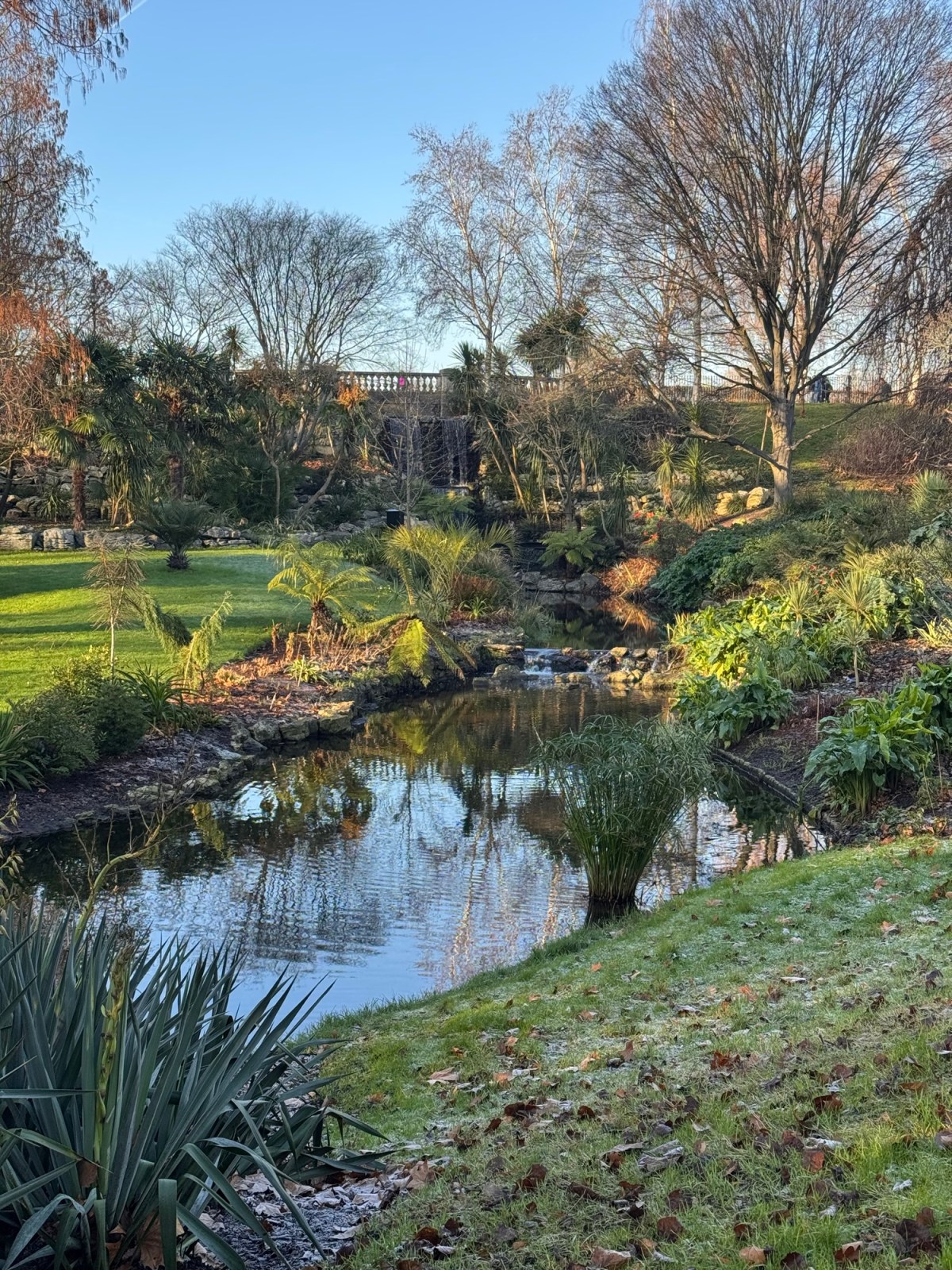
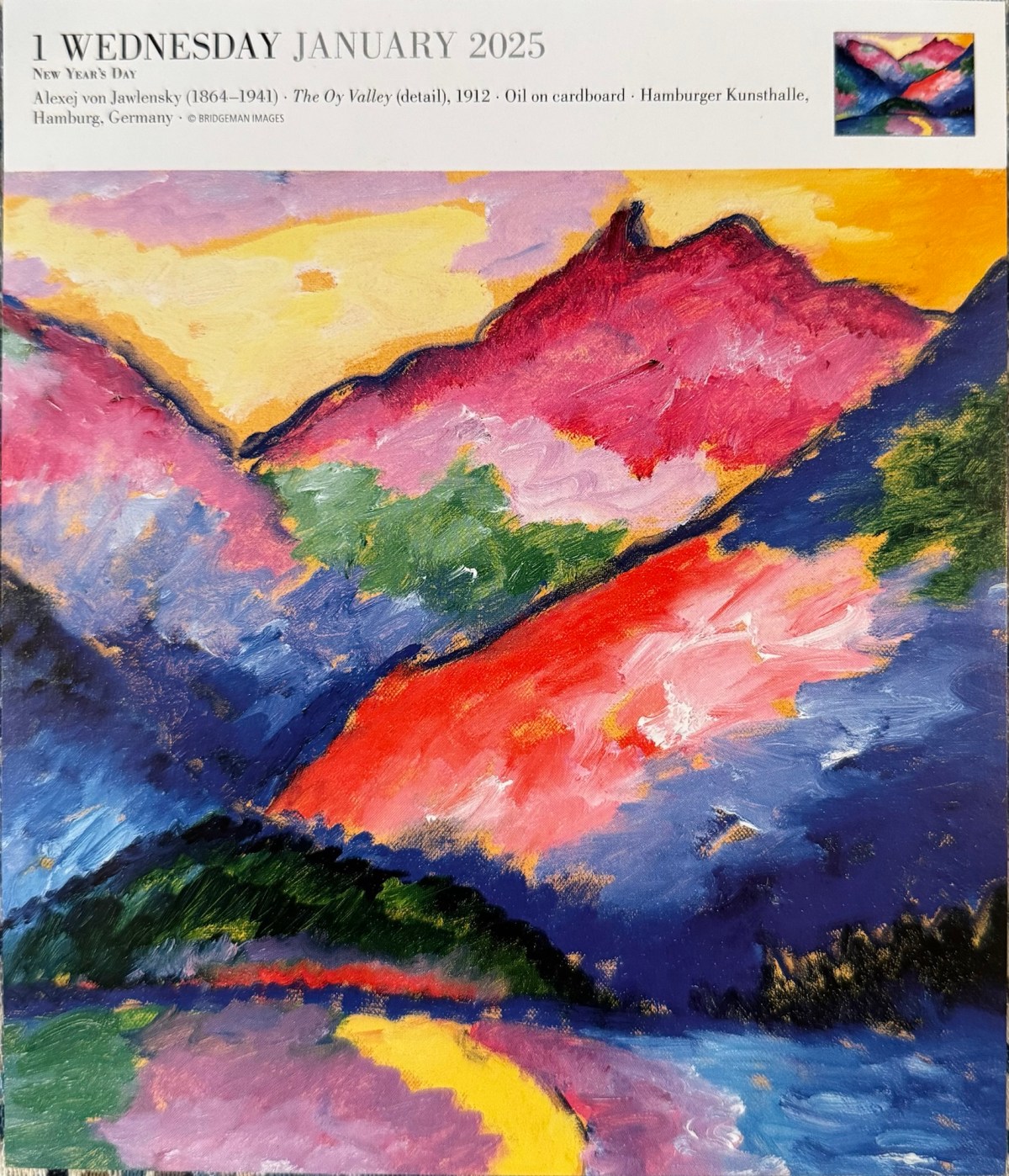
Kicking off this artistic journey, I’m excited to share the January 1 selection: The Oy Valley, a piece by Alexej von Jawlensky from 1912. What grabbed my attention first were the vivid pastel colors. Although it beautifully captures a valley in Germany, it instantly transported me back to a hike I took in the breathtaking landscapes of Scotland (see below picture). It’s amazing how art can evoke such personal memories!

Puntland Hills, Scotland

Below is what ChatGPT can tell me about the painting.

Alexej von Jawlensky (1864–1941) was a key figure in the Expressionist movement, known for his use of vivid colors and spiritualized abstraction. The Oy Valley, painted in 1912, reflects Jawlensky’s fascination with landscapes as a means of expressing inner emotions rather than replicating nature.

This particular painting is characterized by:

1. Dynamic Composition: The scene features a mountainous landscape rendered in bold, angular forms that suggest the natural contours of the valley while emphasizing emotional intensity over realism.

2. Vivid Color Palette: Jawlensky employs a spectrum of bright, saturated colors—reds, purples, greens, and blues—to create a striking, almost otherworldly atmosphere. The color contrasts are meant to evoke a sense of awe and spiritual transcendence.

3. Expressionist Techniques: The brushstrokes are bold and textured, lending the painting an energetic, almost raw quality. Rather than detailed realism, Jawlensky focuses on the essence and emotional resonance of the scene.

4. Symbolic Undertones: Jawlensky believed color had a spiritual power. In this work, the interplay of light and shadow, alongside the vibrant hues, suggests a symbolic representation of the divine presence in nature.

During the period this was created, Jawlensky was closely associated with Der Blaue Reiter (The Blue Rider), an avant-garde group that sought to explore spiritual themes through modern art. This painting exemplifies his contribution to that movement and his desire to transcend the physical world through expressive art.

2024 – Time to Review

In “40 Chances: Finding Hope in a Hungry World,” Howard G. Buffett shares his personal journey of using his wealth and influence to combat global hunger and poverty. Drawing from his experiences as a farmer and philanthropist, Buffett reflects on the 40 opportunities—referred to as “chances”—that a person has in their lifetime to create a meaningful impact. Essentially, each chance represents a year or a growing season.

The title and premise of the book are particularly impactful, highlighting the limited nature of our opportunities. Regardless of whether we analyze our chances over years, months, weeks, or days, it is essential to recognize that we are afforded a finite number of opportunities in life. This understanding encourages me to make the most of every moment.

As we near the end of the year, I find myself reflecting on my year. This time signifies both closure and the promise of new beginnings. Over the couple of days, I will review my goals and aspirations for 2024. While I have celebrated some victories, there have also been moments when I fell short. When January 1st arrives, I plan to take the time not only to dream but also to set purposeful goals for 2025. Here’s to the new opportunities that lie ahead!