
What The Scale Doesn’t Tell You

Every morning, for nearly two years, I stepped on a scale. Same time. Same spot on the bathroom floor. I’d look down, note the number, and get on with my day.

The scale is an accountability partner. It doesn’t lie. It also doesn’t tell the whole story.

That distinction took me longer to understand than it should have. For a while, I treated the morning number like a verdict. Good day or bad day. Working or not working. And I’ll be honest, there is something genuinely satisfying about stepping on that scale and seeing the number go down. A small victory, delivered before the coffee is ready. I’m not going to pretend otherwise. But a verdict requires complete information, and the scale is working with a thin file. It knows what you weigh at 6:47 on a Thursday morning. It doesn’t know what you did for the six months before that, and it isn’t interested in finding out.

I figured this out slowly, the way you figure out most things that matter, not in a single moment, but in the accumulation of small observations that eventually add up to something you can’t ignore.

One of the things I started noticing was my heart rate. Early on, three miles was work. My heart rate on those morning walks told me my cardiovascular system was doing considerably more than it should have had to. But the number that really told the story was the one I saw when I wasn’t moving at all. Resting heart rate is quiet data. It doesn’t announce itself. It just sits there, and over time, if you’re making the right choices consistently, it goes down. That number dropping is the body reporting back that something has changed at a deeper level than the bathroom floor can measure. The scale hadn’t moved much yet. But the resting heart rate had, and it knew something the scale didn’t. I still track it. On the days I’m doing things right, it shows up in that number before it shows up anywhere else.

Then there was the afternoon. Somewhere after lunch, the energy would just leave. Not dramatically, no collapse, no moment you could point to. Just a slow drain. The enthusiasm that was there at nine o’clock wasn’t there at two. What I started noticing, over time, was that this was a signal. On the days I was eating well and drinking enough water, the drop was smaller. On the days I wasn’t, it wasn’t just physical, it was everything. Focus, mood, the will to make one more good decision before dinner. The afternoon became a report card I hadn’t asked for, and the grades weren’t always flattering.

Water is the one I simply didn’t think about. Not resisted, just ignored. It wasn’t a choice, it was an absence of attention. The frustrating part is that even now, knowing what I know about how much it matters, I still find myself at two in the afternoon realizing I haven’t had nearly enough. What I’ve learned is that water does more than hydrate. It fills me up in a way that quietly crowds out the bad decisions. It cleans me out in ways I’ll spare you the details on. And when I’m properly hydrated, I simply feel better. Not dramatically, not in a way I could put in a spreadsheet, but in the way that makes everything else a little more manageable. It is not a wellness trend. It is not a lifestyle brand. It’s water. I still have to remind myself to drink it.

A recent week on the road reminded me how much of this depends on owning your schedule. Business travel is the enemy of everything I’ve just described. You don’t pick when you eat. You don’t pick where you eat. The water bottle you keep on your desk at home is five time zones away. Hotel gyms are negotiations with yourself you usually lose. I’ve gotten better at it over time, packing a refillable bottle, walking the terminal between flights instead of sitting, ordering the thing I actually want rather than the thing I talked myself into because everyone else did. But I won’t pretend the road doesn’t bend the week out of shape. It does. The strategies help me come home without giving back everything I built. They don’t make the week itself easy.

The pants are the most honest instrument I own. There is a specific pair in my closet that I have used as a benchmark for longer than I’d care to admit. The scale might be unmoved on a given week. The pants don’t care about the scale. They fit or they don’t, and they have no interest in making me feel better about the difference. You cannot talk a pair of pants into flattering you.

What connects all of these things is the same lesson, approached from different angles: sustainable change is not linear, and the scoreboard you’re watching is probably not the most important one. One bad week is not the story. A number that moved the wrong direction on a Wednesday morning is not the story. The story is the direction of travel across months, and you can only see it if you’re paying attention to more than one thing at a time.

I have been walking daily since long before this series started. The streak exists not because I have unusual discipline, but because I learned something that intensity never teaches you: consistency compounds in ways that don’t show up in a single morning. The fitness industry will not sell you this, because you cannot package it in a six-week program.

A sprint gets you somewhere fast. Consistency gets you somewhere real.

The scale will tell you the truth. Just not all of it. Learning to read the rest of the room, that’s the work nobody puts on the box.

Saturday Routine

“I do not have a formal degree from the University of Michigan. I have something more valuable. A certificate of completion. Think of it as the Gen X version of a participation trophy.”

Last Monday, my beloved Michigan Wolverines won the NCAA Men’s Basketball National Championship. I have fielded the same question all week. What is your connection to Michigan? Did you go there? Are you from there?

The answer is simple. And complicated.

I do not have a formal degree from the University of Michigan. I have something more valuable. A certificate of completion. Think of it as the Gen X version of a participation trophy. I did serious post-graduate executive training there, which counts for something, at least in my mind. My uncle lived in Michigan for years and raised his family there. I gave genuine consideration to attending law school at Michigan. Unfortunately, Michigan did not give the same consideration to me. Perhaps it was my law school admissions scores. We will leave it there.

But the moment I fell in love with Michigan and its flagship university is easy to trace. My wife and I honeymooned at Mackinac Island. In nearly 25 years of marriage, we have returned to the island no fewer than 17 times. In the early years it was annual. It is woven into us in a way that is hard to explain to someone who has not stood on that island and understood immediately why you would keep coming back.

So when the final seconds ran out Monday night, it was not just a scoreboard. It was something older than that. And somehow, with the college basketball season now over, it feels like permission. Winter is done and spring can begin. Rightfully so, a small world is turning its attention to Augusta for a tradition like no other. The Masters is on. Saturday morning is about to change its address.

Augusta has pristine emerald fairways and perfectly manicured greens. It is the kind of green that makes you envious until you remember what Georgia feels like in July. The envy passes. My head has been somewhere else most of the week, and I am not apologizing for it.


Consider what a Saturday morning routine actually is. Not what it looks like on the surface — coffee, a dog, a tee time — but what it does. It is a standing appointment with a version of yourself. You show up to the same place at the same time, and over months and years, that consistency builds something you did not plan for. It makes you findable. Not just to yourself, but to everyone who has ever known you.

Outside of golf season, Saturday morning means Josiah’s. Same line, same order. Ginger handles public relations. I handle the coffee. She is better at her job than I am at mine. This past February, two Saturdays in a row, a former student appeared in line behind me. Same opening line both times.

“Professor Harris, I’m not sure you remember me.”

This is not a coincidence. It is not luck. It is what happens when you show up to the same place reliably enough that the people from your past know exactly where to look. I have taught roughly 1,200 students. I did not seek any of them out. I just kept showing up, and they found me. That is the quiet power of a routine that most people never think to name.

I always need a hint. I am always glad they said hello.


Golf season is a different Saturday entirely. Same day of the week, same general idea. Get outside. Move around. Spend time with people you stopped explaining yourself to a long time ago. We have been playing together for close to thirty years. There was no ceremony when that number arrived. You just look up one day, do the math, and feel briefly old before someone hits a bad shot and the feeling passes.

It is more about being outside than keeping score, but we always keep score.

Here is what thirty years of Saturday mornings with the same group actually produces. It is not a scoreboard. It is not even a friendship in the way most people define the word. It is something closer to a shared language. A set of references and rhythms that require no explanation because they were built slowly, Saturday by Saturday, across decades. You do not have to catch these people up. They were there.

Nobody on the fairway is going to tap me on the shoulder and ask if I remember them. Josiah’s is where the past finds you. The golf course is where you go to be exactly who you are right now, with people who knew you before you figured that out. Play your own game.


The line at Josiah’s will be there in October. Same order. Winter will come back, the courses will close, and Saturday morning will find its way back inside. There will probably be another former student behind me in line who is not sure I remember them. I will. I always need a hint, but I remember. That is what the line is for. Showing up to the same place long enough that the people who once sat in your classroom know where to find you.

For now, it is almost time. The same group. The same course. The same morning light that makes me think you might actually be good at this. I am not.

Don’t tell Ginger.

The Long View of Friendship

Every spring, I send the same text. Just a few words asking whether they are in this year. Same message for thirty-nine years. Only the delivery has changed.

It started with a floor in Bergsaker Hall, a shared love of the Minnesota Twins, and a World Series nobody saw coming. What followed was nearly four decades of games, road trips, bad food, one covert operation that would have impressed the CIA, and conversations that always end up somewhere back in college.

The scores are gone. The games are not. This is a story about what stays.

I sent a text this week. Nothing complicated. Just asked whether they were in this year, and we started working on a date. It used to be a face-to-face conversation, then a phone call, then an email, and now it is a text. Same basic message for thirty-nine years. Only the delivery changed.


We met freshman year of college, a group of us living on the same floor in Bergsaker Hall. Different hometowns. Different majors. Different ideas about where life was headed, most of them wrong. We probably do not find each other without college doing what college does best, throwing a bunch of strangers together and letting time do its work. If you are lucky, a few of those strangers become people you are still texting nearly four decades later.


What we had in common, as it turned out, was the Minnesota Twins. That was enough. In 1987, that was more than enough.


For most of our lives, the Twins had been mediocre or worse. Then suddenly they were not. They played in a dome built for football, with plexiglass in left field, the Baggie in right, and acoustics that made the whole place feel like a washing machine on spin cycle. Other teams complained about it. We took that as a compliment.


They barely got into the playoffs. Nobody outside Minnesota thought they were real. Then they won the whole thing anyway. If you were college age and a Twins fan that fall, watching it happen with people who mattered to you, something got locked in.

* * *

Thirty-nine years of going to Twins games with friends, and I could not build you a proper box score from more than two of them. The first was September 27, 1987, that same fall, before the World Series run was even finished. It was the final home game of the year, and you could feel the buzz because everybody was hoping the Twins were headed to the playoffs. Sunday game. One o’clock first pitch. We got up early, stopped at Mr. Donut, piled into a car, and drove four hours like this was an entirely reasonable use of a weekend. Somewhere I still have the ticket stub.


There was a double play in the top of the first inning, ground ball to third, force at second, throw home, a 5-4-2, which is a weird little baseball gem. The Twins scored five in the bottom half before half the crowd had settled in. I had to look up the five runs. I did not have to look up the double play. That seems about right. I could not tell you what I had for breakfast yesterday, but I can still see that play. The Twins won. They clinched a playoff spot. More than 53,000 people went home happy.


Then there is Game 7 in 1991. Jack Morris. Ten innings. No runs. One of the best baseball games ever played, and somehow we were there. How we got the tickets involves a romantic subplot, and at this age I think it is better left slightly blurry. Another Sunday. Another four-hour drive. Then a celebration in the streets of Minneapolis, followed by turning around and driving four hours home because Monday was still coming, and apparently we were still pretending to be responsible people.


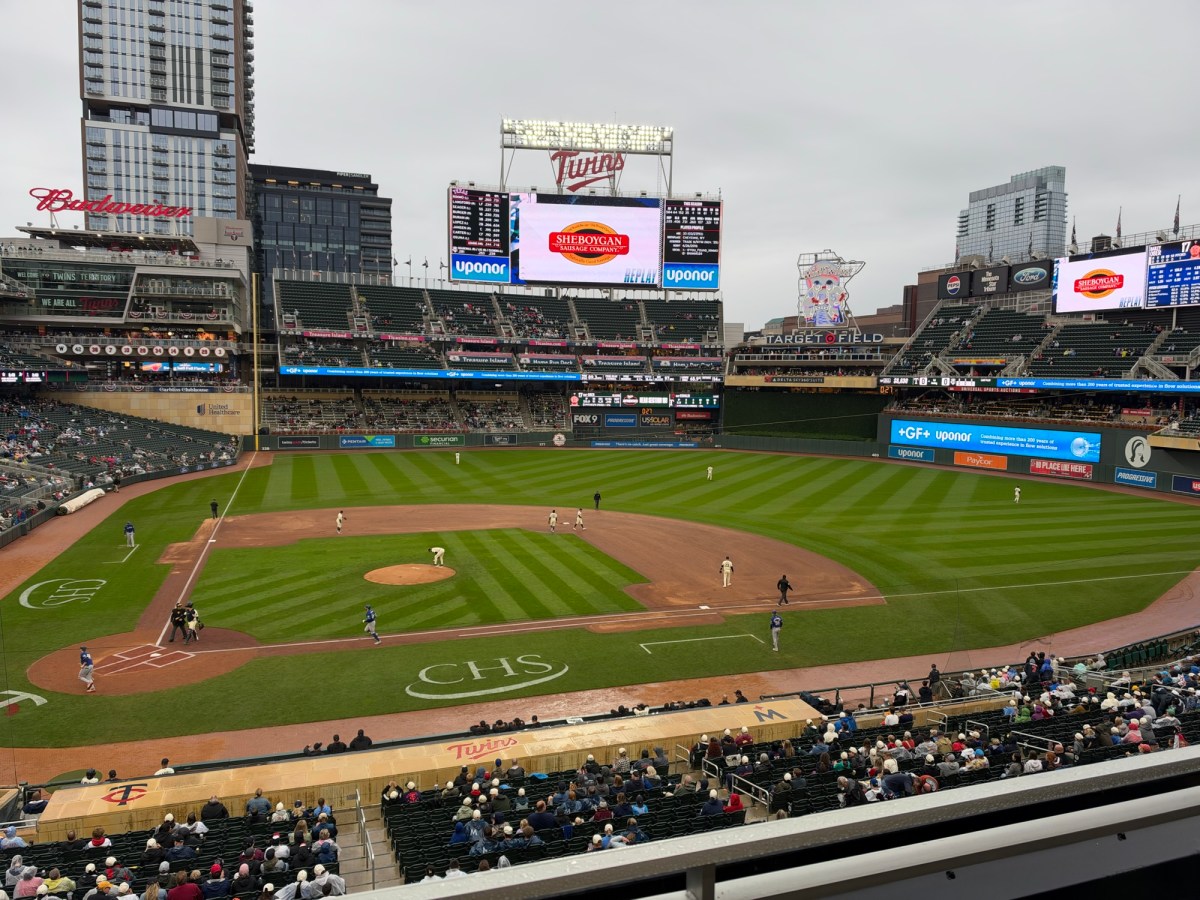
Everything else has blurred, which is fine. Blur has its own value. There was a game where the Twins were losing by so much that we started rooting for the other team, just to see a better brand of baseball before the day was over. There was one of the last games in the Metrodome, sitting right down the third base line in front of the visitors bullpen, close enough to hear everything and probably say a few things we should not have. There was one of the first games at Target Field, when the place was still new enough that we were wandering around like tourists, and somehow we ended up in the Legends Club.


You do not accidentally end up in the Legends Club. Somehow we had acquired two tickets even though there were four of us, and this was before the sophisticated scanning devices you see at ballparks now. So getting everybody in required a plan. And we had one. The kind of plan that would have made a CIA operations officer nod with quiet approval. Timing, nerve, precise execution, and the kind of straight-faced confidence usually reserved for people with actual credentials. We divided roles without discussion. Each person went in at the right moment, no hesitation, no eye contact, no deviation from the plan. A Navy SEAL team could not have done it cleaner. We were absolutely not supposed to be there. We stayed as long as we could. That remains one of my favorite life skills, the ability to act like you belong somewhere just long enough.


The scores are gone. The games are not.


Some things have changed. We started in the three dollar general admission seats, upper deck, outfield, way out where the baseball looked more like theory than sport. That was college. Cheap tickets, long drives, no money, no hesitation. Now we often pay more than one hundred dollars each for a game, and more often than not we end up in the Legends Club. The same place we once slipped into like it was a minor covert operation. Turns out if you live long enough, some of the places you used to sneak into will eventually just let you buy a ticket.


The food changed too, and not always for the better. That day in the Legends Club was the first time we learned stadium food could mean a lot more than hot dogs and Cracker Jack. We still like to inspect the ballpark menu, which is not a sentence our younger selves would have seen coming. When we do end up in the Legends Club — which has had enough corporate sponsors over the years that keeping up with the current name feels like a part-time job — we still usually come back with basic stadium fare because change is hard. But games have never quite been the same since the Hormel Dome Dog failed to make the move to Target Field. That comes up too, usually right after someone has settled for something that is not a Dome Dog and knows it.

* * *

In the beginning, the conversations were about college. What was happening on campus. What we were going to do with our lives. Who we were dating and how that was going, which was a mixed bag at best. We thought we were fascinating.


Then the years did what years do. Jobs. Cars. Spouses. Kids. Aging parents. Politics, when everyone felt sufficiently rested and charitable. The whole messy architecture of adult life, covered inning by inning over three decades. But we always end up back in college, because that is what happens when people have known you that long. Nobody lets you stay in your current form for very long. Somebody always remembers the earlier draft.


We still talk about professors we loved and professors we endured. Classes that mattered and classes we survived. Basketball games and football games that once felt like the center of the universe. Former romantic interests always make an appearance. They always will. And sooner or later, somebody brings up Nite City.


Nite City was a dance club near campus that we were convinced was sophisticated. It was not. But it had drink specials, and it had people from our college, and at that age that is really the whole formula. The facts are usually off now. The feeling is still exactly right.

* * *

The season started this week, and my hand reached for the phone before I had thought it through. That is all it takes. The Twins play a few games, and thirty-nine years of the same reflex kicks in.


For most of that time, the core group has been the same three of us. Others have joined in different years, depending on schedules and seasons of life. But lately it has settled back to the three, which feels about right. The text goes out. The replies come back. Then at some point we are sitting in that ballpark, talking about this year, then 1987, then somebody’s kids, then something dumb we did in college, then some old story that gets less accurate and somehow better every time it gets told.


I probably will not remember this year’s score either. That is what scores do. They fade. But I will remember who was there. I will remember what we talked about that had almost nothing to do with baseball. I will remember the feel of Target Field on a summer night when the season is still young and hope is still allowed to be a little irrational.


We were college age and convinced the Twins would just keep winning. They did not. But we kept showing up anyway, which turned out to be the more important habit.


Thirty-nine years. One text. Still working on a date.


Some things you just keep doing. Not because you mapped it out. Not because you saw the whole arc coming. Just because somewhere along the way it became part of your life, then part of your identity, and finally just part of you.

* * *

That is the long view of friendship. It does not look like much from the outside. From the inside, it is everything.

Why I Started — And Why That Still Matters

In November 2020, I took a picture to make people laugh. It didn’t go the way I planned. What followed was the hardest and most important journey of my life. Some of it has slipped. Here is why I am starting again, and why the reason I started still matters more than anything else.

I began this blog to talk about how and why I was able to recapture my life by losing weight. The inaugural post was titled “Fat, Fifty and Fatigued,” and I meant every word of it. I do regular check-ins to see if I am happy with where I stand from a health standpoint. The honest answer lately is no. Since leaving academia to return to the financial field, some of the weight has crept back. The schedule changed, the rhythms changed, and somewhere in the transition the habits I had built started to erode. So recently I decided to begin the journey again. To get back to where I was, and maybe further. To do that, I need to go back to where it started. It all started with a picture.
The picture was taken on a Thursday, a week before Thanksgiving, 2020. It was warm enough that wearing a hoodie felt like a small act of rebellion against the season. I was teaching from my home office, which meant I could wear whatever I wanted, and I wanted everyone to know it. So I took a picture and posted it. Look at me. No tie. No commute. Just a guy in a hoodie, conducting class from his living room, winning the pandemic. And then I looked at my face in that picture, really looked at it, and the joke stopped being funny.
That was the moment. Not a doctor’s appointment, not a conversation with anyone who loved me. A selfie.
That picture was taken in the middle of one of the strangest falls any of us can remember. The country was a mess, and I was not in great shape either. The election had been called but half the country wasn’t ready to accept it. COVID was getting worse, not better. And every time you turned on the news, someone was talking about who was most at risk. They kept using the word comorbidity. I had to look it up the first time I heard it. It basically means the conditions that make you more likely to die. Obesity was on the list. High blood pressure was on the list. I had most of the list, and I felt it every day. Every night when the heartburn woke me up. Every time I caught myself in a picture and looked away. I was not just overweight. I was a walking risk factor and I had been for years, and until that Thursday in November I had been very good at not thinking about it too hard.
My oldest brother died that September, two months before I took that picture. Both of my brothers were born with extra DNA that hindered their development, leaving them vulnerable not just to viruses but to complications most of us never have to think about. COVID found him anyway. I was still carrying that loss when I posted the hoodie picture, still in that strange suspended grief where you go through the motions of normal life because there is nothing else to do. One week after I made the decision to start losing weight, my other brother came down with COVID. There were some touch and go moments. We made the call to get him to the hospital where he had a fighting chance. Unlike my oldest, I was able to visit him. He was there for a couple of weeks, and then he came home. He is still with us today. And somewhere in those weeks of waiting and visiting and hoping, I kept going. Because I had just watched COVID take a man who had no choice about his vulnerabilities. I had a choice. I was not going to waste it.
At my peak, according to my scale, I weighed 252 pounds. I had never said that out loud before I wrote it in 2021, and even then it felt strange to put it in public. There it is. I didn’t want to be a statistic. I didn’t want my family to lose me the same year they had already lost so much. So I started.
The timing helped, and if you read last week’s post, you already know why. A semester doesn’t wind down gradually. It collapses. Around Thanksgiving the intensity breaks, the calendar starts to breathe, and for the first time since August there is actual white space. That is what I had in November 2020. A picture I could not stop thinking about, a grief I was still learning to carry, and for the first time in a long time the capacity to focus on something I could actually control.
By 2022 I was at 186. Everything got better. The knees stopped hurting. The acid reflux that had woken me up almost every night for years was just gone. I bought new clothes in sizes I hadn’t worn since college. I felt like myself again, or maybe a version of myself I had given up on finding.
And then, gradually, some of it came back.
The financial world doesn’t have semesters. There is no Thanksgiving wind-down, no January slow start, no built-in breathing room. The days got longer, the schedule got tighter, and the habits I had built around a particular kind of life stopped fitting the new one. I didn’t lose the plot all at once. It happened slowly, one small compromise at a time, until I did a check-in one day and didn’t like what I found.
Here is what I know now that I didn’t fully understand the first time. Losing weight is hard. Keeping it off is a different kind of hard, and nobody really prepares you for that part. Motivation comes and goes. Discipline gets tired. The only thing that actually holds is knowing your why, specifically enough that you can find your way back to it when things go sideways. I have done this long enough to know that is true.
My why hasn’t changed. I don’t want to be a burden. I want to be around for the people who count on me. I want to feel the way I felt in 2022, when the knees didn’t hurt and the clothes fit and I had enough energy to actually show up for my life. That was true in November 2020 and it is true right now. The number on the scale has changed. The reason has not.
Focus. Facts. Forgiveness. That is the framework that worked for me the first time and it is what I am coming back to. Focus means knowing your why and keeping it close. The Facts piece means understanding what actually works, not what you hope will work. Forgiveness means accepting that setbacks are part of it, that starting over is not failure, it is just what comes next. Over the coming weeks I am going to walk through each one. If you are on this road too, I hope something here is useful. If you are just starting, welcome. You are in the right place.

Word count: 944 words.

The Rhythm Is Gonna Get You: Circadian Rhythm, Spring, and Why Timing Matters

Gloria Estefan warned us: the rhythm is gonna get you. A reflection on circadian rhythm, academic life, and why spring feels like the only real beginning.

Gloria Estefan warned us. The rhythm is gonna get you. You can fight it for a while, but it always wins, usually at the worst possible time. Everything has a rhythm. The seasons. The school year. A marriage. Some people find theirs early and live inside it comfortably. Others spend decades bumping around looking for it. The rhythm does not wait for you to figure it out. It is coming for you regardless.

My wife figured this out a long time ago. The rest of us are still working on it.

For the most part, she goes to bed at the same time and wakes up at the same time. It does not matter the day, season, weather, or location. At some point she informed me this was called a circadian rhythm. For years, I nodded and smiled like I understood, which is generally how I handle most things, and then went about my day. But with the arrival of Copilot and ChatGPT, I was finally able to dig into it in a way my small brain could understand. That is how I found myself learning about my suprachiasmatic nucleus, located in the hypothalamus, nestled deep within the brain’s center, positioned below the thalamus and above the pituitary gland. Of course it is. This naturally led me to wonder whether mine had been injured in my January fall. I asked my wife, who works at a hospital. She told me I was fine. Just more irritating.

Further research suggests a handful of best practices for keeping your circadian rhythm aligned. My wife does all of them. She has a blinding light she activates each morning like she’s signaling aircraft. She goes to bed and wakes up at the same time every day, weekends included. She limits screens before bed, with a carve-out for Law & Order and Dateline, because apparently procedural crime dramas are melatonin-neutral. She eats on schedule. And caffeine, well, that deserves its own piece entirely.

Gloria Estefan. My wife. My mother. Fine. The rhythm got me.

For a long time, my rhythm was the academic year. August was pure optimism. You built syllabi, mapped out lesson plans, and convinced yourself this was the year everything would click. You would reach every student. You would teach differently. You would get it right.

Then the first faculty meeting hit. It was Dorothy throwing water on the Wicked Witch, except the melt took until May. Nothing kills momentum like a three-hour meeting about parking, assessment, and what absolutely must be in the general education curriculum that no student has ever once cared about. Even better when faculty from entirely different disciplines are sorted into small groups to solve these problems together. Nothing says higher education like a chemist, a music theorist, and a medieval historian trying to reach consensus.

The best part was that you could always tell exactly which discipline someone was from without ever seeing their name tag. Communications professors liked to speak, at length, about speaking. Biology and chemistry professors made everything about the scientific method, including whether the agenda had a proper hypothesis. Philosophy professors asked questions no one could answer, which they considered progress. History professors talked about the past, often at the expense of the present. English professors, being mostly gentle souls, just wanted to fix things, quietly noting that the third bullet point contained a squinting modifier and the mission statement had a dangling participle. Could we perhaps offer a friendly amendment? Business and accounting professors wanted to discuss the finances and would, given any opening, perform a SWOT analysis on everything, including the parking situation. And the business law professor felt a deep, personal obligation to remind the room that a friendly amendment is not actually a thing. You cannot offer one. It is not valid. It never was. Everyone asked anyway.

And yet, the meeting did not kill the August optimism. Not entirely.

Because then the students arrived. The campus came back to life. The halls filled up. And somewhere in the chaos of the first week you remembered exactly why you were there.

The fall semester was fun right up until the first round of exams and homecoming, whichever came first. If the football team was winning, the campus was noticeably happier, which tells you everything you need to know about higher education. Somewhere along the way, quietly and without fanfare, the great ideas from August disappeared. The innovative plans, the creative approaches, the belief that this year would be different, gone. Professors taught the way they always had, the way their professors had taught them. Innovation, it turns out, has a shelf life of about four weeks. But even that was part of the rhythm. Hope arrives in August. Reality settles in by October. Every year, right on schedule.

Then came the first round of illness, like it had its own place on the calendar, and we limped into fall break having earned it. And promptly wrecked our circadian rhythms for four straight days, which my wife would like me to point out is everything she would never do.

October turned to November, and suddenly it was registration, projects, and round two of exams. We stumbled into Thanksgiving slightly disheveled, definitely behind, and unreasonably relieved we had made it at all. Every class after Thanksgiving felt optional, whether anyone admitted it or not. For all practical purposes, everyone agreed to pretend otherwise. Students and faculty alike did what academics do best under pressure, negotiating, rationalizing, and convincing themselves a paper submitted at 11:58 p.m. represented genuine scholarship. And then it was over. By Christmas, the greatest gift was silence.

Spring semester was different, though not in the way you might hope. Fall arrived like a first date. Spring arrived like a Monday morning. Everyone knew what was coming and nobody was particularly excited about it. The energy was lower. The novelty gone. You already knew some of the students, which was either comforting or concerning.

February tested everyone. The holidays were a distant memory. Spring break was not close enough to matter. The days were gray and identical. You taught. They sat. Everyone just got through it.

Then March arrived. And March meant spring. And spring meant just enough hope to keep everyone moving.

Students left for spring break and returned tan and suspiciously cheerful, having traded a meaningful number of brain cells and part of their liver for the experience. They all came back physically. But something stayed in Florida. You could see it in their eyes, that faraway look of someone who had briefly escaped and had not yet accepted that they hadn’t.

As the weather warmed, attention drifted toward the windows and away from the board. The same was true for me. By March, I was done pretending otherwise. I had graded enough papers and sat through enough meetings to know that when the sun finally showed up with intent, something shifted. The same projects were back, just with new due dates and the same dread. But it felt manageable. The days were getting longer. The end was finally in sight. The rhythm was doing what it always does, pulling everyone forward whether they were ready or not.

And then it was over. Students moved out. Graduation happened. And then the campus went quiet. Beautifully, mercifully quiet.

I have not stood in front of a classroom in years. But every March, something stirs anyway. Old habits. Old rhythms.

Which brings me to now.

What is my rhythm if not the academic year? The calendar year never made much sense to me. January has never felt like a beginning. Short days. Dark skies. Cold everything. January feels less like a beginning and more like a life sentence.

Then we spring forward, which feels like something designed by Satan. A small disruption, but enough to remind you how fragile the whole system is.

And then, almost without warning, it changes.

Spring arrives.

Spring is August of the academic year. It is January with actual hope. The grass turns green. Leaves return. Flowers push through the ground. And then there is that first warm Saturday where you find yourself standing outside for no reason at all, just because you can. That is when you know it is back.

And baseball season starts. There is something about opening day, the impossibly green grass, the crack of a bat, the unhurried pace of a game that refuses to hurry, that feels like the world exhaling after a long winter. On opening day, every team is undefeated. Every fan is a believer. For a while, that is enough.

Spring does not just arrive. It reminds you that things come back. That the world has a rhythm, and if you are patient enough, it finds you again. My wife, of course, already knew all of this.

Some of us just needed a few decades. And a March morning.

Gloria was right.

What the Day Means

This past weekend, many people celebrated St. Patrick’s Day. A massive snowstorm celebrated back. I missed the parade. I did our taxes.

Fair warning, this one is longer than most. I started writing and couldn’t stop. Hopefully you will indulge. Mothers deserve more attention.

I’m old enough to remember when St. Patrick’s Day was actually celebrated on March 17. Then someone probably decided it conflicted with March Madness and the next thing you know it’s drifting around the calendar like a bar promotion looking for a Saturday. Which, honestly, is all it ever was for most people. I just preferred the fiction.

Here’s what most people don’t know about March 17, nor do they care. It’s not St. Patrick’s birthday. It’s not the day he drove the snakes out of Ireland, and for the record, there apparently weren’t any snakes in Ireland to begin with, which makes that particular miracle less impressive upon reflection. We celebrate March 17 because it’s believed to be the day St. Patrick died, in 461 AD. The Irish built a party around a death anniversary. For me, that’s always been a strange thing to celebrate.

My mom was raised an Irish Catholic, and she loved St. Patrick’s Day the way she loved most things, fully, and with very little patience for people who didn’t. She loved a big party, loved an occasion, and could walk into a room full of strangers and leave knowing everyone. Not in a working-the-room way. In a genuine way. People wanted to be around her because being around her felt like something. She also had strong opinions about most things, and the wisdom to know when to share them, which turns out to be a much rarer combination than it sounds. She died on March 17, 2005, and I’m not a huge fan of this day. But here we are again, twenty-one years later, parade missed, taxes done, and I find myself back at this keyboard trying to figure out what this day is asking of me now and whether I have a better answer than I did the last time.

I’ve written about March 17 twice before. In 2022, I wrote about the sweater. Bright, multicolored, chosen by her on the last morning of her life. She had Parkinson’s for thirteen years and it took most of what made her her, slowly and without mercy. But that morning she picked the right sweater. In 2024, I wrote about standing on a sidewalk the day she died, holding the hand of a two-year-old who had no idea what had just happened and very much wanted to see some floats.

I didn’t want to go to that parade. I wanted to sit somewhere quiet and let the day be what it was. But he wanted to see the parade, and she would have wanted him to see it, and those two things together were enough to get me to the curb. He was completely, unreservedly delighted the way two-year-olds are, without conditions, without any awareness of what it cost the person next to him to be standing there. I was grateful for that. Uncomplicated joy turns out to be exactly what you need when everything else is the opposite of uncomplicated.

That two-year-old is an adult now, my son, and I’ve been thinking lately about how well he and my mom would have gotten along. They would have found each other immediately, compared notes, and spent a considerable amount of time making fun of me together, shamelessly and with great enthusiasm. I would have been irritated. I would have given anything for it.

He walks into a room and something shifts. Not in a loud way, he’s not performing anything. People just want to be near him, want to talk to him, want to know what he thinks. Strangers become less strange around him. He has opinions about everything, and like her, he knows exactly when to use them — and when to put them down in service of the people in the room. He reads the room the way some people read a clock, naturally and without thinking about it. He shows up for people, genuinely, reliably, in the ways that actually count. And he loves a good party, which in this family is less a preference than a personality trait passed down like eye color. And like her, he finds a way to get on camera. For the record, he will be missed this March Madness.

I’ve watched him in rooms the way I used to watch her in rooms, and the feeling is the same. The particular warmth of watching someone who doesn’t have to try to make people feel welcome because it never occurred to them that anyone might not be.

She never met him as the person he became. Parkinson’s had been taking her for years by the time he arrived, and she died when he was two, and the version of her that could have really known him, the sharp, funny, opinionated, life-of-the-party version, was already mostly gone by then. That’s the loss inside the loss, the one that doesn’t get talked about as much. It’s not just that he lost a grandmother. It’s that they lost each other, and neither of them got to know what they were missing.

But here’s the thing I’ve come to understand, slowly and without any dramatic moment of revelation. She didn’t disappear. She just carried forward. The warmth with strangers, the stubbornness, the peacemaking, the way a room feels different when he walks in, the absolute conviction that life is better with more people in it and the volume turned up, that’s not coincidence. That’s her, showing up in the next generation, wearing different clothes.

She would have recognized him immediately. And she would have adored him, and he would have adored her, and together they would have been a handful, and I mean that as the best possible thing I could say about either of them.

Here’s what twenty-one years teaches you. Grief doesn’t leave. It just stops being the loudest thing in the room. In the early years it’s everywhere. It answers your phone, comes to work with you, sits across from you at dinner and says nothing. But if you’re patient with it, and patient with yourself, it eventually learns to share the space. It lets other things back in, joy, distraction, a walk on a good morning. Twenty-one years in, grief and I have an arrangement. It gets March 17. I get the rest of the calendar.

Those words — your mother died — don’t stop being true. They just stop being the only thing that’s true. She loved a big party, she picked the right sweater, and somewhere in a son who lights up rooms and shows up for people and knows exactly when to say the right thing, she is still very much present. You don’t have to believe in anything supernatural to believe that. You just have to pay attention.

Life is worth showing up for. She knew that. Turns out, so does he.

This weekend I missed the parade and did our taxes. She would have had opinions about both. The taxes she would have understood, reluctantly. The missed parade she would have given me grief about for years, which, now that I think about it, would have been its own kind of gift. Happy St. Patrick’s Day, Mom. You would have loved this one. You’d have especially loved who else showed up.

The sweater is still here. And in all the ways that matter, so are you.


This is the third March 17 I’ve written about here. The first two are here and here. New readers, start there. Returning readers, thank you for coming back.

The next 30 million steps

Six years of walking at least 10,000 steps a day taught me a lot about perseverance. A fall in my driveway taught me even more about perspective.

In 1989, the first Life Alert commercial hit television. A woman on the floor yelling into a necklace: “I’ve fallen and I can’t get up.”

To a twenty-something watching it at the time, the whole scenario seemed absurd. That was a problem for Old People, somewhere far down the road, probably around the same time you start voluntarily eating bran for breakfast.

Life, of course, has a way of adjusting your perspective.

Given my recent fall in the driveway, that famous line suddenly felt less like a punchline and more like a documentary. Gravity made a convincing argument, and the driveway won the debate.

In last week’s blog post, I joked that only five people read the essay and two of them probably clicked the link by accident. At least I think I was joking. The analytics suggest I may not have been. But those five readers were clearly paying attention. Within hours I received several helpful suggestions, including one enthusiastic recommendation that I start “walking by five in the morning,” which I assume is now considered medical advice.

Last week also marked six years of walking at least 10,000 steps a day. Other than writing about it here, the milestone passed with almost no fanfare, which frankly felt appropriate. Nearly 30 million steps sounds impressive until you realize most of those miles were not heroic. They were cold mornings, windy afternoons, and sidewalks that could politely be described as uninspiring. Plenty of days the couch made a very strong closing argument. People assume a streak like that is about discipline or health, and those things matter. My knees appreciate it. My doctor probably does too. But after six years, I’ve realized the real benefit isn’t physical. Mostly, it’s perspective.

And perspective has a funny way of making you look at familiar things differently.

This week the streak continued, but I changed a few things up. Same commitment, just a slightly different angle.

One morning I walked a familiar route in the opposite direction, clockwise instead of counterclockwise. Another day the treadmill got involved, and I started playing with the incline and speed like a bored airline pilot. One morning I swapped the usual podcast for music.

Small adjustments, same routine. And something interesting happened. By making those subtle changes, I started noticing things in my own neighborhood that I hadn’t seen before. An electric utility box that had always been hidden from one direction but stood out clearly from the other. A tree I don’t remember ever seeing, even though it must have been there the entire time. I noticed the sunlight hitting houses, water, and the sidewalk differently depending on the angle. Turns out sometimes the only thing that changes is the direction you’re looking from.

It reminded me of something I once heard from pro golfer Dicky Pride. When Pride prepares for tournaments, he sometimes walks the course backward during practice rounds. Not playing it that way, obviously, just studying it.

His explanation stuck with me. Golf course designers are good at their jobs. They know exactly where players look and where the traps appear when you approach a hole the way it was designed to be played. From the tee forward, the course tells you a story.

Walk it backward and suddenly you see something else. You see where the trouble really sits, and you notice angles you missed. The fairway that looked generous from the tee suddenly looks a lot narrower when you’re standing on the green looking back. The bunkers make more sense, and the danger becomes clearer.

Same course, different perspective.

Six years ago I started walking because I wanted to feel better. What I didn’t realize was that the real value wouldn’t be the miles behind me. It would be the perspective that comes from continuing to put one foot in front of the other. The real story was never the first 30 million steps. It’s the next 30 million.

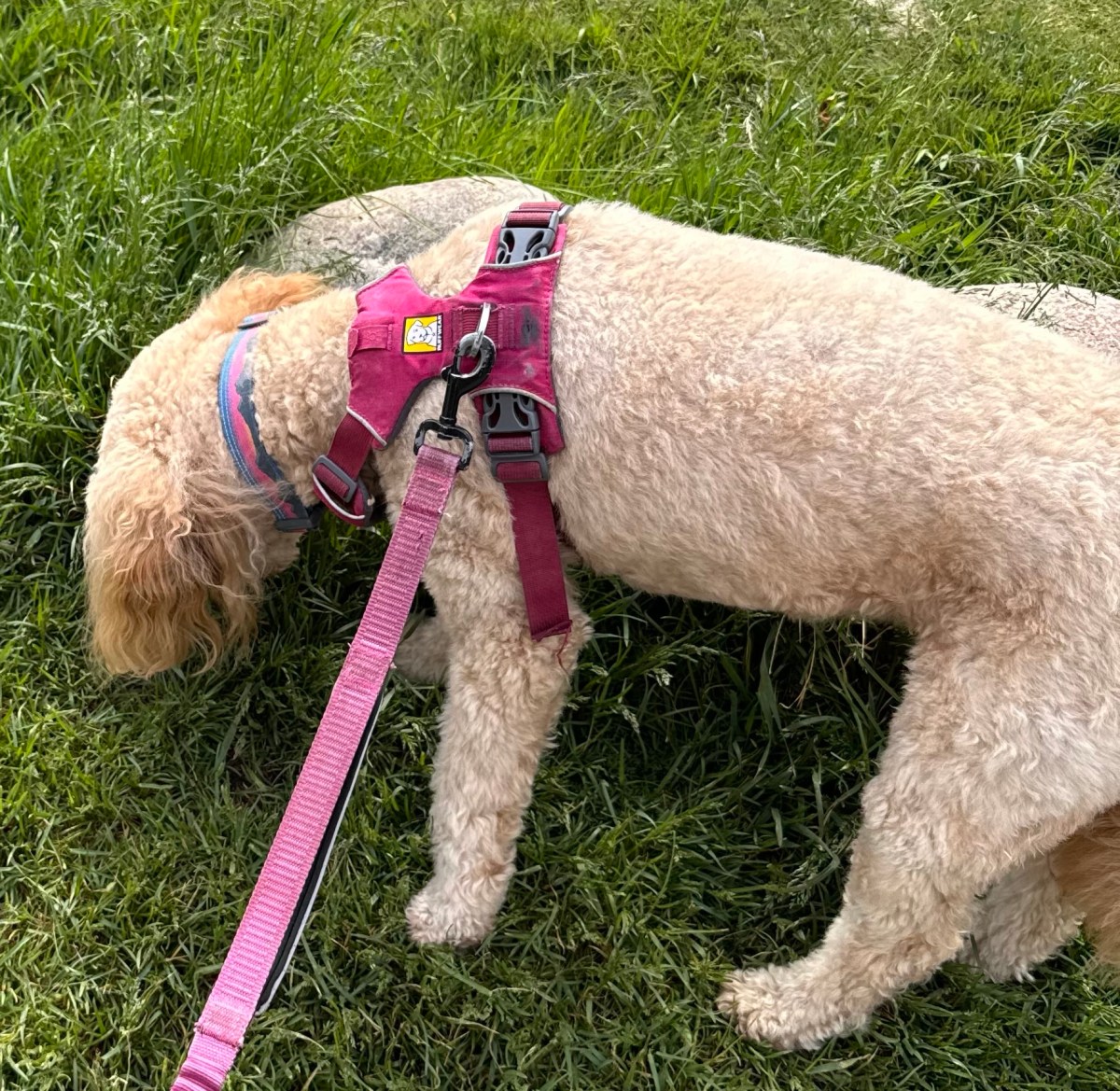
The weather is finally starting to warm up, which means Ginger is thrilled the streak continues. She has always been a strong advocate for additional walking. So tomorrow morning we’ll head out again, same sidewalks and same neighborhood, maybe clockwise, maybe counterclockwise. Sometimes the best way to see things differently is simply to keep walking — just from another direction, toward the next 30 million steps.

Six Years. Nearly 30 Million Steps. My Dog Is Thrilled.

The streak has become a daily permission slip to call the day a success. Some days it is a gift, a good conversation, an unexpected view, twenty quiet minutes nobody can touch. Other days it is just a man and his kitchen. Either way, you keep moving, and that is the philosophy.

Fair warning. If you have followed this blog for any length of time, you know what is coming. I have written about this before. My five loyal readers are nodding. The other two are still trying to find the exit. Feel free to skim. I mostly write these for myself anyway. It is cheaper than therapy and the co pay is better. Still, stay with me. Maybe something here lands for you too.

January was brutal, and I wrote about it. Somehow it became the most viewed post in the five year history of this blog. Apparently the best thing I ever did for readership was fall down. February was merely hard, and through all of it there was the streak. Today it turns six years old.

That means two thousand one hundred ninety one consecutive days. Not one missed. No exceptions. At least 10,000 steps every single day.

Nearly 30 million steps. Over 13,000 miles. An average of 13,500 steps a day. Thirteen thousand miles, on foot, mostly on ordinary days.

The last two months tested the streak more than most. I am still hurting from the fall in January, and my neck and back remind me every morning that gravity won. Some days I stand up slowly and negotiate with muscles that are not interested in compromise. There were days, more than I would like to admit, when I considered letting it go because six years felt like a respectable number. Instead, I pressed on.

Here is what that actually looks like sometimes. It is 8:57 p.m. I am tired. The weather is ugly. My neck and back are staging a formal protest. And there I am, walking circles around the main floor of my house, because every loop is 75 steps and I still need 1,256.

It is not scenic. It is not Instagram worthy. It is a middle aged man shuffling past his own kitchen for the fourteenth time while his dog watches with concerned confusion. But the steps get done and the streak survives, and somewhere in that absurd little ritual is the whole point. Some days, showing up looks nothing like you imagined, and it counts anyway.

The streak has become a daily permission slip to call the day a success. Some days it is a gift, a good conversation, an unexpected view, twenty quiet minutes nobody can touch. Other days it is just a man and his kitchen. Either way, you keep moving, and that is the philosophy.

Six years of daily movement has not made me stronger. It has made me steadier and less dramatic about hard days. I am more willing now to do the small, boring thing that keeps everything else from unraveling. The change was not heroic or loud. It was ordinary, and it stuck.

Today feels like spring’s opening act. The snow has mostly surrendered. I spotted a robin doing that smug little robin thing like it never left, and the days are stretching longer. Year seven will not be about intensity. It will be about curiosity. I want new trails, new neighborhoods, and roads I have never turned down before, because discipline got me here and curiosity can take it from here.

That is where you come in. Yes, you, all five of you plus the two still searching for the exit. If you have a favorite two or three mile route, send it my way and consider it your contribution to year seven. I cannot promise I will get to all of them, but I can promise I will keep moving.

Six years ago this started as a way to survive a pandemic. Now it is the anchor in chaotic mornings and the release valve at the end of hard days. It is quiet proof that I showed up for myself again, even when showing up meant walking past my own kitchen for the fourteenth time.

If I am honest, though, I am not the one who benefits most. Spring means real walks again, trails and air that does not sting. It means doors that open on purpose and paws that hit pavement with enthusiasm. Discipline is easier when someone is waiting by the door.

She has watched the kitchen laps and endured the treadmill indignity. She has waited on cold mornings with complete certainty that today would be worth it. She was right, because six years and nearly 30 million steps later, it was never really about mileage. In the end, it was always about the dog.

Office Hours at Josiah’s: Do You Remember Me?

Teaching is more than just imparting knowledge; it’s about building lasting relationships and witnessing personal growth. Despite the lack of financial rewards, the joy of connecting with students remains unmatched.

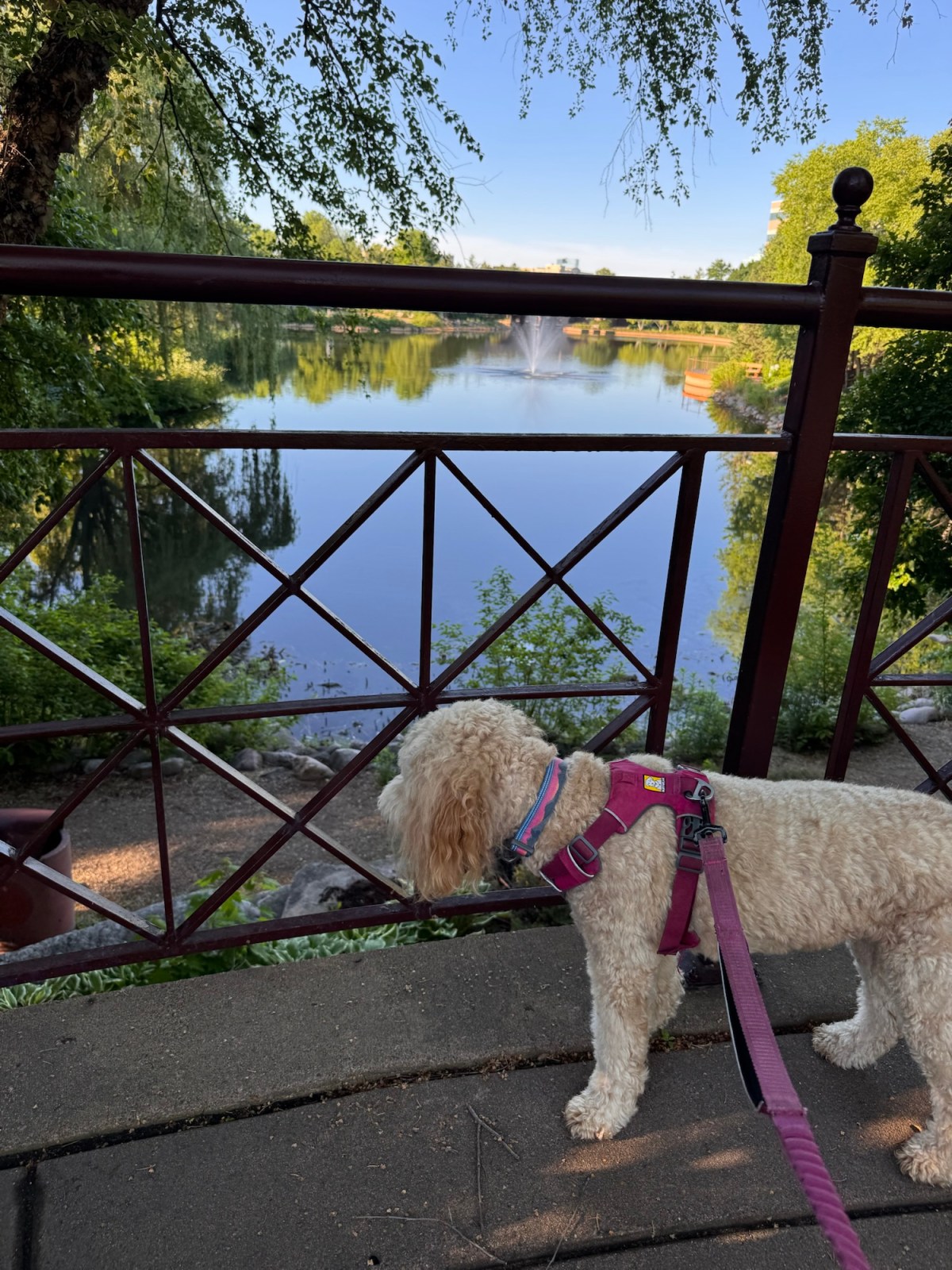
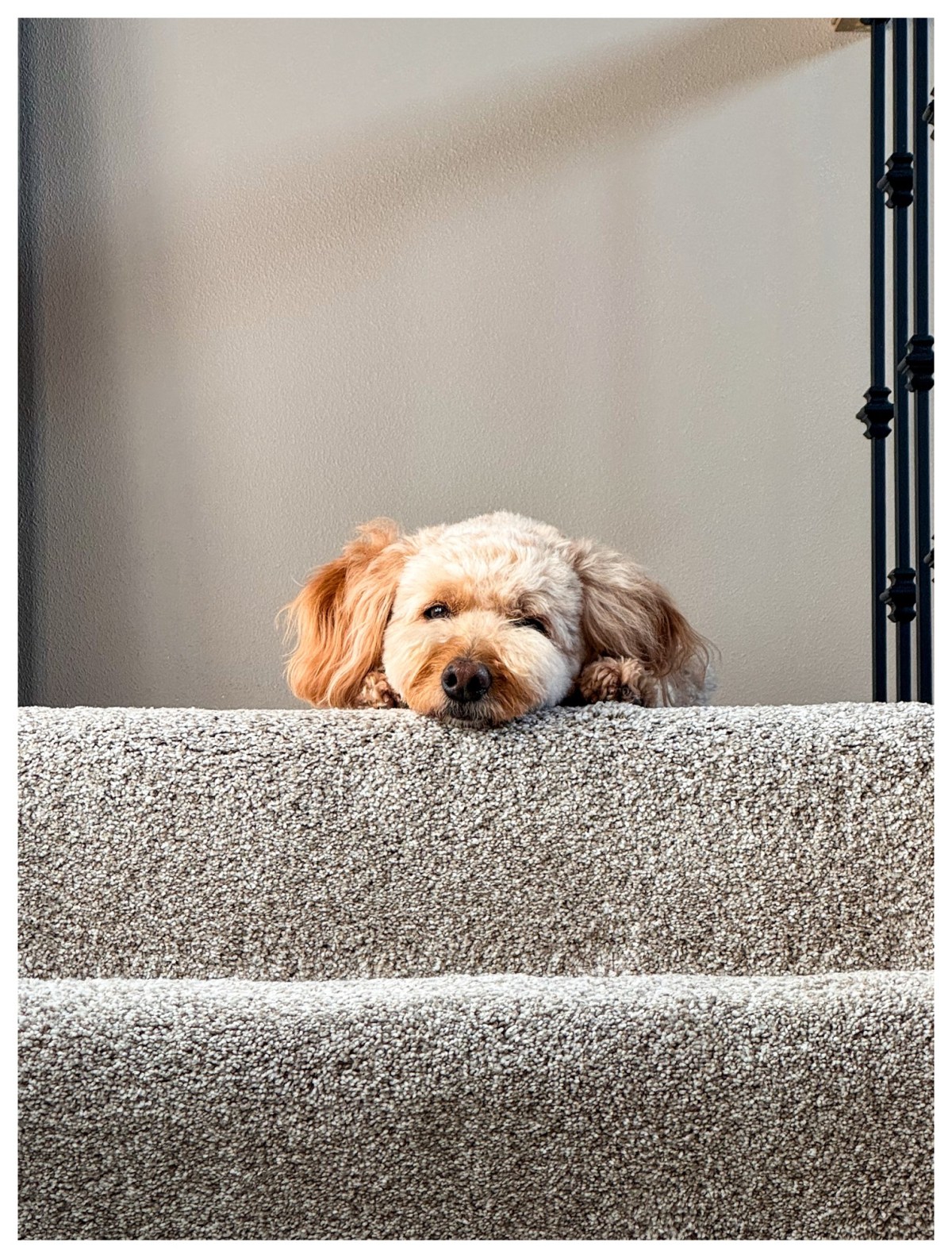
Outside of golf season, when I am in town, I spend 45 quiet minutes with Ginger, a cup of coffee, and my thoughts in my usual booth at Josiah’s. Ginger handles public relations. You can follow her on Instagram @sdgingerdoodle. She is better at this than I am.

For Ginger, the best part is when kids ask to pet her. The second best is when they spill something on the floor.

For the past two Saturdays, the person in line behind me has been a former student. Same place. Different Saturday. Same opening line.

“Professor Harris, I’m not sure you remember me.”

That is a reasonable question. I have taught roughly 1,200 students. When I did the math, it stopped me. That is not a number. That is a neighborhood or, in South Dakota, a mid-sized town. I knew every name during the semester. Ten years later, without the Business Law textbook in your hands, I may need a hint.

Today, the former student I met in line told me she and her husband had moved away, later had children, and recently moved back. Now she is in school again and loving it. She asked if I remembered a friend from class. They still keep in touch. Of course I remembered. That is a life lived between cups of coffee.

I love these meetings. I love hearing what you built after class ended. I love knowing you still talk to people from that room.

At some point the question comes. Do you miss teaching? I do. I miss the relationships. I miss watching confidence take shape. I do not miss the pay. I do not miss the administration.

So if you see me at Josiah’s or anywhere else, say hello. Tell me who you are, or make me work for it. I would love to hear your story.

But only if I was your favorite.

Not a Hockey Fan, Except Every Four Years

I will begin with full disclosure. I am not a hockey fan. In fact, I do not particularly like the sport, which is awkward considering the number of people who do. A few years ago, when the university where I work announced they were starting a Division I hockey program, I remember thinking that was the stupidest thing I had ever heard. If I am honest, part of me still thinks that, although I will concede that the food at the games is surprisingly good and sometimes that counts for something.

Simply put, hockey has always felt like a sporting event designed to expose my weaknesses. The puck disappears like a small black ghost. The action feels chaotic. I am never entirely sure whether I am watching a hockey game or a hockey match, or whether I am supposed to call it something else entirely, like a tilt or a contest, or perhaps just remain silent and nod respectfully while someone in a vintage jersey explains icing to me for the fifth time. The rules seem designed for people who grew up with skates on their feet, and I did not.

And yet, for two weeks every four years, hockey becomes the center of my attention. It interrupts my schedule and pulls me back in the way certain songs do, whether you want them to or not. That began in 1980, and the hook was set in a way that has never quite come loose. It had less to do with the sport itself and more to do with the moment in which it arrived, because sometimes a game walks into history at exactly the right time.

For those who were not alive at the time, it is difficult to explain what America felt like in 1980. We were only a few years removed from Vietnam, and the Cold War cast a long, steady shadow over daily life. Inflation was high. Gas lines stretched around corners. Iran had erupted in revolution, American hostages were being held, and there was a quiet, persistent sense that the country had misplaced something important and was not entirely sure where to look for it.

Then came the Winter Olympics in Lake Placid, like a bright light in a very gray season. Hopes initially rested on Eric and Beth Heiden in speed skating and on figure skater Linda Fratianne. Eric Heiden delivered one of the most extraordinary Olympic performances in history, winning five gold medals in five events and setting Olympic records in each race, as if he had decided gravity simply did not apply to him that week. His dominance was breathtaking, but what ultimately captured the country’s imagination was something else entirely.

A group of American college players faced the Soviet hockey machine, a team that looked less like athletes and more like a system. It was more than a game, and everyone knew it, even if they pretended it was not. For two weeks, the country rallied around a team that had no business winning on paper but did so anyway, and in doing so reminded us that paper is not destiny. The Miracle on Ice was not just a victory. It was a pulse returning.

Last week, I watched the Netflix documentary Miracle The Boys of ’80, and it is outstanding. The players, now in their late sixties, tell the story with the kind of clarity that only comes after decades of perspective. In 1980 they were young and largely unknown. Today they are older men who understand what they were part of, and you can hear it in their voices. Memory has a way of polishing certain moments until they glow, and that one still does.

For every Olympics since then, I have tuned in hoping to feel that again, quietly wondering whether lightning ever agrees to strike twice. Sarajevo, Calgary, Lillehammer, and a dozen more came and went like chapters in a long book, each one arriving with promise and leaving with something less than myth. There were silver medals in 2002 and again in 2010, and those were fine teams filled with extraordinary talent, but by then the Olympics had changed, professional players filled the rosters, and the Cold War backdrop had faded into history.

The truth is that it will never feel the same as 1980, because 1980 was not just about hockey. It was about timing and need and a country that wanted something uncomplicated to cheer for. Some moments are less about what happened and more about when they happened. You do not have to love hockey to understand that, and I am living proof that you can dislike the sport and still carry that memory like a lucky coin in your pocket.

There is, however, one Olympics in that long list that I do not remember very well, and that has far more to do with my family than with hockey. During Salt Lake City in 2002, my wife was newly pregnant with our youngest child, and our oldest, who was seven, apparently decided he would sample multiple Winter Olympic disciplines at once when he launched himself off the main slope of a local ski area and directly into a tree, cracking his skull in the process. The small hospital we were taken to had exactly two emergency rooms, my son occupying one and my wife occupying the other after seeing his condition.

Everyone else received oxygen that day. I did not.

Everyone would fully recover, our youngest would be born perfectly healthy, and I remain convinced the extra oxygen in the building did not hurt. It may explain why my recollection of the silver medal that year is foggier than it should be. Or it may not. I was not getting any oxygen.

Today, after nearly forty six years of waiting and on the anniversary of the defeat of the Soviets, the United States beat Canada two to one in an overtime thriller to win the gold medal. It was not 1980, and it did not feel like 1980, but it was still a pretty good feeling, the kind that makes you sit a little straighter on the couch. Some echoes are softer than the original, but they still travel.

After the game, I went into the bowels of my home to find a relic of the past, because nostalgia apparently requires wardrobe choices. I am not entirely sure when I purchased the uncomfortable polyester knockoff Team USA hockey jersey, but it has been at least thirty years, and either way it predates both my children and my marriage. I once thought it dated back to 1984, though a little recent research suggests it carries an early to mid 1990s logo, which means my memory may be as unreliable as my understanding of icing. Nonetheless, it felt good to pull it over my head today. I was mildly surprised, and quietly pleased, that it still fit. Which, at this stage of life, might be the most improbable comeback of all.