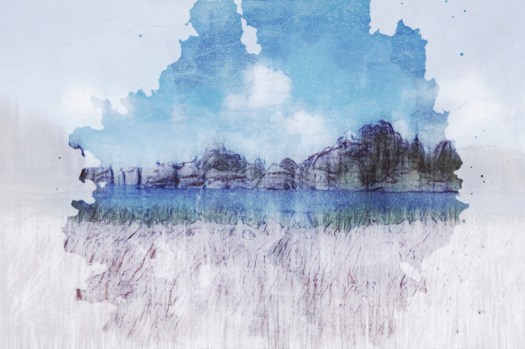

I have chosen themes to drive my aspirations for the year in recent years. One of my aspirations this year is to learn more about paintings.
In recent years, I’ve been fortunate enough to immerse myself in some of the most stunning artwork the world has to offer. Each piece captivates and inspires me, yet I often find myself puzzled. What exactly elevates Van Gogh’s iconic sunflowers above my son’s colorful creations (see below)? The mystery of art continues to intrigue me!

In my inform my appreciation for art, I recently picked up a daily art calendar. My aim is to carve out a little time each day to observe and learn something new about the world of creativity.
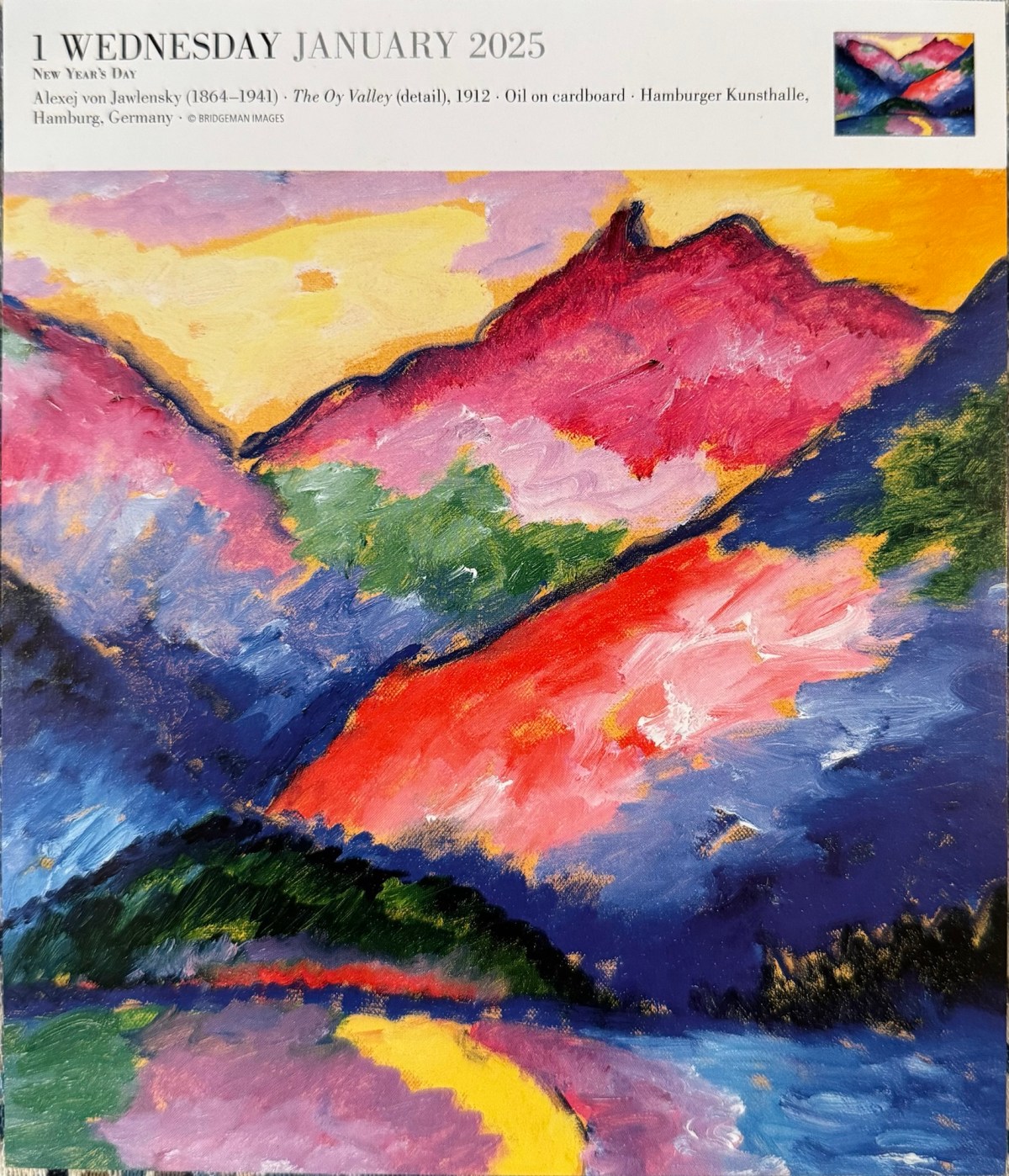
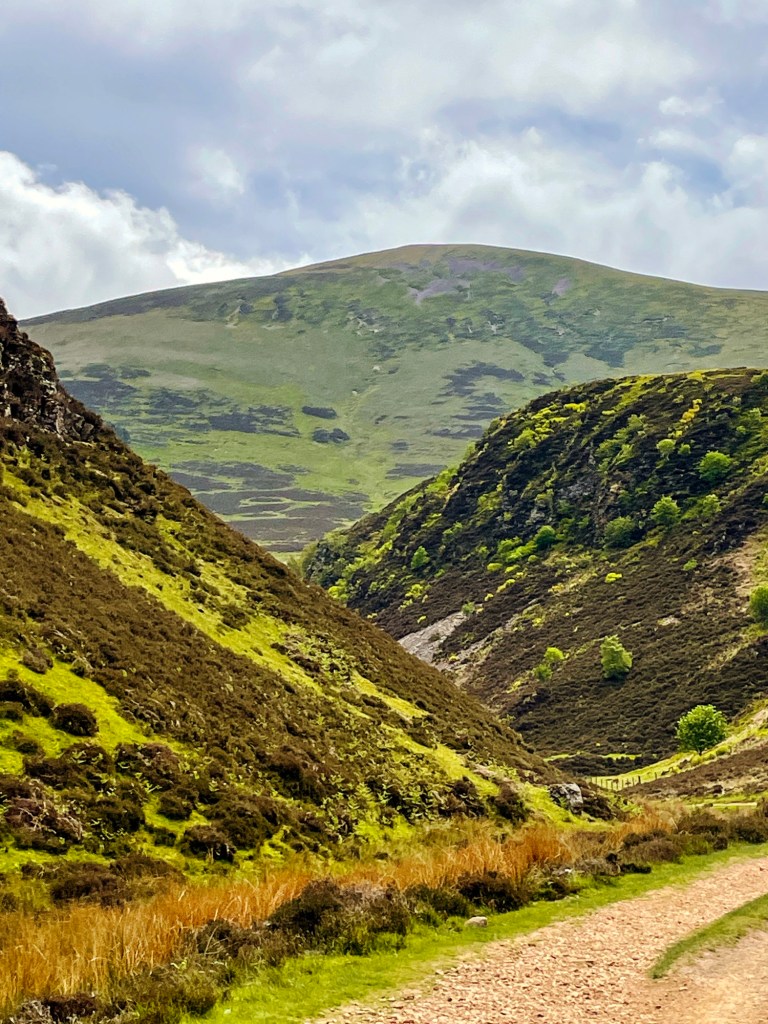
Kicking off this artistic journey, I’m excited to share the January 1 selection: The Oy Valley, a piece by Alexej von Jawlensky from 1912. What grabbed my attention first were the vivid pastel colors. Although it beautifully captures a valley in Germany, it instantly transported me back to a hike I took in the breathtaking landscapes of Scotland (see below picture). It’s amazing how art can evoke such personal memories!
Below is what ChatGPT can tell me about the painting.
Alexej von Jawlensky (1864–1941) was a key figure in the Expressionist movement, known for his use of vivid colors and spiritualized abstraction. The Oy Valley, painted in 1912, reflects Jawlensky’s fascination with landscapes as a means of expressing inner emotions rather than replicating nature.
This particular painting is characterized by:
1. Dynamic Composition: The scene features a mountainous landscape rendered in bold, angular forms that suggest the natural contours of the valley while emphasizing emotional intensity over realism.
2. Vivid Color Palette: Jawlensky employs a spectrum of bright, saturated colors—reds, purples, greens, and blues—to create a striking, almost otherworldly atmosphere. The color contrasts are meant to evoke a sense of awe and spiritual transcendence.
3. Expressionist Techniques: The brushstrokes are bold and textured, lending the painting an energetic, almost raw quality. Rather than detailed realism, Jawlensky focuses on the essence and emotional resonance of the scene.
4. Symbolic Undertones: Jawlensky believed color had a spiritual power. In this work, the interplay of light and shadow, alongside the vibrant hues, suggests a symbolic representation of the divine presence in nature.
During the period this was created, Jawlensky was closely associated with Der Blaue Reiter (The Blue Rider), an avant-garde group that sought to explore spiritual themes through modern art. This painting exemplifies his contribution to that movement and his desire to transcend the physical world through expressive art.


 Sireadh Toileachas
You must be logged in to post a comment.