Advice I wish I had Given My Younger Self

The question is not really whether you would go back. The question is what you are going to do today with everything you already know.

Lately, scrolling through the noise that social media has become, I keep running into a certain kind of post. You have seen them. They usually start with a photograph, a high school hallway, a gymnasium, a parking lot that looks like every parking lot from 1984. And then comes the question. Would you go back? To a specific year. To a specific moment. To a specific version of yourself you have not been in a very long time.

The comment sections on these things are something. People arguing with complete strangers about which year they would choose and why. Some of them are serious. Some of them are heartbreaking. All of them are trying to answer the same question underneath the question, which is: was there a version of this life that went better?

I think about that question more than I probably should. When I see those posts I think about the 1980s with genuine nostalgia. It was a simpler time. We were not being bombarded around the clock with news and noise and everyone’s opinion about everything. But nostalgia is not the same as regret, and when I am honest with myself I do not look back at what I had and feel like something is missing now. My life is good. Arguably great. My wife is my best friend. My sons turned out amazing. My work has mattered, for the most part. My friendships have lasted longer than most things I own. And Ginger meets me at the door every single day like I have been gone for six months.

So the long and short of it is I am not going back. But I would send a note. That note, it turns out, has existed for years in rougher form, tucked inside syllabi and first-day-of-class remarks and the things I said on the last day when I thought nobody was writing anything down. It was shaped by the mistakes I thought I had made and the opportunities I thought I had missed and the things I wished someone had told me before I had to figure them out the hard way. Since I do not have a DeLorean with a flux capacitor, I will have to settle for what I have written here.

Find time for the people who will be gone the soonest. Now, if we are being honest, I would absolutely go back knowing what I know. I understand I might be tinkering with the space-time continuum, and I have made my peace with that. Yes, I would probably look into a few investments. Apple. Walmart. Amazon. Netflix. I am not a saint. But that is not actually why I would go back. I would go back to sit with my parents for a while. Hug them more. Ask them questions I never thought to ask. Ask them about their parents and grandparents, their cousins, the family stories that were actually told. Because they were told. I just was not paying attention the way I should have been. Storytelling is how families survive themselves, and I let too many stories go in one ear and out the other because I was young and thought there was plenty of time. The same goes for a few friends and family members I did not know I was running out of time with. In 1986, I did not know there were only ten years left with my dad.

Pay attention. Most of life does not announce itself as important when it happens. The random Tuesday night dinner when everyone somehow made it to the table. The walk with the dog. The conversation with your dad the night before he died, not knowing it would be your last. The family story you have heard a dozen times before and assume you will hear a dozen more. The big moments are easy to spot. Graduations. Weddings. Births. Retirements. Life has a way of putting those on the calendar for you. The smaller ones require more effort. They slip by quietly, and only later do you realize they were part of something larger. Take the picture. Ask the question. Stay a little longer. One day you will discover that what looked like an ordinary day was actually a gift. The trick is noticing it before it is gone. Turns out Ferris Bueller was right. Life moves pretty fast. If you don’t stop and look around once in a while, you could miss it.

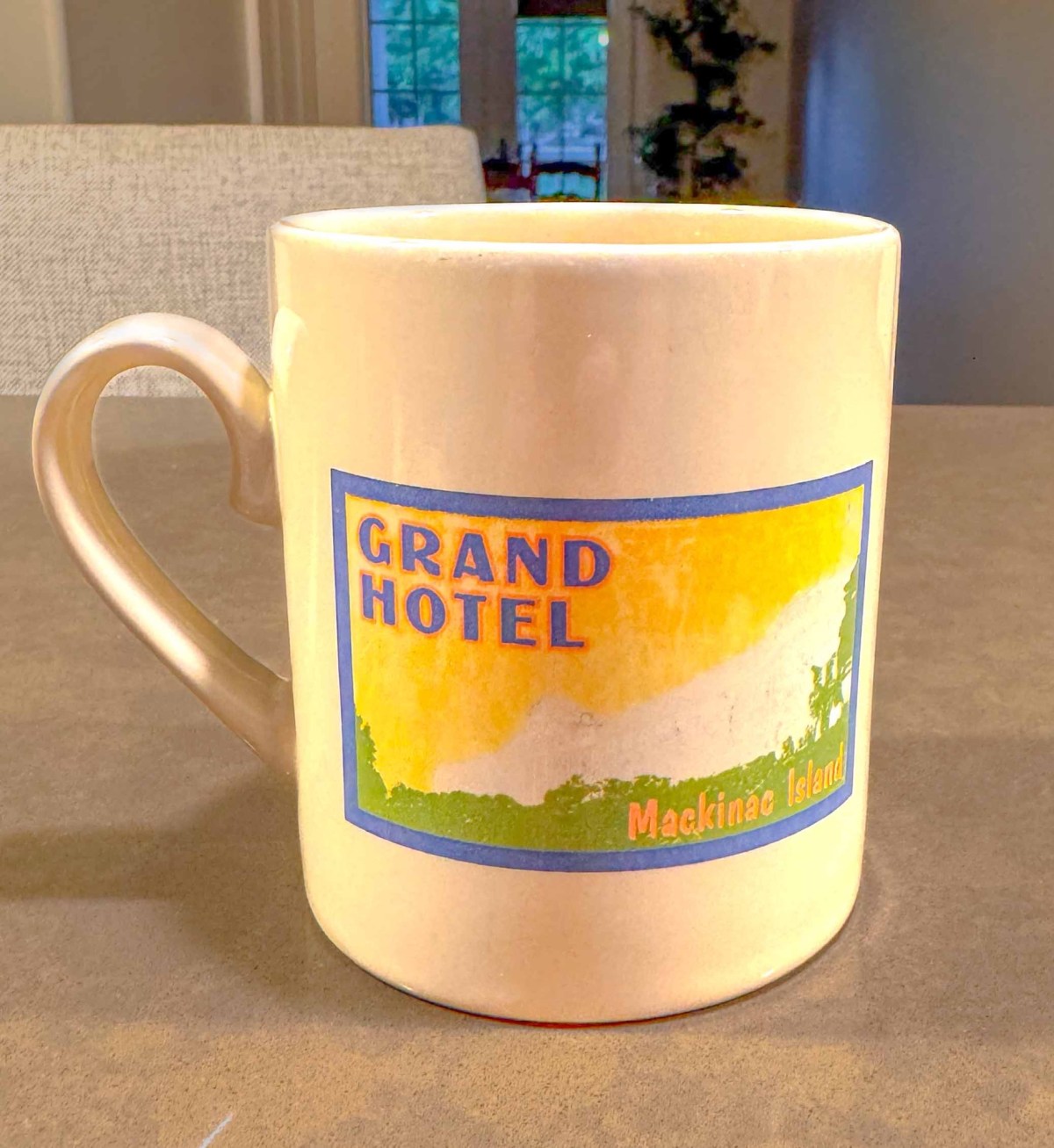
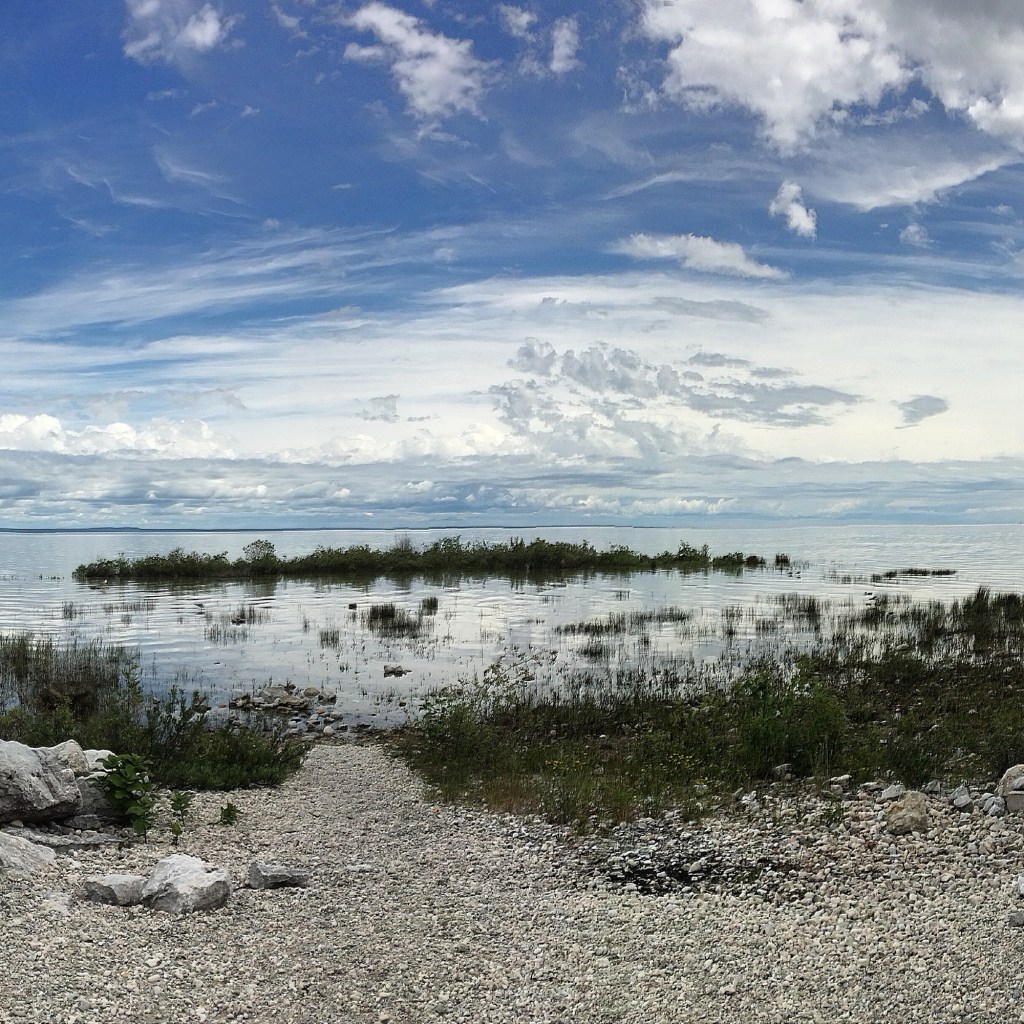
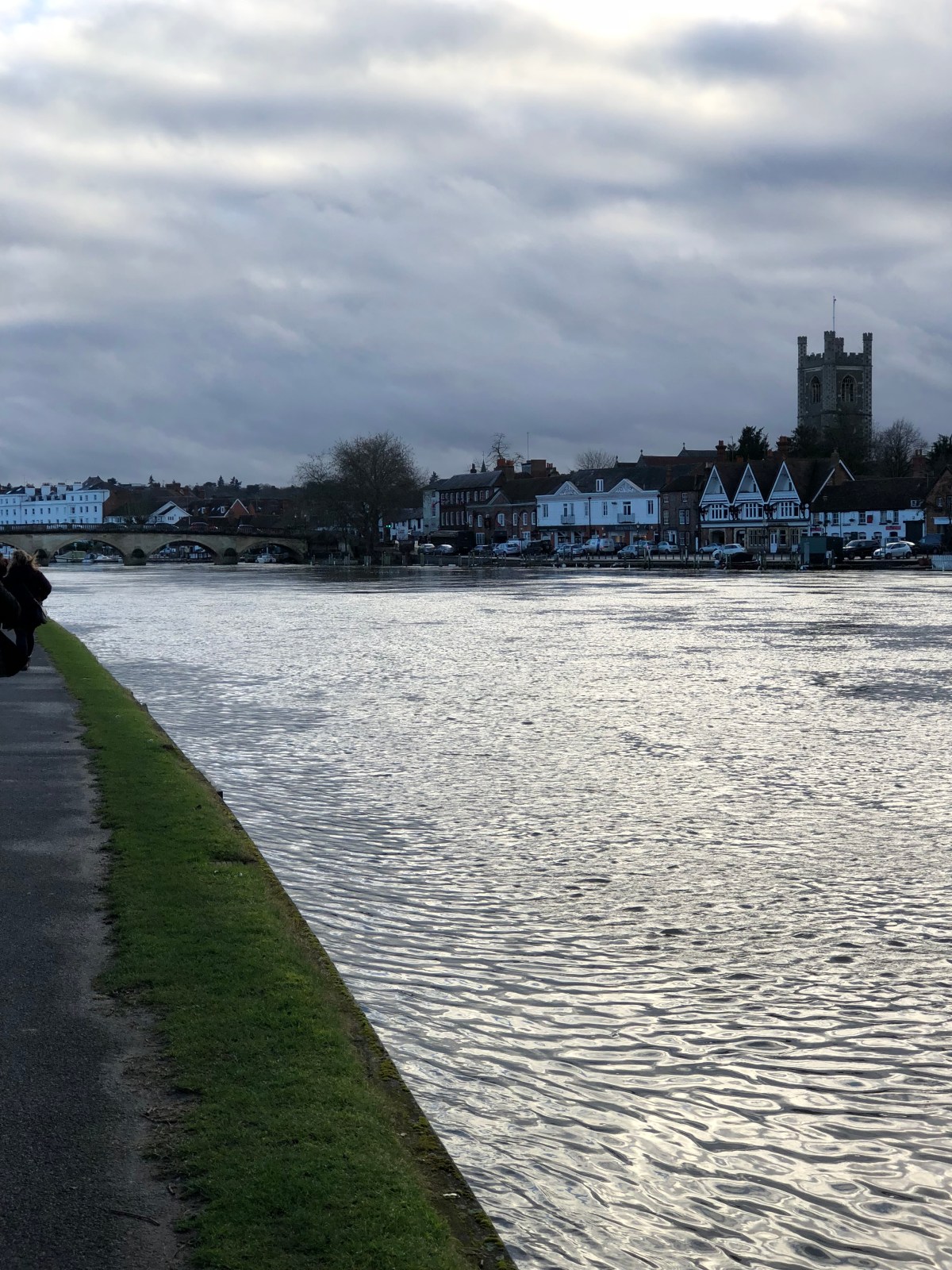
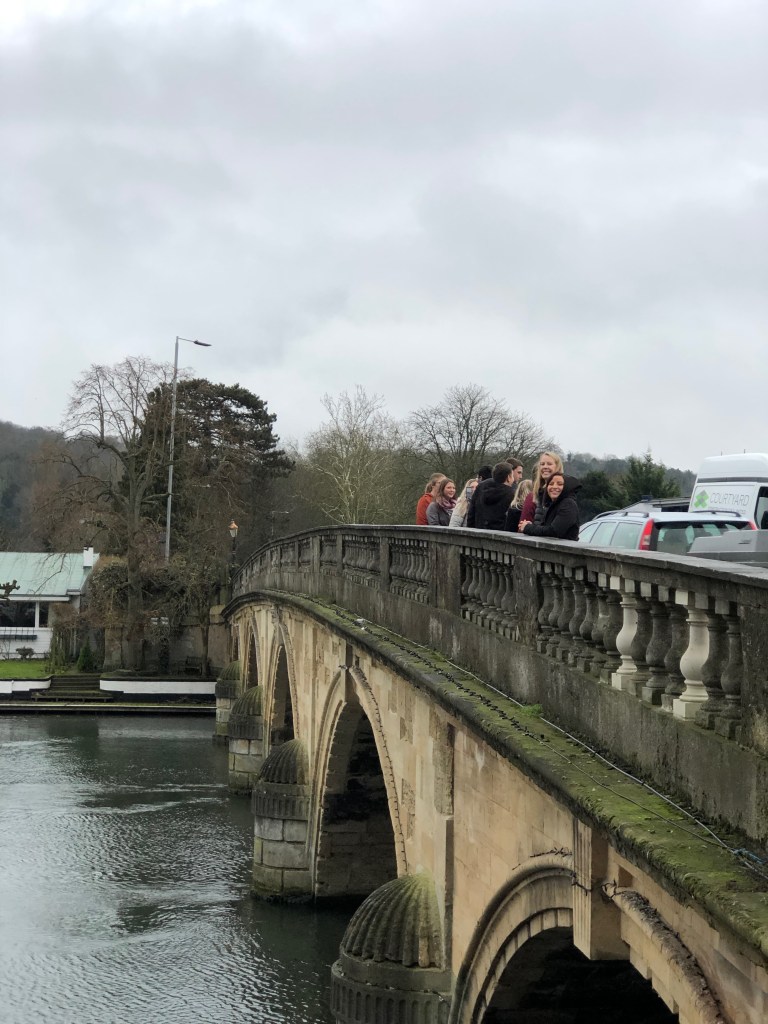
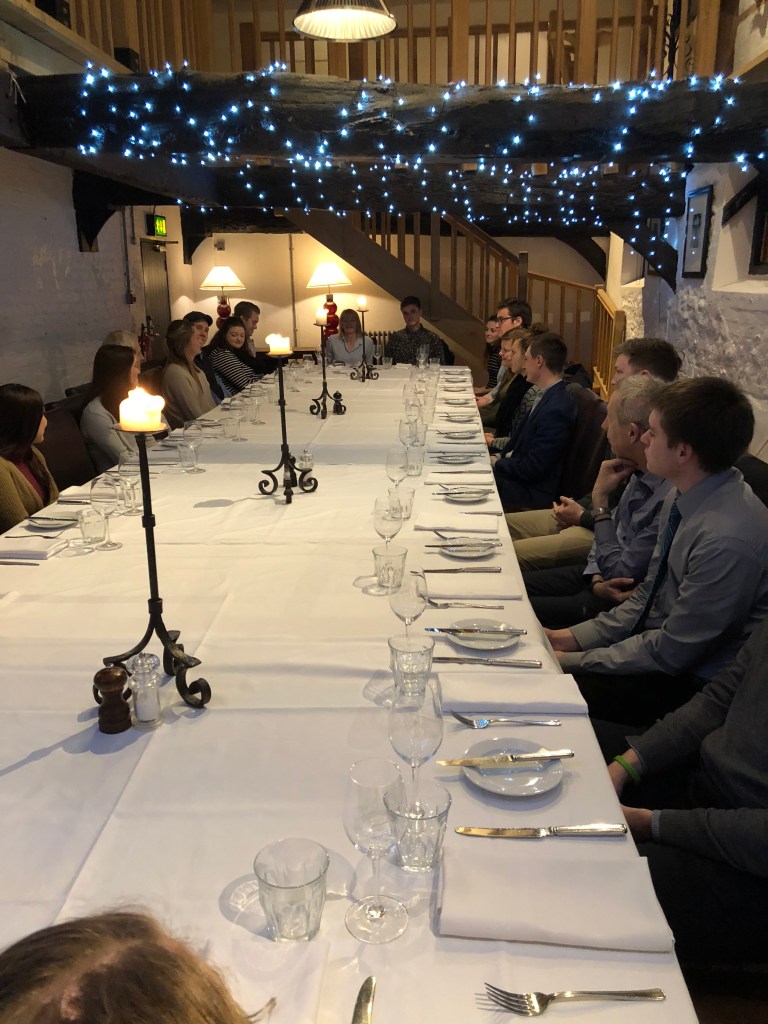
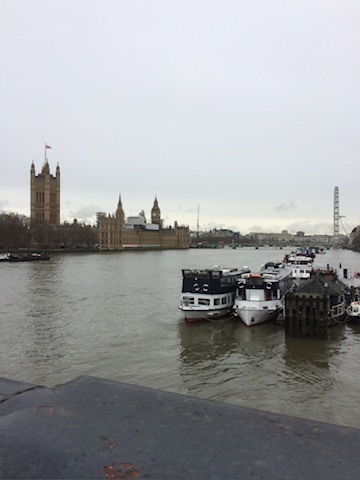
Take the trip. Both of them. The one you cannot afford and the one you can. You will find reasons to wait on both, and the reasons will sound responsible and they will be wrong. Think about what you actually remember. Not the gifts. Not the things. The trips. The British Isles with my parents and grandparents. Switzerland for a dear friend’s twenty-fifth wedding anniversary. The thirteen-hour drive to Mackinac Island with my family, and somewhere in the middle of Wisconsin one of my sons looking up and announcing, “You people are the worst family ever. You people are not my family.” I remember all of it. If I had it to do over, I would rethink every holiday, every birthday, every Christmas morning. Less stuff under the tree. More stamps in the passport. Experiences last forever. Most everything else ends up at Goodwill.

Travel does something else too. It exposes you to different cultures, different people, different food, different ways of looking at the same world you thought you already understood. It hardens some of your beliefs and softens others, and both of those things are good for you. French wine tastes better in France. And most of all, you learn that a mother in South Dakota loves her child just as much as a mother nearly everywhere else in the world.

Ask her out. In my wildest dreams I did not think she would say yes. She said yes. We are married. There were others along the way, there always are, but she was the one, and I almost talked myself out of asking because I was certain I already knew the answer. I did not know the answer. That is the part nobody tells you. You are a terrible predictor of outcomes involving your own life. Ask anyway. Apply anyway. Start the business anyway. Have the conversation anyway. The worst outcome is rarely as bad as you imagine, and the wondering lasts considerably longer.

Read more than you think you need to. Not for school. Not to finish. Read because, like travel, it opens your mind and calms it at the same time. It expands curiosity and makes you better in ways that are hard to measure and impossible to fake. Every good book teaches you something. Find an author you enjoy and spend time with them. Doris Kearns Goodwin taught me about leadership through Lincoln and Team of Rivals, perhaps the greatest lesson in leadership ever put on paper. Oddly enough, my favorite book of hers is not about Lincoln at all. It is about growing up as a Brooklyn Dodgers fan in the 1950s. David McCullough took me to Paris in The Greater Journey. Michael Lewis taught me to see the world differently. Mitch Albom reminded me that kindness still matters. John Grisham kept me up far too late reading The Firm.

Books are inexpensive travel. They let you borrow someone else’s life for a few hundred pages and return to your own a little wiser than when you left. Ted Lasso once quoted Walt Whitman on this subject: be curious, not judgmental. There is essentially no evidence Whitman ever said that. But the line made me curious enough to go read some actual Whitman, which I suppose proves the point entirely. I have learned something from almost every book I have read. Some lessons were profound. Some were useful. Some were simply that Clan of the Cave Bear is still not making my top ten.

I baked reading into my syllabus every semester, mostly through Wall Street Journal articles, but it was intentional. I wanted my students curious about the world beyond the classroom and beyond the case law. Whether it worked I cannot say with any certainty. Some of them listened. I choose to believe more of them did than I will ever know.

Start saving. Now. Not instead of living, not instead of the trip or the experience or the night out that becomes a story you will tell for thirty years. Alongside all of it. Compound interest is the closest thing normal people get to magic. The problem is that magic only works if you start early. Start by at least matching what your company puts in. Then think about more. Ten percent of your pay is a good number. You will not miss it, and I say that knowing you think you will. Every time you get a raise, increase your savings rate by half. If you get a four percent raise, save two more percent before you ever see it. The math on compound interest is not complicated, but it is unforgiving. Time is the one ingredient you cannot buy back. You do not need to save everything. You need to start. There is a difference, and younger me confused the two for longer than I would like to admit.

Move your body. I want to be clear about something. I have never liked working out. The gym, the weights, the person grunting next to you at six in the morning, none of that was ever me. But I do like moving, and it turns out that is enough. Walk. Swim. Bike. Dance. Tai chi. Golf without the cart. Run, if you are that particular kind of crazy. It does not have to hurt and it does not have to be impressive. It just has to happen, and it has to happen again tomorrow. I have now walked more than thirty million steps, one day at a time, and I did not do it because I love exercise. I did it because I love moving. The body keeps score longer than we think it does, and small, consistent habits compound the same way investments do. Small. Consistent. Long term. The math works the same way in both places. Trust it.

Worry less. I mean this practically, not as a bumper sticker. You are lying awake at 2am about the student upset about his grade, the client upset about his case, the beneficiary upset about not getting enough money. You cannot fix any of it at 2am. And if you are being honest, most of it was never yours to fix in the first place. I used to tell my students there were three kinds of problems in the world. Your problems. My problems. Our problems. And most of the problems keeping people awake at night belong firmly in that first category. Not mine. Not ours. Yours. The sooner you learn to hand them back, the better everyone sleeps, including you. So plan for what is actually yours. Adapt when you need to. Handle what is genuinely in front of you. But the 2am rehearsal of every possible outcome, that is just energy leaving the building with nothing to show for it. I stumbled onto a meditation technique once where you imagine a river and you place each anxious thought onto a boat and watch it float away. You keep going until the river is empty. The first time I tried it I was skeptical. By the fifth boat I was nearly asleep. Five minutes of watching your thoughts drift downstream will do more for you than two hours of staring at the ceiling. Put it on a boat. Let it go.

Take the chance. This one is broader than the trip and the girl, though it includes both. I mean the job you are not sure you are qualified for. The idea you have not said out loud yet. The conversation you keep rehearsing and never having. The version of yourself you have not introduced to anyone yet. Younger me was careful in ways that younger me thought were wise. They were not wise. They were fear with better posture. I tried to tell my students that, in so many words, every chance I got. I am not sure they believed me. I am not sure I would have believed me either. And if it does not work? Pay attention. Failure usually has something to teach you. More often than not, the breakthrough is sitting just on the other side of the thing that did not go according to plan. Some of the best things that happened to me came immediately after something I thought was a setback. At the time I could not see it. Looking back, it seems obvious. Looking forward, it never does.

Forgive yourself. You will make mistakes. You will say the wrong thing to the wrong person at the wrong moment. You will lose friends, money, and maybe a job. Some of it will be your fault. Some of it will feel like your fault and will not be. Either way, carrying it does not fix it. Learn what it has to teach you, resolve not to do the same thing twice, and put it down. It just makes everything else heavier.

There is a particular cruelty in advice. It arrives, almost without exception, after the moment it would have been useful. Four years ago I wrote something called The Last Lecture, my final words to my students at Augustana on my last day in the classroom. Reading it now alongside this is an interesting exercise. The curiosity is still there. The belief in showing up is still there. But that piece was written from the front of a room to people just starting out. This one is written from inside a life, to myself, with the benefit of forty years of evidence. What strikes me most is that the advice is not all that different. Which means one of two things. Either I have not learned as much as I thought, or the fundamentals were right all along and the only thing that changes is how personally you feel them. I choose to believe it is the latter. And I suspect that everything I just told younger me applies just as much to the students who sat in my classroom over the years as it does to the man who stood at the front of it.

Here is the thing I did not expect when I started writing this. Most of this list is not finished business. It is current business. The people who are still here will not always be. There are trips not yet taken and chances not yet seized and worry that still needs to stop. The body still needs to move tomorrow and the day after that. The math on all of it still works, but only if you start. I wrote this as advice to a younger version of myself and somewhere in the middle of writing it I realized I was also writing it to right now. That is what the social media posts never tell you. The question is not really whether you would go back. The question is what you are going to do today with everything you already know.

Most of the chances I took turned out better than I deserved, and most of the ones I did not take I cannot quite stop thinking about. The balance sheet is not even close. My life is good. It could have been good sooner, and with less hesitation. But it is not too late for any of it. Not for me. Not for you.

Do the thing. Take the trip. Ask.

Walking Thoughts

A ransomware attack took down Canvas at the end of the semester. A seven year walking streak. A treadmill in a basement. And what all three have in common.

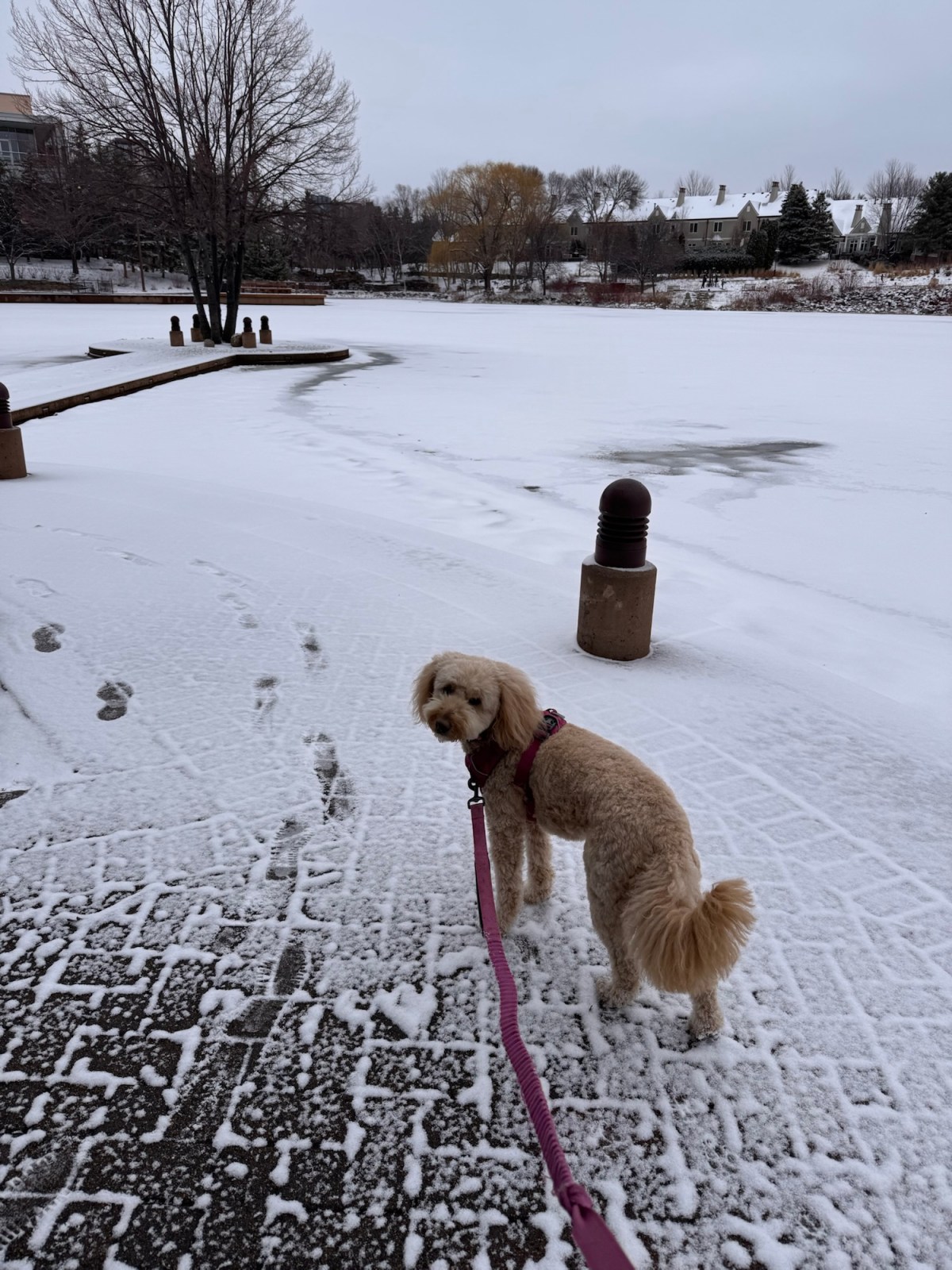
Earlier this week, I walked outside in shorts and a t-shirt for the first time in a long time. Ginger was with me, which has not been a given since January. The temperature was what my kids used to call Goldilocks weather. Not too hot. Not too cold. Just right. It felt like spring, which is one of my favorite seasons, and for a few minutes it felt like something else too. It felt like before.

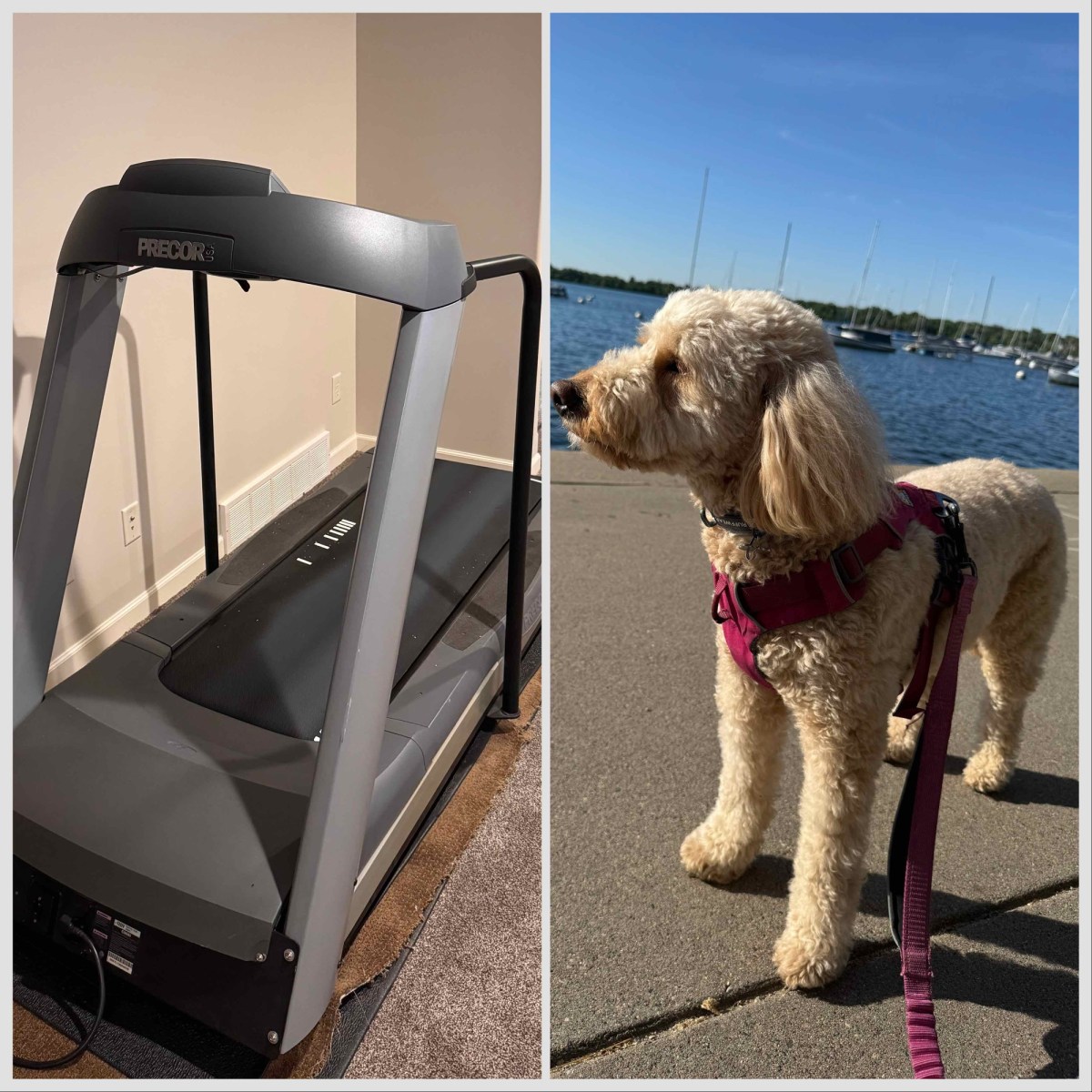
After my fall, the winter was a lot of treadmill miles. Necessary, functional, and about as inspiring as a dentist waiting room. The streak stayed alive, but the treadmill is not this. It is not the morning air or the way Ginger’s ears go up when she realizes we are actually going outside and not just standing near the door. It is not pavement under your feet or the specific quality of light that only exists in early morning in May. The treadmill is the backup system. This is the real thing. I have been thinking about backup systems a lot lately.

The streak is important to me. It is not worth my life. Those two things can both be true, and learning to hold them together has been its own kind of discipline. Ginger has paid the price for my caution more than anyone, which is not entirely fair to her. But here we were on Tuesday morning. Back outside. Goldilocks weather. Shorts and a t-shirt. The dog happy in the way only dogs can be happy, completely and without reservation.


On one of those treadmill mornings earlier this week, before the shorts and the t-shirt and the Goldilocks weather, I was reading about Canvas on my iPad while walking in place in my basement. Canvas had been hit with a ransomware attack. The system was down. Data had been breached. Somewhere, someone was waiting to get paid.

For those who do not spend their lives around universities, Canvas is the learning management system that runs coursework, gradebooks, assignments, and submission records at a majority of American colleges and universities. Michigan uses it. Minnesota uses it. So do Harvard, Stanford, MIT, and Cal Berkeley. The public school district down the street uses it. Everyone uses it. Well, almost everyone. Purdue made a different call. North Carolina State uses Moodle, which used to be the system at my former institution before Canvas became the answer to a question nobody asked out loud.

The ransomware attack was timed with surgical precision. End of semester. Grades due. Students at maximum anxiety. Every hallway conversation and email orbiting the same question. Then suddenly, the whole system was gone. I later learned that the day before the attack, my former institution had recommended a policy requiring faculty to use Canvas or suffer consequences that were not fully specified but were clearly intended to sound unpleasant. One day later, Canvas did not exist. The universe, apparently, was paying attention.


In the days after the attack, I came across social media posts and articles from professors, mostly in the humanities. Most were people I have never met. A few were former colleagues. Many smugly announced that this never happened before Canvas, that the old system worked fine, and that if we simply returned to bluebooks and spiral notebooks we would all be safe from hackers. They were not wrong that ransomware cannot attack a filing cabinet. They were wrong about almost everything else. A bluebook and a spiral notebook are one fire, flood, theft, or dog with poor judgment away from a semester that never existed. The filing cabinet has no redundancy, no recovery, and no mercy. That is not a backup system. That is cognitive dissonance with a manila folder.

My response to all of this has mostly been a Gen X eye roll. We are the generation that typed college papers on typewriters with margin formatters because the alternative was starting over. We are the generation that had that one professor, and you know exactly who I mean, who required footnotes at the bottom of every page instead of endnotes because he had decided that was how civilization worked and your convenience was not his problem. In law school, we saved papers every ten minutes and printed them every half hour. By the end of a writing session there would be a stack of drafts on the desk and no reliable way to know which one was current. That was our backup system. We learned early that the tools were never as reliable as they looked and the system was never your friend. So when administrators started calling Canvas innovation, some of us smiled, nodded, and kept backing things up.

And because Gen X does not brag about this kind of thing, I will simply say that my gradebook most likely would not have been impacted. During my last semester teaching, I was required to use Canvas as my LMS. Every time I entered a grade into Canvas, I exported the file into an Excel spreadsheet saved in two places: my computer and a thumb drive. My syllabus was not contained in Canvas. It was uploaded to Canvas, which is a different thing entirely. Assignments were separate files. Canvas was the display window, not the warehouse. I did this because systems fail. Not sometimes. Eventually. All of them.


I have been walking every day for nearly seven years. Two thousand two hundred and some days, depending on when you are reading this. The streak began on March 1, 2020, and I know that the way I know my own birthday. Every step since then has been counted by a device, transferred to software, uploaded to an app that tells me immediately where I stand and how long the streak has been intact. The streak is simple in its requirements and unforgiving in its execution: a minimum of ten thousand steps, every single day, without exception. Early on, that number mattered more than it does now. I needed to see it. Now I just need to know it.

If the watch dies tomorrow, if the software crashes, if every piece of technology I use to track this disappears overnight, and I have already walked at least ten thousand steps that day, the streak is still intact. The walk happened. The streak exists in the record, yes, but it also exists somewhere the record cannot touch. I know for a fact that I have walked every day since March 1, 2020. No ransomware attack changes that.

The grades and assignments should work the same way. The learning happened. The work happened. The record of it should be protected, backed up, saved in more than one place. But the work itself belongs to something no system can hold and no hacker can touch. Canvas was the display window, not the thing itself.

The treadmill kept the streak alive all winter. It is not the walk. It was never the walk. But it was there when the walk was not possible, which is the only thing a backup system needs to be.


I will walk this morning. I will write down the number. Somewhere, somebody will back up a gradebook before the semester closes. Somebody else will not.

The next 30 million steps

Six years of walking at least 10,000 steps a day taught me a lot about perseverance. A fall in my driveway taught me even more about perspective.

In 1989, the first Life Alert commercial hit television. A woman on the floor yelling into a necklace: “I’ve fallen and I can’t get up.”

To a twenty-something watching it at the time, the whole scenario seemed absurd. That was a problem for Old People, somewhere far down the road, probably around the same time you start voluntarily eating bran for breakfast.

Life, of course, has a way of adjusting your perspective.

Given my recent fall in the driveway, that famous line suddenly felt less like a punchline and more like a documentary. Gravity made a convincing argument, and the driveway won the debate.

In last week’s blog post, I joked that only five people read the essay and two of them probably clicked the link by accident. At least I think I was joking. The analytics suggest I may not have been. But those five readers were clearly paying attention. Within hours I received several helpful suggestions, including one enthusiastic recommendation that I start “walking by five in the morning,” which I assume is now considered medical advice.

Last week also marked six years of walking at least 10,000 steps a day. Other than writing about it here, the milestone passed with almost no fanfare, which frankly felt appropriate. Nearly 30 million steps sounds impressive until you realize most of those miles were not heroic. They were cold mornings, windy afternoons, and sidewalks that could politely be described as uninspiring. Plenty of days the couch made a very strong closing argument. People assume a streak like that is about discipline or health, and those things matter. My knees appreciate it. My doctor probably does too. But after six years, I’ve realized the real benefit isn’t physical. Mostly, it’s perspective.

And perspective has a funny way of making you look at familiar things differently.

This week the streak continued, but I changed a few things up. Same commitment, just a slightly different angle.

One morning I walked a familiar route in the opposite direction, clockwise instead of counterclockwise. Another day the treadmill got involved, and I started playing with the incline and speed like a bored airline pilot. One morning I swapped the usual podcast for music.

Small adjustments, same routine. And something interesting happened. By making those subtle changes, I started noticing things in my own neighborhood that I hadn’t seen before. An electric utility box that had always been hidden from one direction but stood out clearly from the other. A tree I don’t remember ever seeing, even though it must have been there the entire time. I noticed the sunlight hitting houses, water, and the sidewalk differently depending on the angle. Turns out sometimes the only thing that changes is the direction you’re looking from.

It reminded me of something I once heard from pro golfer Dicky Pride. When Pride prepares for tournaments, he sometimes walks the course backward during practice rounds. Not playing it that way, obviously, just studying it.

His explanation stuck with me. Golf course designers are good at their jobs. They know exactly where players look and where the traps appear when you approach a hole the way it was designed to be played. From the tee forward, the course tells you a story.

Walk it backward and suddenly you see something else. You see where the trouble really sits, and you notice angles you missed. The fairway that looked generous from the tee suddenly looks a lot narrower when you’re standing on the green looking back. The bunkers make more sense, and the danger becomes clearer.

Same course, different perspective.

Six years ago I started walking because I wanted to feel better. What I didn’t realize was that the real value wouldn’t be the miles behind me. It would be the perspective that comes from continuing to put one foot in front of the other. The real story was never the first 30 million steps. It’s the next 30 million.

The weather is finally starting to warm up, which means Ginger is thrilled the streak continues. She has always been a strong advocate for additional walking. So tomorrow morning we’ll head out again, same sidewalks and same neighborhood, maybe clockwise, maybe counterclockwise. Sometimes the best way to see things differently is simply to keep walking — just from another direction, toward the next 30 million steps.

Six Years. Nearly 30 Million Steps. My Dog Is Thrilled.

The streak has become a daily permission slip to call the day a success. Some days it is a gift, a good conversation, an unexpected view, twenty quiet minutes nobody can touch. Other days it is just a man and his kitchen. Either way, you keep moving, and that is the philosophy.

Fair warning. If you have followed this blog for any length of time, you know what is coming. I have written about this before. My five loyal readers are nodding. The other two are still trying to find the exit. Feel free to skim. I mostly write these for myself anyway. It is cheaper than therapy and the co pay is better. Still, stay with me. Maybe something here lands for you too.

January was brutal, and I wrote about it. Somehow it became the most viewed post in the five year history of this blog. Apparently the best thing I ever did for readership was fall down. February was merely hard, and through all of it there was the streak. Today it turns six years old.

That means two thousand one hundred ninety one consecutive days. Not one missed. No exceptions. At least 10,000 steps every single day.

Nearly 30 million steps. Over 13,000 miles. An average of 13,500 steps a day. Thirteen thousand miles, on foot, mostly on ordinary days.

The last two months tested the streak more than most. I am still hurting from the fall in January, and my neck and back remind me every morning that gravity won. Some days I stand up slowly and negotiate with muscles that are not interested in compromise. There were days, more than I would like to admit, when I considered letting it go because six years felt like a respectable number. Instead, I pressed on.

Here is what that actually looks like sometimes. It is 8:57 p.m. I am tired. The weather is ugly. My neck and back are staging a formal protest. And there I am, walking circles around the main floor of my house, because every loop is 75 steps and I still need 1,256.

It is not scenic. It is not Instagram worthy. It is a middle aged man shuffling past his own kitchen for the fourteenth time while his dog watches with concerned confusion. But the steps get done and the streak survives, and somewhere in that absurd little ritual is the whole point. Some days, showing up looks nothing like you imagined, and it counts anyway.

The streak has become a daily permission slip to call the day a success. Some days it is a gift, a good conversation, an unexpected view, twenty quiet minutes nobody can touch. Other days it is just a man and his kitchen. Either way, you keep moving, and that is the philosophy.

Six years of daily movement has not made me stronger. It has made me steadier and less dramatic about hard days. I am more willing now to do the small, boring thing that keeps everything else from unraveling. The change was not heroic or loud. It was ordinary, and it stuck.

Today feels like spring’s opening act. The snow has mostly surrendered. I spotted a robin doing that smug little robin thing like it never left, and the days are stretching longer. Year seven will not be about intensity. It will be about curiosity. I want new trails, new neighborhoods, and roads I have never turned down before, because discipline got me here and curiosity can take it from here.

That is where you come in. Yes, you, all five of you plus the two still searching for the exit. If you have a favorite two or three mile route, send it my way and consider it your contribution to year seven. I cannot promise I will get to all of them, but I can promise I will keep moving.

Six years ago this started as a way to survive a pandemic. Now it is the anchor in chaotic mornings and the release valve at the end of hard days. It is quiet proof that I showed up for myself again, even when showing up meant walking past my own kitchen for the fourteenth time.

If I am honest, though, I am not the one who benefits most. Spring means real walks again, trails and air that does not sting. It means doors that open on purpose and paws that hit pavement with enthusiasm. Discipline is easier when someone is waiting by the door.

She has watched the kitchen laps and endured the treadmill indignity. She has waited on cold mornings with complete certainty that today would be worth it. She was right, because six years and nearly 30 million steps later, it was never really about mileage. In the end, it was always about the dog.

2026 arrived quickly and with a certain enthusiasm for chaos.

Some seasons arrive quickly, carrying more than we planned to unpack.

It was probably best that I didn’t subscribe to Dry January. I should have known the year was going to be a beast when, less than six hours into it, I was in a hotel and the fire alarm went off—and it wasn’t a drill. This is not how you want to meet a new calendar year. Then the gods of fate said hold my beer when four members of my immediate family experienced “medical” events, including three emergency room visits, three hospitalizations, and a surgery. January came in like it had a clipboard and a very aggressive agenda.

Along the way, I learned—or was reintroduced to—phrases like spinal stenosis, Clostridioides difficile, colitis, concussion, and tympanostomy. My medical vocabulary has expanded more in a few weeks than it had since I snuck into my dad’s home office and leafed through his copies of the Journal of the American Medical Association and Annals of Surgery. I may not have earned a degree, but I’ve at least qualified for a certificate. Possibly laminated.

And in case you hadn’t noticed—perhaps because you, too, were distracted by sirens and discharge papers—there is also a lot going on in the world.

Much of my attention has been on the Twin Cities. My family has been impacted. My friends have been impacted. This hits close to home. I watch and wonder how we got here. Early in my professional life, I spent time both prosecuting and defending criminal cases, which means I have a reasonably high tolerance for human dysfunction. Even so, many of the things I now see and read—especially through that lens—are genuinely shocking. Not shocking in a cinematic way. Shocking in a quiet, procedural, this-is-how-it’s-written-down way.

Current events often pull me back to what I studied in college, back when you could take courses that wrestled directly with uncomfortable truths instead of politely circling them. I took more than one class focused on the Holocaust and similar atrocities. As a senior, I enrolled in Light in the Darkness: Courage and Evil in the Twentieth Century. The course focused heavily on the Holocaust. At the time—and still—I struggled with how something so terrible could happen.

We studied life in Nazi Germany. We discussed Anne Frank. We read Elie Wiesel. We also read Heart of Darkness by Joseph Conrad, a book I still don’t fully understand, which puts me in excellent company that includes most honest readers.

Though my memory of the course is imperfect—college being a long time ago and optimism being a powerful anesthetic—several moments stand out. Perhaps most significantly, we took a “field trip” to Minneapolis. While there, we attended a concert at Orchestra Hall, spent an evening at the Chanhassen Dinner Theatre, and visited a Holocaust museum.

But there is one experience I will never forget.

We met Holocaust survivors.

One woman had been sent to Auschwitz. She told us her story patiently and answered our questions with care. Then, in a moment that permanently fixed itself in my memory, she rolled up her sleeve and showed us the tattooed number on her arm—a mark that had been there for more than forty-five years. No build-up. No warning. Just history, sitting across from us in a folding chair.

She spoke about the days leading up to liberation. She described the moment she knew she was free. She was offered a ride to the nearest supply camp roughly a mile away. She declined. This, she said, was her freedom walk. She walked the entire distance, stopping frequently because she was so weak. She had to keep her head lower than her heart to avoid losing consciousness.

She spoke about her first bite of food—and the danger of eating too much, too quickly—because her body had essentially shut down. She knew she was close to death, close enough to feel it in a practical, unsentimental way, but she willed herself to live. She told us she kept repeating to herself: Not today. Today I am free.

Someone asked her how she felt about Germany now. Very calmly, she explained that she bore no ill will toward Germans born after World War II. They were not responsible, she said; they carried the scar, not the guilt. But Germans who were present at the time—who did nothing and said nothing—were responsible for the atrocities.

There was no theatrics. No slogans. No grand conclusions. But the emotion, the pain, and the anger hung in the air, doing what facts sometimes do when delivered by someone who earned them the hard way.

I don’t remember her name. I remember her message.

Make sure this never happens again.

Since then, I have found myself returning to her words. I wonder—perhaps naively—whether a similar regime could ever arise in my own country. I keep reaching the same conclusion: yes, it absolutely could. Not because of any single current event, but because we are human, and humans have repeatedly shown a remarkable capacity for atrocity, especially when paperwork is involved.

I also arrive at a more uncomfortable conclusion: there is no way to know how I would respond.

Would I recognize what was happening in real time? Would I speak out? Would I protect those being targeted? Or would I choose personal or family safety over principles and values? Would I convince myself that compliance was temporary, reasonable, or necessary? History suggests these decisions are rarely dramatic. They are incremental. Transactional. Rationalized. Often explained afterward with excellent grammar.

And that, more than anything, troubles me.

What unsettles me most is not that the news feels alarming—news often does—but how quickly alarming things begin to feel normal. A headline that stops you cold on Monday becomes background noise by Friday. By the following week, it’s something we summarize with a shrug and a sentence that starts with, “Well, I guess that’s just how things are now.” That is usually the point at which questions about how we would respond quietly turn into questions about what we are willing to tolerate.

What we are willing to tolerate is shaped, in no small part, by what we understand to be our rights in the first place. When those boundaries are clear, normalization has limits. When they are vague, everything becomes negotiable. Fortunately, we do not have to define those boundaries from scratch or rely solely on instinct and outrage. We have a well-worn roadmap. It is called the Constitution. It does not prevent abuse or guarantee wisdom, but it does establish a baseline—certain rights meant to exist regardless of convenience, popularity, or who happens to be in power.

At its most basic level, that baseline includes the right to move through daily life without harassment; the right not to be stopped and required to justify one’s existence; the right to be free from restraint, harm, or worse based on minor suspicion; and the right to observe authority without becoming its target. It includes the right not to be threatened, exploited, confined, or erased—and the right to speak freely, worship freely, and to have a home that remains a refuge rather than a checkpoint.

None of this is abstract. None of it lives safely in textbooks or court opinions. It unfolds in real time—often within hours: a traffic stop at dusk, a crowd forming, a knock before sunrise, a decision made quickly by someone with power and limited restraint. At that speed, there is no meaningful pause, no appeal, no rewind. Due process—the idea that power must justify itself before it harms—only protects people if it exists before force is applied, not afterward. If this feels distant or exaggerated, it is usually because it has not yet arrived at one’s own door.

These are not rights granted by government, nor privileges extended for good behavior. They exist prior to government—whether understood as gifts of God, products of nature, or the result of generations of hard-won human progress. We entrust them to the state for one narrow purpose: protection. When that order is reversed, what remains may look like order, but it is not law.

It is force, borrowing the language of authority.

I began by describing how difficult January felt for me—personally, professionally, and emotionally. But those struggles, real as they were, pale in comparison to January of 1945, when Auschwitz was liberated and survival itself depended on the refusal to give in, even when the body was failing and the future uncertain. Remembering that contrast doesn’t diminish present concerns; it sharpens them. It reminds me that perspective matters, that endurance has a history, and that resolve—then as now—often begins with a single, quiet decision: not today.

Cold Hard Facts

There is a strong argument for keeping certain things to yourself. This is probably one of those things. Unfortunately, I may soon be in public wearing medical equipment, which tends to raise questions and invite speculation. Rather than let the driveway control the narrative, or pretend it didn’t know exactly what it was doing, here is what happened.

Friday morning, as I was leaving my house to walk the dog, I was attacked. Not by an animal. Not by another human. By ice. In my own driveway. A place I had crossed hundreds of times safely. No warning. No sound. No dramatic buildup. The last clear thought I remember having was wondering whether the driveway might be slippery. That thought turned out to be the prologue. When I regained consciousness—flat on my back, staring at the sky, with a dog hovering over me like a very judgmental witness—I felt comfortable ruling the surface hostile.

Out of an abundance of caution, and at my wife’s direct and non-negotiable order, I went to the local hospital. On the drive there—where my wife also works—she decided to run a neurological exam. The questions were unfair and oddly personal: when were we married, where were we married, when is her birthday, and, in what felt like an advanced interrogation technique, what is the password to our financial accounts.

Because my injury did not involve a gunshot, a stroke, or a heart attack—and because I walked in under my own power—the hospital staff responded with polite professionalism mixed with the unmistakable vibe of let’s see what this turns into. This was reasonable.

After a short wait—which, in medical terms, is often measured in hours rather than minutes—I was invited to check in. Check-in involved a weigh-in, an IV “just in case,” and a full panel of vitals: blood pressure, heart rate, and oxygen levels. All of this felt slightly unfair given that I had not yet taken my medication and had recently been tackled by frozen precipitation. At one point, I believe they also asked my body to “relax,” which suggested a touching but misplaced optimism.

Then came the questions, which demonstrated that my wife—though well-intentioned—was still very much an amateur. After the battery of questions, the staff turned to her and asked whether she had noticed any personality changes. She said I was more irritable than usual. This answer was delivered efficiently, confidently, and without hesitation. It is now, presumably, part of my permanent medical record.

After a CT scan and an MRI, it was confirmed that I had indeed “bonked” the back of my head. Medical terminology has a way of minimizing the unsettling. I did not break my neck—which aligned with my own independent research—but I did sprain it. I am now in a cervical collar, which sends a clear message about fragility, gravity, and the quiet power of ice.

I have been told to take it easy and to avoid complex thinking until my brain fully heals. This feels less like short-term medical advice and more like a long-term warning.

I should end by thanking my wife, whose compassion, patience, and steady presence have carried me through this with far more grace than I deserve. She has been unfailingly supportive, calm when I could not be, and generous with both care and restraint—except, of course, for the comment about my irritability, which has been entirely forgiven.

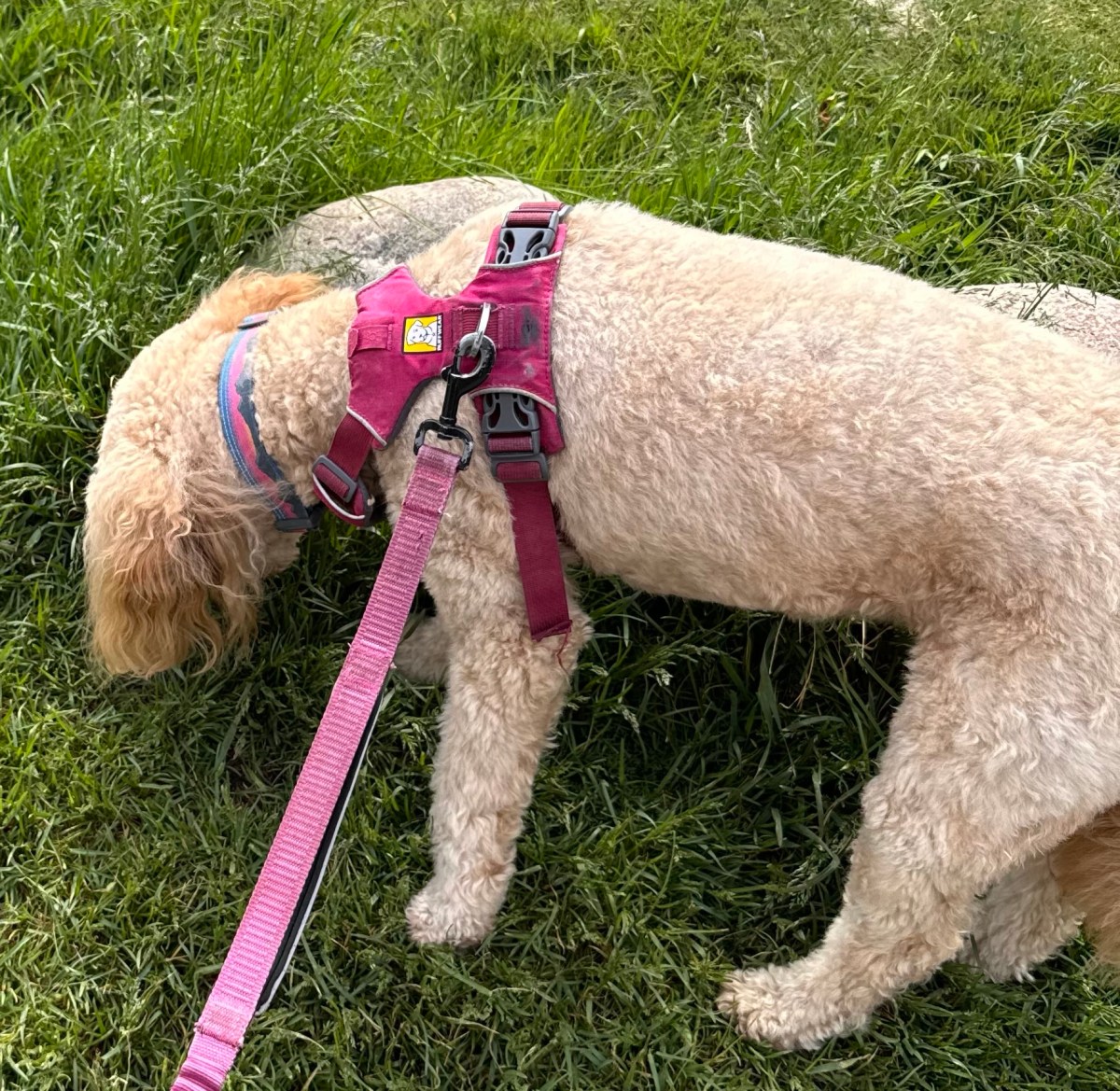
The dog, meanwhile, remains unconvinced. She watches me closely, tilts her head from time to time, and appears to believe that my collar is essentially the same as hers. In her mind, this confirms that I am ready for a walk. Healing is fine—but the schedule still matters.

2000

The pandemic feels like a lifetime ago, and yet I can tell you exactly how long it has been: 2,000 days. I know this not because of science, or history, or the passage of time, but because on March 1, 2020, I started a streak.

A walking streak.

Every single day since then—through shutdowns and reopenings, through new jobs, new routines, travel, stress, exhaustion, weather that felt like it was designed to break me—I have walked at least 10,000 steps.

Two thousand days.

I didn’t set out to do this. At the beginning, it was something to do during the pandemic. It also protected my sanity. Walking was the chance to get out of the house and leave everything else behind. Ten thousand steps a day had long been the baseline, ever since I started wearing a fitness tracker. Twenty-two thousand steps was the dream. (For reference, that’s about ten miles a day, or the equivalent of pacing nervously during a seven-hour baseball game.)

The first year was easy. I averaged nearly 22,000 steps per day. The second was manageable, still averaging nearly 20,000 steps per day. But the last three were harder. I changed careers. Time shrank. The joy of the walk, once as natural as breathing, sometimes felt like another appointment on an already crowded calendar.

Quick aside here: if you’ve never experienced the low-grade panic of watching your fitness tracker show 9,976 steps at 11:57 p.m., you haven’t lived. That’s when you find yourself walking in pajama pants around the kitchen island like a lunatic, praying the neighbors can’t see through the window.

What kept me going? Partly, the dog. (She doesn’t negotiate. She knows when it’s walk time, and if I try to skip, she looks at me like I just canceled Christmas.) Partly, the number itself. The bigger the streak grew, the harder it was to let it go. You don’t walk 1,732 consecutive days just to stop there.

And now we’re at 2,000.

I should say this: I am impressed with myself. I don’t usually say things like that, but persistence deserves a little horn-tooting. If I can string together 2,000 days of anything—walking, writing, flossing—maybe I’m not as undisciplined as I sometimes think.

Of course, streaks end. Technology fails. Bodies get sick. Life interrupts. At some point, a day will come when the step counter doesn’t make it to 10,000, and I’ll have to deal with it.

But not yet.

The next goal is December 30, 2025—Day 2,131. If you’re a baseball fan, you know why. (That’s the number Cal Ripken Jr. reached when he passed Lou Gehrig in consecutive games played. If you’re not a fan, know this: it’s persistence at a mythical scale.) After that, the big one: 2,633 days, when Ripken’s streak itself comes into view on or about February 6, 2027.

Will I make it to 2,633? I don’t know. The streak doesn’t give me the same joy it once did, and some days it feels like one more box to check. But every morning, the dog is there, stretching in anticipation, eyes pathetically pleading. And every morning, I lace up my shoes.

2024 Gratitude Challenge Day 3

“Mindfulness is the ability to be aware of what’s going on around us and in our bodies….it is the continuous awareness of our bodies, our emotions and our thoughts.” Thich Naht Hanh

How did Day 2 unfold for you? Were there any little details or standout moments that truly grabbed your attention? It’s so important to take a moment to acknowledge and celebrate those small, beautiful aspects of life that often go unnoticed. They can make all the difference!

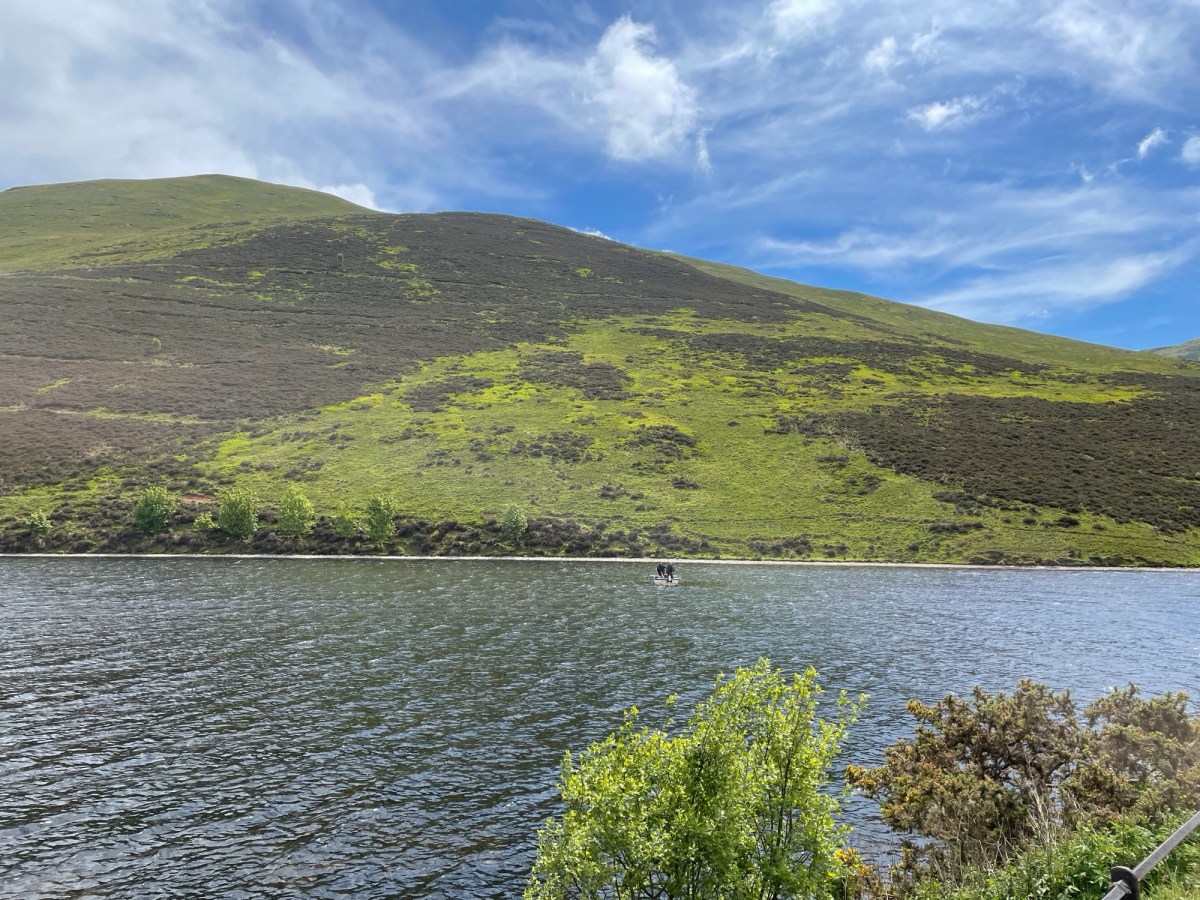
I wandered outside for a refreshing walk and stumbled upon a group of fishermen reeling in a stunning catch. The thrill in the air was palpable, and it was a joy to witness their excitement firsthand. I’ve included a picture of their impressive haul at the top of this post—don’t miss it!

Today, embrace the present moment with mindfulness and gratitude. By immersing ourselves in the here and now, we free ourselves from worries about the future and reflections on the past. Let your focus shine on today.

2024 Gratitude Challenge Day 2

How did your Day 1 turn out? I found myself slipping into complaints a few times, but I quickly caught it and shifted my focus. Honestly, it made such a difference! Embracing positivity really turned my day around. How about you?

I apologize for getting this post out later than usual. I decided to embrace the joy of sleeping in. Last night, I attended a fantastic basketball game that stretched past my usual bedtime. Appreciating the little things, like giving ourselves the gift of rest is essential.

Today’s challenge is to embrace the beauty of life’s little things. Imagine how different life would be without them. With the weather promising to be lovely, I plan to take a long walk outside, observing the small and the big things around me.

Day 30 Final Day of Beautiful Things

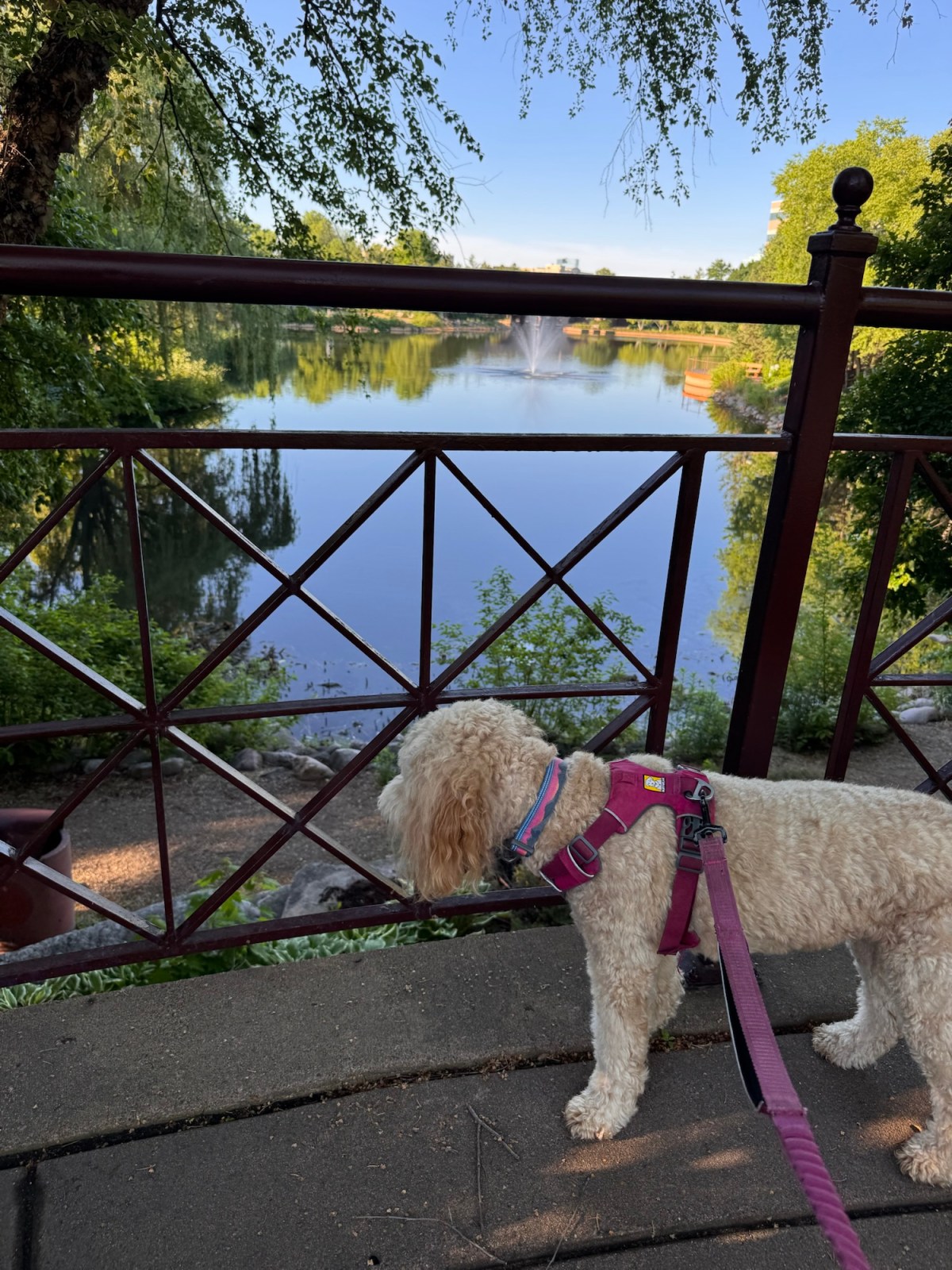
This experiment started 30 days ago. It has been 30 days of searching for something beautiful. Today, while walking my dog along the bike trail, we saw a small white-tailed deer. It stood and stared at us before gracefully walking away. It was a moment of beauty.