The Path That Isn’t on the Map

What do you do when there are no directions, no signs, and no map? If you’re lucky, you go anyway. Some of the best days of my life started with no idea where I was going or how I would get back. You climb a hill that doesn’t tell you its name. You come around a ridge into a valley that stops your breath, and you stand in it not knowing a single thing you’re looking at. The names come later, at home, at a desk, with a map finally open. So does the meaning. I learned that on a day in the Pentland Hills, about twenty miles south of Edinburgh, in the summer of 2022.

It was a transition summer. One life was closing and another was about to begin. My years in academia were ending, and the work I do now in trust and financial services was still a few weeks off, sitting out there like weather I couldn’t see. Being between jobs is a little like trying to jump across a creek. You run and you jump and you pray you jumped far enough to make it to the other side. I knew where I was supposed to land. I just didn’t know if it was the right spot, or whether I should have jumped at all. Which is how I found myself in Edinburgh, a long way from any of it, with a few free days and no agenda.

My wife wanted to walk, and I wanted to walk with her. There are famous walks in Edinburgh, Arthur’s Seat rising right out of the city, and we could have done the sensible thing. Instead, the concierge told us to get in a cab, ride south to a place called the Pentland Hills, and just start walking. We had no idea what to expect, no idea where we were going, and no idea how we would get back. So we got in the cab.

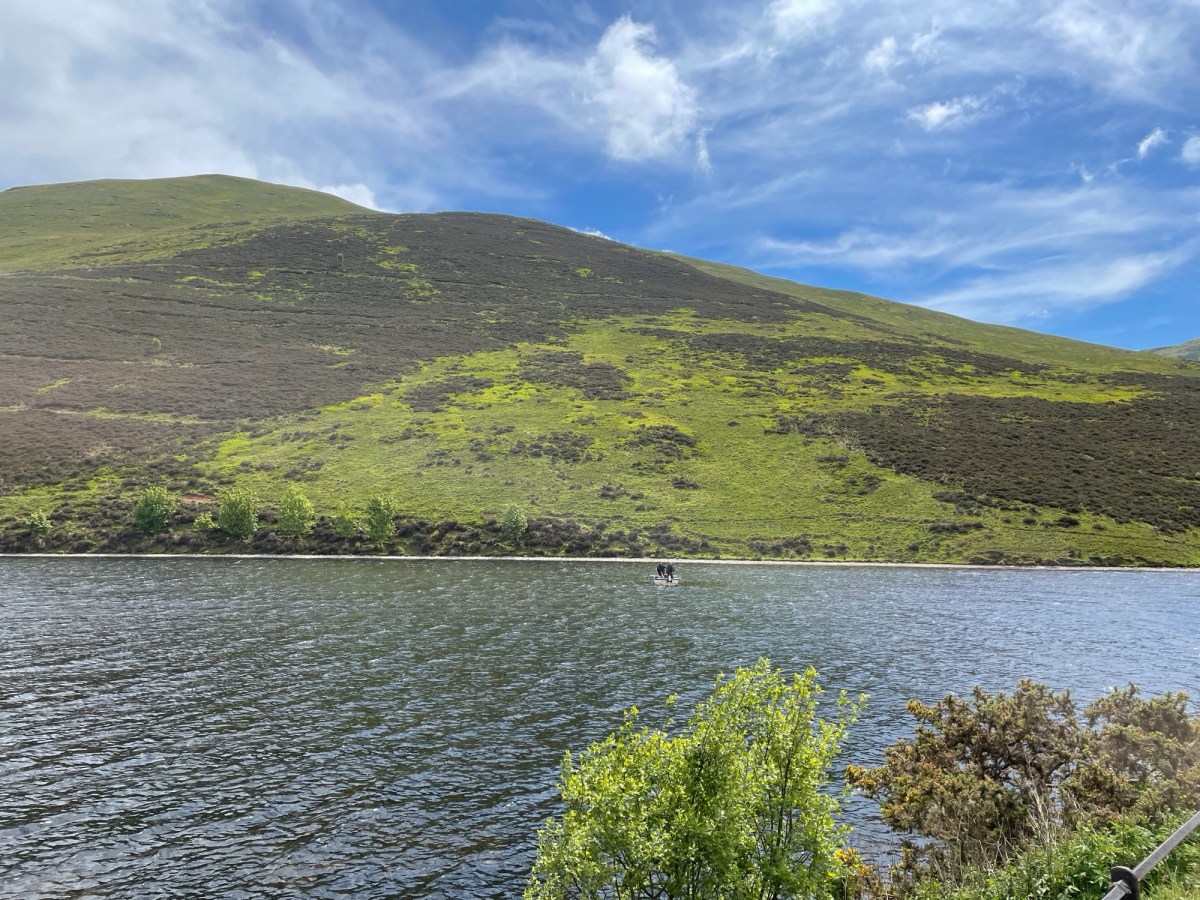
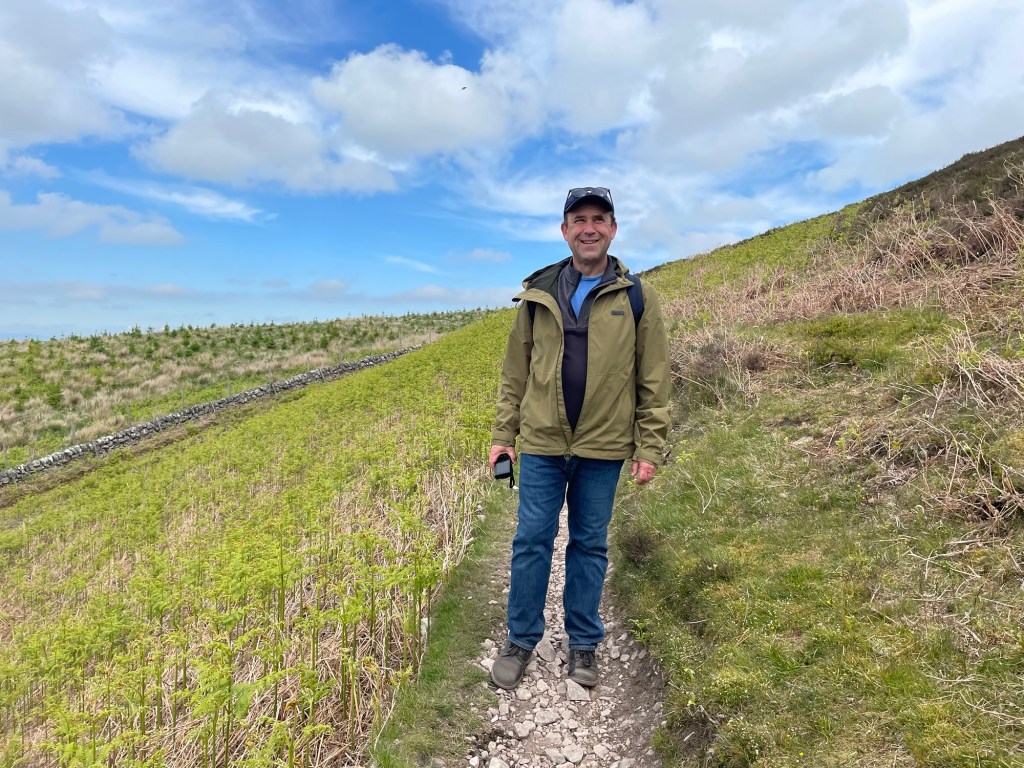
The driver left us at a car park I would only later learn was called Threipmuir Reservoir. We followed the signs to the water, mostly because the signs said it was there and we could see it. These would be the last signs I remember seeing. We walked along the reservoir, and then around it, and eventually we looked up and there was a hill. A big one. There was a path up it, narrow and jagged, the kind that makes you suspect you don’t quite belong on it, but there were runners on it, several of them, moving up and along the slope with that easy purpose that tells you a thing is possible. They were the only sign we had, so we followed where they went and started up.
As we climbed, I found myself waiting for a feeling I already knew. Growing up in the Black Hills, I hiked a lot, though I hiked the way a kid hikes, aiming for the destination and not thinking much about the path. Mount Baldy, Little Devils Tower, Hippie Hole. Most of all, Harney Peak, which we would climb a few times each season. I first knew it as Harney Peak, and it was Harney Peak every time I climbed it. They call it Black Elk Peak now, renamed to honor the Lakota holy man.

When you reached that summit, you knew you were somewhere. You stood at the highest place for miles and looked down as the hills rolled away toward the plains. There was a destination, a summit, and a reward for getting there. So as I worked my way up that rocky Scottish path, some part of me was hoping for another Harney Peak. I expected the same bargain. Do the climbing and eventually the world would open beneath you.

What I got instead was better. The climb was hard, but the good kind of hard, the kind that empties your head while it works your legs. Whatever I had carried into that summer got quieter somewhere on the slope. I would find out later that the hill was called Black Hill, and of all the names it could have had, it was that one. I had spent my childhood among hills that carried the name, and here I was an ocean away, climbing another one without knowing it.

There was no sign announcing Black Hill. I learned the name later, tracing our route on a map, and when I saw it, I sat with it for a while. There was something about discovering that name afterward, at that particular moment in my life, that stayed with me. Some circles you don’t notice you’re walking until you’ve already closed them.

The path wrapped around the southern edge of Black Hill, and then the whole world opened. I came around that edge and looked east toward Scald Law, the highest of these hills, and it took my breath away. I had already fallen for Scotland by then, and for the Pentlands, but this was something else. This was not the Harney Peak feeling, the summit that looks down and flattens the world beneath you. This was almost the opposite.

The valley fell away green and folded and enormous, hill giving way to hill, the light doing what light does in that country, always moving. I had come up looking for a view that looked down on everything, and what I found looked out, and across, and into. I stood there and did not need anything to be different than it was, which, if you think about it, is as close to happiness as most of us ever get.
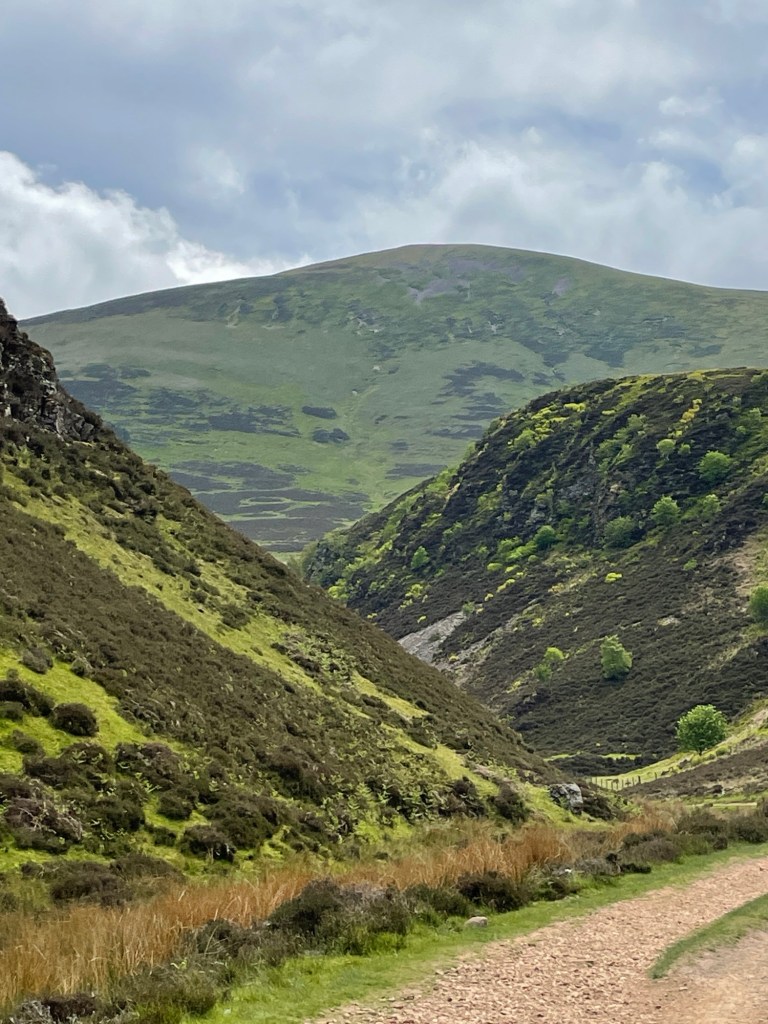
We came down the south edge into the valley below Scald Law and found another path, and this one didn’t test us. It ran north between the slopes, Black Hill on one side and Scald Law on the other, then Carnethy Hill, then Turnhouse. We passed two more reservoirs, each with a few people fishing, patient at the edge of the water. The air was clean in a way that felt like it was doing something for you. You could hear sheep and birds, and not much else. The climb was behind us now, and this was the long, easy after, the way the good stretches of a life sometimes feel when you’re finally not fighting anything.

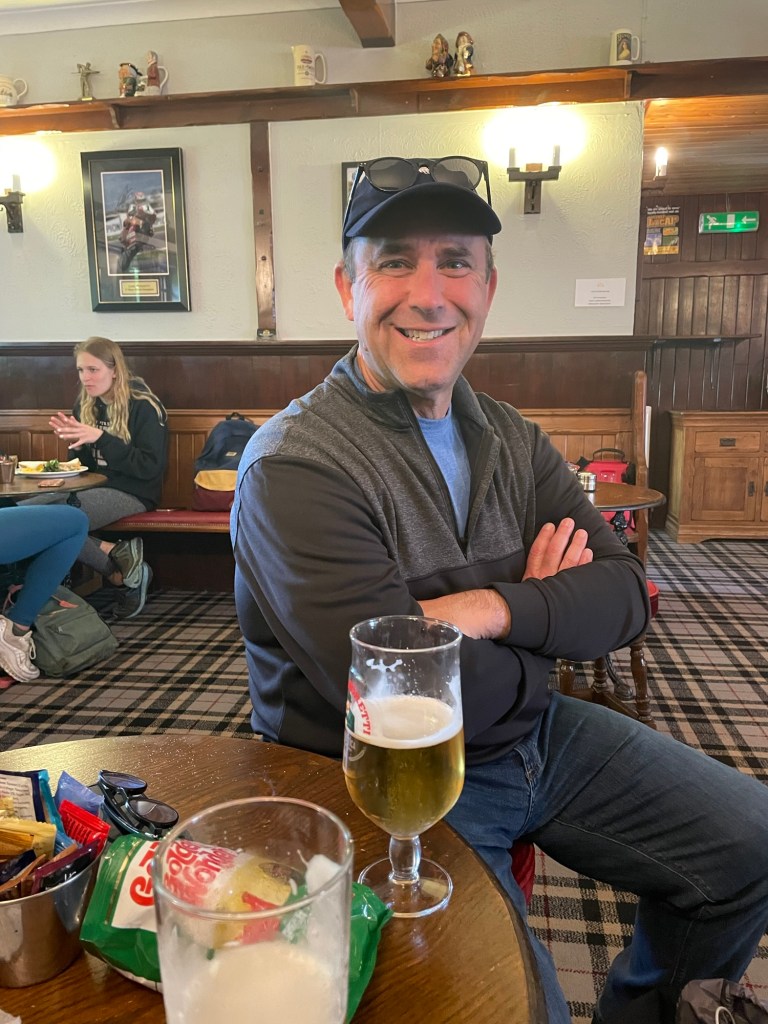
Eventually we stumbled onto a rustic pub called the Flotterstone Inn. We had a couple of drinks, and I don’t know that a beer has ever tasted more earned. There was still one small problem. We had spent the day walking farther and farther from where the cab had dropped us, and we still had no idea how we were going to get home. Then, outside the pub, we found a bus sign.
I keep coming back to that small detail. There had been no signs on the walk telling us the names of the hills. Black Hill, Scald Law, Carnethy, Turnhouse. We had walked among all of them blind and would learn their names later. Yet there at the end was a sign telling us exactly when the bus would come. Maybe that’s about as much direction as we usually get. Not an explanation and certainly not a map of everything ahead. Just enough to keep going. A few runners disappearing up a hill, a path under your feet, and eventually a bus at the end to carry you home. The rest you learn later.

When I sat down to write this, I pulled up the official trail map because I wanted to retrace that day and make sure I remembered it correctly. That was when I found one more thing. The path my wife and I walked that day, up and around Black Hill, isn’t really on it. It isn’t one of the routes they tell you to take. We had wandered onto something unmarked, drawn up a hill by a handful of runners and a feeling, and it made all the difference.

The name of this blog is two words of Scottish Gaelic. Sireadh Toileachas. Seek happiness. I didn’t choose the language by accident, although I didn’t understand when I chose it how much of my own seeking would trace back to a country I keep returning to. I found some of it that day on a hill I couldn’t name, on a path that wasn’t on the map, in the summer when everything was about to change.

I knew where the new job was. I knew when it started, and I knew where I was supposed to land. What I couldn’t know was whether I had chosen the right path to get there. Four years later, I still think about that walk, but not because I eventually learned the names of the hills or because I managed to reconstruct our route on a map. Maybe it is precisely the opposite.

The path wasn’t on the map, and we took it anyway. I think there are stretches of life that work much the same way. We go looking for signs that this is the right job, the right move, the right time, the right path, and most of the time we don’t find them. You pick a direction, start walking, and hope there will be enough along the way to keep you moving.

Sometimes there is. Sometimes there are runners ahead of you, a valley on the other side of the hill, a pub when your legs are tired, and a bus when it’s finally time to go home. You don’t know what any of it means while you’re walking through it. The names come later. Sometimes the meaning does, too. And I have come to think that has always been the deal.
What a Mother Is

A Mother’s Day essay about the several mothers in one life — the mother who raised me, the birth mother I found after fifty years, and the woman I chose. Each gave me something the others couldn’t.

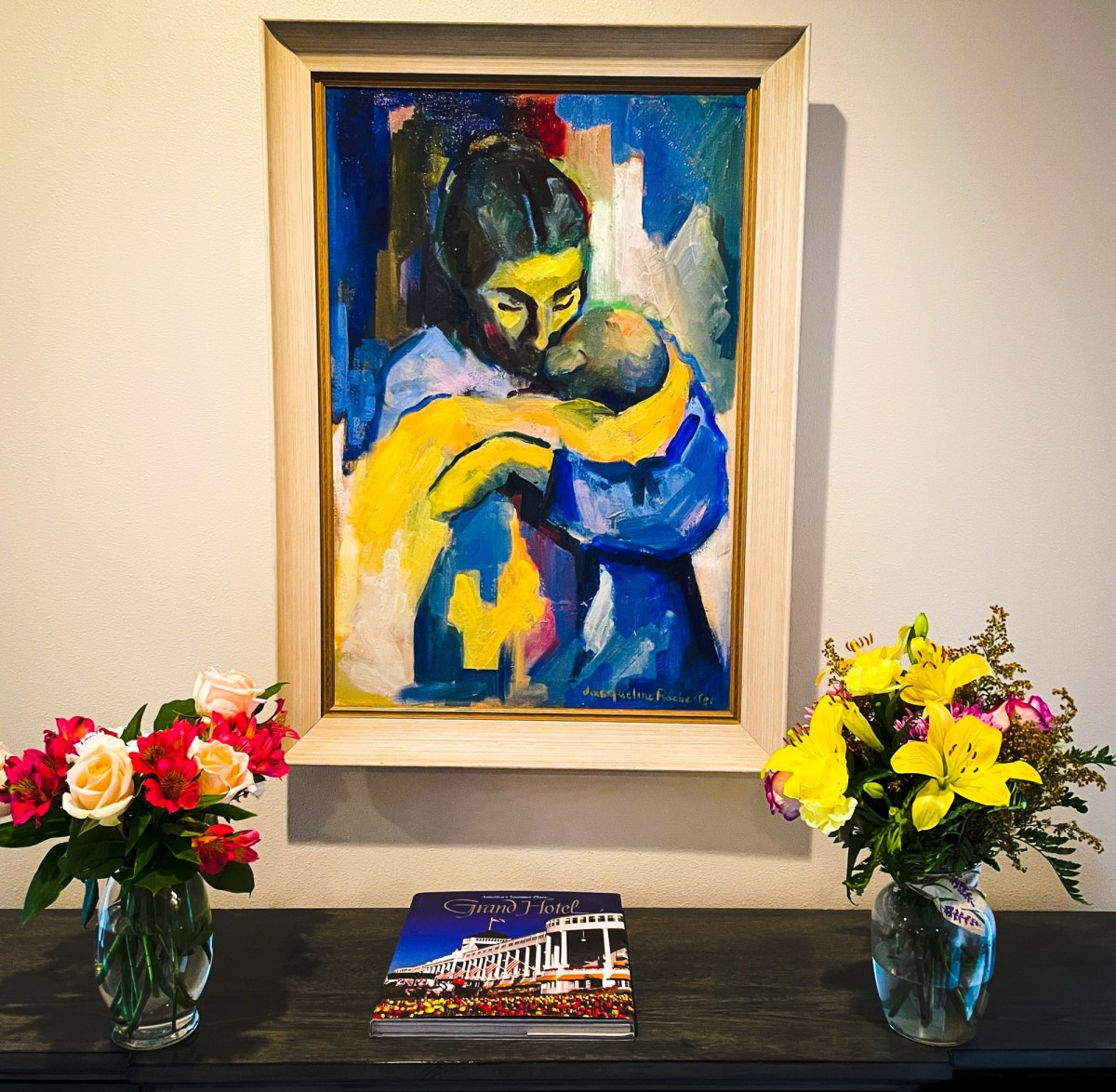
There is a painting in my home that has always been part of my life. A mother holding a child, rendered in bold blues and yellows by a local artist named Jacqueline Rochester. My parents bought it from her when she was a neighbor. Years later, I inherited it. My wife lets me keep it in our home. I am not someone who is moved by a great deal of art. I am moved by this one.

It hangs in the main room. At some point, Mother’s Day flowers ended up on either side of it without anyone planning it. Two bouquets framing a mother and child. It seemed right to leave them there. Tomorrow is Mother’s Day. Early in life, the assumption built into all of it, the cards, the brunches, the flower displays waiting near every grocery store entrance, is that you only have one mother to think about. That is true for a while. Then life keeps moving and the math changes.

There are several mothers in my life, each of whom gave me something the others could not. Every second Sunday in May, I think about all of them.


My mother was everything a young child could want. Caring, compassionate, creative, kind. She made my lunch every day, always my favorite foods. When dinner came, she cooked multiple meals to keep all of us happy. My father, who grew up in a time when food was not always plentiful, would have told us to eat what was in front of us and be grateful. My mother just cooked another meal.

It was early June when a flash flood devastated my hometown. Two hundred and thirty-eight people died in a matter of hours. I was four years old, so my memories are not complete. I remember pieces. Bridges washed out. Cars upside down in department stores. Water and sewer service gone. Close family friends lost their home and lived with us for six or eight weeks. We shared what we had. When we needed drinking water, we drove to an elementary school where tanker trucks had been set up for families. Standing in line filling jugs should have felt strange or frightening. My mother made it feel like an adventure. She made turning on a faucet sound dull by comparison. What four-year-old gets to drive to a school to pick up water?

Looking back now, I realize the same qualities that made her a good mother also made her good on television. “A Woman’s Touch With Mary Ann” was a local talk show, and she was its host. Before tapings, I watched her settle nervous guests with conversation. She made them comfortable. She treated them like they were the most important person in the world, and for those few minutes, maybe they were. She interviewed Phil Donahue, Bob Hope, and, before much of the country understood what it was seeing, Oprah Winfrey. I have sometimes wondered what would have happened if she had been born in a different era or found her way to a bigger market earlier. She never wondered out loud. She may have known it. She never let on.

When South Dakota decided to close the institution where both of my brothers lived, one for twenty-five years and the other for nearly fifteen, my mother went to work. She wrote letters, made calls, cornered politicians, and fought for her sons the way only a mother can fight when she has nothing to lose and everything to protect. In the end, the institution closed anyway. She did not win. But by the end of it, the governor knew exactly who she was. For a mother fighting for her kids, that is not nothing.

In late April and early May, the pasque flower bloomed across our property in the Black Hills. Purple and low to the ground, the first sign winter had finally loosened its grip. Every spring I picked bouquets for my mother without being asked. What I did not know at the time, or perhaps did not care about, was that the pasque flower is the South Dakota state flower, and picking it is technically illegal. I was out there committing crimes for my mother on a seasonal basis. She never once mentioned it. She took those bouquets like they were the greatest gift she had ever received, and she made me feel like maybe they were. Even in college, if I happened to be home at the right time, I still picked them. Some habits survive childhood intact.

She wasn’t there the day I was born, but she is the beginning of every memory I have. She is my original Mother’s Day. She’s gone now. But every May she returns a little.


Maybe that is part of getting older. You realize the people you have lost are not gone in any practical sense. They remain in habits, stories, meals, flowers, holidays, and even the objects sitting quietly in your home. Mother’s Day stopped being simple for me a long time ago because eventually I realized there was another mother thinking about me too.

In the summer of 1968, a twenty-year-old junior at Florida State University arrived in Sioux Falls alone, unmarried, and pregnant. In that era, those facts carried their own social sentence. She lived in a basement apartment for four months. She sewed clothes. She read books. She watched baseball. When the time came, nurses took the baby before she could hold him. She knew only that he was a boy. Then she went home and rebuilt her life. She married, had children, built a career, and kept the secret for fifty years. The hardest days, she later told me, were Christmas, Mother’s Day, and June 15th, the birthday she knew was being celebrated somewhere by someone.

That boy was me.

I found Sandi the way people find things now. A DNA test led to a first cousin match, some internet sleuthing, and eventually, to her. The letter I wrote her took nearly two weeks. I gave her every possible exit because I did not know what waited on the other side. On Christmas Eve 2018, I was standing in a Hy-Vee checkout line, already irritated about something I can no longer remember, when I checked my phone and saw an email subject line that read “Happy Christmas.” I left the cart where it was and walked to my car. I sat there reading the words of a woman I had never met, a woman who had thought about me every Christmas for half a century. At some point I started crying. By the time I drove home, whatever had irritated me ten minutes earlier had completely disappeared.

We met in North Carolina the following spring. She saw me come through the airport terminal and recognized me instantly. To anyone watching, the resemblance probably made the whole thing obvious. She held me the way she had not been allowed to hold me fifty years earlier. For most of my life, adoption had felt abstract to me, almost administrative. A fact more than a feeling. Meeting Sandi rearranged that.

Sandi gave me two things no one else could give. She gave me life. And she gave me up so I could have a better one. I did not understand the size of that decision until I became a parent myself. Both required courage. Both were acts of love. It took me five decades to understand that, but I understand it now.

The painting changed a little after that. For years I had mostly seen comfort in it. After finding Sandi, I started noticing the grip in the mother’s arms.


I did not get to choose the first two women in this story. They came to me the way most things in life do, through circumstance, timing, and decisions made by others. Wanda I chose. She chose me back. What followed has been the great gift of my life, and I have never once found the words adequate to describe her.

Wanda is not a June Cleaver mother. She didn’t bring treats to the ball games. But she made sure her boys got there, on time, with every piece of equipment they needed, which anyone who has ever tried to get a child out the door for a game knows is no small thing. She grew up with only a sister. Boys were not part of her original instruction manual. She figured it out anyway. I’d like to think I helped with the translation.

What she did was harder and quieter than the performing version of motherhood, and she never pretended otherwise. She led by example. She became a role model for her boys without any of them noticing it was happening, which is the only way that actually works.

She protected them, even from me. There were moments when I had something to say and she would suggest another approach. She was right. Every time. Her version of mothering was never hovering. She let her boys figure things out on their own, which takes more restraint than most people realize. When they needed to be challenged, she challenged them. When they needed to be held accountable, she held them accountable. She had a gift I never fully mastered. She could chew them out and motivate them in the same breath. I could only manage the first part.

There is one moment, though, that I come back to more than any other. Our oldest was seven years old when he hit a tree on a ski slope and cracked his skull. We had just found out we were pregnant with our youngest. The doctors were careful with their words. The next 48 hours would be key. That was all they could tell us.

The first night, the two of us folded ourselves into a single recliner in that hospital room, holding each other, not saying much. There wasn’t much to say. Outside the window, the world was going about its business. Inside that room, everything had narrowed down to the sound of a monitor and a seven-year-old’s breathing.

She stayed. The second night, she insisted I go to the hotel. One of us needed real rest, she said. One of us needed to be ready for whatever came next. She had already decided it wasn’t going to be her turn to step back. She sat awake through the night carrying one child while watching over another, and she did it without drama, without complaint, without asking anyone to notice.

We knew he was going to be fine when he started trying to make shapes on one of the monitors, controlling his breath, watching the screen, turning medical equipment into a game. That’s a seven-year-old telling you he’s back. We laughed. On the third day, we went home.

Wanda has been that woman every day for more than twenty-five years. I have a law degree and I teach for a living. I am reasonably good with words. They are not sufficient when it comes to her.


There are several mothers in my life. I am not confused by that. I am grateful for it. Each one of them gave me something the others couldn’t.


Tomorrow is Mother’s Day. There will be flowers and a card, and if I know Wanda, she will insist neither was necessary. Ginger will spend the day underfoot, hoping the occasion calls for a longer walk than usual. Somewhere in North Carolina, Sandi will think about June 15th, except now she knows where the story ended. And I will think about my mother, who spent much of her life making difficult things feel manageable for the people around her.

The painting will still be there when we get back. A mother holding a child between two bouquets no one planned.

Day 15 Gratitude Challenge

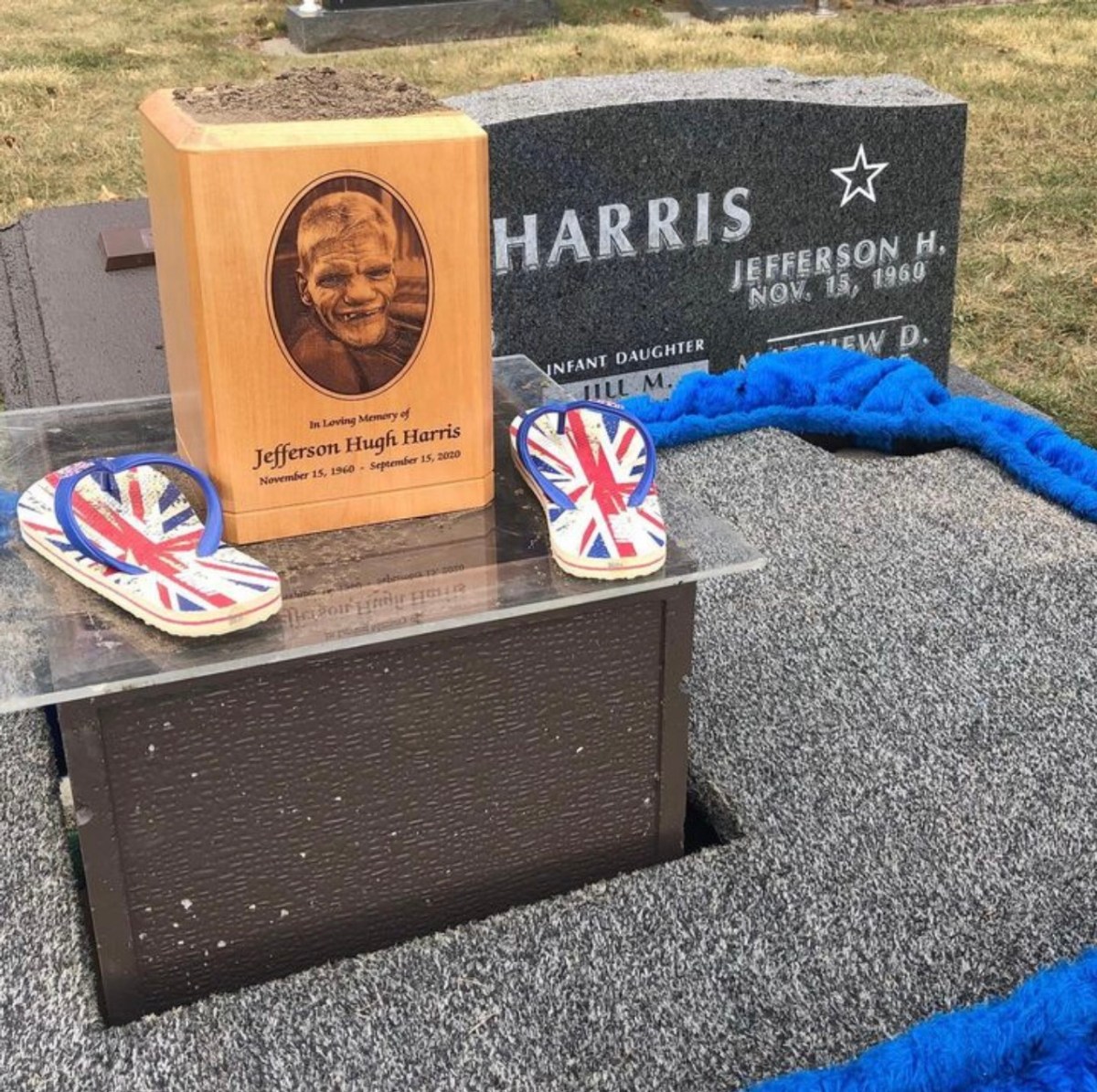
Death is inevitable. It leaves a trail of sorrow for those left behind. There are so many unanswered questions. Yet, one thing is certain . My brother is dead. We buried his remains today. Jason Harris

I wrote the quote above just over four years ago on the day I buried my oldest brother, Jeff. I vividly remember writing those words and can still feel the pain, anger, sadness, and confusion I experienced. I will always remember. I don’t believe you ever forget the pain of losing someone you love so deeply.

The five stages of grief—denial, anger, bargaining, depression, and acceptance—are commonly understood as a sequential journey, often thought to unfold in a specific order. However, since the loss of my brother, I’ve found myself navigating these stages in various sequences and sometimes experiencing them all in one day. Most days, I come to a place of acceptance, though it’s a difficult journey, and I embrace that feeling as best as I can, knowing it’s a part of the healing process. Yet, I often wonder: is it truly possible to fully heal from such a profound loss?

Today marks several significant events. It’s the 15th day of the gratitude challenge, which means we’ve reached the halfway mark. It’s also 10 days past the election. Most importantly, today is my brother’s birthday; he would have been 64.

Today’s challenge invites us to transform a negative experience into a positive reflection. Let’s take a moment to think about those who are no longer with us. It’s natural to feel a mix of emotions, and acknowledging the impact they had on our lives is important. We can hold on to the gratitude for the moments we shared with them, cherishing their memory. Although we may not be able to thank them directly, we can honor their legacy and the positive influence they brought into our lives. This act of remembrance allows us to celebrate the love and lessons they imparted, keeping their spirit alive in our hearts.

Day 30 Final Day of Beautiful Things

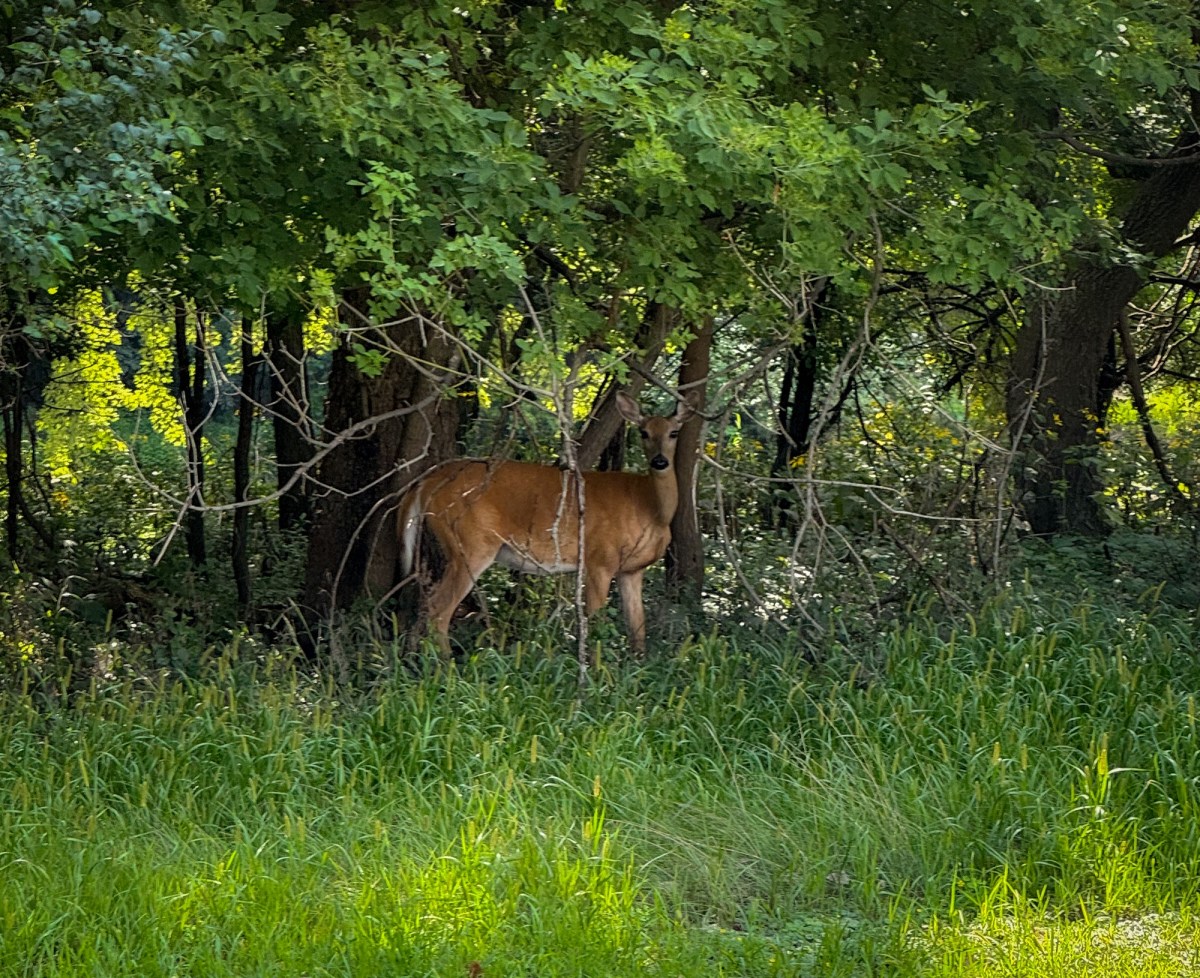
This experiment started 30 days ago. It has been 30 days of searching for something beautiful. Today, while walking my dog along the bike trail, we saw a small white-tailed deer. It stood and stared at us before gracefully walking away. It was a moment of beauty.

Day 29 Beautiful Things

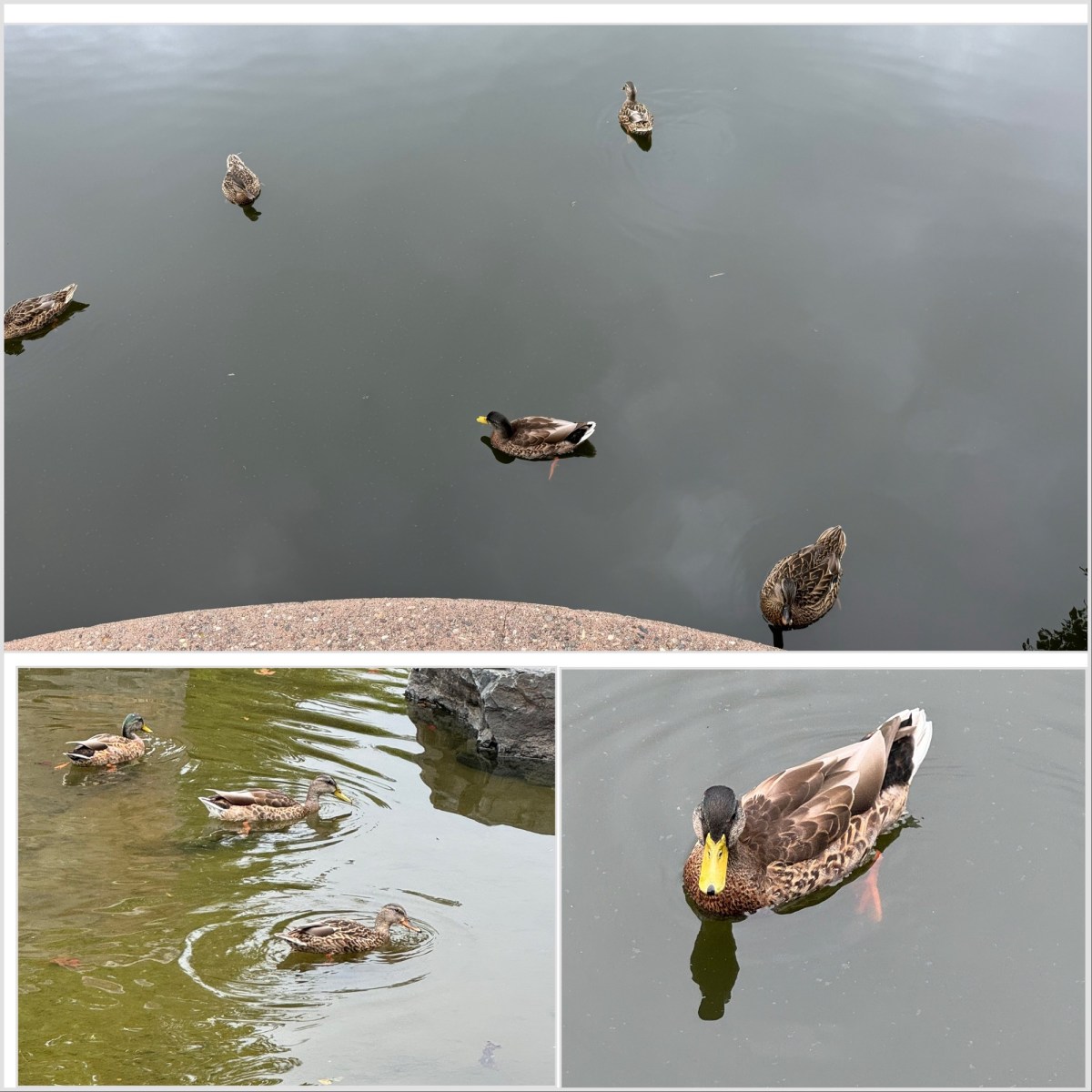
On days 1 and 2, I shared images of adorable ducklings. Today, I revisited them and was amazed by their growth and transformation over the past month.

Day 28 Beautiful Things

Life’s most beautiful moments are often the ones we least expect. During my walk today, I stumbled upon some vibrant red leaves on the ground. When I turned around, I saw this tree.

I don’t remember ever witnessing a tree in full autumn colors in the middle of August. Despite being unusual, it was truly breathtaking.

Day 27 Beautiful Things

Day 26 was an absolute whirlwind! While I didn’t get to spend as much time with my wife as I wanted to, I had some fantastic business meetings and organized a few meals with people who mean the world to me. There’s nothing quite like spending quality time with those you hold dear.

Day 26 Beautiful Things

Today might have been gloomy and rainy, but it was also a day filled with excitement! The best part was getting to pick up my wife at the airport after her work trip to North Dakota.

My wife really doesn’t like it when I post pictures of her. So, I decided to share a picture of both of us! There are so many amazing things about her. I won’t go into detail, but trust me—she’s truly something beautiful.

Day 25 Beautiful Things

If you have known me for a while, you know that I am obsessed with taking at least 10,000 steps every day. My streak is 1627 consecutive days with at least 10,000 steps, or 4 years, 5 months, 2 weeks, and 3 days. It’s an impressive achievement, and while someday it will end, for now, it is a beautiful testament to dedication and perseverance.

Enough about me. The most beautiful sight today was seeing pictures of my brother at a local county fair. Witnessing the joy of those you love is, perhaps, the most beautiful thing in the world.

Day 24 Beautiful Things

Throwback photo from a few years ago – totally unrelated to today’s adventures! Had an amazing time with friends, diving into conversations about the past, present, and future.