Washington, D.C., in the summer belongs to everyone. The tour groups, the school trips, the families with strollers and matching t-shirts and someone always needing a bathroom. We had both been there before, my wife and I, though never together. Our oldest son had not been there at all. We were the kind of parents who believed in this sort of thing. Washington, D.C., is the heart of the democratic experiment, the place where laws are made, history preserved, and sacrifice remembered in stone and silence. Some families went to Disney. We went to Washington. Each boy was going to get his own trip, seven years apart. This was the first one. It also happened to be near my wife’s fortieth birthday, which made it feel like the right time for all of it.
Washington and I went back a long way. In 1984 I came with my high school band for the Cherry Blossom Festival. We took first place in the competition, the same thing our band had done three years earlier. Just three years after that we would become the first band from South Dakota invited to march in the Rose Bowl Parade, but what I remember most about that first trip was Pennsylvania Avenue. We marched down it playing “Battle Hymn of the Republic” and “This Is My Country,” trying to stay in formation while I worried mostly about the horses ahead of us. White marching shoes and horses always felt like a risky combination. Even then the city felt different to me, heavier, like history happened there in a way it did not happen other places. I was a teenager and I felt it. I wondered what I would feel coming back as a father.
This trip was different. I was coming back with nearly four decades of life behind me, but I was also seeing the city through the eyes of an eleven-year-old seeing it for the first time. That changes the experience. We walked the Mall, toured the Capitol, and negotiated our way through the Smithsonian. My wife wanted to watch a congressional debate on immigration. My son and I wanted Air and Space. We went to Air and Space. We stood at the Vietnam Wall. The names go on longer than you think they will. More than 58,000 of them. At some point they stop feeling historical and start feeling personal. You cannot stand there very long without realizing each name once belonged to somebody who thought they would eventually come home.
We visited Arlington National Cemetery and found the grave of Cecil Harris, my father’s cousin and a World War II fighter ace. He died on his birthday. I had known his name my entire life, mostly because he was my father’s hero. Standing over the marker, surrounded by row after row of men just like him, I understood something about that word for the first time. This was where the heroes were. All of them. My son was young and we told him what we could.
The changing of the guard at the Tomb of the Unknown Soldier is another one of those things Americans think they understand before they see it. Then they see it. Twenty-one steps. Twenty-one seconds. Everything deliberate. Everything exact. While we were there another group laid a wreath, the same ceremony my high school band had once participated in years earlier. We stood quietly with everyone else watching until a phone rang somewhere in the crowd. Not just any ringtone either. The American Idol theme song. The sound cut through the silence in a way that felt almost physically painful. Heads snapped around. A few people gasped. The soldier never reacted. That made it worse.
But even that was not the moment we carried home with us.
That came later at the World War II Memorial.
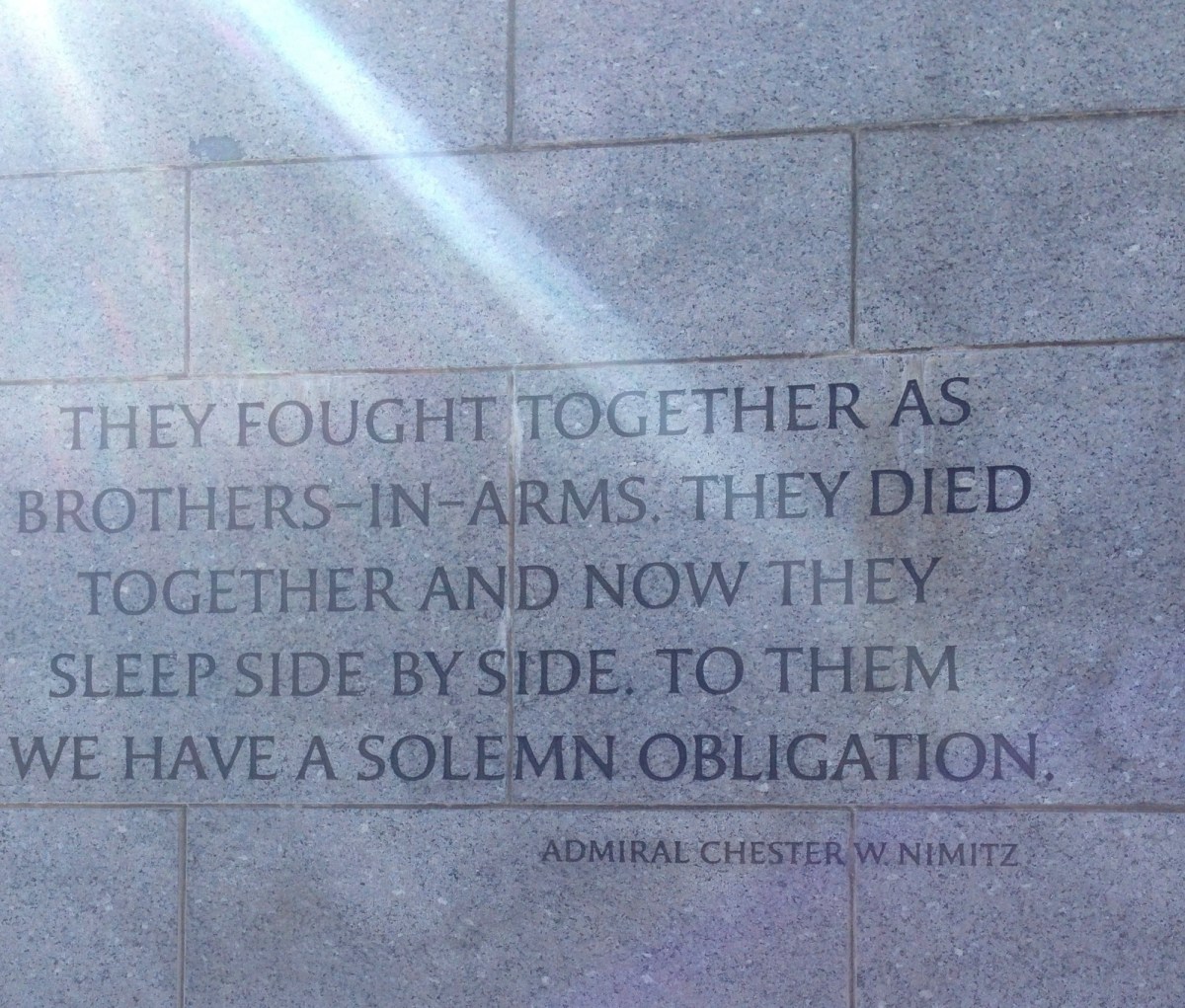
We arrived early on purpose because my wife hates crowds. The memorial was nearly empty when we got there. Blue sky without a cloud in it. White stone. You could hear your own footsteps. The World War II Memorial feels different from the Vietnam Wall. The Vietnam Wall is intimate and personal. It breaks you quietly. The World War II Memorial is broader than grief. Vast and declarative, built to hold the weight of an entire generation and what was asked of them. We walked slowly around the perimeter reading the names etched into the stone. Normandy. Bastogne. Midway. Saipan.
Then the bus pulled up.
It was a charter carrying veterans. The men stepped off slowly, moving with the careful mechanics of age. Several wore hearing aids. One carried portable oxygen. There were canes and a few white New Balance tennis shoes. Many wore caps stitched with the names the campaigns and divisions: Pacific Theater, 82nd Airborne, Battle of the Bulge. Someone handed each man a rose as he stepped onto the plaza. They entered the memorial built for the war they had fought more than sixty years earlier, long after most of the country had moved on. Etched into the stone behind them, the words of one of their own: “This was a people’s war, and everyone was in it.”
One man drifted quietly toward the Pacific side of the memorial. He moved slower than the others. His rose trembled slightly in his hand. I tried to take a picture without being noticed, one man alone walking toward a wall built for his war. He stopped near the word Saipan and carefully lowered the flower to the base of the wall. Then he stayed there. He did not speak. He did not move. More than once he started to turn away and could not do it. Something kept pulling him back to that stone. After a while another veteran walked over and gently took him by the arm. He leaned into the help as they slowly started back toward the bus. Halfway there he turned around once, just once, looking back toward the wall with something I still do not have a word for.
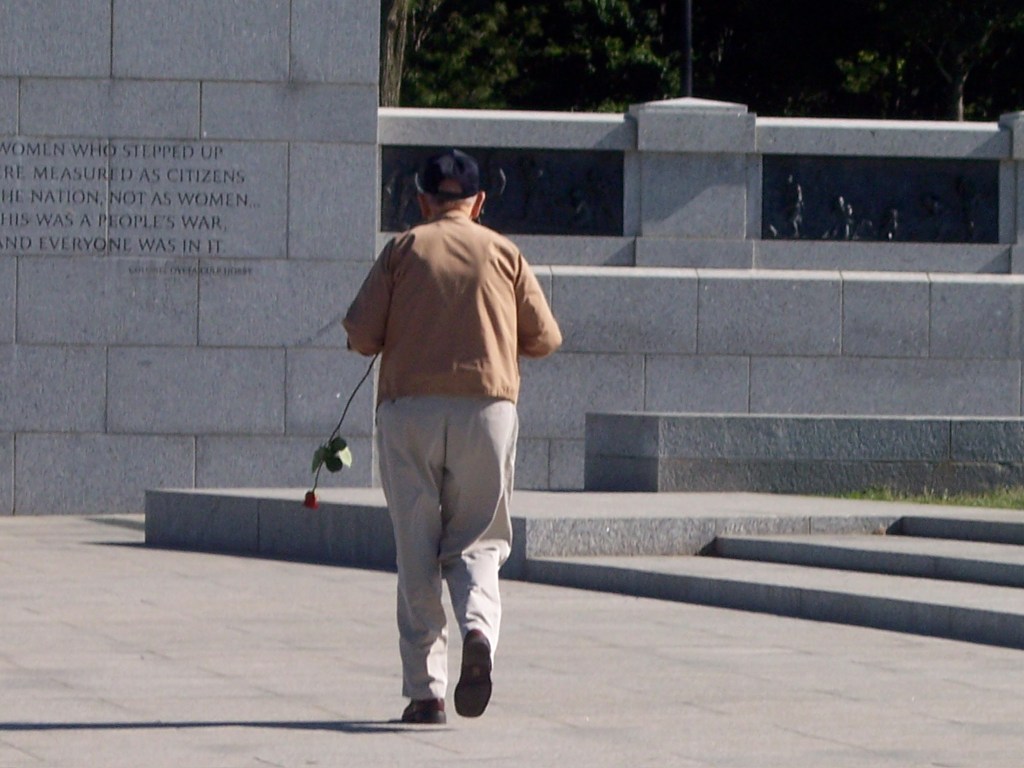
The rose stayed. The man left. The name on the stone didn’t change.
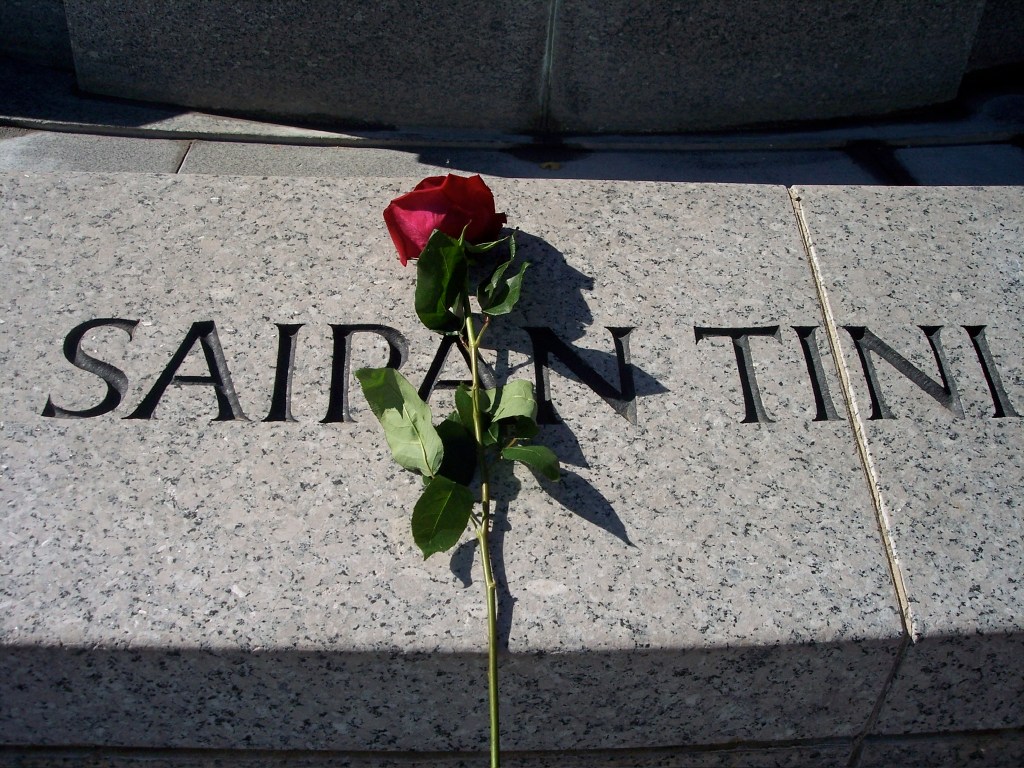
I have thought about him many times since that morning. I still wonder what it was that held him there. A memory. A friend. A brother. Something that happened on that island that he never spoke of and never forgot. Whatever it was, it was strong enough to pull him back to that wall sixty years later with a rose in his hand and no ability to leave. I will never know the answer. When you are talking about war, maybe wondering is the right response. Maybe not asking is its own kind of respect.
Those men came home. Thousands of others did not. Their theaters and battles are etched in the granite. Others have their names on the Vietnam Wall. They are in the ground at Arlington. So many who never came home. Memorial Day gets treated now as the unofficial start of summer, the long weekend, the backyard barbecue, the first real warmth after winter. None of that is wrong. But it is also this. An old man and a rose and a word carved in stone. The ones who did not come home deserve at least that much of our attention, at least one moment in the long weekend when we let it land.
My son was eleven that morning. My wife and I were nearing forty. The veterans were in their eighties. We all stood in the same place. We all carried different versions of the American experience. None of us said much walking back. Washington does that. It finds you wherever you are. It found a teenager once, worried about horses. It found a father watching his son. It found old men with roses. It finds everyone. And it asks the same thing every time. Do you understand what this cost?
Sometimes that’s how it starts.


You must be logged in to post a comment.