
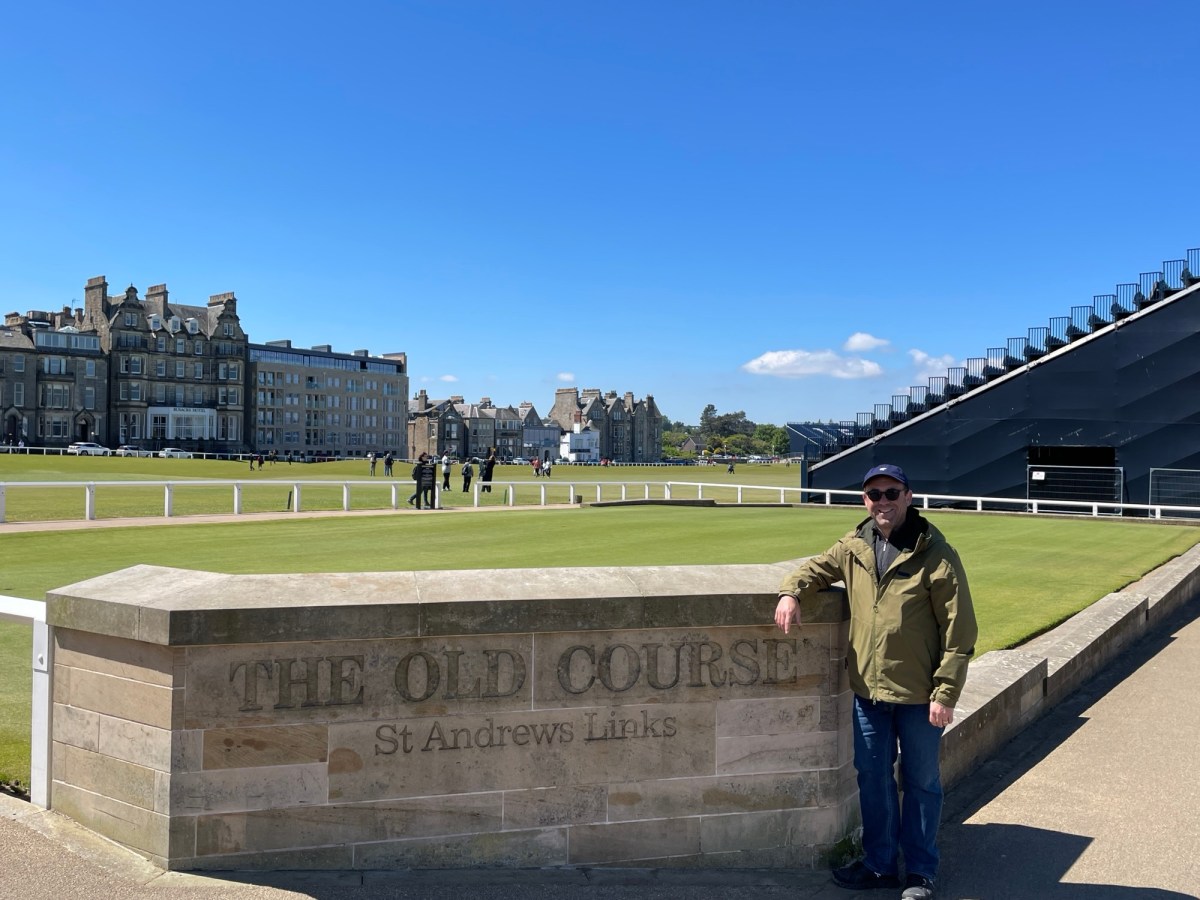
Saturday Routine

“I do not have a formal degree from the University of Michigan. I have something more valuable. A certificate of completion. Think of it as the Gen X version of a participation trophy.”

Last Monday, my beloved Michigan Wolverines won the NCAA Men’s Basketball National Championship. I have fielded the same question all week. What is your connection to Michigan? Did you go there? Are you from there?

The answer is simple. And complicated.

I do not have a formal degree from the University of Michigan. I have something more valuable. A certificate of completion. Think of it as the Gen X version of a participation trophy. I did serious post-graduate executive training there, which counts for something, at least in my mind. My uncle lived in Michigan for years and raised his family there. I gave genuine consideration to attending law school at Michigan. Unfortunately, Michigan did not give the same consideration to me. Perhaps it was my law school admissions scores. We will leave it there.

But the moment I fell in love with Michigan and its flagship university is easy to trace. My wife and I honeymooned at Mackinac Island. In nearly 25 years of marriage, we have returned to the island no fewer than 17 times. In the early years it was annual. It is woven into us in a way that is hard to explain to someone who has not stood on that island and understood immediately why you would keep coming back.

So when the final seconds ran out Monday night, it was not just a scoreboard. It was something older than that. And somehow, with the college basketball season now over, it feels like permission. Winter is done and spring can begin. Rightfully so, a small world is turning its attention to Augusta for a tradition like no other. The Masters is on. Saturday morning is about to change its address.

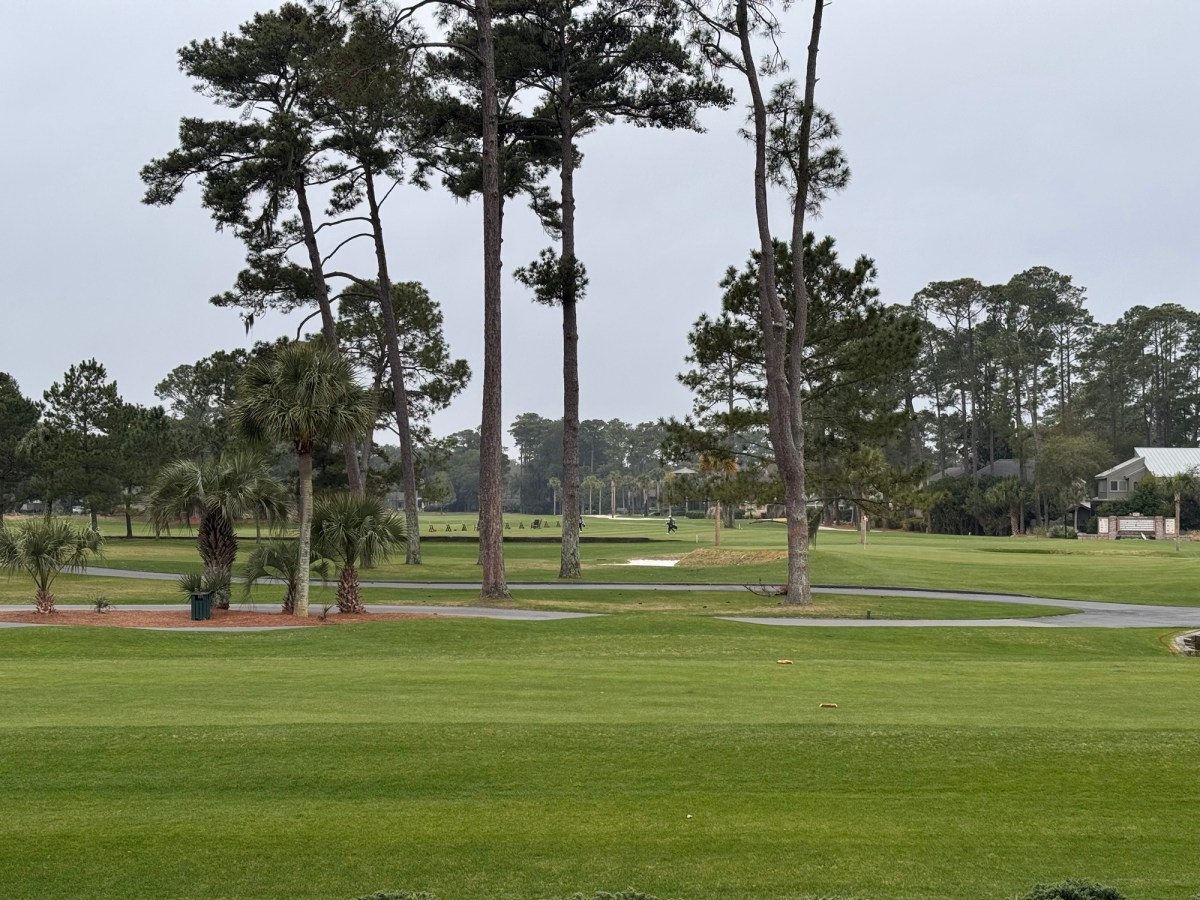
Augusta has pristine emerald fairways and perfectly manicured greens. It is the kind of green that makes you envious until you remember what Georgia feels like in July. The envy passes. My head has been somewhere else most of the week, and I am not apologizing for it.


Consider what a Saturday morning routine actually is. Not what it looks like on the surface — coffee, a dog, a tee time — but what it does. It is a standing appointment with a version of yourself. You show up to the same place at the same time, and over months and years, that consistency builds something you did not plan for. It makes you findable. Not just to yourself, but to everyone who has ever known you.

Outside of golf season, Saturday morning means Josiah’s. Same line, same order. Ginger handles public relations. I handle the coffee. She is better at her job than I am at mine. This past February, two Saturdays in a row, a former student appeared in line behind me. Same opening line both times.

“Professor Harris, I’m not sure you remember me.”

This is not a coincidence. It is not luck. It is what happens when you show up to the same place reliably enough that the people from your past know exactly where to look. I have taught roughly 1,200 students. I did not seek any of them out. I just kept showing up, and they found me. That is the quiet power of a routine that most people never think to name.

I always need a hint. I am always glad they said hello.


Golf season is a different Saturday entirely. Same day of the week, same general idea. Get outside. Move around. Spend time with people you stopped explaining yourself to a long time ago. We have been playing together for close to thirty years. There was no ceremony when that number arrived. You just look up one day, do the math, and feel briefly old before someone hits a bad shot and the feeling passes.

It is more about being outside than keeping score, but we always keep score.

Here is what thirty years of Saturday mornings with the same group actually produces. It is not a scoreboard. It is not even a friendship in the way most people define the word. It is something closer to a shared language. A set of references and rhythms that require no explanation because they were built slowly, Saturday by Saturday, across decades. You do not have to catch these people up. They were there.

Nobody on the fairway is going to tap me on the shoulder and ask if I remember them. Josiah’s is where the past finds you. The golf course is where you go to be exactly who you are right now, with people who knew you before you figured that out. Play your own game.


The line at Josiah’s will be there in October. Same order. Winter will come back, the courses will close, and Saturday morning will find its way back inside. There will probably be another former student behind me in line who is not sure I remember them. I will. I always need a hint, but I remember. That is what the line is for. Showing up to the same place long enough that the people who once sat in your classroom know where to find you.

For now, it is almost time. The same group. The same course. The same morning light that makes me think you might actually be good at this. I am not.

Don’t tell Ginger.

The Long View of Friendship

Every spring, I send the same text. Just a few words asking whether they are in this year. Same message for thirty-nine years. Only the delivery has changed.

It started with a floor in Bergsaker Hall, a shared love of the Minnesota Twins, and a World Series nobody saw coming. What followed was nearly four decades of games, road trips, bad food, one covert operation that would have impressed the CIA, and conversations that always end up somewhere back in college.

The scores are gone. The games are not. This is a story about what stays.

I sent a text this week. Nothing complicated. Just asked whether they were in this year, and we started working on a date. It used to be a face-to-face conversation, then a phone call, then an email, and now it is a text. Same basic message for thirty-nine years. Only the delivery changed.


We met freshman year of college, a group of us living on the same floor in Bergsaker Hall. Different hometowns. Different majors. Different ideas about where life was headed, most of them wrong. We probably do not find each other without college doing what college does best, throwing a bunch of strangers together and letting time do its work. If you are lucky, a few of those strangers become people you are still texting nearly four decades later.


What we had in common, as it turned out, was the Minnesota Twins. That was enough. In 1987, that was more than enough.


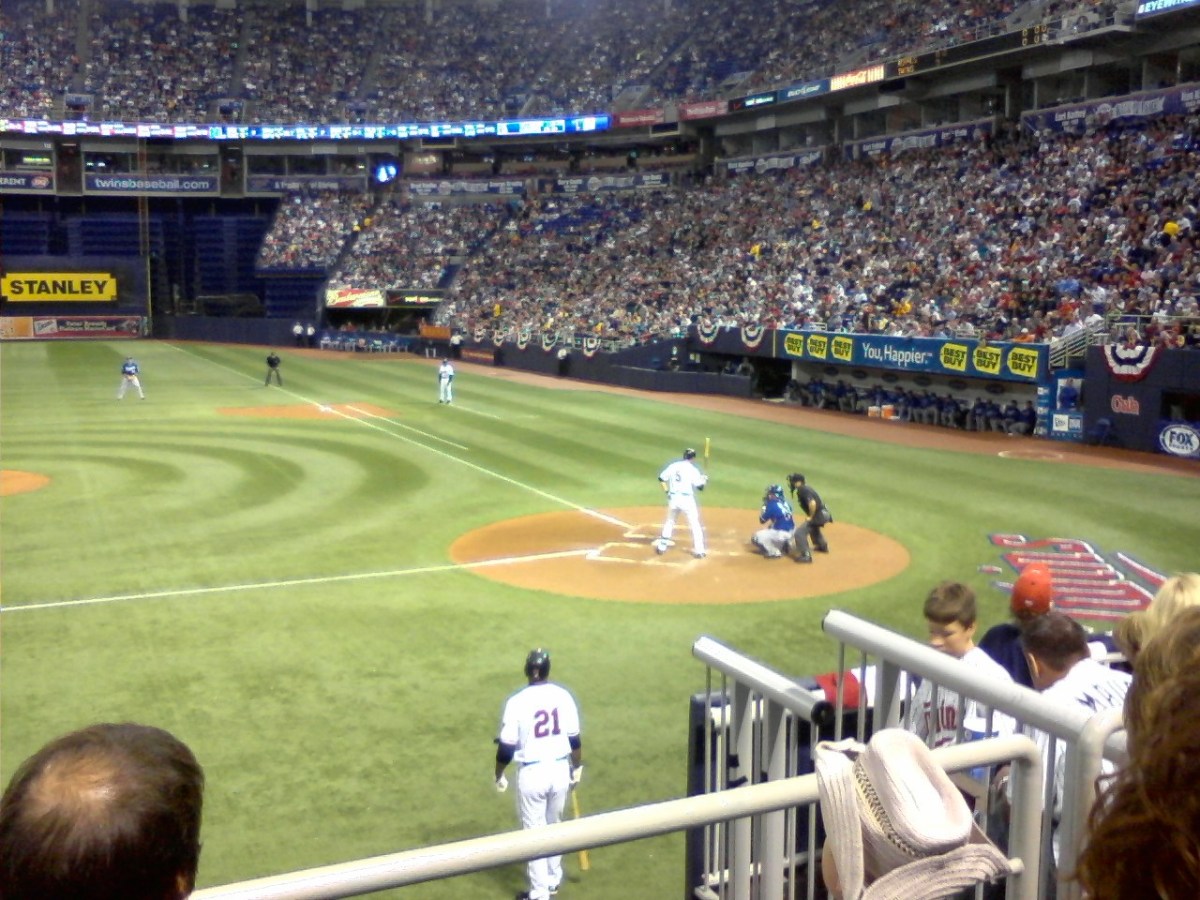
For most of our lives, the Twins had been mediocre or worse. Then suddenly they were not. They played in a dome built for football, with plexiglass in left field, the Baggie in right, and acoustics that made the whole place feel like a washing machine on spin cycle. Other teams complained about it. We took that as a compliment.


They barely got into the playoffs. Nobody outside Minnesota thought they were real. Then they won the whole thing anyway. If you were college age and a Twins fan that fall, watching it happen with people who mattered to you, something got locked in.

* * *

Thirty-nine years of going to Twins games with friends, and I could not build you a proper box score from more than two of them. The first was September 27, 1987, that same fall, before the World Series run was even finished. It was the final home game of the year, and you could feel the buzz because everybody was hoping the Twins were headed to the playoffs. Sunday game. One o’clock first pitch. We got up early, stopped at Mr. Donut, piled into a car, and drove four hours like this was an entirely reasonable use of a weekend. Somewhere I still have the ticket stub.


There was a double play in the top of the first inning, ground ball to third, force at second, throw home, a 5-4-2, which is a weird little baseball gem. The Twins scored five in the bottom half before half the crowd had settled in. I had to look up the five runs. I did not have to look up the double play. That seems about right. I could not tell you what I had for breakfast yesterday, but I can still see that play. The Twins won. They clinched a playoff spot. More than 53,000 people went home happy.


Then there is Game 7 in 1991. Jack Morris. Ten innings. No runs. One of the best baseball games ever played, and somehow we were there. How we got the tickets involves a romantic subplot, and at this age I think it is better left slightly blurry. Another Sunday. Another four-hour drive. Then a celebration in the streets of Minneapolis, followed by turning around and driving four hours home because Monday was still coming, and apparently we were still pretending to be responsible people.


Everything else has blurred, which is fine. Blur has its own value. There was a game where the Twins were losing by so much that we started rooting for the other team, just to see a better brand of baseball before the day was over. There was one of the last games in the Metrodome, sitting right down the third base line in front of the visitors bullpen, close enough to hear everything and probably say a few things we should not have. There was one of the first games at Target Field, when the place was still new enough that we were wandering around like tourists, and somehow we ended up in the Legends Club.


You do not accidentally end up in the Legends Club. Somehow we had acquired two tickets even though there were four of us, and this was before the sophisticated scanning devices you see at ballparks now. So getting everybody in required a plan. And we had one. The kind of plan that would have made a CIA operations officer nod with quiet approval. Timing, nerve, precise execution, and the kind of straight-faced confidence usually reserved for people with actual credentials. We divided roles without discussion. Each person went in at the right moment, no hesitation, no eye contact, no deviation from the plan. A Navy SEAL team could not have done it cleaner. We were absolutely not supposed to be there. We stayed as long as we could. That remains one of my favorite life skills, the ability to act like you belong somewhere just long enough.


The scores are gone. The games are not.


Some things have changed. We started in the three dollar general admission seats, upper deck, outfield, way out where the baseball looked more like theory than sport. That was college. Cheap tickets, long drives, no money, no hesitation. Now we often pay more than one hundred dollars each for a game, and more often than not we end up in the Legends Club. The same place we once slipped into like it was a minor covert operation. Turns out if you live long enough, some of the places you used to sneak into will eventually just let you buy a ticket.


The food changed too, and not always for the better. That day in the Legends Club was the first time we learned stadium food could mean a lot more than hot dogs and Cracker Jack. We still like to inspect the ballpark menu, which is not a sentence our younger selves would have seen coming. When we do end up in the Legends Club — which has had enough corporate sponsors over the years that keeping up with the current name feels like a part-time job — we still usually come back with basic stadium fare because change is hard. But games have never quite been the same since the Hormel Dome Dog failed to make the move to Target Field. That comes up too, usually right after someone has settled for something that is not a Dome Dog and knows it.

* * *

In the beginning, the conversations were about college. What was happening on campus. What we were going to do with our lives. Who we were dating and how that was going, which was a mixed bag at best. We thought we were fascinating.


Then the years did what years do. Jobs. Cars. Spouses. Kids. Aging parents. Politics, when everyone felt sufficiently rested and charitable. The whole messy architecture of adult life, covered inning by inning over three decades. But we always end up back in college, because that is what happens when people have known you that long. Nobody lets you stay in your current form for very long. Somebody always remembers the earlier draft.


We still talk about professors we loved and professors we endured. Classes that mattered and classes we survived. Basketball games and football games that once felt like the center of the universe. Former romantic interests always make an appearance. They always will. And sooner or later, somebody brings up Nite City.


Nite City was a dance club near campus that we were convinced was sophisticated. It was not. But it had drink specials, and it had people from our college, and at that age that is really the whole formula. The facts are usually off now. The feeling is still exactly right.

* * *

The season started this week, and my hand reached for the phone before I had thought it through. That is all it takes. The Twins play a few games, and thirty-nine years of the same reflex kicks in.


For most of that time, the core group has been the same three of us. Others have joined in different years, depending on schedules and seasons of life. But lately it has settled back to the three, which feels about right. The text goes out. The replies come back. Then at some point we are sitting in that ballpark, talking about this year, then 1987, then somebody’s kids, then something dumb we did in college, then some old story that gets less accurate and somehow better every time it gets told.


I probably will not remember this year’s score either. That is what scores do. They fade. But I will remember who was there. I will remember what we talked about that had almost nothing to do with baseball. I will remember the feel of Target Field on a summer night when the season is still young and hope is still allowed to be a little irrational.


We were college age and convinced the Twins would just keep winning. They did not. But we kept showing up anyway, which turned out to be the more important habit.


Thirty-nine years. One text. Still working on a date.


Some things you just keep doing. Not because you mapped it out. Not because you saw the whole arc coming. Just because somewhere along the way it became part of your life, then part of your identity, and finally just part of you.

* * *

That is the long view of friendship. It does not look like much from the outside. From the inside, it is everything.