Advice I wish I had Given My Younger Self

The question is not really whether you would go back. The question is what you are going to do today with everything you already know.

Lately, scrolling through the noise that social media has become, I keep running into a certain kind of post. You have seen them. They usually start with a photograph, a high school hallway, a gymnasium, a parking lot that looks like every parking lot from 1984. And then comes the question. Would you go back? To a specific year. To a specific moment. To a specific version of yourself you have not been in a very long time.

The comment sections on these things are something. People arguing with complete strangers about which year they would choose and why. Some of them are serious. Some of them are heartbreaking. All of them are trying to answer the same question underneath the question, which is: was there a version of this life that went better?

I think about that question more than I probably should. When I see those posts I think about the 1980s with genuine nostalgia. It was a simpler time. We were not being bombarded around the clock with news and noise and everyone’s opinion about everything. But nostalgia is not the same as regret, and when I am honest with myself I do not look back at what I had and feel like something is missing now. My life is good. Arguably great. My wife is my best friend. My sons turned out amazing. My work has mattered, for the most part. My friendships have lasted longer than most things I own. And Ginger meets me at the door every single day like I have been gone for six months.

So the long and short of it is I am not going back. But I would send a note. That note, it turns out, has existed for years in rougher form, tucked inside syllabi and first-day-of-class remarks and the things I said on the last day when I thought nobody was writing anything down. It was shaped by the mistakes I thought I had made and the opportunities I thought I had missed and the things I wished someone had told me before I had to figure them out the hard way. Since I do not have a DeLorean with a flux capacitor, I will have to settle for what I have written here.

Find time for the people who will be gone the soonest. Now, if we are being honest, I would absolutely go back knowing what I know. I understand I might be tinkering with the space-time continuum, and I have made my peace with that. Yes, I would probably look into a few investments. Apple. Walmart. Amazon. Netflix. I am not a saint. But that is not actually why I would go back. I would go back to sit with my parents for a while. Hug them more. Ask them questions I never thought to ask. Ask them about their parents and grandparents, their cousins, the family stories that were actually told. Because they were told. I just was not paying attention the way I should have been. Storytelling is how families survive themselves, and I let too many stories go in one ear and out the other because I was young and thought there was plenty of time. The same goes for a few friends and family members I did not know I was running out of time with. In 1986, I did not know there were only ten years left with my dad.

Pay attention. Most of life does not announce itself as important when it happens. The random Tuesday night dinner when everyone somehow made it to the table. The walk with the dog. The conversation with your dad the night before he died, not knowing it would be your last. The family story you have heard a dozen times before and assume you will hear a dozen more. The big moments are easy to spot. Graduations. Weddings. Births. Retirements. Life has a way of putting those on the calendar for you. The smaller ones require more effort. They slip by quietly, and only later do you realize they were part of something larger. Take the picture. Ask the question. Stay a little longer. One day you will discover that what looked like an ordinary day was actually a gift. The trick is noticing it before it is gone. Turns out Ferris Bueller was right. Life moves pretty fast. If you don’t stop and look around once in a while, you could miss it.

Take the trip. Both of them. The one you cannot afford and the one you can. You will find reasons to wait on both, and the reasons will sound responsible and they will be wrong. Think about what you actually remember. Not the gifts. Not the things. The trips. The British Isles with my parents and grandparents. Switzerland for a dear friend’s twenty-fifth wedding anniversary. The thirteen-hour drive to Mackinac Island with my family, and somewhere in the middle of Wisconsin one of my sons looking up and announcing, “You people are the worst family ever. You people are not my family.” I remember all of it. If I had it to do over, I would rethink every holiday, every birthday, every Christmas morning. Less stuff under the tree. More stamps in the passport. Experiences last forever. Most everything else ends up at Goodwill.

Travel does something else too. It exposes you to different cultures, different people, different food, different ways of looking at the same world you thought you already understood. It hardens some of your beliefs and softens others, and both of those things are good for you. French wine tastes better in France. And most of all, you learn that a mother in South Dakota loves her child just as much as a mother nearly everywhere else in the world.

Ask her out. In my wildest dreams I did not think she would say yes. She said yes. We are married. There were others along the way, there always are, but she was the one, and I almost talked myself out of asking because I was certain I already knew the answer. I did not know the answer. That is the part nobody tells you. You are a terrible predictor of outcomes involving your own life. Ask anyway. Apply anyway. Start the business anyway. Have the conversation anyway. The worst outcome is rarely as bad as you imagine, and the wondering lasts considerably longer.

Read more than you think you need to. Not for school. Not to finish. Read because, like travel, it opens your mind and calms it at the same time. It expands curiosity and makes you better in ways that are hard to measure and impossible to fake. Every good book teaches you something. Find an author you enjoy and spend time with them. Doris Kearns Goodwin taught me about leadership through Lincoln and Team of Rivals, perhaps the greatest lesson in leadership ever put on paper. Oddly enough, my favorite book of hers is not about Lincoln at all. It is about growing up as a Brooklyn Dodgers fan in the 1950s. David McCullough took me to Paris in The Greater Journey. Michael Lewis taught me to see the world differently. Mitch Albom reminded me that kindness still matters. John Grisham kept me up far too late reading The Firm.

Books are inexpensive travel. They let you borrow someone else’s life for a few hundred pages and return to your own a little wiser than when you left. Ted Lasso once quoted Walt Whitman on this subject: be curious, not judgmental. There is essentially no evidence Whitman ever said that. But the line made me curious enough to go read some actual Whitman, which I suppose proves the point entirely. I have learned something from almost every book I have read. Some lessons were profound. Some were useful. Some were simply that Clan of the Cave Bear is still not making my top ten.

I baked reading into my syllabus every semester, mostly through Wall Street Journal articles, but it was intentional. I wanted my students curious about the world beyond the classroom and beyond the case law. Whether it worked I cannot say with any certainty. Some of them listened. I choose to believe more of them did than I will ever know.

Start saving. Now. Not instead of living, not instead of the trip or the experience or the night out that becomes a story you will tell for thirty years. Alongside all of it. Compound interest is the closest thing normal people get to magic. The problem is that magic only works if you start early. Start by at least matching what your company puts in. Then think about more. Ten percent of your pay is a good number. You will not miss it, and I say that knowing you think you will. Every time you get a raise, increase your savings rate by half. If you get a four percent raise, save two more percent before you ever see it. The math on compound interest is not complicated, but it is unforgiving. Time is the one ingredient you cannot buy back. You do not need to save everything. You need to start. There is a difference, and younger me confused the two for longer than I would like to admit.

Move your body. I want to be clear about something. I have never liked working out. The gym, the weights, the person grunting next to you at six in the morning, none of that was ever me. But I do like moving, and it turns out that is enough. Walk. Swim. Bike. Dance. Tai chi. Golf without the cart. Run, if you are that particular kind of crazy. It does not have to hurt and it does not have to be impressive. It just has to happen, and it has to happen again tomorrow. I have now walked more than thirty million steps, one day at a time, and I did not do it because I love exercise. I did it because I love moving. The body keeps score longer than we think it does, and small, consistent habits compound the same way investments do. Small. Consistent. Long term. The math works the same way in both places. Trust it.

Worry less. I mean this practically, not as a bumper sticker. You are lying awake at 2am about the student upset about his grade, the client upset about his case, the beneficiary upset about not getting enough money. You cannot fix any of it at 2am. And if you are being honest, most of it was never yours to fix in the first place. I used to tell my students there were three kinds of problems in the world. Your problems. My problems. Our problems. And most of the problems keeping people awake at night belong firmly in that first category. Not mine. Not ours. Yours. The sooner you learn to hand them back, the better everyone sleeps, including you. So plan for what is actually yours. Adapt when you need to. Handle what is genuinely in front of you. But the 2am rehearsal of every possible outcome, that is just energy leaving the building with nothing to show for it. I stumbled onto a meditation technique once where you imagine a river and you place each anxious thought onto a boat and watch it float away. You keep going until the river is empty. The first time I tried it I was skeptical. By the fifth boat I was nearly asleep. Five minutes of watching your thoughts drift downstream will do more for you than two hours of staring at the ceiling. Put it on a boat. Let it go.

Take the chance. This one is broader than the trip and the girl, though it includes both. I mean the job you are not sure you are qualified for. The idea you have not said out loud yet. The conversation you keep rehearsing and never having. The version of yourself you have not introduced to anyone yet. Younger me was careful in ways that younger me thought were wise. They were not wise. They were fear with better posture. I tried to tell my students that, in so many words, every chance I got. I am not sure they believed me. I am not sure I would have believed me either. And if it does not work? Pay attention. Failure usually has something to teach you. More often than not, the breakthrough is sitting just on the other side of the thing that did not go according to plan. Some of the best things that happened to me came immediately after something I thought was a setback. At the time I could not see it. Looking back, it seems obvious. Looking forward, it never does.

Forgive yourself. You will make mistakes. You will say the wrong thing to the wrong person at the wrong moment. You will lose friends, money, and maybe a job. Some of it will be your fault. Some of it will feel like your fault and will not be. Either way, carrying it does not fix it. Learn what it has to teach you, resolve not to do the same thing twice, and put it down. It just makes everything else heavier.

There is a particular cruelty in advice. It arrives, almost without exception, after the moment it would have been useful. Four years ago I wrote something called The Last Lecture, my final words to my students at Augustana on my last day in the classroom. Reading it now alongside this is an interesting exercise. The curiosity is still there. The belief in showing up is still there. But that piece was written from the front of a room to people just starting out. This one is written from inside a life, to myself, with the benefit of forty years of evidence. What strikes me most is that the advice is not all that different. Which means one of two things. Either I have not learned as much as I thought, or the fundamentals were right all along and the only thing that changes is how personally you feel them. I choose to believe it is the latter. And I suspect that everything I just told younger me applies just as much to the students who sat in my classroom over the years as it does to the man who stood at the front of it.

Here is the thing I did not expect when I started writing this. Most of this list is not finished business. It is current business. The people who are still here will not always be. There are trips not yet taken and chances not yet seized and worry that still needs to stop. The body still needs to move tomorrow and the day after that. The math on all of it still works, but only if you start. I wrote this as advice to a younger version of myself and somewhere in the middle of writing it I realized I was also writing it to right now. That is what the social media posts never tell you. The question is not really whether you would go back. The question is what you are going to do today with everything you already know.

Most of the chances I took turned out better than I deserved, and most of the ones I did not take I cannot quite stop thinking about. The balance sheet is not even close. My life is good. It could have been good sooner, and with less hesitation. But it is not too late for any of it. Not for me. Not for you.

Do the thing. Take the trip. Ask.
The Man With the Rose

A family trip to Washington DC becomes an unexpected lesson in memory, sacrifice, and what memorial day really means when you let it land.

Washington, D.C., in the summer belongs to everyone. The tour groups, the school trips, the families with strollers and matching t-shirts and someone always needing a bathroom. We had both been there before, my wife and I, though never together. Our oldest son had not been there at all. We were the kind of parents who believed in this sort of thing. Washington, D.C., is the heart of the democratic experiment, the place where laws are made, history preserved, and sacrifice remembered in stone and silence. Some families went to Disney. We went to Washington. Each boy was going to get his own trip, seven years apart. This was the first one. It also happened to be near my wife’s fortieth birthday, which made it feel like the right time for all of it.

Washington and I went back a long way. In 1984 I came with my high school band for the Cherry Blossom Festival. We took first place in the competition, the same thing our band had done three years earlier. Just three years after that we would become the first band from South Dakota invited to march in the Rose Bowl Parade, but what I remember most about that first trip was Pennsylvania Avenue. We marched down it playing “Battle Hymn of the Republic” and “This Is My Country,” trying to stay in formation while I worried mostly about the horses ahead of us. White marching shoes and horses always felt like a risky combination. Even then the city felt different to me, heavier, like history happened there in a way it did not happen other places. I was a teenager and I felt it. I wondered what I would feel coming back as a father.

This trip was different. I was coming back with nearly four decades of life behind me, but I was also seeing the city through the eyes of an eleven-year-old seeing it for the first time. That changes the experience. We walked the Mall, toured the Capitol, and negotiated our way through the Smithsonian. My wife wanted to watch a congressional debate on immigration. My son and I wanted Air and Space. We went to Air and Space. We stood at the Vietnam Wall. The names go on longer than you think they will. More than 58,000 of them. At some point they stop feeling historical and start feeling personal. You cannot stand there very long without realizing each name once belonged to somebody who thought they would eventually come home.

We visited Arlington National Cemetery and found the grave of Cecil Harris, my father’s cousin and a World War II fighter ace. He died on his birthday. I had known his name my entire life, mostly because he was my father’s hero. Standing over the marker, surrounded by row after row of men just like him, I understood something about that word for the first time. This was where the heroes were. All of them. My son was young and we told him what we could.

The changing of the guard at the Tomb of the Unknown Soldier is another one of those things Americans think they understand before they see it. Then they see it. Twenty-one steps. Twenty-one seconds. Everything deliberate. Everything exact. While we were there another group laid a wreath, the same ceremony my high school band had once participated in years earlier. We stood quietly with everyone else watching until a phone rang somewhere in the crowd. Not just any ringtone either. The American Idol theme song. The sound cut through the silence in a way that felt almost physically painful. Heads snapped around. A few people gasped. The soldier never reacted. That made it worse.

But even that was not the moment we carried home with us.

That came later at the World War II Memorial.

We arrived early on purpose because my wife hates crowds. The memorial was nearly empty when we got there. Blue sky without a cloud in it. White stone. You could hear your own footsteps. The World War II Memorial feels different from the Vietnam Wall. The Vietnam Wall is intimate and personal. It breaks you quietly. The World War II Memorial is broader than grief. Vast and declarative, built to hold the weight of an entire generation and what was asked of them. We walked slowly around the perimeter reading the names etched into the stone. Normandy. Bastogne. Midway. Saipan.

Then the bus pulled up.

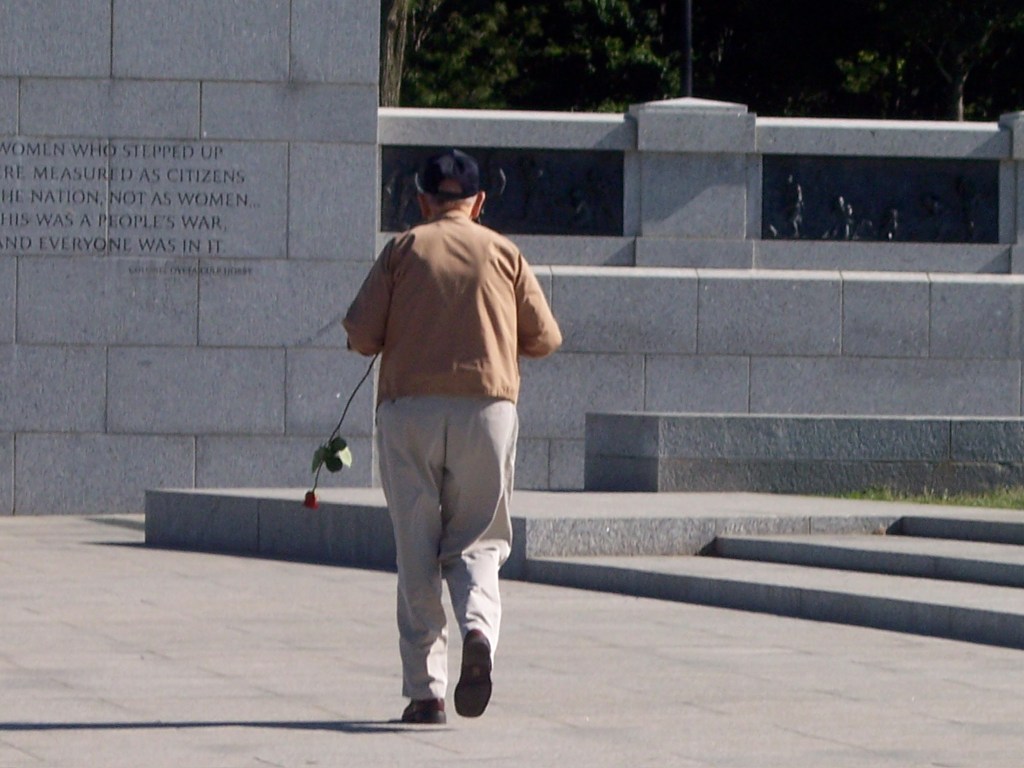
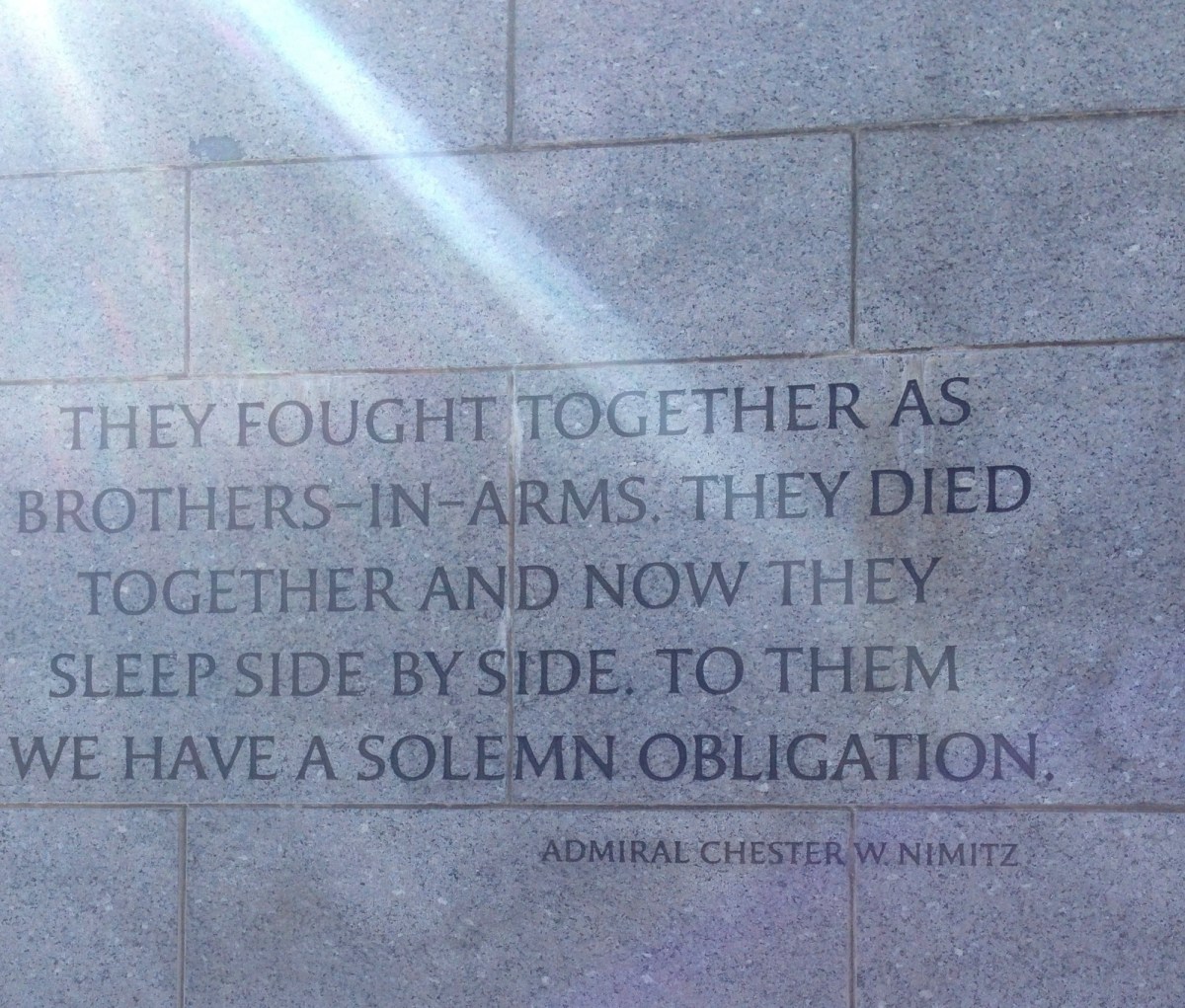
It was a charter carrying veterans. The men stepped off slowly, moving with the careful mechanics of age. Several wore hearing aids. One carried portable oxygen. There were canes and a few white New Balance tennis shoes. Many wore caps stitched with the names the campaigns and divisions: Pacific Theater, 82nd Airborne, Battle of the Bulge. Someone handed each man a rose as he stepped onto the plaza. They entered the memorial built for the war they had fought more than sixty years earlier, long after most of the country had moved on. Etched into the stone behind them, the words of one of their own: “This was a people’s war, and everyone was in it.”

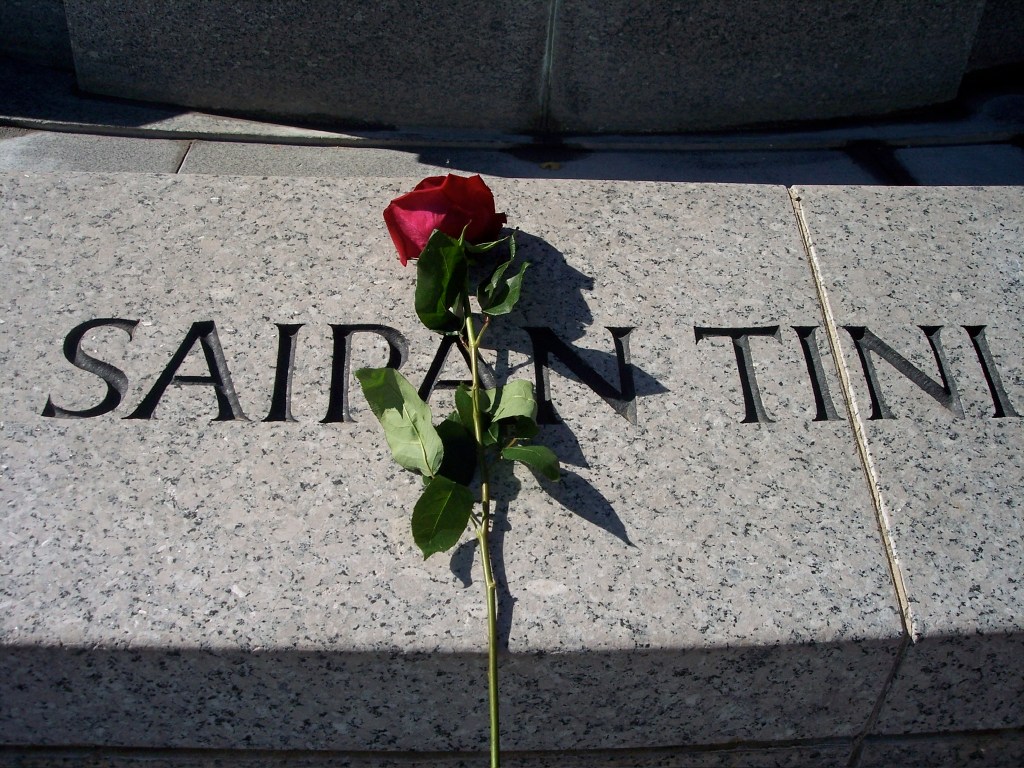
One man drifted quietly toward the Pacific side of the memorial. He moved slower than the others. His rose trembled slightly in his hand. I tried to take a picture without being noticed, one man alone walking toward a wall built for his war. He stopped near the word Saipan and carefully lowered the flower to the base of the wall. Then he stayed there. He did not speak. He did not move. More than once he started to turn away and could not do it. Something kept pulling him back to that stone. After a while another veteran walked over and gently took him by the arm. He leaned into the help as they slowly started back toward the bus. Halfway there he turned around once, just once, looking back toward the wall with something I still do not have a word for.

The rose stayed. The man left. The name on the stone didn’t change.

I have thought about him many times since that morning. I still wonder what it was that held him there. A memory. A friend. A brother. Something that happened on that island that he never spoke of and never forgot. Whatever it was, it was strong enough to pull him back to that wall sixty years later with a rose in his hand and no ability to leave. I will never know the answer. When you are talking about war, maybe wondering is the right response. Maybe not asking is its own kind of respect.

Those men came home. Thousands of others did not. Their theaters and battles are etched in the granite. Others have their names on the Vietnam Wall. They are in the ground at Arlington. So many who never came home. Memorial Day gets treated now as the unofficial start of summer, the long weekend, the backyard barbecue, the first real warmth after winter. None of that is wrong. But it is also this. An old man and a rose and a word carved in stone. The ones who did not come home deserve at least that much of our attention, at least one moment in the long weekend when we let it land.

My son was eleven that morning. My wife and I were nearing forty. The veterans were in their eighties. We all stood in the same place. We all carried different versions of the American experience. None of us said much walking back. Washington does that. It finds you wherever you are. It found a teenager once, worried about horses. It found a father watching his son. It found old men with roses. It finds everyone. And it asks the same thing every time. Do you understand what this cost?

Sometimes that’s how it starts.

Walking Thoughts

A ransomware attack took down Canvas at the end of the semester. A seven year walking streak. A treadmill in a basement. And what all three have in common.

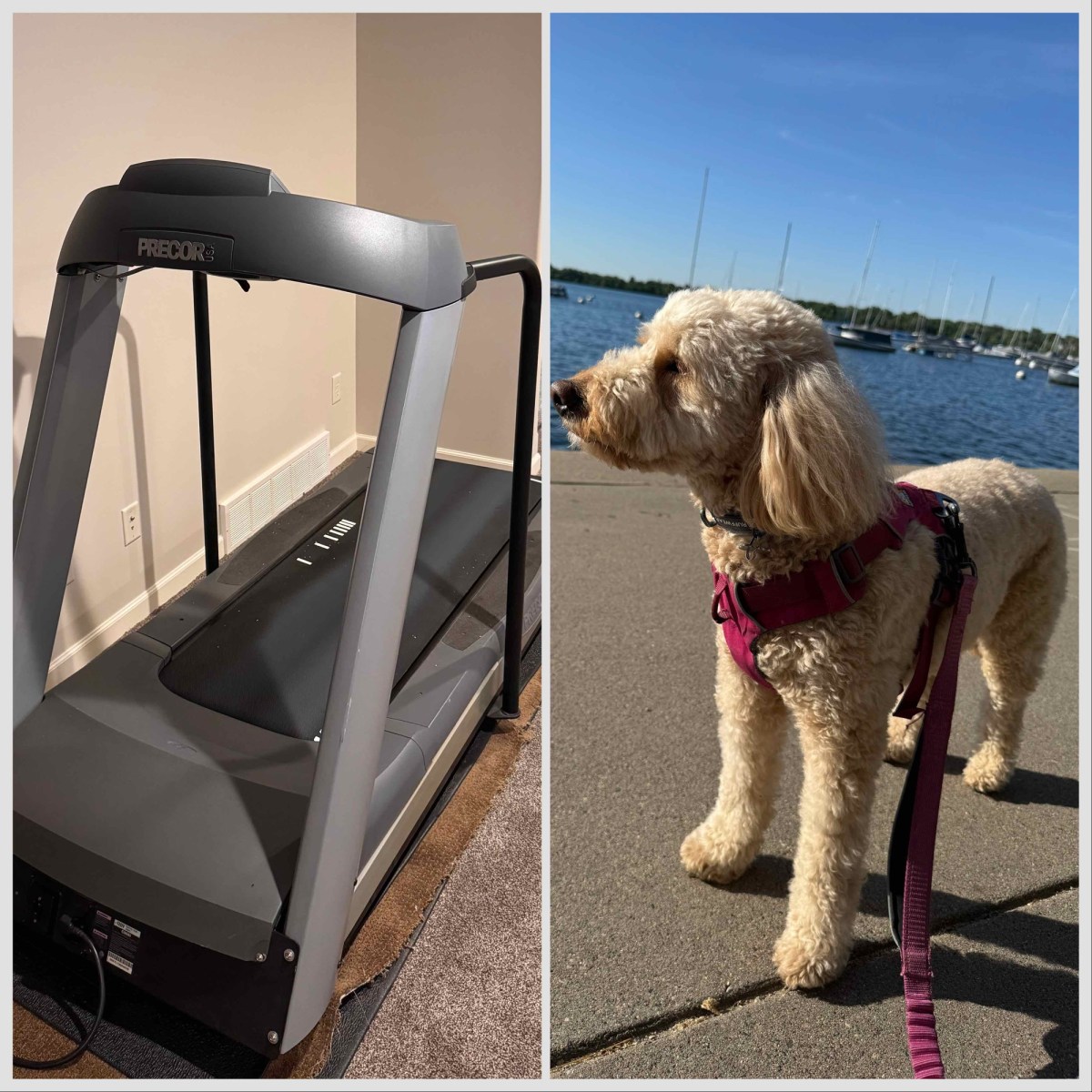
Earlier this week, I walked outside in shorts and a t-shirt for the first time in a long time. Ginger was with me, which has not been a given since January. The temperature was what my kids used to call Goldilocks weather. Not too hot. Not too cold. Just right. It felt like spring, which is one of my favorite seasons, and for a few minutes it felt like something else too. It felt like before.

After my fall, the winter was a lot of treadmill miles. Necessary, functional, and about as inspiring as a dentist waiting room. The streak stayed alive, but the treadmill is not this. It is not the morning air or the way Ginger’s ears go up when she realizes we are actually going outside and not just standing near the door. It is not pavement under your feet or the specific quality of light that only exists in early morning in May. The treadmill is the backup system. This is the real thing. I have been thinking about backup systems a lot lately.

The streak is important to me. It is not worth my life. Those two things can both be true, and learning to hold them together has been its own kind of discipline. Ginger has paid the price for my caution more than anyone, which is not entirely fair to her. But here we were on Tuesday morning. Back outside. Goldilocks weather. Shorts and a t-shirt. The dog happy in the way only dogs can be happy, completely and without reservation.


On one of those treadmill mornings earlier this week, before the shorts and the t-shirt and the Goldilocks weather, I was reading about Canvas on my iPad while walking in place in my basement. Canvas had been hit with a ransomware attack. The system was down. Data had been breached. Somewhere, someone was waiting to get paid.

For those who do not spend their lives around universities, Canvas is the learning management system that runs coursework, gradebooks, assignments, and submission records at a majority of American colleges and universities. Michigan uses it. Minnesota uses it. So do Harvard, Stanford, MIT, and Cal Berkeley. The public school district down the street uses it. Everyone uses it. Well, almost everyone. Purdue made a different call. North Carolina State uses Moodle, which used to be the system at my former institution before Canvas became the answer to a question nobody asked out loud.

The ransomware attack was timed with surgical precision. End of semester. Grades due. Students at maximum anxiety. Every hallway conversation and email orbiting the same question. Then suddenly, the whole system was gone. I later learned that the day before the attack, my former institution had recommended a policy requiring faculty to use Canvas or suffer consequences that were not fully specified but were clearly intended to sound unpleasant. One day later, Canvas did not exist. The universe, apparently, was paying attention.


In the days after the attack, I came across social media posts and articles from professors, mostly in the humanities. Most were people I have never met. A few were former colleagues. Many smugly announced that this never happened before Canvas, that the old system worked fine, and that if we simply returned to bluebooks and spiral notebooks we would all be safe from hackers. They were not wrong that ransomware cannot attack a filing cabinet. They were wrong about almost everything else. A bluebook and a spiral notebook are one fire, flood, theft, or dog with poor judgment away from a semester that never existed. The filing cabinet has no redundancy, no recovery, and no mercy. That is not a backup system. That is cognitive dissonance with a manila folder.

My response to all of this has mostly been a Gen X eye roll. We are the generation that typed college papers on typewriters with margin formatters because the alternative was starting over. We are the generation that had that one professor, and you know exactly who I mean, who required footnotes at the bottom of every page instead of endnotes because he had decided that was how civilization worked and your convenience was not his problem. In law school, we saved papers every ten minutes and printed them every half hour. By the end of a writing session there would be a stack of drafts on the desk and no reliable way to know which one was current. That was our backup system. We learned early that the tools were never as reliable as they looked and the system was never your friend. So when administrators started calling Canvas innovation, some of us smiled, nodded, and kept backing things up.

And because Gen X does not brag about this kind of thing, I will simply say that my gradebook most likely would not have been impacted. During my last semester teaching, I was required to use Canvas as my LMS. Every time I entered a grade into Canvas, I exported the file into an Excel spreadsheet saved in two places: my computer and a thumb drive. My syllabus was not contained in Canvas. It was uploaded to Canvas, which is a different thing entirely. Assignments were separate files. Canvas was the display window, not the warehouse. I did this because systems fail. Not sometimes. Eventually. All of them.


I have been walking every day for nearly seven years. Two thousand two hundred and some days, depending on when you are reading this. The streak began on March 1, 2020, and I know that the way I know my own birthday. Every step since then has been counted by a device, transferred to software, uploaded to an app that tells me immediately where I stand and how long the streak has been intact. The streak is simple in its requirements and unforgiving in its execution: a minimum of ten thousand steps, every single day, without exception. Early on, that number mattered more than it does now. I needed to see it. Now I just need to know it.

If the watch dies tomorrow, if the software crashes, if every piece of technology I use to track this disappears overnight, and I have already walked at least ten thousand steps that day, the streak is still intact. The walk happened. The streak exists in the record, yes, but it also exists somewhere the record cannot touch. I know for a fact that I have walked every day since March 1, 2020. No ransomware attack changes that.

The grades and assignments should work the same way. The learning happened. The work happened. The record of it should be protected, backed up, saved in more than one place. But the work itself belongs to something no system can hold and no hacker can touch. Canvas was the display window, not the thing itself.

The treadmill kept the streak alive all winter. It is not the walk. It was never the walk. But it was there when the walk was not possible, which is the only thing a backup system needs to be.


I will walk this morning. I will write down the number. Somewhere, somebody will back up a gradebook before the semester closes. Somebody else will not.

What a Mother Is

A Mother’s Day essay about the several mothers in one life — the mother who raised me, the birth mother I found after fifty years, and the woman I chose. Each gave me something the others couldn’t.

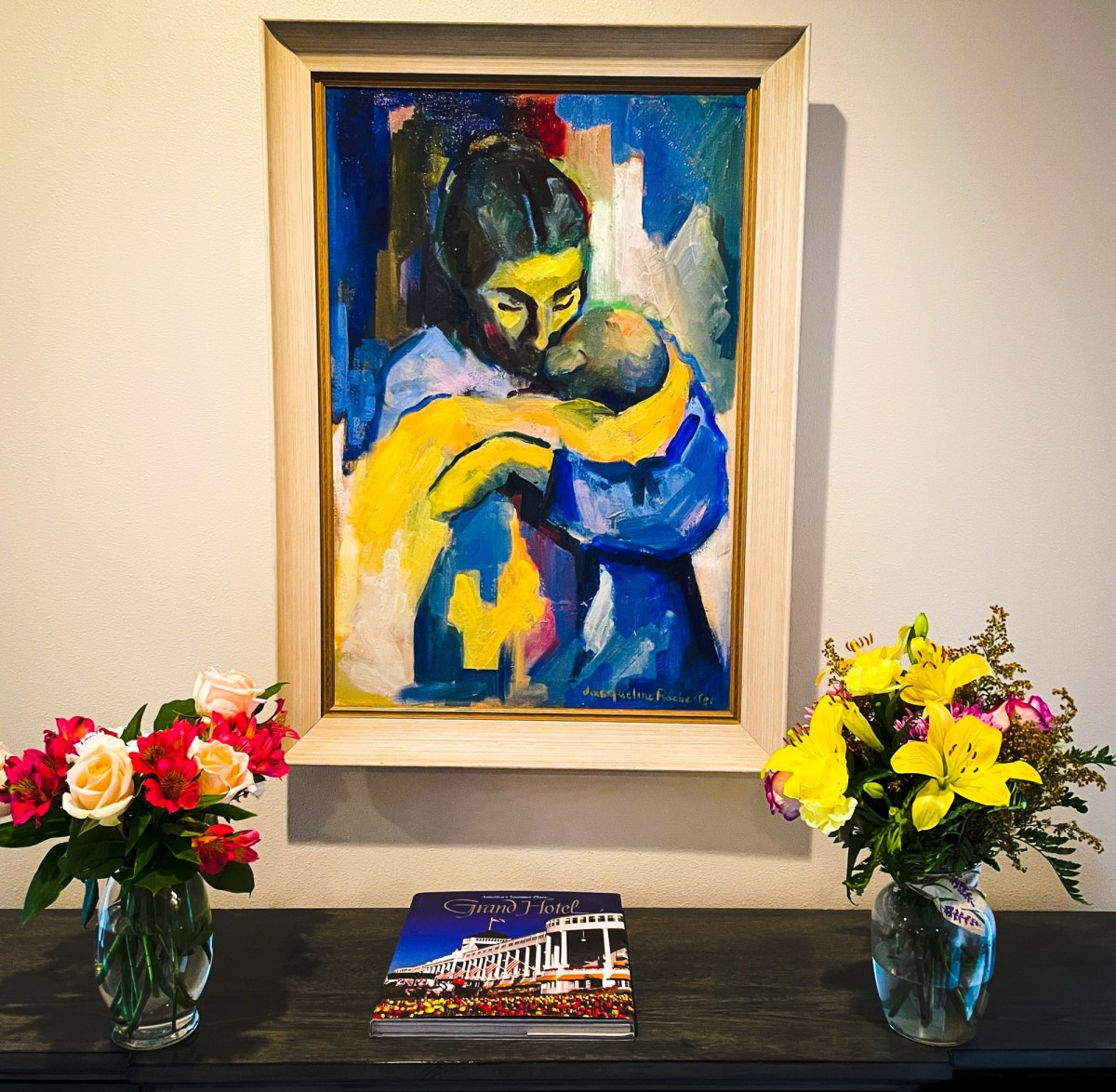
There is a painting in my home that has always been part of my life. A mother holding a child, rendered in bold blues and yellows by a local artist named Jacqueline Rochester. My parents bought it from her when she was a neighbor. Years later, I inherited it. My wife lets me keep it in our home. I am not someone who is moved by a great deal of art. I am moved by this one.

It hangs in the main room. At some point, Mother’s Day flowers ended up on either side of it without anyone planning it. Two bouquets framing a mother and child. It seemed right to leave them there. Tomorrow is Mother’s Day. Early in life, the assumption built into all of it, the cards, the brunches, the flower displays waiting near every grocery store entrance, is that you only have one mother to think about. That is true for a while. Then life keeps moving and the math changes.

There are several mothers in my life, each of whom gave me something the others could not. Every second Sunday in May, I think about all of them.


My mother was everything a young child could want. Caring, compassionate, creative, kind. She made my lunch every day, always my favorite foods. When dinner came, she cooked multiple meals to keep all of us happy. My father, who grew up in a time when food was not always plentiful, would have told us to eat what was in front of us and be grateful. My mother just cooked another meal.

It was early June when a flash flood devastated my hometown. Two hundred and thirty-eight people died in a matter of hours. I was four years old, so my memories are not complete. I remember pieces. Bridges washed out. Cars upside down in department stores. Water and sewer service gone. Close family friends lost their home and lived with us for six or eight weeks. We shared what we had. When we needed drinking water, we drove to an elementary school where tanker trucks had been set up for families. Standing in line filling jugs should have felt strange or frightening. My mother made it feel like an adventure. She made turning on a faucet sound dull by comparison. What four-year-old gets to drive to a school to pick up water?

Looking back now, I realize the same qualities that made her a good mother also made her good on television. “A Woman’s Touch With Mary Ann” was a local talk show, and she was its host. Before tapings, I watched her settle nervous guests with conversation. She made them comfortable. She treated them like they were the most important person in the world, and for those few minutes, maybe they were. She interviewed Phil Donahue, Bob Hope, and, before much of the country understood what it was seeing, Oprah Winfrey. I have sometimes wondered what would have happened if she had been born in a different era or found her way to a bigger market earlier. She never wondered out loud. She may have known it. She never let on.

When South Dakota decided to close the institution where both of my brothers lived, one for twenty-five years and the other for nearly fifteen, my mother went to work. She wrote letters, made calls, cornered politicians, and fought for her sons the way only a mother can fight when she has nothing to lose and everything to protect. In the end, the institution closed anyway. She did not win. But by the end of it, the governor knew exactly who she was. For a mother fighting for her kids, that is not nothing.

In late April and early May, the pasque flower bloomed across our property in the Black Hills. Purple and low to the ground, the first sign winter had finally loosened its grip. Every spring I picked bouquets for my mother without being asked. What I did not know at the time, or perhaps did not care about, was that the pasque flower is the South Dakota state flower, and picking it is technically illegal. I was out there committing crimes for my mother on a seasonal basis. She never once mentioned it. She took those bouquets like they were the greatest gift she had ever received, and she made me feel like maybe they were. Even in college, if I happened to be home at the right time, I still picked them. Some habits survive childhood intact.

She wasn’t there the day I was born, but she is the beginning of every memory I have. She is my original Mother’s Day. She’s gone now. But every May she returns a little.


Maybe that is part of getting older. You realize the people you have lost are not gone in any practical sense. They remain in habits, stories, meals, flowers, holidays, and even the objects sitting quietly in your home. Mother’s Day stopped being simple for me a long time ago because eventually I realized there was another mother thinking about me too.

In the summer of 1968, a twenty-year-old junior at Florida State University arrived in Sioux Falls alone, unmarried, and pregnant. In that era, those facts carried their own social sentence. She lived in a basement apartment for four months. She sewed clothes. She read books. She watched baseball. When the time came, nurses took the baby before she could hold him. She knew only that he was a boy. Then she went home and rebuilt her life. She married, had children, built a career, and kept the secret for fifty years. The hardest days, she later told me, were Christmas, Mother’s Day, and June 15th, the birthday she knew was being celebrated somewhere by someone.

That boy was me.

I found Sandi the way people find things now. A DNA test led to a first cousin match, some internet sleuthing, and eventually, to her. The letter I wrote her took nearly two weeks. I gave her every possible exit because I did not know what waited on the other side. On Christmas Eve 2018, I was standing in a Hy-Vee checkout line, already irritated about something I can no longer remember, when I checked my phone and saw an email subject line that read “Happy Christmas.” I left the cart where it was and walked to my car. I sat there reading the words of a woman I had never met, a woman who had thought about me every Christmas for half a century. At some point I started crying. By the time I drove home, whatever had irritated me ten minutes earlier had completely disappeared.

We met in North Carolina the following spring. She saw me come through the airport terminal and recognized me instantly. To anyone watching, the resemblance probably made the whole thing obvious. She held me the way she had not been allowed to hold me fifty years earlier. For most of my life, adoption had felt abstract to me, almost administrative. A fact more than a feeling. Meeting Sandi rearranged that.

Sandi gave me two things no one else could give. She gave me life. And she gave me up so I could have a better one. I did not understand the size of that decision until I became a parent myself. Both required courage. Both were acts of love. It took me five decades to understand that, but I understand it now.

The painting changed a little after that. For years I had mostly seen comfort in it. After finding Sandi, I started noticing the grip in the mother’s arms.


I did not get to choose the first two women in this story. They came to me the way most things in life do, through circumstance, timing, and decisions made by others. Wanda I chose. She chose me back. What followed has been the great gift of my life, and I have never once found the words adequate to describe her.

Wanda is not a June Cleaver mother. She didn’t bring treats to the ball games. But she made sure her boys got there, on time, with every piece of equipment they needed, which anyone who has ever tried to get a child out the door for a game knows is no small thing. She grew up with only a sister. Boys were not part of her original instruction manual. She figured it out anyway. I’d like to think I helped with the translation.

What she did was harder and quieter than the performing version of motherhood, and she never pretended otherwise. She led by example. She became a role model for her boys without any of them noticing it was happening, which is the only way that actually works.

She protected them, even from me. There were moments when I had something to say and she would suggest another approach. She was right. Every time. Her version of mothering was never hovering. She let her boys figure things out on their own, which takes more restraint than most people realize. When they needed to be challenged, she challenged them. When they needed to be held accountable, she held them accountable. She had a gift I never fully mastered. She could chew them out and motivate them in the same breath. I could only manage the first part.

There is one moment, though, that I come back to more than any other. Our oldest was seven years old when he hit a tree on a ski slope and cracked his skull. We had just found out we were pregnant with our youngest. The doctors were careful with their words. The next 48 hours would be key. That was all they could tell us.

The first night, the two of us folded ourselves into a single recliner in that hospital room, holding each other, not saying much. There wasn’t much to say. Outside the window, the world was going about its business. Inside that room, everything had narrowed down to the sound of a monitor and a seven-year-old’s breathing.

She stayed. The second night, she insisted I go to the hotel. One of us needed real rest, she said. One of us needed to be ready for whatever came next. She had already decided it wasn’t going to be her turn to step back. She sat awake through the night carrying one child while watching over another, and she did it without drama, without complaint, without asking anyone to notice.

We knew he was going to be fine when he started trying to make shapes on one of the monitors, controlling his breath, watching the screen, turning medical equipment into a game. That’s a seven-year-old telling you he’s back. We laughed. On the third day, we went home.

Wanda has been that woman every day for more than twenty-five years. I have a law degree and I teach for a living. I am reasonably good with words. They are not sufficient when it comes to her.


There are several mothers in my life. I am not confused by that. I am grateful for it. Each one of them gave me something the others couldn’t.


Tomorrow is Mother’s Day. There will be flowers and a card, and if I know Wanda, she will insist neither was necessary. Ginger will spend the day underfoot, hoping the occasion calls for a longer walk than usual. Somewhere in North Carolina, Sandi will think about June 15th, except now she knows where the story ended. And I will think about my mother, who spent much of her life making difficult things feel manageable for the people around her.

The painting will still be there when we get back. A mother holding a child between two bouquets no one planned.

See You When Silver Turns to Gold

Twenty-five years ago today it was raining in Rapid City. The places are mostly gone. The day is completely intact.

They say it’s good luck if it rains on your wedding day. Twenty-five years ago today, it was raining. I remember because my soon-to-be wife was worried about her hair. That has held up as a theme. I do not worry about my hair, one of the advantages of not having much left to negotiate. It was also Cinco de Mayo, and I’ve always suspected that wasn’t entirely accidental.

We were married at the Chapel in the Hills, a replica stave church in Rapid City honoring her Norwegian Lutheran heritage and a shared Augustana history, even if we hadn’t found each other there yet. Only our families were invited. Our friends found out later, which was less dramatic than it sounds and exactly how we wanted it. Nine people. Small, quiet, and right.

After the ceremony, we had lunch at the Canyon Lake Chophouse. It’s gone now. That evening, after everyone went their separate ways, we drove to Deadwood for dinner at Jake’s, on the top floor of the Midnight Star. It felt like the right place for that night. It closed about ten years ago, reopened at some point, and I’m not entirely sure what it is now. After dinner, we headed to our family cabin at Terry Peak. We sold that about fifteen years ago.

The Chapel in the Hills is still there, but much of the rest has shifted. The restaurant where we celebrated with family is gone. The place where we had our first dinner as a married couple has been through at least one more life. The cabin where we ended the night is no longer ours. Many of the places that framed one of the most important days of our life no longer exist, or no longer belong to us, or have become something else entirely. And yet the day is completely intact.

We are not the same as we were that day either. A lot of life has happened. We expanded our family. We built a home. We buried a parent. We buried a brother. We built careers and then rebuilt them. We watched both kids grow up and leave, which is the point and also a terrible system. It wasn’t all sunshine and puppy dogs, though we did eventually get the dog. There were ups, a lot of them, and some downs. We rode them out. Everything around us shifted. We shifted too. But through all of it, one thing never moved. Us.

Twenty-five years is long enough to know which fights weren’t worth having and short enough to remember having them anyway. Long enough to finish each other’s sentences and still occasionally be surprised by the person sitting across the table. Long enough to understand that showing up, day after day, in the ordinary and the hard and the unremarkable, is the whole thing.

So, to the woman who worried about her hair in the rain on a cool May morning in Rapid City, thank you. For your love, your patience, your understanding, your compassion, our children, and the thousand quiet Tuesdays that nobody writes about but that are the whole story.

Your hair looked great, by the way. It always does.

See you when silver turns to gold.

How Then Shall We Live

A professor, lawyer, lifelong learner, reflects on what college actually gave him – a World War II barracks, a prehistoric novel, Arthur Miller, and a holocaust survivor who answered the question that still matters most.

The graduation announcements have started arriving in the mail. Envelopes from family members, children of friends, and young people I know mostly through Christmas cards, sidelines, and the long social web of a South Dakota life, where there are at most two degrees of separation between anyone in the entire state, and that may be generous. They are heading toward ceremonies and photographs and whatever comes next. I am not standing at the front of a classroom anymore. But every spring, when the announcements arrive, I find myself thinking about what college meant, what I missed while I was in it, and whether it still offers young people something worth the cost, the time, and the trouble.

I have been thinking about this one for a while, trying to figure out how to say what I want to say. The topic is too big. The question is too complicated. Every time I think I know where it is going, it turns out I don’t, which is either a sign that I am not ready to write it or a sign that it is exactly the kind of thing worth writing. I have decided to believe the latter and proceed accordingly.

Consider this a first pass. I will come back to it. The question demands that. And it may demand more than one answer.


There was a quote on the wall of a classroom at Augustana College that I have never forgotten. It belongs to the philosopher George Santayana: “Those who cannot remember the past are condemned to repeat it.” The building that held it had its own history. After World War II, Augustana purchased several barracks from the Sioux Falls Air Base and moved them to campus to accommodate a surge in enrollment. One of them, an H-shaped structure, became the Science Building, and later the Social Science Building, with a little theater tucked inside. It lasted nearly sixty years before finally coming down. For those who took classes there, it is hard to forget and hard to describe. Santayana’s quote went with it. Some things have to be carried.

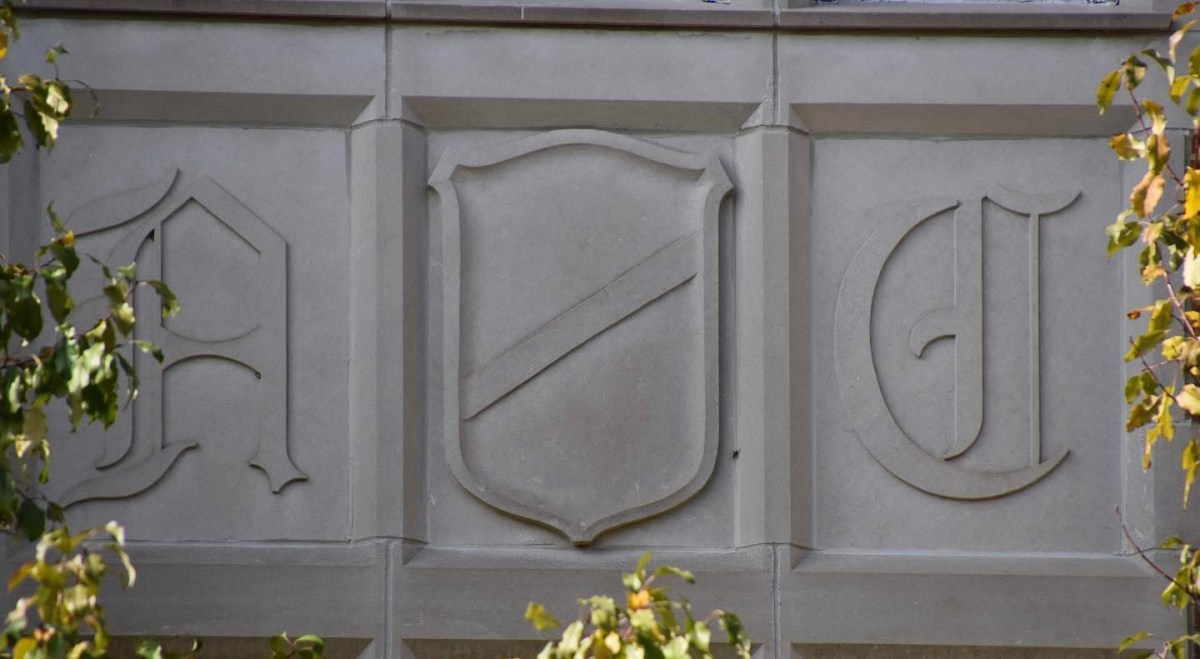
Augustana College, Augustana University now, in the late 1980s was a small Lutheran liberal arts institution on the plains of South Dakota, the kind of place that took seriously the question of what education was for. Not just what you would do with it, but what it would do with you. You would study across disciplines. You would sit with ideas that made you uncomfortable. And at the end, if the institution had done its job, you would be prepared to wrestle with the question that sat underneath all of it: how then shall we live. And, though no one said it quite this way, how then shall we not.

The question, of course, is whether a place like that still exists, or whether we have priced it out, streamlined it away, or explained it so poorly that people no longer recognize its value when they see it.

I did not appreciate any of this at the time. I was eighteen. I had opinions and a meal plan and very little else. The liberal arts made no particular sense to me. College itself made no particular sense to me.

My father had two requirements for everyone in our family. The first was piano lessons. I took them long enough to negotiate my way out, eventually arguing that being in band should count for something. He accepted this, either because he agreed or because he was tired of the negotiation. The second requirement was not negotiable: you are going to college. My parents believed, with the certainty of people who had thought this through, that a degree was the most reliable path to a life with options. They had also, I suspect, done an honest assessment of my manual skills and concluded that the alternatives were limited.

So I went. I had no idea that over the next four years the place would fundamentally change me. I had no idea that a barracks turned classroom, a book I did not want to read, a playwright I did not seek out, and a quote on a wall I walked past a hundred times would still be with me decades later. The place changed me mostly for the better. I say mostly because I am a GenX kid with a healthy suspicion of clean endings. It was college. Some of it was a mess. But the mess turned out to matter too. It would be years before the liberal arts really set in — not until I found myself on the other side of the classroom, looking out at eighteen-year-olds with opinions and meal plans and very little else, and finally understood what had been happening to me all along.


At some point I enrolled in a course called God in the 21st Century: In Search of Fresh Images and New Metaphors. The title was the course. This was not about doctrine or tradition. It was about what happens when the old frameworks stop holding, when the answers no longer fit the questions people are actually asking.

I was assigned Jean Auel’s The Clan of the Cave Bear. My initial reaction was not enthusiastic. A five-hundred-page prehistoric novel in a religion course felt like a category error. We were given two days to read it, which felt less like pedagogy and more like a test of endurance. What stayed with me was not the plot but the structure underneath it, the way authority operated, the way people signaled power and enforced it. I did not have language for that at the time. I do now.

We also read Shusaku Endo’s Silence and The Last Temptation of Christ by Nikos Kazantzakis. I remember liking Silence without being able to tell you why. Some books work on you quietly and leave no forwarding address.

Kazantzakis stayed with me more clearly, mostly because of what was happening around it. The film adaptation had just been released and people were furious. Protests, boycotts, the full apparatus of public outrage. As a junior I did not fully understand the reaction. I understand it better now. He was not writing the untouchable figure many churchgoers recognize. He was writing the human one, a man who wrestled with the possibility of walking away. What if he had refused the role. What if he had chosen an ordinary life. The church has always held that Jesus was both fully human and fully divine. Kazantzakis chose to dwell inside that human struggle, and that alone was enough to bring people into the streets. Today I can see why deeply religious people would struggle with that. But I think that tension — human and divine, doubt and commitment, the road taken and the one refused — is actually at the heart of who Jesus is. The controversy, it turned out, was the lesson.

The professor knew something I didn’t. That is usually how it works.

It was an English course that introduced me to Arthur Miller’s Death of a Salesman. It was on the syllabus, and attending his campus lecture was part of the assignment. I did not seek out the experience. It was required. And yet I sat there and thought: I am in the presence of history. The man had been married to Marilyn Monroe. He talked a little about his writing and I don’t remember much of what he said. What I remember is knowing I was somewhere important, even if I couldn’t have explained exactly why. I was twenty years old and that was enough.

What stayed with me was not the lecture. It was the play. Willy Loman did not fail because he worked too little. He failed because he believed the wrong things about what success meant. He believed the hustle was the point. He was wrong then. We are still getting this wrong. Every new wave of technology resets the hustle without changing the error underneath it. The tools change. The mistake doesn’t.

Which makes the question unavoidable: if college is still worth it, it has to do more than credential the hustle. It has to correct it.


Here is something they do not put in the brochure: higher education is terrible at explaining itself. Colleges will tell you the liberal arts are important. They will hand you a course catalog and a tuition bill and a vague promise about critical thinking. What they will not do often enough is tell you what it is for. Longevity is not an argument. And when they fail to explain it, people quite reasonably start to wonder whether it is worth what it costs.

I spent much of my adult life on the other side of the classroom. Somewhere in the neighborhood of 1,200 students sat in front of me, most of them business majors, most of them practical, most of them focused on what the degree would get them. I do not say that as criticism. It is honest. I understood it because I had been exactly the same way, sitting in a barracks turned classroom, annoyed about a book on prehistoric humans, completely unaware that I was being handed something I would spend the rest of my life unpacking.

But here is what I watched happen, year after year, with the consistency of a well-run experiment: the students who could think across disciplines were better at everything else. Not a little better. Meaningfully better. The accounting major who had wrestled with philosophy could construct an ethical argument under pressure and make it hold. The finance student who had read history understood something his peers sometimes missed — that markets are not machines, they are human systems, and human systems are not rational, they are emotional, and emotional systems repeat themselves with remarkable loyalty to their worst instincts. The business student who had learned to write, really write, could walk into a room and move people with a memo. These were not soft skills decorating the edges of a real education. They were the real education, wearing a different name tag at the conference.

If you are asking whether college has value, this is where I would point. Not to the credential, not to the starting salary, but to the ability to think, to connect, to see patterns where others see noise. Those things compound. They are hard to measure in the short term and almost impossible to replace later.

The argument that liberal arts and vocational programs are rivals is one of the more persistent and counterproductive ideas in American higher education. It is also wrong. The business major and the philosophy major need each other. The nursing student and the history student are asking different versions of the same question. The vocational and the liberal are not competing tracks. They are the same education, approached from different doors, and the ones who figured that out — who let the two inform each other — were the ones who could do things the others couldn’t quite explain.

At Augustana there was a senior capstone course built around exactly this idea. Three disciplines. Humanities, social sciences, natural sciences. The assignment was to put them in conversation with each other, to find the connective tissue, to arrive at something that none of them could produce alone. It was the institution making its argument at last, showing its hand after four years of dealing cards. The course was asking students to do what the whole education had been preparing them to do. It was asking them to think. Not about one thing. About everything, together, at once. And underneath all of it, the question the curriculum was always really about: how then shall we live.

That capstone course was part of a new curriculum Augustana implemented in the late 1980s, an institutional bet that the whole education should build toward something. It was the right bet. In my final years on the faculty, much of it driven by a dean who I believe fundamentally misread what the curriculum was for, the capstone was dismantled and replaced with a first-year experience. The question moved from the end of the journey to the beginning. I thought it was a mistake then. I still think it was a mistake. You cannot answer how then shall we live before you have lived anything. The capstone worked because students arrived at it carrying four years of accumulated confusion, challenge, and occasional revelation. That accumulation was the point. Strip it away and you have a nice orientation exercise. You do not have an education.

This is, I think, what is missing from higher education today. Not funding. Not technology. Not innovation. The willingness to ask the hard question at the moment when it might actually land.

The course was a January term. One month. Three professors. Every day. Peter Schotten, Murray Harr, and Sandra Looney. I want to name them because they deserve to be named.

Peter was Jewish, one of the smartest men I have ever known. As a professor he challenged you and pushed you, and he did it with the confidence of someone who knew exactly what he was building. He was my pre-law advisor and mentor, and when I later returned to Augustana as a colleague he continued to be both. I spent my entire teaching career trying to emulate him. I never did.

Murray had been raised Jewish, had family members who survived the Holocaust, had found his way to Lutheranism, and would later find his way back to Judaism. He had lived the questions he was asking. That mattered. It showed up in the way he taught, in the way he moved between traditions, in the way he assigned books that did not make sense until years later. It was Murray who, earlier, had assigned Clan of the Cave Bear. I understood it better now than I had then.

Sandra Looney was extraordinary. I have tried to find the adequate words for what she brought to that room and I cannot. Some things resist description. What I can say is that all three of them knew exactly what they were doing, and that the month they built together was the most intellectually alive I have ever felt in a classroom.

The centerpiece of the course was a trip to Minneapolis. We stayed at a Lutheran seminary, which felt appropriately on brand for a small Lutheran college on the plains. We saw a dinner theater production of Shenandoah — a Civil War musical about a Virginia farmer who tries to keep his family out of a war that will not stay away from his door. We sat in the front rows of Orchestra Hall, close enough that the music felt physical, close enough that I could see the faces of the musicians. I couldn’t tell you now what they performed. What I remember is thinking that each of those experiences alone would have been worth the trip.

Then we went to a Holocaust center and met Holocaust survivors.

Two survivors spoke with us that day. I don’t remember the name of either one. I don’t remember much of what they said. What I remember is a woman who rolled up her sleeve and showed us her forearm. The number tattooed there when she was a prisoner at Auschwitz. She had been a young woman when they put it on her. She was an old woman now, standing in a room full of college students from South Dakota who had just seen a musical and heard an orchestra, and she was showing us what human beings are capable of doing to one another.

The course had been asking all month how then shall we live. Standing in that room, looking at that forearm, I understood that the question had another side. How then shall we not live. That is not a rhetorical flourish. It is the other half of the education. The books, the arguments, the disciplines in conversation with each other — all of it points somewhere. That woman’s forearm pointed there too, more directly than anything I had read in four years of college.

I have never forgotten her. I don’t need her name to carry what she gave us.


I have been asking it ever since. As a student who did not know what he was being given. As a lawyer who learned that the law is a philosophy with consequences, and that the consequences have a way of clarifying the philosophy. As a professor who watched young people arrive with answers and leave, if things went well, with better questions. As someone who has now walked more than 2,200 days in a row, which turns out to be its own kind of answer, or at least its own kind of practice. You keep moving. You figure it out as you go.

The barracks is gone. A building that survived a world war, crossed a city on a flatbed truck, and held a quote about memory on its wall for sixty years is gone. Santayana would have had something to say about that.

Willy Loman is still out there, working the territory, certain that the next deal will be the one that finally makes it add up. The hustle goes on.

I started this wondering whether college still has value, whether it needs to change, whether what I was given is still being given. I think the answer is yes, but only if we remember what the education was actually for.

And somewhere there is a woman whose name I never knew, who rolled up her sleeve in a room full of college students and answered the question the month had been asking.

How then shall we live.

How then shall we not.

I am still working on both.


Books Referenced in This Post