Aged Thirty Years

I had a birthday this week. Tomorrow is Father’s Day. This is always a complicated time of year, and this one has been harder than most to put into words.

If you’ve been reading this blog for a while, you’ve heard parts of this story before. The golf course. The note. The phone call. I’ve written about this day before. But thirty years asks for more. This year I wanted to go further. Not just what happened, but who he was. And what it’s like to figure that out without him.

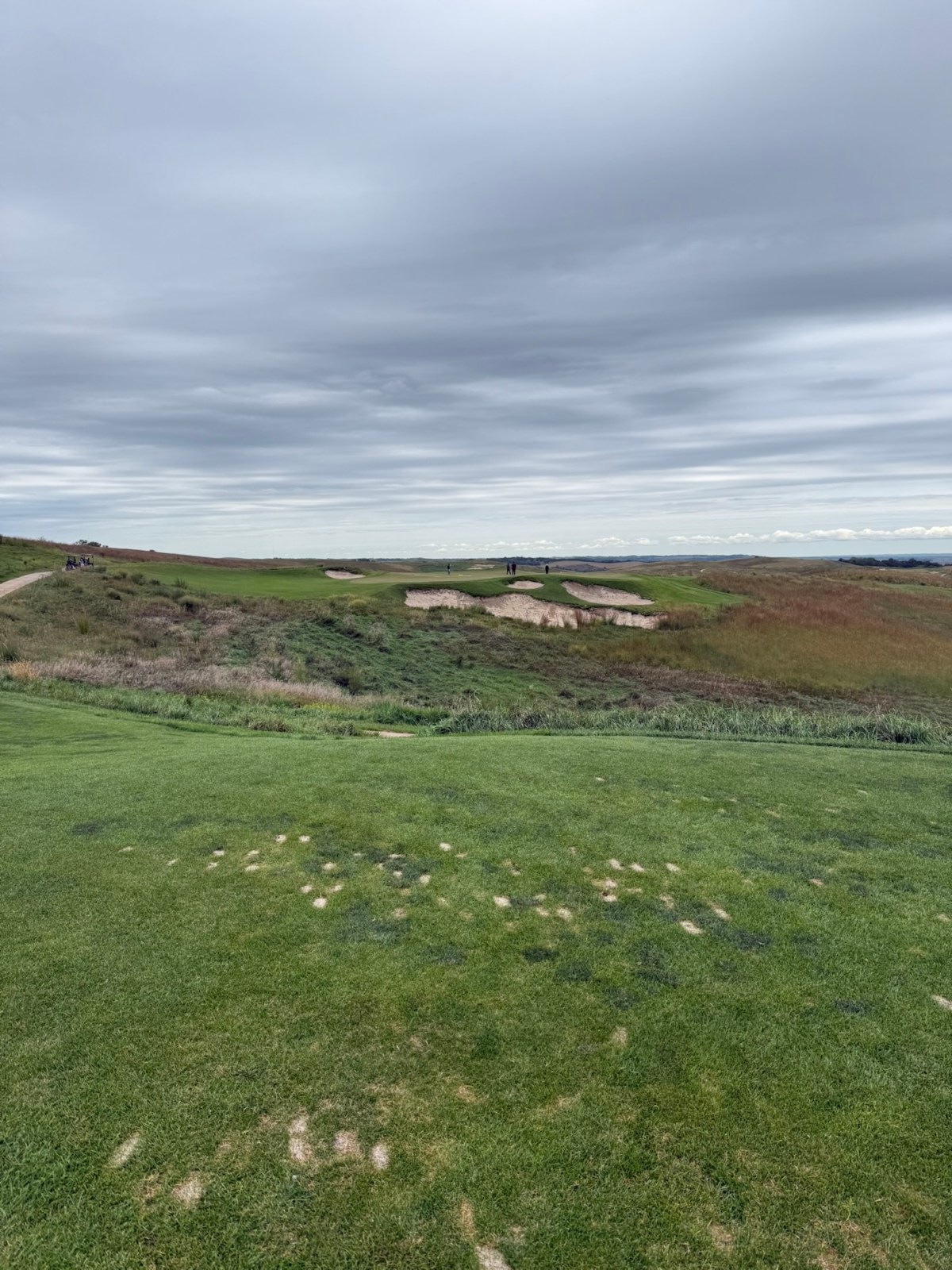
Thirty years ago, my birthday fell on a Saturday. The next day was Father’s Day. I was on the golf course when someone handed me a note written in red ink. Five words: Paramedics called. Call your mom at home.

I went back to the clubhouse. This was before cell phones were common, and they let me make a long distance call to my mother. I think they knew what I was about to learn. She told me “Your father had another heart attack and he isn’t doing very well.” We said a few more words. I don’t remember all of them. Then she told me the ambulance was taking him to the funeral home.

I drove to my parents’ home. Twenty-five minutes. When I arrived, my birthday presents were sitting out. We had been planning a celebration. There wouldn’t be one that day. There was a funeral to plan instead.

Grief, it turns out, comes with logistics. Two services in two towns 350 miles apart. Countless people to notify, arrangements to make, decisions that shouldn’t have to be made at all. His death was so sudden there hadn’t been time to plan anything. We found ourselves picking out burial plots in the cemetery where I had learned to ride a bike. Four of them, side by side. Three are now occupied. One remains. A lot of that planning happened on Father’s Day.

In the middle of it, I needed to get away for a little while. Not far. Just somewhere I could breathe without answering another question or making another decision. I went back to my own home, an apartment attached to a monument shop. That’s when I found it. The Father’s Day card I had already bought, signed, sealed, and set aside. That was not like me. I am usually the guy buying the card the day before, or the morning of, hoping the selection has not been picked clean. But that year, for reasons I still don’t know, I had bought it early. I had written in it. I had done the responsible thing. And now the last Father’s Day card I would ever buy had nowhere to go except with him. It was buried with him.

Father’s Day has never been simple since. Neither has my birthday. They arrive within days of each other every year, and every year they carry the weight of that one. Four times since he died, including the very first anniversary, my birthday and Father’s Day have fallen on the same day. I don’t have a word for what that feels like. I’m not sure one exists.

I don’t know that I can say I know who he was. Maybe none of us ever fully know our parents that way. But thirty years of life have given me more perspective than I had then. I understand more about him now than I did as his son standing in the wreckage of that week. Two of his siblings are still alive, and they could probably tell me even more. That is part of the strange work of grief, too. You keep learning about someone after they are gone. Family. Old friends. Coworkers. Former patients. I’ve heard stories about him from people I barely know. My favorite came from a man who shook my hand and said, “I knew your dad. He did my vasectomy.” I didn’t know what else to say, so I asked how it turned out.

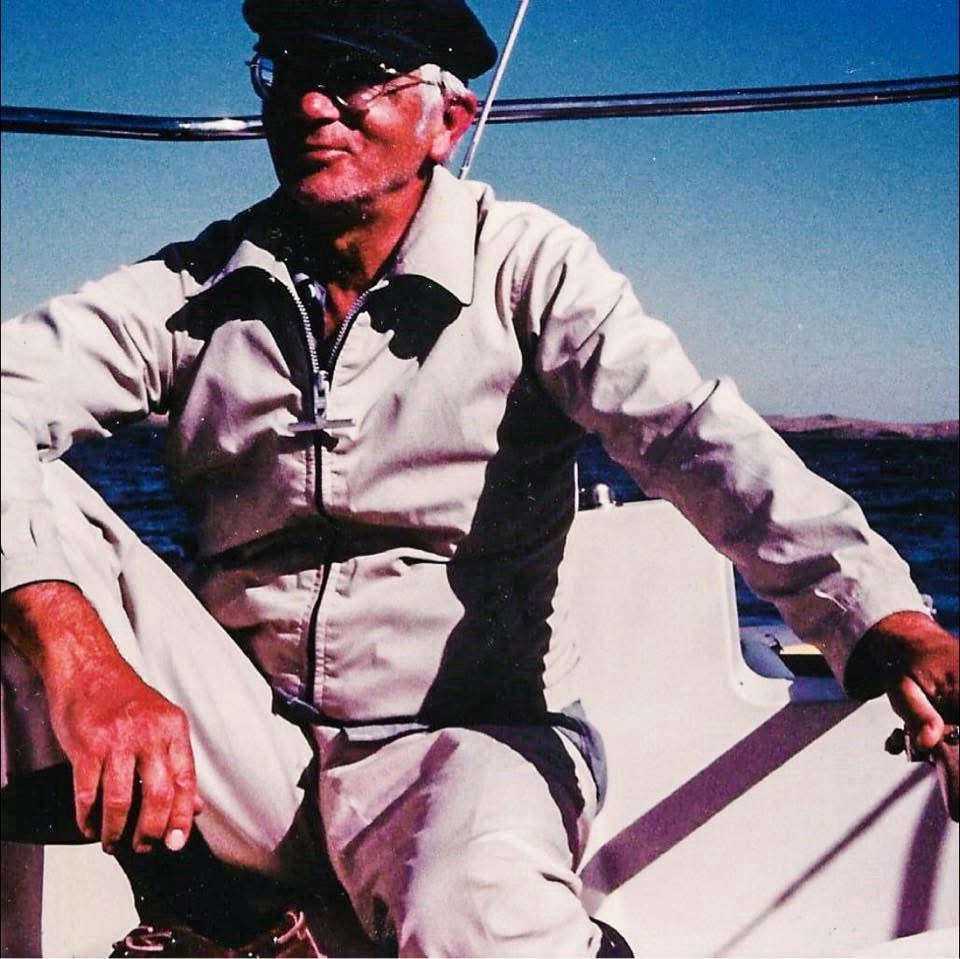
My dad’s name was Russell. He was the oldest child, or so I always believed, and he acted like it his whole life. It wasn’t until we buried my grandfather, his father, that I learned the truth. There had been another child born before him. A baby who didn’t survive. My dad had spent his entire life as the oldest surviving child, carrying that weight without ever fully being the firstborn.

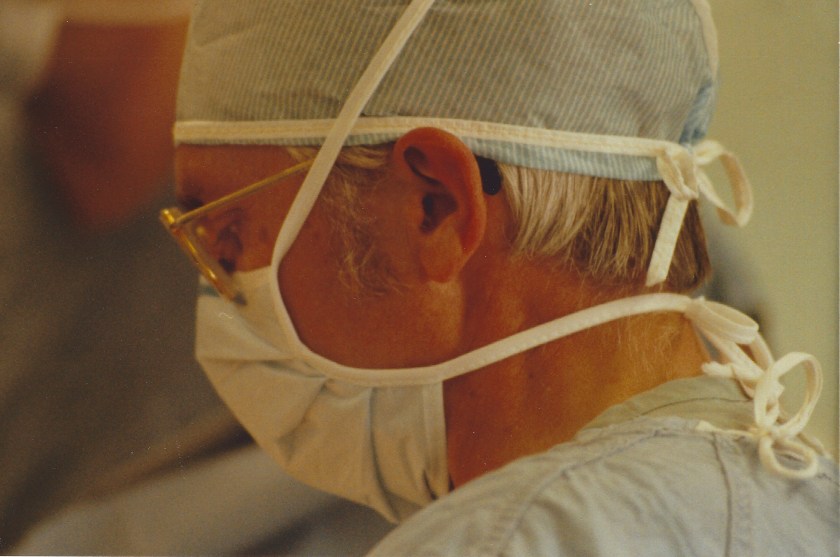
He was a surgeon, and like a lot of surgeons, he was gifted with his hands. He could build things, fix things, figure out what was broken and make it right. He was also a perfectionist. That is exactly what you want in a surgeon. It is not always what you want in a dad.

He tried to teach me some of what he knew, but teaching did not come as naturally to him as doing. I remember being about ten years old, mowing the lawn, and having him inspect it afterward with a surgeon’s eye for the imperfect line and the missed blade of grass. These were errors in a side yard at the end of a long private driveway. Nobody would ever see them. But to him, they mattered. Every project was like that. I never developed any real interest in working with my hands, building things, or fixing things. It wasn’t that the work itself felt beneath me. It was that something in me tensed up every time I picked up a tool, already worrying about the feedback if it wasn’t perfect.

When he died, I kept most of his tools. At the time, I told myself it was practical and valuable. Good tools are worth keeping. He certainly thought so. Every Sunday he would comb through the Sears newspaper ads looking for a deal on a new power tool. If he found one, he would dream up a project that justified the purchase. The tool came first. The reason came after. But the truth is, I kept his tools mostly as a way to keep him.

Over the years, I gave most of them away to people who would use them. That felt better than I expected. There is something good about knowing his tools are still fixing things, still building things, still in the hands of people who know what to do with them.

I still have some of them. This week, I used a few to fix a leaky faucet. I wish I were better at that kind of thing. I wish I cared more about it. But I don’t, not really. Maybe that is because of how he taught me. Maybe it is because of how I am made. Most likely, it is some combination of both. What I know is that even now, standing by a sink with a wrench in my hand, I can still feel the old pressure to get it right on the first try.

And when my own sons were old enough, I didn’t make them mow the lawn. I didn’t teach them how to build things or fix things, either. Maybe that was the wrong choice. But I couldn’t teach what I didn’t know how to do, and I didn’t want them to feel what I had felt. I didn’t want a missed blade of grass, a leaky faucet, or a failed first try to become something larger than it needed to be.

Times are different now. If they need to fix something, they can find a video, ask a question, or follow instructions I never had at my fingertips. But part of me still wonders whether I protected them from frustration or quietly passed along my own fear of it. How do you know what you should teach, what you should push, and what you should let them learn on their own? That is the kind of question I wish I could have asked my father.

What he left behind was not only tools, and the inheritance was not only fear. He left behind standards too. Some useful. Some heavy. Some I wanted to carry. Some I spent years trying not to pass along. And I also remember who he was when he was there.

My father believed in hard work. Not the performance of it, not the talking about it, but the actual showing up and doing the thing in front of you until it was done right.

I remember trying to learn how to water ski. I didn’t enjoy it. I wasn’t having fun. I wanted to be done. My father yelled at me and said that wasn’t the point. The point was learning a new skill, learning how to do something difficult, and taking pride in knowing you could do it. He was right, probably. I did learn how to water ski. But I never learned to enjoy it.

That was one of the complicated things about him. Sometimes the lesson was right, even when the delivery made it harder to receive. He believed competence mattered. He believed doing hard things mattered. He believed there was value in knowing you could do something, even if you never particularly wanted to do it again.

He also believed in integrity, in treating every person you encounter with basic human respect regardless of who they are or what they can do for you. Those weren’t lessons he delivered in speeches. They were just how he lived.

He was generous in ways he didn’t always announce. Our home was open to my friends. He would be there in his chair after a long day, a cigarette in one hand, a book or newspaper in the other, and a martini, scotch, or whatever drink was in rotation sitting not too far away. In hindsight, the fire safety plan may have needed some work. He might pull you into a conversation about politics, argue his side hard, and still expect everyone to be friends the next morning. If we went out to dinner, he paid. Every time, without discussion.

We also had two foreign exchange students live with us for a year. That is not a small thing. Adding another child to a house is expensive, inconvenient, and disruptive in ways people don’t always see from the outside. He did it anyway. He welcomed them, included them, and made them feel like family. That was his generosity, too. Not loud. Not sentimental. But real.

He was not without contradictions. He understood some of his own shortcomings, or at least enough of them to try to warn me away from the same mistakes. I came to think of those warnings as Russisms. He would point at me with a lit cigarette, take a deep drag, and tell me not to smoke because it was bad for me. Or he would swirl a martini, take a sip, and pronounce the dangers of alcohol and why I should avoid it. At the time, I probably heard the hypocrisy more than the wisdom. Now I hear something else. A man who knew his own weaknesses and hoped his son might not have to carry them.

Looking back, I think the Russisms were less about the cigarettes and the martinis and more about something harder to say out loud. They were the advice he wished someone had given him. The mistakes he had already made, handed back to me in the form of a warning. He couldn’t always fix what was broken in himself. But maybe I could avoid some of it. That was the hope, anyway. It usually is.

He was a dedicated physician in ways I didn’t fully understand when I was young. You don’t appreciate that kind of commitment when you’re a kid watching your father leave for the hospital at strange hours. You understand it later, when you’re the patient, sitting across from a doctor and hoping with everything you have that this person actually cares about what happens to you. My father was that doctor. I know that now in a way I couldn’t then.


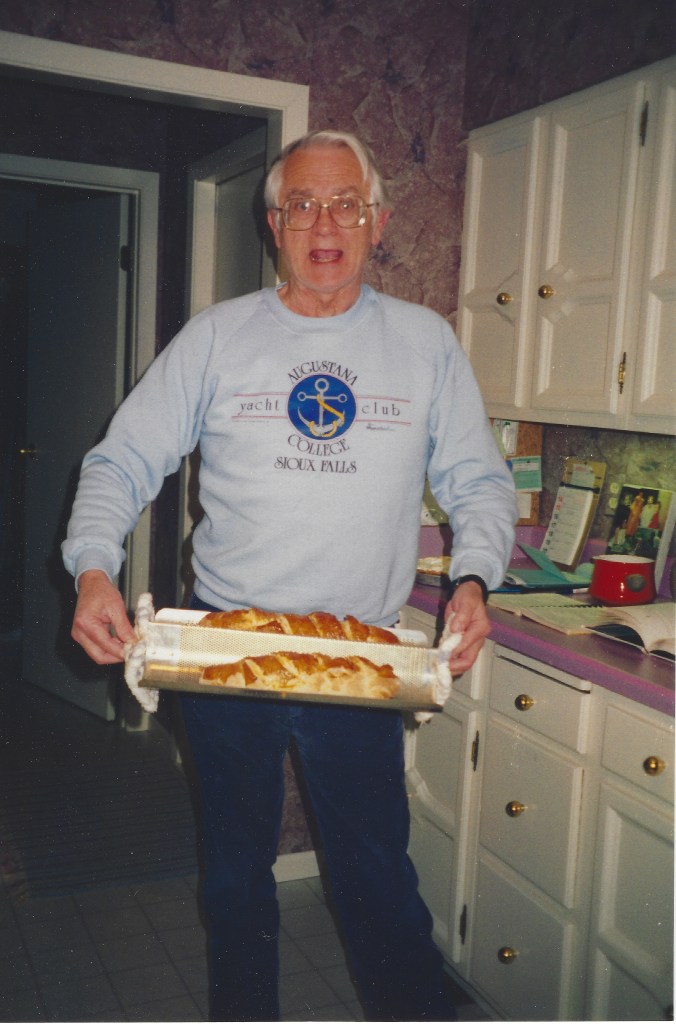
In his later years, after four heart attacks and a forced retirement from medicine, my father began to soften. He tried breadmaking. It didn’t go well, and I think part of him knew it, but he made it anyway. That was new. The man who had inspected a lawn with a surgeon’s eye for the imperfect line was now standing in a kitchen, covered in flour, making something that didn’t turn out right and living with it.

He also showed more outward empathy. He let things go that he wouldn’t have let go before. And in the weeks before he died, he called me just to talk. No agenda. No news to deliver. Just his voice on the phone, checking in. The dad I grew up with never did that. I didn’t know how much I needed it until it wasn’t there.

So what he left behind was also unfinished. The conversations that never happened. The phone calls I never got to make when life got hard. The chance to ask whether he had felt the same doubts, made the same mistakes, and wondered in the quiet moments whether he had gotten it right. I never got to tell him about my own shortcomings and hear him say he understood. And I never got to thank him. Not really. Not for the sacrifices he made, or the strange hours he kept, or the dedication he gave to his patients. I understand now that he did those things so our lives could be better.

He never met my wife. He never met my boys. He would have loved them and probably invented a couple more Russisms. They know him only through stories and a middle name. My youngest carries Russell as his middle name. It’s the closest thing I had to introducing them. It’s not enough. It never is. But it’s something.

Thirty years is a long time to figure something out on your own. Long enough that the figuring becomes the thing itself. I don’t know if I got fatherhood right. I tried to show up. I tried to work hard and keep my word and treat people the way my father taught me. I tried to pass along what was passed to me, even when I wasn’t sure I was doing it correctly. I may not have gotten everything right. But my boys have never once been anything other than the best thing I’ve done. And when I failed, which I did, there was no one to call who had walked this particular road before me.

My father was a connoisseur of scotch and other spirits. Maybe connoisseur is too fancy a word, but he knew what he liked and took some pleasure in understanding it. I have taken an interest in scotch, too. Some of that is taste. Some of it is ritual. Some of it, I suspect, is another way of keeping a small conversation with him going.

A thirty year scotch is not simply older than a fifteen year scotch or a ten year scotch. Time has done something to it. The sharper edges have softened. The heat is still there, but it does not hit the same way. What remains is deeper, smoother, more complicated. Still scotch, but different than it was.

Grief works that way, too. Thirty years have done something to this. Not all of it has burned off. Some of it never will. But the raw pain of that first Father’s Day, the one spent planning a funeral in a cemetery where I learned to ride a bike, has changed. What remains now is grief, yes, but also gratitude, understanding, and a kind of love that has had a long time to age.

Somewhere today there’s a golf course, and a note written in red ink, and a young man who doesn’t yet know what he’s about to learn. I think about him every year on this day. I think about what I’d tell him if I could.

Happy Father’s Day, Russ. I still have things to tell you. And thirty years later, I am still finding things you left behind.

The Man With the Rose

A family trip to Washington DC becomes an unexpected lesson in memory, sacrifice, and what memorial day really means when you let it land.

Washington, D.C., in the summer belongs to everyone. The tour groups, the school trips, the families with strollers and matching t-shirts and someone always needing a bathroom. We had both been there before, my wife and I, though never together. Our oldest son had not been there at all. We were the kind of parents who believed in this sort of thing. Washington, D.C., is the heart of the democratic experiment, the place where laws are made, history preserved, and sacrifice remembered in stone and silence. Some families went to Disney. We went to Washington. Each boy was going to get his own trip, seven years apart. This was the first one. It also happened to be near my wife’s fortieth birthday, which made it feel like the right time for all of it.

Washington and I went back a long way. In 1984 I came with my high school band for the Cherry Blossom Festival. We took first place in the competition, the same thing our band had done three years earlier. Just three years after that we would become the first band from South Dakota invited to march in the Rose Bowl Parade, but what I remember most about that first trip was Pennsylvania Avenue. We marched down it playing “Battle Hymn of the Republic” and “This Is My Country,” trying to stay in formation while I worried mostly about the horses ahead of us. White marching shoes and horses always felt like a risky combination. Even then the city felt different to me, heavier, like history happened there in a way it did not happen other places. I was a teenager and I felt it. I wondered what I would feel coming back as a father.

This trip was different. I was coming back with nearly four decades of life behind me, but I was also seeing the city through the eyes of an eleven-year-old seeing it for the first time. That changes the experience. We walked the Mall, toured the Capitol, and negotiated our way through the Smithsonian. My wife wanted to watch a congressional debate on immigration. My son and I wanted Air and Space. We went to Air and Space. We stood at the Vietnam Wall. The names go on longer than you think they will. More than 58,000 of them. At some point they stop feeling historical and start feeling personal. You cannot stand there very long without realizing each name once belonged to somebody who thought they would eventually come home.

We visited Arlington National Cemetery and found the grave of Cecil Harris, my father’s cousin and a World War II fighter ace. He died on his birthday. I had known his name my entire life, mostly because he was my father’s hero. Standing over the marker, surrounded by row after row of men just like him, I understood something about that word for the first time. This was where the heroes were. All of them. My son was young and we told him what we could.

The changing of the guard at the Tomb of the Unknown Soldier is another one of those things Americans think they understand before they see it. Then they see it. Twenty-one steps. Twenty-one seconds. Everything deliberate. Everything exact. While we were there another group laid a wreath, the same ceremony my high school band had once participated in years earlier. We stood quietly with everyone else watching until a phone rang somewhere in the crowd. Not just any ringtone either. The American Idol theme song. The sound cut through the silence in a way that felt almost physically painful. Heads snapped around. A few people gasped. The soldier never reacted. That made it worse.

But even that was not the moment we carried home with us.

That came later at the World War II Memorial.

We arrived early on purpose because my wife hates crowds. The memorial was nearly empty when we got there. Blue sky without a cloud in it. White stone. You could hear your own footsteps. The World War II Memorial feels different from the Vietnam Wall. The Vietnam Wall is intimate and personal. It breaks you quietly. The World War II Memorial is broader than grief. Vast and declarative, built to hold the weight of an entire generation and what was asked of them. We walked slowly around the perimeter reading the names etched into the stone. Normandy. Bastogne. Midway. Saipan.

Then the bus pulled up.

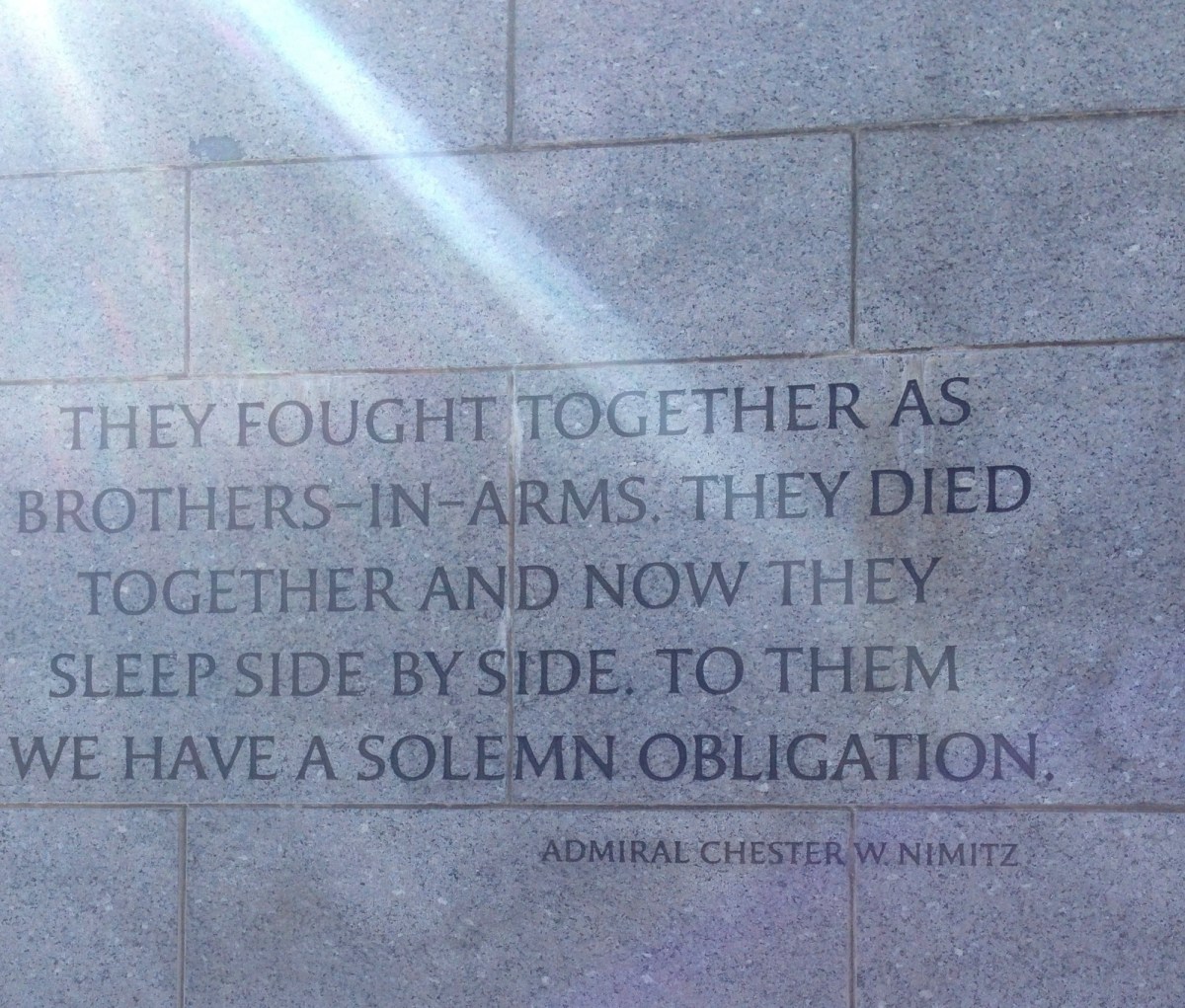
It was a charter carrying veterans. The men stepped off slowly, moving with the careful mechanics of age. Several wore hearing aids. One carried portable oxygen. There were canes and a few white New Balance tennis shoes. Many wore caps stitched with the names the campaigns and divisions: Pacific Theater, 82nd Airborne, Battle of the Bulge. Someone handed each man a rose as he stepped onto the plaza. They entered the memorial built for the war they had fought more than sixty years earlier, long after most of the country had moved on. Etched into the stone behind them, the words of one of their own: “This was a people’s war, and everyone was in it.”

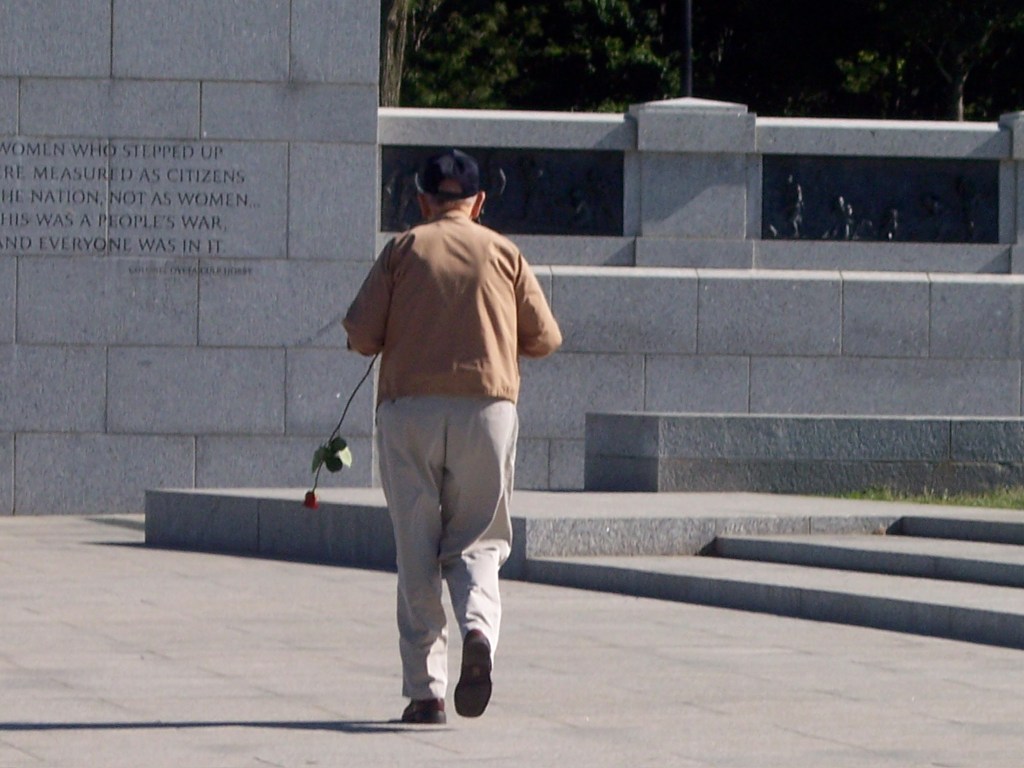
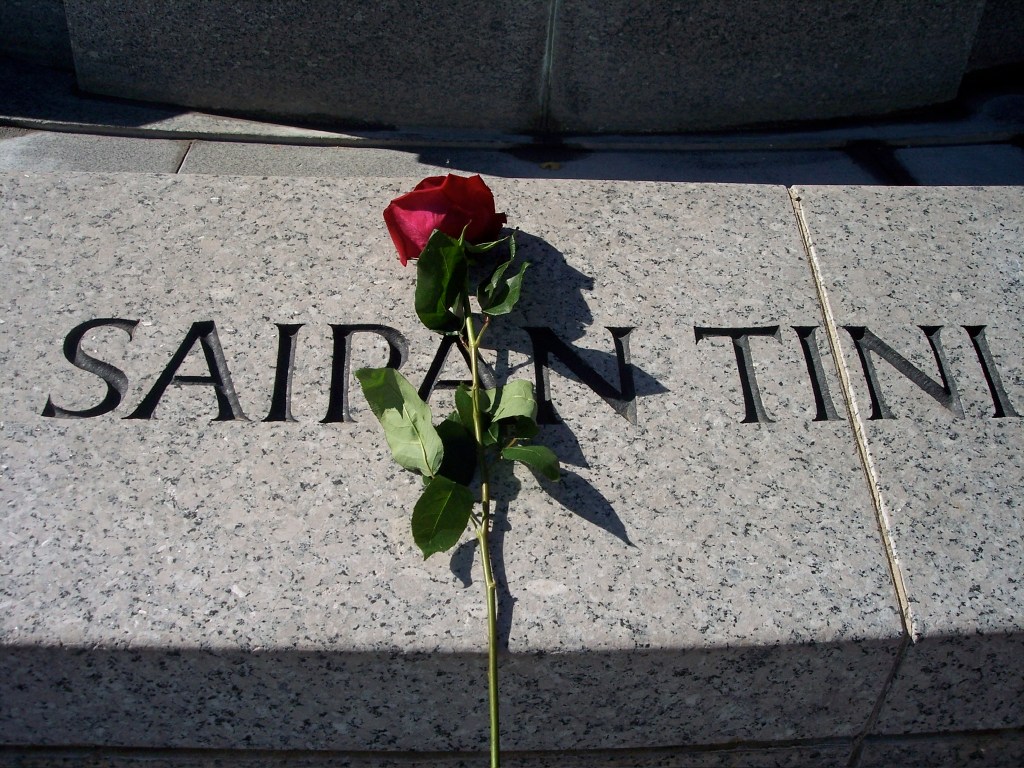
One man drifted quietly toward the Pacific side of the memorial. He moved slower than the others. His rose trembled slightly in his hand. I tried to take a picture without being noticed, one man alone walking toward a wall built for his war. He stopped near the word Saipan and carefully lowered the flower to the base of the wall. Then he stayed there. He did not speak. He did not move. More than once he started to turn away and could not do it. Something kept pulling him back to that stone. After a while another veteran walked over and gently took him by the arm. He leaned into the help as they slowly started back toward the bus. Halfway there he turned around once, just once, looking back toward the wall with something I still do not have a word for.

The rose stayed. The man left. The name on the stone didn’t change.

I have thought about him many times since that morning. I still wonder what it was that held him there. A memory. A friend. A brother. Something that happened on that island that he never spoke of and never forgot. Whatever it was, it was strong enough to pull him back to that wall sixty years later with a rose in his hand and no ability to leave. I will never know the answer. When you are talking about war, maybe wondering is the right response. Maybe not asking is its own kind of respect.

Those men came home. Thousands of others did not. Their theaters and battles are etched in the granite. Others have their names on the Vietnam Wall. They are in the ground at Arlington. So many who never came home. Memorial Day gets treated now as the unofficial start of summer, the long weekend, the backyard barbecue, the first real warmth after winter. None of that is wrong. But it is also this. An old man and a rose and a word carved in stone. The ones who did not come home deserve at least that much of our attention, at least one moment in the long weekend when we let it land.

My son was eleven that morning. My wife and I were nearing forty. The veterans were in their eighties. We all stood in the same place. We all carried different versions of the American experience. None of us said much walking back. Washington does that. It finds you wherever you are. It found a teenager once, worried about horses. It found a father watching his son. It found old men with roses. It finds everyone. And it asks the same thing every time. Do you understand what this cost?

Sometimes that’s how it starts.

What a Mother Is

A Mother’s Day essay about the several mothers in one life — the mother who raised me, the birth mother I found after fifty years, and the woman I chose. Each gave me something the others couldn’t.

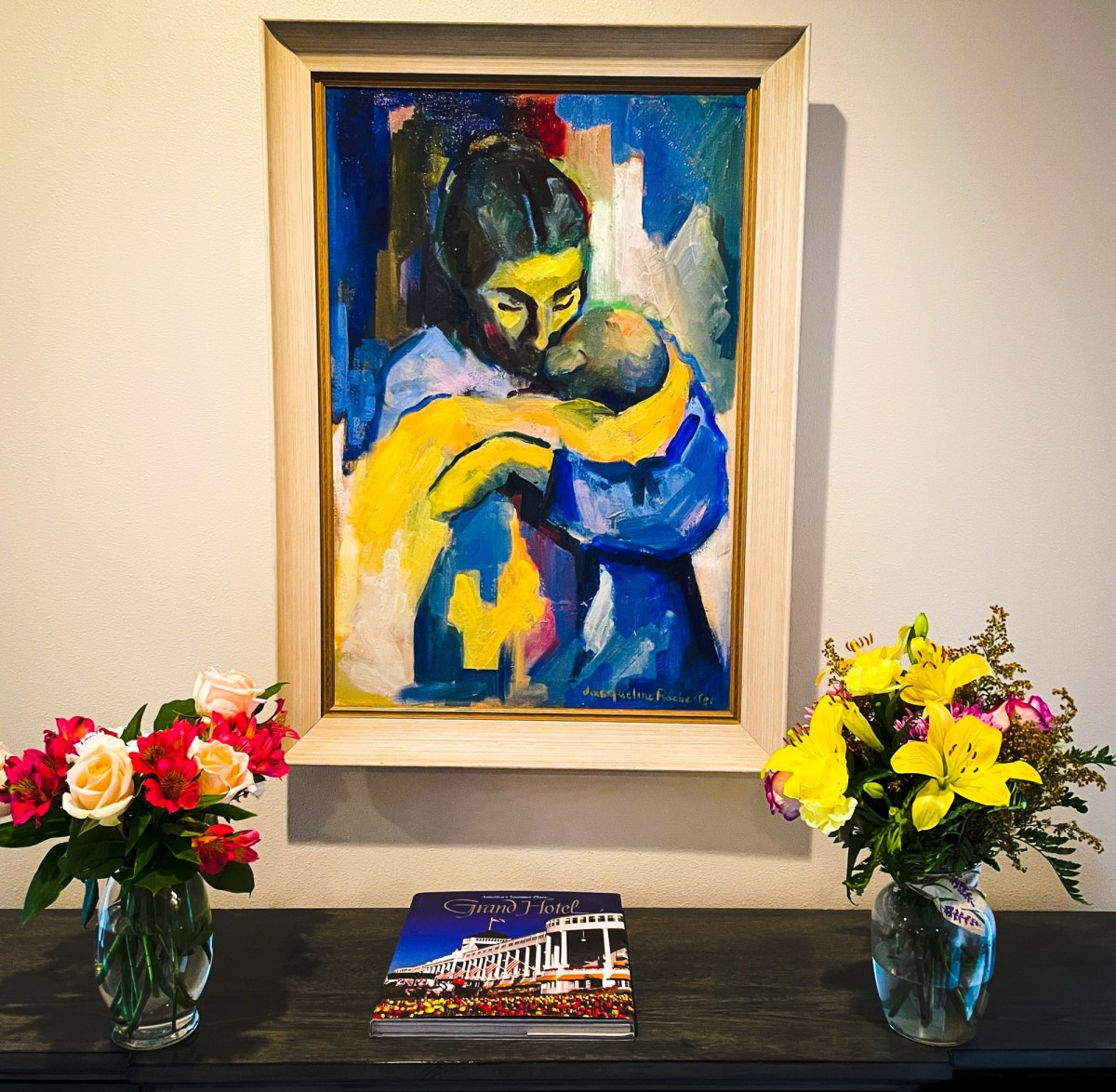
There is a painting in my home that has always been part of my life. A mother holding a child, rendered in bold blues and yellows by a local artist named Jacqueline Rochester. My parents bought it from her when she was a neighbor. Years later, I inherited it. My wife lets me keep it in our home. I am not someone who is moved by a great deal of art. I am moved by this one.

It hangs in the main room. At some point, Mother’s Day flowers ended up on either side of it without anyone planning it. Two bouquets framing a mother and child. It seemed right to leave them there. Tomorrow is Mother’s Day. Early in life, the assumption built into all of it, the cards, the brunches, the flower displays waiting near every grocery store entrance, is that you only have one mother to think about. That is true for a while. Then life keeps moving and the math changes.

There are several mothers in my life, each of whom gave me something the others could not. Every second Sunday in May, I think about all of them.


My mother was everything a young child could want. Caring, compassionate, creative, kind. She made my lunch every day, always my favorite foods. When dinner came, she cooked multiple meals to keep all of us happy. My father, who grew up in a time when food was not always plentiful, would have told us to eat what was in front of us and be grateful. My mother just cooked another meal.

It was early June when a flash flood devastated my hometown. Two hundred and thirty-eight people died in a matter of hours. I was four years old, so my memories are not complete. I remember pieces. Bridges washed out. Cars upside down in department stores. Water and sewer service gone. Close family friends lost their home and lived with us for six or eight weeks. We shared what we had. When we needed drinking water, we drove to an elementary school where tanker trucks had been set up for families. Standing in line filling jugs should have felt strange or frightening. My mother made it feel like an adventure. She made turning on a faucet sound dull by comparison. What four-year-old gets to drive to a school to pick up water?

Looking back now, I realize the same qualities that made her a good mother also made her good on television. “A Woman’s Touch With Mary Ann” was a local talk show, and she was its host. Before tapings, I watched her settle nervous guests with conversation. She made them comfortable. She treated them like they were the most important person in the world, and for those few minutes, maybe they were. She interviewed Phil Donahue, Bob Hope, and, before much of the country understood what it was seeing, Oprah Winfrey. I have sometimes wondered what would have happened if she had been born in a different era or found her way to a bigger market earlier. She never wondered out loud. She may have known it. She never let on.

When South Dakota decided to close the institution where both of my brothers lived, one for twenty-five years and the other for nearly fifteen, my mother went to work. She wrote letters, made calls, cornered politicians, and fought for her sons the way only a mother can fight when she has nothing to lose and everything to protect. In the end, the institution closed anyway. She did not win. But by the end of it, the governor knew exactly who she was. For a mother fighting for her kids, that is not nothing.

In late April and early May, the pasque flower bloomed across our property in the Black Hills. Purple and low to the ground, the first sign winter had finally loosened its grip. Every spring I picked bouquets for my mother without being asked. What I did not know at the time, or perhaps did not care about, was that the pasque flower is the South Dakota state flower, and picking it is technically illegal. I was out there committing crimes for my mother on a seasonal basis. She never once mentioned it. She took those bouquets like they were the greatest gift she had ever received, and she made me feel like maybe they were. Even in college, if I happened to be home at the right time, I still picked them. Some habits survive childhood intact.

She wasn’t there the day I was born, but she is the beginning of every memory I have. She is my original Mother’s Day. She’s gone now. But every May she returns a little.


Maybe that is part of getting older. You realize the people you have lost are not gone in any practical sense. They remain in habits, stories, meals, flowers, holidays, and even the objects sitting quietly in your home. Mother’s Day stopped being simple for me a long time ago because eventually I realized there was another mother thinking about me too.

In the summer of 1968, a twenty-year-old junior at Florida State University arrived in Sioux Falls alone, unmarried, and pregnant. In that era, those facts carried their own social sentence. She lived in a basement apartment for four months. She sewed clothes. She read books. She watched baseball. When the time came, nurses took the baby before she could hold him. She knew only that he was a boy. Then she went home and rebuilt her life. She married, had children, built a career, and kept the secret for fifty years. The hardest days, she later told me, were Christmas, Mother’s Day, and June 15th, the birthday she knew was being celebrated somewhere by someone.

That boy was me.

I found Sandi the way people find things now. A DNA test led to a first cousin match, some internet sleuthing, and eventually, to her. The letter I wrote her took nearly two weeks. I gave her every possible exit because I did not know what waited on the other side. On Christmas Eve 2018, I was standing in a Hy-Vee checkout line, already irritated about something I can no longer remember, when I checked my phone and saw an email subject line that read “Happy Christmas.” I left the cart where it was and walked to my car. I sat there reading the words of a woman I had never met, a woman who had thought about me every Christmas for half a century. At some point I started crying. By the time I drove home, whatever had irritated me ten minutes earlier had completely disappeared.

We met in North Carolina the following spring. She saw me come through the airport terminal and recognized me instantly. To anyone watching, the resemblance probably made the whole thing obvious. She held me the way she had not been allowed to hold me fifty years earlier. For most of my life, adoption had felt abstract to me, almost administrative. A fact more than a feeling. Meeting Sandi rearranged that.

Sandi gave me two things no one else could give. She gave me life. And she gave me up so I could have a better one. I did not understand the size of that decision until I became a parent myself. Both required courage. Both were acts of love. It took me five decades to understand that, but I understand it now.

The painting changed a little after that. For years I had mostly seen comfort in it. After finding Sandi, I started noticing the grip in the mother’s arms.


I did not get to choose the first two women in this story. They came to me the way most things in life do, through circumstance, timing, and decisions made by others. Wanda I chose. She chose me back. What followed has been the great gift of my life, and I have never once found the words adequate to describe her.

Wanda is not a June Cleaver mother. She didn’t bring treats to the ball games. But she made sure her boys got there, on time, with every piece of equipment they needed, which anyone who has ever tried to get a child out the door for a game knows is no small thing. She grew up with only a sister. Boys were not part of her original instruction manual. She figured it out anyway. I’d like to think I helped with the translation.

What she did was harder and quieter than the performing version of motherhood, and she never pretended otherwise. She led by example. She became a role model for her boys without any of them noticing it was happening, which is the only way that actually works.

She protected them, even from me. There were moments when I had something to say and she would suggest another approach. She was right. Every time. Her version of mothering was never hovering. She let her boys figure things out on their own, which takes more restraint than most people realize. When they needed to be challenged, she challenged them. When they needed to be held accountable, she held them accountable. She had a gift I never fully mastered. She could chew them out and motivate them in the same breath. I could only manage the first part.

There is one moment, though, that I come back to more than any other. Our oldest was seven years old when he hit a tree on a ski slope and cracked his skull. We had just found out we were pregnant with our youngest. The doctors were careful with their words. The next 48 hours would be key. That was all they could tell us.

The first night, the two of us folded ourselves into a single recliner in that hospital room, holding each other, not saying much. There wasn’t much to say. Outside the window, the world was going about its business. Inside that room, everything had narrowed down to the sound of a monitor and a seven-year-old’s breathing.

She stayed. The second night, she insisted I go to the hotel. One of us needed real rest, she said. One of us needed to be ready for whatever came next. She had already decided it wasn’t going to be her turn to step back. She sat awake through the night carrying one child while watching over another, and she did it without drama, without complaint, without asking anyone to notice.

We knew he was going to be fine when he started trying to make shapes on one of the monitors, controlling his breath, watching the screen, turning medical equipment into a game. That’s a seven-year-old telling you he’s back. We laughed. On the third day, we went home.

Wanda has been that woman every day for more than twenty-five years. I have a law degree and I teach for a living. I am reasonably good with words. They are not sufficient when it comes to her.


There are several mothers in my life. I am not confused by that. I am grateful for it. Each one of them gave me something the others couldn’t.


Tomorrow is Mother’s Day. There will be flowers and a card, and if I know Wanda, she will insist neither was necessary. Ginger will spend the day underfoot, hoping the occasion calls for a longer walk than usual. Somewhere in North Carolina, Sandi will think about June 15th, except now she knows where the story ended. And I will think about my mother, who spent much of her life making difficult things feel manageable for the people around her.

The painting will still be there when we get back. A mother holding a child between two bouquets no one planned.

See You When Silver Turns to Gold

Twenty-five years ago today it was raining in Rapid City. The places are mostly gone. The day is completely intact.

They say it’s good luck if it rains on your wedding day. Twenty-five years ago today, it was raining. I remember because my soon-to-be wife was worried about her hair. That has held up as a theme. I do not worry about my hair, one of the advantages of not having much left to negotiate. It was also Cinco de Mayo, and I’ve always suspected that wasn’t entirely accidental.

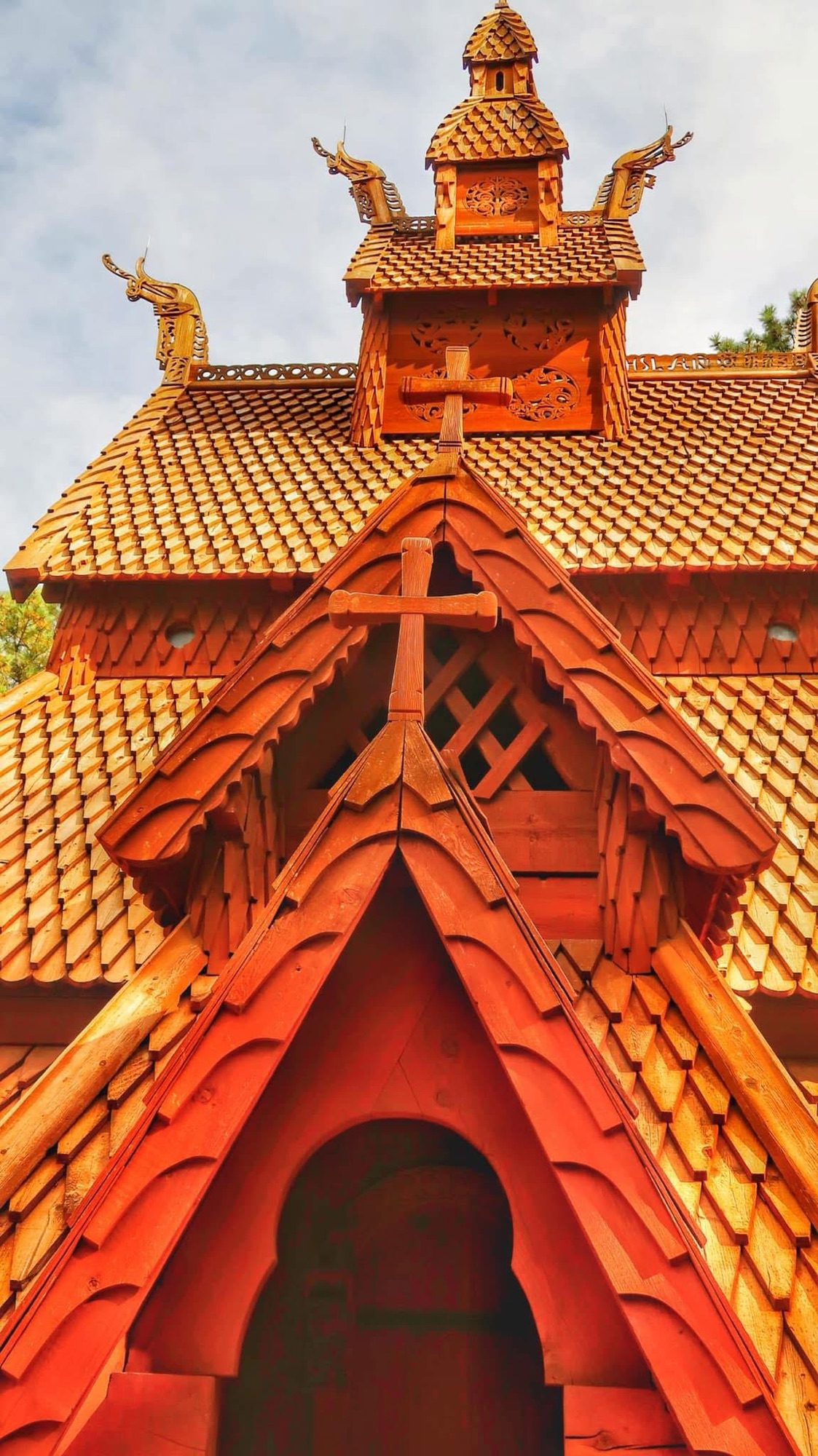
We were married at the Chapel in the Hills, a replica stave church in Rapid City honoring her Norwegian Lutheran heritage and a shared Augustana history, even if we hadn’t found each other there yet. Only our families were invited. Our friends found out later, which was less dramatic than it sounds and exactly how we wanted it. Nine people. Small, quiet, and right.

After the ceremony, we had lunch at the Canyon Lake Chophouse. It’s gone now. That evening, after everyone went their separate ways, we drove to Deadwood for dinner at Jake’s, on the top floor of the Midnight Star. It felt like the right place for that night. It closed about ten years ago, reopened at some point, and I’m not entirely sure what it is now. After dinner, we headed to our family cabin at Terry Peak. We sold that about fifteen years ago.

The Chapel in the Hills is still there, but much of the rest has shifted. The restaurant where we celebrated with family is gone. The place where we had our first dinner as a married couple has been through at least one more life. The cabin where we ended the night is no longer ours. Many of the places that framed one of the most important days of our life no longer exist, or no longer belong to us, or have become something else entirely. And yet the day is completely intact.

We are not the same as we were that day either. A lot of life has happened. We expanded our family. We built a home. We buried a parent. We buried a brother. We built careers and then rebuilt them. We watched both kids grow up and leave, which is the point and also a terrible system. It wasn’t all sunshine and puppy dogs, though we did eventually get the dog. There were ups, a lot of them, and some downs. We rode them out. Everything around us shifted. We shifted too. But through all of it, one thing never moved. Us.

Twenty-five years is long enough to know which fights weren’t worth having and short enough to remember having them anyway. Long enough to finish each other’s sentences and still occasionally be surprised by the person sitting across the table. Long enough to understand that showing up, day after day, in the ordinary and the hard and the unremarkable, is the whole thing.

So, to the woman who worried about her hair in the rain on a cool May morning in Rapid City, thank you. For your love, your patience, your understanding, your compassion, our children, and the thousand quiet Tuesdays that nobody writes about but that are the whole story.

Your hair looked great, by the way. It always does.

See you when silver turns to gold.

Gratitude Challenge 2025 Style

In 2025, I skipped the Gratitude Challenge, mainly due to time constraints. Reflecting on a hectic year, I recognize my gratitude for family and the present moment, acknowledging their support despite challenges. As Christmas approaches, I emphasize kindness, reminding us that everyone faces unseen struggles that require patience and grace.

This was the first year since 2020 that I didn’t do the Gratitude Challenge in November. I could offer plenty of reasons, but the truth is simple: I didn’t make the time for it. That’s on me.

A couple of days ago, I read “The Right Attitude to Gratitude” by David Brooks. It prompted me to look back on 2025. It’s been a hectic year — full of unexpected turns, long stretches of stress, and more challenges than I planned for. But even with all of that, there’s a lot to be grateful for.

I’m grateful for my family. Most of what I feel about them ends up in private writing, where it belongs. But they make my life better in every possible way. They push me to be better, to stay grounded, and to remember what truly matters. I’m grateful for the ways they’ve helped me, and for the quiet ways they help others just by being themselves. Too often, I take them for granted and they become the brunt of my frustrations. I hope to reduce — if not stop — that going forward.

I’m also grateful to be living here and now. When you step back and look at the sweep of human history, you realize how fortunate we are. Things aren’t perfect, but they are better than they’ve been for most of human existence. That perspective doesn’t erase the hard parts, but it does put them in context.

As we move into the Christmas season, I keep coming back to one simple reminder: be kind. Everyone is carrying something — stress, grief, uncertainty, hope — and most of it we never see. A little patience and a little grace go a long way.

No Gratitude Challenge this November. Just a moment to acknowledge what’s good, and to carry that forward.

Reflections on Another Year

It’s complicated. It’s Father’s Day. My father wasn’t the father I wanted him to be; however, given how things have turned out, it appears he was the father I needed.

It’s complicated. Twenty-nine years ago today, my mother called to tell me that my father had suffered another heart attack and didn’t survive. It was a Saturday, and the next day was Father’s Day. his sudden death is one of the saddest days of my life.

It’s complicated. As critical as I was of my father while growing up, on this day when we celebrate fathers, I am reminded of how challenging it is to be a parent. You are constantly trying to make the best decisions, but you often fail. I love my sons more than anything in the world. I haven’t been perfect, but I have always loved them.

It’s complicated. An elected official was assassinated yesterday, marking the seventh such incident in the last 50 years. There is a suspect and it appears he was targeting several other elected officials. Meanwhile, the president celebrated his birthday with a grand military parade, something I have never witnessed in my lifetime across the country. There were mostly peaceful protests taking place. The country is deeply divided.

It’s complicated. Birthdays should be a celebration—a time to reflect on all that is good in our lives. Over the past year, I have used social media to acknowledge birthdays. Each day, I start by checking Facebook for birthday announcements. For those who share their birthdays, I make sure to send them a heartfelt birthday message.

I also take a moment to reflect on how I know each person, why they remain friends on Facebook, and the joy we have brought to each other’s lives. My friends come from various places, with diverse interests, differing political views, and various professions. While I may have favorites among them, taking the time to think about each friend is a nice way to start my day and often reminds me of many wonderful memories.

I also remember friends who are no longer with us but are still on Facebook. I believe that if we dedicate time to remember and celebrate these connections, it enriches our lives.

It’s a bittersweet day for me—today marks my birthday, Father’s Day, and the anniversary of my dad’s passing. It’s a lot to process. So, let’s take a moment to do something special today to brighten the world around us. Reach out to the people you love; they might be facing their own complexities. You never know how your words of kindness can make a difference. Life is complicated.

Life Events

Throughout my professional career, I have consistently advised adults to establish an estate plan. A well-crafted estate plan helps prevent family conflicts, reduce taxes and expenses, and provides clear guidance on how assets should be distributed. I also recommend that individuals review and update their estate plans after significant life events, such as a death, birth, marriage, or divorce. After this past weekend, I am adding college graduation to that list of important events.

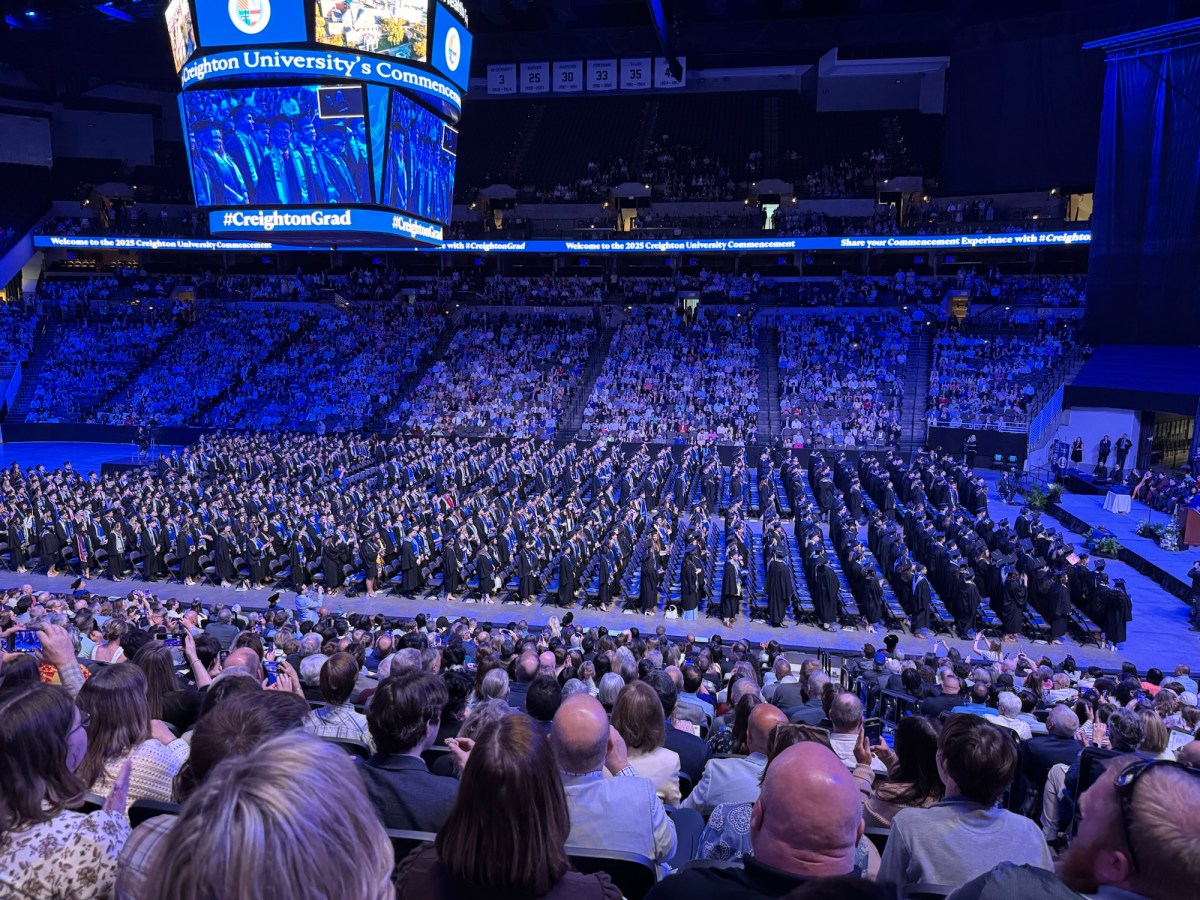
This past weekend, our youngest child graduated from university, and I couldn’t be prouder of him. Watching him grow and mature over the last four years has been incredibly rewarding. As I observed friends, family, and others interacting during this significant occasion, I found myself reflecting on a few key points.

First, I was struck by the importance relationships that were formed over these years. Second, I was reminded of how quickly time passes; it feels like just yesterday when we dropped him off at school. Lastly, I was reminded of the importance of higher education.

My university years were quite a while ago, but many of the relationships I formed during that time still play a significant role in my life today. Watching my son interact with his friends and their families brings a smile to my face; they are wonderful people. As the graduates transition to the next phase of their lives, I hope they continue to nurture their relationships, even as they scatter across the country.

As I write this blog post from my now-quiet empty nest, I can hardly wrap my head around how swiftly time has passed. It feels like just yesterday we were dropping him off at his freshman dorm, filled with a mix of excitement and apprehension. His brief visits home during breaks often left me wishing for just a little more time together, and our trips to his university town were far too few. Yet, here I am, in a surprising twist, sending him a checklist to gear up for moving out of his apartment and into a house of his own. How did we get here so fast?

As a former university professor, I have attended numerous graduation ceremonies. While many share similar elements, my son’s graduation truly reaffirmed the importance of higher education. In recent years, higher education has faced significant scrutiny, and in some cases, this criticism is warranted.

As a student, my university required every student to take a capstone course centered around the essential question, “How then shall we live?” This course encouraged us to explore, connect, and discuss what we had learned throughout our time at the university. My simple takeaway, both then and now, is that higher education serves at least three important functions.

First, it develops and expands our knowledge base. Second, it cultivates essential soft skills, including critical thinking, adaptability, time management, commitment, and improved communication. Lastly, and most importantly, it highlights the importance of building and engaging in a strong community.

What resonated with me was the vital role that universities play in fostering community. A good university gathers a diverse array of individuals—each with their own backgrounds, perspectives, and aspirations—and creates an environment where collaboration and growth can flourish. This sentiment was articulated by both the president of the university and the commencement speaker, who emphasized the importance of this collective journey. They encouraged us to recognize our shared responsibility in using our unique talents and experiences to contribute positively to the world.

Day 29 – Gratitude Challenge

Yesterday turned out to be a fantastic day for several reasons. First and foremost, it was a holiday, which meant I could escape the usual hustle and bustle of work life. There’s something refreshing about having a day entirely to yourself, free from obligations and deadlines.

Moreover, I had the opportunity to spend the day with family. We engaged in activities that we enjoy. Being surrounded by loved ones while doing things that I genuinely enjoy made the day even more special.

I am so grateful for my two sons. They bring so much joy, love, and purpose to my life. Watching them grow into kind adults fills me with pride. They are thriving in their own ways, and it’s inspiring to see them find their paths in life. They teach me patience, kindness, and the value of laughter. I feel lucky to be their parent and to share in their journey. My heart is full, and I am thankful for them every day.

Day 28 Gratitude Challenge

Today, families all across the United States come together to celebrate a cherished tradition: Thanksgiving. It is our national day of gratitude.

As I reflect on past Thanksgivings, I am reminded of those I experienced in my youth. During those times, our family would join with another unrelated family to create one large family for the day. It was such a wonderful time.

In recent years, my small family has come together at a local country club to celebrate Thanksgiving with an incredible meal. While we may not have had any leftovers to take home, the time we spent together filled with gratitude and warmth was truly what mattered most. It’s always heartening to cherish these moments as a family.

Take some time to reflect on Thanksgiving and the traditions that come with it. This holiday is about celebrating what we have. There is a danger in focusing on what we lack or envying what others possess. Instead, be grateful for what you do have.

Day 23 Gratitude Challenge

Yesterday, a friend sent me several pictures of my brothers that I had never seen before. I posted one on social media and attached another to this post. I’ve written about my brothers previously, as they have impacted my life immeasurably.

Since it is the weekend, I will keep this simple. I am grateful for my brothers.