

2026 arrived quickly and with a certain enthusiasm for chaos.

Some seasons arrive quickly, carrying more than we planned to unpack.

It was probably best that I didn’t subscribe to Dry January. I should have known the year was going to be a beast when, less than six hours into it, I was in a hotel and the fire alarm went off—and it wasn’t a drill. This is not how you want to meet a new calendar year. Then the gods of fate said hold my beer when four members of my immediate family experienced “medical” events, including three emergency room visits, three hospitalizations, and a surgery. January came in like it had a clipboard and a very aggressive agenda.

Along the way, I learned—or was reintroduced to—phrases like spinal stenosis, Clostridioides difficile, colitis, concussion, and tympanostomy. My medical vocabulary has expanded more in a few weeks than it had since I snuck into my dad’s home office and leafed through his copies of the Journal of the American Medical Association and Annals of Surgery. I may not have earned a degree, but I’ve at least qualified for a certificate. Possibly laminated.

And in case you hadn’t noticed—perhaps because you, too, were distracted by sirens and discharge papers—there is also a lot going on in the world.

Much of my attention has been on the Twin Cities. My family has been impacted. My friends have been impacted. This hits close to home. I watch and wonder how we got here. Early in my professional life, I spent time both prosecuting and defending criminal cases, which means I have a reasonably high tolerance for human dysfunction. Even so, many of the things I now see and read—especially through that lens—are genuinely shocking. Not shocking in a cinematic way. Shocking in a quiet, procedural, this-is-how-it’s-written-down way.

Current events often pull me back to what I studied in college, back when you could take courses that wrestled directly with uncomfortable truths instead of politely circling them. I took more than one class focused on the Holocaust and similar atrocities. As a senior, I enrolled in Light in the Darkness: Courage and Evil in the Twentieth Century. The course focused heavily on the Holocaust. At the time—and still—I struggled with how something so terrible could happen.

We studied life in Nazi Germany. We discussed Anne Frank. We read Elie Wiesel. We also read Heart of Darkness by Joseph Conrad, a book I still don’t fully understand, which puts me in excellent company that includes most honest readers.

Though my memory of the course is imperfect—college being a long time ago and optimism being a powerful anesthetic—several moments stand out. Perhaps most significantly, we took a “field trip” to Minneapolis. While there, we attended a concert at Orchestra Hall, spent an evening at the Chanhassen Dinner Theatre, and visited a Holocaust museum.

But there is one experience I will never forget.

We met Holocaust survivors.

One woman had been sent to Auschwitz. She told us her story patiently and answered our questions with care. Then, in a moment that permanently fixed itself in my memory, she rolled up her sleeve and showed us the tattooed number on her arm—a mark that had been there for more than forty-five years. No build-up. No warning. Just history, sitting across from us in a folding chair.

She spoke about the days leading up to liberation. She described the moment she knew she was free. She was offered a ride to the nearest supply camp roughly a mile away. She declined. This, she said, was her freedom walk. She walked the entire distance, stopping frequently because she was so weak. She had to keep her head lower than her heart to avoid losing consciousness.

She spoke about her first bite of food—and the danger of eating too much, too quickly—because her body had essentially shut down. She knew she was close to death, close enough to feel it in a practical, unsentimental way, but she willed herself to live. She told us she kept repeating to herself: Not today. Today I am free.

Someone asked her how she felt about Germany now. Very calmly, she explained that she bore no ill will toward Germans born after World War II. They were not responsible, she said; they carried the scar, not the guilt. But Germans who were present at the time—who did nothing and said nothing—were responsible for the atrocities.

There was no theatrics. No slogans. No grand conclusions. But the emotion, the pain, and the anger hung in the air, doing what facts sometimes do when delivered by someone who earned them the hard way.

I don’t remember her name. I remember her message.

Make sure this never happens again.

Since then, I have found myself returning to her words. I wonder—perhaps naively—whether a similar regime could ever arise in my own country. I keep reaching the same conclusion: yes, it absolutely could. Not because of any single current event, but because we are human, and humans have repeatedly shown a remarkable capacity for atrocity, especially when paperwork is involved.

I also arrive at a more uncomfortable conclusion: there is no way to know how I would respond.

Would I recognize what was happening in real time? Would I speak out? Would I protect those being targeted? Or would I choose personal or family safety over principles and values? Would I convince myself that compliance was temporary, reasonable, or necessary? History suggests these decisions are rarely dramatic. They are incremental. Transactional. Rationalized. Often explained afterward with excellent grammar.

And that, more than anything, troubles me.

What unsettles me most is not that the news feels alarming—news often does—but how quickly alarming things begin to feel normal. A headline that stops you cold on Monday becomes background noise by Friday. By the following week, it’s something we summarize with a shrug and a sentence that starts with, “Well, I guess that’s just how things are now.” That is usually the point at which questions about how we would respond quietly turn into questions about what we are willing to tolerate.

What we are willing to tolerate is shaped, in no small part, by what we understand to be our rights in the first place. When those boundaries are clear, normalization has limits. When they are vague, everything becomes negotiable. Fortunately, we do not have to define those boundaries from scratch or rely solely on instinct and outrage. We have a well-worn roadmap. It is called the Constitution. It does not prevent abuse or guarantee wisdom, but it does establish a baseline—certain rights meant to exist regardless of convenience, popularity, or who happens to be in power.

At its most basic level, that baseline includes the right to move through daily life without harassment; the right not to be stopped and required to justify one’s existence; the right to be free from restraint, harm, or worse based on minor suspicion; and the right to observe authority without becoming its target. It includes the right not to be threatened, exploited, confined, or erased—and the right to speak freely, worship freely, and to have a home that remains a refuge rather than a checkpoint.

None of this is abstract. None of it lives safely in textbooks or court opinions. It unfolds in real time—often within hours: a traffic stop at dusk, a crowd forming, a knock before sunrise, a decision made quickly by someone with power and limited restraint. At that speed, there is no meaningful pause, no appeal, no rewind. Due process—the idea that power must justify itself before it harms—only protects people if it exists before force is applied, not afterward. If this feels distant or exaggerated, it is usually because it has not yet arrived at one’s own door.

These are not rights granted by government, nor privileges extended for good behavior. They exist prior to government—whether understood as gifts of God, products of nature, or the result of generations of hard-won human progress. We entrust them to the state for one narrow purpose: protection. When that order is reversed, what remains may look like order, but it is not law.

It is force, borrowing the language of authority.

I began by describing how difficult January felt for me—personally, professionally, and emotionally. But those struggles, real as they were, pale in comparison to January of 1945, when Auschwitz was liberated and survival itself depended on the refusal to give in, even when the body was failing and the future uncertain. Remembering that contrast doesn’t diminish present concerns; it sharpens them. It reminds me that perspective matters, that endurance has a history, and that resolve—then as now—often begins with a single, quiet decision: not today.

2000

The pandemic feels like a lifetime ago, and yet I can tell you exactly how long it has been: 2,000 days. I know this not because of science, or history, or the passage of time, but because on March 1, 2020, I started a streak.

A walking streak.

Every single day since then—through shutdowns and reopenings, through new jobs, new routines, travel, stress, exhaustion, weather that felt like it was designed to break me—I have walked at least 10,000 steps.

Two thousand days.

I didn’t set out to do this. At the beginning, it was something to do during the pandemic. It also protected my sanity. Walking was the chance to get out of the house and leave everything else behind. Ten thousand steps a day had long been the baseline, ever since I started wearing a fitness tracker. Twenty-two thousand steps was the dream. (For reference, that’s about ten miles a day, or the equivalent of pacing nervously during a seven-hour baseball game.)

The first year was easy. I averaged nearly 22,000 steps per day. The second was manageable, still averaging nearly 20,000 steps per day. But the last three were harder. I changed careers. Time shrank. The joy of the walk, once as natural as breathing, sometimes felt like another appointment on an already crowded calendar.

Quick aside here: if you’ve never experienced the low-grade panic of watching your fitness tracker show 9,976 steps at 11:57 p.m., you haven’t lived. That’s when you find yourself walking in pajama pants around the kitchen island like a lunatic, praying the neighbors can’t see through the window.

What kept me going? Partly, the dog. (She doesn’t negotiate. She knows when it’s walk time, and if I try to skip, she looks at me like I just canceled Christmas.) Partly, the number itself. The bigger the streak grew, the harder it was to let it go. You don’t walk 1,732 consecutive days just to stop there.

And now we’re at 2,000.

I should say this: I am impressed with myself. I don’t usually say things like that, but persistence deserves a little horn-tooting. If I can string together 2,000 days of anything—walking, writing, flossing—maybe I’m not as undisciplined as I sometimes think.

Of course, streaks end. Technology fails. Bodies get sick. Life interrupts. At some point, a day will come when the step counter doesn’t make it to 10,000, and I’ll have to deal with it.

But not yet.

The next goal is December 30, 2025—Day 2,131. If you’re a baseball fan, you know why. (That’s the number Cal Ripken Jr. reached when he passed Lou Gehrig in consecutive games played. If you’re not a fan, know this: it’s persistence at a mythical scale.) After that, the big one: 2,633 days, when Ripken’s streak itself comes into view on or about February 6, 2027.

Will I make it to 2,633? I don’t know. The streak doesn’t give me the same joy it once did, and some days it feels like one more box to check. But every morning, the dog is there, stretching in anticipation, eyes pathetically pleading. And every morning, I lace up my shoes.

The Streak

Since 2017, I have been using walking as my primary form of exercise and fitness. During that summer, I bought a Fitbit and started my fitness journey. That also marked the beginning of my obsession with steps. Over the next three years, I have walked so much that I had to replace my shoes multiple times. While walking, I listen to audiobooks and podcasts, which make the experience more enjoyable. Overall, I felt much better and healthier after incorporating walking into my daily routine.

I am determined to achieve at least 10,000 steps every day (approximately five miles). Before 2020, I used to accomplish this goal on most days. I am proud to have set multiple personal records, including 41,000+ steps in a day, 215,000+ steps in a week, and 715,000+ steps in a month. However, one record still eludes me – 365 consecutive days with 10,000 steps or more. Despite this, I am motivated to keep pushing myself and working towards this achievement.

Let me take you back to the beginning of 2020, a time when the world was full of hope and anticipation for a great year ahead. As for me, January kicked off with a trip to London, where I spent most of the month teaching a course on Brexit with a great colleague and a group of primarily enthusiastic students. Later that month, I flew back just in time for my oldest son’s wedding – a beautiful celebration with family and friends.

It seemed like everything was going smoothly when February rolled around, and the start of another semester loomed ahead. Despite the busy schedule, my wife and I had a San Diego trip planned for early March, and we were both eagerly looking forward to it. Little did we know that this trip would be one of the last normal things we would do for a while.

I totally failed my goal of walking 10,000 steps on February 29, 2020. I have no clue why it didn’t happen. That day, I went to an Augie basketball game and watched them lose by two points in the conference tournament, which was really sad. Maybe I was so bummed about the loss that I didn’t feel like walking at all.

Can you believe it’s been four years since I last missed my step goal? That’s right, February 29, 2020, was the last time I fell short, and since then, I’ve been crushing my daily target of 10,000 steps or more for 1,460 consecutive days. It’s been an incredible journey, and I couldn’t be more thrilled to have made it this far.

Although my memory is somewhat blurry, I recall that I had planned to begin a new streak on March 1, 2020. I was quite enthusiastic about it because our upcoming trip would have given me a good head start on my goal. Unfortunately, what I didn’t expect was the outbreak of a global pandemic that would bring about the shutdown of society.

From the very beginning of the pandemic, I committed myself to walking at least 10,000 steps every single day until the pandemic came to an end. I thought it would last for only six months, but as it turns out, it was a significant part of our lives for almost a year. But you know what? This has been one of the most exciting challenges I have ever taken up. Who would have thought the habits I started during that unprecedented time would become a permanent part of my life? It’s exciting to think about the positive impact this challenge has had on my life.

Every day, I kick off my mornings with a brisk walk lasting 30 to 45 minutes. Time permitting, I take another walk after work as well. Whether it’s outside enjoying the fresh air or indoors on a treadmill, I ensure that exercise is an integral part of my daily routine. I am committed to this routine, and breaking the streak is not even a remote possibility at the moment.

What streak are you starting today?

*The picture attached to this post was taken during a March 2020 walk along a San Diego beach.

Small Changes

“Think about the massive positive change that could occur in the world if we each did even the tiniest thing to make a difference every single day.” – Jen Sincero

Twenty-three months ago, I made a decision to change. I made a commitment to be healthier and happier. Most of the physical change occurred in the first four months. Since then, despite repeated efforts to change even more, I have mostly stayed within a 10 pound range. While I have maintained, I haven’t made significant movement towards my ultimate goal. This has been frustrating.

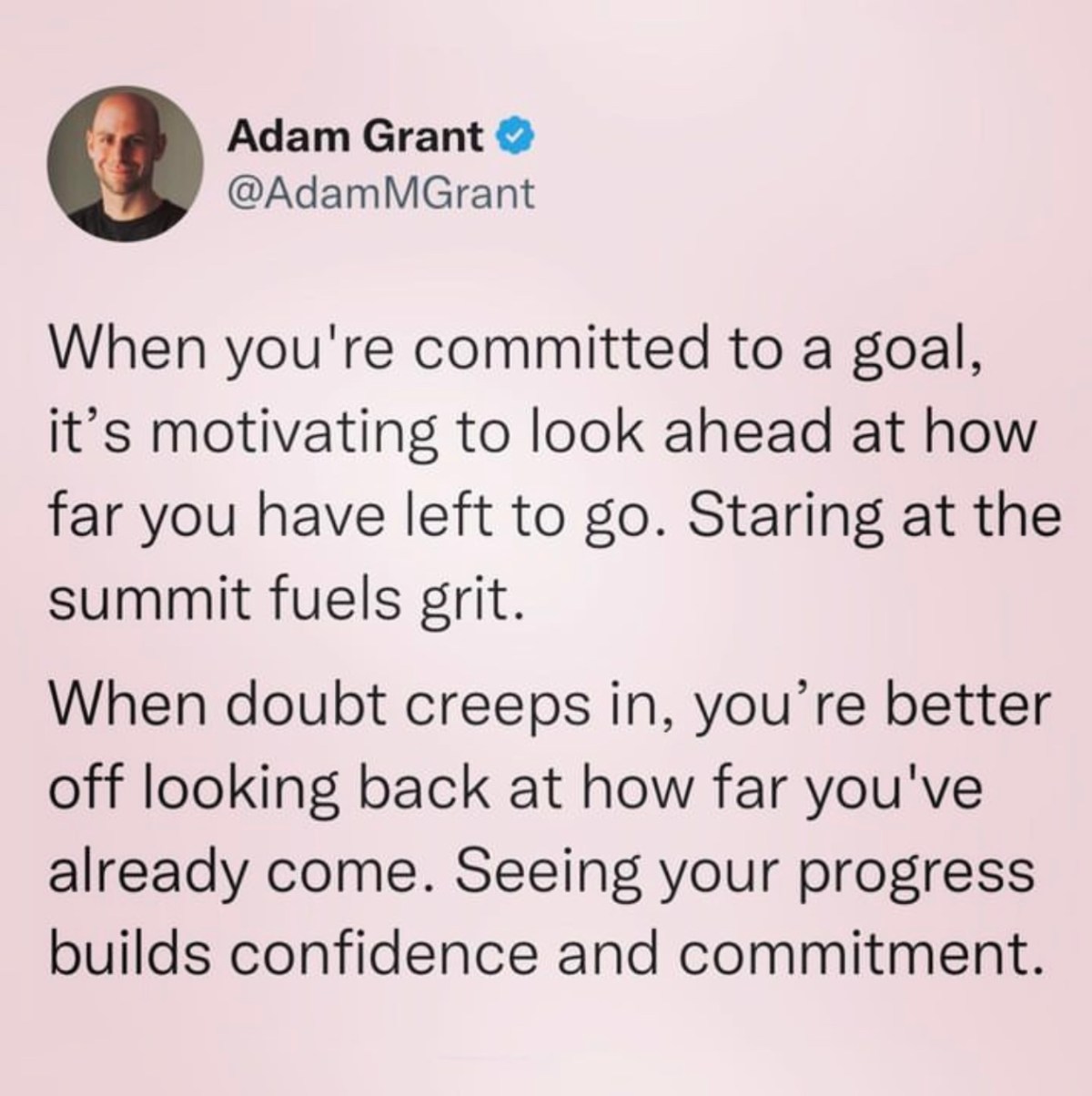
A recent instagram post by Adam Grant may have led to a breakthrough for me. He said, “When you’re committed to a goal, it’s motivating to lookahead at how far you have to go. Staring at the summit fuels grit. When doubt creeps in, you’re better off looking back at how far you’ve already come. Seeing your progress builds confidence and commitment.”

While these quotes can be inspriational, they do little good if you don’t put them into practice. Reading Grant’s words reminded me that early in this process, I was committed to a very specific goal. I started each day with a singular focus. Specifically, I spent the begining moments (about 15 minutes) of each day thinking about what needed to happen that day to move me towards my goal. I thought about what was going to happen that day, where I might be challenged, and how I might deal with the challenges. As I moved through the day, I adapted as necessary and tried to stick to the plan. Obviously, it worked.

Stated another way, speding about 1% of each day to focus on my goal correlated to a tremendous change. Likewise, when I stopped consistently spending 1% in focus, I did not make significant progress towards my goal. Today, I changed my schedule. I started the day with 15 minutes of focus on my goal. Stay tuned!

Success & Setbacks

Full disclosure- I am a fan of the Minnesota Vikings. I have endured four Super Bowl and six straight NFC Championship game losses. I turned the tv off with three minutes left during the Minneapolis Miracle game. I couldn’t watch the Vikings lose again. I often turn the game off when I get “the feeling” it won’t go well. If you are a true Vikings fan, you understand “the feeling.”

So why do I write about the Vikings? Because there have been several times when I have stopped watching the game and the final score was not what I expected.

Much like a football game has ups and downs, so do weight loss and health. Life is not static. This week, I had some victories but also setbacks. It is easy to get discouraged by setbacks. This is why it is important to track what you do. When you track what you do, you begin to see patterns. The patterns often show why the set the back occurred. Did you give into temptation and eat the whole bag of Oreos? Did you get bored and just start snacking on what was available? Did you super size? Does the same thing happen at the same time every day?

I have two MAJOR challenge areas. First, after 6:30pm, I eat out of boredom. I’m not hungry yet I eat. This week I made a conscious effort to ask if am I hungry after 6:30pm. If I am, I eat some carrots (my go-to healthy choice) or drink a glass of water. Over the past couple of months, I didn’t make the good choice. I would eat the whole box of NutThins. This often made my spouse unhappy because they were purchased for her…and then I eat them all. I declare today, that I will not eat them anymore.

My second challenge area is the weekend. On the weekend, patterns and schedules break down. So does meal planning and tracking. This often offsets the positive progress of Monday-Friday. Amazingly, just two days of poor choices can cancel five days of good choices.

So, like a football game, I am adjusting my game plan. This weekend, I will track my food intake and plan my meals. I will make my health a priority. I’ll report back next week on how it went.

Persist and Stay in the game

It’s that time of year when many Americans turn their attention to college basketball. The NCAA has done an amazing job in promoting and branding the March Madness tournament (AND FINALLY ALLOWING WOMEN TO USE THE BRAND). There will be millions of brackets filled out and busted (Kentucky, Iowa).

I write this short post to remind people to stay in the game. Don’t quit. If you focus on the result you want, it will become your reality.

Last night, the Creighton University mens basketball team was down by 9 points with 2:29 left in the game. The team chipped away and tied the game at regulation to send the game into overtime. Down by two in overtime with 2:42 left, one of Creighton’s best player suffered an injury and left the game. Seconds later, another key player fouled out. Through persistence, belief, and teamwork, Creighton won the game 72-69.

This reminds me to persist and stay in the game. I will never achieve my goals if I stop trying. Each day I do something to move towards my goals. Persist. If I have a set back, I make adjustments and always keep moving towards my goals. Persist. Have a great weekend. Watch some basketball and move towards your goals.

700 Days

At the beginning of the pandemic, I set a goal to walk for 10,000 steps (approximately 5 miles) every day until the pandemic was over. I started on March 1, 2020. Yesterday, while walking my dog, I completed 700 days.

While I am ready for the pandemic to be over, I am not ready for this streak to end. New goal is 1000 days. Focus forward.

Day 19 of Gratitude Challenge

It’s been one year since I took the picture. One year of change I never thought would happen. One year of steady improvement.

I began this journey alone and unhappy. I began not knowing where to start. But I made the decision to change. My advice – make the decision about why then work on the how.

Over the last year, I have received so much encouragement and support from family and friends. Thank you it made a difference. I haven’t been perfect but I have improved. And more importantly, I could not have done it without the encouragement. I am grateful for all the kindness.

Today’s challenge is for you to thank a friend and family member. Call, text, email, message, Snap, What’s App or snail mail them. Just thank this person for something they did.

Persist, Pivot or Concede

“Persist, pivot, or concede. It’s up to us, our choice every time.”
― Matthew McConaughey, Greenlights

I started reading Matthew McConaughey’s book this week. The above quote jumped out at me. When faced obstacles and challenges, we have three choices. Last week, for the first time since George W Bush was President, the woman’s soccer team at my alma mater defeated a longtime conference foe ending an 18 game losing streak. I was fortunate to be there to capture this picture of the woman who scored the winning goal.

The picture, the winning goal, and my weight loss are all the result of persistent and steady pursuit of a goal. I could have given up of weight loss many times. The soccer team could have conceded. Neither of us did. We persisted and pivoted until we found something that worked. Both of us are celebrating our success.

Take time this weekend to examine The obstacles and challenges in your life. What is the best strategy. Persist? Pivot? Concede? To me, it seems obvious that two of these strategies will lead to more success than the other.