

What a Mother Is

A Mother’s Day essay about the several mothers in one life — the mother who raised me, the birth mother I found after fifty years, and the woman I chose. Each gave me something the others couldn’t.

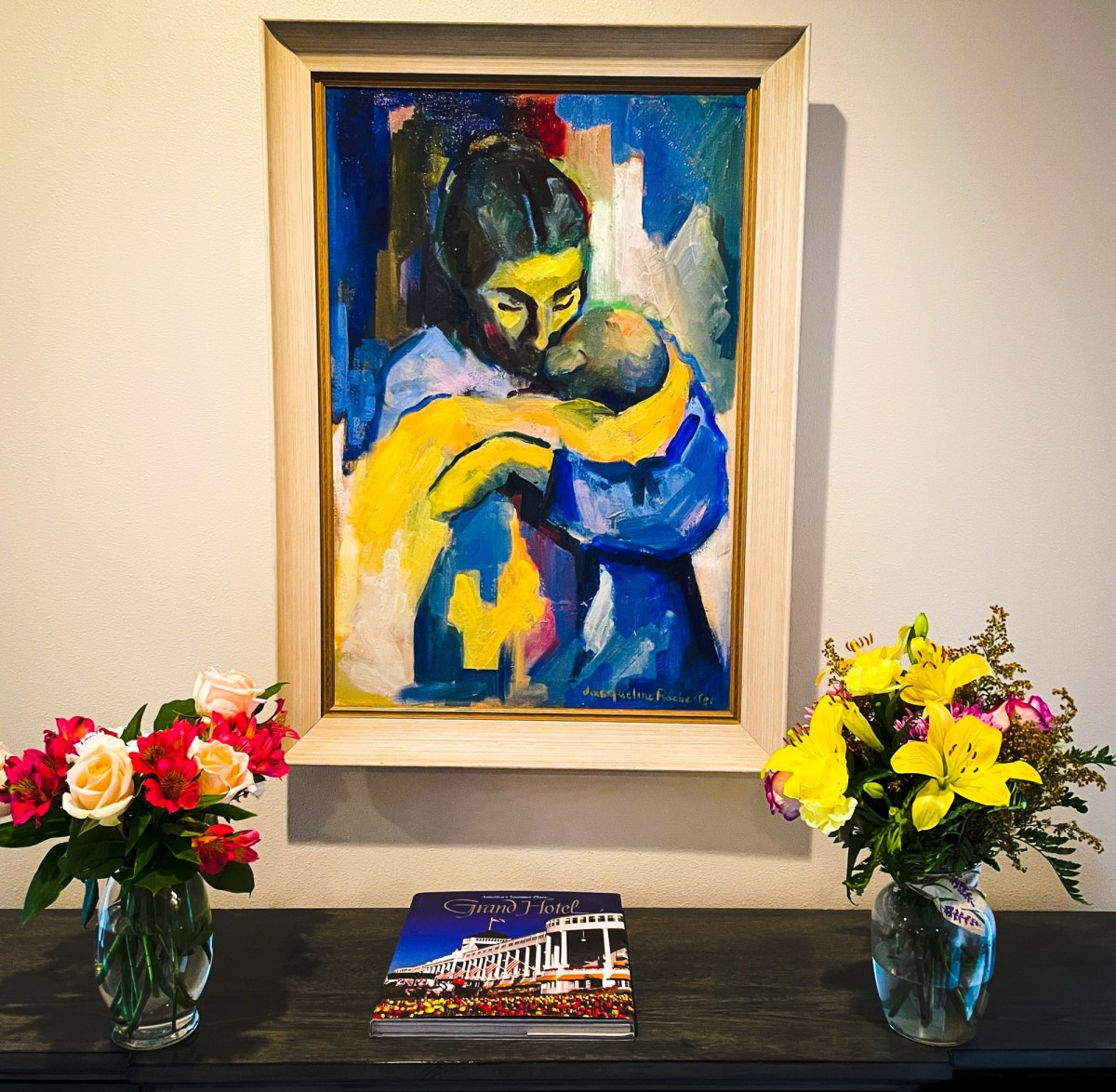
There is a painting in my home that has always been part of my life. A mother holding a child, rendered in bold blues and yellows by a local artist named Jacqueline Rochester. My parents bought it from her when she was a neighbor. Years later, I inherited it. My wife lets me keep it in our home. I am not someone who is moved by a great deal of art. I am moved by this one.

It hangs in the main room. At some point, Mother’s Day flowers ended up on either side of it without anyone planning it. Two bouquets framing a mother and child. It seemed right to leave them there. Tomorrow is Mother’s Day. Early in life, the assumption built into all of it, the cards, the brunches, the flower displays waiting near every grocery store entrance, is that you only have one mother to think about. That is true for a while. Then life keeps moving and the math changes.

There are several mothers in my life, each of whom gave me something the others could not. Every second Sunday in May, I think about all of them.


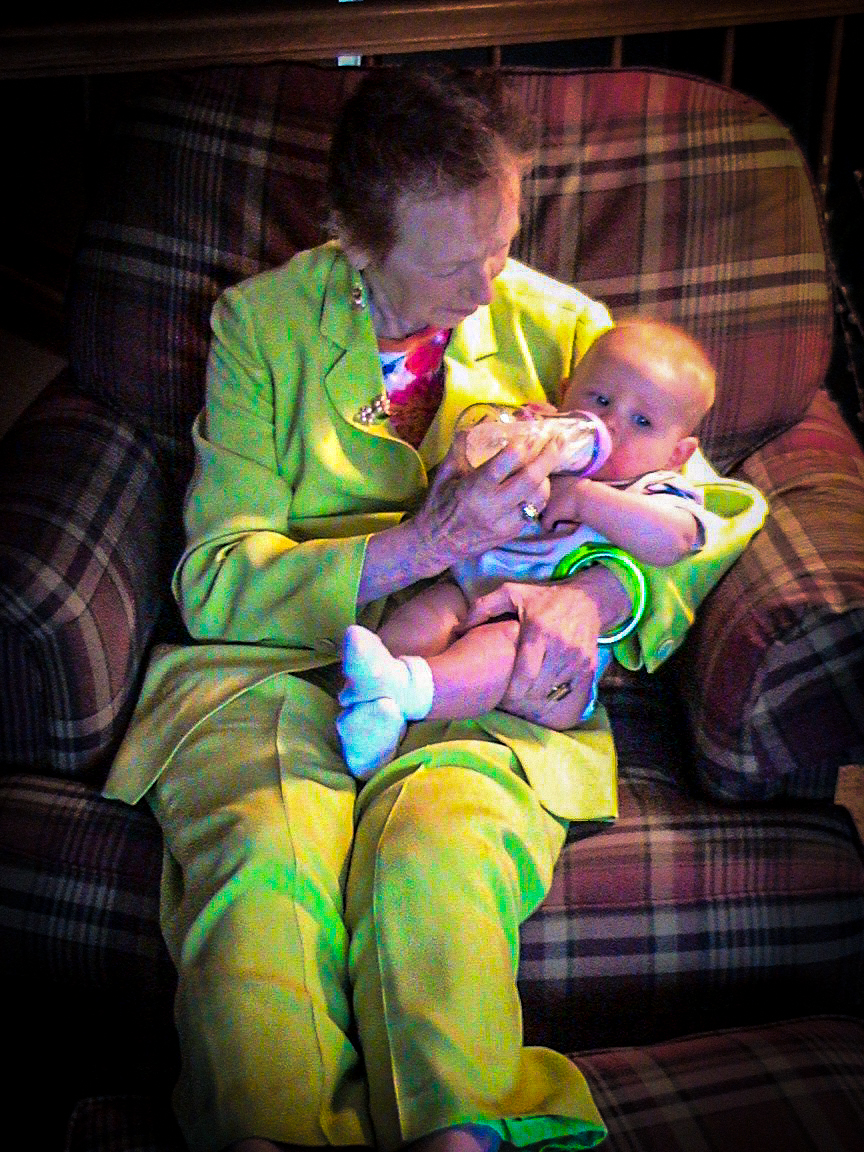
My mother was everything a young child could want. Caring, compassionate, creative, kind. She made my lunch every day, always my favorite foods. When dinner came, she cooked multiple meals to keep all of us happy. My father, who grew up in a time when food was not always plentiful, would have told us to eat what was in front of us and be grateful. My mother just cooked another meal.

It was early June when a flash flood devastated my hometown. Two hundred and thirty-eight people died in a matter of hours. I was four years old, so my memories are not complete. I remember pieces. Bridges washed out. Cars upside down in department stores. Water and sewer service gone. Close family friends lost their home and lived with us for six or eight weeks. We shared what we had. When we needed drinking water, we drove to an elementary school where tanker trucks had been set up for families. Standing in line filling jugs should have felt strange or frightening. My mother made it feel like an adventure. She made turning on a faucet sound dull by comparison. What four-year-old gets to drive to a school to pick up water?

Looking back now, I realize the same qualities that made her a good mother also made her good on television. “A Woman’s Touch With Mary Ann” was a local talk show, and she was its host. Before tapings, I watched her settle nervous guests with conversation. She made them comfortable. She treated them like they were the most important person in the world, and for those few minutes, maybe they were. She interviewed Phil Donahue, Bob Hope, and, before much of the country understood what it was seeing, Oprah Winfrey. I have sometimes wondered what would have happened if she had been born in a different era or found her way to a bigger market earlier. She never wondered out loud. She may have known it. She never let on.

When South Dakota decided to close the institution where both of my brothers lived, one for twenty-five years and the other for nearly fifteen, my mother went to work. She wrote letters, made calls, cornered politicians, and fought for her sons the way only a mother can fight when she has nothing to lose and everything to protect. In the end, the institution closed anyway. She did not win. But by the end of it, the governor knew exactly who she was. For a mother fighting for her kids, that is not nothing.

In late April and early May, the pasque flower bloomed across our property in the Black Hills. Purple and low to the ground, the first sign winter had finally loosened its grip. Every spring I picked bouquets for my mother without being asked. What I did not know at the time, or perhaps did not care about, was that the pasque flower is the South Dakota state flower, and picking it is technically illegal. I was out there committing crimes for my mother on a seasonal basis. She never once mentioned it. She took those bouquets like they were the greatest gift she had ever received, and she made me feel like maybe they were. Even in college, if I happened to be home at the right time, I still picked them. Some habits survive childhood intact.

She wasn’t there the day I was born, but she is the beginning of every memory I have. She is my original Mother’s Day. She’s gone now. But every May she returns a little.


Maybe that is part of getting older. You realize the people you have lost are not gone in any practical sense. They remain in habits, stories, meals, flowers, holidays, and even the objects sitting quietly in your home. Mother’s Day stopped being simple for me a long time ago because eventually I realized there was another mother thinking about me too.

In the summer of 1968, a twenty-year-old junior at Florida State University arrived in Sioux Falls alone, unmarried, and pregnant. In that era, those facts carried their own social sentence. She lived in a basement apartment for four months. She sewed clothes. She read books. She watched baseball. When the time came, nurses took the baby before she could hold him. She knew only that he was a boy. Then she went home and rebuilt her life. She married, had children, built a career, and kept the secret for fifty years. The hardest days, she later told me, were Christmas, Mother’s Day, and June 15th, the birthday she knew was being celebrated somewhere by someone.

That boy was me.

I found Sandi the way people find things now. A DNA test led to a first cousin match, some internet sleuthing, and eventually, to her. The letter I wrote her took nearly two weeks. I gave her every possible exit because I did not know what waited on the other side. On Christmas Eve 2018, I was standing in a Hy-Vee checkout line, already irritated about something I can no longer remember, when I checked my phone and saw an email subject line that read “Happy Christmas.” I left the cart where it was and walked to my car. I sat there reading the words of a woman I had never met, a woman who had thought about me every Christmas for half a century. At some point I started crying. By the time I drove home, whatever had irritated me ten minutes earlier had completely disappeared.

We met in North Carolina the following spring. She saw me come through the airport terminal and recognized me instantly. To anyone watching, the resemblance probably made the whole thing obvious. She held me the way she had not been allowed to hold me fifty years earlier. For most of my life, adoption had felt abstract to me, almost administrative. A fact more than a feeling. Meeting Sandi rearranged that.

Sandi gave me two things no one else could give. She gave me life. And she gave me up so I could have a better one. I did not understand the size of that decision until I became a parent myself. Both required courage. Both were acts of love. It took me five decades to understand that, but I understand it now.

The painting changed a little after that. For years I had mostly seen comfort in it. After finding Sandi, I started noticing the grip in the mother’s arms.


I did not get to choose the first two women in this story. They came to me the way most things in life do, through circumstance, timing, and decisions made by others. Wanda I chose. She chose me back. What followed has been the great gift of my life, and I have never once found the words adequate to describe her.

Wanda is not a June Cleaver mother. She didn’t bring treats to the ball games. But she made sure her boys got there, on time, with every piece of equipment they needed, which anyone who has ever tried to get a child out the door for a game knows is no small thing. She grew up with only a sister. Boys were not part of her original instruction manual. She figured it out anyway. I’d like to think I helped with the translation.

What she did was harder and quieter than the performing version of motherhood, and she never pretended otherwise. She led by example. She became a role model for her boys without any of them noticing it was happening, which is the only way that actually works.

She protected them, even from me. There were moments when I had something to say and she would suggest another approach. She was right. Every time. Her version of mothering was never hovering. She let her boys figure things out on their own, which takes more restraint than most people realize. When they needed to be challenged, she challenged them. When they needed to be held accountable, she held them accountable. She had a gift I never fully mastered. She could chew them out and motivate them in the same breath. I could only manage the first part.

There is one moment, though, that I come back to more than any other. Our oldest was seven years old when he hit a tree on a ski slope and cracked his skull. We had just found out we were pregnant with our youngest. The doctors were careful with their words. The next 48 hours would be key. That was all they could tell us.

The first night, the two of us folded ourselves into a single recliner in that hospital room, holding each other, not saying much. There wasn’t much to say. Outside the window, the world was going about its business. Inside that room, everything had narrowed down to the sound of a monitor and a seven-year-old’s breathing.

She stayed. The second night, she insisted I go to the hotel. One of us needed real rest, she said. One of us needed to be ready for whatever came next. She had already decided it wasn’t going to be her turn to step back. She sat awake through the night carrying one child while watching over another, and she did it without drama, without complaint, without asking anyone to notice.

We knew he was going to be fine when he started trying to make shapes on one of the monitors, controlling his breath, watching the screen, turning medical equipment into a game. That’s a seven-year-old telling you he’s back. We laughed. On the third day, we went home.

Wanda has been that woman every day for more than twenty-five years. I have a law degree and I teach for a living. I am reasonably good with words. They are not sufficient when it comes to her.


There are several mothers in my life. I am not confused by that. I am grateful for it. Each one of them gave me something the others couldn’t.


Tomorrow is Mother’s Day. There will be flowers and a card, and if I know Wanda, she will insist neither was necessary. Ginger will spend the day underfoot, hoping the occasion calls for a longer walk than usual. Somewhere in North Carolina, Sandi will think about June 15th, except now she knows where the story ended. And I will think about my mother, who spent much of her life making difficult things feel manageable for the people around her.

The painting will still be there when we get back. A mother holding a child between two bouquets no one planned.

See You When Silver Turns to Gold

Twenty-five years ago today it was raining in Rapid City. The places are mostly gone. The day is completely intact.

They say it’s good luck if it rains on your wedding day. Twenty-five years ago today, it was raining. I remember because my soon-to-be wife was worried about her hair. That has held up as a theme. I do not worry about my hair, one of the advantages of not having much left to negotiate. It was also Cinco de Mayo, and I’ve always suspected that wasn’t entirely accidental.

We were married at the Chapel in the Hills, a replica stave church in Rapid City honoring her Norwegian Lutheran heritage and a shared Augustana history, even if we hadn’t found each other there yet. Only our families were invited. Our friends found out later, which was less dramatic than it sounds and exactly how we wanted it. Nine people. Small, quiet, and right.

After the ceremony, we had lunch at the Canyon Lake Chophouse. It’s gone now. That evening, after everyone went their separate ways, we drove to Deadwood for dinner at Jake’s, on the top floor of the Midnight Star. It felt like the right place for that night. It closed about ten years ago, reopened at some point, and I’m not entirely sure what it is now. After dinner, we headed to our family cabin at Terry Peak. We sold that about fifteen years ago.

The Chapel in the Hills is still there, but much of the rest has shifted. The restaurant where we celebrated with family is gone. The place where we had our first dinner as a married couple has been through at least one more life. The cabin where we ended the night is no longer ours. Many of the places that framed one of the most important days of our life no longer exist, or no longer belong to us, or have become something else entirely. And yet the day is completely intact.

We are not the same as we were that day either. A lot of life has happened. We expanded our family. We built a home. We buried a parent. We buried a brother. We built careers and then rebuilt them. We watched both kids grow up and leave, which is the point and also a terrible system. It wasn’t all sunshine and puppy dogs, though we did eventually get the dog. There were ups, a lot of them, and some downs. We rode them out. Everything around us shifted. We shifted too. But through all of it, one thing never moved. Us.

Twenty-five years is long enough to know which fights weren’t worth having and short enough to remember having them anyway. Long enough to finish each other’s sentences and still occasionally be surprised by the person sitting across the table. Long enough to understand that showing up, day after day, in the ordinary and the hard and the unremarkable, is the whole thing.

So, to the woman who worried about her hair in the rain on a cool May morning in Rapid City, thank you. For your love, your patience, your understanding, your compassion, our children, and the thousand quiet Tuesdays that nobody writes about but that are the whole story.

Your hair looked great, by the way. It always does.

See you when silver turns to gold.

What the Day Means

This past weekend, many people celebrated St. Patrick’s Day. A massive snowstorm celebrated back. I missed the parade. I did our taxes.

Fair warning, this one is longer than most. I started writing and couldn’t stop. Hopefully you will indulge. Mothers deserve more attention.

I’m old enough to remember when St. Patrick’s Day was actually celebrated on March 17. Then someone probably decided it conflicted with March Madness and the next thing you know it’s drifting around the calendar like a bar promotion looking for a Saturday. Which, honestly, is all it ever was for most people. I just preferred the fiction.

Here’s what most people don’t know about March 17, nor do they care. It’s not St. Patrick’s birthday. It’s not the day he drove the snakes out of Ireland, and for the record, there apparently weren’t any snakes in Ireland to begin with, which makes that particular miracle less impressive upon reflection. We celebrate March 17 because it’s believed to be the day St. Patrick died, in 461 AD. The Irish built a party around a death anniversary. For me, that’s always been a strange thing to celebrate.

My mom was raised an Irish Catholic, and she loved St. Patrick’s Day the way she loved most things, fully, and with very little patience for people who didn’t. She loved a big party, loved an occasion, and could walk into a room full of strangers and leave knowing everyone. Not in a working-the-room way. In a genuine way. People wanted to be around her because being around her felt like something. She also had strong opinions about most things, and the wisdom to know when to share them, which turns out to be a much rarer combination than it sounds. She died on March 17, 2005, and I’m not a huge fan of this day. But here we are again, twenty-one years later, parade missed, taxes done, and I find myself back at this keyboard trying to figure out what this day is asking of me now and whether I have a better answer than I did the last time.

I’ve written about March 17 twice before. In 2022, I wrote about the sweater. Bright, multicolored, chosen by her on the last morning of her life. She had Parkinson’s for thirteen years and it took most of what made her her, slowly and without mercy. But that morning she picked the right sweater. In 2024, I wrote about standing on a sidewalk the day she died, holding the hand of a two-year-old who had no idea what had just happened and very much wanted to see some floats.

I didn’t want to go to that parade. I wanted to sit somewhere quiet and let the day be what it was. But he wanted to see the parade, and she would have wanted him to see it, and those two things together were enough to get me to the curb. He was completely, unreservedly delighted the way two-year-olds are, without conditions, without any awareness of what it cost the person next to him to be standing there. I was grateful for that. Uncomplicated joy turns out to be exactly what you need when everything else is the opposite of uncomplicated.

That two-year-old is an adult now, my son, and I’ve been thinking lately about how well he and my mom would have gotten along. They would have found each other immediately, compared notes, and spent a considerable amount of time making fun of me together, shamelessly and with great enthusiasm. I would have been irritated. I would have given anything for it.

He walks into a room and something shifts. Not in a loud way, he’s not performing anything. People just want to be near him, want to talk to him, want to know what he thinks. Strangers become less strange around him. He has opinions about everything, and like her, he knows exactly when to use them — and when to put them down in service of the people in the room. He reads the room the way some people read a clock, naturally and without thinking about it. He shows up for people, genuinely, reliably, in the ways that actually count. And he loves a good party, which in this family is less a preference than a personality trait passed down like eye color. And like her, he finds a way to get on camera. For the record, he will be missed this March Madness.

I’ve watched him in rooms the way I used to watch her in rooms, and the feeling is the same. The particular warmth of watching someone who doesn’t have to try to make people feel welcome because it never occurred to them that anyone might not be.

She never met him as the person he became. Parkinson’s had been taking her for years by the time he arrived, and she died when he was two, and the version of her that could have really known him, the sharp, funny, opinionated, life-of-the-party version, was already mostly gone by then. That’s the loss inside the loss, the one that doesn’t get talked about as much. It’s not just that he lost a grandmother. It’s that they lost each other, and neither of them got to know what they were missing.

But here’s the thing I’ve come to understand, slowly and without any dramatic moment of revelation. She didn’t disappear. She just carried forward. The warmth with strangers, the stubbornness, the peacemaking, the way a room feels different when he walks in, the absolute conviction that life is better with more people in it and the volume turned up, that’s not coincidence. That’s her, showing up in the next generation, wearing different clothes.

She would have recognized him immediately. And she would have adored him, and he would have adored her, and together they would have been a handful, and I mean that as the best possible thing I could say about either of them.

Here’s what twenty-one years teaches you. Grief doesn’t leave. It just stops being the loudest thing in the room. In the early years it’s everywhere. It answers your phone, comes to work with you, sits across from you at dinner and says nothing. But if you’re patient with it, and patient with yourself, it eventually learns to share the space. It lets other things back in, joy, distraction, a walk on a good morning. Twenty-one years in, grief and I have an arrangement. It gets March 17. I get the rest of the calendar.

Those words — your mother died — don’t stop being true. They just stop being the only thing that’s true. She loved a big party, she picked the right sweater, and somewhere in a son who lights up rooms and shows up for people and knows exactly when to say the right thing, she is still very much present. You don’t have to believe in anything supernatural to believe that. You just have to pay attention.

Life is worth showing up for. She knew that. Turns out, so does he.

This weekend I missed the parade and did our taxes. She would have had opinions about both. The taxes she would have understood, reluctantly. The missed parade she would have given me grief about for years, which, now that I think about it, would have been its own kind of gift. Happy St. Patrick’s Day, Mom. You would have loved this one. You’d have especially loved who else showed up.

The sweater is still here. And in all the ways that matter, so are you.


This is the third March 17 I’ve written about here. The first two are here and here. New readers, start there. Returning readers, thank you for coming back.

2026 arrived quickly and with a certain enthusiasm for chaos.

Some seasons arrive quickly, carrying more than we planned to unpack.

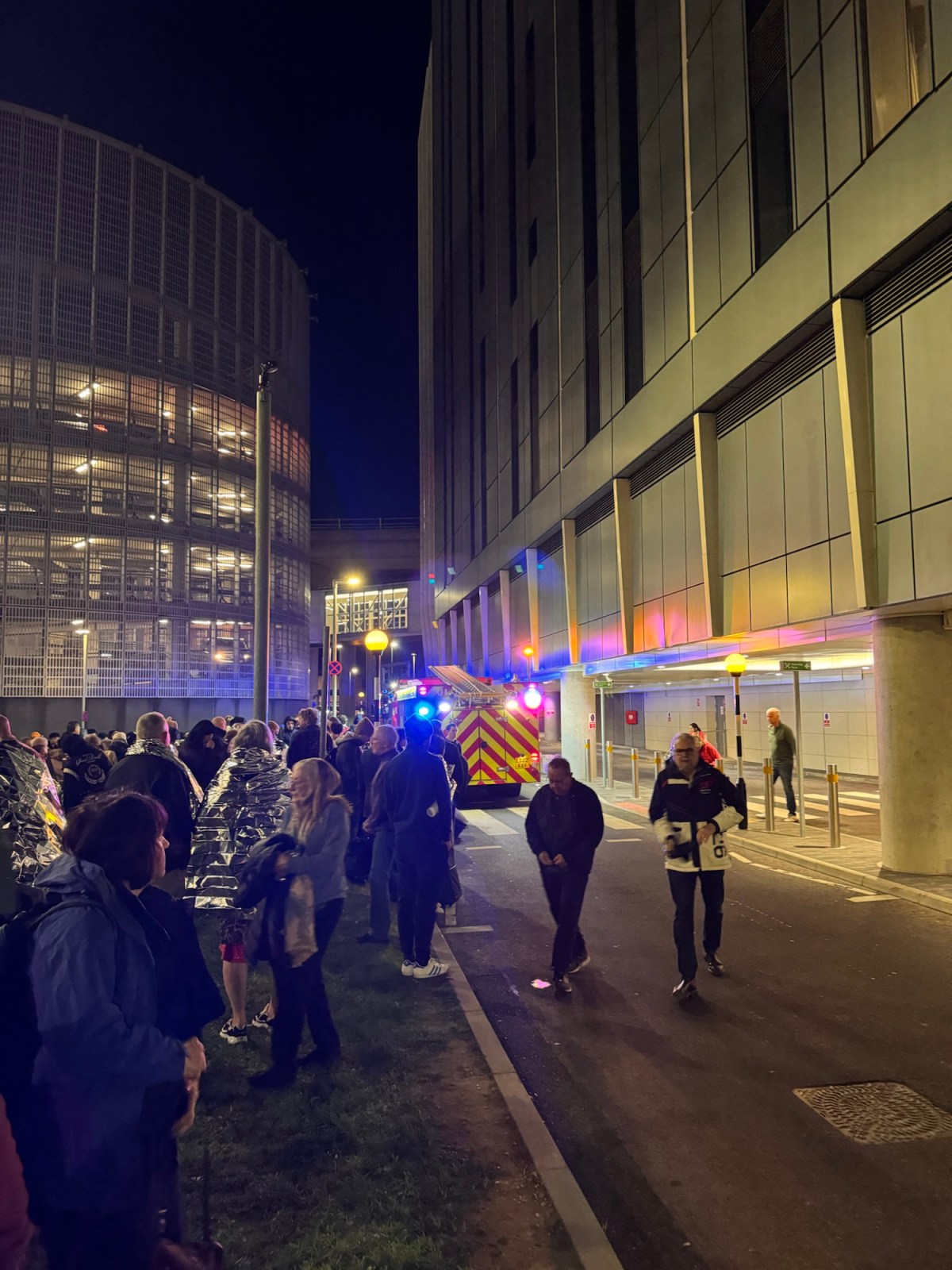
It was probably best that I didn’t subscribe to Dry January. I should have known the year was going to be a beast when, less than six hours into it, I was in a hotel and the fire alarm went off—and it wasn’t a drill. This is not how you want to meet a new calendar year. Then the gods of fate said hold my beer when four members of my immediate family experienced “medical” events, including three emergency room visits, three hospitalizations, and a surgery. January came in like it had a clipboard and a very aggressive agenda.

Along the way, I learned—or was reintroduced to—phrases like spinal stenosis, Clostridioides difficile, colitis, concussion, and tympanostomy. My medical vocabulary has expanded more in a few weeks than it had since I snuck into my dad’s home office and leafed through his copies of the Journal of the American Medical Association and Annals of Surgery. I may not have earned a degree, but I’ve at least qualified for a certificate. Possibly laminated.

And in case you hadn’t noticed—perhaps because you, too, were distracted by sirens and discharge papers—there is also a lot going on in the world.

Much of my attention has been on the Twin Cities. My family has been impacted. My friends have been impacted. This hits close to home. I watch and wonder how we got here. Early in my professional life, I spent time both prosecuting and defending criminal cases, which means I have a reasonably high tolerance for human dysfunction. Even so, many of the things I now see and read—especially through that lens—are genuinely shocking. Not shocking in a cinematic way. Shocking in a quiet, procedural, this-is-how-it’s-written-down way.

Current events often pull me back to what I studied in college, back when you could take courses that wrestled directly with uncomfortable truths instead of politely circling them. I took more than one class focused on the Holocaust and similar atrocities. As a senior, I enrolled in Light in the Darkness: Courage and Evil in the Twentieth Century. The course focused heavily on the Holocaust. At the time—and still—I struggled with how something so terrible could happen.

We studied life in Nazi Germany. We discussed Anne Frank. We read Elie Wiesel. We also read Heart of Darkness by Joseph Conrad, a book I still don’t fully understand, which puts me in excellent company that includes most honest readers.

Though my memory of the course is imperfect—college being a long time ago and optimism being a powerful anesthetic—several moments stand out. Perhaps most significantly, we took a “field trip” to Minneapolis. While there, we attended a concert at Orchestra Hall, spent an evening at the Chanhassen Dinner Theatre, and visited a Holocaust museum.

But there is one experience I will never forget.

We met Holocaust survivors.

One woman had been sent to Auschwitz. She told us her story patiently and answered our questions with care. Then, in a moment that permanently fixed itself in my memory, she rolled up her sleeve and showed us the tattooed number on her arm—a mark that had been there for more than forty-five years. No build-up. No warning. Just history, sitting across from us in a folding chair.

She spoke about the days leading up to liberation. She described the moment she knew she was free. She was offered a ride to the nearest supply camp roughly a mile away. She declined. This, she said, was her freedom walk. She walked the entire distance, stopping frequently because she was so weak. She had to keep her head lower than her heart to avoid losing consciousness.

She spoke about her first bite of food—and the danger of eating too much, too quickly—because her body had essentially shut down. She knew she was close to death, close enough to feel it in a practical, unsentimental way, but she willed herself to live. She told us she kept repeating to herself: Not today. Today I am free.

Someone asked her how she felt about Germany now. Very calmly, she explained that she bore no ill will toward Germans born after World War II. They were not responsible, she said; they carried the scar, not the guilt. But Germans who were present at the time—who did nothing and said nothing—were responsible for the atrocities.

There was no theatrics. No slogans. No grand conclusions. But the emotion, the pain, and the anger hung in the air, doing what facts sometimes do when delivered by someone who earned them the hard way.

I don’t remember her name. I remember her message.

Make sure this never happens again.

Since then, I have found myself returning to her words. I wonder—perhaps naively—whether a similar regime could ever arise in my own country. I keep reaching the same conclusion: yes, it absolutely could. Not because of any single current event, but because we are human, and humans have repeatedly shown a remarkable capacity for atrocity, especially when paperwork is involved.

I also arrive at a more uncomfortable conclusion: there is no way to know how I would respond.

Would I recognize what was happening in real time? Would I speak out? Would I protect those being targeted? Or would I choose personal or family safety over principles and values? Would I convince myself that compliance was temporary, reasonable, or necessary? History suggests these decisions are rarely dramatic. They are incremental. Transactional. Rationalized. Often explained afterward with excellent grammar.

And that, more than anything, troubles me.

What unsettles me most is not that the news feels alarming—news often does—but how quickly alarming things begin to feel normal. A headline that stops you cold on Monday becomes background noise by Friday. By the following week, it’s something we summarize with a shrug and a sentence that starts with, “Well, I guess that’s just how things are now.” That is usually the point at which questions about how we would respond quietly turn into questions about what we are willing to tolerate.

What we are willing to tolerate is shaped, in no small part, by what we understand to be our rights in the first place. When those boundaries are clear, normalization has limits. When they are vague, everything becomes negotiable. Fortunately, we do not have to define those boundaries from scratch or rely solely on instinct and outrage. We have a well-worn roadmap. It is called the Constitution. It does not prevent abuse or guarantee wisdom, but it does establish a baseline—certain rights meant to exist regardless of convenience, popularity, or who happens to be in power.

At its most basic level, that baseline includes the right to move through daily life without harassment; the right not to be stopped and required to justify one’s existence; the right to be free from restraint, harm, or worse based on minor suspicion; and the right to observe authority without becoming its target. It includes the right not to be threatened, exploited, confined, or erased—and the right to speak freely, worship freely, and to have a home that remains a refuge rather than a checkpoint.

None of this is abstract. None of it lives safely in textbooks or court opinions. It unfolds in real time—often within hours: a traffic stop at dusk, a crowd forming, a knock before sunrise, a decision made quickly by someone with power and limited restraint. At that speed, there is no meaningful pause, no appeal, no rewind. Due process—the idea that power must justify itself before it harms—only protects people if it exists before force is applied, not afterward. If this feels distant or exaggerated, it is usually because it has not yet arrived at one’s own door.

These are not rights granted by government, nor privileges extended for good behavior. They exist prior to government—whether understood as gifts of God, products of nature, or the result of generations of hard-won human progress. We entrust them to the state for one narrow purpose: protection. When that order is reversed, what remains may look like order, but it is not law.

It is force, borrowing the language of authority.

I began by describing how difficult January felt for me—personally, professionally, and emotionally. But those struggles, real as they were, pale in comparison to January of 1945, when Auschwitz was liberated and survival itself depended on the refusal to give in, even when the body was failing and the future uncertain. Remembering that contrast doesn’t diminish present concerns; it sharpens them. It reminds me that perspective matters, that endurance has a history, and that resolve—then as now—often begins with a single, quiet decision: not today.

Unforgettable Moments

When I was growing up, my mother drove Chevrolet station wagons. They had wood paneling on the sides, vinyl seats that could burn your legs on hot summer days, and an 8-track player. We had a limited selection of 8-track tapes stored in a faux alligator skin box. One of my favorite tapes was “I Got Lucky” by Elvis Presley. I enjoyed listening to it while we drove around town or went on road trips. Truth be told, it was one of his worst albums, but I loved it.

On June 21, 1977, Elvis performed a concert in my hometown, marking the first event held at the brand-new civic center. This was my first concert (not counting elementary school Christmas concerts). Though it was a long time ago, my memories of that evening are still vivid. The excitement in the building before the concert was palpable. When the lights dimmed and “Also sprach Zarathustra” started playing, I knew we were in for an amazing show.

When Elvis walked onto the stage, the lightbulbs began popping, accompanied by the screams of excited women. I will never forget those screams. It was evident that Elvis was larger than life. He delivered a tremendous show before walking off the stage. Less than two months later, we were all shocked by his sudden death. In the fall of 1977, we gathered around our television to watch the Elvis In Concert CBS Special, which featured the same concert.

That night in June 1977 had a profound impact on me. I fell in love with the music of Elvis Presley. My first cassette tape purchase was “Elvis: Aloha from Hawaii via Satellite.” I must have listened to that tape a thousand times, and I can still sing most of the songs from memory.

In the years since the concert, many people have commented that it wasn’t Elvis Presley’s best performance. In fact, it wasn’t. He was significantly heavier than in earlier parts of his career and forgot many lyrics, often slurring his words. When I compare the concert I attended to other performances I’ve seen, it’s clear that I didn’t witness his finest work. However, even at his worst, his performance was still remarkable.

I still have my ticket stub from that concert, tucked away. It’s a simple piece of paper, but each time I see it, I’m transported back to that night. I’m not entirely sure why I’ve held onto it all these years, but perhaps it’s because some moments in life are so impactful that we want to preserve them forever.

6/9/72

Some numbers stick with you. For me, they are 6/9/1972, a date, and 238, the number of deaths.

On June 9, 1972, in western South Dakota, it started to rain. My only memory of that evening is standing outside under our covered front entryway while my father smoked. As I watched him, I noticed that the raindrops were the biggest I had ever seen. When I mentioned this to my dad, he suggested we go back inside because it was bedtime.

On the evening of June 9, 1972, our family went to bed early. When we awoke the next morning, we were unaware of the tragic events that had occurred overnight. Persistent clouds over the Black Hills resulted in severe flash flooding that devastated the Rapid City area. By the morning of June 10, there were 238 fatalities, and more than 1,300 homes had been destroyed.

My father was a medical doctor in our community. That morning, my mother received a call from the hospital asking if my dad would be coming into work. She was surprised by the question because she was unaware of what had happened. The hospital explained that there had been a severe storm that caused significant damage, and his services were urgently needed.

In the days, weeks, months, and years following the flood, I began to hear more stories. I learned about a classmate and friend who lost his father and two brothers, one of whom was never found. I heard about a friend of my sister’s who survived in an air pocket inside a submerged vehicle while her brothers slowly succumbed. I listened to the accounts of the screams that echoed during the disaster. I witnessed the devastation firsthand.

Our house and family were on high ground, so we were safe from the flooding. However, some friends of ours lost everything and had to stay with us until they could find a new place to live. My preschool was destroyed. While I’m not sure, I believe my father’s office was flooded but did not sustain permanent damage.

It has been over 50 years, but I still vividly remember many events from the time of the flood. Growing up, I encountered haunting reminders of the devastation: driveways where homes once stood, streets that are now vacant and abandoned, and buildings bearing the names of those who perished. Many of these reminders are still visible today if you know where to look (see picture at top of steps from a house washed away in the flood still present). Ironically, much of this is located along a beautiful greenway and bike trail that were created in the aftermath of the destruction.

In recent years, on this anniversary, I have taken the time to read through a list of the names of those who lost their lives. I reflect on friends who were affected by the flood and how suddenly life can change. This reminds me of what Marcus Aurelius wrote over 2000 years ago: “You could leave life right now. Let that determine what you do, say, and think.” Marcus Aurelius, Meditations, Book 2, Section 11.

This is dedicated to all who were affected by the 1972 flood but more specifically to Shirley, Steve, Sarah, Andy, Lisa, Mike, and JoAnn.

Day 19 Gratitude Challenge – The Picture

Four years ago, as I was completing the first gratitude challenge, I made two posts in Facebook.

One was about gratitude see below. I think these words are still applicable.

Today we are to consider the challenges we have faced in our lives. What can I find to be grateful for for in those challenges. While there are many examples, there is a present challenge that exists. How to survive during a pandemic. The present challenge requires me to view the world through a different lens and focus on what matters. I have intentionally tried to direct my energy toward things that matter. I am grateful that the pandemic has caused me to look at an approach life differently.

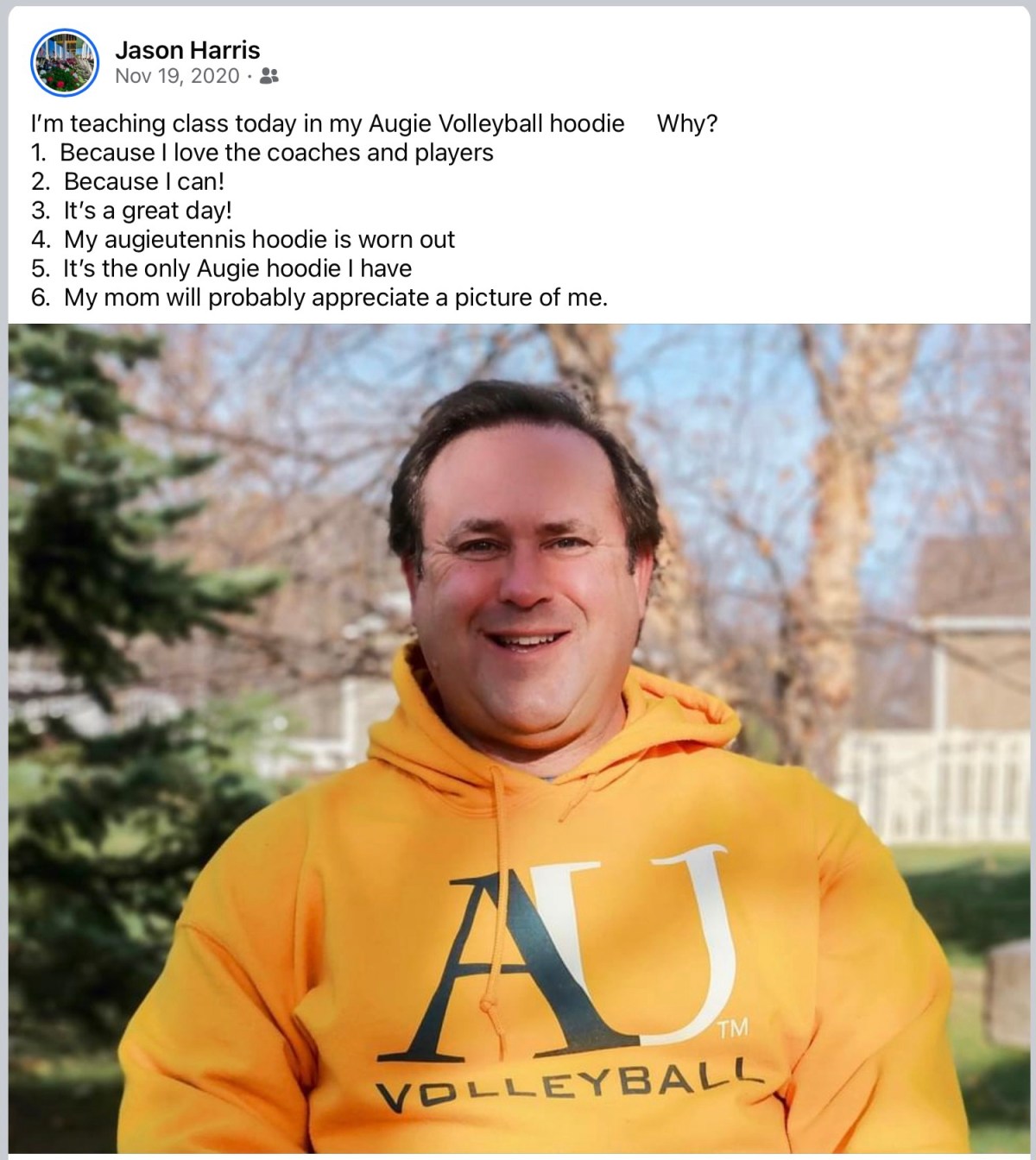
The other post from that day is at the top of this one. When I took that picture and made that post, I was not aware that my life was about to undergo a dramatic transformation.

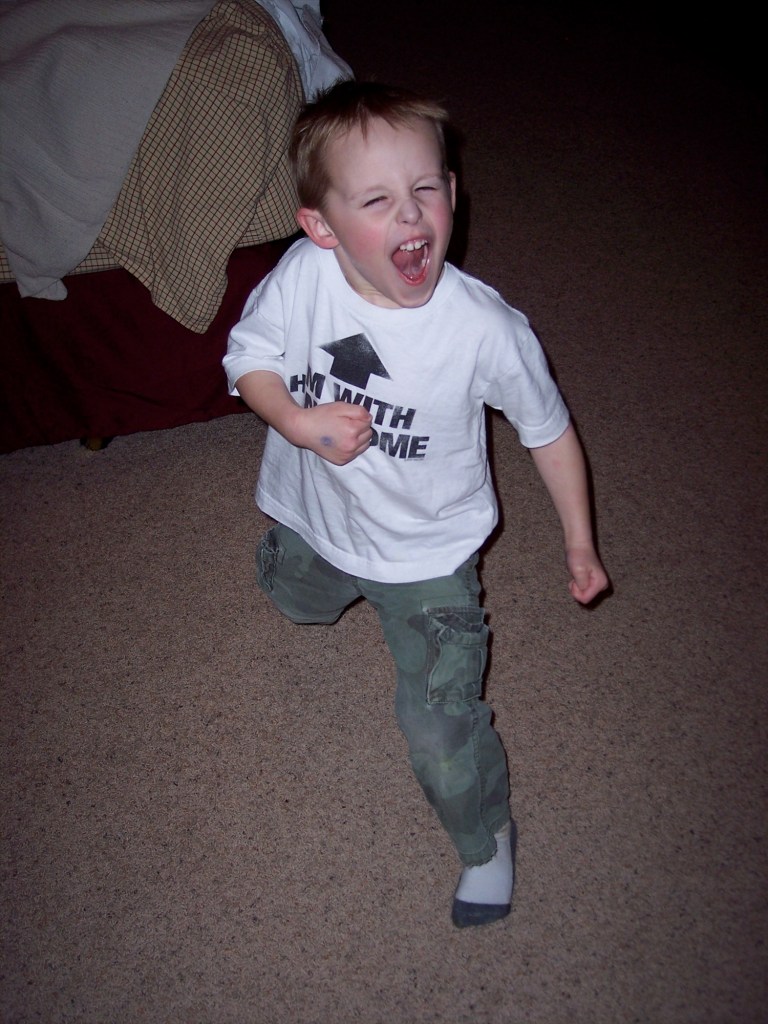
I looked at that picture and immediately realized that something needed to change. My health and weight were out of control. That day, I started researching options and quietly began my transformation. Ultimately, I lost about 60 pounds but have since gained back around 15 of those. What’s interesting is that I find my current weight unacceptable, even though it is still lower than my original goal.

So, today’s challenge is to be grateful for your challenges and difficulties.

Day 4 – 2024 Gratitude Challenge

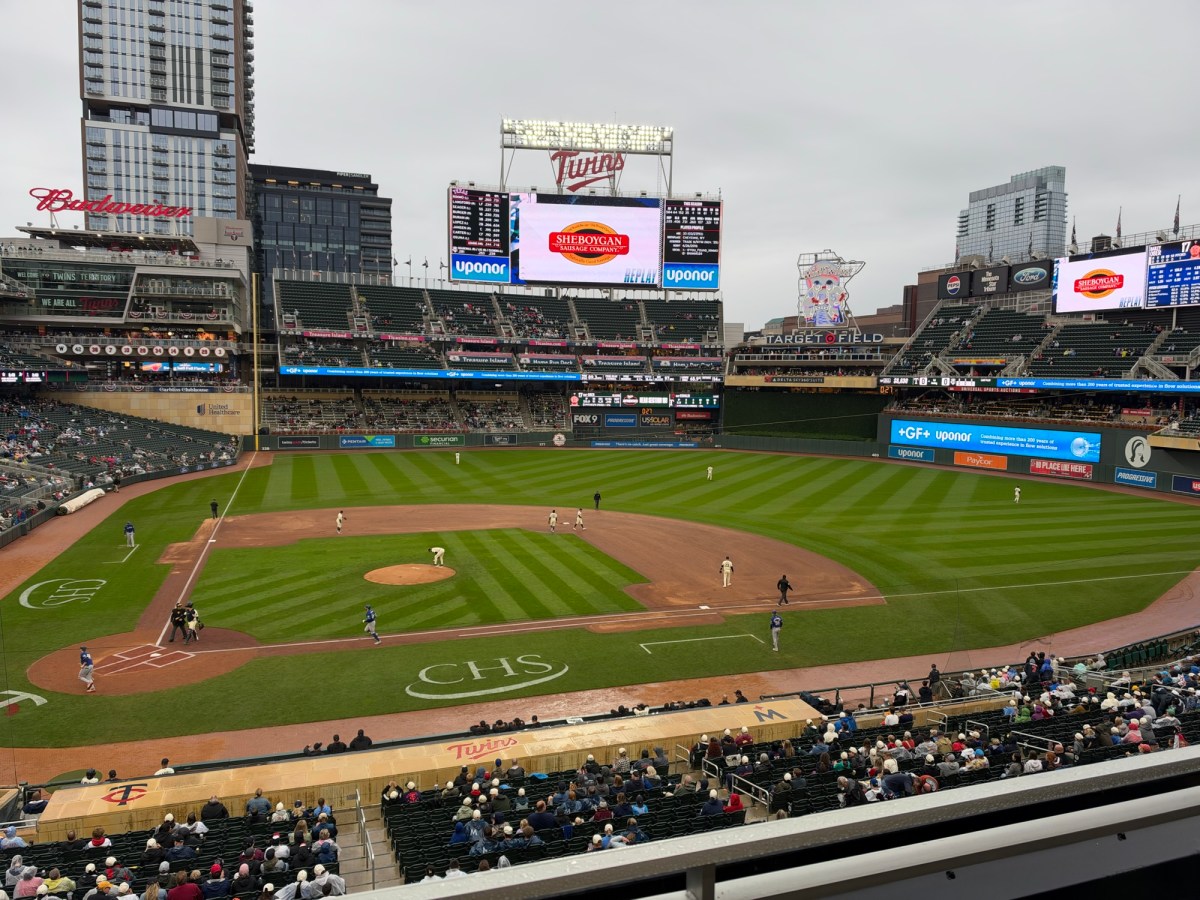
As I take a moment to write this, I’m gearing up to spend a few cherished hours in the here and now, watching my beloved Minnesota Vikings. I know how important it is to focus on the present, which means setting aside the distractions of past regrets and future uncertainties. It’s a gentle reminder that being fully present can bring joy and connection. This was the challenge for Day 3.

It is also important to spend time reflecting on the past. We often overlook the true value of a moment. Consider the memories that brighten your life—what are the ones that make you smile, laugh, or even bring a heartwarming tear to your eye? Take a journey down memory lane and share those beautiful moments with your family and friends. Remember to reach out to those who played a part in creating those memories with you. Celebrate the connections that make those memories so extraordinary!

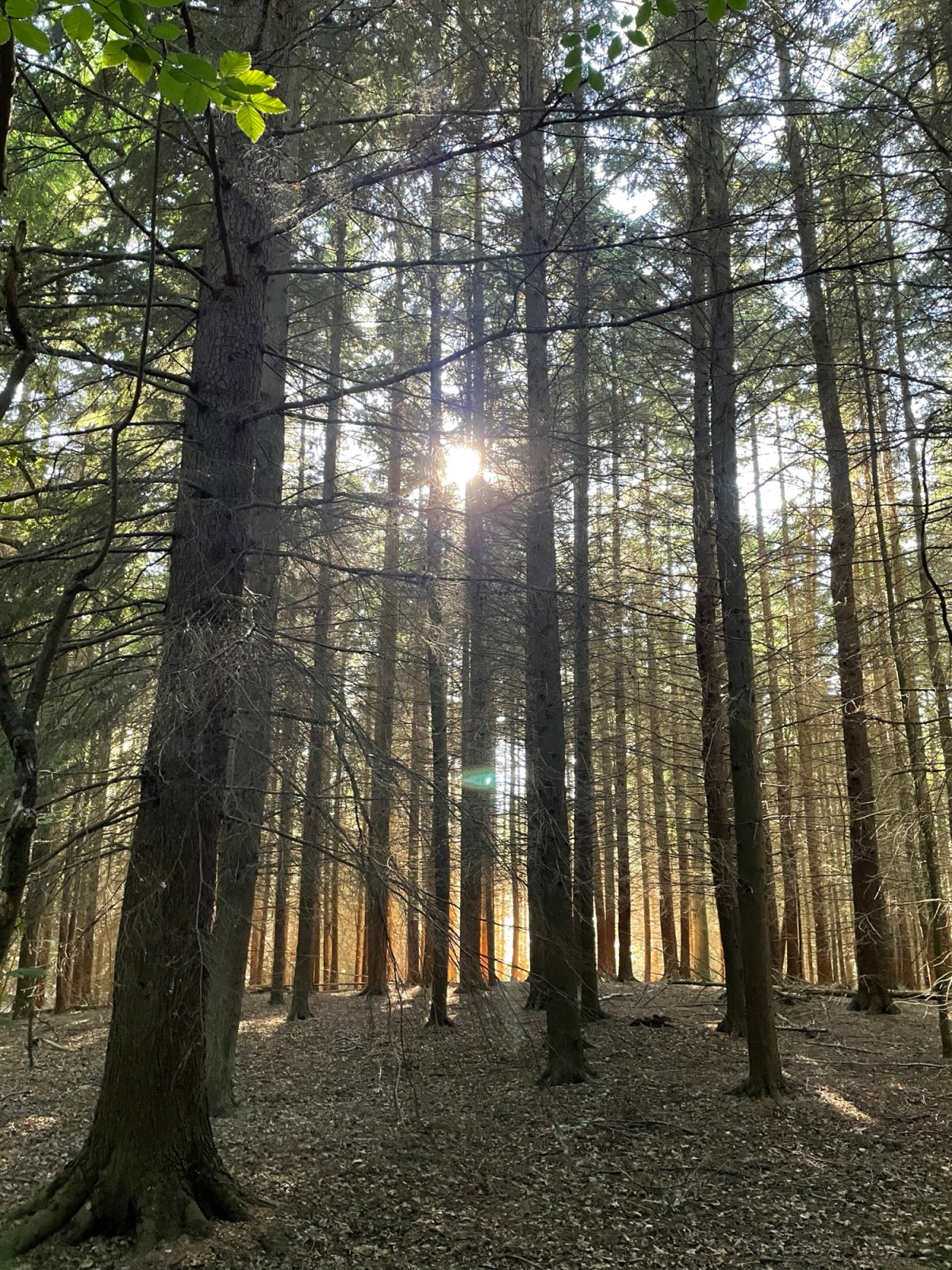
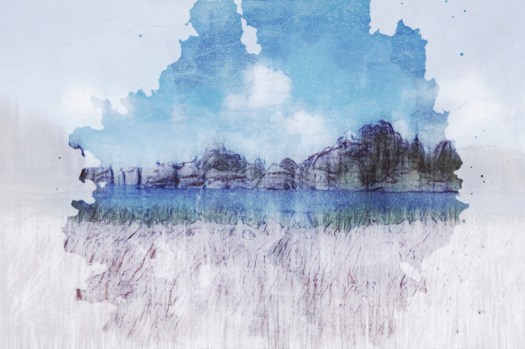
At the top of this post is a picture that holds a special place in my heart. It is from the Black Hills, a region I haven’t called home for a while. Nevertheless, the memories I’ve created there are vivid and alive, each serving as a beautiful reminder of the adventures and moments that have shaped me.

Day 19 Beautiful Things

The purpose of this challenge is to take a moment to appreciate the beauty surrounding us. A few days ago, I shared a post about the beauty of a gift I received—a camera. I also included one of my favorite football pictures. Below is the story about one of the first pictures I took.

When I was young, my mother used to give each of her children a Christmas ornament every year. Some years, the ornaments had a similar theme. I remember a Wizard of Oz themed year and another year with a fairy tale theme, when I got a Puss-in-Boots ornament. My first ornament was a train, and I still have it.

When I was three or four, I received a football player ornament that became my favorite. Even now, it remains front and center on our tree, a reminder of Christmases past, present, and future. I took one of the first pictures with my new camera of this special ornament. Like me, it has aged. While some may not find it beautiful, it holds a special meaning for me. Sometimes, beauty is found in memories or photo albums.

Day 16 – Beautiful Things

Over the weekend, my youngest son paid us a visit. Amidst the excitement of a wedding and catching up with his buddies, he managed to squeeze in some quality time with us. We even hit the golf course for a few rounds. While he’s now a better golfer than I am, we always have a playing together. It’s great to see him thriving and it’s even better to share these moments with him.