One Saturday at a Time

Four years ago the scale read 186. Today it tells a different story. This is the Forgiveness post — the hardest of the three to write, and the most honest.

Four years ago this spring, I stepped on a scale and it read 186. I had worked for almost two years to get there, and the work had shown up everywhere. New clothes in sizes I had not worn since college. Old energy back in the legs. Knees that did not complain when I stood up from the couch. The person in the mirror looked like someone I recognized again, which was not a small thing, because for a long stretch before that I had been avoiding mirrors the way some people avoid their inbox on a Monday morning.

Today the scale tells a different story. Not the one I want to tell, and not the one I had hoped to be telling four years later. Nothing dramatic happened in between, which is the part that took me the longest to understand, and the part that matters most for what this post is actually about.

I changed jobs somewhere in that stretch. That is probably a post for another Saturday, the one about the difference between academic life and the financial world, between a calendar that breathes and a calendar that does not. I will write that one later and spare you the full tour for now. What matters here is that the new work sat me down, the old rhythms did not fit the new life, and I did not build new ones fast enough. The body did what bodies do. It adjusted to what I was actually doing, not to what I meant to be doing. Turns out bodies are excellent listeners. Mine heard every excuse I made and took detailed notes.

The return was not a week or a month or a quarter. It was four years. It came on slowly, in small unremarkable increments, the way these things almost always do. There was no decision to point at, no bad stretch I can circle on a calendar and say this is where it went wrong, no villain. Just a slow drift, measured in pants sizes and the steadily growing list of things I did not want to look at too closely. That is the hardest kind of regression to explain, because there is no story in it. A bad month has a shape to it. A bad year has a cause you can name. Four years of gradual drift has neither, which is probably why so many people end up carrying some version of it quietly, with no good way to talk about it even when they want to.

Three weeks ago I wrote about why I started. Last week I wrote about what the scale does not tell you. Focus, then Facts. I told you there would be a third one, about Forgiveness, and here we are, which was always going to be the hardest of the three to write honestly.

I would love to report that writing those first two posts fixed something, that putting it in public and naming the framework and telling all five of my readers exactly what I was going to do was enough to break the pattern. That is the version of this post I wish I could write. It is not the one I am writing, because the last month has produced no meaningful progress, and that is on me. I know what to do. I am not doing it. The focus slips somewhere around Monday, the facts become negotiable by Wednesday, and by Friday I am telling myself the week was unusual and next week will be different. The weeks are never unusual. The weeks are the point, and pretending otherwise is how four years happen in the first place.

There have been family matters this spring that have required attention, and I am not going to write about them here. There has been travel. There has been what I consider the particular stress of spring, which always seems to arrive with more on the calendar than I remember agreeing to. None of that is an excuse, and I am not offering it as one. I mention it only because pretending the last month happened in a vacuum would be its own kind of dishonesty, and this post has no room for that.

What I usually do next, after a stretch like that, is spend a few days beating myself up about it. Quietly, mostly, but thoroughly. I run through the week, count the missed walks, replay the snacks I did not need, the water I did not drink, the extra serving, the dessert, and make a long internal case against myself that no actual courtroom would have let me bring. The lawyer in me knows better. The rest of me does it anyway. It does not change a single fact about the week that already happened, and it almost always makes the next week harder than it needed to be. This is the part they leave out of every motivational poster. The part where you know exactly what you did and you sit with it anyway.

That is the thing I have come to understand about Forgiveness, and it took me longer than it should have to get here. Forgiveness is not lowering the standard. It is not telling yourself the week did not count. It is not pretending the facts are something other than what they are. It is just the part where you stop prosecuting yourself long enough to get moving again. The setback already happened. That part is finished. The only thing still in front of you is how quickly you put the case down and start the next day.

Here is what I have learned after enough Mondays and enough fresh starts to know the difference. The people who make it back are not the ones with the most discipline or the most willpower or the best plan. They are the ones with the shortest recovery time. The ones who can look at a bad week honestly, set it down without ceremony, and show up the next morning anyway. That is the whole game. Not the falling. The getting up. And how long you spend on the floor in between.

The struggle is real, and I am not going to dress that up or sell it as something it is not. The fight continues, and I am not going to promise it is going better than it is. Forgiveness is the part that lets the fight continue at all, because without it, four years of drift becomes a reason to stop trying, and with it, four years of drift becomes a starting point. The same way it was a starting point in November of 2020 when I took that picture and looked at my face and decided I was done. The starting point is wherever you are standing. It is never where you wish you were standing, and waiting until you are somewhere better before you begin is just another way of not beginning.

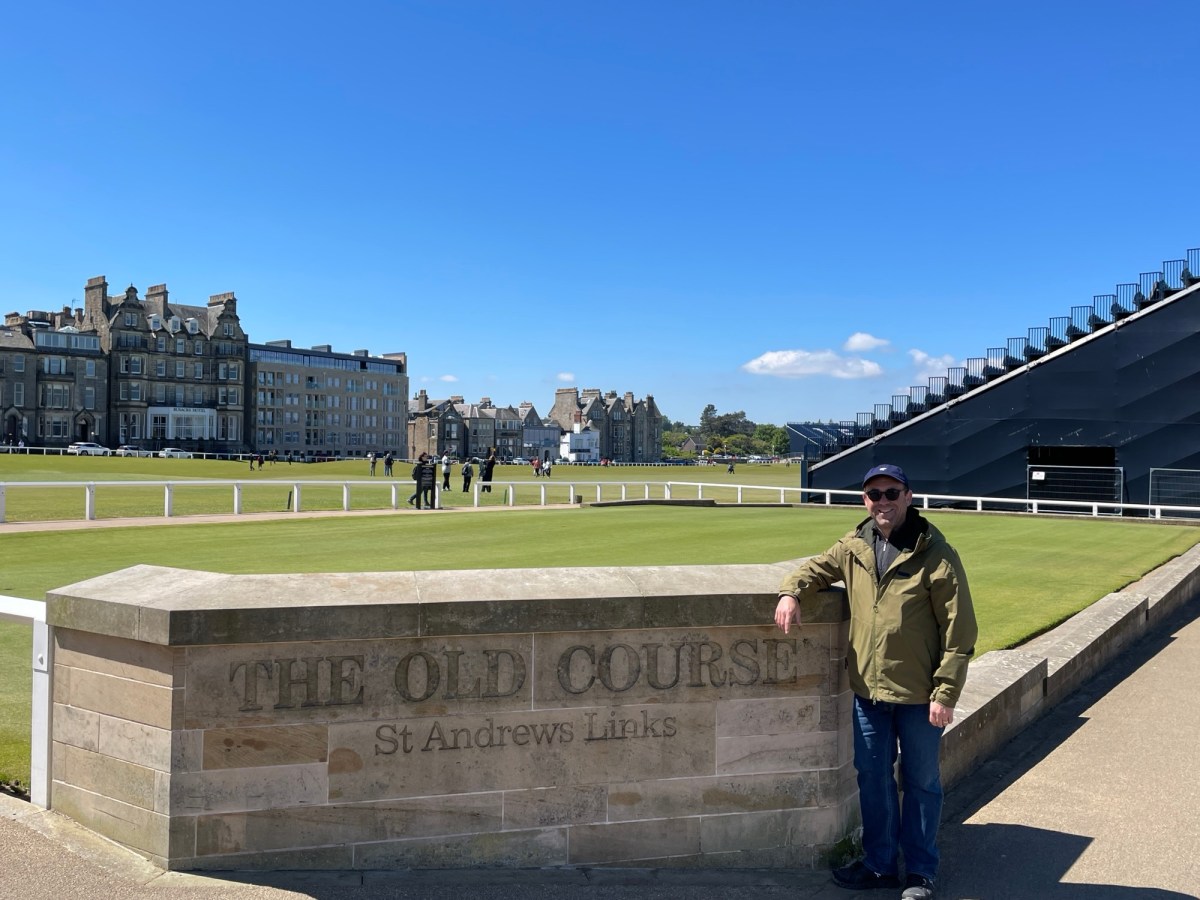
So this morning I walked. This morning I also hope to play golf, weather permitting. This afternoon I will make choices about what I eat, and some of them will be the right ones and some will not. Tomorrow I will do it again. The ebb and the flow is not the obstacle. The ebb and the flow is the shape of it, and anyone who tells you otherwise is selling you something. Focus got me here. Facts tell me what to do now that I am here. Forgiveness is what keeps me here, on the days when here is not where I wanted to be by now. Four years. One Saturday at a time.
The Rhythm Is Gonna Get You: Circadian Rhythm, Spring, and Why Timing Matters

Gloria Estefan warned us: the rhythm is gonna get you. A reflection on circadian rhythm, academic life, and why spring feels like the only real beginning.

Gloria Estefan warned us. The rhythm is gonna get you. You can fight it for a while, but it always wins, usually at the worst possible time. Everything has a rhythm. The seasons. The school year. A marriage. Some people find theirs early and live inside it comfortably. Others spend decades bumping around looking for it. The rhythm does not wait for you to figure it out. It is coming for you regardless.

My wife figured this out a long time ago. The rest of us are still working on it.

For the most part, she goes to bed at the same time and wakes up at the same time. It does not matter the day, season, weather, or location. At some point she informed me this was called a circadian rhythm. For years, I nodded and smiled like I understood, which is generally how I handle most things, and then went about my day. But with the arrival of Copilot and ChatGPT, I was finally able to dig into it in a way my small brain could understand. That is how I found myself learning about my suprachiasmatic nucleus, located in the hypothalamus, nestled deep within the brain’s center, positioned below the thalamus and above the pituitary gland. Of course it is. This naturally led me to wonder whether mine had been injured in my January fall. I asked my wife, who works at a hospital. She told me I was fine. Just more irritating.

Further research suggests a handful of best practices for keeping your circadian rhythm aligned. My wife does all of them. She has a blinding light she activates each morning like she’s signaling aircraft. She goes to bed and wakes up at the same time every day, weekends included. She limits screens before bed, with a carve-out for Law & Order and Dateline, because apparently procedural crime dramas are melatonin-neutral. She eats on schedule. And caffeine, well, that deserves its own piece entirely.

Gloria Estefan. My wife. My mother. Fine. The rhythm got me.

For a long time, my rhythm was the academic year. August was pure optimism. You built syllabi, mapped out lesson plans, and convinced yourself this was the year everything would click. You would reach every student. You would teach differently. You would get it right.

Then the first faculty meeting hit. It was Dorothy throwing water on the Wicked Witch, except the melt took until May. Nothing kills momentum like a three-hour meeting about parking, assessment, and what absolutely must be in the general education curriculum that no student has ever once cared about. Even better when faculty from entirely different disciplines are sorted into small groups to solve these problems together. Nothing says higher education like a chemist, a music theorist, and a medieval historian trying to reach consensus.

The best part was that you could always tell exactly which discipline someone was from without ever seeing their name tag. Communications professors liked to speak, at length, about speaking. Biology and chemistry professors made everything about the scientific method, including whether the agenda had a proper hypothesis. Philosophy professors asked questions no one could answer, which they considered progress. History professors talked about the past, often at the expense of the present. English professors, being mostly gentle souls, just wanted to fix things, quietly noting that the third bullet point contained a squinting modifier and the mission statement had a dangling participle. Could we perhaps offer a friendly amendment? Business and accounting professors wanted to discuss the finances and would, given any opening, perform a SWOT analysis on everything, including the parking situation. And the business law professor felt a deep, personal obligation to remind the room that a friendly amendment is not actually a thing. You cannot offer one. It is not valid. It never was. Everyone asked anyway.

And yet, the meeting did not kill the August optimism. Not entirely.

Because then the students arrived. The campus came back to life. The halls filled up. And somewhere in the chaos of the first week you remembered exactly why you were there.

The fall semester was fun right up until the first round of exams and homecoming, whichever came first. If the football team was winning, the campus was noticeably happier, which tells you everything you need to know about higher education. Somewhere along the way, quietly and without fanfare, the great ideas from August disappeared. The innovative plans, the creative approaches, the belief that this year would be different, gone. Professors taught the way they always had, the way their professors had taught them. Innovation, it turns out, has a shelf life of about four weeks. But even that was part of the rhythm. Hope arrives in August. Reality settles in by October. Every year, right on schedule.

Then came the first round of illness, like it had its own place on the calendar, and we limped into fall break having earned it. And promptly wrecked our circadian rhythms for four straight days, which my wife would like me to point out is everything she would never do.

October turned to November, and suddenly it was registration, projects, and round two of exams. We stumbled into Thanksgiving slightly disheveled, definitely behind, and unreasonably relieved we had made it at all. Every class after Thanksgiving felt optional, whether anyone admitted it or not. For all practical purposes, everyone agreed to pretend otherwise. Students and faculty alike did what academics do best under pressure, negotiating, rationalizing, and convincing themselves a paper submitted at 11:58 p.m. represented genuine scholarship. And then it was over. By Christmas, the greatest gift was silence.

Spring semester was different, though not in the way you might hope. Fall arrived like a first date. Spring arrived like a Monday morning. Everyone knew what was coming and nobody was particularly excited about it. The energy was lower. The novelty gone. You already knew some of the students, which was either comforting or concerning.

February tested everyone. The holidays were a distant memory. Spring break was not close enough to matter. The days were gray and identical. You taught. They sat. Everyone just got through it.

Then March arrived. And March meant spring. And spring meant just enough hope to keep everyone moving.

Students left for spring break and returned tan and suspiciously cheerful, having traded a meaningful number of brain cells and part of their liver for the experience. They all came back physically. But something stayed in Florida. You could see it in their eyes, that faraway look of someone who had briefly escaped and had not yet accepted that they hadn’t.

As the weather warmed, attention drifted toward the windows and away from the board. The same was true for me. By March, I was done pretending otherwise. I had graded enough papers and sat through enough meetings to know that when the sun finally showed up with intent, something shifted. The same projects were back, just with new due dates and the same dread. But it felt manageable. The days were getting longer. The end was finally in sight. The rhythm was doing what it always does, pulling everyone forward whether they were ready or not.

And then it was over. Students moved out. Graduation happened. And then the campus went quiet. Beautifully, mercifully quiet.

I have not stood in front of a classroom in years. But every March, something stirs anyway. Old habits. Old rhythms.

Which brings me to now.

What is my rhythm if not the academic year? The calendar year never made much sense to me. January has never felt like a beginning. Short days. Dark skies. Cold everything. January feels less like a beginning and more like a life sentence.

Then we spring forward, which feels like something designed by Satan. A small disruption, but enough to remind you how fragile the whole system is.

And then, almost without warning, it changes.

Spring arrives.

Spring is August of the academic year. It is January with actual hope. The grass turns green. Leaves return. Flowers push through the ground. And then there is that first warm Saturday where you find yourself standing outside for no reason at all, just because you can. That is when you know it is back.

And baseball season starts. There is something about opening day, the impossibly green grass, the crack of a bat, the unhurried pace of a game that refuses to hurry, that feels like the world exhaling after a long winter. On opening day, every team is undefeated. Every fan is a believer. For a while, that is enough.

Spring does not just arrive. It reminds you that things come back. That the world has a rhythm, and if you are patient enough, it finds you again. My wife, of course, already knew all of this.

Some of us just needed a few decades. And a March morning.

Gloria was right.

Sleepless in Savannah

I didn’t sleep well last night. Perhaps it was the low-grade anxiety that comes from traveling during a major weather event, the kind where every departure board looks like a crime scene. Maybe it was the neck pain, still hanging around like an unwanted houseguest who keeps promising, “I’ll be gone tomorrow.” Perhaps it was the realization that three beers is now officially one beer too many when you’re not 23—or even pretending to be. Or perhaps it was the unmistakable sense that my hotel room and I had very different ideas about acceptable living conditions.

Perhaps it was something else.

Perhaps it was the conversation I overheard at the hotel bar, where three extremely drunk, mostly younger people were conducting what appeared to be a peer-reviewed symposium on the modern dating landscape and which apps deliver the strongest romantic return on investment. (Important disclosure: none of them were married, but all spoke with the calm authority of seasoned divorce attorneys who had seen things.)

I can’t control what happens in the world. I can barely control what happens before my first cup of coffee. But I can control how I respond to it. Which is why I’ve chosen not to unload my thoughts on social media—that gleaming coliseum of reasoned debate where everyone listens carefully, nobody interrupts, and no one is sharpening a digital pitchfork while waiting for their turn to speak.

There’s a reason I’ve connected with people on social media, but I can’t think of a single friend I have because they voted a certain way. That feels important.

For the most part, I don’t think my social media friends are inherently good or evil. Do they post dumb things? Absolutely, but who am I to judge? My dog has her own Instagram account—@sdgingerdoodle—and it is, without question, the most consistently joyful and least controversial thing in my feed. You should probably follow it, if only to restore your faith in the internet.

Which brings me back to the hotel bar. To be clear—and I want this on the record—I AM NOT IN THE DATING MARKET and haven’t been for many years. That may be why dating apps confuse me the way TikTok confuses my parents. Back in the prehistoric era of my youth, dating involved something radical: talking. Face-to-face. Sometimes—often—alcohol was involved, but there were no algorithms, no swipes, and no carefully curated versions of yourself that mysteriously enjoyed hiking.

You walked up to someone and said, “Hey. You’re cute. I like you. Want to go on a date?” Frequently, the answer was “No.” When that happened, I licked my wounds, questioned my entire identity, wondered if I should’ve worn the other shirt, and moved on. It was brutal. It was inefficient. And yet, somehow, humanity endured.

Eventually, through a combination of persistence, timing, and luck that bordered on divine intervention, I got the girl. We’ve been married almost 25 years now. No app required. Just conversation, shared space, and the quiet miracle of two people choosing each other again and again.

So why couldn’t I sleep?

I think it’s because we’re disconnected. I think social media, for all its conveniences, has a way of sanding down real human interaction until it’s flat, loud, and oddly lonely. I think we’re better when we talk to each other—actually talk—where autocorrect can’t rescue us and we have to look someone in the eye and live with what we say.

So here’s my modest proposal: let’s talk. Meet in the town square or the coffee shop. Pick up the phone. Check in. Be human. Care a little more than feels comfortable. In short, stop being assholes to each other.

So I end with this message – Love everyone. Even Packer or Buckeye fans.

Top Achievements of 2021

What are my top achievements for 2021? This is a long list but mine it bore you with all the details. Here are my two –

One – I transformed my body and health. AND I maintained it. I AM 45 pounds lighter than this time last year. My weight has been fairly steady for the last 8 months.

Two – I navigated the transition to an empty nester. This was more challenging than anticipated. It impacted all aspects of life. It impacted home because things we quiet. The energy of youth is gone. It impacted professional. Though I love my current career, it’s less fulfilling because of the empty nest syndrome. It impacted my marriage. My wife and I spend more time together – just the two of us. This hasn’t happened since our dating days.

In closing, I wish everyone a very Happy Christmas.

Personal Lessons of 2021

I continue to reflect on the year that is 2021. I learned and relearned important lessons. Here a just a few things I learned this year:

  1. There is more commality among humans than diversity. Focus on what we have in common.
  2. Do not assume the worst in people. Most people are trying to their best.
  3. Making small changes each day will lead to big changes over time. Example: In Week 1, run (or walk) one mile. In week 2, add 300 feet (approximately the length of a football field). Add 300 more feet each week. After a year, you will run nearly four miles.
  4. Discover, understand, and live your values. This is the hardest of the four listed. It takes time to discover what you value, what that value means to you, and why you value it. It is a greater challenge to live your values.
  5. Read for fun.

Take some time to ponder your own personal lessons of 2021. Consider what you learned and how the lessons impacted your life.