
Aged Thirty Years

I had a birthday this week. Tomorrow is Father’s Day. This is always a complicated time of year, and this one has been harder than most to put into words.

If you’ve been reading this blog for a while, you’ve heard parts of this story before. The golf course. The note. The phone call. I’ve written about this day before. But thirty years asks for more. This year I wanted to go further. Not just what happened, but who he was. And what it’s like to figure that out without him.

Thirty years ago, my birthday fell on a Saturday. The next day was Father’s Day. I was on the golf course when someone handed me a note written in red ink. Five words: Paramedics called. Call your mom at home.

I went back to the clubhouse. This was before cell phones were common, and they let me make a long distance call to my mother. I think they knew what I was about to learn. She told me “Your father had another heart attack and he isn’t doing very well.” We said a few more words. I don’t remember all of them. Then she told me the ambulance was taking him to the funeral home.

I drove to my parents’ home. Twenty-five minutes. When I arrived, my birthday presents were sitting out. We had been planning a celebration. There wouldn’t be one that day. There was a funeral to plan instead.

Grief, it turns out, comes with logistics. Two services in two towns 350 miles apart. Countless people to notify, arrangements to make, decisions that shouldn’t have to be made at all. His death was so sudden there hadn’t been time to plan anything. We found ourselves picking out burial plots in the cemetery where I had learned to ride a bike. Four of them, side by side. Three are now occupied. One remains. A lot of that planning happened on Father’s Day.

In the middle of it, I needed to get away for a little while. Not far. Just somewhere I could breathe without answering another question or making another decision. I went back to my own home, an apartment attached to a monument shop. That’s when I found it. The Father’s Day card I had already bought, signed, sealed, and set aside. That was not like me. I am usually the guy buying the card the day before, or the morning of, hoping the selection has not been picked clean. But that year, for reasons I still don’t know, I had bought it early. I had written in it. I had done the responsible thing. And now the last Father’s Day card I would ever buy had nowhere to go except with him. It was buried with him.

Father’s Day has never been simple since. Neither has my birthday. They arrive within days of each other every year, and every year they carry the weight of that one. Four times since he died, including the very first anniversary, my birthday and Father’s Day have fallen on the same day. I don’t have a word for what that feels like. I’m not sure one exists.

I don’t know that I can say I know who he was. Maybe none of us ever fully know our parents that way. But thirty years of life have given me more perspective than I had then. I understand more about him now than I did as his son standing in the wreckage of that week. Two of his siblings are still alive, and they could probably tell me even more. That is part of the strange work of grief, too. You keep learning about someone after they are gone. Family. Old friends. Coworkers. Former patients. I’ve heard stories about him from people I barely know. My favorite came from a man who shook my hand and said, “I knew your dad. He did my vasectomy.” I didn’t know what else to say, so I asked how it turned out.

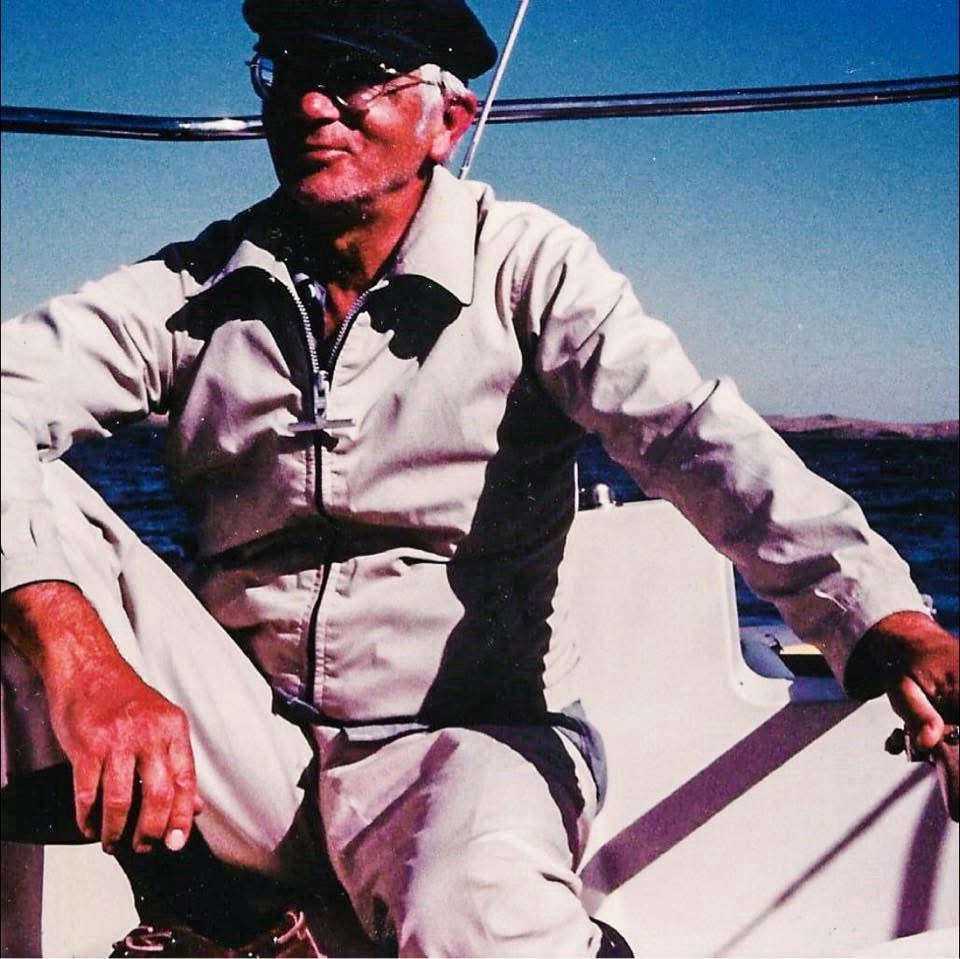
My dad’s name was Russell. He was the oldest child, or so I always believed, and he acted like it his whole life. It wasn’t until we buried my grandfather, his father, that I learned the truth. There had been another child born before him. A baby who didn’t survive. My dad had spent his entire life as the oldest surviving child, carrying that weight without ever fully being the firstborn.

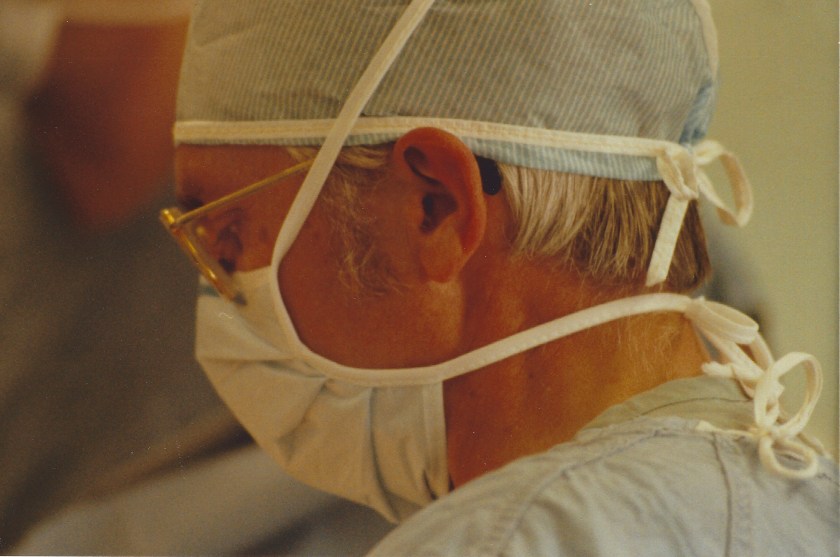
He was a surgeon, and like a lot of surgeons, he was gifted with his hands. He could build things, fix things, figure out what was broken and make it right. He was also a perfectionist. That is exactly what you want in a surgeon. It is not always what you want in a dad.

He tried to teach me some of what he knew, but teaching did not come as naturally to him as doing. I remember being about ten years old, mowing the lawn, and having him inspect it afterward with a surgeon’s eye for the imperfect line and the missed blade of grass. These were errors in a side yard at the end of a long private driveway. Nobody would ever see them. But to him, they mattered. Every project was like that. I never developed any real interest in working with my hands, building things, or fixing things. It wasn’t that the work itself felt beneath me. It was that something in me tensed up every time I picked up a tool, already worrying about the feedback if it wasn’t perfect.

When he died, I kept most of his tools. At the time, I told myself it was practical and valuable. Good tools are worth keeping. He certainly thought so. Every Sunday he would comb through the Sears newspaper ads looking for a deal on a new power tool. If he found one, he would dream up a project that justified the purchase. The tool came first. The reason came after. But the truth is, I kept his tools mostly as a way to keep him.

Over the years, I gave most of them away to people who would use them. That felt better than I expected. There is something good about knowing his tools are still fixing things, still building things, still in the hands of people who know what to do with them.

I still have some of them. This week, I used a few to fix a leaky faucet. I wish I were better at that kind of thing. I wish I cared more about it. But I don’t, not really. Maybe that is because of how he taught me. Maybe it is because of how I am made. Most likely, it is some combination of both. What I know is that even now, standing by a sink with a wrench in my hand, I can still feel the old pressure to get it right on the first try.

And when my own sons were old enough, I didn’t make them mow the lawn. I didn’t teach them how to build things or fix things, either. Maybe that was the wrong choice. But I couldn’t teach what I didn’t know how to do, and I didn’t want them to feel what I had felt. I didn’t want a missed blade of grass, a leaky faucet, or a failed first try to become something larger than it needed to be.

Times are different now. If they need to fix something, they can find a video, ask a question, or follow instructions I never had at my fingertips. But part of me still wonders whether I protected them from frustration or quietly passed along my own fear of it. How do you know what you should teach, what you should push, and what you should let them learn on their own? That is the kind of question I wish I could have asked my father.

What he left behind was not only tools, and the inheritance was not only fear. He left behind standards too. Some useful. Some heavy. Some I wanted to carry. Some I spent years trying not to pass along. And I also remember who he was when he was there.

My father believed in hard work. Not the performance of it, not the talking about it, but the actual showing up and doing the thing in front of you until it was done right.

I remember trying to learn how to water ski. I didn’t enjoy it. I wasn’t having fun. I wanted to be done. My father yelled at me and said that wasn’t the point. The point was learning a new skill, learning how to do something difficult, and taking pride in knowing you could do it. He was right, probably. I did learn how to water ski. But I never learned to enjoy it.

That was one of the complicated things about him. Sometimes the lesson was right, even when the delivery made it harder to receive. He believed competence mattered. He believed doing hard things mattered. He believed there was value in knowing you could do something, even if you never particularly wanted to do it again.

He also believed in integrity, in treating every person you encounter with basic human respect regardless of who they are or what they can do for you. Those weren’t lessons he delivered in speeches. They were just how he lived.

He was generous in ways he didn’t always announce. Our home was open to my friends. He would be there in his chair after a long day, a cigarette in one hand, a book or newspaper in the other, and a martini, scotch, or whatever drink was in rotation sitting not too far away. In hindsight, the fire safety plan may have needed some work. He might pull you into a conversation about politics, argue his side hard, and still expect everyone to be friends the next morning. If we went out to dinner, he paid. Every time, without discussion.

We also had two foreign exchange students live with us for a year. That is not a small thing. Adding another child to a house is expensive, inconvenient, and disruptive in ways people don’t always see from the outside. He did it anyway. He welcomed them, included them, and made them feel like family. That was his generosity, too. Not loud. Not sentimental. But real.

He was not without contradictions. He understood some of his own shortcomings, or at least enough of them to try to warn me away from the same mistakes. I came to think of those warnings as Russisms. He would point at me with a lit cigarette, take a deep drag, and tell me not to smoke because it was bad for me. Or he would swirl a martini, take a sip, and pronounce the dangers of alcohol and why I should avoid it. At the time, I probably heard the hypocrisy more than the wisdom. Now I hear something else. A man who knew his own weaknesses and hoped his son might not have to carry them.

Looking back, I think the Russisms were less about the cigarettes and the martinis and more about something harder to say out loud. They were the advice he wished someone had given him. The mistakes he had already made, handed back to me in the form of a warning. He couldn’t always fix what was broken in himself. But maybe I could avoid some of it. That was the hope, anyway. It usually is.

He was a dedicated physician in ways I didn’t fully understand when I was young. You don’t appreciate that kind of commitment when you’re a kid watching your father leave for the hospital at strange hours. You understand it later, when you’re the patient, sitting across from a doctor and hoping with everything you have that this person actually cares about what happens to you. My father was that doctor. I know that now in a way I couldn’t then.


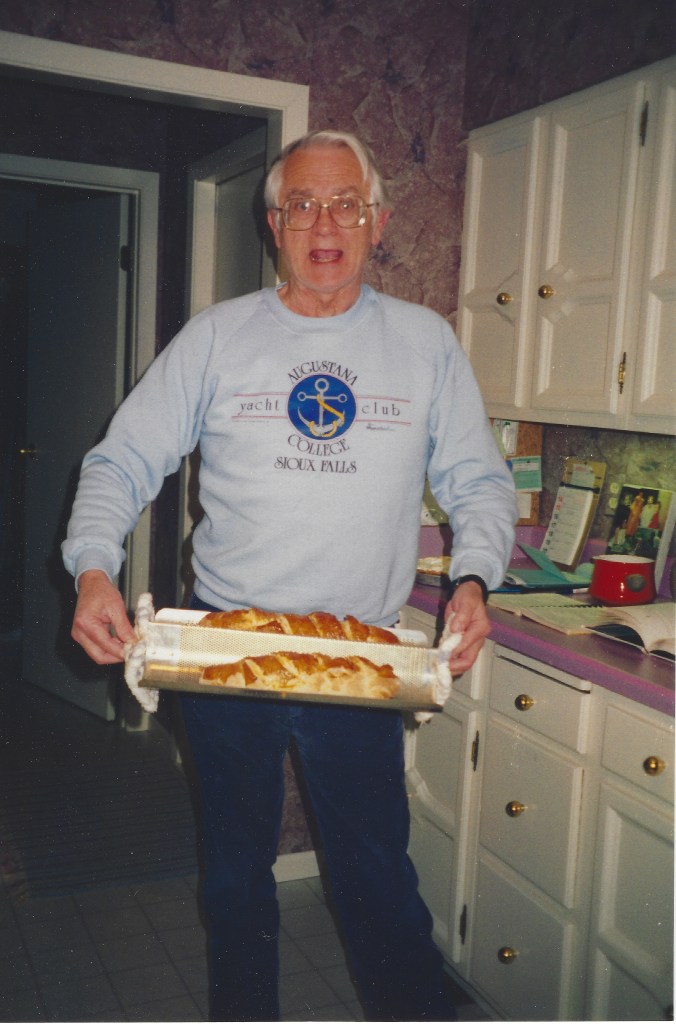
In his later years, after four heart attacks and a forced retirement from medicine, my father began to soften. He tried breadmaking. It didn’t go well, and I think part of him knew it, but he made it anyway. That was new. The man who had inspected a lawn with a surgeon’s eye for the imperfect line was now standing in a kitchen, covered in flour, making something that didn’t turn out right and living with it.

He also showed more outward empathy. He let things go that he wouldn’t have let go before. And in the weeks before he died, he called me just to talk. No agenda. No news to deliver. Just his voice on the phone, checking in. The dad I grew up with never did that. I didn’t know how much I needed it until it wasn’t there.

So what he left behind was also unfinished. The conversations that never happened. The phone calls I never got to make when life got hard. The chance to ask whether he had felt the same doubts, made the same mistakes, and wondered in the quiet moments whether he had gotten it right. I never got to tell him about my own shortcomings and hear him say he understood. And I never got to thank him. Not really. Not for the sacrifices he made, or the strange hours he kept, or the dedication he gave to his patients. I understand now that he did those things so our lives could be better.

He never met my wife. He never met my boys. He would have loved them and probably invented a couple more Russisms. They know him only through stories and a middle name. My youngest carries Russell as his middle name. It’s the closest thing I had to introducing them. It’s not enough. It never is. But it’s something.

Thirty years is a long time to figure something out on your own. Long enough that the figuring becomes the thing itself. I don’t know if I got fatherhood right. I tried to show up. I tried to work hard and keep my word and treat people the way my father taught me. I tried to pass along what was passed to me, even when I wasn’t sure I was doing it correctly. I may not have gotten everything right. But my boys have never once been anything other than the best thing I’ve done. And when I failed, which I did, there was no one to call who had walked this particular road before me.

My father was a connoisseur of scotch and other spirits. Maybe connoisseur is too fancy a word, but he knew what he liked and took some pleasure in understanding it. I have taken an interest in scotch, too. Some of that is taste. Some of it is ritual. Some of it, I suspect, is another way of keeping a small conversation with him going.

A thirty year scotch is not simply older than a fifteen year scotch or a ten year scotch. Time has done something to it. The sharper edges have softened. The heat is still there, but it does not hit the same way. What remains is deeper, smoother, more complicated. Still scotch, but different than it was.

Grief works that way, too. Thirty years have done something to this. Not all of it has burned off. Some of it never will. But the raw pain of that first Father’s Day, the one spent planning a funeral in a cemetery where I learned to ride a bike, has changed. What remains now is grief, yes, but also gratitude, understanding, and a kind of love that has had a long time to age.

Somewhere today there’s a golf course, and a note written in red ink, and a young man who doesn’t yet know what he’s about to learn. I think about him every year on this day. I think about what I’d tell him if I could.

Happy Father’s Day, Russ. I still have things to tell you. And thirty years later, I am still finding things you left behind.

The Long View of Friendship

Every spring, I send the same text. Just a few words asking whether they are in this year. Same message for thirty-nine years. Only the delivery has changed.

It started with a floor in Bergsaker Hall, a shared love of the Minnesota Twins, and a World Series nobody saw coming. What followed was nearly four decades of games, road trips, bad food, one covert operation that would have impressed the CIA, and conversations that always end up somewhere back in college.

The scores are gone. The games are not. This is a story about what stays.

I sent a text this week. Nothing complicated. Just asked whether they were in this year, and we started working on a date. It used to be a face-to-face conversation, then a phone call, then an email, and now it is a text. Same basic message for thirty-nine years. Only the delivery changed.


We met freshman year of college, a group of us living on the same floor in Bergsaker Hall. Different hometowns. Different majors. Different ideas about where life was headed, most of them wrong. We probably do not find each other without college doing what college does best, throwing a bunch of strangers together and letting time do its work. If you are lucky, a few of those strangers become people you are still texting nearly four decades later.


What we had in common, as it turned out, was the Minnesota Twins. That was enough. In 1987, that was more than enough.


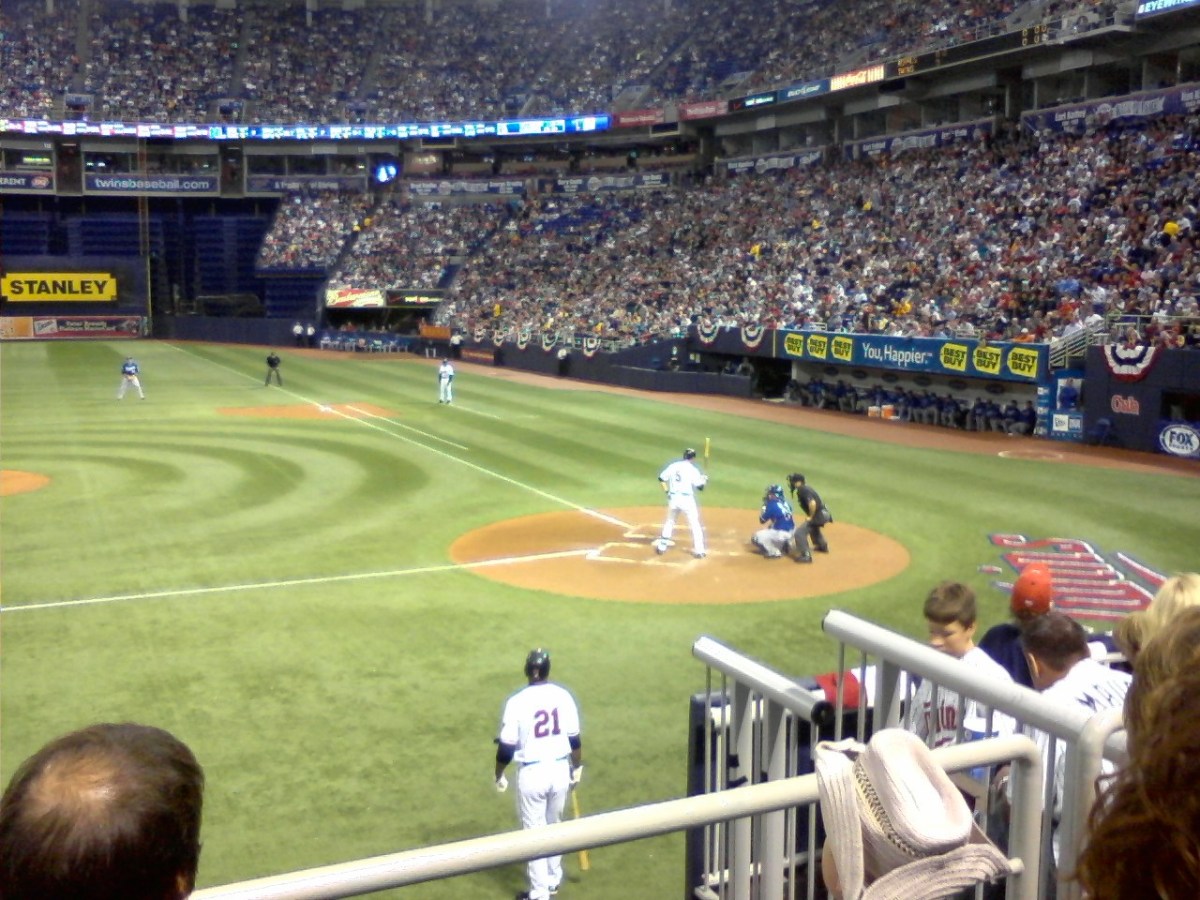
For most of our lives, the Twins had been mediocre or worse. Then suddenly they were not. They played in a dome built for football, with plexiglass in left field, the Baggie in right, and acoustics that made the whole place feel like a washing machine on spin cycle. Other teams complained about it. We took that as a compliment.


They barely got into the playoffs. Nobody outside Minnesota thought they were real. Then they won the whole thing anyway. If you were college age and a Twins fan that fall, watching it happen with people who mattered to you, something got locked in.

* * *

Thirty-nine years of going to Twins games with friends, and I could not build you a proper box score from more than two of them. The first was September 27, 1987, that same fall, before the World Series run was even finished. It was the final home game of the year, and you could feel the buzz because everybody was hoping the Twins were headed to the playoffs. Sunday game. One o’clock first pitch. We got up early, stopped at Mr. Donut, piled into a car, and drove four hours like this was an entirely reasonable use of a weekend. Somewhere I still have the ticket stub.


There was a double play in the top of the first inning, ground ball to third, force at second, throw home, a 5-4-2, which is a weird little baseball gem. The Twins scored five in the bottom half before half the crowd had settled in. I had to look up the five runs. I did not have to look up the double play. That seems about right. I could not tell you what I had for breakfast yesterday, but I can still see that play. The Twins won. They clinched a playoff spot. More than 53,000 people went home happy.


Then there is Game 7 in 1991. Jack Morris. Ten innings. No runs. One of the best baseball games ever played, and somehow we were there. How we got the tickets involves a romantic subplot, and at this age I think it is better left slightly blurry. Another Sunday. Another four-hour drive. Then a celebration in the streets of Minneapolis, followed by turning around and driving four hours home because Monday was still coming, and apparently we were still pretending to be responsible people.


Everything else has blurred, which is fine. Blur has its own value. There was a game where the Twins were losing by so much that we started rooting for the other team, just to see a better brand of baseball before the day was over. There was one of the last games in the Metrodome, sitting right down the third base line in front of the visitors bullpen, close enough to hear everything and probably say a few things we should not have. There was one of the first games at Target Field, when the place was still new enough that we were wandering around like tourists, and somehow we ended up in the Legends Club.


You do not accidentally end up in the Legends Club. Somehow we had acquired two tickets even though there were four of us, and this was before the sophisticated scanning devices you see at ballparks now. So getting everybody in required a plan. And we had one. The kind of plan that would have made a CIA operations officer nod with quiet approval. Timing, nerve, precise execution, and the kind of straight-faced confidence usually reserved for people with actual credentials. We divided roles without discussion. Each person went in at the right moment, no hesitation, no eye contact, no deviation from the plan. A Navy SEAL team could not have done it cleaner. We were absolutely not supposed to be there. We stayed as long as we could. That remains one of my favorite life skills, the ability to act like you belong somewhere just long enough.


The scores are gone. The games are not.


Some things have changed. We started in the three dollar general admission seats, upper deck, outfield, way out where the baseball looked more like theory than sport. That was college. Cheap tickets, long drives, no money, no hesitation. Now we often pay more than one hundred dollars each for a game, and more often than not we end up in the Legends Club. The same place we once slipped into like it was a minor covert operation. Turns out if you live long enough, some of the places you used to sneak into will eventually just let you buy a ticket.


The food changed too, and not always for the better. That day in the Legends Club was the first time we learned stadium food could mean a lot more than hot dogs and Cracker Jack. We still like to inspect the ballpark menu, which is not a sentence our younger selves would have seen coming. When we do end up in the Legends Club — which has had enough corporate sponsors over the years that keeping up with the current name feels like a part-time job — we still usually come back with basic stadium fare because change is hard. But games have never quite been the same since the Hormel Dome Dog failed to make the move to Target Field. That comes up too, usually right after someone has settled for something that is not a Dome Dog and knows it.

* * *

In the beginning, the conversations were about college. What was happening on campus. What we were going to do with our lives. Who we were dating and how that was going, which was a mixed bag at best. We thought we were fascinating.


Then the years did what years do. Jobs. Cars. Spouses. Kids. Aging parents. Politics, when everyone felt sufficiently rested and charitable. The whole messy architecture of adult life, covered inning by inning over three decades. But we always end up back in college, because that is what happens when people have known you that long. Nobody lets you stay in your current form for very long. Somebody always remembers the earlier draft.


We still talk about professors we loved and professors we endured. Classes that mattered and classes we survived. Basketball games and football games that once felt like the center of the universe. Former romantic interests always make an appearance. They always will. And sooner or later, somebody brings up Nite City.


Nite City was a dance club near campus that we were convinced was sophisticated. It was not. But it had drink specials, and it had people from our college, and at that age that is really the whole formula. The facts are usually off now. The feeling is still exactly right.

* * *

The season started this week, and my hand reached for the phone before I had thought it through. That is all it takes. The Twins play a few games, and thirty-nine years of the same reflex kicks in.


For most of that time, the core group has been the same three of us. Others have joined in different years, depending on schedules and seasons of life. But lately it has settled back to the three, which feels about right. The text goes out. The replies come back. Then at some point we are sitting in that ballpark, talking about this year, then 1987, then somebody’s kids, then something dumb we did in college, then some old story that gets less accurate and somehow better every time it gets told.


I probably will not remember this year’s score either. That is what scores do. They fade. But I will remember who was there. I will remember what we talked about that had almost nothing to do with baseball. I will remember the feel of Target Field on a summer night when the season is still young and hope is still allowed to be a little irrational.


We were college age and convinced the Twins would just keep winning. They did not. But we kept showing up anyway, which turned out to be the more important habit.


Thirty-nine years. One text. Still working on a date.


Some things you just keep doing. Not because you mapped it out. Not because you saw the whole arc coming. Just because somewhere along the way it became part of your life, then part of your identity, and finally just part of you.

* * *

That is the long view of friendship. It does not look like much from the outside. From the inside, it is everything.

The Stories That Remain

I know I’m dating myself with this story, but still stories matter. Lately, I worry we are losing our ability to connect through them.

When I was in high school, Chicago released a song that became a staple at every dance. The lights would dim, and somewhere in the opening line—I guess I thought you’d be here forever—the gym suddenly felt much larger and much quieter. Teenagers stood shoulder to shoulder, unsure where to put their hands, hoping the song would end before anyone noticed they weren’t moving at all. Standing a little closer than usual felt like progress.

“You don’t know what you got until it’s gone.”

Forty years ago, those words were about a breakup. A boy and a girl. A slow goodbye.

Age changes lyrics. It sharpens them.

Both of my parents died when I was relatively young. Now I’ve reached the age where friends and colleagues are experiencing what I went through decades ago. I recognize the look. The stunned quiet. The way the world keeps moving while something essential has stopped.

When my parents died, I was devastated. They were far from perfect. But they were my parents, and I believe they did the best they could. As children, we only see one version of our parents. Mom and Dad. We don’t see the other hats they wear.

My parents held high-profile roles in our town. I understood that in theory. In practice, they were the people who packed lunches and asked about homework. My father wasn’t a public figure to me. He was the man who sat in the stands.

After they passed, people began telling me stories.

One day, a rancher came to see me. He was nearly six-foot-four, with large hands that looked like they had done real work. He had a military haircut and an imposing presence—the kind of man who fills a room without speaking. I had only ever known him as unshakable.

He stood in front of me and cried.

He told me how my dad had saved his life. Then he told me how my dad had saved his wife’s life too. He said he thanked God for Doc Harris and for what he did. Then he looked at me and said, simply, your dad was an amazing man.

I had never heard that story.

In that moment, my father became larger—and somehow closer. I learned about the quiet ways he showed up for people. The unseen hours. The choices I never knew about. And I understood that sometimes saving a life mattered more than making it to a baseball game.

When people die, all we really have left are the stories. If we don’t tell them, they disappear.

That’s why it matters to speak them out loud. To share them while we still can. Stories are how we keep people alive—not as they were in one role, but as they truly were.

You don’t know what you’ve got until it’s gone.

And sometimes, you don’t really know it until someone tells you the story.

So maybe today, reach out to someone and tell a story—about a parent, a friend, a moment that mattered—because maybe, just maybe, it will remind us of our shared human bond.