
2026 arrived quickly and with a certain enthusiasm for chaos.

Some seasons arrive quickly, carrying more than we planned to unpack.

It was probably best that I didn’t subscribe to Dry January. I should have known the year was going to be a beast when, less than six hours into it, I was in a hotel and the fire alarm went off—and it wasn’t a drill. This is not how you want to meet a new calendar year. Then the gods of fate said hold my beer when four members of my immediate family experienced “medical” events, including three emergency room visits, three hospitalizations, and a surgery. January came in like it had a clipboard and a very aggressive agenda.

Along the way, I learned—or was reintroduced to—phrases like spinal stenosis, Clostridioides difficile, colitis, concussion, and tympanostomy. My medical vocabulary has expanded more in a few weeks than it had since I snuck into my dad’s home office and leafed through his copies of the Journal of the American Medical Association and Annals of Surgery. I may not have earned a degree, but I’ve at least qualified for a certificate. Possibly laminated.

And in case you hadn’t noticed—perhaps because you, too, were distracted by sirens and discharge papers—there is also a lot going on in the world.

Much of my attention has been on the Twin Cities. My family has been impacted. My friends have been impacted. This hits close to home. I watch and wonder how we got here. Early in my professional life, I spent time both prosecuting and defending criminal cases, which means I have a reasonably high tolerance for human dysfunction. Even so, many of the things I now see and read—especially through that lens—are genuinely shocking. Not shocking in a cinematic way. Shocking in a quiet, procedural, this-is-how-it’s-written-down way.

Current events often pull me back to what I studied in college, back when you could take courses that wrestled directly with uncomfortable truths instead of politely circling them. I took more than one class focused on the Holocaust and similar atrocities. As a senior, I enrolled in Light in the Darkness: Courage and Evil in the Twentieth Century. The course focused heavily on the Holocaust. At the time—and still—I struggled with how something so terrible could happen.

We studied life in Nazi Germany. We discussed Anne Frank. We read Elie Wiesel. We also read Heart of Darkness by Joseph Conrad, a book I still don’t fully understand, which puts me in excellent company that includes most honest readers.

Though my memory of the course is imperfect—college being a long time ago and optimism being a powerful anesthetic—several moments stand out. Perhaps most significantly, we took a “field trip” to Minneapolis. While there, we attended a concert at Orchestra Hall, spent an evening at the Chanhassen Dinner Theatre, and visited a Holocaust museum.

But there is one experience I will never forget.

We met Holocaust survivors.

One woman had been sent to Auschwitz. She told us her story patiently and answered our questions with care. Then, in a moment that permanently fixed itself in my memory, she rolled up her sleeve and showed us the tattooed number on her arm—a mark that had been there for more than forty-five years. No build-up. No warning. Just history, sitting across from us in a folding chair.

She spoke about the days leading up to liberation. She described the moment she knew she was free. She was offered a ride to the nearest supply camp roughly a mile away. She declined. This, she said, was her freedom walk. She walked the entire distance, stopping frequently because she was so weak. She had to keep her head lower than her heart to avoid losing consciousness.

She spoke about her first bite of food—and the danger of eating too much, too quickly—because her body had essentially shut down. She knew she was close to death, close enough to feel it in a practical, unsentimental way, but she willed herself to live. She told us she kept repeating to herself: Not today. Today I am free.

Someone asked her how she felt about Germany now. Very calmly, she explained that she bore no ill will toward Germans born after World War II. They were not responsible, she said; they carried the scar, not the guilt. But Germans who were present at the time—who did nothing and said nothing—were responsible for the atrocities.

There was no theatrics. No slogans. No grand conclusions. But the emotion, the pain, and the anger hung in the air, doing what facts sometimes do when delivered by someone who earned them the hard way.

I don’t remember her name. I remember her message.

Make sure this never happens again.

Since then, I have found myself returning to her words. I wonder—perhaps naively—whether a similar regime could ever arise in my own country. I keep reaching the same conclusion: yes, it absolutely could. Not because of any single current event, but because we are human, and humans have repeatedly shown a remarkable capacity for atrocity, especially when paperwork is involved.

I also arrive at a more uncomfortable conclusion: there is no way to know how I would respond.

Would I recognize what was happening in real time? Would I speak out? Would I protect those being targeted? Or would I choose personal or family safety over principles and values? Would I convince myself that compliance was temporary, reasonable, or necessary? History suggests these decisions are rarely dramatic. They are incremental. Transactional. Rationalized. Often explained afterward with excellent grammar.

And that, more than anything, troubles me.

What unsettles me most is not that the news feels alarming—news often does—but how quickly alarming things begin to feel normal. A headline that stops you cold on Monday becomes background noise by Friday. By the following week, it’s something we summarize with a shrug and a sentence that starts with, “Well, I guess that’s just how things are now.” That is usually the point at which questions about how we would respond quietly turn into questions about what we are willing to tolerate.

What we are willing to tolerate is shaped, in no small part, by what we understand to be our rights in the first place. When those boundaries are clear, normalization has limits. When they are vague, everything becomes negotiable. Fortunately, we do not have to define those boundaries from scratch or rely solely on instinct and outrage. We have a well-worn roadmap. It is called the Constitution. It does not prevent abuse or guarantee wisdom, but it does establish a baseline—certain rights meant to exist regardless of convenience, popularity, or who happens to be in power.

At its most basic level, that baseline includes the right to move through daily life without harassment; the right not to be stopped and required to justify one’s existence; the right to be free from restraint, harm, or worse based on minor suspicion; and the right to observe authority without becoming its target. It includes the right not to be threatened, exploited, confined, or erased—and the right to speak freely, worship freely, and to have a home that remains a refuge rather than a checkpoint.

None of this is abstract. None of it lives safely in textbooks or court opinions. It unfolds in real time—often within hours: a traffic stop at dusk, a crowd forming, a knock before sunrise, a decision made quickly by someone with power and limited restraint. At that speed, there is no meaningful pause, no appeal, no rewind. Due process—the idea that power must justify itself before it harms—only protects people if it exists before force is applied, not afterward. If this feels distant or exaggerated, it is usually because it has not yet arrived at one’s own door.

These are not rights granted by government, nor privileges extended for good behavior. They exist prior to government—whether understood as gifts of God, products of nature, or the result of generations of hard-won human progress. We entrust them to the state for one narrow purpose: protection. When that order is reversed, what remains may look like order, but it is not law.

It is force, borrowing the language of authority.

I began by describing how difficult January felt for me—personally, professionally, and emotionally. But those struggles, real as they were, pale in comparison to January of 1945, when Auschwitz was liberated and survival itself depended on the refusal to give in, even when the body was failing and the future uncertain. Remembering that contrast doesn’t diminish present concerns; it sharpens them. It reminds me that perspective matters, that endurance has a history, and that resolve—then as now—often begins with a single, quiet decision: not today.

2024 Gratitude Challenge – Day 10

Yesterday’s weather might be considered dismal by many—cool and rainy for the better part of the day. But for my dog, it was great. With the right clothing, even a drizzly day can turn into a delightful adventure. While I didn’t get to spend as much time outside as I’d hoped, the moments I did share with my furry friend in the fresh, cool air were truly enjoyable. Sometimes, it’s all about making the most of what nature throws our way.

There is a wonderful patisserie near my office that I love. Occasionally, I sneak over to buy a dozen macarons to share with my co-workers. I enjoy treating others, and while it feels rewarding and delightful, there are times when it feels incomplete. I don’t do this for recognition; I do it to be kind.

Today, the challenge invites you to embrace the joy of anonymous acts of kindness! The possibilities are endless! Consider leaving a thoughtful gift on a friend’s doorstep, lending a helping hand with a neighbor’s outdoor chores, or tackling a task that’s not even yours. You might write a note of encouragement and slip it under someone’s windshield or even treat a stranger to lunch. If anonymity isn’t possible, that’s perfectly fine—just remember, the key is to spread kindness today, no matter how you choose to do it!

Day 25 Gratitude Challenge

Pretty soon, gratitude will become a habit, if you continue to practice it. There are several ways you could do this. You could repeat this gratitude challenge every month. You could pick three things every morning and every night that you are grateful for. You could pay it forward every day. But if you want to make it a habit and keep it simple, today’s challenge is for you. Today’s challenge is simple. Say thank you and mean it for everything and everyone. If you go to a store and a clerk helps you, say thank you. If someone compliments you, say thank you. If your car starts, say thank you. If you have hot water, say thank you. If your dog greets you, say thank you.

Pay attention to how people respond. Pay attention to how you respond. Journal about it. One last thing, if you are reading this, thank you.

Day 25 Gratitude Challenge

Yesterday was a great day. Great weather for Thanksgiving. Two long walks with the dog. One along the bike trail and the other at Good Earth State Park. Lots of family time including wonderful meal and some trivial pursuit. Closed it all out with a Vikings win.

Today will be interesting. While many will be out shopping form deals, I will be working. The last time I worked on a Friday after Thanksgiving, Bill Clinton was President.

The challenge today is a repeat. It is a pay it forward and/or random act of kindness kind of day. If you have the day off, enjoy it but remember others are working. Maybe leave them a bigger tip, give a compliment, or do something kind. Maybe you buy a stranger coffee, breakfast, or lunch. It doesn’t matter what it is, it just matters that you act.

Day 21 Gratitude Challenge

“Showing gratitude is one of the simplest yet most powerful things humans can do for each other.”

— Randy Pausch

Today the challenge is simple. Show gratitude towards others. Be conscious of saying thank you to others. Keep track of how many times you say it today. Pay attention to how people respond to your gratitude.

Also, be gentle with Viking fans. They might be a little sensitive today.

Day 15 – Gratitude Challenge

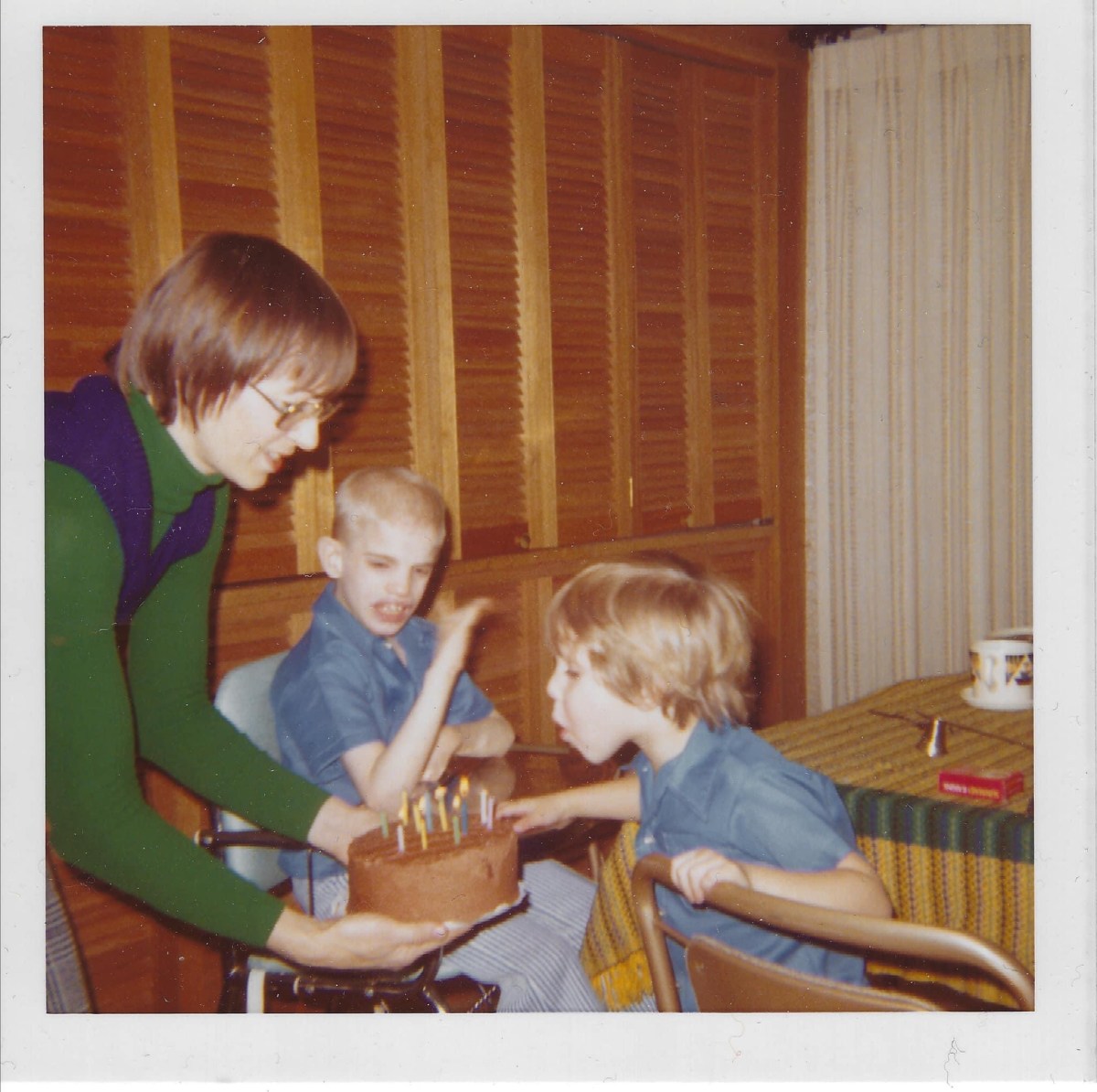
Few will remember that he would have been a year older today. I am sad he no longer with us. But I am grateful for the 59+ years he was on earth. His life and his death have impacted my life beyond measure. My brother was special. Happy Birthday, Jeff! Thanks for letting blow out the candles.

Take time today to notice the people around you. Don’t just float through the day and mindlessly interact. Go out of your way to give compliments to people. Often, we have no idea what people may be going through. Maybe someone just lost a family member. Maybe someone just lost a job. Maybe they just ended a relationship. Your compliment may make all the difference today.

Day 10 – Gratitude Challenge

As I suspected, my spouse did not read or comment on my blog post. It’s okay, she is not a social media person. She is busy with other things.

Yesterday was a long day but I did experience the joys of nature. When I woke up, the temperature was about 60 degrees which is unusual this time of year. Hence, I took nice morning walk with my dog. At the beginning of the walk it was dark and I enjoyed the stillness and quiet. Towards the end of the walk, it started to get lighter. As we returned home a couple of ducks flew by quacking about something. Throughout the day, when I had a moment, I thought about the beauty I see in nature everyday. Just thinking about it made me a bit happier.

The challenge today is simple. Today, commit a random AND anonymous act of kindness (or at least try to be anonymous). It is important to do nice things for others. This could be anything really. Put coins in an expired parking meter. Buy a strangers lunch or coffee. Send flowers to someone. Leave an encouraging note for a coworker Want some more ideas? See this list

Don’t forget, you can do todays challenge along with other previous challenges. Remember no complaining? Caught myself complaining on the way to work this morning. Finally, take time to notice how the actions make you feel. How did others react? Was it worth it? Have great day!

Day 8 Gratitude Challenge

Yesterday was a success. I paid it forward at a local coffee shop. I didn’t make the impulse buy. I complained less than usual. College basketball is back on. It was a god day.

Today is Election Day. I am grateful the unnecessary mail, television ads, and door knocking will be reduced. While I am grateful for the opportunity to vote, I don’t like the negativity of the election cycle.

Recently, I was decluttering. This is a never ending process in my house. I found a letter written to my dad by a friend when my dad was in the hospital. The letter said “Please take good care of yourself and take it easy. We need a healthy Dr. Harris in South Dakota. I am grateful that you are on the mend.” I remember that illness. My dad almost died. I can only imagine the impact the letter I had on my father.

The challenge today is to put down your devices. Get off social media (after you read this) and take time to write a letter of gratitude to someone that has made a difference in your life. Then mail the letter Delivery by hand, interoffice mail, or carrier pigeon are acceptable methods too. Bonus points if you send more than one.

Not sure who is worthy of a note? Here is a possible list – grandparents, parents, spouse, child, sibling, coworker, mentor, teacher, professor, or candidate for public office (just have a dialogue change if we sent notes thanking candidates rather than throwing beer cans or attacking with hammers).

One final thought, do you want to take this challenge to the next level? Perform two of the previous challenges each day. Imagine how you will feel if you write a note, pay it forward, and do not complain all day. Imagine how others would respond if you did so. Imagine a better world.

Day 7 Gratitude Challenge

First, full disclosure, I was traveling yesterday and forgot to pay it forward. It will happen today. Second, remember the challenge from Day 1? Try it again today. Third, tomorrow is Election Day in the US. It is your right and your duty to vote. Now on to the challenge….

Today the challenge asks you to resist the marketing. We are constantly asked to buy things through ads n television, radio, social media, websites, and print media. Today, don’t indulge. Don’t make that impulse buy. Instead, save the money or buy for someone else. Bring treats to your office. Take friend to lunch, coffee, or drinks. Focus on someone other than yourself.

Day 6 of Gratitude Challenge

It has been a challenging and busy week. Yesterday, I battled with my inner voice. I questioned everything. Am I doing my best? Is this challenge impacting anyone? Does being grateful and thankful really help?

We all have off days. I was searching for the my sense of purpose and place. Though I pontificated about the benefits of gratitude, internally I was questioning its efficacy. Yet, I know this challenge works. I did this gratitude challenge last year hoping it would help at least one person. It did. It helped me.

This year, my hope is the gratitude challenge to helps many. But, if it helps just one person, it will have be a success. By that measure, it has been successful because at least one my readers has told me so and because it has helped me.

To be grateful and thankful is a choice. It is a choice that each of us controls. Chose gratitude today. Express gratitude today. Take control today by resisting the urge to purchase something for yourself. Instead, purchase something for someone else or give to a charity. Further, when you purchase something for somebody else, take a moment to reflect about how the action makes you feel. Do you feel better?

I plan to take my dog to a local coffee house and purchase a few coffees for the people behind me in line. I don’t expect or want anything back. I just want them to have a nice part of their day. I challenge all of you to do something similar. Have a great day!