
Years ago, our family rented a flat near the Parsons Green tube station in Fulham. Staying in a neighborhood instead of a hotel lets you pretend, briefly, that you live there. You find your restaurants, your coffee shop, and your preferred route home. Once you find them, you defend them like property.
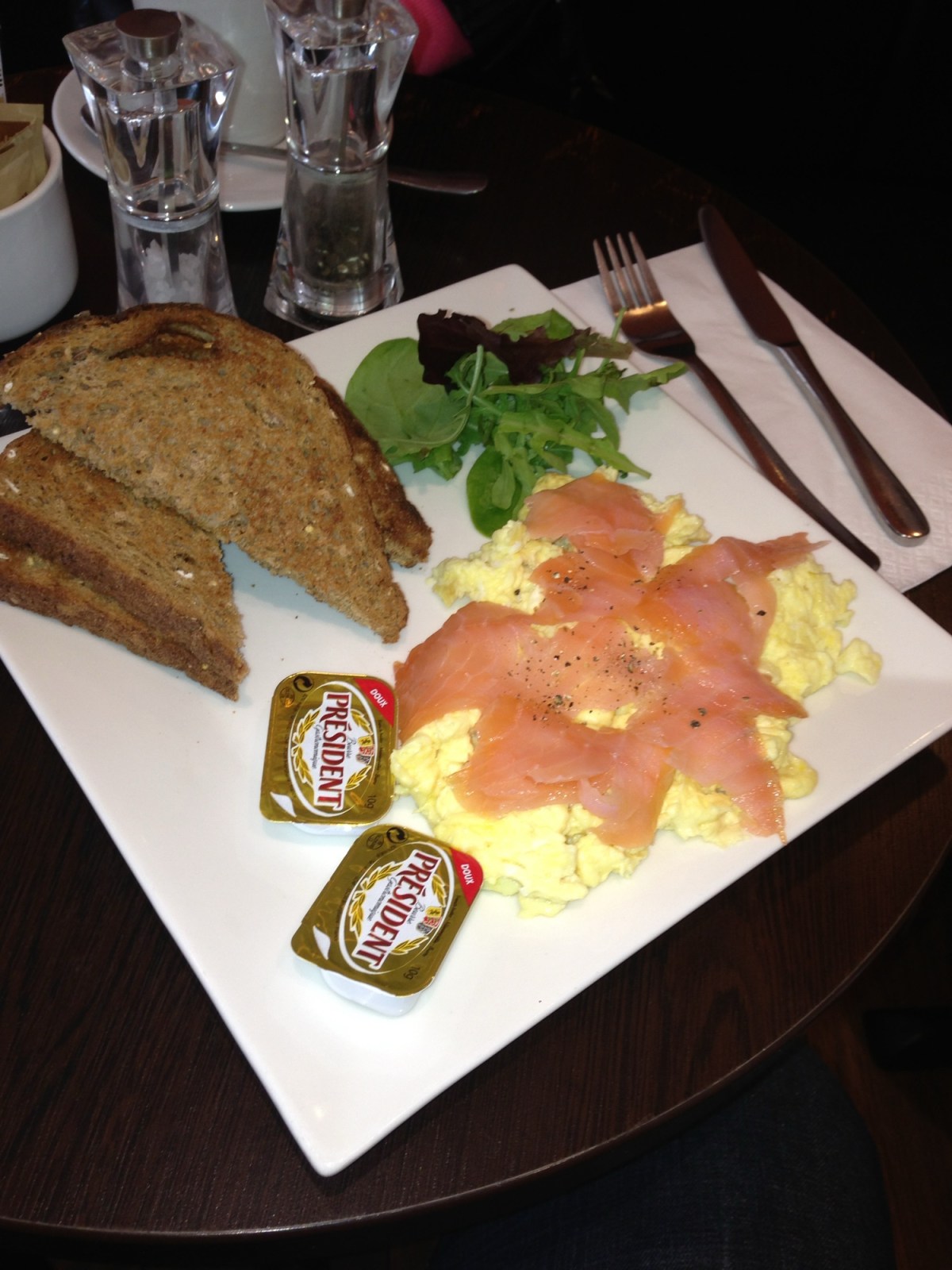
We had a full kitchen and a Waitrose a block away, but we mostly ate out anyway because that is what you do when you are pretending to be a local. We had dinner one night at the Brown Cow, partly because we had heard Prince Harry occasionally socialized there, back before things got complicated. A couple of mornings, we walked to a small breakfast spot called Kafeinn (breakfast pictured above). It has since rebranded itself as the Hive. The sign changed, but thankfully the atmosphere and food did not.
Whenever I return to London, I try to find time to walk through that neighborhood again and, if possible, have breakfast at the Hive. That was how this particular walk began.
I was back in London several years later, this time running a study abroad program. I had an idea rattling around for a new course built around the business of football. The English football pyramid would provide the structure, with the Premier League at the top and the increasingly precarious tiers below it. The class would meet in January, during the season, so students could watch the business they were studying unfold in real time.
We had already toured Stamford Bridge as part of a course on Brexit. Standing inside Chelsea’s ground had advanced the idea further than any syllabus meeting ever could. Craven Cottage sits only about two miles away, close enough that you could walk between two Premier League grounds in less than an hour. I wanted to see another stadium and understand how clubs that close geographically could remain so different in identity, history, and culture.
On a free day, I took the tube to Parsons Green and stopped for breakfast at the Hive. After breakfast, I started walking toward Craven Cottage. I had no real plan beyond reaching the stadium. At that point, the stadium was still the point.
Fulham Road was busy, loud, and full of motor coaches and traffic that did not care whether a tourist was trying to get his bearings. It was not the kind of city walking I usually seek out. There was no room to hear my own thoughts over the noise, so I put my head down and kept moving, assuming the destination would make up for the ugliness of getting there.
About half a mile into the walk, the road gave way to green. I did not know it at the time, but I had reached Moat Gardens, a narrow strip of parkland beside what remains of the old moat surrounding the Fulham Palace estate. The traffic noise dropped away almost immediately. One moment I was dodging buses, and the next I was beneath the trees, with the Thames somewhere nearby but not yet visible. London works its magic this way.
A little farther in, there was a dog park tucked into the green space, where dogs ran loose and off leash, doing one of the things dogs in a big city rarely get to do. I stopped to watch them for a while. I usually do. The stadium was not going anywhere.
The path carried me farther from Fulham Road and down Bishop’s Park Road, past a row of tennis courts where people were playing through the drizzle. It was January, cool and gray, the kind of day that would be considered bad weather almost anywhere else. In London, it was apparently still tennis weather.
As I approached Bishop’s Park, I was planning to turn toward Craven Cottage. Then I noticed something to my left, and the plan stopped mattering. It was Fulham Palace.
I walked through the gate and into a Tudor courtyard that was quiet and almost completely empty. Craven Cottage could wait. There were no tour groups, no lines, and no crowd gathered around someone holding a flag in the air. The gate was simply open, as if the palace had stopped trying to be found and decided to let itself be discovered.
The Bishops of London had been connected to this place since around the year 704. Queen Elizabeth I was entertained there with a lavish banquet in 1601. According to the story, two thieves stole her silver salt cellar during the festivities before being caught, which is either a cautionary tale or the most 1601 thing that has ever happened.
Standing there alone, it was difficult to reconcile that history with how quiet the palace felt. There were timber beams, worn stone, and the sound of my own footsteps. It did not feel like a museum piece sealed behind glass. It felt like a building that had outlasted nearly everything expected of it and had made peace with that.
The entire time I was there, I wished my wife were with me. She was not in London on that trip, but I knew immediately that she would love the quiet, the courtyard, the Tudor architecture, and the weight of its age. She visited on her own a couple of years later and came back agreeing that I had been right, which does not happen nearly often enough for me to leave it out of the story.
Eventually, I remembered the reason for the walk, left the palace, and continued toward Craven Cottage. I had come to see a football stadium, after all, and you cannot design a course around the business of football by spending the entire day wandering through a bishop’s palace.
I walked around the outside of the ground, past the away end and along its neighborhood side. Craven Cottage looked slightly out of place there, squeezed between the neighborhood and the river. I saw a couple of people who looked like players go into the stadium, but otherwise the place was quiet.
A football stadium on a non-match day is mostly a large, quiet building. There was no crowd, no chanting, no match, and none of the energy that turns concrete and seats into something more important. After Fulham Palace, the stadium never had much of a chance. I had come to see it, and I had seen it.
Having accomplished the mission, it was time to head back to the hotel. I chose the path beside the Thames instead of returning along Fulham Road. The river moved slowly, going nowhere in a hurry, and I let the walk slow down with it.
I passed through Bishop’s Park and returned to the palace grounds, this time walking through the walled garden. Its old gateway was still standing, apparently unbothered by the centuries. It was winter, so the garden was not in full bloom, but winter in London is different from winter back home on the plains. The grass remained green, and a few flowers had held on against the season.
The garden opened almost directly into the churchyard of All Saints. The church caught me off guard in much the same way the palace had, which by then should no longer have surprised me.
I walked through the churchyard and then went inside. The site dates to the Middle Ages, and the tower survives from the 1400s, although much of the present church was rebuilt during the nineteenth century. Pieces of the older church remain inside, incorporated into the newer walls and stonework, as if the building could not quite bring itself to let go of what it had been.
Eleven Bishops of London are buried in the church or the surrounding churchyard. They once lived in the palace next door and, unlike the rest of us, never had to commute.
My relationship with religion is complicated, but old churches in England get to me every time. What I feel inside them is something closer to spiritual than religious. Maybe it comes from the accumulated weight of all the people who stood in that same quiet over hundreds of years. They came seeking comfort, forgiveness, answers, or perhaps simply a little peace. Whatever brought them there, it had nothing to do with tourism and certainly nothing to do with a football stadium.
When I left the church, I knew Putney Bridge station was somewhere nearby. I wandered until I found it, got on the tube, and headed back toward the hotel.
I had set out that morning to see a football stadium as research for a class I expected to teach. I finished building the course, complete with the English football pyramid as its spine, but I never taught it. I left academia not long afterward, and the Business of Football is probably still sitting on an old hard drive, complete and unused, which is where some of our best-laid plans end up.
I still think about the course occasionally, but I think more often about the walk.
I went looking for Craven Cottage and found a moated garden, an empty Tudor courtyard, and a medieval church tied to generations of people who had called that stretch of the Thames home. I am sure I took photographs that day, although I cannot find them now. Some walks do not need the proof.
That is the thing about walking through a city like London. You can choose the destination, study the route, and convince yourself that you know why you are going. What you cannot plan is what will make you stop, turn left, and forget the plan entirely.
The stadium was never really the point.


