Both Things Are True

A son’s phone call, a course called Landmand, and a reunion photo that made one choice cost something even though it was still the right one.

The dream comes back often enough that I have stopped being surprised by it. I am walking the halls of my high school, the version that exists only in my head, and I end up in the fine arts center almost every time. Usually it is the band room. Sometimes it is the theater above it. I spent a lot of time there throughout high school, especially senior year, and those rooms were where I began learning who I was going to become before I had any real proof of it.

Sometimes I land in the lunchroom instead, and I always know why. That is where Mike Church told me the Challenger had exploded, and I did not believe him, right up until I did. Some part of my mind decided that moment belonged in the same building as everything else it was not ready to let go of.

I do not wake up from these dreams shaken or sentimental. I wake up and make coffee. But forty years later, it says something that my subconscious still knows the floor plan by heart, even though I could not tell you where any of my lockers were or what a single classroom looked like. Memory makes its own choices about what it keeps and what it allows to disappear. I wish there were a confirmation screen before something vanished, the way there is when you delete a file from your computer. Are you sure? One last chance to keep it.

I have been thinking about all of this more than usual lately, because the dream and the actual building finally had a reason to overlap. This past weekend was my 40th high school class reunion, and even typing that number, I still have to stop and do the math twice before it sounds real.

I have gone back for two reunions, the 10th and the 20th, and if I am being honest, I did not enjoy either one very much. I was never one of the athletes or the popular kids, genetics left me an NBA center trapped in a guard’s body, so there was only so much a name tag and a cash bar could do to manufacture a connection that was not really there the first time around. Do not get me wrong. I had friends, and I liked most of my classmates.

What I never really had was contact. Once my parents moved away, I drifted from most of them, mostly because I rarely went back, and long-distance phone calls were expensive. I suppose I could have written letters. I just did not form the kind of lasting friendships with them that I later formed in college and beyond.

The 10th landed just a few weeks after my father died. Some classmates knew and asked how I was holding up. Others did not know and asked how my parents were doing. Neither question was one I wanted to answer that weekend.

The 20th came a little more than a year after my mother died, and I brought my wife along that time. She did not know a single person in the room, and I do not think she had much fun. It is a strange thing, bringing someone you love into a part of your life she was never part of. She could see the building and hear the names, but she could not see what any of it meant. There was no way for me to hand that over to her in the space of one evening.

Going back for a reunion has always been a little different for me because my parents moved away four years after I graduated. There has never been a house to stay in, a childhood bedroom still holding my trophies, or family to visit while I was in town. You stay in a hotel. The reunion becomes the entire reason for the trip, not one stop on a longer visit home.

When my parents died and were buried in that same town, the tether became stranger. I go back now for a cemetery, not a childhood. Visiting their graves is usually one of the first things I do and one of the last, though I have never made the trip specifically for that reason. The cemetery is something I stop at on my way to something else, a reunion, a funeral, or a drive through town on my way somewhere farther. It is a ritual built around memory, the same names on the same stone and the same silence waiting for me.

None of that means I have lost interest in the people. I do not think I would go back to relive what happened forty years ago. Those years mattered, but I have never felt much need to step inside them again and pretend nothing has changed. If I went back, it would be to find out what happened after we all walked out of that building and into the rest of our lives.

The truth is that social media, Facebook in particular, has already filled in much of that story. Most of us got married. Some of us got divorced. Many had children. We built careers, changed directions, found success, and endured failure. Some became exactly who they imagined they would become when we were seventeen. Many of us did not. That may sound colder than I intend because it is not that I do not care about them. I do. It is simply that high school was forty years ago, and I am still trying to look forward. I remain curious about where life took everyone. I am just not sure I am curious enough to drive three hundred fifty miles for the chance that they might show up.

Even so, I was on the fence about going. My wife could not make the trip because a co-worker’s bachelorette outing had already claimed part of her weekend. If I went, I would be going alone, though maybe that was fine since she had never known any of these people to begin with. One classmate, whose wife was not coming either, offered to make me his plus-one for the drive. I appreciated it, but the offer did not move me any closer to going. It still meant a long drive there, a hotel room, and a long drive back.

I had not decided anything when my phone rang. It was my youngest son, the one who spent his high school years on the tennis court, calling from Nebraska, where he lives now. He asked if I had anything going on that particular weekend. I told him about the reunion, still undecided and still turning it over. He said he had a better idea. He wanted me to come play golf with him at a course called Landmand.

I did not need to think about it. The invitation checked boxes I had not realized I was counting. Time with my son, first and simplest. A round of golf with him, which does not happen nearly as often as I would like now that he lives in Nebraska. And a chance to play a course where people wait a year for a tee time and still come away empty-handed. It was not a difficult choice. It was barely a choice at all.

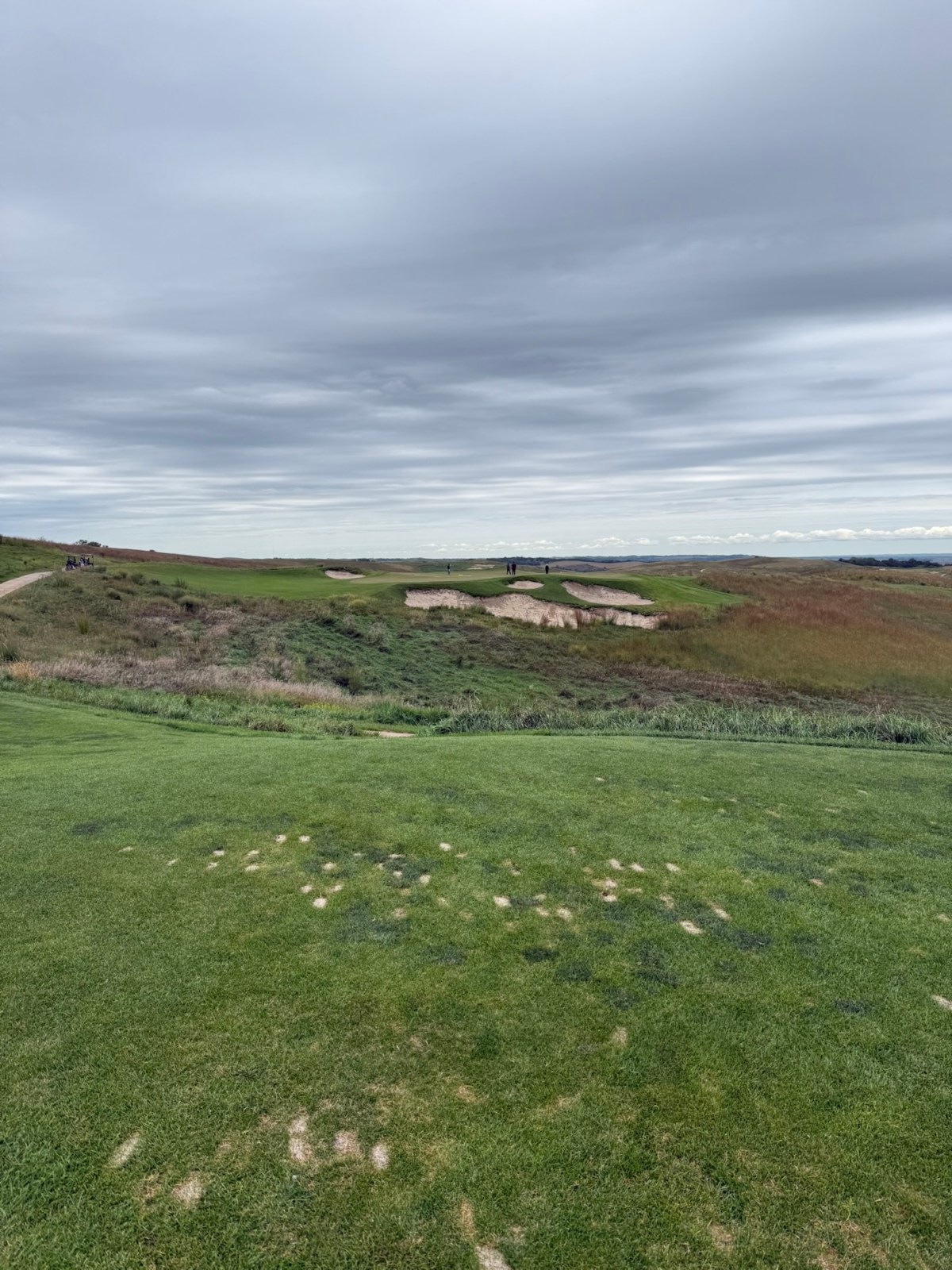
Landmand sits in the middle of nowhere by design, carved into steep, windblown bluffs outside Homer, Nebraska, on a stretch of ground so rough that architects told the farmer who built it to look elsewhere. He did not. Now it is one of the hardest tee times to get in the country, an entire season’s reservations disappearing in less than an hour whenever they open the book. My son had one, and on a Sunday morning in September, that mattered more to me than anything happening three hundred fifty miles away.

The day started cool and gray, with rain moving through in waves. At one point, we watched lightning far enough away that we decided to keep playing rather than duck for cover. Later in the round, the clouds broke enough to let the sun through, though they never fully cleared. We played the rest of the morning under that half-lit sky, with the sun and clouds trading turns overhead.

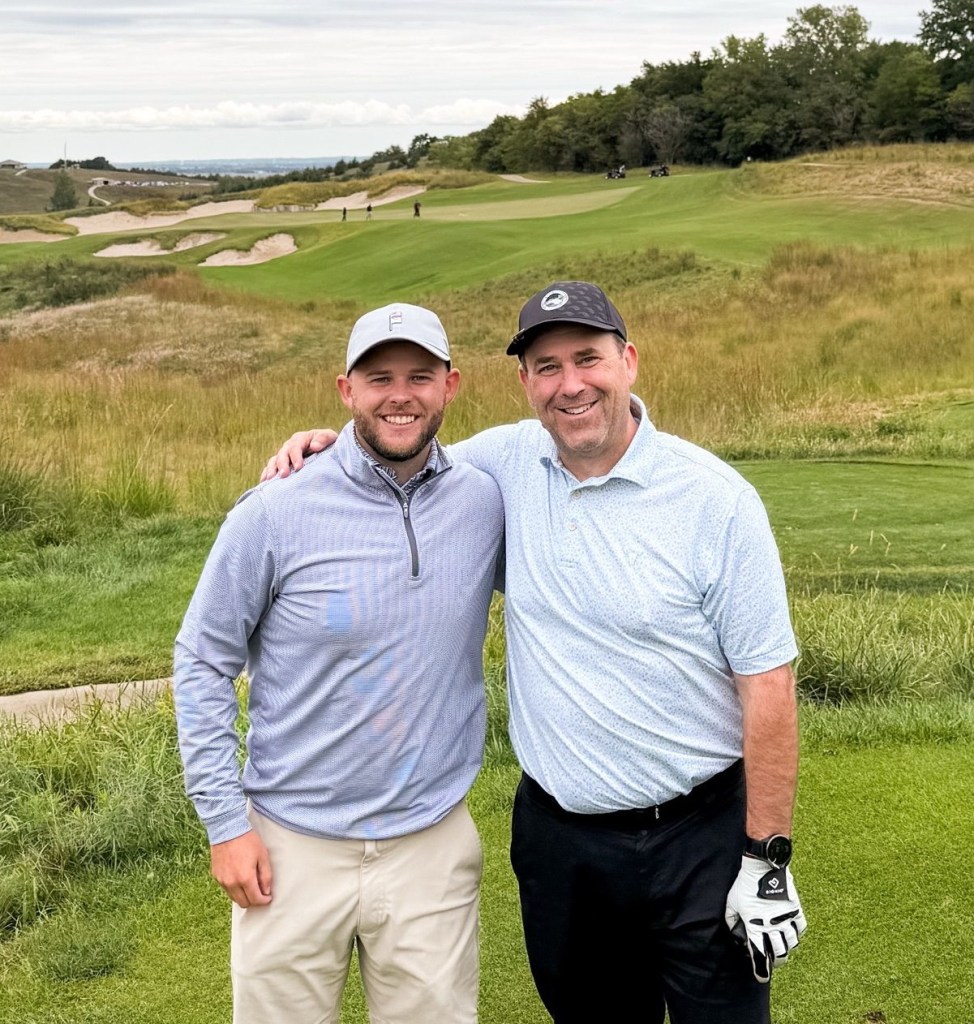
My son’s roommate came along, and his father did too. It was not one father and son on that course but two, trading shots and ribbing each other across fairways wide enough to lose a golf cart in. There was no ritual waiting for me at Landmand and no history I was expected to revisit. There was just a course my son knew and I had never played, a son who wanted me there, and a Sunday that had not yet decided whether it would rain or clear.

I played terribly at the start and improved only slightly as the round went on. It did not matter. A day on the golf course with my son is priceless.

When I got home after golf, the reunion photographs began showing up. Some appeared on Facebook, posted by classmates who had gone. A few more were sent directly to me by someone who thought of me while scrolling through a camera roll. I went through them slowly, forty years compressed onto a phone screen.

Most of the faces I recognized without much effort, aged but unmistakably themselves. A handful I could not place at all, people who had apparently once shared hallways and classes with me but had left no trace in my memory.

Then I reached a photograph taken in the band room, where I had spent so much of my high school life. Standing in the middle of the group was Mr. Winter, my high school band director, smiling.

A month earlier, I had written about what he meant to me. I had ended that piece by saying that if I knew Mr. Winter would be at the reunion, I would seriously consider making the three hundred fifty mile drive to see him. He was there. I just had not known he would be.

Of everyone I might have wanted to see that weekend, he was the one I wanted to see most. I stopped scrolling and took in the photograph. I wondered if anyone had sent him what I had written about him. What I felt was not regret exactly. It was the honest weight of what a choice costs, even when it is the right one.

The Stadium Was Never the Point

A walk to see a football stadium in Fulham turns into an unplanned discovery of Fulham Palace, a moated garden, and a centuries-old church on the Thames.

Years ago, our family rented a flat near the Parsons Green tube station in Fulham. Staying in a neighborhood instead of a hotel lets you pretend, briefly, that you live there. You find your restaurants, your coffee shop, and your preferred route home. Once you find them, you defend them like property.

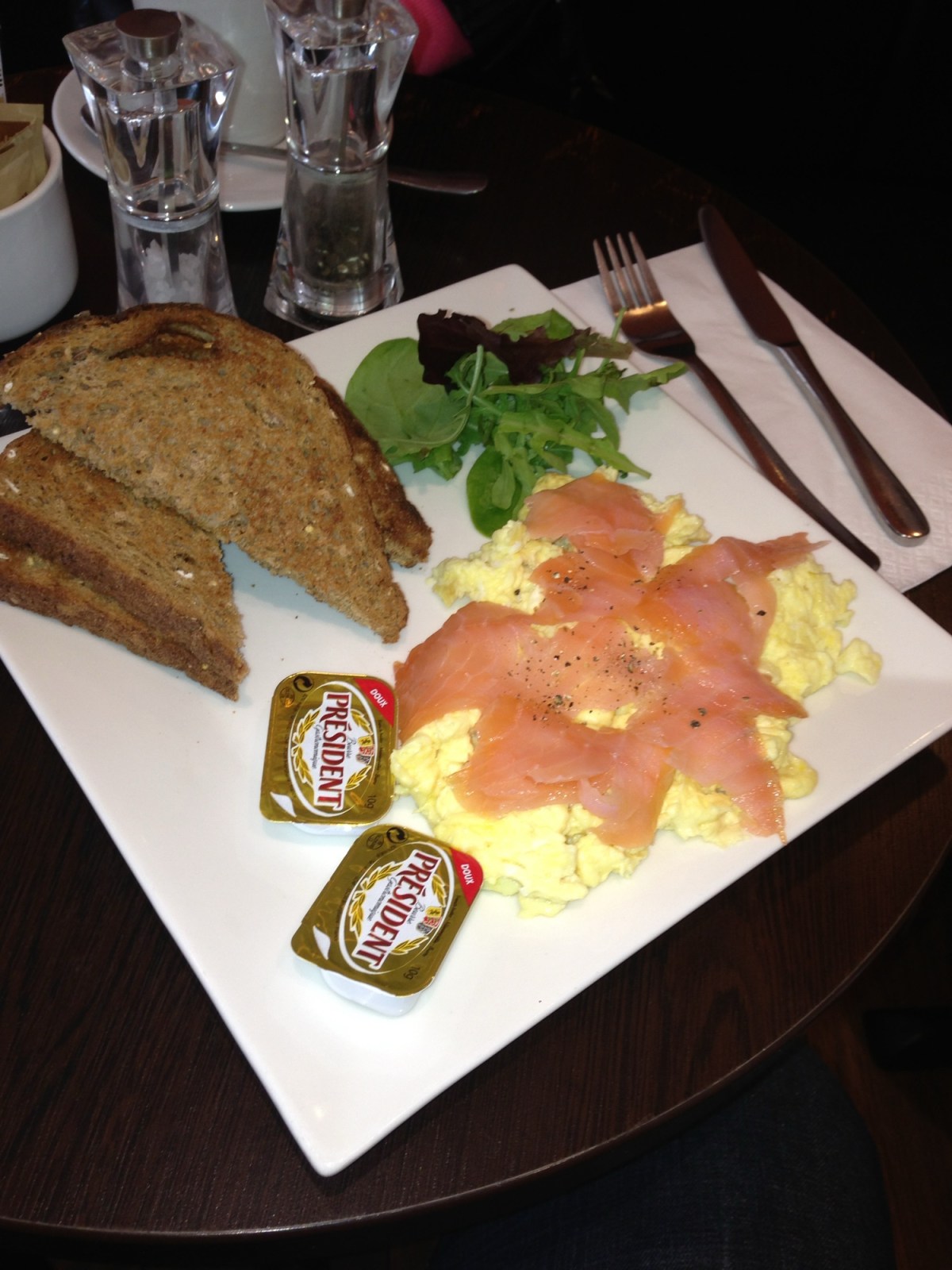
We had a full kitchen and a Waitrose a block away, but we mostly ate out anyway because that is what you do when you are pretending to be a local. We had dinner one night at the Brown Cow, partly because we had heard Prince Harry occasionally socialized there, back before things got complicated. A couple of mornings, we walked to a small breakfast spot called Kafeinn (breakfast pictured above). It has since rebranded itself as the Hive. The sign changed, but thankfully the atmosphere and food did not.

Whenever I return to London, I try to find time to walk through that neighborhood again and, if possible, have breakfast at the Hive. That was how this particular walk began.

I was back in London several years later, this time running a study abroad program. I had an idea rattling around for a new course built around the business of football. The English football pyramid would provide the structure, with the Premier League at the top and the increasingly precarious tiers below it. The class would meet in January, during the season, so students could watch the business they were studying unfold in real time.

We had already toured Stamford Bridge as part of a course on Brexit. Standing inside Chelsea’s ground had advanced the idea further than any syllabus meeting ever could. Craven Cottage sits only about two miles away, close enough that you could walk between two Premier League grounds in less than an hour. I wanted to see another stadium and understand how clubs that close geographically could remain so different in identity, history, and culture.

On a free day, I took the tube to Parsons Green and stopped for breakfast at the Hive. After breakfast, I started walking toward Craven Cottage. I had no real plan beyond reaching the stadium. At that point, the stadium was still the point.

Fulham Road was busy, loud, and full of motor coaches and traffic that did not care whether a tourist was trying to get his bearings. It was not the kind of city walking I usually seek out. There was no room to hear my own thoughts over the noise, so I put my head down and kept moving, assuming the destination would make up for the ugliness of getting there.

About half a mile into the walk, the road gave way to green. I did not know it at the time, but I had reached Moat Gardens, a narrow strip of parkland beside what remains of the old moat surrounding the Fulham Palace estate. The traffic noise dropped away almost immediately. One moment I was dodging buses, and the next I was beneath the trees, with the Thames somewhere nearby but not yet visible. London works its magic this way.

A little farther in, there was a dog park tucked into the green space, where dogs ran loose and off leash, doing one of the things dogs in a big city rarely get to do. I stopped to watch them for a while. I usually do. The stadium was not going anywhere.

The path carried me farther from Fulham Road and down Bishop’s Park Road, past a row of tennis courts where people were playing through the drizzle. It was January, cool and gray, the kind of day that would be considered bad weather almost anywhere else. In London, it was apparently still tennis weather.

As I approached Bishop’s Park, I was planning to turn toward Craven Cottage. Then I noticed something to my left, and the plan stopped mattering. It was Fulham Palace.

I walked through the gate and into a Tudor courtyard that was quiet and almost completely empty. Craven Cottage could wait. There were no tour groups, no lines, and no crowd gathered around someone holding a flag in the air. The gate was simply open, as if the palace had stopped trying to be found and decided to let itself be discovered.

The Bishops of London had been connected to this place since around the year 704. Queen Elizabeth I was entertained there with a lavish banquet in 1601. According to the story, two thieves stole her silver salt cellar during the festivities before being caught, which is either a cautionary tale or the most 1601 thing that has ever happened.

Standing there alone, it was difficult to reconcile that history with how quiet the palace felt. There were timber beams, worn stone, and the sound of my own footsteps. It did not feel like a museum piece sealed behind glass. It felt like a building that had outlasted nearly everything expected of it and had made peace with that.

The entire time I was there, I wished my wife were with me. She was not in London on that trip, but I knew immediately that she would love the quiet, the courtyard, the Tudor architecture, and the weight of its age. She visited on her own a couple of years later and came back agreeing that I had been right, which does not happen nearly often enough for me to leave it out of the story.

Eventually, I remembered the reason for the walk, left the palace, and continued toward Craven Cottage. I had come to see a football stadium, after all, and you cannot design a course around the business of football by spending the entire day wandering through a bishop’s palace.

I walked around the outside of the ground, past the away end and along its neighborhood side. Craven Cottage looked slightly out of place there, squeezed between the neighborhood and the river. I saw a couple of people who looked like players go into the stadium, but otherwise the place was quiet.

A football stadium on a non-match day is mostly a large, quiet building. There was no crowd, no chanting, no match, and none of the energy that turns concrete and seats into something more important. After Fulham Palace, the stadium never had much of a chance. I had come to see it, and I had seen it.

Having accomplished the mission, it was time to head back to the hotel. I chose the path beside the Thames instead of returning along Fulham Road. The river moved slowly, going nowhere in a hurry, and I let the walk slow down with it.

I passed through Bishop’s Park and returned to the palace grounds, this time walking through the walled garden. Its old gateway was still standing, apparently unbothered by the centuries. It was winter, so the garden was not in full bloom, but winter in London is different from winter back home on the plains. The grass remained green, and a few flowers had held on against the season.

The garden opened almost directly into the churchyard of All Saints. The church caught me off guard in much the same way the palace had, which by then should no longer have surprised me.

I walked through the churchyard and then went inside. The site dates to the Middle Ages, and the tower survives from the 1400s, although much of the present church was rebuilt during the nineteenth century. Pieces of the older church remain inside, incorporated into the newer walls and stonework, as if the building could not quite bring itself to let go of what it had been.

Eleven Bishops of London are buried in the church or the surrounding churchyard. They once lived in the palace next door and, unlike the rest of us, never had to commute.

My relationship with religion is complicated, but old churches in England get to me every time. What I feel inside them is something closer to spiritual than religious. Maybe it comes from the accumulated weight of all the people who stood in that same quiet over hundreds of years. They came seeking comfort, forgiveness, answers, or perhaps simply a little peace. Whatever brought them there, it had nothing to do with tourism and certainly nothing to do with a football stadium.

When I left the church, I knew Putney Bridge station was somewhere nearby. I wandered until I found it, got on the tube, and headed back toward the hotel.

I had set out that morning to see a football stadium as research for a class I expected to teach. I finished building the course, complete with the English football pyramid as its spine, but I never taught it. I left academia not long afterward, and the Business of Football is probably still sitting on an old hard drive, complete and unused, which is where some of our best-laid plans end up.

I still think about the course occasionally, but I think more often about the walk.

I went looking for Craven Cottage and found a moated garden, an empty Tudor courtyard, and a medieval church tied to generations of people who had called that stretch of the Thames home. I am sure I took photographs that day, although I cannot find them now. Some walks do not need the proof.

That is the thing about walking through a city like London. You can choose the destination, study the route, and convince yourself that you know why you are going. What you cannot plan is what will make you stop, turn left, and forget the plan entirely.

The stadium was never really the point.

Still Walking: What Focus Looks Like When Everything Else Changes

Summer meant the move. Fall means looking forward. Through both, one six-year streak — and one dog at the door — never stopped.

Earlier this week, the sun set at 8:00 PM. It won’t happen again until late April. From here, the days get shorter, the temperatures fall, and eventually the leaves do, too.

Labor Day weekend marks the unofficial end of summer here in the upper Midwest, and every year it seems to ask the same question: what was this season actually about? This summer, the answer was easy. The move.

It took the whole season and most of my attention. Preparing the old house, sorting through decades of our stuff and generations of family stuff, selling the house, moving, closing, learning a new neighborhood, and figuring out where the coffee maker goes. For a few months, everything else waited its turn.

Fall feels different. It turns the attention forward again, toward what comes next instead of what just got finished. New goals, new routines, winter coming, and the work of looking ahead instead of simply settling in.

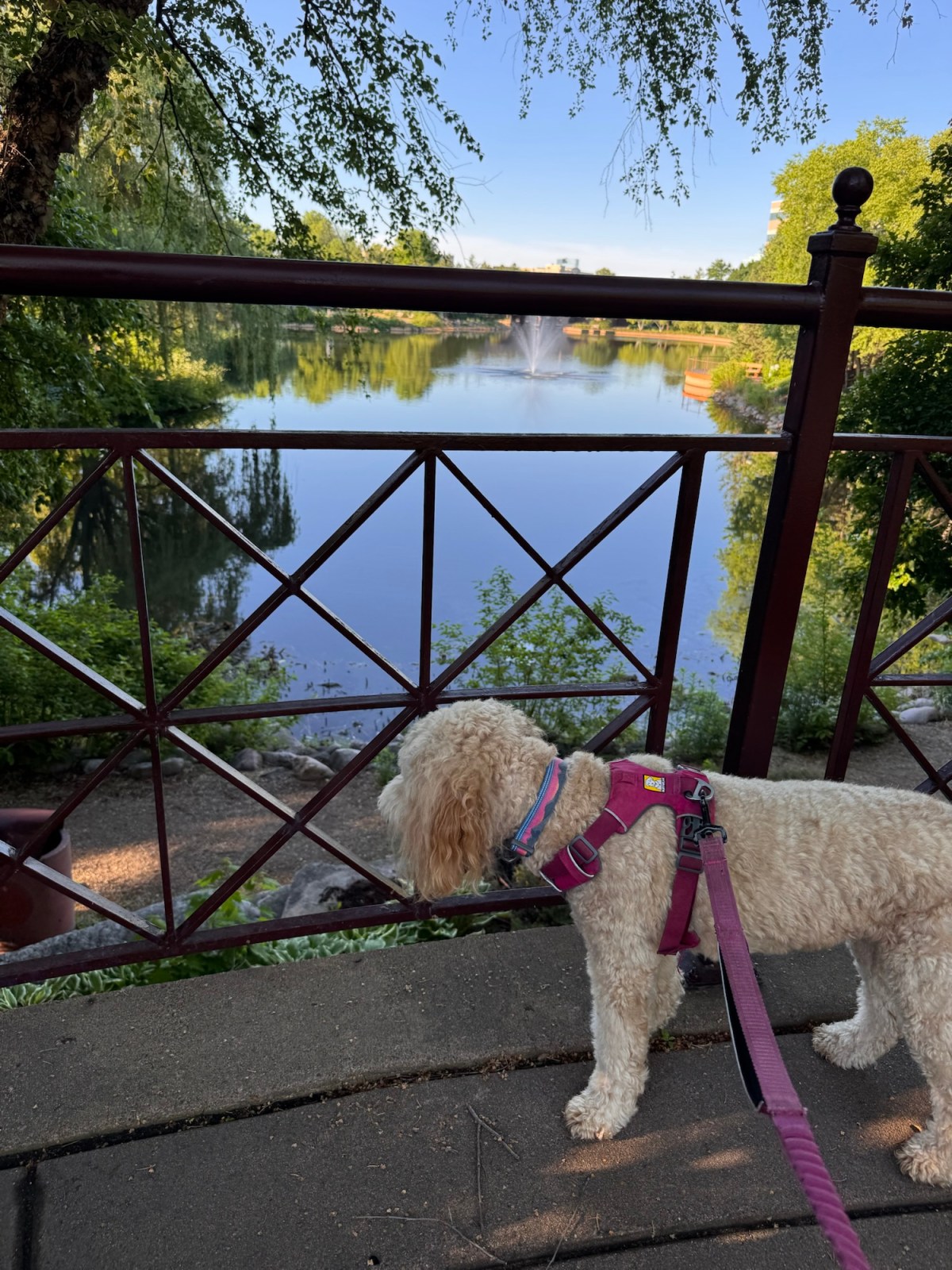
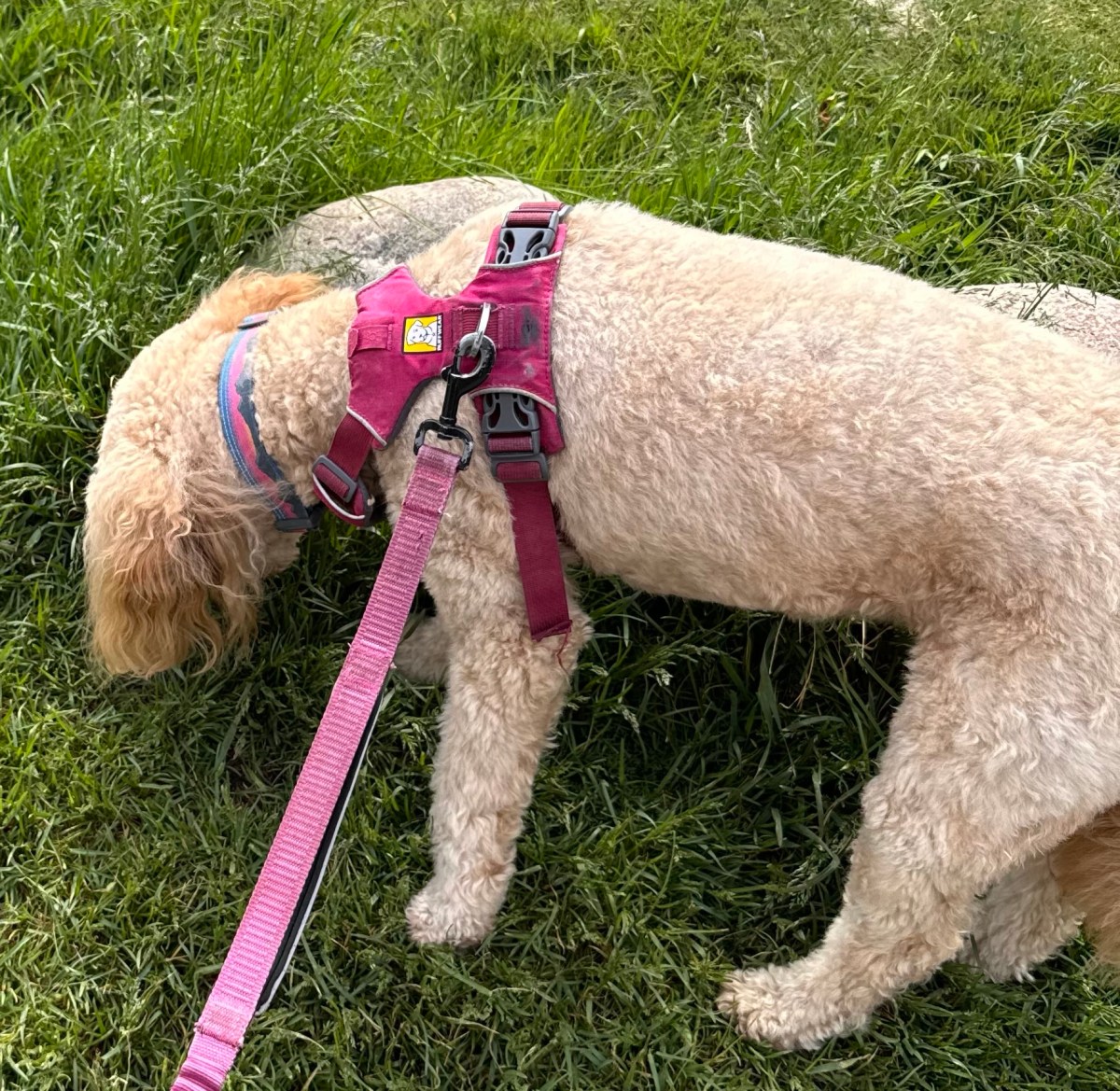
Through both seasons, though, one thing never cared what I was focused on. Ginger doesn’t understand summer or fall, moves or goals. She just knows that 6 AM means walk.

She looks at me, then at the door. Back at me, then back at the door, tail wagging the whole time, as if she’s asking nicely. Then comes the stretch, front paws forward, rear end in the air, and the message changes: I’m not giving you a choice. You must walk today. If not for yourself, for me.

So we walk, now on a new path complete with strategically timed neighborhood sprinklers trying to take us out. It is not the walk we had before, but it is close enough, and most mornings, close enough is the whole point. For Ginger, there are new smells, new fire hydrants, and new trees. For me, there is the same thing there has been every day for more than six years: 10,000 steps.

Two thousand three hundred seventy-nine days, and counting. The focus keeps moving, from the move behind me to whatever comes next, but the streak doesn’t. It is just there underneath it all, the same way Ginger is at the door every morning, whether I’m thinking about a moving truck, a new goal, or nothing much at all. And we’re still walking, trying to enjoy the last moments of summer and the beginning of fall.