Advice I wish I had Given My Younger Self

The question is not really whether you would go back. The question is what you are going to do today with everything you already know.

Lately, scrolling through the noise that social media has become, I keep running into a certain kind of post. You have seen them. They usually start with a photograph, a high school hallway, a gymnasium, a parking lot that looks like every parking lot from 1984. And then comes the question. Would you go back? To a specific year. To a specific moment. To a specific version of yourself you have not been in a very long time.

The comment sections on these things are something. People arguing with complete strangers about which year they would choose and why. Some of them are serious. Some of them are heartbreaking. All of them are trying to answer the same question underneath the question, which is: was there a version of this life that went better?

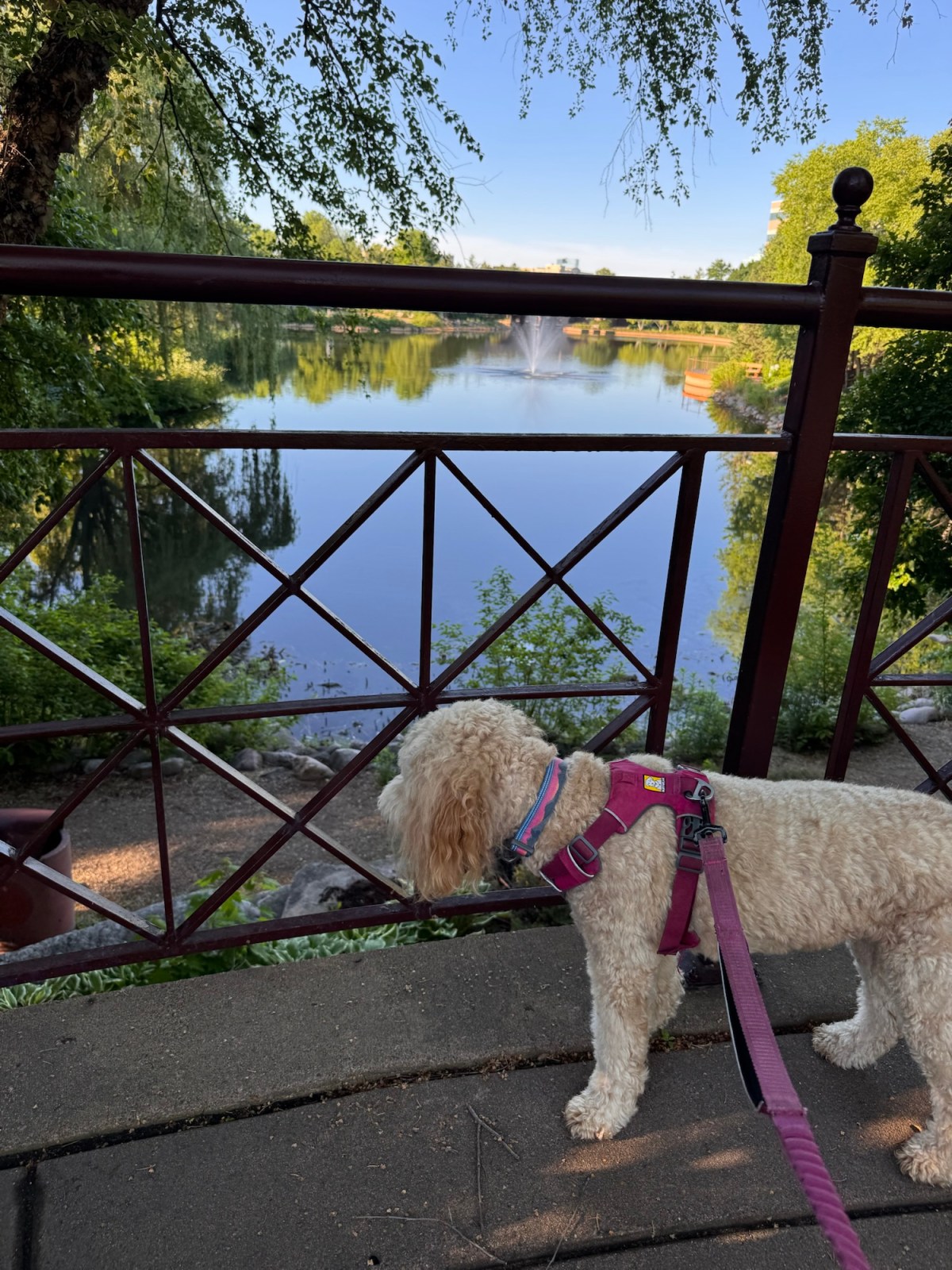
I think about that question more than I probably should. When I see those posts I think about the 1980s with genuine nostalgia. It was a simpler time. We were not being bombarded around the clock with news and noise and everyone’s opinion about everything. But nostalgia is not the same as regret, and when I am honest with myself I do not look back at what I had and feel like something is missing now. My life is good. Arguably great. My wife is my best friend. My sons turned out amazing. My work has mattered, for the most part. My friendships have lasted longer than most things I own. And Ginger meets me at the door every single day like I have been gone for six months.

So the long and short of it is I am not going back. But I would send a note. That note, it turns out, has existed for years in rougher form, tucked inside syllabi and first-day-of-class remarks and the things I said on the last day when I thought nobody was writing anything down. It was shaped by the mistakes I thought I had made and the opportunities I thought I had missed and the things I wished someone had told me before I had to figure them out the hard way. Since I do not have a DeLorean with a flux capacitor, I will have to settle for what I have written here.

Find time for the people who will be gone the soonest. Now, if we are being honest, I would absolutely go back knowing what I know. I understand I might be tinkering with the space-time continuum, and I have made my peace with that. Yes, I would probably look into a few investments. Apple. Walmart. Amazon. Netflix. I am not a saint. But that is not actually why I would go back. I would go back to sit with my parents for a while. Hug them more. Ask them questions I never thought to ask. Ask them about their parents and grandparents, their cousins, the family stories that were actually told. Because they were told. I just was not paying attention the way I should have been. Storytelling is how families survive themselves, and I let too many stories go in one ear and out the other because I was young and thought there was plenty of time. The same goes for a few friends and family members I did not know I was running out of time with. In 1986, I did not know there were only ten years left with my dad.

Pay attention. Most of life does not announce itself as important when it happens. The random Tuesday night dinner when everyone somehow made it to the table. The walk with the dog. The conversation with your dad the night before he died, not knowing it would be your last. The family story you have heard a dozen times before and assume you will hear a dozen more. The big moments are easy to spot. Graduations. Weddings. Births. Retirements. Life has a way of putting those on the calendar for you. The smaller ones require more effort. They slip by quietly, and only later do you realize they were part of something larger. Take the picture. Ask the question. Stay a little longer. One day you will discover that what looked like an ordinary day was actually a gift. The trick is noticing it before it is gone. Turns out Ferris Bueller was right. Life moves pretty fast. If you don’t stop and look around once in a while, you could miss it.

Take the trip. Both of them. The one you cannot afford and the one you can. You will find reasons to wait on both, and the reasons will sound responsible and they will be wrong. Think about what you actually remember. Not the gifts. Not the things. The trips. The British Isles with my parents and grandparents. Switzerland for a dear friend’s twenty-fifth wedding anniversary. The thirteen-hour drive to Mackinac Island with my family, and somewhere in the middle of Wisconsin one of my sons looking up and announcing, “You people are the worst family ever. You people are not my family.” I remember all of it. If I had it to do over, I would rethink every holiday, every birthday, every Christmas morning. Less stuff under the tree. More stamps in the passport. Experiences last forever. Most everything else ends up at Goodwill.

Travel does something else too. It exposes you to different cultures, different people, different food, different ways of looking at the same world you thought you already understood. It hardens some of your beliefs and softens others, and both of those things are good for you. French wine tastes better in France. And most of all, you learn that a mother in South Dakota loves her child just as much as a mother nearly everywhere else in the world.

Ask her out. In my wildest dreams I did not think she would say yes. She said yes. We are married. There were others along the way, there always are, but she was the one, and I almost talked myself out of asking because I was certain I already knew the answer. I did not know the answer. That is the part nobody tells you. You are a terrible predictor of outcomes involving your own life. Ask anyway. Apply anyway. Start the business anyway. Have the conversation anyway. The worst outcome is rarely as bad as you imagine, and the wondering lasts considerably longer.

Read more than you think you need to. Not for school. Not to finish. Read because, like travel, it opens your mind and calms it at the same time. It expands curiosity and makes you better in ways that are hard to measure and impossible to fake. Every good book teaches you something. Find an author you enjoy and spend time with them. Doris Kearns Goodwin taught me about leadership through Lincoln and Team of Rivals, perhaps the greatest lesson in leadership ever put on paper. Oddly enough, my favorite book of hers is not about Lincoln at all. It is about growing up as a Brooklyn Dodgers fan in the 1950s. David McCullough took me to Paris in The Greater Journey. Michael Lewis taught me to see the world differently. Mitch Albom reminded me that kindness still matters. John Grisham kept me up far too late reading The Firm.

Books are inexpensive travel. They let you borrow someone else’s life for a few hundred pages and return to your own a little wiser than when you left. Ted Lasso once quoted Walt Whitman on this subject: be curious, not judgmental. There is essentially no evidence Whitman ever said that. But the line made me curious enough to go read some actual Whitman, which I suppose proves the point entirely. I have learned something from almost every book I have read. Some lessons were profound. Some were useful. Some were simply that Clan of the Cave Bear is still not making my top ten.

I baked reading into my syllabus every semester, mostly through Wall Street Journal articles, but it was intentional. I wanted my students curious about the world beyond the classroom and beyond the case law. Whether it worked I cannot say with any certainty. Some of them listened. I choose to believe more of them did than I will ever know.

Start saving. Now. Not instead of living, not instead of the trip or the experience or the night out that becomes a story you will tell for thirty years. Alongside all of it. Compound interest is the closest thing normal people get to magic. The problem is that magic only works if you start early. Start by at least matching what your company puts in. Then think about more. Ten percent of your pay is a good number. You will not miss it, and I say that knowing you think you will. Every time you get a raise, increase your savings rate by half. If you get a four percent raise, save two more percent before you ever see it. The math on compound interest is not complicated, but it is unforgiving. Time is the one ingredient you cannot buy back. You do not need to save everything. You need to start. There is a difference, and younger me confused the two for longer than I would like to admit.

Move your body. I want to be clear about something. I have never liked working out. The gym, the weights, the person grunting next to you at six in the morning, none of that was ever me. But I do like moving, and it turns out that is enough. Walk. Swim. Bike. Dance. Tai chi. Golf without the cart. Run, if you are that particular kind of crazy. It does not have to hurt and it does not have to be impressive. It just has to happen, and it has to happen again tomorrow. I have now walked more than thirty million steps, one day at a time, and I did not do it because I love exercise. I did it because I love moving. The body keeps score longer than we think it does, and small, consistent habits compound the same way investments do. Small. Consistent. Long term. The math works the same way in both places. Trust it.

Worry less. I mean this practically, not as a bumper sticker. You are lying awake at 2am about the student upset about his grade, the client upset about his case, the beneficiary upset about not getting enough money. You cannot fix any of it at 2am. And if you are being honest, most of it was never yours to fix in the first place. I used to tell my students there were three kinds of problems in the world. Your problems. My problems. Our problems. And most of the problems keeping people awake at night belong firmly in that first category. Not mine. Not ours. Yours. The sooner you learn to hand them back, the better everyone sleeps, including you. So plan for what is actually yours. Adapt when you need to. Handle what is genuinely in front of you. But the 2am rehearsal of every possible outcome, that is just energy leaving the building with nothing to show for it. I stumbled onto a meditation technique once where you imagine a river and you place each anxious thought onto a boat and watch it float away. You keep going until the river is empty. The first time I tried it I was skeptical. By the fifth boat I was nearly asleep. Five minutes of watching your thoughts drift downstream will do more for you than two hours of staring at the ceiling. Put it on a boat. Let it go.

Take the chance. This one is broader than the trip and the girl, though it includes both. I mean the job you are not sure you are qualified for. The idea you have not said out loud yet. The conversation you keep rehearsing and never having. The version of yourself you have not introduced to anyone yet. Younger me was careful in ways that younger me thought were wise. They were not wise. They were fear with better posture. I tried to tell my students that, in so many words, every chance I got. I am not sure they believed me. I am not sure I would have believed me either. And if it does not work? Pay attention. Failure usually has something to teach you. More often than not, the breakthrough is sitting just on the other side of the thing that did not go according to plan. Some of the best things that happened to me came immediately after something I thought was a setback. At the time I could not see it. Looking back, it seems obvious. Looking forward, it never does.

Forgive yourself. You will make mistakes. You will say the wrong thing to the wrong person at the wrong moment. You will lose friends, money, and maybe a job. Some of it will be your fault. Some of it will feel like your fault and will not be. Either way, carrying it does not fix it. Learn what it has to teach you, resolve not to do the same thing twice, and put it down. It just makes everything else heavier.

There is a particular cruelty in advice. It arrives, almost without exception, after the moment it would have been useful. Four years ago I wrote something called The Last Lecture, my final words to my students at Augustana on my last day in the classroom. Reading it now alongside this is an interesting exercise. The curiosity is still there. The belief in showing up is still there. But that piece was written from the front of a room to people just starting out. This one is written from inside a life, to myself, with the benefit of forty years of evidence. What strikes me most is that the advice is not all that different. Which means one of two things. Either I have not learned as much as I thought, or the fundamentals were right all along and the only thing that changes is how personally you feel them. I choose to believe it is the latter. And I suspect that everything I just told younger me applies just as much to the students who sat in my classroom over the years as it does to the man who stood at the front of it.

Here is the thing I did not expect when I started writing this. Most of this list is not finished business. It is current business. The people who are still here will not always be. There are trips not yet taken and chances not yet seized and worry that still needs to stop. The body still needs to move tomorrow and the day after that. The math on all of it still works, but only if you start. I wrote this as advice to a younger version of myself and somewhere in the middle of writing it I realized I was also writing it to right now. That is what the social media posts never tell you. The question is not really whether you would go back. The question is what you are going to do today with everything you already know.

Most of the chances I took turned out better than I deserved, and most of the ones I did not take I cannot quite stop thinking about. The balance sheet is not even close. My life is good. It could have been good sooner, and with less hesitation. But it is not too late for any of it. Not for me. Not for you.

Do the thing. Take the trip. Ask.

The Rhythm Is Gonna Get You: Circadian Rhythm, Spring, and Why Timing Matters

Gloria Estefan warned us: the rhythm is gonna get you. A reflection on circadian rhythm, academic life, and why spring feels like the only real beginning.

Gloria Estefan warned us. The rhythm is gonna get you. You can fight it for a while, but it always wins, usually at the worst possible time. Everything has a rhythm. The seasons. The school year. A marriage. Some people find theirs early and live inside it comfortably. Others spend decades bumping around looking for it. The rhythm does not wait for you to figure it out. It is coming for you regardless.

My wife figured this out a long time ago. The rest of us are still working on it.

For the most part, she goes to bed at the same time and wakes up at the same time. It does not matter the day, season, weather, or location. At some point she informed me this was called a circadian rhythm. For years, I nodded and smiled like I understood, which is generally how I handle most things, and then went about my day. But with the arrival of Copilot and ChatGPT, I was finally able to dig into it in a way my small brain could understand. That is how I found myself learning about my suprachiasmatic nucleus, located in the hypothalamus, nestled deep within the brain’s center, positioned below the thalamus and above the pituitary gland. Of course it is. This naturally led me to wonder whether mine had been injured in my January fall. I asked my wife, who works at a hospital. She told me I was fine. Just more irritating.

Further research suggests a handful of best practices for keeping your circadian rhythm aligned. My wife does all of them. She has a blinding light she activates each morning like she’s signaling aircraft. She goes to bed and wakes up at the same time every day, weekends included. She limits screens before bed, with a carve-out for Law & Order and Dateline, because apparently procedural crime dramas are melatonin-neutral. She eats on schedule. And caffeine, well, that deserves its own piece entirely.

Gloria Estefan. My wife. My mother. Fine. The rhythm got me.

For a long time, my rhythm was the academic year. August was pure optimism. You built syllabi, mapped out lesson plans, and convinced yourself this was the year everything would click. You would reach every student. You would teach differently. You would get it right.

Then the first faculty meeting hit. It was Dorothy throwing water on the Wicked Witch, except the melt took until May. Nothing kills momentum like a three-hour meeting about parking, assessment, and what absolutely must be in the general education curriculum that no student has ever once cared about. Even better when faculty from entirely different disciplines are sorted into small groups to solve these problems together. Nothing says higher education like a chemist, a music theorist, and a medieval historian trying to reach consensus.

The best part was that you could always tell exactly which discipline someone was from without ever seeing their name tag. Communications professors liked to speak, at length, about speaking. Biology and chemistry professors made everything about the scientific method, including whether the agenda had a proper hypothesis. Philosophy professors asked questions no one could answer, which they considered progress. History professors talked about the past, often at the expense of the present. English professors, being mostly gentle souls, just wanted to fix things, quietly noting that the third bullet point contained a squinting modifier and the mission statement had a dangling participle. Could we perhaps offer a friendly amendment? Business and accounting professors wanted to discuss the finances and would, given any opening, perform a SWOT analysis on everything, including the parking situation. And the business law professor felt a deep, personal obligation to remind the room that a friendly amendment is not actually a thing. You cannot offer one. It is not valid. It never was. Everyone asked anyway.

And yet, the meeting did not kill the August optimism. Not entirely.

Because then the students arrived. The campus came back to life. The halls filled up. And somewhere in the chaos of the first week you remembered exactly why you were there.

The fall semester was fun right up until the first round of exams and homecoming, whichever came first. If the football team was winning, the campus was noticeably happier, which tells you everything you need to know about higher education. Somewhere along the way, quietly and without fanfare, the great ideas from August disappeared. The innovative plans, the creative approaches, the belief that this year would be different, gone. Professors taught the way they always had, the way their professors had taught them. Innovation, it turns out, has a shelf life of about four weeks. But even that was part of the rhythm. Hope arrives in August. Reality settles in by October. Every year, right on schedule.

Then came the first round of illness, like it had its own place on the calendar, and we limped into fall break having earned it. And promptly wrecked our circadian rhythms for four straight days, which my wife would like me to point out is everything she would never do.

October turned to November, and suddenly it was registration, projects, and round two of exams. We stumbled into Thanksgiving slightly disheveled, definitely behind, and unreasonably relieved we had made it at all. Every class after Thanksgiving felt optional, whether anyone admitted it or not. For all practical purposes, everyone agreed to pretend otherwise. Students and faculty alike did what academics do best under pressure, negotiating, rationalizing, and convincing themselves a paper submitted at 11:58 p.m. represented genuine scholarship. And then it was over. By Christmas, the greatest gift was silence.

Spring semester was different, though not in the way you might hope. Fall arrived like a first date. Spring arrived like a Monday morning. Everyone knew what was coming and nobody was particularly excited about it. The energy was lower. The novelty gone. You already knew some of the students, which was either comforting or concerning.

February tested everyone. The holidays were a distant memory. Spring break was not close enough to matter. The days were gray and identical. You taught. They sat. Everyone just got through it.

Then March arrived. And March meant spring. And spring meant just enough hope to keep everyone moving.

Students left for spring break and returned tan and suspiciously cheerful, having traded a meaningful number of brain cells and part of their liver for the experience. They all came back physically. But something stayed in Florida. You could see it in their eyes, that faraway look of someone who had briefly escaped and had not yet accepted that they hadn’t.

As the weather warmed, attention drifted toward the windows and away from the board. The same was true for me. By March, I was done pretending otherwise. I had graded enough papers and sat through enough meetings to know that when the sun finally showed up with intent, something shifted. The same projects were back, just with new due dates and the same dread. But it felt manageable. The days were getting longer. The end was finally in sight. The rhythm was doing what it always does, pulling everyone forward whether they were ready or not.

And then it was over. Students moved out. Graduation happened. And then the campus went quiet. Beautifully, mercifully quiet.

I have not stood in front of a classroom in years. But every March, something stirs anyway. Old habits. Old rhythms.

Which brings me to now.

What is my rhythm if not the academic year? The calendar year never made much sense to me. January has never felt like a beginning. Short days. Dark skies. Cold everything. January feels less like a beginning and more like a life sentence.

Then we spring forward, which feels like something designed by Satan. A small disruption, but enough to remind you how fragile the whole system is.

And then, almost without warning, it changes.

Spring arrives.

Spring is August of the academic year. It is January with actual hope. The grass turns green. Leaves return. Flowers push through the ground. And then there is that first warm Saturday where you find yourself standing outside for no reason at all, just because you can. That is when you know it is back.

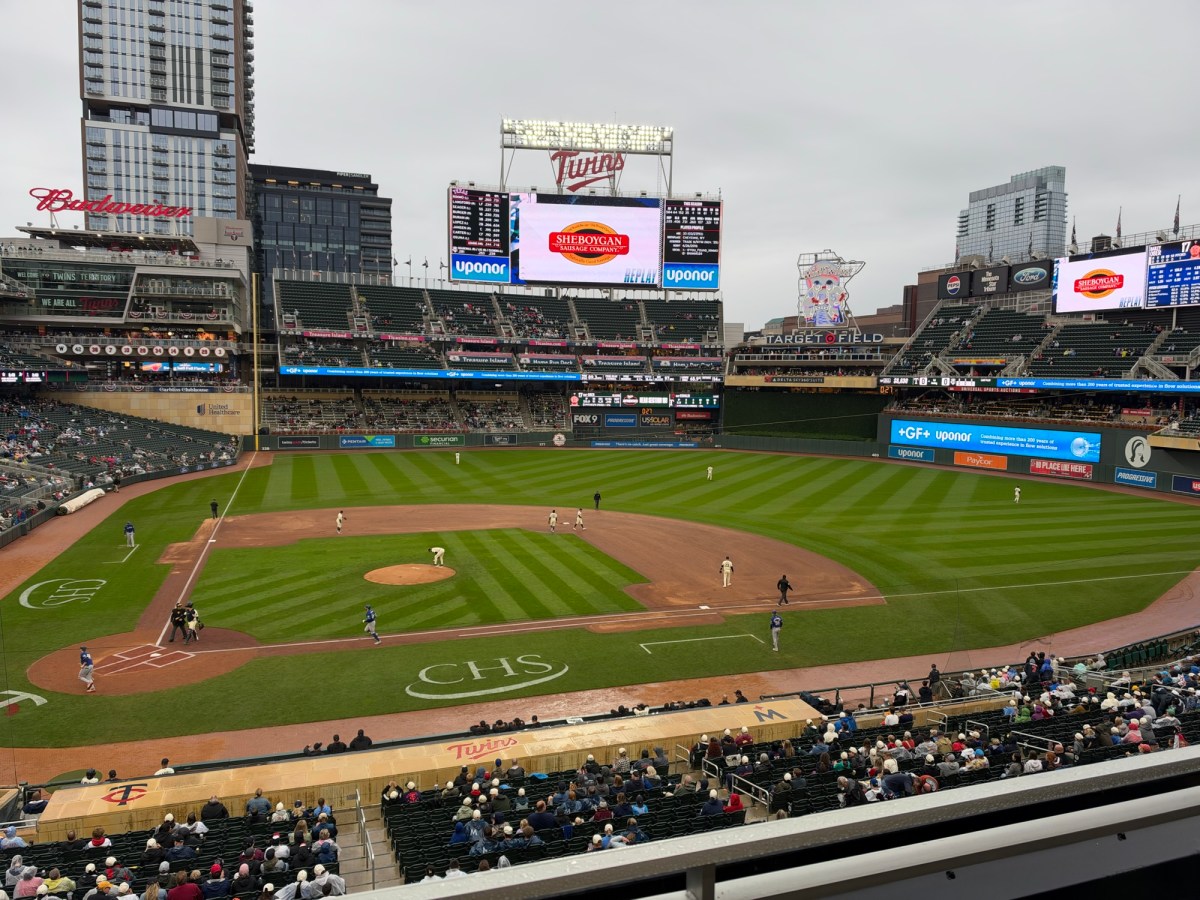
And baseball season starts. There is something about opening day, the impossibly green grass, the crack of a bat, the unhurried pace of a game that refuses to hurry, that feels like the world exhaling after a long winter. On opening day, every team is undefeated. Every fan is a believer. For a while, that is enough.

Spring does not just arrive. It reminds you that things come back. That the world has a rhythm, and if you are patient enough, it finds you again. My wife, of course, already knew all of this.

Some of us just needed a few decades. And a March morning.

Gloria was right.