

The Boy in the Photographs

The cloud service where I keep my photographs holds thousands of them, twenty-some years’ worth, and every time I log in it serves up a handful it claims were picked at random. I stopped believing that a while ago. Lately, nearly every one has been of my youngest son when he was four or five years old. This is his birthday week. I can’t prove the service knows what week it is, but I’m not going to argue with it.

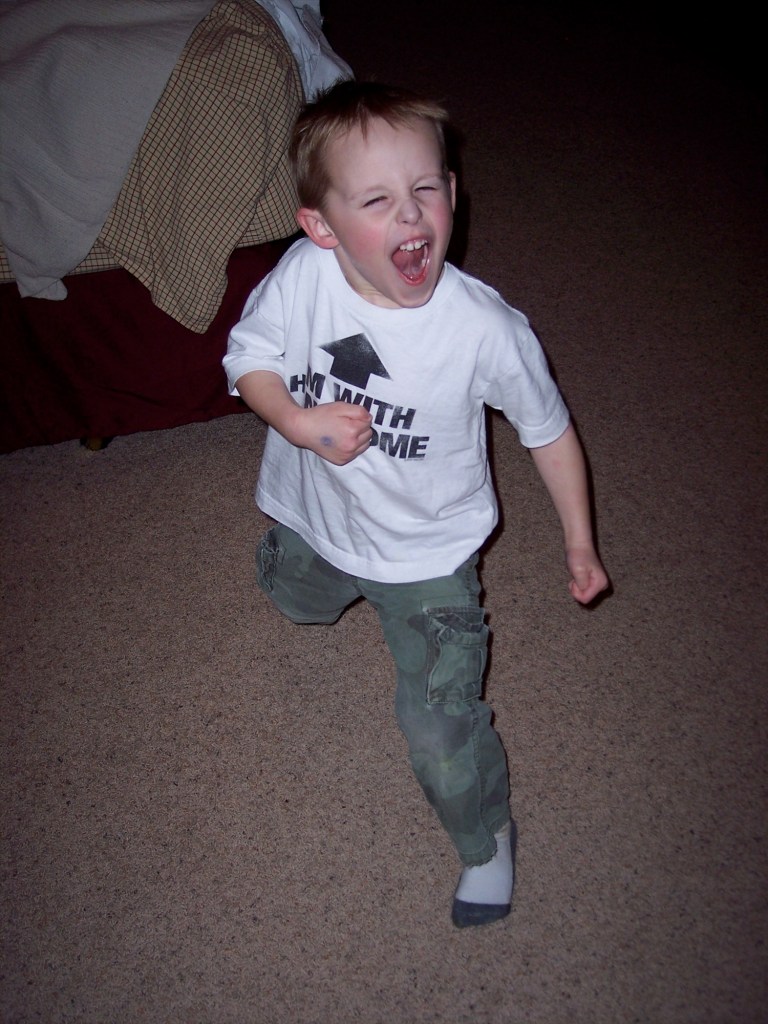
In one, he’s about five, dancing across the carpet in camo pants and a T-shirt that reads “I’m with handsome,” an arrow pointing at his own face. He’s playing air guitar, eyes squeezed shut, mouth wide open, one sock sliding off his foot. Nobody in that house was going to talk him out of whatever song was playing in his head. In another, he’s about four, wearing a tiger cap, one hand on his hip and the other resting on the shell of a giant tortoise. He looks like he’s introducing me to an old friend.
I look at those photographs and wonder how that little boy could possibly be in his mid-20s. Somewhere along the way, the years slipped past, although I certainly don’t remember giving them permission. But the more I look at the pictures, the more I realize that while a lot has changed, much of what makes him who he is hasn’t. The independence, the determination, and the stubborn streak were all there from the beginning. They’ve just grown up with him.

“I do it myself” was his motto before he could tie his shoes, and it never really went away. Try planning something with him today. He’ll decide quickly whether he likes the idea. If he doesn’t, he’ll explain why the plan is wrong and suggest something better. If that fails, he’ll explain it again. Eventually, he’ll announce that he won’t be joining us. Some call that persistence. Others call it annoying. I call it stubbornness, and I know exactly where he got it, so I’m in no position to complain.

But there’s another side to that stubbornness, and it’s grit. At eight, he wanted to be the closer on his baseball team, the kid who gets the ball when everything is on the line. That’s a tall order when you’re eight. Tennis gave me even better evidence. I watched him play matches he had no business winning, except that he refused to lose. The one I remember best came at the state tournament. He was trailing 3-7 in an eight-game set, one game from losing. Plenty of players would have mentally packed their bags. He won the next game. Then he won the one after that, and the one after that, and eventually he won the set 9-7.

I’ve seen that same determination in high school, college, and now at work, where he gets up early, puts in the effort, and gets things done. He gets that grit from his mother. In fact, when I look at his best qualities, I see a lot of her. From me, he inherited his stubbornness, his height, and, of course, his handsome good looks. I think it’s fair to say his mother did most of the heavy lifting, although I made some important contributions.

This week, the boy in those photographs turned 24. He’s mostly off the payroll, which is a development his mother and I enthusiastically support. He enjoys his job, he’s fun to be around, and he cares deeply about the people close to him. That little boy with the imaginary guitar became a young man I’m proud to know. And looking at those photographs got me thinking about what I’d want him to know about the years ahead. So here’s what I’d say, if he’d let me finish.

The years go fast, ridiculously fast, and it feels like yesterday you were standing beside that tortoise. The next twenty years will move just as quickly, whether you’re ready or not. The trick is to make sure you’re doing something worth remembering while they’re passing.

So plan at least one big experience every year. Take the trip you keep putting off, and say yes to something that makes you a little nervous. Save for the future, certainly, but don’t spend your entire life getting ready to live. The nicest car and the biggest house won’t mean much when you’re looking through old photographs. The people and the experiences will. And while we’re on the subject, take the trip to London… on your own dime, not ours.

Set your goals high, but understand why they matter. Goals give you somewhere to go. Your why gives you a reason to keep going when you’re down 3-7 and everyone else thinks the match is over. You already know how to dig in. Just make sure you’re digging in for something that matters. Not every disagreement needs to be fought down to the last game, although I recognize that may be a difficult concept for you to embrace.

Find someone to share the journey. The right partner makes the good days better and the difficult days bearable, and the years will bring plenty of both. It’s a lot more fun to have someone beside you who remembers the stories, too.

Mostly, though, keep being yourself. The determination and the loyalty, and even the occasional stubbornness, have served you pretty well so far. When you were little, “I do it myself” could drive me crazy. Twenty years later, I realize that raising you to the point where you actually can do it yourself was the whole idea.

I’d tell him all of this in person, but he’d probably interrupt halfway through with a better plan. That’s fine. I’ve spent 24 years watching him figure things out for himself, and I suppose there’s no reason to expect that to change now. I just hope that somewhere along the way, he’ll take a few photographs of his own. Someday, he’ll understand why I keep looking at mine.
What It Will Always Mean

What It Will Always Mean | A Baseball Essay

I was stuck for three days. Since I posted last Saturday’s piece about the measuring cups, I sat down more than once trying to find this week’s idea and came up empty every time. Nothing rough, nothing I could fix later. Just nothing.

Tuesday was the first day of the baseball playoffs, and I missed nearly all of it. A long day at work ran well past quitting time. By the time I finally shut the computer down, the Yankees and Red Sox were playing, two teams I have never rooted for and never will. A few years back I saw them play at Fenway, and even without a rooting interest, there is something about that ballpark that gets its hooks in you. Watching two teams I do not like, it hit me. I needed to write about baseball.

Baseball. What it has meant, and what it still means.

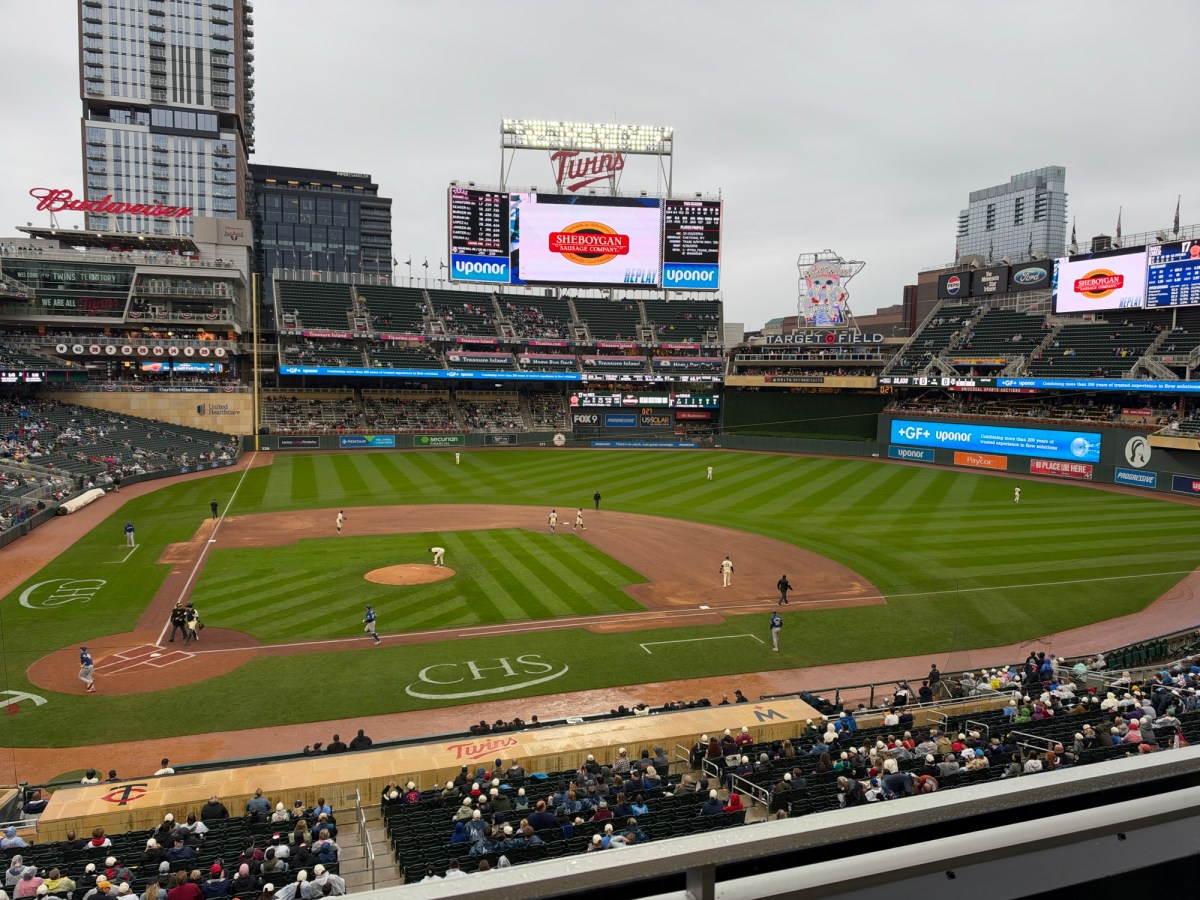
Three days earlier, on a Saturday, I was sitting at a table inside Target Field with two friends I have known for most of my adult life. They both live in the Twin Cities, so getting the three of us together should really just be a matter of picking a date that works. Except this year even that turned into its own project. We started talking about it back in April, floated several dates in May, settled on two of them, and then had to change both. It was not until a few weeks before the end of the season that we finally landed on this Saturday, the second-to-last day of the regular season.

We spent part of the morning worried the game would be rained out altogether, a concern we never had in the Metrodome days. But as we have often done, we met at a bar near the stadium first to catch up before heading over. By the time we walked to the ballpark, the news was official. First pitch, scheduled for 3:10, had been pushed back to 5:10.

Our seats were in the Thrivent Club, which will always be the Delta Club to me no matter how many times the sponsor changes. Padded seats, better food, and an indoor concourse made the two-hour wait considerably easier to take. We wandered the club for a while looking at pictures and memorabilia of past Twins greats. With the rain, we needed an inside home base, so we found a spot along the third base line, got some beer and a basket of peanuts, and picked up the conversation from the bar.

We have been going to these games for nearly forty years now, and every so often we try to reconstruct how it started. None of us is entirely sure our memories match the actual facts anymore, but we all tell the story the same way, so we have decided that is close enough. We talked about the games we could still see clearly, 1987 and 1991, the two years the Twins won it all, along with a handful of others that have blurred together over four decades of sitting next to each other.

Mostly, though, we talked about our lives. What was going on, what was good, and a few things that were genuinely bothering one of us. We even got into Istanbul, the Ottoman Empire, and how it all connects to today. We brought up old romantic interests, the ones from before any of us got married, and agreed, all three of us, that we had each ended up marrying above our station. We chose wisely, and we know it.

We used to talk about what our lives would look like in thirty or forty years. Now we are living in that future, and somehow, every time the three of us are together, it still feels like we are back in college. Except the conversation has changed. We do not talk about dorm rooms anymore. We talk about what retirement might actually look like. We talk about aging parents, the ones we have already lost and what that loss meant, and the ones we are still watching decline. We talk about people we care about who are struggling, in ways none of us would have known how to talk about when we were twenty.

None of us knew it at the time, but while we stood there with our beer and our peanuts, waiting out a rain delay in Minneapolis, Justin Verlander was making the final start of his career several hundred miles away in Detroit. I did not see any of it until I got back to the hotel that night. I pulled up the video and watched it more than once.

Verlander was pulled in the sixth inning. His manager walked out of the dugout, and everyone in the ballpark assumed they knew what came next, a handshake, a pat on the back, the long walk to the dugout. Instead, the manager pointed toward the stands. Verlander’s seven-year-old daughter came sprinting onto the field and out to the mound ahead of him. Verlander, one of the most decorated pitchers of his generation, stood there and cried while his own kid hugged him goodbye in front of forty thousand people. Then he walked off holding her hand, toward his wife and the rest of his family waiting at the edge of the field.

Eventually, the rain stopped. We finished our beers, left the club, and made our way to our seats. The seats were still wet. Maybe that was another reminder that ballparks change, too. The Metrodome was gone. The Delta Club had become the Thrivent Club. The three guys walking toward their seats were pushing sixty instead of twenty.

The Twins scored first. Texas answered with four runs in the second, added a couple more, and by the middle innings the outcome was becoming fairly obvious. We left early and checked the final score the next morning. Rangers 6, Twins 2. None of us had been there to see the end of it, and none of us minded.

Maybe that is my answer. Baseball is slow, and the slowness is the point. The game unfolds in front of you instead of being handed over all at once, and you have no choice but to sit inside that pace and let it happen.

That pace gives you time. Time to see the strategy, argue about it, and talk it through with whoever is sitting next to you. For three guys who have been doing this since college, the pause between pitches has always been the whole point. It is not dead time. It is the time we actually get to spend together, second-guessing a bullpen call or talking about life, the same way we have for forty years.

Baseball is also, mostly, a sport built on failure. This season, hitters around the league managed a hit in about twenty-four percent of their official at bats. Three out of four times, the answer was no. The best players in the world fail far more often than they succeed, and the game asks them to walk back to the dugout, sit down, and do it again the next time their name is called.

I think that is why it has stayed with me for most of my life. It is slow, and most of what happens on a baseball field does not work. And still, every so often, something does. A ball finds a gap. A daughter sprints onto a mound to walk her father off it for the last time. A rain delay turns into two hours you would not trade for a dry forecast.

There is a reason Field of Dreams ends the way it does, with Terence Mann standing at the edge of a cornfield talking about memory, about all that was once good, and about the chance that it could be again. He is talking about a game, but he is really talking about everything the game carries with it. Three guys standing around a high-top table with beer and peanuts, forty years in, know exactly what he means.