Aged Thirty Years

I had a birthday this week. Tomorrow is Father’s Day. This is always a complicated time of year, and this one has been harder than most to put into words.

If you’ve been reading this blog for a while, you’ve heard parts of this story before. The golf course. The note. The phone call. I’ve written about this day before. But thirty years asks for more. This year I wanted to go further. Not just what happened, but who he was. And what it’s like to figure that out without him.

Thirty years ago, my birthday fell on a Saturday. The next day was Father’s Day. I was on the golf course when someone handed me a note written in red ink. Five words: Paramedics called. Call your mom at home.

I went back to the clubhouse. This was before cell phones were common, and they let me make a long distance call to my mother. I think they knew what I was about to learn. She told me “Your father had another heart attack and he isn’t doing very well.” We said a few more words. I don’t remember all of them. Then she told me the ambulance was taking him to the funeral home.

I drove to my parents’ home. Twenty-five minutes. When I arrived, my birthday presents were sitting out. We had been planning a celebration. There wouldn’t be one that day. There was a funeral to plan instead.

Grief, it turns out, comes with logistics. Two services in two towns 350 miles apart. Countless people to notify, arrangements to make, decisions that shouldn’t have to be made at all. His death was so sudden there hadn’t been time to plan anything. We found ourselves picking out burial plots in the cemetery where I had learned to ride a bike. Four of them, side by side. Three are now occupied. One remains. A lot of that planning happened on Father’s Day.

In the middle of it, I needed to get away for a little while. Not far. Just somewhere I could breathe without answering another question or making another decision. I went back to my own home, an apartment attached to a monument shop. That’s when I found it. The Father’s Day card I had already bought, signed, sealed, and set aside. That was not like me. I am usually the guy buying the card the day before, or the morning of, hoping the selection has not been picked clean. But that year, for reasons I still don’t know, I had bought it early. I had written in it. I had done the responsible thing. And now the last Father’s Day card I would ever buy had nowhere to go except with him. It was buried with him.

Father’s Day has never been simple since. Neither has my birthday. They arrive within days of each other every year, and every year they carry the weight of that one. Four times since he died, including the very first anniversary, my birthday and Father’s Day have fallen on the same day. I don’t have a word for what that feels like. I’m not sure one exists.

I don’t know that I can say I know who he was. Maybe none of us ever fully know our parents that way. But thirty years of life have given me more perspective than I had then. I understand more about him now than I did as his son standing in the wreckage of that week. Two of his siblings are still alive, and they could probably tell me even more. That is part of the strange work of grief, too. You keep learning about someone after they are gone. Family. Old friends. Coworkers. Former patients. I’ve heard stories about him from people I barely know. My favorite came from a man who shook my hand and said, “I knew your dad. He did my vasectomy.” I didn’t know what else to say, so I asked how it turned out.

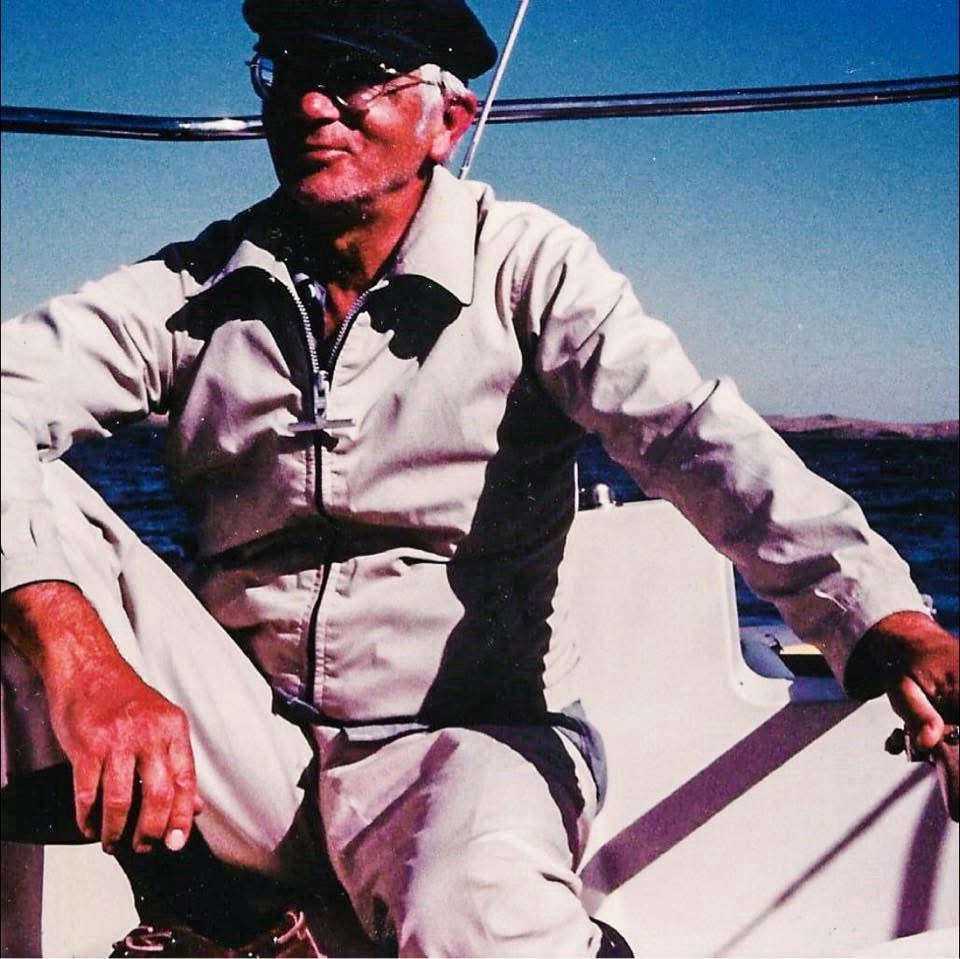
My dad’s name was Russell. He was the oldest child, or so I always believed, and he acted like it his whole life. It wasn’t until we buried my grandfather, his father, that I learned the truth. There had been another child born before him. A baby who didn’t survive. My dad had spent his entire life as the oldest surviving child, carrying that weight without ever fully being the firstborn.

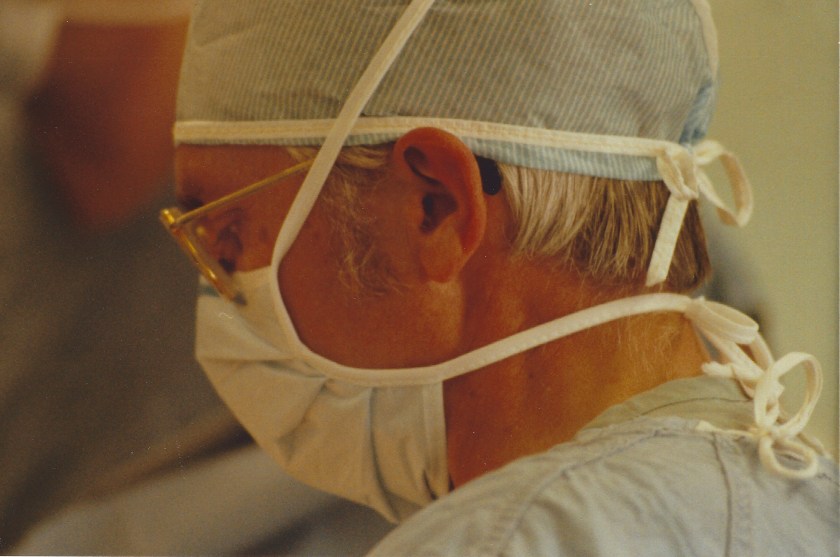
He was a surgeon, and like a lot of surgeons, he was gifted with his hands. He could build things, fix things, figure out what was broken and make it right. He was also a perfectionist. That is exactly what you want in a surgeon. It is not always what you want in a dad.

He tried to teach me some of what he knew, but teaching did not come as naturally to him as doing. I remember being about ten years old, mowing the lawn, and having him inspect it afterward with a surgeon’s eye for the imperfect line and the missed blade of grass. These were errors in a side yard at the end of a long private driveway. Nobody would ever see them. But to him, they mattered. Every project was like that. I never developed any real interest in working with my hands, building things, or fixing things. It wasn’t that the work itself felt beneath me. It was that something in me tensed up every time I picked up a tool, already worrying about the feedback if it wasn’t perfect.

When he died, I kept most of his tools. At the time, I told myself it was practical and valuable. Good tools are worth keeping. He certainly thought so. Every Sunday he would comb through the Sears newspaper ads looking for a deal on a new power tool. If he found one, he would dream up a project that justified the purchase. The tool came first. The reason came after. But the truth is, I kept his tools mostly as a way to keep him.

Over the years, I gave most of them away to people who would use them. That felt better than I expected. There is something good about knowing his tools are still fixing things, still building things, still in the hands of people who know what to do with them.

I still have some of them. This week, I used a few to fix a leaky faucet. I wish I were better at that kind of thing. I wish I cared more about it. But I don’t, not really. Maybe that is because of how he taught me. Maybe it is because of how I am made. Most likely, it is some combination of both. What I know is that even now, standing by a sink with a wrench in my hand, I can still feel the old pressure to get it right on the first try.

And when my own sons were old enough, I didn’t make them mow the lawn. I didn’t teach them how to build things or fix things, either. Maybe that was the wrong choice. But I couldn’t teach what I didn’t know how to do, and I didn’t want them to feel what I had felt. I didn’t want a missed blade of grass, a leaky faucet, or a failed first try to become something larger than it needed to be.

Times are different now. If they need to fix something, they can find a video, ask a question, or follow instructions I never had at my fingertips. But part of me still wonders whether I protected them from frustration or quietly passed along my own fear of it. How do you know what you should teach, what you should push, and what you should let them learn on their own? That is the kind of question I wish I could have asked my father.

What he left behind was not only tools, and the inheritance was not only fear. He left behind standards too. Some useful. Some heavy. Some I wanted to carry. Some I spent years trying not to pass along. And I also remember who he was when he was there.

My father believed in hard work. Not the performance of it, not the talking about it, but the actual showing up and doing the thing in front of you until it was done right.

I remember trying to learn how to water ski. I didn’t enjoy it. I wasn’t having fun. I wanted to be done. My father yelled at me and said that wasn’t the point. The point was learning a new skill, learning how to do something difficult, and taking pride in knowing you could do it. He was right, probably. I did learn how to water ski. But I never learned to enjoy it.

That was one of the complicated things about him. Sometimes the lesson was right, even when the delivery made it harder to receive. He believed competence mattered. He believed doing hard things mattered. He believed there was value in knowing you could do something, even if you never particularly wanted to do it again.

He also believed in integrity, in treating every person you encounter with basic human respect regardless of who they are or what they can do for you. Those weren’t lessons he delivered in speeches. They were just how he lived.

He was generous in ways he didn’t always announce. Our home was open to my friends. He would be there in his chair after a long day, a cigarette in one hand, a book or newspaper in the other, and a martini, scotch, or whatever drink was in rotation sitting not too far away. In hindsight, the fire safety plan may have needed some work. He might pull you into a conversation about politics, argue his side hard, and still expect everyone to be friends the next morning. If we went out to dinner, he paid. Every time, without discussion.

We also had two foreign exchange students live with us for a year. That is not a small thing. Adding another child to a house is expensive, inconvenient, and disruptive in ways people don’t always see from the outside. He did it anyway. He welcomed them, included them, and made them feel like family. That was his generosity, too. Not loud. Not sentimental. But real.

He was not without contradictions. He understood some of his own shortcomings, or at least enough of them to try to warn me away from the same mistakes. I came to think of those warnings as Russisms. He would point at me with a lit cigarette, take a deep drag, and tell me not to smoke because it was bad for me. Or he would swirl a martini, take a sip, and pronounce the dangers of alcohol and why I should avoid it. At the time, I probably heard the hypocrisy more than the wisdom. Now I hear something else. A man who knew his own weaknesses and hoped his son might not have to carry them.

Looking back, I think the Russisms were less about the cigarettes and the martinis and more about something harder to say out loud. They were the advice he wished someone had given him. The mistakes he had already made, handed back to me in the form of a warning. He couldn’t always fix what was broken in himself. But maybe I could avoid some of it. That was the hope, anyway. It usually is.

He was a dedicated physician in ways I didn’t fully understand when I was young. You don’t appreciate that kind of commitment when you’re a kid watching your father leave for the hospital at strange hours. You understand it later, when you’re the patient, sitting across from a doctor and hoping with everything you have that this person actually cares about what happens to you. My father was that doctor. I know that now in a way I couldn’t then.


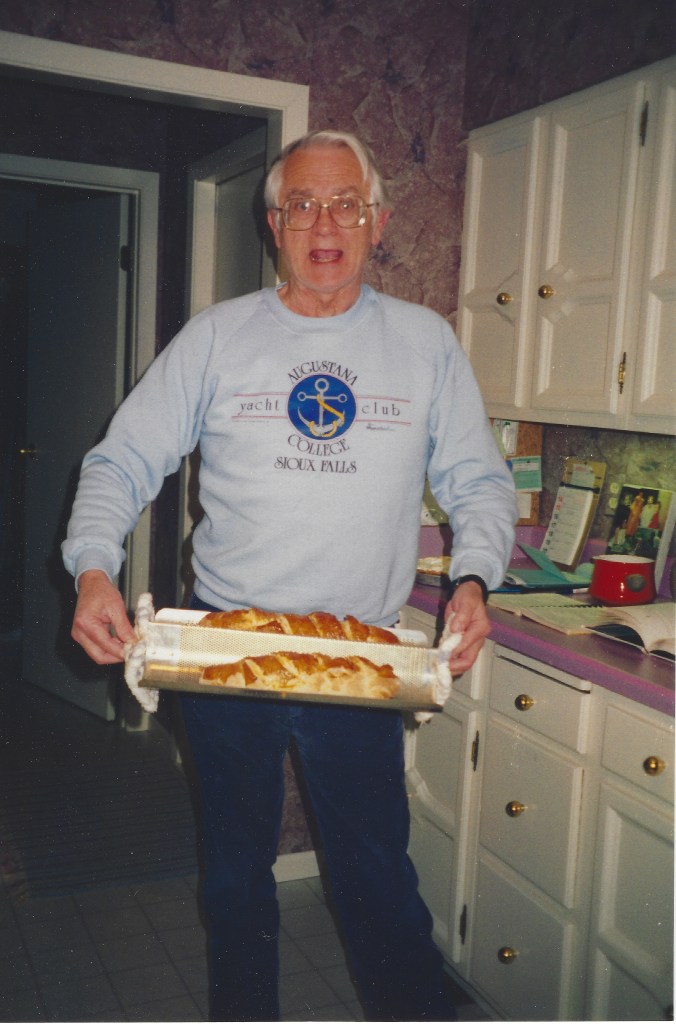
In his later years, after four heart attacks and a forced retirement from medicine, my father began to soften. He tried breadmaking. It didn’t go well, and I think part of him knew it, but he made it anyway. That was new. The man who had inspected a lawn with a surgeon’s eye for the imperfect line was now standing in a kitchen, covered in flour, making something that didn’t turn out right and living with it.

He also showed more outward empathy. He let things go that he wouldn’t have let go before. And in the weeks before he died, he called me just to talk. No agenda. No news to deliver. Just his voice on the phone, checking in. The dad I grew up with never did that. I didn’t know how much I needed it until it wasn’t there.

So what he left behind was also unfinished. The conversations that never happened. The phone calls I never got to make when life got hard. The chance to ask whether he had felt the same doubts, made the same mistakes, and wondered in the quiet moments whether he had gotten it right. I never got to tell him about my own shortcomings and hear him say he understood. And I never got to thank him. Not really. Not for the sacrifices he made, or the strange hours he kept, or the dedication he gave to his patients. I understand now that he did those things so our lives could be better.

He never met my wife. He never met my boys. He would have loved them and probably invented a couple more Russisms. They know him only through stories and a middle name. My youngest carries Russell as his middle name. It’s the closest thing I had to introducing them. It’s not enough. It never is. But it’s something.

Thirty years is a long time to figure something out on your own. Long enough that the figuring becomes the thing itself. I don’t know if I got fatherhood right. I tried to show up. I tried to work hard and keep my word and treat people the way my father taught me. I tried to pass along what was passed to me, even when I wasn’t sure I was doing it correctly. I may not have gotten everything right. But my boys have never once been anything other than the best thing I’ve done. And when I failed, which I did, there was no one to call who had walked this particular road before me.

My father was a connoisseur of scotch and other spirits. Maybe connoisseur is too fancy a word, but he knew what he liked and took some pleasure in understanding it. I have taken an interest in scotch, too. Some of that is taste. Some of it is ritual. Some of it, I suspect, is another way of keeping a small conversation with him going.

A thirty year scotch is not simply older than a fifteen year scotch or a ten year scotch. Time has done something to it. The sharper edges have softened. The heat is still there, but it does not hit the same way. What remains is deeper, smoother, more complicated. Still scotch, but different than it was.

Grief works that way, too. Thirty years have done something to this. Not all of it has burned off. Some of it never will. But the raw pain of that first Father’s Day, the one spent planning a funeral in a cemetery where I learned to ride a bike, has changed. What remains now is grief, yes, but also gratitude, understanding, and a kind of love that has had a long time to age.

Somewhere today there’s a golf course, and a note written in red ink, and a young man who doesn’t yet know what he’s about to learn. I think about him every year on this day. I think about what I’d tell him if I could.

Happy Father’s Day, Russ. I still have things to tell you. And thirty years later, I am still finding things you left behind.

The Long Way Back from Paddington

The tickets were sorted. Now came the long way home.

Last week I wrote about the walk from Waterloo to Paddington, four miles across London on a free day while my students attempted to set the Guinness record for pub crawling. I had gone to Paddington for train tickets to Henley, but the walk back was never going to be the same walk in reverse. London had changed by then.

By the time I started back, the city was louder, the parks were fuller, and the quiet errand had become something closer to a full day’s walk. I was not trying to make good time. I was trying to notice. I reentered at the Italian Gardens, the formal ornamental garden at the northern tip of the Serpentine where Hyde Park and Kensington Gardens meet. The boundary between the two parks is blurry here, which is part of the charm. Stay west and you are in Kensington Gardens. Go east and you are in Hyde Park.

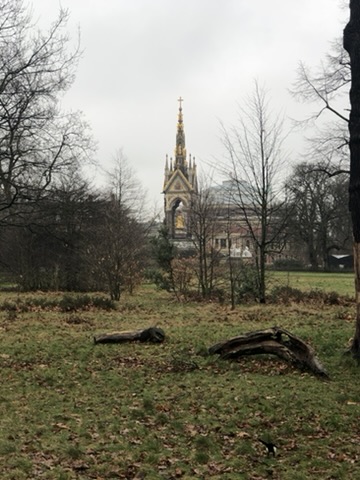
I usually went west first, toward Kensington Palace. The Albert Memorial comes into view on your left, an elaborate gilded monument with Royal Albert Hall rising behind it across the road. Then I would turn back east along the Serpentine. If instead you head south from the Italian Gardens, the path takes you past the Peter Pan statue, which has been standing there since 1912 and still draws people who stop longer than they expected to. Either way, you end up along the Serpentine, which by then was an afternoon walk, with the park busier, the light different, and my feet beginning to understand London better than my map did.

Keep your eyes up while you walk. Hyde Park has parakeets, bright green ones, darting through the trees. They are not native to England, and nobody knows for certain how they got there. The stories range from Jimi Hendrix releasing a pair on Carnaby Street in the 1960s to escapees from a film set. The truth is unclear. The birds are not. Eventually the park releases you. You come out near the back side of Buckingham Palace, which is where I would duck through rather than past the front.

Walking behind the palace, you find yourself in a neighborhood marked by a surprising number of international flags, the kind that signal embassies and consulates. If you know your flags, this is a good stretch to test yourself.

Eventually the consulates of Belgravia give way to Victoria, where each street seems to have been designed by a different century. Turn a corner and you move from Edwardian to Georgian. Turn another and you are in late Victorian. Turn one more and someone has dropped a modern building in without asking. London has always been like that. It should not work. It does.

The street names alone are worth the detour: Petty France, Buckingham Gate, Queen Anne’s Gate. Tucked among the townhouses are pubs with names that feel like they belong in a novel: The Old Star, The Adam and Eve, The Two Chairmen, The Feathers, The Phoenix. More than once I stopped for a late lunch, an afternoon snack, or a local beer. Nobody was in a hurry. Neither was I. Eventually I settled the bill, stepped back outside, and kept walking. A few blocks later I reached into my jacket to make sure the tickets were still there. They were. A few days from now, those tickets would put my students on a train to Henley, and me a few hours closer to someone I had been looking forward to seeing since before the term began. Then, without much warning, Westminster Abbey appeared above the roofline as if it had simply decided to be there. It stopped me every time. It still does.

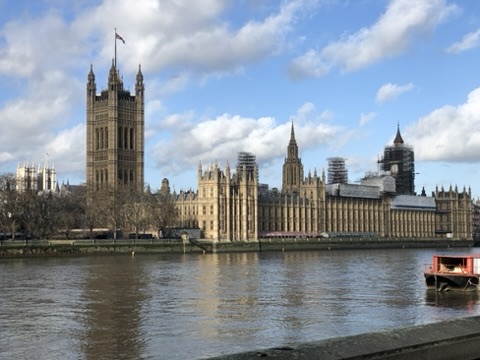
I usually worked my way behind Westminster Abbey and then to Victoria Tower Gardens, a small park tucked at the south end of the Parliament building that most visitors never find. The gardens take you naturally down to Lambeth Bridge, which is nothing like Westminster Bridge and better for it.

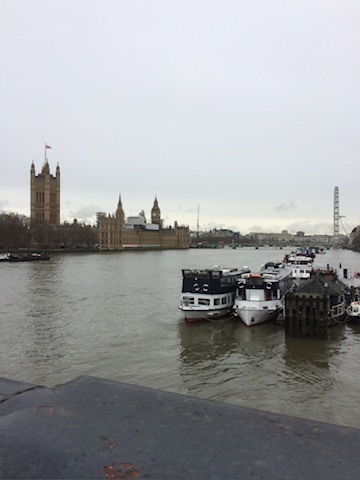
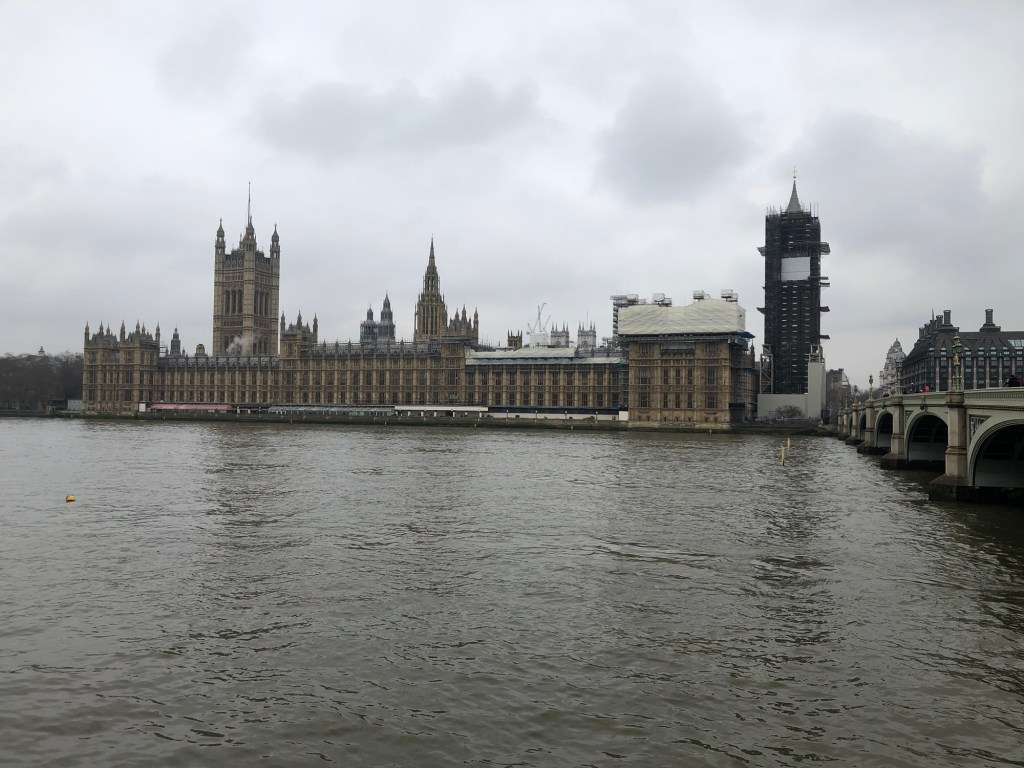
Earlier in the day I had crossed Westminster Bridge, the green one, the postcard one, the one crowded with selfie sticks and people trying to prove they had been there. Lambeth Bridge is different. It is painted a deep red, supposedly to echo the benches of the House of Lords, just as Westminster Bridge echoes the green benches of the House of Commons. Maybe that is true. Maybe it is just one of those stories London tells because it sounds right. Either way, from the middle of Lambeth Bridge you get Parliament and Westminster Abbey without the crowd. The same landmarks, but from a quieter angle.

Once across, you have a choice. Head toward Lambeth Palace, the official London residence of the Archbishop of Canterbury and reportedly so for 800 years. I never saw him there. Or turn and walk along the Thames toward Westminster Bridge.

I usually took the river. The walk along the Thames after Lambeth Bridge is quiet and thoughtful in a way the outbound journey never is. The city has changed pace by now. Fewer people, a handful of street vendors, but no hustlers, no tour groups, and no one performing for anyone. The river moves beside you, and London lets you alone for a while. You follow the river until Westminster Bridge comes into view, and that is your signal to turn. From there it is a short walk back through the familiar landmarks: past the London Eye, back through Leake Street, up through Lower Marsh, and finally the hotel. By the time you walk through the door, you have covered nine to ten miles of one of the great cities in the world, more if you wandered, and your feet know it.

When I got back to the hotel, I carefully sorted and stored the tickets for the trip to Henley. After nine to ten miles of walking, I was ready to join my students for a pint at a nearby pub. Most of them had a head start. Though I should say, some of them had actually used the day the way I had hoped. A few went to the V&A Museum. Others made the pilgrimage to Abbey Road. There were always a couple who did something Harry Potter related, which I understood completely. Many went to pubs. We compared stories about our day.

I told them I had walked to Paddington to get the tickets to Henley. Then I told them a little about my friend. The woman who had lived with our family during the Silver Jubilee. The one who had made my life immeasurably better. Not the whole story. That would come later. For now, it was enough that Henley was getting closer.

A Walk to Paddington

A professor, a free day in London, and a four-mile walk across one of the great cities in the world. From Lower Marsh to Leake Street, Westminster Bridge to Hyde Park, and finally Paddington. This is walking London the right way.

Every course I taught in London included free days on the weekend. The idea was simple. Let the students explore the city on their own terms. In practice, this meant most of them spent the better part of the day on an unorganized pub crawl, apparently attempting to set the Guinness record. As a professor I found this frustrating. But truth be told, when I was 20, I would have done the same thing.

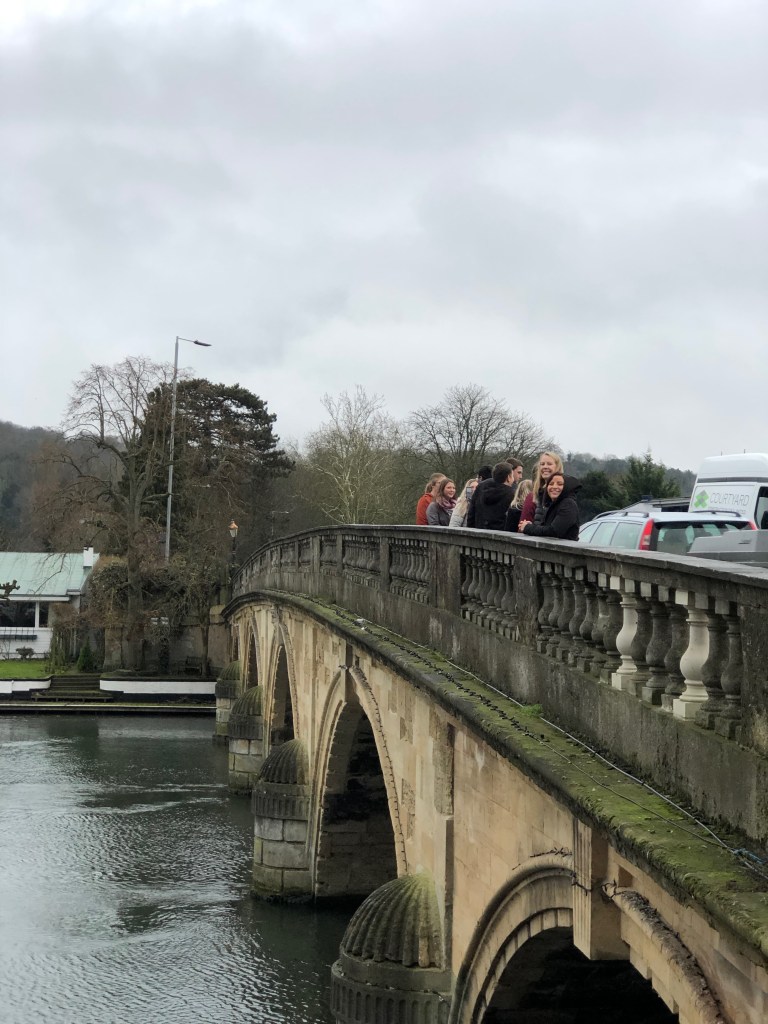
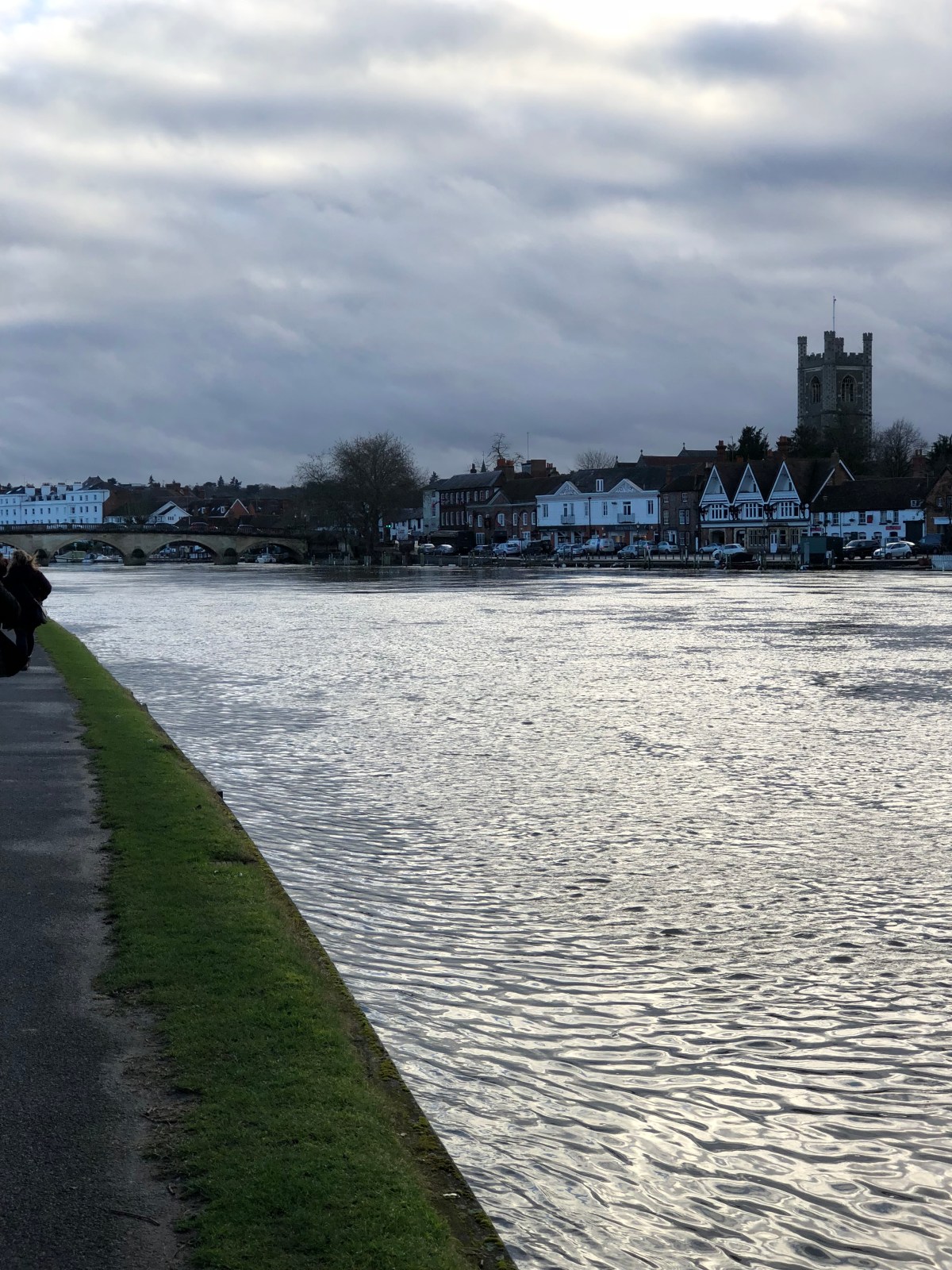
On one of those free days, I had my own agenda. It was my favorite day of the course, just me and London getting to know each other a little better. The walk to Paddington was, on the surface, a practical errand. I needed to purchase train tickets so the students could visit Henley-on-Thames, a small and beautiful town about an hour outside the city, home of the famous regatta and, more importantly to me, people I deeply care about.

One of them had come into our family years earlier as an exchange student and somehow became something closer to a sister. I am not going to name her here, but she knows exactly who she is. She lived with us for a year during the Queen’s Silver Jubilee, and what started as a temporary stay became one of those rare relationships that keeps deepening instead of fading. Over the last twenty years, she and her family have become one of the better things in my life. The train tickets were the reason for the walk. She was the reason for the trip.

The walk is about four miles each way, but that number is misleading. Four miles in London is not four miles on a treadmill or four miles around a suburban walking path. It usually took me a couple of hours to get to Paddington and a couple of hours to get back. You do not rush a walk like this because there is too much to see. You stop for photographs. You pause on bridges. You stand in front of buildings longer than you planned. You let a street, a park, or a memorial interrupt you. That was the point.

Waterloo Station was about five minutes from the hotel, and I could have taken the Bakerloo line directly to Paddington and spent the rest of the day in a pub. But where’s the fun in that. If you have a free morning in London and a decent pair of shoes, this is how I would suggest spending it.

Before any long walk you need fuel. The Hampton Inn near Waterloo put out a full buffet breakfast, and I worked my way through it with some purpose. The scrambled eggs were, I’m fairly certain, made from powder, but after a cup of tea nobody was complaining. I passed on the beans. I understand this is a beloved British tradition. I have never understood it and I’m not going to pretend otherwise. The potato rounds, essentially flattened tater tots, were almost as good as a McDonald’s hashbrown, and that is not faint praise. I finished up, got myself sorted, and stepped outside into whatever London had waiting.

I turned right out of the Hampton Inn and headed up toward Lower Marsh, one of those streets guidebooks mention in passing and then move on from. That is a mistake. In the morning it is a market waking up. Stalls are being assembled. Vendors are arranging things. The smell of food is beginning to organize itself. The sights and smells remind you of a local fair or carnival from childhood, except this version has better coffee, better food, and no livestock barns. Lower Marsh feels more local than the better known markets, less performed, the kind of place where people actually shop rather than pose for photographs. When I was there it ran Monday through Saturday. These days it is weekdays only, probably another casualty of Covid. Come back on a Tuesday for lunch. You will not regret it.

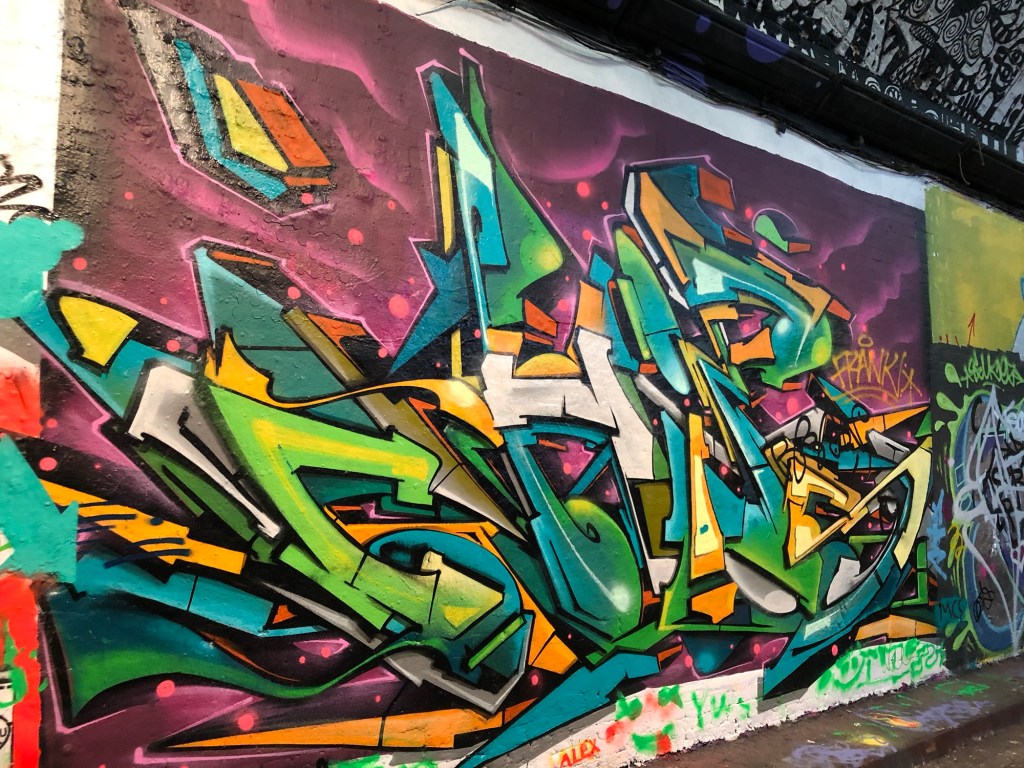
From there I found my way to Leake Street, which is easy to miss and worth finding every time. At its most basic, it is a tunnel running underneath the outbound tracks of Waterloo Station. The entrance is unremarkable, which is part of the point. You step in and the city changes register entirely. Leake Street is maybe 300 yards long, and every wall belongs to graffiti. Not the scratched-out signatures of people marking territory, but actual art, full murals, color from floor to ceiling, work that changes regularly because other artists paint over it and start again. It smells like spray paint and old concrete. It sounds like your own footsteps. Walking through it early, before anyone else has found it that morning, is one of the genuinely strange pleasures London keeps tucked away.

Leake Street eventually opens onto York Road, near the London Eye and the Aquarium. From there you weave your way toward the Eye and eventually the Thames. This stretch of the South Bank is busy at almost any hour, but early on a Saturday morning in January you can have it largely to yourself, which makes it ideal for photographs. Westminster Bridge is worth visiting once. After that, unless you enjoy navigating around selfie sticks, wannabe influencers staging endless photo shoots, and the occasional pickpocket, there are better ways across the river.

But stop in the middle on your first time. The bridge is painted green, which is said to echo the green benches of the House of Commons, the chamber nearest the bridge. London loves that kind of detail, the sort of thing you can walk past a dozen times before finally noticing it. Then look upriver toward Parliament, the Elizabeth Tower with Big Ben rising over everything, and the water moving underneath. It is the postcard version of London, and the reason postcards exist.

The far side of the bridge drops you into Westminster, and you should take a moment before you go anywhere. You are standing at the heart of England. Parliament is to your left, Westminster Abbey just beyond it, the UK Supreme Court across the square, Whitehall stretching north. Not all of it packed into one view, but close enough that you can feel the weight of the place. Early on a Saturday morning in January you may have most of it to yourself, which is the only way to properly appreciate it. From here you have choices. Head up Whitehall and cut across the Horse Guards to reach St. James’s Park from the north, or head due west and arrive at the southeast corner of the park directly. Either way works. I usually went west. And that is where Churchill finds you.

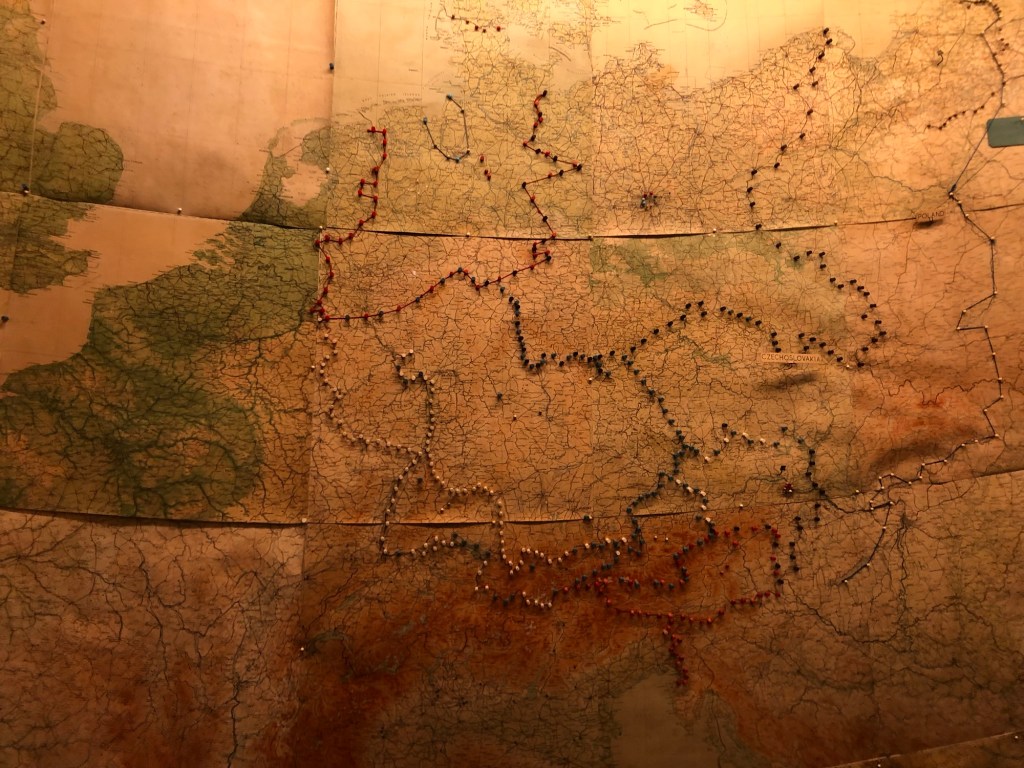
Tucked at the southeast corner of St. James’s Park, nearly in the shadow of Parliament and Downing Street, are the Churchill War Rooms. If you have any interest in World War II, this is not optional. The War Rooms are the secret underground bunker where Churchill and his senior commanders spent the war years monitoring, planning, and trying to hold a country together when certainty was in short supply. When the war ended in 1945, they sealed the facility and walked away. It exists today almost exactly as it was left. The maps are still on the walls. The phones are still on the desks.

A city like London never lets you walk only in the present, and on June 6 that was especially true. Eighty-one years ago, the largest seaborne invasion in human history launched from Britain and landed on the beaches of Normandy. Some of it was planned in rooms like the ones a few hundred yards from where you are standing. The men who went ashore that morning did not all come home. A morning walk through a peaceful city is not a small thing when you remember what left from these shores. It is worth a moment of your time to remember that.

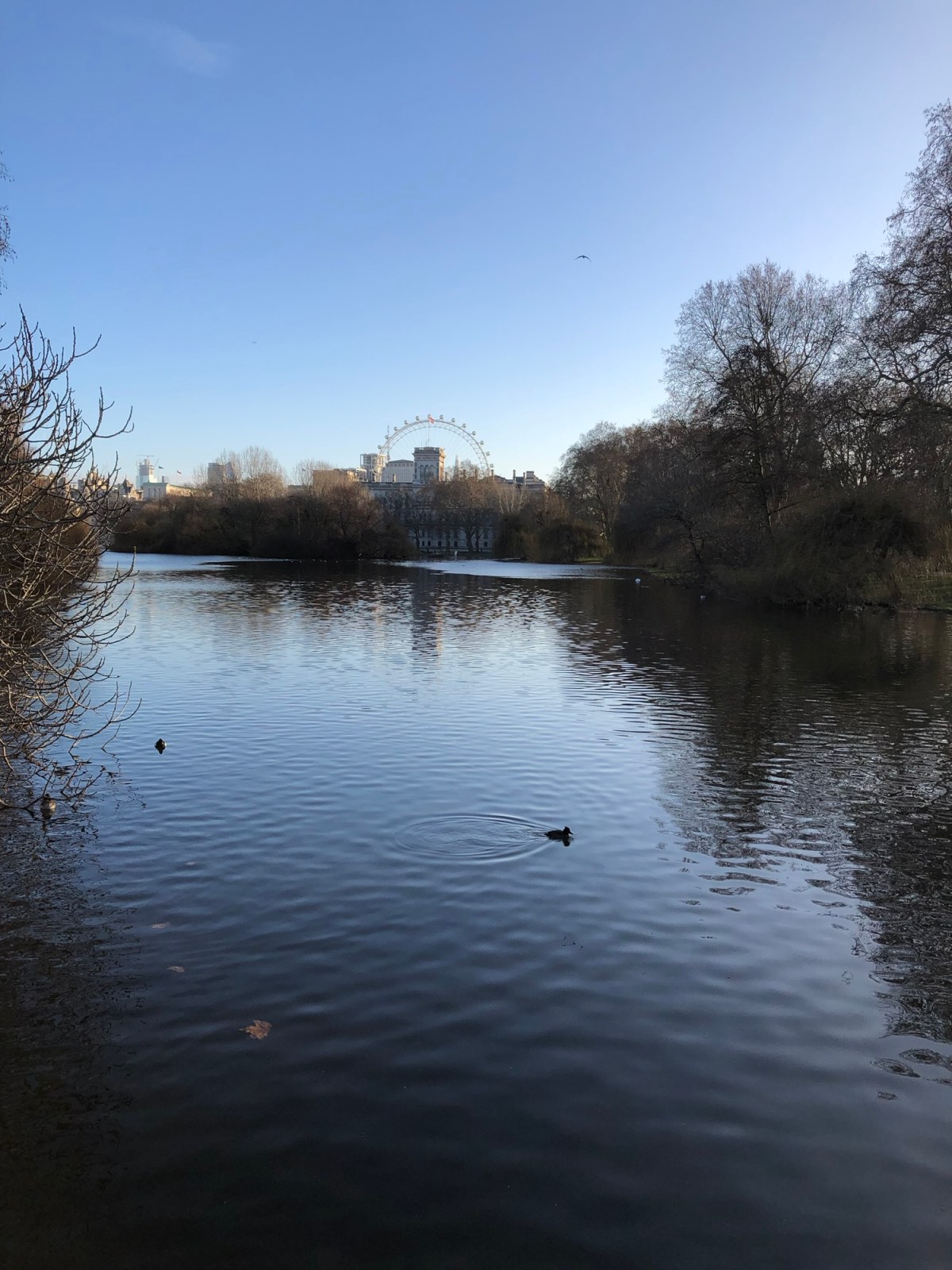
St. James’s Park is worth walking through, not around. Follow the path along the lake and take your time with it. The waterfowl alone are worth slowing down for. Ducks, geese, and swans move around in numbers that suggest they know they own the place. Henry VIII used it as a deer park. James I turned it into an exotic animal park. Charles I walked through it on his way to his execution. Now it is nearly sixty acres of paths, water, birds, and one of the better views in London. From there, Green Park carries you toward Hyde Park.

Hyde Park deserves its own moment. St. James’s Park belongs emotionally to monarchy and ceremony. Green Park belongs to quiet passage. Hyde Park belongs to the public, which means it is sometimes beautiful, sometimes noisy, sometimes odd, and almost always alive. By the time you arrive you have already walked a couple of miles, Paddington is just on the other side, and you might be tempted to think the hard part is behind you. It is not. Hyde Park covers 350 acres. Walking across it is a little like driving through Montana on I-90, where you are absolutely certain it is never going to end.

Henry VIII took this land from the monks of Westminster Abbey in 1536. The man had a pattern. It stayed private for a century until Charles I opened it to the public in 1637, giving Londoners a place to promenade, argue, protest, and occasionally listen to each other. History remembered him poorly regardless.

Every November through January, a corner of Hyde Park transforms into Winter Wonderland, a sprawling Christmas festival with roller coasters, a Ferris wheel, ice skating, a Bavarian village, and enough mulled wine to get through a British winter. I always wanted to go in but never had anyone to go with, and frankly the admission price gave me a convenient excuse. So I walked around it. London’s giant civic backyard. It takes a while to cross. I never minded.

And then, sometime around noon, after nearly four miles, three parks, and more pauses than I could count, I arrived at Paddington. For many, Paddington is where London begins. If you fly in from Heathrow you take the Express straight here. There is a bear named after this place, which tells you something about how deeply it has worked its way into the culture. It is a vast station of steel and glass, with none of the grandeur of Union Station in Washington or Grand Central in New York. It is open and cold and relentlessly busy. Frankly, it is overwhelming.

But I had a job to do, and I did it. Tucked into one corner was the ticket office. Because it was Saturday, there was rarely a line. I ordered the tickets with the group discount and tucked them into my jacket. I always found it odd how satisfying that moment was. I had walked nearly four miles across London for a stack of paper tickets, which made no sense and perfect sense at the same time. They were not just tickets. They were one step closer to Henley, one step closer to my students meeting family, and one step closer to seeing one of my best friends.

The tickets were sorted. Now came the long way home