Looking Forward

Friday, the sale closed.

Last week I told you the house had taken over my life and my cortisol. This week it finally let go. The signatures are done, the keys have changed hands, and the place where we lived for twenty-two years belongs to someone else now.

The new owners are wonderful people. My wife and I met them, and there was something familiar about where they stood. They are at roughly the same stage of life we were in when we built the place, standing at the beginning of a story that now belongs to them. I handed the keys to a house I know by heart to people who are about to learn it the way we did.

I keep thinking about another house. The one I grew up in sold thirty-five years ago to a family that still lives there. By any measure that matters, it is their house, and it has been for a long time. But my boyhood dog is buried in that yard.

You can sell the house. You cannot sell what you left in the ground.

Somewhere beneath thirty-five years of someone else’s life, a small part of that place is still mine. I suppose that is what I handed the new owners without telling them. Not only a house, but a claim they may feel someday too.

My wife and I talked briefly about what the closing felt like. For her, it was relief. Relief from the last two months and, if I am honest, relief from the whole year. We should have seen 2026 coming.

The fire alarm went off less than five hours into it. At five in the morning in London, the two of us scrambled down thirteen flights of stairs because we had wanted a room with a view. The price of the view was the climb down. We laughed about it on the sidewalk. We were not laughing by February.

My own reaction to the closing was harder to name. Relief was in there, but so was sadness, along with a few other things for which I still do not have good words. That is the strange arithmetic of selling a house you loved. You can be glad it is over and sorry it is over in the same breath. Both are true, and neither cancels the other.

The best part of the sale is what it finally makes room for. For most of this summer, I have been looking backward at old photographs, boxes of memories, and essays that all seem to begin with the word “remember.” It was time, but it is done now. The house is closed, and for the first time in a long while, I find myself wanting to look ahead.

Looking ahead, however, requires something to look toward. That is where the journal comes in.

I have kept one, off and on, for years. It went quiet after I was injured in a fall, and truthfully, it stayed quiet because this blog became the place where I did my thinking. If you have been reading, you have been reading my journal, though not all of it. There are parts of these stories I leave out on purpose. Some things are meant to remain private, and a journal knows the difference between what you tell people and what you tell only yourself.

Like everything else, the journal made the move. Unpacking it seemed like a good time to revisit what I had written at the beginning of the year and take another look at the goals I set shortly after the fire alarm.

I remembered making the list. What I had forgotten was what was on it.

There were seven goals, written in my own handwriting during the early days of 2026. I wrote them during a lull that winter, when we allowed ourselves to believe the worst of the year had passed. It had not. It was only warming up. But I did not know that yet, so I did what hopeful people do in a moment of calm. I made a list.

Reading it now, months later, felt like opening my own report card. Some of it made me wince. Some of it made me smile. A few entries made me wonder who, exactly, I thought I was in January.

Three of the seven are done. The big one, the goal that has taken over this blog for weeks, was to sell the house and find a new one. Checked, as of Friday. Two others are also complete, although they were admittedly low-hanging fruit, the kind of goals you put on a list partly because you already know you can reach them. I am not going to pretend they count for much, but a checkmark is still a checkmark.

Two more goals remain largely untouched. There is still time, although the calendar and I may have different opinions about how much. Then there is golf.

One of my goals was to get better at it. After the fall, I was not sure golf was going to be on the table at all this year, so the fact that I have played is its own small victory. I even worked on my putting, and my putting has improved. The rest of my game, however, has aged. Note to self for next year’s list: Make sure your goals are realistic.

And then there is the one I do not joke about, at least not entirely.

I want to lose weight.

That is not a new goal in my life. If I am honest, it has been a goal for most of my life. But five years ago, I got serious. I set a goal weight, and when the weight came off faster than I expected, I moved the number down.

When I reached the adjusted number, I kept going and said ten more. When I reached that, I said ten more again. That time I lost eight, not ten. Those last two pounds became the finish line I kept chasing. If people would stop bringing cupcakes to work, I might have caught them.

Then came a career change, a more structured and sedentary life, and some of the weight returned. For the most part, I have kept it within a range I can live with. It just is not as easy as it used to be, and the finish line is a little farther away than it was.

So 2026 was going to be the year. I even attached a nice dream to it. Wouldn’t it be something, I thought, to get down to my high school weight in time for my 40th class reunion this fall?

That is not going to happen, but not because of the weight. My son invited me to play golf that weekend, and I would rather look forward than back. The reunion is a room full of who we used to be. A round of golf with my son is who I get to be now. That was not a hard choice.

The weight goal is still on the list, and I intend to keep chasing those last two pounds. Here is what I know, and why I am not writing this as a confession: I have done this before. I know exactly how it works when it works.

When I lost the weight five years ago, I did one small thing every morning. I reminded myself of the number. Not with shame and not with a lecture. I simply looked at where I was headed before the rest of the day could talk me out of it. The mornings I did that, I made progress. The mornings I skipped it, I drifted.

The reminder was not magic. It was just attention. And attention, it turns out, is the whole game.

That is the real reason I am telling you any of this. The list had been sitting in the journal since January, waiting to be read. Now it has been. Three goals are done, two are barely underway, golf remains golf, and one still matters enough that I am willing to tell you about it.

The value was never entirely in the checkmarks. It was in picking up the book and asking the question out loud: What am I actually working toward?

So here is what I am going to do with the rest of 2026. Every morning, I am going to look at the list. Not to grade myself or turn breakfast into a performance review. I only want to make sure that, on any given day, I am working toward at least one of the things I said mattered.

That is the whole method. It worked when I lost the weight, and it stopped working when I stopped looking. A goal you do not look at is just a wish you wrote down once.

Before long, I imagine I will need some new lines on the page. I want to find time this fall to set a few fresh goals, some to close out 2026 and others to carry into 2027. That is the part I am making my peace with. The work is never really finished.

You reach a goal, or you do not. Either way, morning comes and asks you the same question again.

I spent the summer looking back at the photographs, the boxes, and the house that belongs to someone else now. I do not regret a minute of it. But the boxes are unpacked. The keys have been handed over. The journal is back on the shelf where I can reach it.

And every morning, I am going to reach for it.
Long Week

I’m sorry there’s no real post this week.

Life got hectic. We were getting the old house ready for its final send-off, and like it usually goes, not much went according to plan. The one thing that did go up on schedule was my stress level… higher than a Georgia pine.

I’ve got some thoughts written down for next week and I’ll start building on those. For now I need to decompress and get my cortisol back where my doctor would like it.

So to my readers: I’ll find you. Enjoy the weekend off.

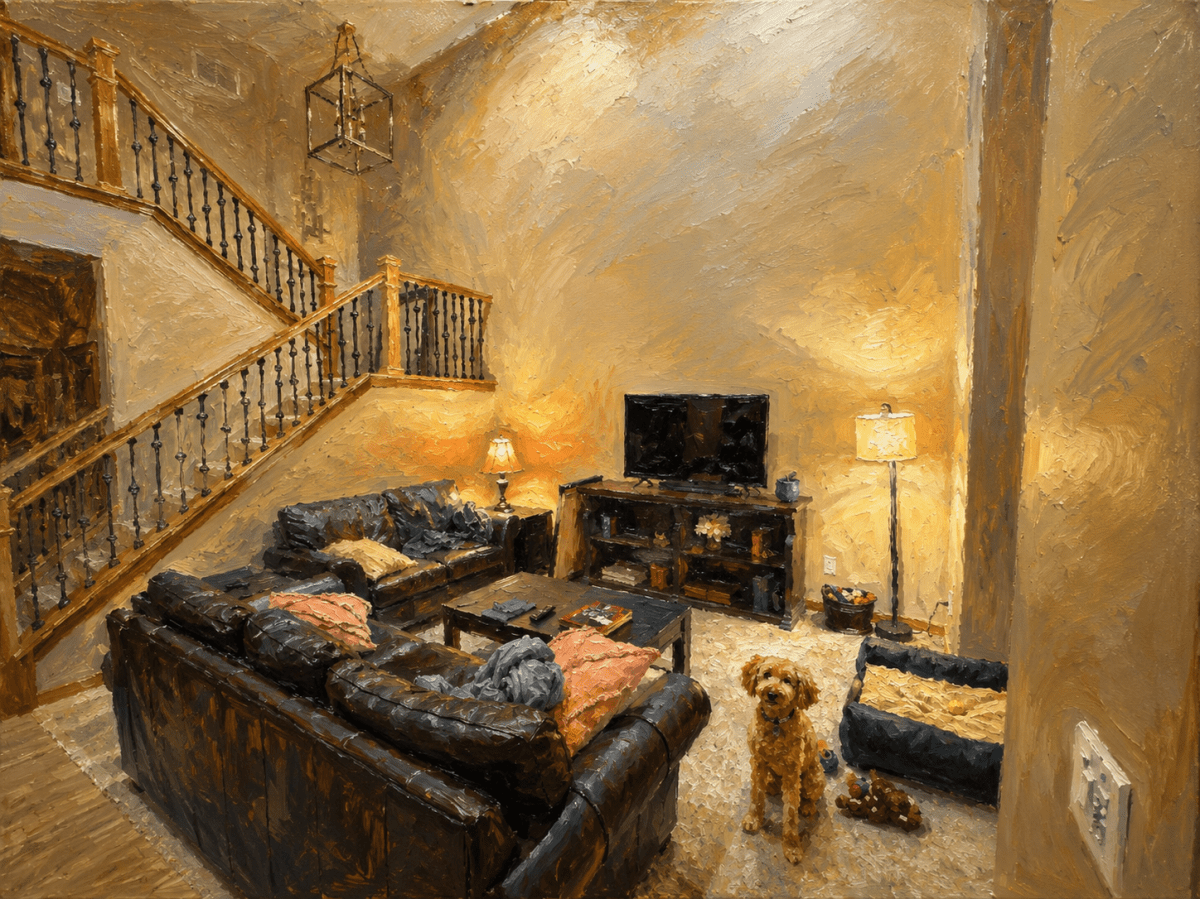
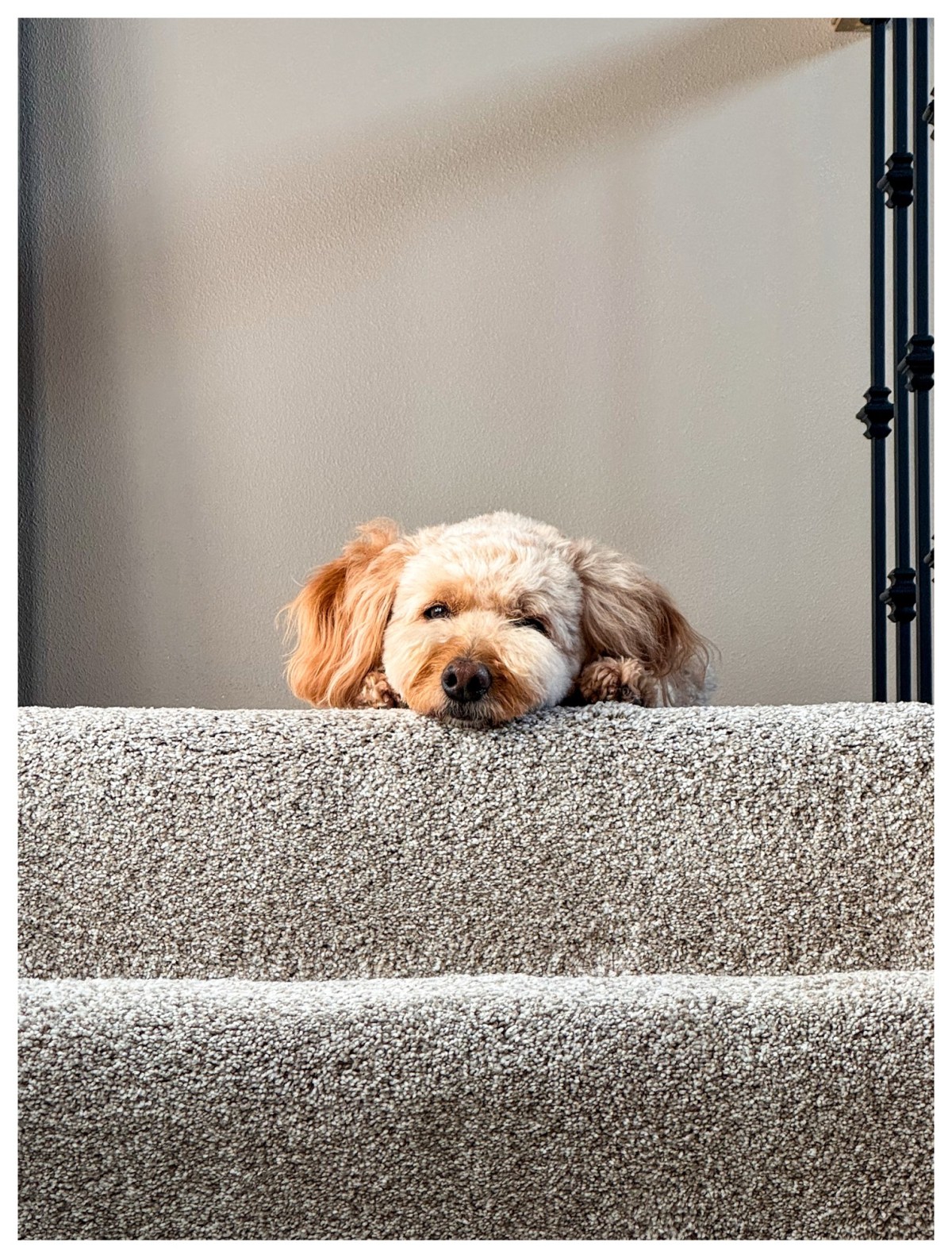
And as you can see, Ginger is handling the move quite well. Not pouting at all.

I Thought I’d Handled It

* I apologize in advance is this one rambles a bit.

We bought the new house last Friday. It’s been ours for a week. We’d known for months we were going, but Friday made it real the way planning never does. It didn’t feel like paperwork. It felt like the old house had already become someone else’s.

The old house is mostly empty now. We’re selling what won’t fit in the new place, an antique dining set, some artwork, a couple of beds, a treadmill. I’ve been carrying the personal things over myself, trip by trip, because I don’t trust anyone else with them. Each load leaves the rooms a little more hollow, until they echo. Out on the driveway, the concrete still holds the faint mark where the boys once crouched down and tried to scratch their initials into it before it set. Inside, the dining room is unchanged, the one that held every holiday and birthday we ever ran. We built this house in 2004 for the life we ended up living in it. I thought I’d already made my peace with leaving it.

A few weeks ago I wrote the goodbye. I published it, a whole essay about learning to let go. I’d found George Howe Colt’s book about his family’s old place, and it handed me the words and the story I needed. I closed by saying the house had done its job and it was somebody else’s turn now. I meant every line of it.

Then Friday came, and I learned that writing the goodbye and living it are two different things. I’d said the words. I hadn’t done the leaving. It’s like being a Vikings fan. Even when you know how the season’s going to end, you’re still upset when it does.

Except this time we won. We sold the house. We bought another, and we’re mostly moved in now. I should be celebrating. But I’ve stood in this spot before, in a different room, and I know how I get. The knowledge was never the problem. I can see the line between discipline and drift without having to think about it. The signs are always right in front of me. And I stumble anyway. That’s the thing that needs forgiving. Nobody has to forgive you for what you didn’t know. The hard forgiveness is for the days you knew better and did it anyway.

I learned that a few years ago, when I lost the weight. Just over a month in, Christmas arrived, with a table that doesn’t take no for an answer. I could blame the cheese. I could blame the second helping of stuffing and turkey. I’ve long had my suspicions about the oyster stew. Whatever the cause, I stepped on the scale three days later and I’d gained eight pounds. Eight, in three days. I was devastated in the specific way you can only be devastated by a number you watched yourself earn.

Then I forgave myself, and it wasn’t hard, because it was Christmas. I dusted off, got back to the program, and most of that eight pounds turned out to be water. It came off almost as fast as it went on. The devastation had been real and the damage had not. I’d forgiven myself for something that mostly fixed itself while I wasn’t looking.

The slow one is harder. There’s no Christmas to point at, no single table to blame. It comes in quietly, a cheesecake here, an extra serving there, a few too many of the foods I know better than to eat. Nothing about any one night feels like a stumble, and that’s the trick of it. Then the clothes told me. The workout shorts first, then the t-shirt, both tighter than they had any business being. There’s a sting in that, because those are the clothes I put on to do the disciplined thing, and they were the ones that turned me in. I stepped on the scale, and I didn’t like the number. No water weight waiting to hand it back this time. Just the slow arithmetic of a body carrying weight I’d already lost once and let quietly return. I thought I’d handled it. I’d handled it the way I handled the house, which is to say I decided it was done and never noticed that deciding only gets you partway there.

That’s what I keep relearning. Forgiveness isn’t a single act. It’s something you do again. You forgive yourself, you correct course, and then some morning you find you have to do it all over. The morning the clothes are tight. The afternoon the empty house catches you off guard. You forgive the version of you who let the weight drift back, and the version who thought a published goodbye meant the leaving was done.

So this weekend my wife and I are going to dinner, and we’ll open the bottle of Veuve that’s been waiting in the fridge longer than I can remember, on an occasion I kept forgetting to give it. Selling a house after 22 years is reason enough. So is buying another. The bottle’s waited long enough.

The house is empty now except for what’s staying. We hand over the keys next week, and I still won’t be all the way done leaving it, because leaving, like forgiving, isn’t something you finish in one motion. I already know how it goes. When I go back to my hometown I drive past the places I used to live, on purpose or out of habit, I’ve never been sure which. I’ll do the same with this one. Some evening I’ll find myself on the street without meaning to be, slow down as I pass, and leave it one more time. I decided to let go months ago. Now I’m still doing it, a little more each day, until my life catches up to what I already said. That’s the hardest part. Not that it hurts, but that you have to keep doing it until it’s true.

The Path That Isn’t on the Map

What do you do when there are no directions, no signs, and no map? If you’re lucky, you go anyway. Some of the best days of my life started with no idea where I was going or how I would get back. You climb a hill that doesn’t tell you its name. You come around a ridge into a valley that stops your breath, and you stand in it not knowing a single thing you’re looking at. The names come later, at home, at a desk, with a map finally open. So does the meaning. I learned that on a day in the Pentland Hills, about twenty miles south of Edinburgh, in the summer of 2022.

It was a transition summer. One life was closing and another was about to begin. My years in academia were ending, and the work I do now in trust and financial services was still a few weeks off, sitting out there like weather I couldn’t see. Being between jobs is a little like trying to jump across a creek. You run and you jump and you pray you jumped far enough to make it to the other side. I knew where I was supposed to land. I just didn’t know if it was the right spot, or whether I should have jumped at all. Which is how I found myself in Edinburgh, a long way from any of it, with a few free days and no agenda.

My wife wanted to walk, and I wanted to walk with her. There are famous walks in Edinburgh, Arthur’s Seat rising right out of the city, and we could have done the sensible thing. Instead, the concierge told us to get in a cab, ride south to a place called the Pentland Hills, and just start walking. We had no idea what to expect, no idea where we were going, and no idea how we would get back. So we got in the cab.

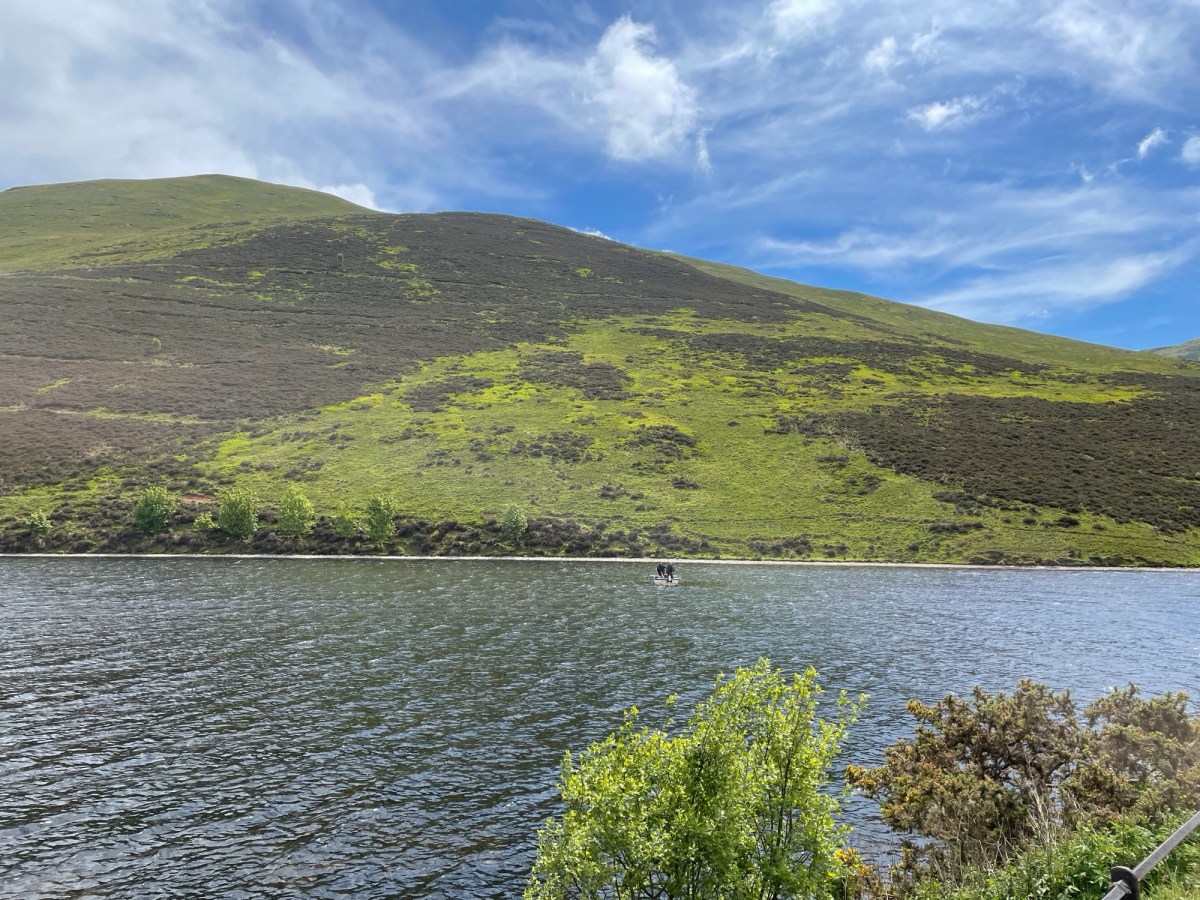
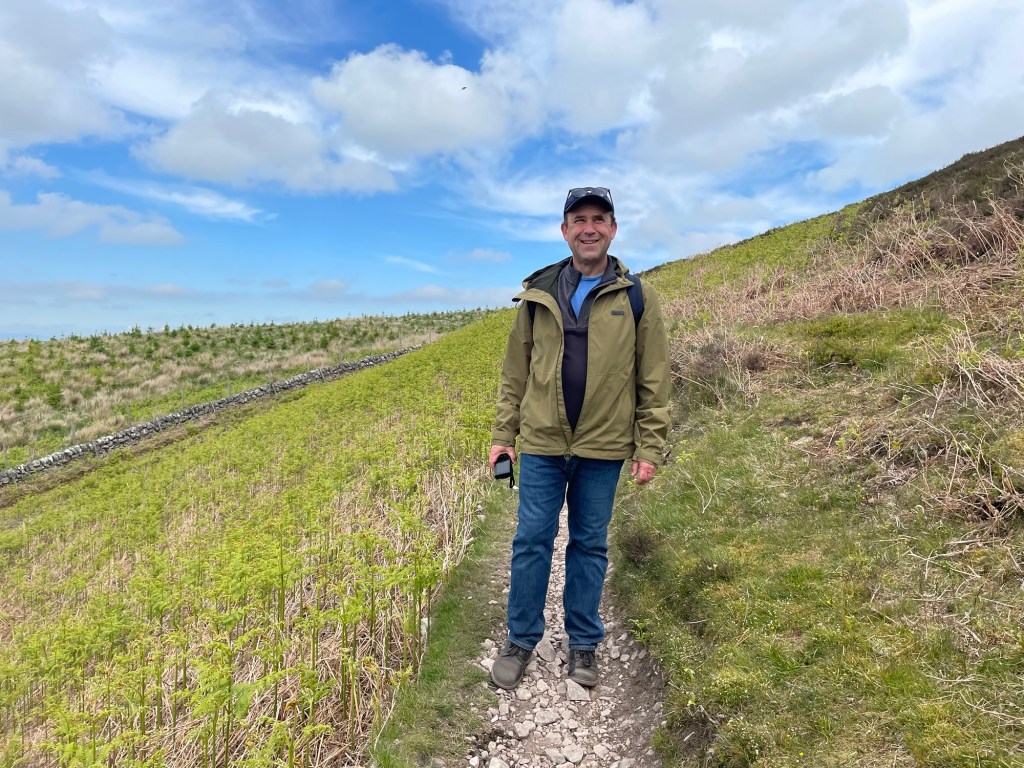
The driver left us at a car park I would only later learn was called Threipmuir Reservoir. We followed the signs to the water, mostly because the signs said it was there and we could see it. These would be the last signs I remember seeing. We walked along the reservoir, and then around it, and eventually we looked up and there was a hill. A big one. There was a path up it, narrow and jagged, the kind that makes you suspect you don’t quite belong on it, but there were runners on it, several of them, moving up and along the slope with that easy purpose that tells you a thing is possible. They were the only sign we had, so we followed where they went and started up.

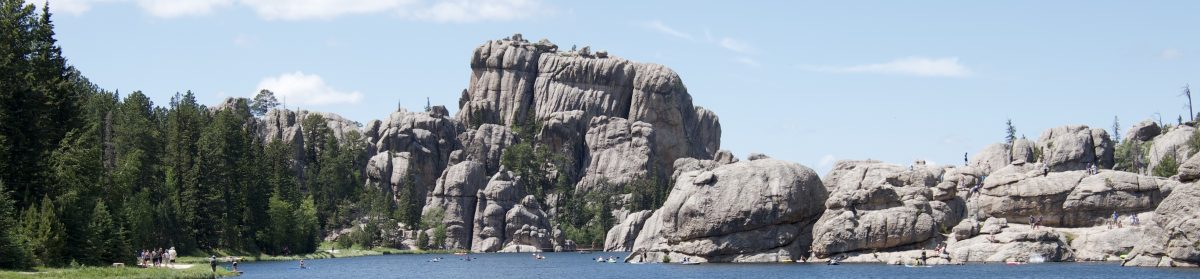
As we climbed, I found myself waiting for a feeling I already knew. Growing up in the Black Hills, I hiked a lot, though I hiked the way a kid hikes, aiming for the destination and not thinking much about the path. Mount Baldy, Little Devils Tower, Hippie Hole. Most of all, Harney Peak, which we would climb a few times each season. I first knew it as Harney Peak, and it was Harney Peak every time I climbed it. They call it Black Elk Peak now, renamed to honor the Lakota holy man.

When you reached that summit, you knew you were somewhere. You stood at the highest place for miles and looked down as the hills rolled away toward the plains. There was a destination, a summit, and a reward for getting there. So as I worked my way up that rocky Scottish path, some part of me was hoping for another Harney Peak. I expected the same bargain. Do the climbing and eventually the world would open beneath you.

What I got instead was better. The climb was hard, but the good kind of hard, the kind that empties your head while it works your legs. Whatever I had carried into that summer got quieter somewhere on the slope. I would find out later that the hill was called Black Hill, and of all the names it could have had, it was that one. I had spent my childhood among hills that carried the name, and here I was an ocean away, climbing another one without knowing it.

There was no sign announcing Black Hill. I learned the name later, tracing our route on a map, and when I saw it, I sat with it for a while. There was something about discovering that name afterward, at that particular moment in my life, that stayed with me. Some circles you don’t notice you’re walking until you’ve already closed them.

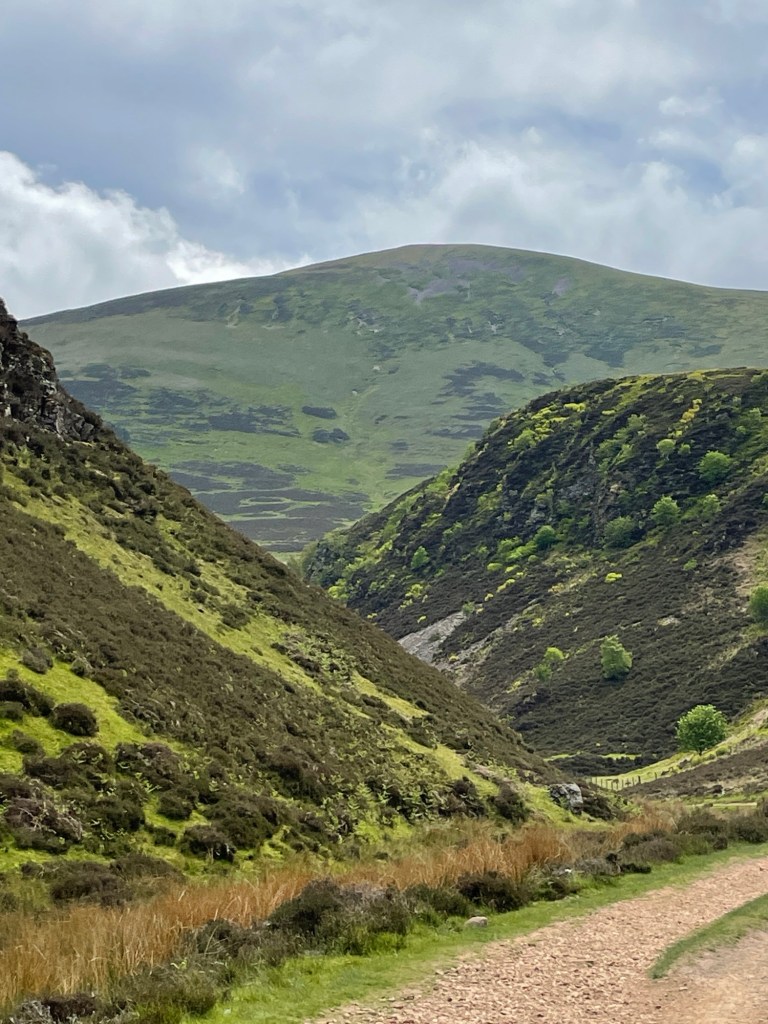
The path wrapped around the southern edge of Black Hill, and then the whole world opened. I came around that edge and looked east toward Scald Law, the highest of these hills, and it took my breath away. I had already fallen for Scotland by then, and for the Pentlands, but this was something else. This was not the Harney Peak feeling, the summit that looks down and flattens the world beneath you. This was almost the opposite.

The valley fell away green and folded and enormous, hill giving way to hill, the light doing what light does in that country, always moving. I had come up looking for a view that looked down on everything, and what I found looked out, and across, and into. I stood there and did not need anything to be different than it was, which, if you think about it, is as close to happiness as most of us ever get.

We came down the south edge into the valley below Scald Law and found another path, and this one didn’t test us. It ran north between the slopes, Black Hill on one side and Scald Law on the other, then Carnethy Hill, then Turnhouse. We passed two more reservoirs, each with a few people fishing, patient at the edge of the water. The air was clean in a way that felt like it was doing something for you. You could hear sheep and birds, and not much else. The climb was behind us now, and this was the long, easy after, the way the good stretches of a life sometimes feel when you’re finally not fighting anything.

Eventually we stumbled onto a rustic pub called the Flotterstone Inn. We had a couple of drinks, and I don’t know that a beer has ever tasted more earned. There was still one small problem. We had spent the day walking farther and farther from where the cab had dropped us, and we still had no idea how we were going to get home. Then, outside the pub, we found a bus sign.

I keep coming back to that small detail. There had been no signs on the walk telling us the names of the hills. Black Hill, Scald Law, Carnethy, Turnhouse. We had walked among all of them blind and would learn their names later. Yet there at the end was a sign telling us exactly when the bus would come. Maybe that’s about as much direction as we usually get. Not an explanation and certainly not a map of everything ahead. Just enough to keep going. A few runners disappearing up a hill, a path under your feet, and eventually a bus at the end to carry you home. The rest you learn later.

When I sat down to write this, I pulled up the official trail map because I wanted to retrace that day and make sure I remembered it correctly. That was when I found one more thing. The path my wife and I walked that day, up and around Black Hill, isn’t really on it. It isn’t one of the routes they tell you to take. We had wandered onto something unmarked, drawn up a hill by a handful of runners and a feeling, and it made all the difference.

The name of this blog is two words of Scottish Gaelic. Sireadh Toileachas. Seek happiness. I didn’t choose the language by accident, although I didn’t understand when I chose it how much of my own seeking would trace back to a country I keep returning to. I found some of it that day on a hill I couldn’t name, on a path that wasn’t on the map, in the summer when everything was about to change.

I knew where the new job was. I knew when it started, and I knew where I was supposed to land. What I couldn’t know was whether I had chosen the right path to get there. Four years later, I still think about that walk, but not because I eventually learned the names of the hills or because I managed to reconstruct our route on a map. Maybe it is precisely the opposite.

The path wasn’t on the map, and we took it anyway. I think there are stretches of life that work much the same way. We go looking for signs that this is the right job, the right move, the right time, the right path, and most of the time we don’t find them. You pick a direction, start walking, and hope there will be enough along the way to keep you moving.

Sometimes there is. Sometimes there are runners ahead of you, a valley on the other side of the hill, a pub when your legs are tired, and a bus when it’s finally time to go home. You don’t know what any of it means while you’re walking through it. The names come later. Sometimes the meaning does, too. And I have come to think that has always been the deal.