The 8.3 Miles We Keep Walking

Someone I was dating in college made me watch a movie I had no interest in seeing. Somewhere in Time. I went along with it the way you go along with things in college, more interested in the company than the film. Then Christopher Reeve fell in love with a photograph, Rachmaninoff started playing, and somewhere in the middle of a story about a man traveling back through decades for a woman he’d never met, I stopped being polite about watching it and started actually watching it.

The hotel looked like something from another century, which it was. I didn’t know its name yet, but I knew I wanted to stand inside it someday.

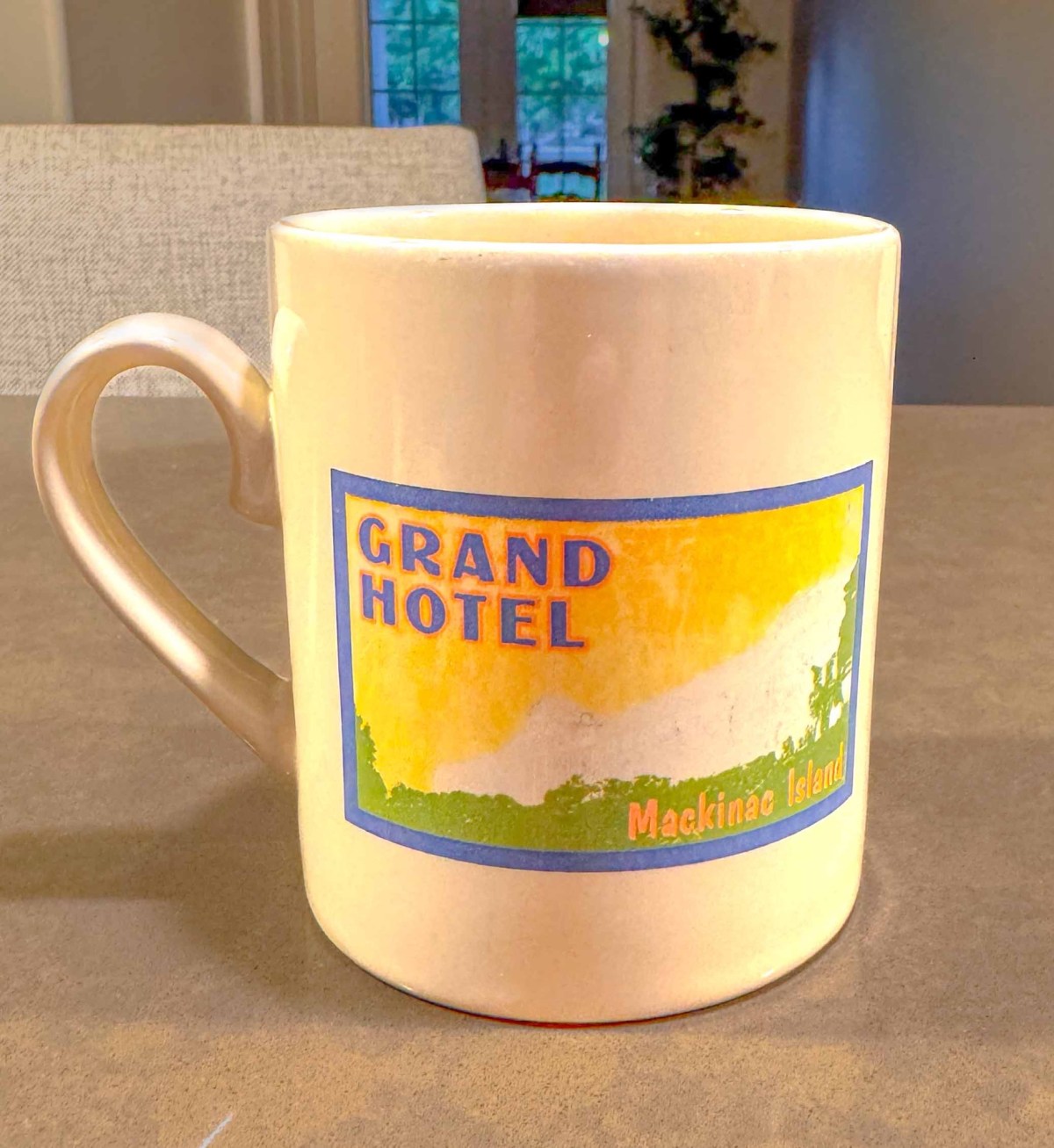
Not long afterward, I bought some cologne, and four mugs came free with the purchase, each printed with a different historic hotel. I couldn’t tell you the other three today, but I still have the fourth. The print has faded from years of dishwasher cycles and daily use, but it still says Grand Hotel, Mackinac Island.

That mug’s made every move I’ve made since. It went with me through law school, to Pierre, to Canton, to Sioux Falls, and then to another house in Sioux Falls. Almost forty years have passed, and it’s never once been left behind.

Years later, my wife and I were trying to decide where to go on our honeymoon. I suggested Mackinac Island. When I explained why, she told me she’d seen the same movie. Not a similar movie. The same movie, with the same hotel and the same Rachmaninoff. Neither of us knew anyone else who’d watched it, so we booked the trip.

The day we first crossed over was cloudy, late May, with fog low enough to swallow the island whole. Standing on the shore in Mackinaw City, I couldn’t tell which direction to look because there was nothing out there to see yet. Then the ferry pulled away from the dock, and somewhere in the middle of the strait, the fog thinned enough to let the island through.

Fort Mackinac appeared first, high on the bluff. Then came Grand Hotel, long and white and exactly like the movie, except it wasn’t a movie anymore. It was real, and we were finally close enough to walk to it.

We stepped off the ferry into the combined smell of horse manure and fudge, which isn’t something anyone warns you about but is something you never forget. We didn’t know which way to walk. There were signs pointing travelers toward Grand Hotel, but half a mile feels different when you’re new somewhere and don’t quite trust the directions.

We kept walking and waiting for the hotel to appear the way it had from the ferry. It took longer than it should have for a half mile covered on foot at a reasonable pace. Excitement does that. It stretches distance instead of shortening it.

Grand Hotel has a dress code for dinner, including a jacket and tie for men after six, and walking into its dining room for the first time was its own kind of time travel. Some men wore sport coats, while others wore tuxedos. Women arrived in evening gowns, and the entire room had a formality that’s difficult to find anywhere else now. Nobody seemed uncomfortable with it. It felt like the natural way to end a day on an island where nothing else moves very fast either.

My wife loves to dance. After that first year, we signed up for lessons so we could actually do it properly, the foxtrot, the waltz, the jitterbug. She took to all of it. I took to it the way a man takes to something his wife loves more than he does, which is to say I learned the steps and stopped complaining about them. We still dance when we’re there, though not every night anymore. Some nights one of us is simply too tired, and we’ve reached the age where we admit it.

That first trip belonged entirely to discovery. We splurged on a bottle of French wine with dinner one night, the kind of extravagance that felt enormous to two people just starting out. We walked more than either of us had walked in years, enough that my legs ached in a way they never had before, but every mile felt worth the ache. The island made us feel as though we’d discovered something no one else knew about. That feeling remained even with a hundred other honeymooners making the same discovery a few feet away.

The boys came a few years later, and with them came a different kind of walking. The first time we covered the full 8.3 miles around the island, we did it on bicycles. Our older son was ten and pedaling behind us on a bike with no gears. He was working three times as hard as we were to cover the same ground, and somewhere along the shoreline road, he began narrating the injustice of it out loud. I couldn’t tell you whether he was whining or simply providing an accurate report of his circumstances. It was probably a little of both.

The perimeter loop was only part of the walking we did during those family trips. We walked to the Woods, not for the restaurant but for the duck pin bowling alley next door. We walked downtown for fudge and whatever souvenir had become that trip’s obsession. We walked to the fort and actually toured it, including the reenactors, cannon fire, and entire production, which is exactly the sort of thing my wife and I tend to skip when it’s just the two of us. On ambitious days, we walked to British Landing on the far side of the island. It was about as far as small legs could go before turning back made more sense than pushing forward.

The shape of the day depended on the weekend. Memorial Day, when we first visited, had very little scheduled around it. We’d begin with an enormous breakfast in the Grand’s dining room and spend the rest of the day working it off. Lunch was wherever we happened to find ourselves. Then came a nap, because you can’t dance all night without one, followed by dinner, dressed properly, and dancing afterward. Labor Day eventually became our favorite. Mornings belonged to walking, while midday brought a cookout and jazz concert. Then came the nap, dinner, and dancing. It had the same bones as our first Memorial Day trip, only now there was usually a saxophone playing somewhere in the background.

The weather never signed on to any of it. We’ve packed for one season and lived through three, worn sweatshirts in the morning, rain gear by noon, and shorts by late afternoon, sometimes all in the same day. You learn to bring everything and expect to use it.

That kind of day, replayed with small variations, is what comes to mind when people mention books I’ve never actually read. I’ve never read James Joyce’s Ulysses. I’ve read enough reviews and commentary to understand the idea, and several people whose judgment I respect consider it one of the greatest books ever written. I don’t know whether I’ll ever actually read it. But if I ever tried to write a book in that style, following people through the ordinary events of a single day, my day would take place on Mackinac Island. It would begin with breakfast in the Grand’s dining room and move through the paths, the fort, the horses, the fudge shops, and whatever lunch presented itself. There would be a nap in the afternoon, dinner after six, and music somewhere in the evening. Nothing extraordinary would have to happen, because on Mackinac Island the day itself would be enough.

Earning that kind of day on foot, though, took years. For a long time, walking the full 8.3 miles in one stretch seemed excessive when a bicycle could cover the same ground in a third of the time. It wasn’t until we were older that walking became the point rather than the obstacle. The perimeter is flat, paved, and wide enough to walk beside each other, but the interior is different. Paths climb toward the cemetery, the fort, Sugarloaf, the natural arch, and the governor’s summer residence. Some narrow into dirt trails just wide enough for one person. Others open into gravel roads where we can walk side by side again. Five minutes from the shoreline, the island becomes a completely different place.

The Woods has changed too. It was once where we took two tired boys to go bowling. Now it’s a quiet place where the two of us walk for dinner. The fort is still there, but we no longer feel compelled to tour it. Downtown still smells like fudge and horses, although we’re less likely to come home with a souvenir. The island has remained much the same, but we’re the ones who have changed. The walking that once seemed like something to endure has become one of the reasons we return.

Our last two trips came after Covid and after Grand Hotel changed hands, sold by the family that had owned it for nearly a century. There have been updates, some we like and some we don’t, but the bones of the place remain the same ones we fell in love with from a ferry deck in the fog. We stopped booking the basic room somewhere along the way. On one trip, we upgraded to a suite so magnificent that it remains one of the nicest rooms either of us has ever stayed in. Another trip put us in the Teddy Roosevelt room, and I’ll leave you to imagine what that involved. No two rooms at Grand Hotel are decorated alike. That may be the whole point of the place. We can walk the same 8.3 miles a dozen times and never have the same day twice, and sleep in a different room on every visit and never run out of ways to see the same hotel again.

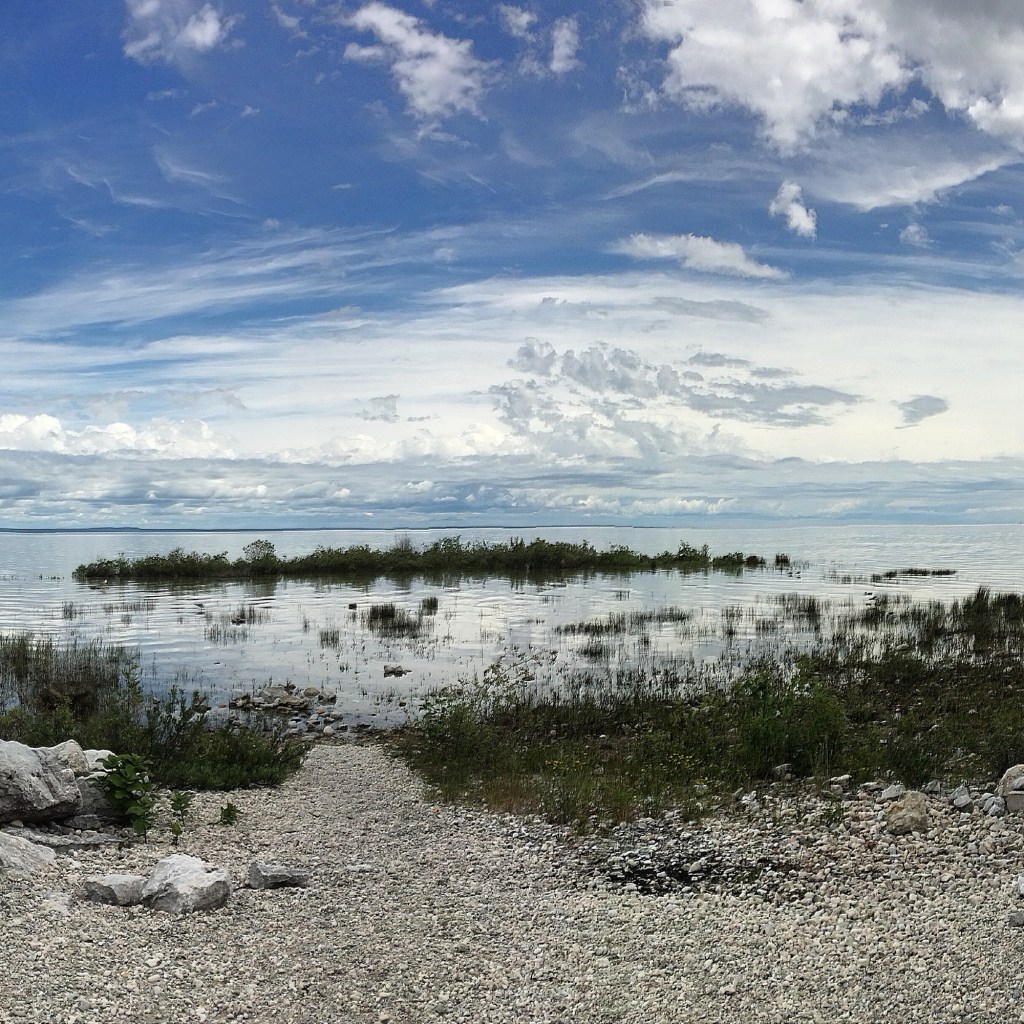
The far end of the island is where it gets quiet. Most people never make it out there, and if you time it right, early enough or late enough, you can stand at the north shore and have the whole thing to yourselves. The water stretches north toward Canada, and there’s nothing to hear but the wind and the water against the rocks. We stood there on our last trip, the two of us, not saying much.

I don’t know what my wife thinks about when we stand there. I’ve never asked. I think about the Ojibwe who crossed this water long before there was a hotel or a fort or a fudge shop, the early travelers in canoes making the same crossing we made on a ferry, looking at the same strait we were looking at. Twenty-five years of marriage and I still can’t tell you what’s going through her head at that railing. That’s not a complaint. It might be the reason we keep coming back.

When we first started coming to the island, we were some of the youngest people staying at the hotel. The crowd has always skewed older, and back then we noticed it. We don’t notice it the same way now, because we’ve become it. The clientele never really changed. We did. These days I find myself watching the young couples, the ones on their honeymoons, and hoping a few of them are falling for the place the way we did, so that someday they’ll be the older ones standing at the north shore, wondering where the years went.

In a few weeks, we’ll move into a new home, and the faded Grand Hotel mug will make the move with us, just as it’s made every move since the mid-1980s. It’ll be wrapped in paper, placed in another box, and carried into another kitchen. The hotel on its side is harder to see than it once was, but it’s still there, holding the memory of a movie, a honeymoon, two boys, many trips, and all the miles we’ve walked together.

The House Did Its Job

For many years, I have loved going to bookstores. The new releases. Certain topics. The sale rack. The ritual of browsing without knowing what you will find. It was probably around 2007 when I was in one of those bookstores and a title caught me: The Big House.

I pulled it off the shelf thinking it was about Michigan Stadium, about the Wolverines, about the kind of place that holds a region’s memory and sells overpriced sweatshirts to people who should know better. I don’t know why I thought that. The jacket made clear I was wrong almost immediately. It was George Howe Colt’s memoir about his family’s summer home on Cape Cod, the house his great-grandfather built in 1903, the Atkinson house, the place that held five generations before the family finally decided to sell it.

Even though the book was about something completely unexpected, something I ordinarily wouldn’t have picked up, I bought it anyway. I didn’t know it yet, but this was the book I needed.

What I didn’t know then was why I needed it. I had left houses before. College houses. Rental houses. Temporary places where you owned a few dishes, a bad couch, and the confidence of someone who did not yet understand compound interest. But the first real house I lost was the one I grew up in, and I didn’t choose to lose it.

My parents built that house from the ground up, the same way our family would later build a cabin and, eventually, the same way my wife and I would build our own dream house. I watched it go from a foundation and framing to something we actually lived in. I got a say in it too, or at least the kind of say a kid gets. I picked my carpet. I picked a football mural wallpaper for my room, the kind that seemed like the most important decision of my young life at the time. It was mine before I understood what that meant, and it stayed mine right up until it wasn’t.

That understanding arrived all at once. I learned around Christmas of my senior year in college that my parents were leaving Rapid City. My dad got a job that required a move, three hundred and sixty miles away. My parents would sell the house I had grown up in. When I came home for Easter, it had already sold. I walked through it knowing I would never see it this way again. It was the house where most of my memories lived, or at least where I thought they lived then. I had never been through losing a place like that before, and deep down I was afraid the memories might disappear with it.

Something did die with that sale, or at least it felt that way at the time. My dad had always had a house to go back to, and he took us with him. I assumed I would have the same thing to give my own kids someday, that I could walk them through the house I grew up in the way my dad had walked me through his. I didn’t know yet that a homebase isn’t something someone simply hands you. You build it, and eventually you lose it. My grandparents lived in the same house for over fifty years. I understand now how rare that actually is. What died with the sale wasn’t the house. It was that assumption. It was, in a way, my youth.

Graduation was on a Sunday. That night, I moved out of my college house and drove to my parents’ new house. A couple of days later, my parents arrived with everything else from the childhood home. My dad would die in that house years later, but it was never home to me. It was the place where the furniture landed after the life had already happened somewhere else.

I never got to pack my own things. I never got a final walkthrough alone. I never got to say goodbye the way I wanted to say goodbye. It wasn’t cruel. It was life. My parents were doing what needed doing, and I was old enough to understand that, but not old enough to know what to do with the ache of it.

That is how it happens sometimes. People come and go. They die. They move away. Houses sell. The world doesn’t pause so you can stand in an empty bedroom and negotiate with the wallpaper. You don’t always get the closure you think you’re owed.

What I got instead was everything my parents couldn’t let go of. My parents were raised during the Depression. Their parents lived it. Nobody in that lineage looked at a coffee can full of screws and thought, “Well, that has served its purpose.” A few months after my dad died, I bought my first house and acquired many of my parents’ things, especially the kind of things you need when you are starting out in a home of your own. Furniture. Dishes. Tools. The practical leftovers of a life already lived, now put to work for a life just beginning.

Six months later, my grandmother died, my mother’s mother, and I inherited some of hers as well. Less than a year after my dad died, my mother downsized to a small two-bedroom condo and gave me the practical Midwestern version of estate planning: come get it or it’s getting thrown away. That was when the books came. The voracious reader’s library. His slides and eight-millimeter movies. His tools and his father’s name tag from Firestone, which I still have. Artwork and furniture and knickknacks. Dishes and silverware. A Vikings helmet lamp. A trumpet lamp. Complete sets of nails and screws and bolts that I would never use.

Even my fifth grade spelling book came along.

It all traveled from the childhood home to my parents’ new home, then to my house in Canton, then to my first marital home, and finally to the dream house. I moved it from one location to another, rarely using it the way it was meant to be used. Deep down, I believed that holding onto their things would keep them alive. If I let the objects go, I feared I would lose them all over again.

When my wife and I got married, there were tense moments. She said no, not everything comes with us. My fifth grade spelling book had to go. But I got to keep the report on the platypus, because a man has to draw the line somewhere.

My wife was not so much happy with the purge as she tolerated the settlement. She was practical. She saw boxes. I saw my father’s hands, my mother’s handwriting, and my grandparents’ stubborn Depression-era refusal to throw away anything that might someday be useful to someone, somewhere.

I tried to explain to my wife what it was like to lose a parent. Both of hers were living then and are living still. Mine have been gone for most of our married life. That wasn’t her fault, of course. It was just one of those uneven facts marriage has to absorb. She could sympathize, but she could not yet know the strange arithmetic of grief, how a useless object can feel heavier than it is because it seems to contain a person you are not ready to lose again.

So she did what practical spouses have done since the beginning of time. She shoved my stuff into a closet so she didn’t have to look at it and waited for me to become a little less ridiculous.

Over the years, I did get better, although not quickly enough to be confused with personal growth in real time. About five or six years ago, I finally admitted another purge was necessary. Not a gentle Saturday afternoon of sorting. Not three tasteful donation boxes and a cup of coffee. I rented a full-size construction dumpster and gave myself about ten days.

I gave some of it away. I sold some of it. Most of it, if I am being honest, was junk that needed to go. I moved fast. I made decisions. I threw things away before memory could hire a lawyer and file an appeal.

That purge helped. It made the house lighter. It made me lighter too, although I probably wouldn’t have said it that way at the time. But it didn’t solve everything, because by then the collection had stopped being just theirs.

Over time, my wife and I added our own layers. Wedding gifts. Baby furniture. School projects. Sports equipment. Christmas decorations. Books of our own. Photos. Framed art. The boys’ trophies, toys, drawings, games, blankets, stuffed animals, and mysterious plastic things that apparently mattered deeply for six weeks in 2009 and then became permanent residents of the basement. The house became part grandparents, part parents, part us. It held four generations of memory, some of it beautiful, some of it useful, and some of it waiting patiently in a storage room for a purpose that was never coming.

That is what made the purging harder. We weren’t just deciding what to keep from my parents. We were deciding what to keep from everyone. Every box seemed to ask the same question in a different voice: Is this still part of the story, or is it just something we have been carrying because no one wanted to be the one to let it go?

Long before that final purging started, though, there was another house that taught me the same lesson the hard way. The cabin arrived when I was about twelve and remained in the family until I was in my mid-forties. We built it from scratch, another place meant to hold us. We skied. We snowmobiled. We did things there that I won’t itemize here, mostly because my parents are gone and I still prefer not to disappoint them retroactively. My dad had his first heart attack there shoveling snow. After that, we got a phone.

We gathered there sometimes for Christmas, often for New Year’s. College friends came. Law school friends came. I lived there one summer. The cabin became more than a structure in the Black Hills. It became the place I went when I needed to remember who I had been before life got complicated.

I brought my future wife there while we were dating. It was a test, although I doubt I admitted that out loud at the time. She needed to love the cabin, maybe not as much as I did, but at least a little. I tried to explain how important it was to me and how important the Black Hills were to me. She came from the plains, so naturally I called her a flatlander, because romance has many languages and mine apparently included mild geographic condescension.

She passed. She understood what the cabin meant, or at least understood that I needed it to mean something. We got married in the Black Hills, and we spent our first night together as husband and wife at the cabin. It wasn’t the first time she had been there, but it was the first time as my wife. I now shared the one place I had always felt at peace with the person I had chosen to spend my life with.

We went back often. We walked and hiked in the Black Hills. We took our kids there from the start. They loved it, except for the time my oldest hit a tree skiing and cracked his skull, which is the sort of family memory that starts as trauma and slowly becomes a story everyone somehow gets to tell at dinner. There was also a Christmas Eve when we drove to a small Episcopal church in Lead and experienced one of the most intimate and spiritual services I have ever been part of. The cabin was still the one place where everything felt right.

But the geography had shifted. When I was young, the cabin was only an hour away. It was a natural gathering place, close enough to be refuge rather than project. As I got older, as my own life expanded, five or six hours became the new distance. Every holiday and school break required a pilgrimage. What had been a refuge began to feel like an obligation. When my parents passed the cabin to me and my sister, and then eventually to me alone, I understood that I could not hold it the way they had.

Before we sold it, the cabin frequently appeared in my dreams. The dreams were not subtle. I would be there again, walking through rooms, looking for something, trying to keep the place intact. Sometimes, in the dreams, we had built additions. Other times, there were secret rooms I had somehow forgotten, or we had made modifications that changed the place without changing what it was. It was bigger, stranger, and not quite real, but it was still the cabin. I understood even then that the dreams were the part of me that could not let go.

Then I read Colt’s book. A family held a century-old summer home on Cape Cod through five generations and finally decided to sell it. The book understood the weight of that kind of place. It understood the guilt, the inheritance, the obligation, and the quiet relief that can come when a family finally admits that love and ownership are not the same thing.

It wasn’t quite the same attachment I see in my professional life, the kind a farmer feels for land that’s been in the family for generations. But it was an attachment. Different scale, same root.

Something in that story gave me permission. We sold the cabin. The dreams stopped. The letting go was real.

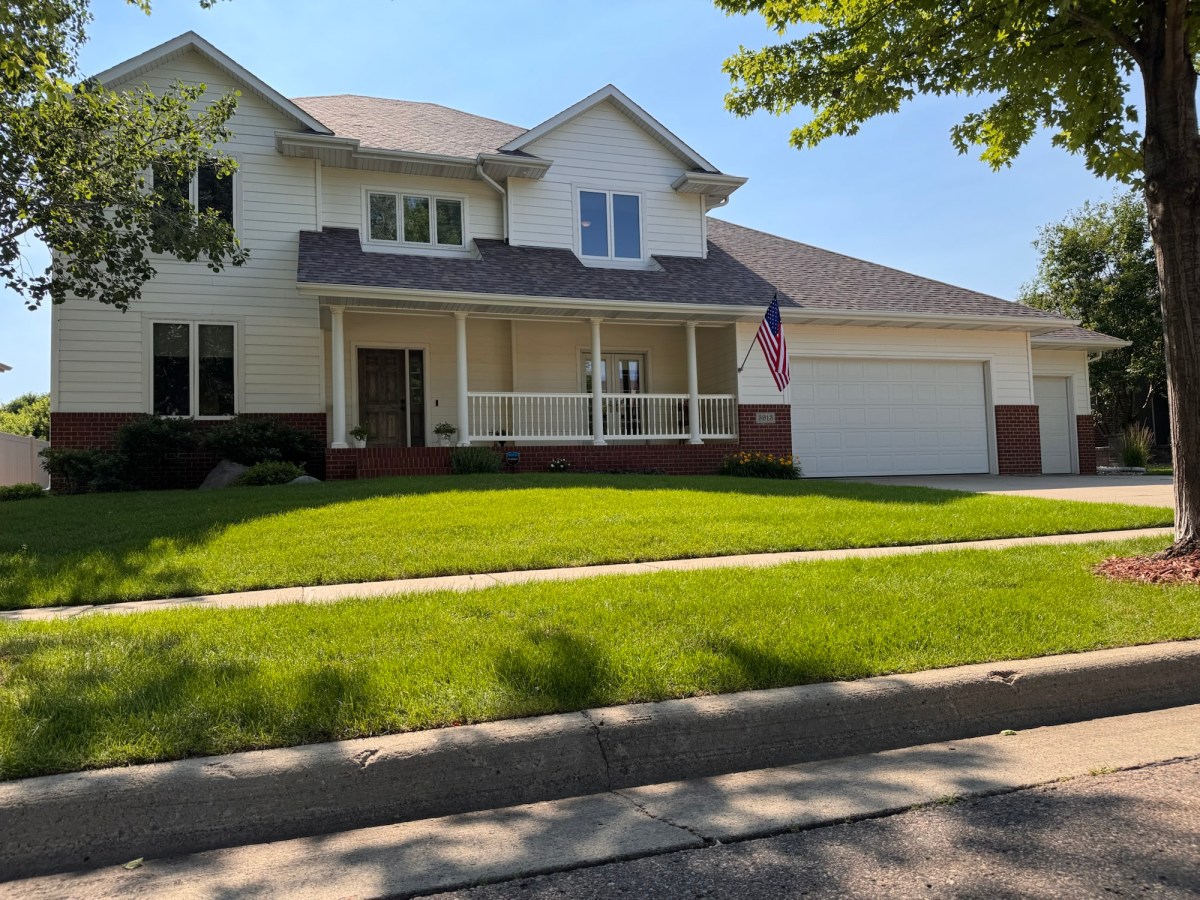
That lesson mattered because, by then, my wife and I had already built the next place we would someday have to release. In 2004, we decided to build our own house. We had gone to countless open houses looking for something that would work for our family, and nothing did. We hired an architect friend who listened to what we wanted. We found the builder. We found a lot in a new neighborhood. We extended ourselves beyond what we probably should have because we believed it was worth it.

It was a farmhouse with a Grand Hotel-inspired porch, modeled after the porch at the Grand Hotel on Mackinac Island, where we honeymooned after our wedding in the Black Hills. Each boy helped design his room. My wife had her space. I had mine. We built the house to fit us, not the other way around.

Christmas mornings happened there. Birthdays happened there. We gathered around the dining room table for dinners that mattered and around the kitchen counter for most of the meals that made up actual life. Both of our boys graduated from high school while living in that house. We took prom pictures there, everyone dressed up and pretending not to be nervous while parents took too many photos. My mother’s ashes spent a night there before we took her to Rapid City for burial. The boys had friends over and made noise in the basement. The house filled with the sound of boys becoming men.

But we always understood, at least in theory, what the house was for. We built it to hold a family while that family grew. We built it for bedrooms full of laundry, backpacks in the wrong places, friends in the basement, shoes by the door, and the daily racket of raising children. We didn’t build it as a museum. We didn’t build it as a monument. We built it for a chapter.

When our youngest left for college, we came home to rooms that were too empty, too quiet, and too big. We did some remodeling. The house remained the gathering point during holidays and school breaks, and for a while that was enough. But my wife and I had always talked about moving once the boys were gone. The house had done what we built it to do, even if admitting that felt like betrayal.

Four months ago, my wife and I looked at each other and said it was time. We got serious about fixing things, cleaning things, sorting things, and facing all the things we had carefully placed in closets so we could pretend they didn’t exist. We talked with a realtor. He gave us the comps. Then came the work no one puts in the real estate brochure: decluttering, painting, repairing, deciding, and standing in the garage wondering how two people had acquired enough stuff to provision a small expedition.

In the middle of that work, I found a stack of letters. My parents had written them to each other years before they married, back when they were dating and living in separate cities. I held them for a moment. I knew what the younger version of me would have done. He would have kept them without thinking. He would have placed them in a box, moved them three more times, and told himself he was preserving something sacred.

I resisted the urge to read them. They weren’t mine to read. Whatever my mother held onto them for, whatever reason she had for keeping them all those years, that reason had nothing to do with me.

I threw them away.

That wasn’t what made us decide to sell the house. We had already made that decision. But it felt like confirmation. My parents’ love for each other didn’t live in a stack of paper. It lived in the fact that I existed, that they built a life together, and that everything after those letters became the actual story. Keeping them wouldn’t have preserved their marriage. It would have given me one more box to carry.

And then, last week, the decision became real. The realtor came at 1:30. We sat at the kitchen counter, the same counter where we had eaten most of our family meals over twenty-two years, saving the dining room for special occasions, and we went through the paperwork like it was any other Tuesday. He asked if we were ready. My wife and I looked at each other and said yes.

The house had never looked better, which felt like its own strange joke. Twenty-two years of raising boys, and somehow the place looked its best on the day we decided to let it go.

The photographer showed up within the hour. She moved room to room while I stood in the kitchen not quite knowing what to do with my hands. The realtor left at 3:00. By 3:30, a text came through: a showing scheduled shortly after five. By 3:45, another text came, another showing shortly after six.

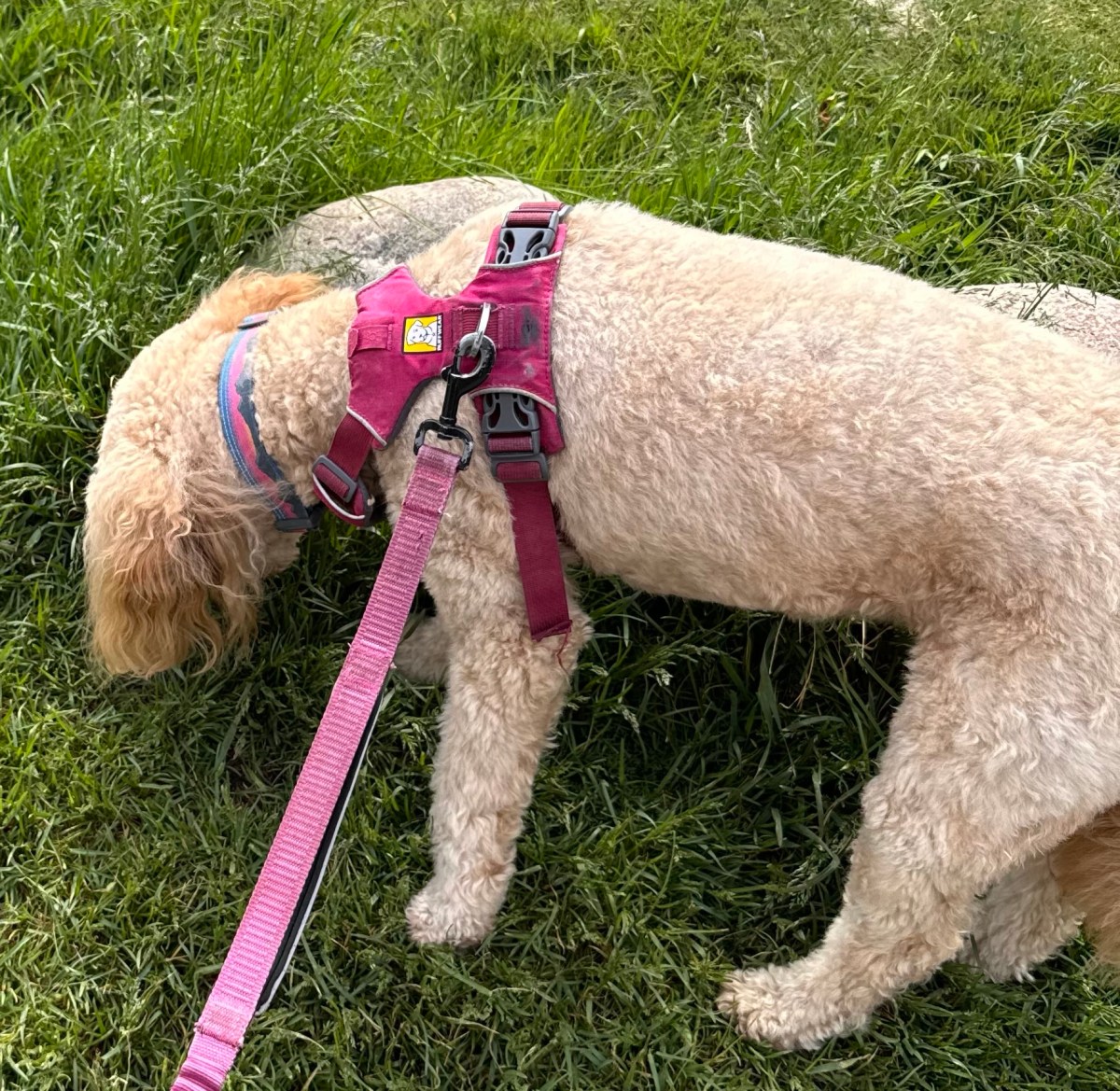
We couldn’t be there for it, so we did what we do. We grabbed Ginger and drove to the brew pub, the one we always end up at on Halloween, and ordered a couple of beers while trying to act like people who weren’t waiting on the biggest phone call of the year. Another text came in about a third showing. We stayed for three hours, longer than we meant to, because leaving felt like admitting something.

We got home. Not long after, the phone buzzed. We had an offer. Five hours. The house we built to raise a family in took less time to sell than it takes to watch a Vikings game go sideways in overtime.

Once we signed the purchase agreement, the work shifted immediately. We had done some preliminary looking already and had a basic idea of what we wanted next. Our realtor sent us fifty-six more choices. My wife and I went through every one of them, built a scorecard, made checklists, and narrowed the list to three we wanted to see in person.

But we already knew. A week after we sold our house, we made an offer on another one.

It won’t have room for all our stuff. That’s fine. We will make new memories there instead of trying to force the old ones into every closet and drawer. There will still be enough room for the boys to visit, even if it’s smaller than what they grew up in. My dad grew up with four siblings in a house that would make this one look enormous. You can fit a lot of people into a house when the people matter more than the square footage.

The letters are gone. The spelling book is gone. Most of the nails and bolts and knickknacks are gone too. What remains is what matters: my wife, the boys, Ginger, and thirty years of memories that never really lived in a box or a drawer or an attic in the first place.

My wife keeps asking me which things I want to keep. For a long time, that question would have sent me into a spiral. Now I tell her the truth: it doesn’t matter anymore. We keep what we need to keep. We throw away what we need to throw away. We give away or sell the rest. It’s not indifference. It’s the opposite of indifference. It’s finally understanding what the things were never able to hold in the first place.

I am sure I will be emotional over the next few weeks as we say goodbye to this house room by room and closet by closet. But I have been through this before. I know now, in a way I didn’t know at twenty-two, that leaving doesn’t mean losing. The memories come with me because they never needed the house’s permission in the first place.

Most of what I write is for me. It helps me think through things I haven’t fully worked out yet, and if someone else reads it and takes something away, that’s a bonus I don’t take for granted. But this one is different. This one I hope my boys read.

To my boys, if you ever read this: the house is gone, but you are not. Christmas morning still happened. Your friends still laughed in that basement. Your mother and I still watched you grow from boys into men inside those rooms. A sold sign cannot change that. A deed cannot erase it. A key can be handed to someone else, but a childhood cannot.

You can sell a house. You cannot sell a family. We are still us. We will always be us.

Colt taught me that in a bookstore in 2007, before I understood why I needed to know it. The cabin taught me again when the dreams finally stopped. Now, with boxes half packed and a new front door waiting, I know it one more time.

The house did its job. It’s somebody else’s turn now.
Advice I wish I had Given My Younger Self

The question is not really whether you would go back. The question is what you are going to do today with everything you already know.

Lately, scrolling through the noise that social media has become, I keep running into a certain kind of post. You have seen them. They usually start with a photograph, a high school hallway, a gymnasium, a parking lot that looks like every parking lot from 1984. And then comes the question. Would you go back? To a specific year. To a specific moment. To a specific version of yourself you have not been in a very long time.

The comment sections on these things are something. People arguing with complete strangers about which year they would choose and why. Some of them are serious. Some of them are heartbreaking. All of them are trying to answer the same question underneath the question, which is: was there a version of this life that went better?

I think about that question more than I probably should. When I see those posts I think about the 1980s with genuine nostalgia. It was a simpler time. We were not being bombarded around the clock with news and noise and everyone’s opinion about everything. But nostalgia is not the same as regret, and when I am honest with myself I do not look back at what I had and feel like something is missing now. My life is good. Arguably great. My wife is my best friend. My sons turned out amazing. My work has mattered, for the most part. My friendships have lasted longer than most things I own. And Ginger meets me at the door every single day like I have been gone for six months.

So the long and short of it is I am not going back. But I would send a note. That note, it turns out, has existed for years in rougher form, tucked inside syllabi and first-day-of-class remarks and the things I said on the last day when I thought nobody was writing anything down. It was shaped by the mistakes I thought I had made and the opportunities I thought I had missed and the things I wished someone had told me before I had to figure them out the hard way. Since I do not have a DeLorean with a flux capacitor, I will have to settle for what I have written here.

Find time for the people who will be gone the soonest. Now, if we are being honest, I would absolutely go back knowing what I know. I understand I might be tinkering with the space-time continuum, and I have made my peace with that. Yes, I would probably look into a few investments. Apple. Walmart. Amazon. Netflix. I am not a saint. But that is not actually why I would go back. I would go back to sit with my parents for a while. Hug them more. Ask them questions I never thought to ask. Ask them about their parents and grandparents, their cousins, the family stories that were actually told. Because they were told. I just was not paying attention the way I should have been. Storytelling is how families survive themselves, and I let too many stories go in one ear and out the other because I was young and thought there was plenty of time. The same goes for a few friends and family members I did not know I was running out of time with. In 1986, I did not know there were only ten years left with my dad.

Pay attention. Most of life does not announce itself as important when it happens. The random Tuesday night dinner when everyone somehow made it to the table. The walk with the dog. The conversation with your dad the night before he died, not knowing it would be your last. The family story you have heard a dozen times before and assume you will hear a dozen more. The big moments are easy to spot. Graduations. Weddings. Births. Retirements. Life has a way of putting those on the calendar for you. The smaller ones require more effort. They slip by quietly, and only later do you realize they were part of something larger. Take the picture. Ask the question. Stay a little longer. One day you will discover that what looked like an ordinary day was actually a gift. The trick is noticing it before it is gone. Turns out Ferris Bueller was right. Life moves pretty fast. If you don’t stop and look around once in a while, you could miss it.

Take the trip. Both of them. The one you cannot afford and the one you can. You will find reasons to wait on both, and the reasons will sound responsible and they will be wrong. Think about what you actually remember. Not the gifts. Not the things. The trips. The British Isles with my parents and grandparents. Switzerland for a dear friend’s twenty-fifth wedding anniversary. The thirteen-hour drive to Mackinac Island with my family, and somewhere in the middle of Wisconsin one of my sons looking up and announcing, “You people are the worst family ever. You people are not my family.” I remember all of it. If I had it to do over, I would rethink every holiday, every birthday, every Christmas morning. Less stuff under the tree. More stamps in the passport. Experiences last forever. Most everything else ends up at Goodwill.

Travel does something else too. It exposes you to different cultures, different people, different food, different ways of looking at the same world you thought you already understood. It hardens some of your beliefs and softens others, and both of those things are good for you. French wine tastes better in France. And most of all, you learn that a mother in South Dakota loves her child just as much as a mother nearly everywhere else in the world.

Ask her out. In my wildest dreams I did not think she would say yes. She said yes. We are married. There were others along the way, there always are, but she was the one, and I almost talked myself out of asking because I was certain I already knew the answer. I did not know the answer. That is the part nobody tells you. You are a terrible predictor of outcomes involving your own life. Ask anyway. Apply anyway. Start the business anyway. Have the conversation anyway. The worst outcome is rarely as bad as you imagine, and the wondering lasts considerably longer.

Read more than you think you need to. Not for school. Not to finish. Read because, like travel, it opens your mind and calms it at the same time. It expands curiosity and makes you better in ways that are hard to measure and impossible to fake. Every good book teaches you something. Find an author you enjoy and spend time with them. Doris Kearns Goodwin taught me about leadership through Lincoln and Team of Rivals, perhaps the greatest lesson in leadership ever put on paper. Oddly enough, my favorite book of hers is not about Lincoln at all. It is about growing up as a Brooklyn Dodgers fan in the 1950s. David McCullough took me to Paris in The Greater Journey. Michael Lewis taught me to see the world differently. Mitch Albom reminded me that kindness still matters. John Grisham kept me up far too late reading The Firm.

Books are inexpensive travel. They let you borrow someone else’s life for a few hundred pages and return to your own a little wiser than when you left. Ted Lasso once quoted Walt Whitman on this subject: be curious, not judgmental. There is essentially no evidence Whitman ever said that. But the line made me curious enough to go read some actual Whitman, which I suppose proves the point entirely. I have learned something from almost every book I have read. Some lessons were profound. Some were useful. Some were simply that Clan of the Cave Bear is still not making my top ten.

I baked reading into my syllabus every semester, mostly through Wall Street Journal articles, but it was intentional. I wanted my students curious about the world beyond the classroom and beyond the case law. Whether it worked I cannot say with any certainty. Some of them listened. I choose to believe more of them did than I will ever know.

Start saving. Now. Not instead of living, not instead of the trip or the experience or the night out that becomes a story you will tell for thirty years. Alongside all of it. Compound interest is the closest thing normal people get to magic. The problem is that magic only works if you start early. Start by at least matching what your company puts in. Then think about more. Ten percent of your pay is a good number. You will not miss it, and I say that knowing you think you will. Every time you get a raise, increase your savings rate by half. If you get a four percent raise, save two more percent before you ever see it. The math on compound interest is not complicated, but it is unforgiving. Time is the one ingredient you cannot buy back. You do not need to save everything. You need to start. There is a difference, and younger me confused the two for longer than I would like to admit.

Move your body. I want to be clear about something. I have never liked working out. The gym, the weights, the person grunting next to you at six in the morning, none of that was ever me. But I do like moving, and it turns out that is enough. Walk. Swim. Bike. Dance. Tai chi. Golf without the cart. Run, if you are that particular kind of crazy. It does not have to hurt and it does not have to be impressive. It just has to happen, and it has to happen again tomorrow. I have now walked more than thirty million steps, one day at a time, and I did not do it because I love exercise. I did it because I love moving. The body keeps score longer than we think it does, and small, consistent habits compound the same way investments do. Small. Consistent. Long term. The math works the same way in both places. Trust it.

Worry less. I mean this practically, not as a bumper sticker. You are lying awake at 2am about the student upset about his grade, the client upset about his case, the beneficiary upset about not getting enough money. You cannot fix any of it at 2am. And if you are being honest, most of it was never yours to fix in the first place. I used to tell my students there were three kinds of problems in the world. Your problems. My problems. Our problems. And most of the problems keeping people awake at night belong firmly in that first category. Not mine. Not ours. Yours. The sooner you learn to hand them back, the better everyone sleeps, including you. So plan for what is actually yours. Adapt when you need to. Handle what is genuinely in front of you. But the 2am rehearsal of every possible outcome, that is just energy leaving the building with nothing to show for it. I stumbled onto a meditation technique once where you imagine a river and you place each anxious thought onto a boat and watch it float away. You keep going until the river is empty. The first time I tried it I was skeptical. By the fifth boat I was nearly asleep. Five minutes of watching your thoughts drift downstream will do more for you than two hours of staring at the ceiling. Put it on a boat. Let it go.

Take the chance. This one is broader than the trip and the girl, though it includes both. I mean the job you are not sure you are qualified for. The idea you have not said out loud yet. The conversation you keep rehearsing and never having. The version of yourself you have not introduced to anyone yet. Younger me was careful in ways that younger me thought were wise. They were not wise. They were fear with better posture. I tried to tell my students that, in so many words, every chance I got. I am not sure they believed me. I am not sure I would have believed me either. And if it does not work? Pay attention. Failure usually has something to teach you. More often than not, the breakthrough is sitting just on the other side of the thing that did not go according to plan. Some of the best things that happened to me came immediately after something I thought was a setback. At the time I could not see it. Looking back, it seems obvious. Looking forward, it never does.

Forgive yourself. You will make mistakes. You will say the wrong thing to the wrong person at the wrong moment. You will lose friends, money, and maybe a job. Some of it will be your fault. Some of it will feel like your fault and will not be. Either way, carrying it does not fix it. Learn what it has to teach you, resolve not to do the same thing twice, and put it down. It just makes everything else heavier.

There is a particular cruelty in advice. It arrives, almost without exception, after the moment it would have been useful. Four years ago I wrote something called The Last Lecture, my final words to my students at Augustana on my last day in the classroom. Reading it now alongside this is an interesting exercise. The curiosity is still there. The belief in showing up is still there. But that piece was written from the front of a room to people just starting out. This one is written from inside a life, to myself, with the benefit of forty years of evidence. What strikes me most is that the advice is not all that different. Which means one of two things. Either I have not learned as much as I thought, or the fundamentals were right all along and the only thing that changes is how personally you feel them. I choose to believe it is the latter. And I suspect that everything I just told younger me applies just as much to the students who sat in my classroom over the years as it does to the man who stood at the front of it.

Here is the thing I did not expect when I started writing this. Most of this list is not finished business. It is current business. The people who are still here will not always be. There are trips not yet taken and chances not yet seized and worry that still needs to stop. The body still needs to move tomorrow and the day after that. The math on all of it still works, but only if you start. I wrote this as advice to a younger version of myself and somewhere in the middle of writing it I realized I was also writing it to right now. That is what the social media posts never tell you. The question is not really whether you would go back. The question is what you are going to do today with everything you already know.

Most of the chances I took turned out better than I deserved, and most of the ones I did not take I cannot quite stop thinking about. The balance sheet is not even close. My life is good. It could have been good sooner, and with less hesitation. But it is not too late for any of it. Not for me. Not for you.

Do the thing. Take the trip. Ask.

Why I Started — And Why That Still Matters

In November 2020, I took a picture to make people laugh. It didn’t go the way I planned. What followed was the hardest and most important journey of my life. Some of it has slipped. Here is why I am starting again, and why the reason I started still matters more than anything else.

I began this blog to talk about how and why I was able to recapture my life by losing weight. The inaugural post was titled “Fat, Fifty and Fatigued,” and I meant every word of it. I do regular check-ins to see if I am happy with where I stand from a health standpoint. The honest answer lately is no. Since leaving academia to return to the financial field, some of the weight has crept back. The schedule changed, the rhythms changed, and somewhere in the transition the habits I had built started to erode. So recently I decided to begin the journey again. To get back to where I was, and maybe further. To do that, I need to go back to where it started. It all started with a picture.
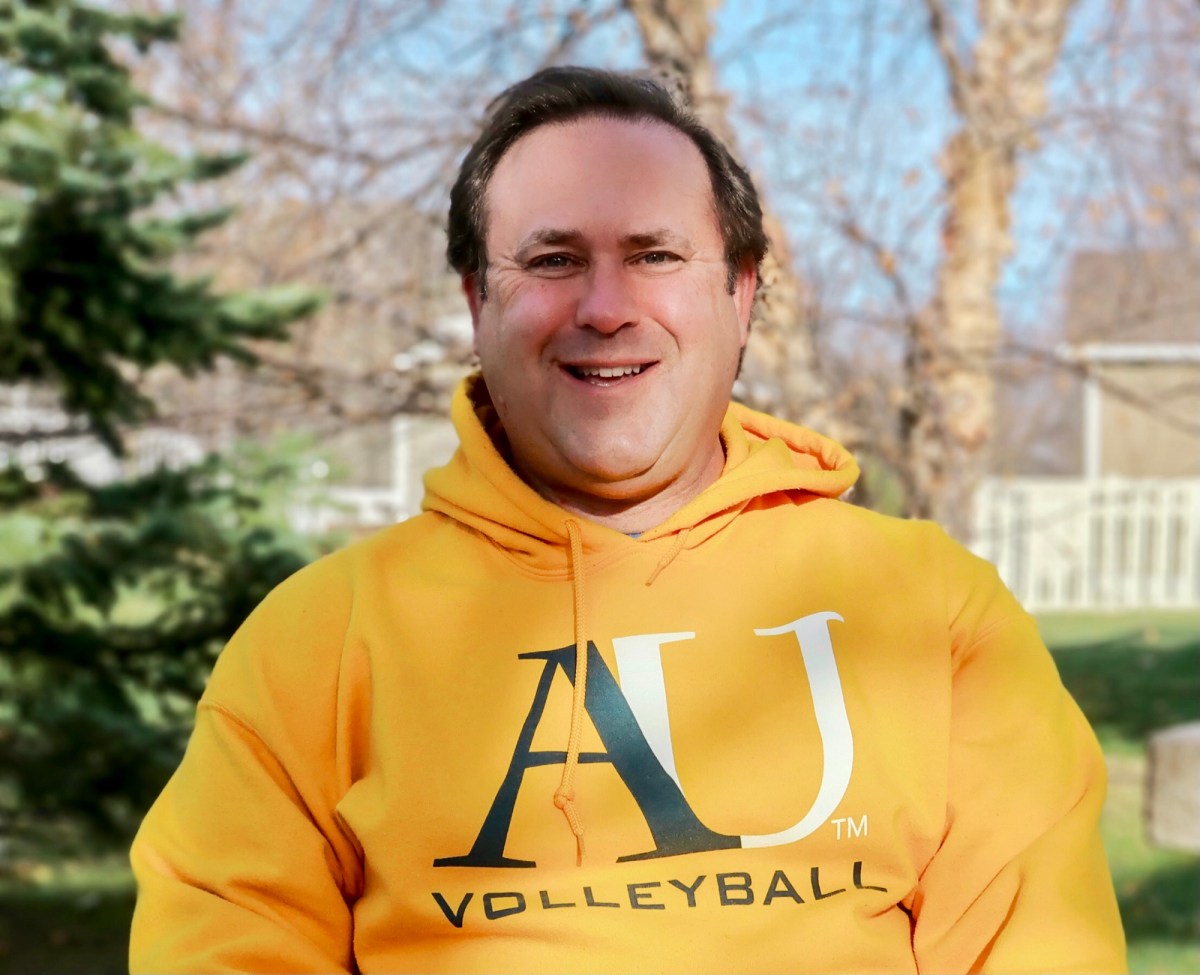
The picture was taken on a Thursday, a week before Thanksgiving, 2020. It was warm enough that wearing a hoodie felt like a small act of rebellion against the season. I was teaching from my home office, which meant I could wear whatever I wanted, and I wanted everyone to know it. So I took a picture and posted it. Look at me. No tie. No commute. Just a guy in a hoodie, conducting class from his living room, winning the pandemic. And then I looked at my face in that picture, really looked at it, and the joke stopped being funny.
That was the moment. Not a doctor’s appointment, not a conversation with anyone who loved me. A selfie.
That picture was taken in the middle of one of the strangest falls any of us can remember. The country was a mess, and I was not in great shape either. The election had been called but half the country wasn’t ready to accept it. COVID was getting worse, not better. And every time you turned on the news, someone was talking about who was most at risk. They kept using the word comorbidity. I had to look it up the first time I heard it. It basically means the conditions that make you more likely to die. Obesity was on the list. High blood pressure was on the list. I had most of the list, and I felt it every day. Every night when the heartburn woke me up. Every time I caught myself in a picture and looked away. I was not just overweight. I was a walking risk factor and I had been for years, and until that Thursday in November I had been very good at not thinking about it too hard.
My oldest brother died that September, two months before I took that picture. Both of my brothers were born with extra DNA that hindered their development, leaving them vulnerable not just to viruses but to complications most of us never have to think about. COVID found him anyway. I was still carrying that loss when I posted the hoodie picture, still in that strange suspended grief where you go through the motions of normal life because there is nothing else to do. One week after I made the decision to start losing weight, my other brother came down with COVID. There were some touch and go moments. We made the call to get him to the hospital where he had a fighting chance. Unlike my oldest, I was able to visit him. He was there for a couple of weeks, and then he came home. He is still with us today. And somewhere in those weeks of waiting and visiting and hoping, I kept going. Because I had just watched COVID take a man who had no choice about his vulnerabilities. I had a choice. I was not going to waste it.
At my peak, according to my scale, I weighed 252 pounds. I had never said that out loud before I wrote it in 2021, and even then it felt strange to put it in public. There it is. I didn’t want to be a statistic. I didn’t want my family to lose me the same year they had already lost so much. So I started.
The timing helped, and if you read last week’s post, you already know why. A semester doesn’t wind down gradually. It collapses. Around Thanksgiving the intensity breaks, the calendar starts to breathe, and for the first time since August there is actual white space. That is what I had in November 2020. A picture I could not stop thinking about, a grief I was still learning to carry, and for the first time in a long time the capacity to focus on something I could actually control.
By 2022 I was at 186. Everything got better. The knees stopped hurting. The acid reflux that had woken me up almost every night for years was just gone. I bought new clothes in sizes I hadn’t worn since college. I felt like myself again, or maybe a version of myself I had given up on finding.
And then, gradually, some of it came back.
The financial world doesn’t have semesters. There is no Thanksgiving wind-down, no January slow start, no built-in breathing room. The days got longer, the schedule got tighter, and the habits I had built around a particular kind of life stopped fitting the new one. I didn’t lose the plot all at once. It happened slowly, one small compromise at a time, until I did a check-in one day and didn’t like what I found.
Here is what I know now that I didn’t fully understand the first time. Losing weight is hard. Keeping it off is a different kind of hard, and nobody really prepares you for that part. Motivation comes and goes. Discipline gets tired. The only thing that actually holds is knowing your why, specifically enough that you can find your way back to it when things go sideways. I have done this long enough to know that is true.
My why hasn’t changed. I don’t want to be a burden. I want to be around for the people who count on me. I want to feel the way I felt in 2022, when the knees didn’t hurt and the clothes fit and I had enough energy to actually show up for my life. That was true in November 2020 and it is true right now. The number on the scale has changed. The reason has not.
Focus. Facts. Forgiveness. That is the framework that worked for me the first time and it is what I am coming back to. Focus means knowing your why and keeping it close. The Facts piece means understanding what actually works, not what you hope will work. Forgiveness means accepting that setbacks are part of it, that starting over is not failure, it is just what comes next. Over the coming weeks I am going to walk through each one. If you are on this road too, I hope something here is useful. If you are just starting, welcome. You are in the right place.

Word count: 944 words.

The Rhythm Is Gonna Get You: Circadian Rhythm, Spring, and Why Timing Matters

Gloria Estefan warned us: the rhythm is gonna get you. A reflection on circadian rhythm, academic life, and why spring feels like the only real beginning.

Gloria Estefan warned us. The rhythm is gonna get you. You can fight it for a while, but it always wins, usually at the worst possible time. Everything has a rhythm. The seasons. The school year. A marriage. Some people find theirs early and live inside it comfortably. Others spend decades bumping around looking for it. The rhythm does not wait for you to figure it out. It is coming for you regardless.

My wife figured this out a long time ago. The rest of us are still working on it.

For the most part, she goes to bed at the same time and wakes up at the same time. It does not matter the day, season, weather, or location. At some point she informed me this was called a circadian rhythm. For years, I nodded and smiled like I understood, which is generally how I handle most things, and then went about my day. But with the arrival of Copilot and ChatGPT, I was finally able to dig into it in a way my small brain could understand. That is how I found myself learning about my suprachiasmatic nucleus, located in the hypothalamus, nestled deep within the brain’s center, positioned below the thalamus and above the pituitary gland. Of course it is. This naturally led me to wonder whether mine had been injured in my January fall. I asked my wife, who works at a hospital. She told me I was fine. Just more irritating.

Further research suggests a handful of best practices for keeping your circadian rhythm aligned. My wife does all of them. She has a blinding light she activates each morning like she’s signaling aircraft. She goes to bed and wakes up at the same time every day, weekends included. She limits screens before bed, with a carve-out for Law & Order and Dateline, because apparently procedural crime dramas are melatonin-neutral. She eats on schedule. And caffeine, well, that deserves its own piece entirely.

Gloria Estefan. My wife. My mother. Fine. The rhythm got me.

For a long time, my rhythm was the academic year. August was pure optimism. You built syllabi, mapped out lesson plans, and convinced yourself this was the year everything would click. You would reach every student. You would teach differently. You would get it right.

Then the first faculty meeting hit. It was Dorothy throwing water on the Wicked Witch, except the melt took until May. Nothing kills momentum like a three-hour meeting about parking, assessment, and what absolutely must be in the general education curriculum that no student has ever once cared about. Even better when faculty from entirely different disciplines are sorted into small groups to solve these problems together. Nothing says higher education like a chemist, a music theorist, and a medieval historian trying to reach consensus.

The best part was that you could always tell exactly which discipline someone was from without ever seeing their name tag. Communications professors liked to speak, at length, about speaking. Biology and chemistry professors made everything about the scientific method, including whether the agenda had a proper hypothesis. Philosophy professors asked questions no one could answer, which they considered progress. History professors talked about the past, often at the expense of the present. English professors, being mostly gentle souls, just wanted to fix things, quietly noting that the third bullet point contained a squinting modifier and the mission statement had a dangling participle. Could we perhaps offer a friendly amendment? Business and accounting professors wanted to discuss the finances and would, given any opening, perform a SWOT analysis on everything, including the parking situation. And the business law professor felt a deep, personal obligation to remind the room that a friendly amendment is not actually a thing. You cannot offer one. It is not valid. It never was. Everyone asked anyway.

And yet, the meeting did not kill the August optimism. Not entirely.

Because then the students arrived. The campus came back to life. The halls filled up. And somewhere in the chaos of the first week you remembered exactly why you were there.

The fall semester was fun right up until the first round of exams and homecoming, whichever came first. If the football team was winning, the campus was noticeably happier, which tells you everything you need to know about higher education. Somewhere along the way, quietly and without fanfare, the great ideas from August disappeared. The innovative plans, the creative approaches, the belief that this year would be different, gone. Professors taught the way they always had, the way their professors had taught them. Innovation, it turns out, has a shelf life of about four weeks. But even that was part of the rhythm. Hope arrives in August. Reality settles in by October. Every year, right on schedule.

Then came the first round of illness, like it had its own place on the calendar, and we limped into fall break having earned it. And promptly wrecked our circadian rhythms for four straight days, which my wife would like me to point out is everything she would never do.

October turned to November, and suddenly it was registration, projects, and round two of exams. We stumbled into Thanksgiving slightly disheveled, definitely behind, and unreasonably relieved we had made it at all. Every class after Thanksgiving felt optional, whether anyone admitted it or not. For all practical purposes, everyone agreed to pretend otherwise. Students and faculty alike did what academics do best under pressure, negotiating, rationalizing, and convincing themselves a paper submitted at 11:58 p.m. represented genuine scholarship. And then it was over. By Christmas, the greatest gift was silence.

Spring semester was different, though not in the way you might hope. Fall arrived like a first date. Spring arrived like a Monday morning. Everyone knew what was coming and nobody was particularly excited about it. The energy was lower. The novelty gone. You already knew some of the students, which was either comforting or concerning.

February tested everyone. The holidays were a distant memory. Spring break was not close enough to matter. The days were gray and identical. You taught. They sat. Everyone just got through it.

Then March arrived. And March meant spring. And spring meant just enough hope to keep everyone moving.

Students left for spring break and returned tan and suspiciously cheerful, having traded a meaningful number of brain cells and part of their liver for the experience. They all came back physically. But something stayed in Florida. You could see it in their eyes, that faraway look of someone who had briefly escaped and had not yet accepted that they hadn’t.

As the weather warmed, attention drifted toward the windows and away from the board. The same was true for me. By March, I was done pretending otherwise. I had graded enough papers and sat through enough meetings to know that when the sun finally showed up with intent, something shifted. The same projects were back, just with new due dates and the same dread. But it felt manageable. The days were getting longer. The end was finally in sight. The rhythm was doing what it always does, pulling everyone forward whether they were ready or not.

And then it was over. Students moved out. Graduation happened. And then the campus went quiet. Beautifully, mercifully quiet.

I have not stood in front of a classroom in years. But every March, something stirs anyway. Old habits. Old rhythms.

Which brings me to now.

What is my rhythm if not the academic year? The calendar year never made much sense to me. January has never felt like a beginning. Short days. Dark skies. Cold everything. January feels less like a beginning and more like a life sentence.

Then we spring forward, which feels like something designed by Satan. A small disruption, but enough to remind you how fragile the whole system is.

And then, almost without warning, it changes.

Spring arrives.

Spring is August of the academic year. It is January with actual hope. The grass turns green. Leaves return. Flowers push through the ground. And then there is that first warm Saturday where you find yourself standing outside for no reason at all, just because you can. That is when you know it is back.

And baseball season starts. There is something about opening day, the impossibly green grass, the crack of a bat, the unhurried pace of a game that refuses to hurry, that feels like the world exhaling after a long winter. On opening day, every team is undefeated. Every fan is a believer. For a while, that is enough.

Spring does not just arrive. It reminds you that things come back. That the world has a rhythm, and if you are patient enough, it finds you again. My wife, of course, already knew all of this.

Some of us just needed a few decades. And a March morning.

Gloria was right.