A few weeks ago I wrote about a walk to Paddington Station, and then a walk back. The reason for the trip, I said, was to buy train tickets to Henley-on-Thames. That was true, as far as it went. But if you’ve been reading this series, you might have wondered what Henley actually meant. The tickets were the cover. My friend was the reason. She was also, if I’m being completely honest, the reason for the course itself, and every course I tried to build before it, and every course I’ve sketched out since. She just didn’t know that until now.
Henley-on-Thames had no particular connection to Brexit when I chose it. If I’d been purely academic about it, I might have taken the students to Birmingham or Coventry, cities in the West Midlands that recorded some of the highest Leave percentages in the country. That would have been genuinely instructive. The area around Henley, as it turns out, voted roughly 55 percent to Remain. I could have taken them somewhere that felt the full weight of the Brexit argument, somewhere that might have actually changed how they understood it. I didn’t. I picked Henley.
The Brexit connection was there, if you wanted to work hard enough to find it. Theresa May represented nearby Maidenhead, Boris Johnson once held the Henley seat in Parliament, and I once spotted Rishi Sunak at the Leander Club in Henley. But I didn’t know any of that when I chose it. That came later, the kind of justification you construct after the fact to make a personal decision look like a professional one. The real reason was simpler. None of those other places had her in them.
None of that mattered on the morning of the trip. What mattered was twenty students in a hotel lobby near Waterloo, two tickets each, and a train to catch.
We did this three times. Three different courses, three different years, but it always started the same way, in a hotel lobby near Waterloo, me handing out two tickets to each student. One for the way out, one for the way back. I told them every time: lose either one and the train fare comes out of your own pocket. Nobody ever lost one, not in three years, though I watched a few of them pat their jacket pockets all the way down to the tube just to be sure.
I had some unpopular rules on my courses. No jeans, no trainers, no hoodies, no baseball caps. I wanted them to blend in rather than stick out, and I know it frustrated plenty of them at the start. By the time we got there, I think most of them understood why. Henley was a different level. Just short of a black tie affair. It was the one day of the course I put on a jacket and tie myself. In that same lobby, before we headed for the tube, I’d give them the rest of it. Nice dinner tonight. Old friends of mine. Be gracious guests. Don’t be the ugly American. Come with at least one question ready, something real, something that shows you were listening and not just eating. A couple of those questions I planted myself, quietly, with a student I trusted to ask them well. I never told them how nervous I was. The day needed to go right, the tour, the dinner, all of it, but underneath that I was about to see my friend and her family again, and some part of me was always braced for the year that wouldn’t go as smoothly as the last.
From Waterloo we’d take the tube to Paddington, then the train out toward Henley, changing at Twyford for the last short hop in. I’d count heads at every handoff like a man counting cards, watching backpacks and the occasional dress shoe shuffle across the gap between trains. We never lost anyone. Not once.
She was waiting at the station every time. Forty-some years since she’d lived in our house the year of the Jubilee, since she’d been the exchange student who became something closer to family than guest, and there she’d be on the platform at Henley, easy to spot, easy to find. She’d arranged much of the day herself, never once complaining about any of it. I knew it took real work. I’m not sure I ever adequately thanked her.
I’d put my hand on a shoulder or two and start the introductions. My students, my friend. My sister, in the only sense of the word that really matters.
She’d walk us into town herself, City Hall first, almost always. Main Street the whole way, small shops on both sides, the street sometimes set up for market day in a way that reminded me of Lower Marsh back in London. City Hall sat at the far end with its clock tower, red brick, pale stone, and the quiet confidence of a building that knew exactly what it was. The tour was another favor, one phone call from her that meant the world. Most years it was the Mayor waiting for us. One year the Mayor was unavailable, and we got the utility superintendent instead, which turned out to be just as useful, maybe more so, because he could explain how the town actually worked. Inside, the building had dark wood, old portraits, and a hall upstairs that looked as if it had hosted a century of dances, council votes, and arguments about parking. Whoever led the tour would explain what was on the docket that month, and then, almost every year, offer the same gentle punchline: Brexit, the whole reason we were there, wasn’t going to change much of anything in Henley. I watched that land on their faces every time, the small recalibration of a student who had assumed the thing they came to study was the only thing happening.


More often than not, the local paper was waiting for us when we came back down. A reporter wanting a few words from the Americans, what they’d come to study, what they made of the town so far. They ran stories about it in the Henley Standard more than once — the first year and again in the second. I never asked whether she’d contacted the paper. But I have my suspicions. It had her fingerprints on it, the same quiet phone call that got us the tour in the first place, one more thing handled before I even knew it needed handling.
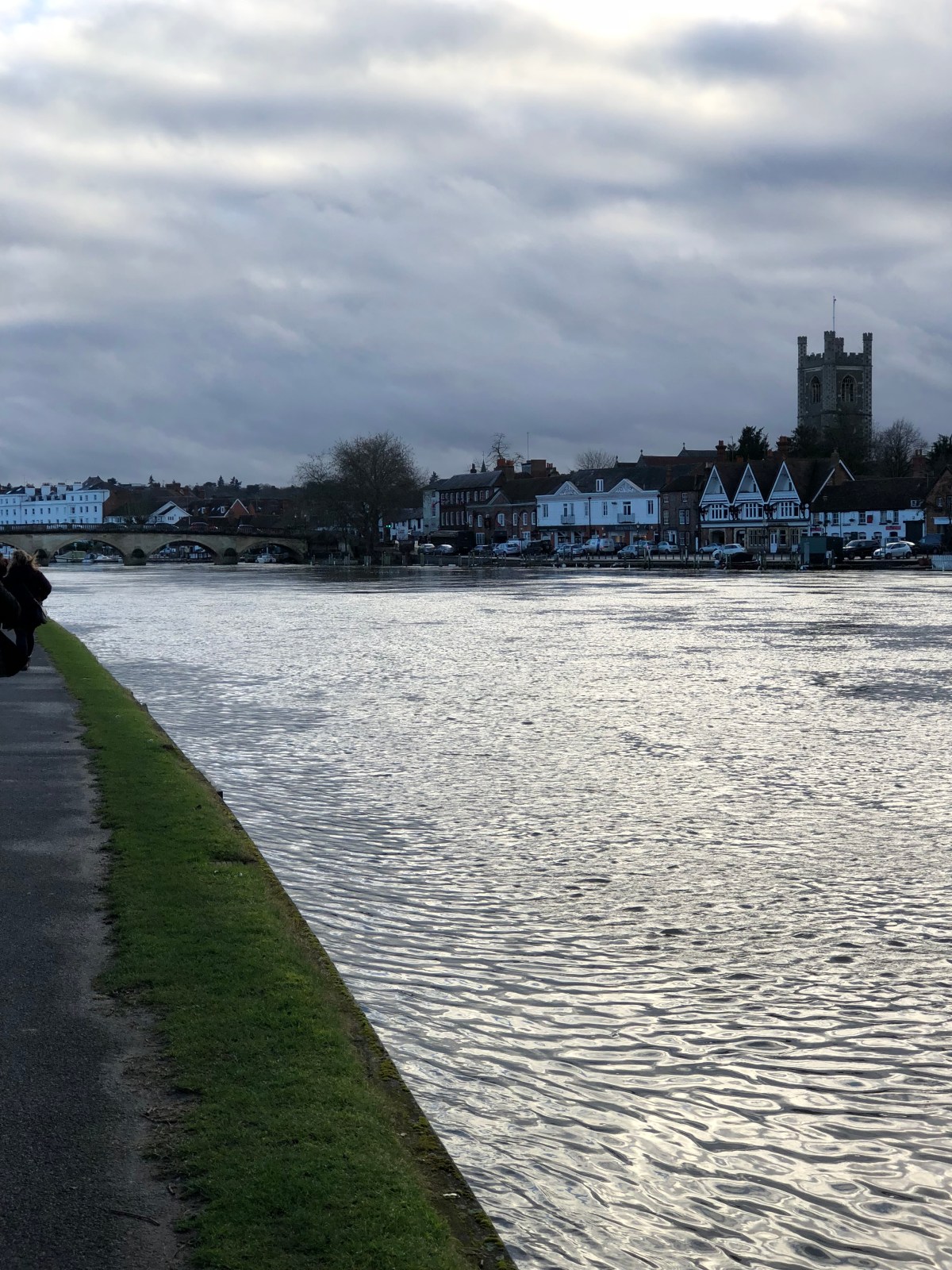
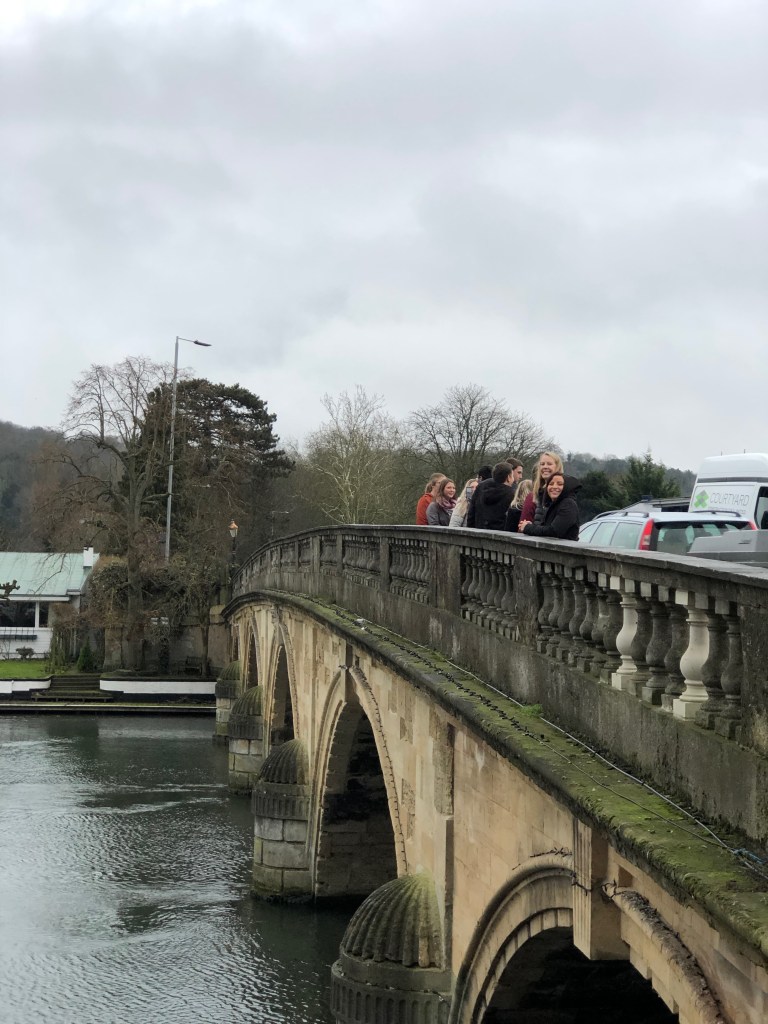
Then I’d turn them loose. A couple of hours to wander, to find shops, to find a pub if they were old enough and bold enough. Most years they ended up down by the water, with the church tower standing watch beside it and the rowing clubs lined up along the river like they’d been waiting two centuries for the next regatta. The students would lean against the balustrade in their dinner clothes, taking pictures of each other with the Thames behind them. I’d see the photos later. Always the same easy grins, always a little wind in someone’s hair, always that river. Before they scattered, I gave them one more instruction: there’d be more guests at dinner, and they needed to be on their best behavior. I never had to say it twice.
That was my window. For a couple of hours, the trip changed shape. Her husband was there, and so was my co-teacher, but it no longer felt like I was leading a course. I don’t remember the specific conversations anymore. What I remember is how welcome we were made to feel, every single time, the same way my own parents had made her feel welcome in our house all those years ago when she was the one far from home. It evens out that way sometimes, across forty years and an ocean, without anyone planning it. It was the one stretch of adult conversation in three weeks otherwise spent keeping twenty-year-olds alive, punctual, dressed, fed, and pointed in the right general direction. I loved being around my students, but three weeks is a long stretch, and we were at different points in our lives wanting different things from the day. Those two hours were the quiet in the middle of all that noise.
For years before Brexit ever entered the picture, I wanted to teach a study abroad course mostly so I could get back to England and see my friend, my sister in every way that matters, under the respectable cover of academic purpose. I spent a long time trying to come up with course ideas that would actually fit a business program at a small liberal arts university. Comparative management. Comparative law. A course tracing Charles Dickens through legal London, courtrooms and debtors’ prisons and all. None of them ever quite found a curriculum to live in.
Then Brexit happened, and the course found me instead. A country legally untangling a forty-year marriage, businesses scrambling to prepare for a divorce nobody had a precedent for. It was real. It was academic. It belonged in a business law classroom, and I could defend every line of it without blinking. The course was genuinely about Brexit. But the reason I’d spent years looking for a course in the first place had nothing to do with the EU at all.
The quiet part of the day always had to give way to the official part again. The students would come back from the river and the shops and whatever pub they’d decided they were mature enough to enter, and I’d become the professor again, counting heads, checking collars, reminding them that dinner was still part of the course even if it came with better wine than anything listed on the syllabus.
Dinner was at Hotel du Vin every year. She recommended it, and for a long time I assumed it was just a place big enough to fit the group. It wasn’t until I dug a little deeper that I learned the building sits on the old Brakspear Brewery grounds, brick and beer and old English usefulness still there underneath the polish. It tied the dinner to Henley as something more than a pretty riverside town: commerce, beer, brick, work, reinvention. The hotel is modern. The bones aren’t. I don’t know for certain, but I can’t help thinking it was intentional all along, one more thing she’d quietly arranged without ever mentioning it.
The room barely fit us, every year, and it was often quite warm, the way old buildings get when you pack too many people into a beautiful room and then pretend candles and wine are a climate-control strategy. My friend and her husband joined us every year, along with anywhere from two to four other local adults she’d brought in to sit with the students. On a good night we had nearly thirty people in a room that was meant for twenty. Stone walls scrubbed pale, low black beams strung with tiny lights, candles down the center of a long white table. Same wine selection, same students cleaned up and trying hard, sitting a little straighter than usual and pretending they ate dinner like that all the time. We all knew most of them would have been just as happy with the McDonald’s at Waterloo Station. The conversation changed every year, because the country kept changing. One thing never did. We always ended up ordering a few more bottles than we’d planned on.
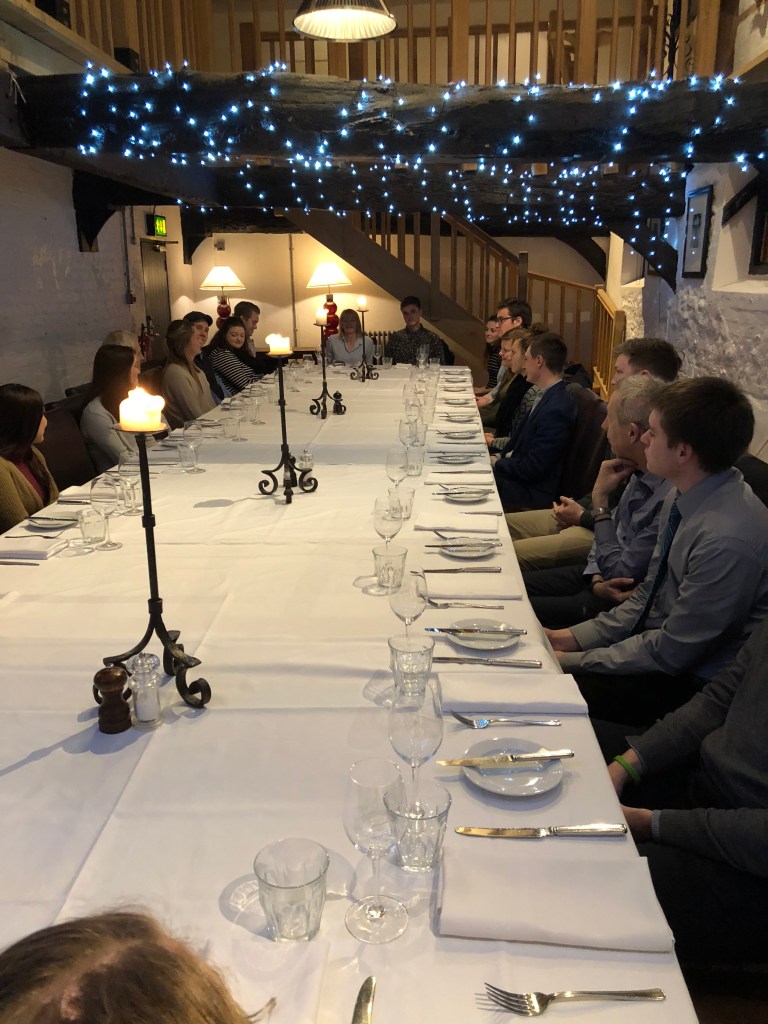
The dinners were never lectures, and they were never debates in the way we think of debates now, with everyone waiting for their turn to reload. People disagreed about whether Brexit was wise or foolish, whether it would be painful or merely inconvenient, whether it was about sovereignty, economics, immigration, nostalgia, or some combination of all of it. But the conversation stayed civil, polite, and entirely British. Nobody shouted. Nobody performed outrage for the room. People listened, answered, disagreed, and then reached for the wine bottle like grown-ups.
The first year, Brexit was still young enough to argue about in the abstract. Henley came near the end of the course, the day after Paris, which had only a loose claim on Brexit beyond the EU connection but the students loved it anyway. I’d recruited most of that group myself, and they were quieter than the ones who came after, more curious than opinionated. The British guests at the table were, on the whole, hopeful. It might not be that bad, someone said. One man put it more honestly than anyone else managed all three years: in my heart I was for Brexit, but in my head I knew it was bad. Nobody at the table disagreed with him out loud.
The second year, Brexit had moved from theory to machinery. We went to Henley early, while the students were still fresh and fully engaged with the material. Parliament was in the thick of it, and I watched a student prop her phone against a water glass during dinner, earbuds in, watching the vote happen in real time an hour away while the table talked around her. The optimism from the first dinner had curdled into something closer to exhaustion, though there was still hope a good exit deal could be found. More wine that year too.
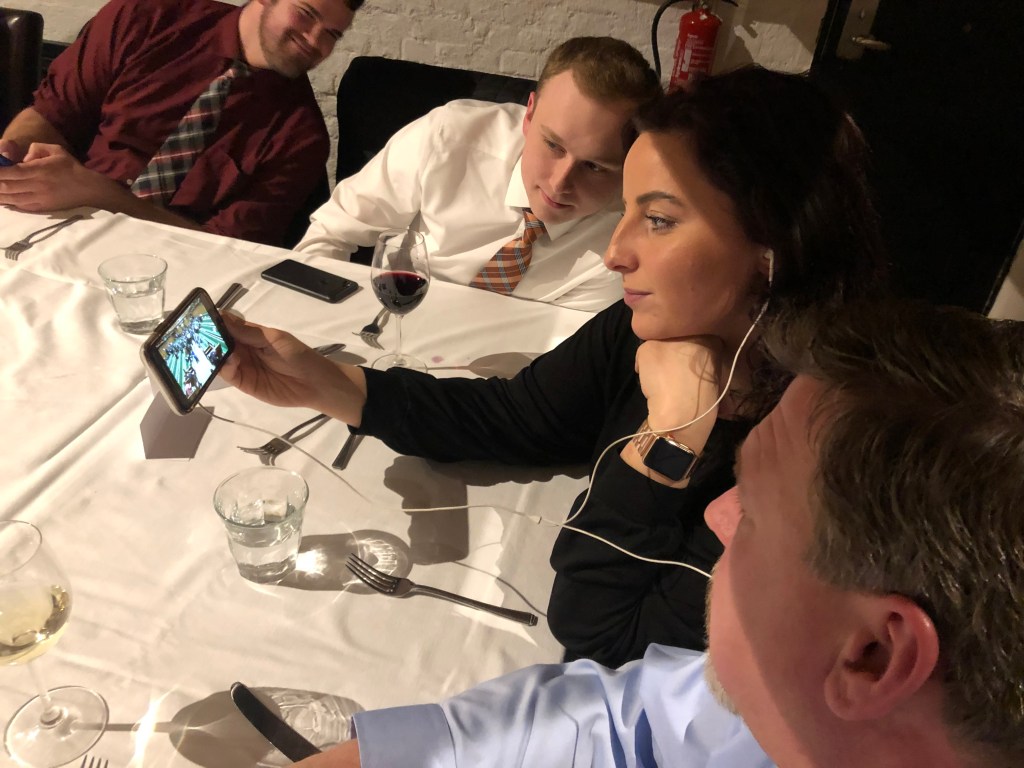
The third year, Brexit was no longer a question. It was a date on the calendar. Henley came toward the end again, but this time as the first stop on a three-leg road trip, Henley, then Paris, then an overnight in Chester, the only year we ever made it there. We were within two weeks of the UK formally leaving. Nobody was hopeful anymore, just tired and practical, working through the logistics of a thing that was already decided. The highlight of that dinner, for me, had nothing to do with Brexit at all. One of the students that year had gone to the same high school I had, the same high school my friend had gone to the year she lived with us. Three of us, decades and an ocean apart, all from the same hallways, sitting at the same table in Henley. A reminder of how closely we’re all tied together in this world. We ordered more wine that night too.

I always knew the train times. I always knew exactly when we needed to leave. As that moment got closer every year, some part of me wanted time to slow down, and every year it refused. There was never enough time. There never is. We’d reluctantly finish the last bottle of wine, say our goodbyes at the door, and walk back through town to the station for the long ride home to London.
Three dinners, three years, three versions of a country trying to decide who it wanted to be. That was the course I put on the syllabus. But the part I remember best was never the vote or the lectures or the long train rides back to London. It was a friend who showed up every time without being asked twice. It was students leaning into the river wind, dressed better than they wanted to be, and then showing up at dinner with more curiosity and grace than I probably gave them credit for ahead of time. They asked better questions than I expected. They listened more carefully than I expected. They treated my friends with the kind of care that made me proud to have brought them there. Henley was not just a place I took them. It was a place they helped me see again.



You must be logged in to post a comment.