2026 arrived quickly and with a certain enthusiasm for chaos.

Some seasons arrive quickly, carrying more than we planned to unpack.

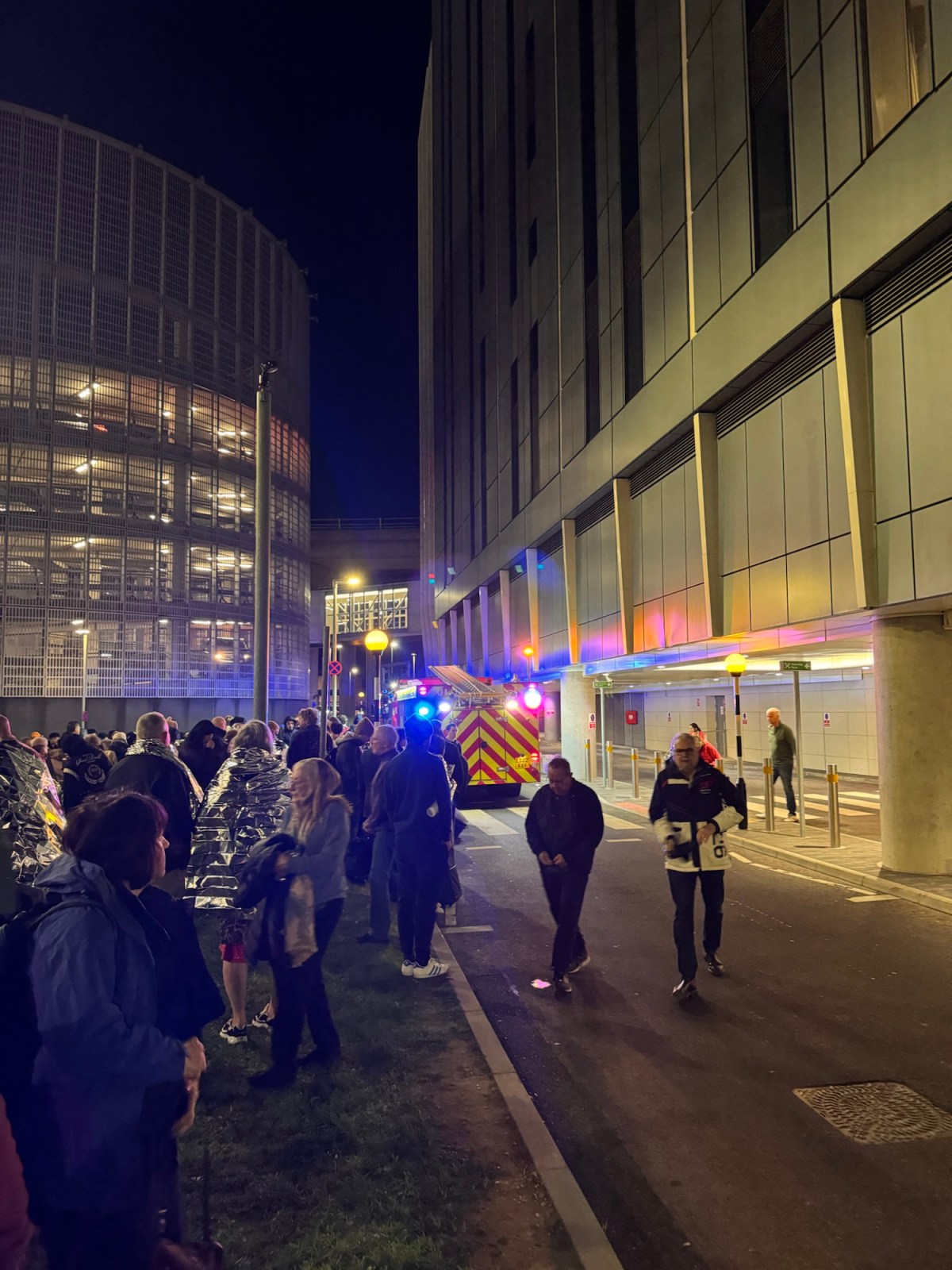
It was probably best that I didn’t subscribe to Dry January. I should have known the year was going to be a beast when, less than six hours into it, I was in a hotel and the fire alarm went off—and it wasn’t a drill. This is not how you want to meet a new calendar year. Then the gods of fate said hold my beer when four members of my immediate family experienced “medical” events, including three emergency room visits, three hospitalizations, and a surgery. January came in like it had a clipboard and a very aggressive agenda.

Along the way, I learned—or was reintroduced to—phrases like spinal stenosis, Clostridioides difficile, colitis, concussion, and tympanostomy. My medical vocabulary has expanded more in a few weeks than it had since I snuck into my dad’s home office and leafed through his copies of the Journal of the American Medical Association and Annals of Surgery. I may not have earned a degree, but I’ve at least qualified for a certificate. Possibly laminated.

And in case you hadn’t noticed—perhaps because you, too, were distracted by sirens and discharge papers—there is also a lot going on in the world.

Much of my attention has been on the Twin Cities. My family has been impacted. My friends have been impacted. This hits close to home. I watch and wonder how we got here. Early in my professional life, I spent time both prosecuting and defending criminal cases, which means I have a reasonably high tolerance for human dysfunction. Even so, many of the things I now see and read—especially through that lens—are genuinely shocking. Not shocking in a cinematic way. Shocking in a quiet, procedural, this-is-how-it’s-written-down way.

Current events often pull me back to what I studied in college, back when you could take courses that wrestled directly with uncomfortable truths instead of politely circling them. I took more than one class focused on the Holocaust and similar atrocities. As a senior, I enrolled in Light in the Darkness: Courage and Evil in the Twentieth Century. The course focused heavily on the Holocaust. At the time—and still—I struggled with how something so terrible could happen.

We studied life in Nazi Germany. We discussed Anne Frank. We read Elie Wiesel. We also read Heart of Darkness by Joseph Conrad, a book I still don’t fully understand, which puts me in excellent company that includes most honest readers.

Though my memory of the course is imperfect—college being a long time ago and optimism being a powerful anesthetic—several moments stand out. Perhaps most significantly, we took a “field trip” to Minneapolis. While there, we attended a concert at Orchestra Hall, spent an evening at the Chanhassen Dinner Theatre, and visited a Holocaust museum.

But there is one experience I will never forget.

We met Holocaust survivors.

One woman had been sent to Auschwitz. She told us her story patiently and answered our questions with care. Then, in a moment that permanently fixed itself in my memory, she rolled up her sleeve and showed us the tattooed number on her arm—a mark that had been there for more than forty-five years. No build-up. No warning. Just history, sitting across from us in a folding chair.

She spoke about the days leading up to liberation. She described the moment she knew she was free. She was offered a ride to the nearest supply camp roughly a mile away. She declined. This, she said, was her freedom walk. She walked the entire distance, stopping frequently because she was so weak. She had to keep her head lower than her heart to avoid losing consciousness.

She spoke about her first bite of food—and the danger of eating too much, too quickly—because her body had essentially shut down. She knew she was close to death, close enough to feel it in a practical, unsentimental way, but she willed herself to live. She told us she kept repeating to herself: Not today. Today I am free.

Someone asked her how she felt about Germany now. Very calmly, she explained that she bore no ill will toward Germans born after World War II. They were not responsible, she said; they carried the scar, not the guilt. But Germans who were present at the time—who did nothing and said nothing—were responsible for the atrocities.

There was no theatrics. No slogans. No grand conclusions. But the emotion, the pain, and the anger hung in the air, doing what facts sometimes do when delivered by someone who earned them the hard way.

I don’t remember her name. I remember her message.

Make sure this never happens again.

Since then, I have found myself returning to her words. I wonder—perhaps naively—whether a similar regime could ever arise in my own country. I keep reaching the same conclusion: yes, it absolutely could. Not because of any single current event, but because we are human, and humans have repeatedly shown a remarkable capacity for atrocity, especially when paperwork is involved.

I also arrive at a more uncomfortable conclusion: there is no way to know how I would respond.

Would I recognize what was happening in real time? Would I speak out? Would I protect those being targeted? Or would I choose personal or family safety over principles and values? Would I convince myself that compliance was temporary, reasonable, or necessary? History suggests these decisions are rarely dramatic. They are incremental. Transactional. Rationalized. Often explained afterward with excellent grammar.

And that, more than anything, troubles me.

What unsettles me most is not that the news feels alarming—news often does—but how quickly alarming things begin to feel normal. A headline that stops you cold on Monday becomes background noise by Friday. By the following week, it’s something we summarize with a shrug and a sentence that starts with, “Well, I guess that’s just how things are now.” That is usually the point at which questions about how we would respond quietly turn into questions about what we are willing to tolerate.

What we are willing to tolerate is shaped, in no small part, by what we understand to be our rights in the first place. When those boundaries are clear, normalization has limits. When they are vague, everything becomes negotiable. Fortunately, we do not have to define those boundaries from scratch or rely solely on instinct and outrage. We have a well-worn roadmap. It is called the Constitution. It does not prevent abuse or guarantee wisdom, but it does establish a baseline—certain rights meant to exist regardless of convenience, popularity, or who happens to be in power.

At its most basic level, that baseline includes the right to move through daily life without harassment; the right not to be stopped and required to justify one’s existence; the right to be free from restraint, harm, or worse based on minor suspicion; and the right to observe authority without becoming its target. It includes the right not to be threatened, exploited, confined, or erased—and the right to speak freely, worship freely, and to have a home that remains a refuge rather than a checkpoint.

None of this is abstract. None of it lives safely in textbooks or court opinions. It unfolds in real time—often within hours: a traffic stop at dusk, a crowd forming, a knock before sunrise, a decision made quickly by someone with power and limited restraint. At that speed, there is no meaningful pause, no appeal, no rewind. Due process—the idea that power must justify itself before it harms—only protects people if it exists before force is applied, not afterward. If this feels distant or exaggerated, it is usually because it has not yet arrived at one’s own door.

These are not rights granted by government, nor privileges extended for good behavior. They exist prior to government—whether understood as gifts of God, products of nature, or the result of generations of hard-won human progress. We entrust them to the state for one narrow purpose: protection. When that order is reversed, what remains may look like order, but it is not law.

It is force, borrowing the language of authority.

I began by describing how difficult January felt for me—personally, professionally, and emotionally. But those struggles, real as they were, pale in comparison to January of 1945, when Auschwitz was liberated and survival itself depended on the refusal to give in, even when the body was failing and the future uncertain. Remembering that contrast doesn’t diminish present concerns; it sharpens them. It reminds me that perspective matters, that endurance has a history, and that resolve—then as now—often begins with a single, quiet decision: not today.

Reflections on Another Year

It’s complicated. It’s Father’s Day. My father wasn’t the father I wanted him to be; however, given how things have turned out, it appears he was the father I needed.

It’s complicated. Twenty-nine years ago today, my mother called to tell me that my father had suffered another heart attack and didn’t survive. It was a Saturday, and the next day was Father’s Day. his sudden death is one of the saddest days of my life.

It’s complicated. As critical as I was of my father while growing up, on this day when we celebrate fathers, I am reminded of how challenging it is to be a parent. You are constantly trying to make the best decisions, but you often fail. I love my sons more than anything in the world. I haven’t been perfect, but I have always loved them.

It’s complicated. An elected official was assassinated yesterday, marking the seventh such incident in the last 50 years. There is a suspect and it appears he was targeting several other elected officials. Meanwhile, the president celebrated his birthday with a grand military parade, something I have never witnessed in my lifetime across the country. There were mostly peaceful protests taking place. The country is deeply divided.

It’s complicated. Birthdays should be a celebration—a time to reflect on all that is good in our lives. Over the past year, I have used social media to acknowledge birthdays. Each day, I start by checking Facebook for birthday announcements. For those who share their birthdays, I make sure to send them a heartfelt birthday message.

I also take a moment to reflect on how I know each person, why they remain friends on Facebook, and the joy we have brought to each other’s lives. My friends come from various places, with diverse interests, differing political views, and various professions. While I may have favorites among them, taking the time to think about each friend is a nice way to start my day and often reminds me of many wonderful memories.

I also remember friends who are no longer with us but are still on Facebook. I believe that if we dedicate time to remember and celebrate these connections, it enriches our lives.

It’s a bittersweet day for me—today marks my birthday, Father’s Day, and the anniversary of my dad’s passing. It’s a lot to process. So, let’s take a moment to do something special today to brighten the world around us. Reach out to the people you love; they might be facing their own complexities. You never know how your words of kindness can make a difference. Life is complicated.

Day 15 Gratitude Challenge

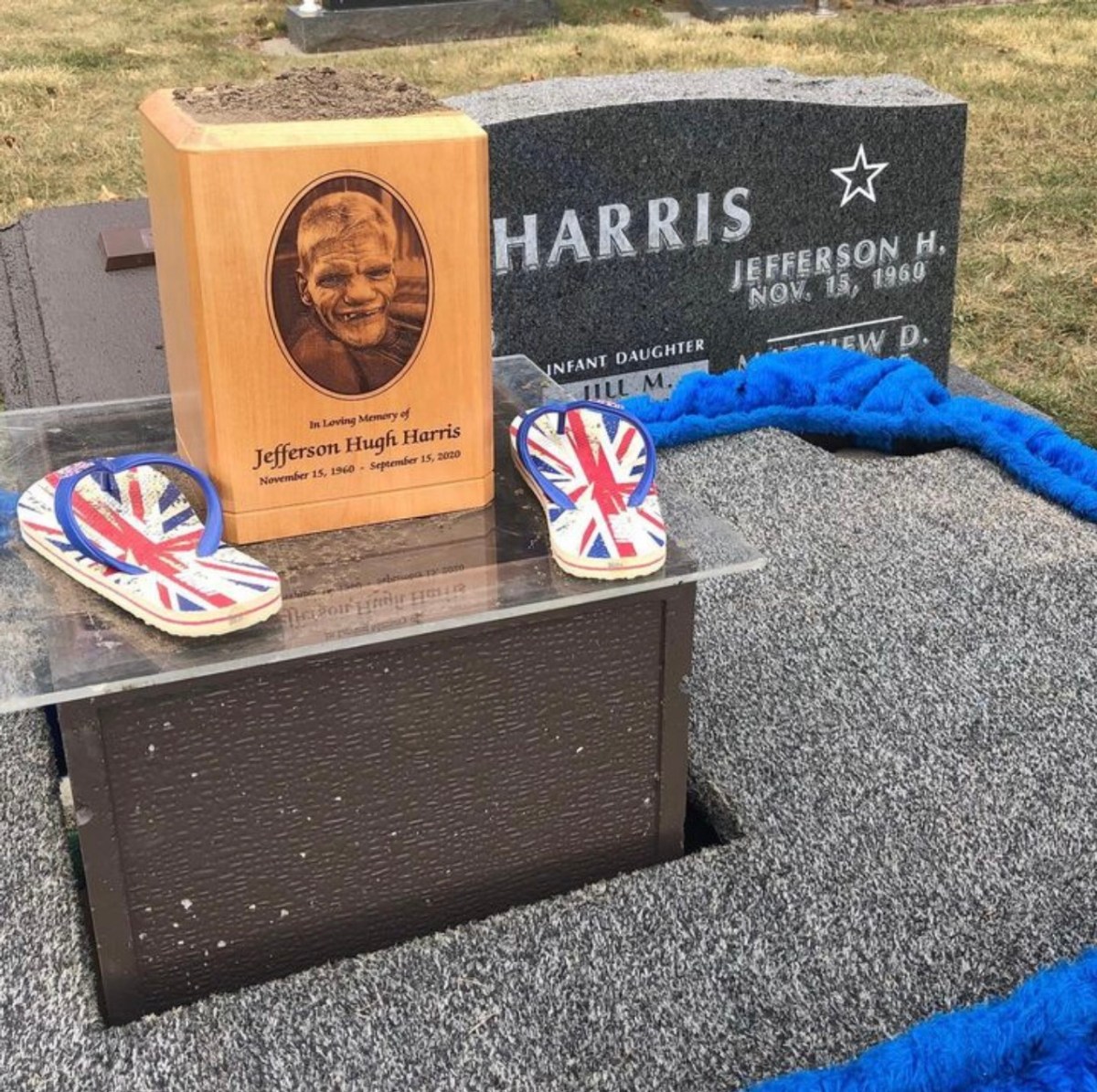
Death is inevitable. It leaves a trail of sorrow for those left behind. There are so many unanswered questions. Yet, one thing is certain . My brother is dead. We buried his remains today. Jason Harris

I wrote the quote above just over four years ago on the day I buried my oldest brother, Jeff. I vividly remember writing those words and can still feel the pain, anger, sadness, and confusion I experienced. I will always remember. I don’t believe you ever forget the pain of losing someone you love so deeply.

The five stages of grief—denial, anger, bargaining, depression, and acceptance—are commonly understood as a sequential journey, often thought to unfold in a specific order. However, since the loss of my brother, I’ve found myself navigating these stages in various sequences and sometimes experiencing them all in one day. Most days, I come to a place of acceptance, though it’s a difficult journey, and I embrace that feeling as best as I can, knowing it’s a part of the healing process. Yet, I often wonder: is it truly possible to fully heal from such a profound loss?

Today marks several significant events. It’s the 15th day of the gratitude challenge, which means we’ve reached the halfway mark. It’s also 10 days past the election. Most importantly, today is my brother’s birthday; he would have been 64.

Today’s challenge invites us to transform a negative experience into a positive reflection. Let’s take a moment to think about those who are no longer with us. It’s natural to feel a mix of emotions, and acknowledging the impact they had on our lives is important. We can hold on to the gratitude for the moments we shared with them, cherishing their memory. Although we may not be able to thank them directly, we can honor their legacy and the positive influence they brought into our lives. This act of remembrance allows us to celebrate the love and lessons they imparted, keeping their spirit alive in our hearts.

4 Years

As I post this, I will be on a reflective walk to remember a difficult time.

This is a story that many people have heard before. It all started on September 4, 2020, when my oldest brother tested positive for the Covid19 virus. This was a time when there were no known effective treatments or vaccines available. He had to isolate himself until he was no longer showing any symptoms. According to common wisdom, if you could make it through 11 days from the diagnosis without experiencing major symptoms, chances were that you would be fine. September 15 would be Day 11.

For the most part, I received good reports about my brother: oxygen levels were good, temperature was mostly good, and no breathing problems. I remained cautiously optimistic. We just needed to get to day 11.

On the afternoon of September 14th, I received a report that my brother was feeling a bit agitated and had a slight fever. He was given something to help reduce his temperature. I was disappointed he still had a slight fever as I wanted all symptoms gone. Unfortunately, this would be the last report I received.

At approximately 2:00 am, I was awoken by the sound of the doorbell and my dog’s barking. When I opened the door, I was met by a local police officer who delivered the unfortunate news that my brother had passed away in his sleep. Regrettably, he became the 200th person in South Dakota to succumb to COVID-19.

It’s been four years since this happened. This day brings up a lot of emotions, but most of all, I feel an overwhelming sense of sadness. I mourn the fact that my brother spent the last 10 days of his life in isolation. I grieve for the many who lost their lives to this virus. It’s heartbreaking that a virus became a tool for political gain. But above all, I miss my brother dearly. Although I didn’t visit him as often as I should have, he was always in my thoughts.

Memories of A Legend

A few days ago, I was saddened to hear about the passing of Phil Donahue. He was a trailblazing figure in the realm of daily television talk shows for close to three decades. Renowned for his timely and thought-provoking content, Donahue’s shows were not only engaging but also often sparked important discussions. One of his signature trademarks was conducting interviews while strolling through the studio, creating an interactive and dynamic atmosphere. His show was also known for actively involving the studio audience and taking phone calls from viewers.

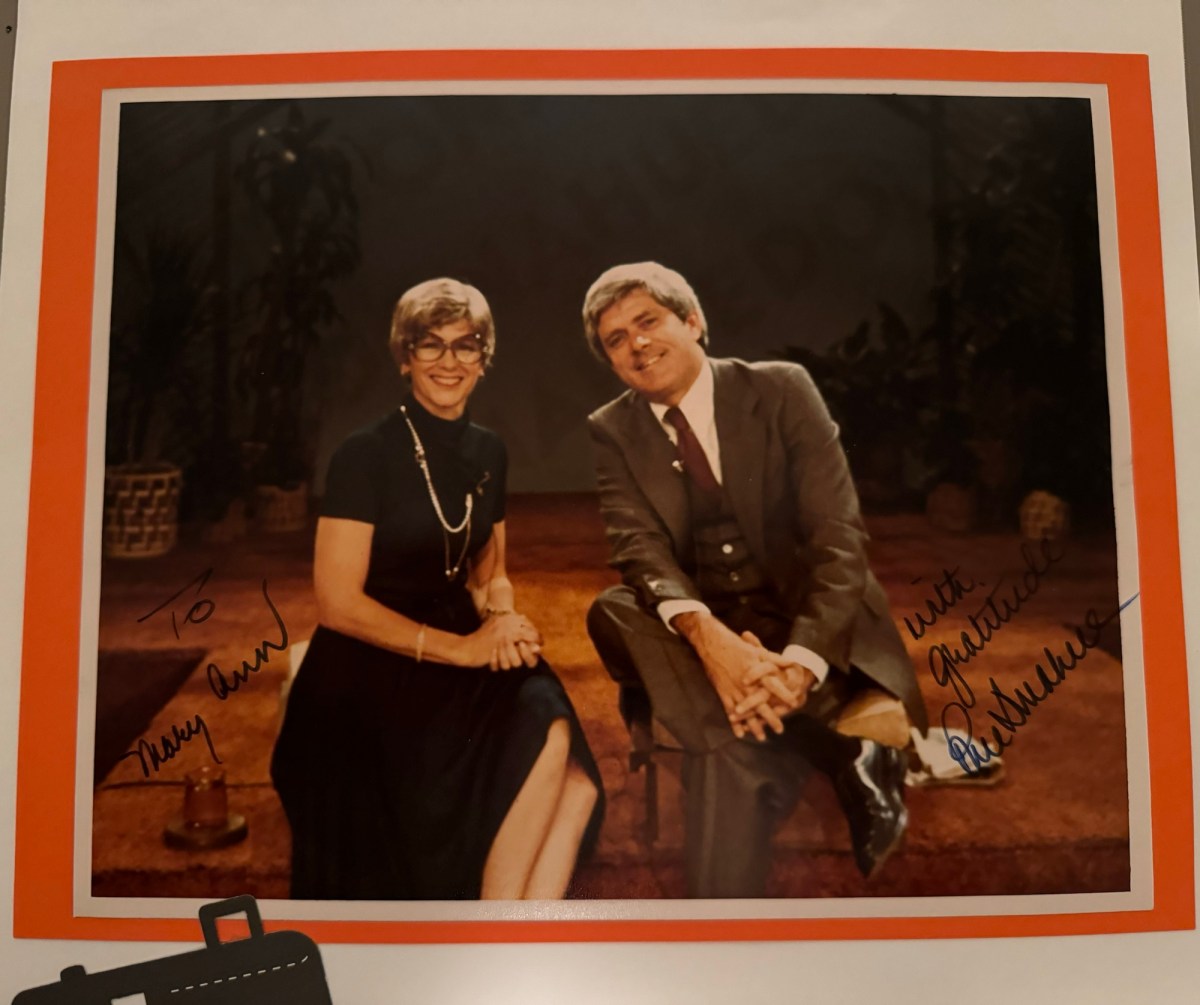
Even though Donahue was talented, he wasn’t my preferred choice as an interviewer. In the photo above, Donahue is shown alongside my all-time favorite interviewer, my mother. I can still recall my mom’s infectious enthusiasm as she eagerly prepared for her trip to Chicago to meet and interview Donahue. After her return, her excitement remained as she vividly described the entire experience.

My mom had a real talent for connecting with people, whether they were everyday individuals or celebrities. Some might call me biased, but I truly believe she was even better at it than the famous talk show hosts. Luckily for me, being a mother was her true passion, and she excelled at that, too.

Even though I miss her dearly, I’m filled with immense gratitude for everything she brought into my life. The photo of Phil Donahue captures the same sentiment, radiating warmth and thankfulness. “With Gratitude”

Day 9 Beautiful Things

Recently, I’ve been spending more time reading things other than the news. I’ve never been a fan of fiction. This past weekend, I revisited Ernest Hemingway’s “The Short Happy Life of Francis Macomber”. It’s been a few years since I last read any of his work, and many years since I read this story.

I was reminded of the beauty of his writing. His clear and concise style brings to life outstanding character development, despite this being a short story. Even though the story was written and set nearly 90 years ago, its themes of courage, masculinity, transformation, and mortality remain relevant today.

As I read, I could identify with the main characters and their challenges. Perhaps that is the essence of literature – to recognize oneself – good, bad, or otherwise – in the characters.

As Many With as Without


“It was the best of times, it was the worst of times, it was the age of wisdom, it was the age of foolishness, it was the epoch of belief, it was the epoch of incredulity, it was the season of light, it was the season of darkness, it was the spring of hope, it was the winter of despair.” – Charles Dickens, A Tale of Two Cities


Time is an interesting concept. Today is a day that marks a significant moment in my life. Many years ago, on this day, I was born into this world. As I grow older, I am reminded that each birthday is a precious gift and should be celebrated.

This weekend, I’m just not feeling the birthday cheer. It’s the eighth time my birthday has landed on a Saturday, and it always sends me on a trip down memory lane.

On a beautifully sunny birthday, I was enjoying a morning round of golf with two new friends in a new town. As we strolled off the green of our 12th hole and headed towards the 13th tee, a young man in a golf cart handed me an urgent note from the pro shop. Written in striking red ink, the note read, “Paramedics called. Call your mom at home.”

This was before cell phones became prevalent. As I was at the furthest point on the course from the clubhouse, I rode back to the clubhouse with the young man. While I did not know exactly what had happened, I knew this ride would be a turning point in my life.

As I reached the clubhouse, I called my mother and received devastating news. She informed me that my father had passed away and asked me to return home immediately. It was difficult to comprehend – I had just hugged him less than 12 hours before. It felt like a surreal and heartbreaking moment. The next day was Father’s Day.

I continue to feel a deep sense of sadness about my father not being here. I often find myself wishing he could have met my wife and sons, and for them to have had the opportunity to meet him.

Today feels like a significant turning point. My father has been absent from my life for as long as he was present. In recent years, I’ve pondered how I would feel. I can confirm that little has changed as I write this.

So forgive me if I don’t want to celebrate or play golf this weekend. Maybe I will have a shot whisky or glass of wine in his honor, but there won’t be a party.

March Sadness

March is a month of transformation and growth. It marks the shift from winter to spring, from darkness to light, and from barrenness to fertility. Moreover, for those who follow college basketball, it is the most thrilling three weeks of the year. At one time, I also regarded it as a month of change and evolution.

In March, I am reminded of what was. It marks her entrance into the world, her departure from it, and the cruel echo of her absence that reverberates most profoundly in my soul.

March 17 is a day of festivities, celebration, and joy for many Americans. However, on this day 18 years ago, what began as a typical day quickly turned when I received a call just before 8:00 am saying, “She is not doing very well; you should come.”

As I entered her room, my heart was racing with anticipation and fear. I could see her lying there, frail and weak. Without wasting another moment, I grabbed her hand tightly and whispered, “Mom, I am here.” She took a deep breath and let it out slowly, as if she had been waiting for me to arrive. It was a moment of profound sadness and unspoken love. As I stood there, trying to process what had just happened, I knew I needed my wife by my side. So, I quickly dialed her number and asked her to come.

“I hope you never hear those words. Your mom. She died. They are different than other words. They are too big to fit in your ears. They belong to some strange, heavy, powerful language that pounds away at the side of your head, a wrecking ball coming at you again and again, until finally, the words crack a hole large enough to fit inside your brain. And in so doing, they split you apart.” 

For One More Day – Mitch Albom

The next few hours were a whirlwind of emotions. Phone calls were made to family and friends to let them know about what had happened. Amidst all the chaos, there was one promise that had to be kept. It was St Patrick’s Day and we had promised our two-year-old son that he could watch the parade. Despite the heavy heart, we wanted to make sure he got to experience the joy and excitement of the parade. It was a bittersweet moment, knowing that our little one had no idea of the tragedy that had struck. It would be great if we could all take a break from the chaos and simply soak in the joy of a parade. Sadly, that wasn’t my experience. Even though my son was having a blast, I couldn’t shake off this feeling of emptiness.

As the years have passed since my mother’s passing, I have hoped that the feeling of emptiness would eventually go away. Unfortunately, it hasn’t. Every year in March, I find myself drawn to “For One More Day” by Mitch Albom. One of my favorite quotes from the book is “Sharing tales of those we’ve lost is how we keep from really losing them.” Therefore, I encourage you to share the story of a loved one who is no longer with us as you go about your day today.

When the past meets the present

It has been a while since I have written here. As usual, life gets in the way and writing becomes less of a priority. I hope to change this as November is just around the corner and I am planning another 30 Days of Gratitude Challenge.

Technology is amazing. This weekend I read an article about a student at the University of Nebraska-Lincoln who used technology to “unroll” carbonised scrolls found in the ruins of Pompeii. With the assistance of technology, we may be able to rediscover a library that is nearly 2000 years old. Perhaps we will learn about things lost to time.

In my own life, technology allows me to listen to virtually any song I want. I have thousands of movies and TV shows available at the click of a button. More importantly, technology allowed me to find my past and make it the present.

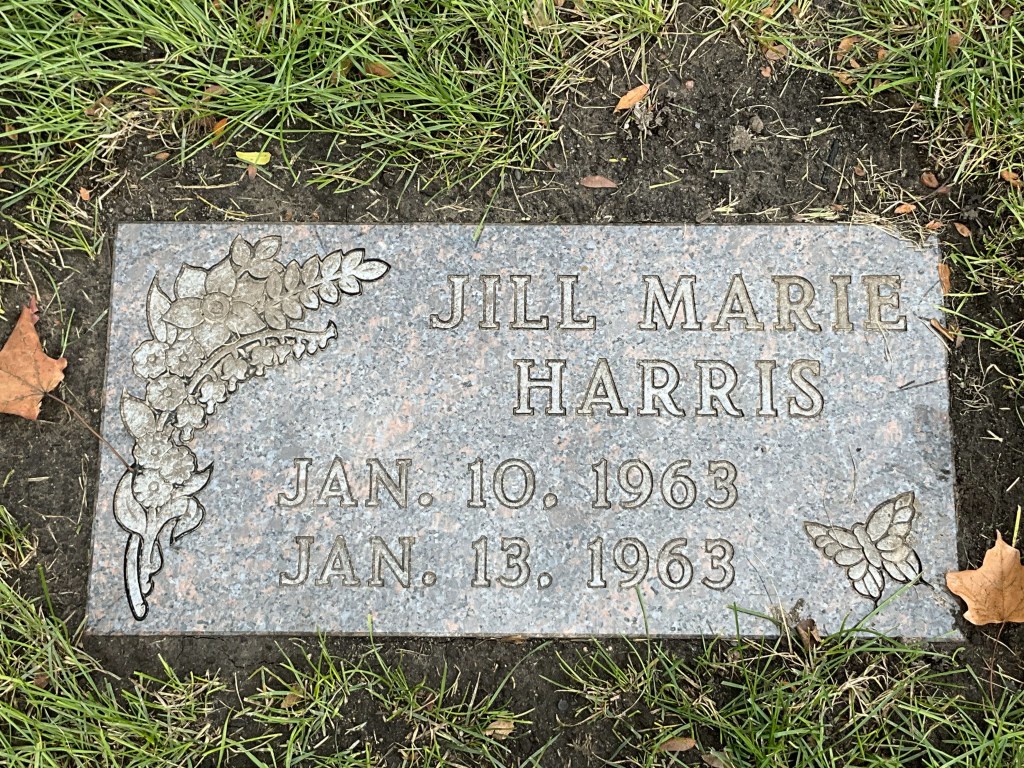
I have previously written about my adoption reunion. Technology (23&Me and Ancenstry.com) made the reunion possible. What readers may not know is that I have sister who died before I was born. My parents rarely (once or twice) talked about her. I didn’t ask. All I knew was an approximate year and location of her her birth and death. When my father passed away, my mom included my sister on their headstone.

It’s strange feeling a connection to someone you never met. Yet, I have always felt a connection. I few years ago, I used technolgoy to locate my sister. I was able to find and who died at three days old. I used findagrave.com to locate the cemetery where she was buried. I was able to use the cemetery website to locate her gravesite.

She is buried in Lakewood Cemetery in Minneapolis. It is a beatuful cemetery located south of uptown Minneapolis next to Bde Maka Ska. “Long considered one of the most beautiful cemeteries in the country, it was modeled after the rural cemeteries of 19th-century France, such as Père-Lachaise in Paris.

Her grave is tucked in the south end of the cemetery near service building in a secluded area. She is buried in area with other children. In her “row” of 18 children, the oldest is 8. Eleven of the eighteen chilrden liast an age of zero. Most of the graves are unmarked (12 of 18). I have visted her gravesite several times over the past few years. It is a very peaceful but sad place.

The first time I visited, I was shocked that my sisters grave was one of the unmarked graves. Over the next few years, I wondered why my parents would not mark her grave. It bothered me. It bothered me so much that earlier this year, I contacted the cemetery about placing a headstone. After some conversations, we agreed upon a design. It is made from grantie quarried in South Dakota. I was told the earliest it would be ready would be spring of 2024. Imagine my joy last week when the cemetery sent me the picture attached to this blog post.

Soon I will visit and beable to know exactly where my sister is buried. So will others who may vist that area of the cemetery where the past meets the present.

Below are the names of the other children buried in my sisters row. I place them here to make sure they are not forgotten.

  1. ELSIE J FERGUSON
  2. BABY KNIGHT
  3. CHARLES R FOSTER
  4. ELIZABETH HOOVER
  5. FREDERICK NEWTON
  6. EARLING LUNDHIEM
  7. BABY ANDERSON
  8. JENNIE CATHERINE SAARE
  9. DOROTHY A. ROSCHE
  10. FLORENCE WILLIAMSON
  11. ROBBIN DARNELL THOMAS

Birthdays

For most, birthdays are significant. It marks another revolution around the sun. Another year of thriving, surviving, or something in between. It is a cause for celebration and reflection.

Today I am celebrating another year. The older I get, the more precious these are. We all have friends and family who will not see another birthday.

I have not always been in a celebratory mood on my birthday. If you recall my last post, I talked about the last time I saw my father. Originally, I wasn’t going to stop at the house to see him that night. Why would I stop? After all, I was going to see him the next day when we gathered to celebrate my birthday.

For many years my birthday has been a painful reminder of one of my darkest days. I can still hear the quiver in my mother’s voice as she told me my father had unexpectedly passed away. I remember the spot I was standing when I received word. I was golfing at the time and had to tell the golf group what had happened. We were all young, far too young to experience this.

Since that day, I have worked to use the day not only to reflect and mourn what was lost that day but also to celebrate. So today, I will take time to reflect on my father. The gifts he gave me. I’ll tell him what has happened over the last year. I will honor him.

I will also celebrate. My celebration today will be different. Today, for the first time, I will be celebrating my birthday with the woman the gave birth to me. So today should be a very good day.