
For many years, I have loved going to bookstores. The new releases. Certain topics. The sale rack. The ritual of browsing without knowing what you will find. It was probably around 2007 when I was in one of those bookstores and a title caught me: The Big House.
I pulled it off the shelf thinking it was about Michigan Stadium, about the Wolverines, about the kind of place that holds a region’s memory and sells overpriced sweatshirts to people who should know better. I don’t know why I thought that. The jacket made clear I was wrong almost immediately. It was George Howe Colt’s memoir about his family’s summer home on Cape Cod, the house his great-grandfather built in 1903, the Atkinson house, the place that held five generations before the family finally decided to sell it.
Even though the book was about something completely unexpected, something I ordinarily wouldn’t have picked up, I bought it anyway. I didn’t know it yet, but this was the book I needed.
What I didn’t know then was why I needed it. I had left houses before. College houses. Rental houses. Temporary places where you owned a few dishes, a bad couch, and the confidence of someone who did not yet understand compound interest. But the first real house I lost was the one I grew up in, and I didn’t choose to lose it.
My parents built that house from the ground up, the same way our family would later build a cabin and, eventually, the same way my wife and I would build our own dream house. I watched it go from a foundation and framing to something we actually lived in. I got a say in it too, or at least the kind of say a kid gets. I picked my carpet. I picked a football mural wallpaper for my room, the kind that seemed like the most important decision of my young life at the time. It was mine before I understood what that meant, and it stayed mine right up until it wasn’t.
That understanding arrived all at once. I learned around Christmas of my senior year in college that my parents were leaving Rapid City. My dad got a job that required a move, three hundred and sixty miles away. My parents would sell the house I had grown up in. When I came home for Easter, it had already sold. I walked through it knowing I would never see it this way again. It was the house where most of my memories lived, or at least where I thought they lived then. I had never been through losing a place like that before, and deep down I was afraid the memories might disappear with it.
Something did die with that sale, or at least it felt that way at the time. My dad had always had a house to go back to, and he took us with him. I assumed I would have the same thing to give my own kids someday, that I could walk them through the house I grew up in the way my dad had walked me through his. I didn’t know yet that a homebase isn’t something someone simply hands you. You build it, and eventually you lose it. My grandparents lived in the same house for over fifty years. I understand now how rare that actually is. What died with the sale wasn’t the house. It was that assumption. It was, in a way, my youth.
Graduation was on a Sunday. That night, I moved out of my college house and drove to my parents’ new house. A couple of days later, my parents arrived with everything else from the childhood home. My dad would die in that house years later, but it was never home to me. It was the place where the furniture landed after the life had already happened somewhere else.
I never got to pack my own things. I never got a final walkthrough alone. I never got to say goodbye the way I wanted to say goodbye. It wasn’t cruel. It was life. My parents were doing what needed doing, and I was old enough to understand that, but not old enough to know what to do with the ache of it.
That is how it happens sometimes. People come and go. They die. They move away. Houses sell. The world doesn’t pause so you can stand in an empty bedroom and negotiate with the wallpaper. You don’t always get the closure you think you’re owed.
What I got instead was everything my parents couldn’t let go of. My parents were raised during the Depression. Their parents lived it. Nobody in that lineage looked at a coffee can full of screws and thought, “Well, that has served its purpose.” A few months after my dad died, I bought my first house and acquired many of my parents’ things, especially the kind of things you need when you are starting out in a home of your own. Furniture. Dishes. Tools. The practical leftovers of a life already lived, now put to work for a life just beginning.
Six months later, my grandmother died, my mother’s mother, and I inherited some of hers as well. Less than a year after my dad died, my mother downsized to a small two-bedroom condo and gave me the practical Midwestern version of estate planning: come get it or it’s getting thrown away. That was when the books came. The voracious reader’s library. His slides and eight-millimeter movies. His tools and his father’s name tag from Firestone, which I still have. Artwork and furniture and knickknacks. Dishes and silverware. A Vikings helmet lamp. A trumpet lamp. Complete sets of nails and screws and bolts that I would never use.
Even my fifth grade spelling book came along.
It all traveled from the childhood home to my parents’ new home, then to my house in Canton, then to my first marital home, and finally to the dream house. I moved it from one location to another, rarely using it the way it was meant to be used. Deep down, I believed that holding onto their things would keep them alive. If I let the objects go, I feared I would lose them all over again.
When my wife and I got married, there were tense moments. She said no, not everything comes with us. My fifth grade spelling book had to go. But I got to keep the report on the platypus, because a man has to draw the line somewhere.
My wife was not so much happy with the purge as she tolerated the settlement. She was practical. She saw boxes. I saw my father’s hands, my mother’s handwriting, and my grandparents’ stubborn Depression-era refusal to throw away anything that might someday be useful to someone, somewhere.
I tried to explain to my wife what it was like to lose a parent. Both of hers were living then and are living still. Mine have been gone for most of our married life. That wasn’t her fault, of course. It was just one of those uneven facts marriage has to absorb. She could sympathize, but she could not yet know the strange arithmetic of grief, how a useless object can feel heavier than it is because it seems to contain a person you are not ready to lose again.
So she did what practical spouses have done since the beginning of time. She shoved my stuff into a closet so she didn’t have to look at it and waited for me to become a little less ridiculous.
Over the years, I did get better, although not quickly enough to be confused with personal growth in real time. About five or six years ago, I finally admitted another purge was necessary. Not a gentle Saturday afternoon of sorting. Not three tasteful donation boxes and a cup of coffee. I rented a full-size construction dumpster and gave myself about ten days.
I gave some of it away. I sold some of it. Most of it, if I am being honest, was junk that needed to go. I moved fast. I made decisions. I threw things away before memory could hire a lawyer and file an appeal.
That purge helped. It made the house lighter. It made me lighter too, although I probably wouldn’t have said it that way at the time. But it didn’t solve everything, because by then the collection had stopped being just theirs.
Over time, my wife and I added our own layers. Wedding gifts. Baby furniture. School projects. Sports equipment. Christmas decorations. Books of our own. Photos. Framed art. The boys’ trophies, toys, drawings, games, blankets, stuffed animals, and mysterious plastic things that apparently mattered deeply for six weeks in 2009 and then became permanent residents of the basement. The house became part grandparents, part parents, part us. It held four generations of memory, some of it beautiful, some of it useful, and some of it waiting patiently in a storage room for a purpose that was never coming.
That is what made the purging harder. We weren’t just deciding what to keep from my parents. We were deciding what to keep from everyone. Every box seemed to ask the same question in a different voice: Is this still part of the story, or is it just something we have been carrying because no one wanted to be the one to let it go?
Long before that final purging started, though, there was another house that taught me the same lesson the hard way. The cabin arrived when I was about twelve and remained in the family until I was in my mid-forties. We built it from scratch, another place meant to hold us. We skied. We snowmobiled. We did things there that I won’t itemize here, mostly because my parents are gone and I still prefer not to disappoint them retroactively. My dad had his first heart attack there shoveling snow. After that, we got a phone.
We gathered there sometimes for Christmas, often for New Year’s. College friends came. Law school friends came. I lived there one summer. The cabin became more than a structure in the Black Hills. It became the place I went when I needed to remember who I had been before life got complicated.
I brought my future wife there while we were dating. It was a test, although I doubt I admitted that out loud at the time. She needed to love the cabin, maybe not as much as I did, but at least a little. I tried to explain how important it was to me and how important the Black Hills were to me. She came from the plains, so naturally I called her a flatlander, because romance has many languages and mine apparently included mild geographic condescension.
She passed. She understood what the cabin meant, or at least understood that I needed it to mean something. We got married in the Black Hills, and we spent our first night together as husband and wife at the cabin. It wasn’t the first time she had been there, but it was the first time as my wife. I now shared the one place I had always felt at peace with the person I had chosen to spend my life with.
We went back often. We walked and hiked in the Black Hills. We took our kids there from the start. They loved it, except for the time my oldest hit a tree skiing and cracked his skull, which is the sort of family memory that starts as trauma and slowly becomes a story everyone somehow gets to tell at dinner. There was also a Christmas Eve when we drove to a small Episcopal church in Lead and experienced one of the most intimate and spiritual services I have ever been part of. The cabin was still the one place where everything felt right.
But the geography had shifted. When I was young, the cabin was only an hour away. It was a natural gathering place, close enough to be refuge rather than project. As I got older, as my own life expanded, five or six hours became the new distance. Every holiday and school break required a pilgrimage. What had been a refuge began to feel like an obligation. When my parents passed the cabin to me and my sister, and then eventually to me alone, I understood that I could not hold it the way they had.
Before we sold it, the cabin frequently appeared in my dreams. The dreams were not subtle. I would be there again, walking through rooms, looking for something, trying to keep the place intact. Sometimes, in the dreams, we had built additions. Other times, there were secret rooms I had somehow forgotten, or we had made modifications that changed the place without changing what it was. It was bigger, stranger, and not quite real, but it was still the cabin. I understood even then that the dreams were the part of me that could not let go.
Then I read Colt’s book. A family held a century-old summer home on Cape Cod through five generations and finally decided to sell it. The book understood the weight of that kind of place. It understood the guilt, the inheritance, the obligation, and the quiet relief that can come when a family finally admits that love and ownership are not the same thing.
It wasn’t quite the same attachment I see in my professional life, the kind a farmer feels for land that’s been in the family for generations. But it was an attachment. Different scale, same root.
Something in that story gave me permission. We sold the cabin. The dreams stopped. The letting go was real.
That lesson mattered because, by then, my wife and I had already built the next place we would someday have to release. In 2004, we decided to build our own house. We had gone to countless open houses looking for something that would work for our family, and nothing did. We hired an architect friend who listened to what we wanted. We found the builder. We found a lot in a new neighborhood. We extended ourselves beyond what we probably should have because we believed it was worth it.
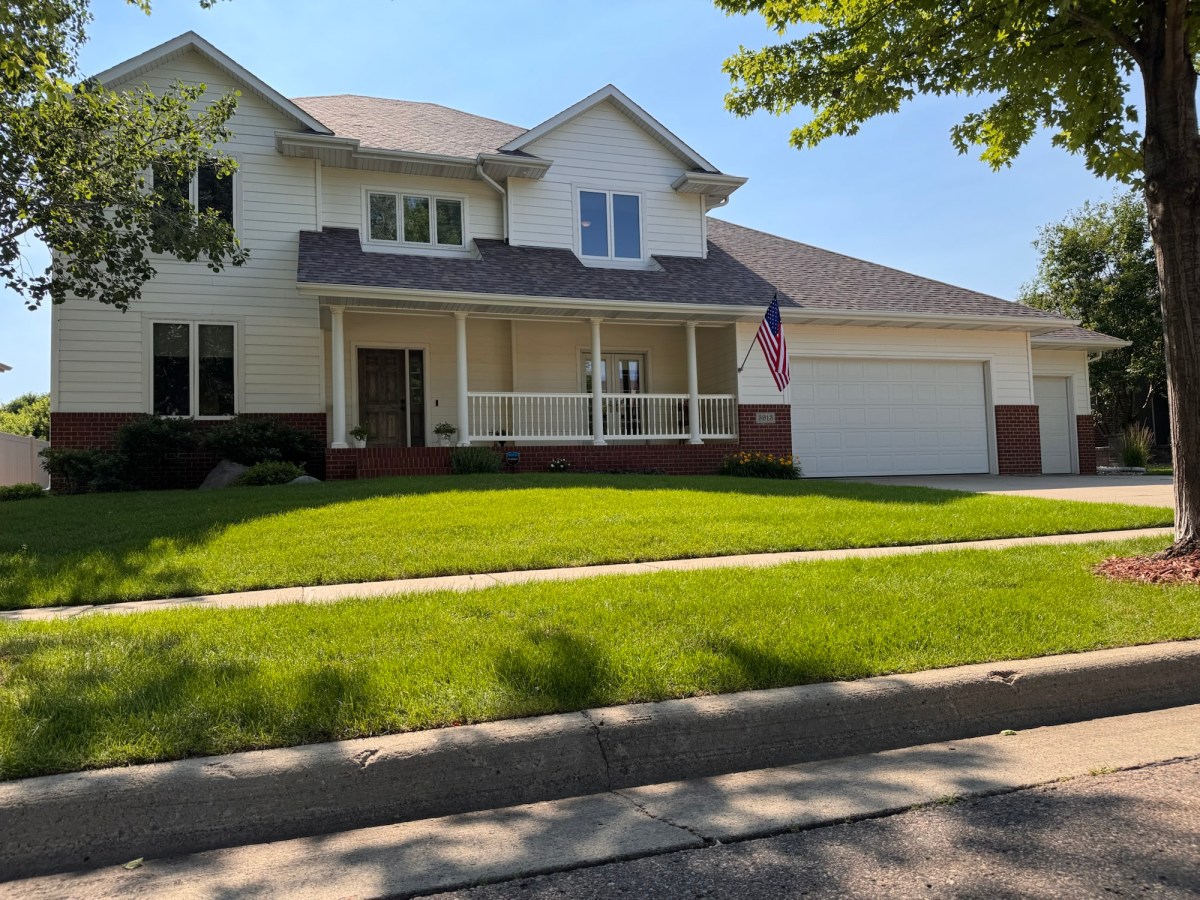
It was a farmhouse with a Grand Hotel-inspired porch, modeled after the porch at the Grand Hotel on Mackinac Island, where we honeymooned after our wedding in the Black Hills. Each boy helped design his room. My wife had her space. I had mine. We built the house to fit us, not the other way around.
Christmas mornings happened there. Birthdays happened there. We gathered around the dining room table for dinners that mattered and around the kitchen counter for most of the meals that made up actual life. Both of our boys graduated from high school while living in that house. We took prom pictures there, everyone dressed up and pretending not to be nervous while parents took too many photos. My mother’s ashes spent a night there before we took her to Rapid City for burial. The boys had friends over and made noise in the basement. The house filled with the sound of boys becoming men.
But we always understood, at least in theory, what the house was for. We built it to hold a family while that family grew. We built it for bedrooms full of laundry, backpacks in the wrong places, friends in the basement, shoes by the door, and the daily racket of raising children. We didn’t build it as a museum. We didn’t build it as a monument. We built it for a chapter.
When our youngest left for college, we came home to rooms that were too empty, too quiet, and too big. We did some remodeling. The house remained the gathering point during holidays and school breaks, and for a while that was enough. But my wife and I had always talked about moving once the boys were gone. The house had done what we built it to do, even if admitting that felt like betrayal.
Four months ago, my wife and I looked at each other and said it was time. We got serious about fixing things, cleaning things, sorting things, and facing all the things we had carefully placed in closets so we could pretend they didn’t exist. We talked with a realtor. He gave us the comps. Then came the work no one puts in the real estate brochure: decluttering, painting, repairing, deciding, and standing in the garage wondering how two people had acquired enough stuff to provision a small expedition.
In the middle of that work, I found a stack of letters. My parents had written them to each other years before they married, back when they were dating and living in separate cities. I held them for a moment. I knew what the younger version of me would have done. He would have kept them without thinking. He would have placed them in a box, moved them three more times, and told himself he was preserving something sacred.
I resisted the urge to read them. They weren’t mine to read. Whatever my mother held onto them for, whatever reason she had for keeping them all those years, that reason had nothing to do with me.
I threw them away.
That wasn’t what made us decide to sell the house. We had already made that decision. But it felt like confirmation. My parents’ love for each other didn’t live in a stack of paper. It lived in the fact that I existed, that they built a life together, and that everything after those letters became the actual story. Keeping them wouldn’t have preserved their marriage. It would have given me one more box to carry.
And then, last week, the decision became real. The realtor came at 1:30. We sat at the kitchen counter, the same counter where we had eaten most of our family meals over twenty-two years, saving the dining room for special occasions, and we went through the paperwork like it was any other Tuesday. He asked if we were ready. My wife and I looked at each other and said yes.
The house had never looked better, which felt like its own strange joke. Twenty-two years of raising boys, and somehow the place looked its best on the day we decided to let it go.
The photographer showed up within the hour. She moved room to room while I stood in the kitchen not quite knowing what to do with my hands. The realtor left at 3:00. By 3:30, a text came through: a showing scheduled shortly after five. By 3:45, another text came, another showing shortly after six.
We couldn’t be there for it, so we did what we do. We grabbed Ginger and drove to the brew pub, the one we always end up at on Halloween, and ordered a couple of beers while trying to act like people who weren’t waiting on the biggest phone call of the year. Another text came in about a third showing. We stayed for three hours, longer than we meant to, because leaving felt like admitting something.
We got home. Not long after, the phone buzzed. We had an offer. Five hours. The house we built to raise a family in took less time to sell than it takes to watch a Vikings game go sideways in overtime.
Once we signed the purchase agreement, the work shifted immediately. We had done some preliminary looking already and had a basic idea of what we wanted next. Our realtor sent us fifty-six more choices. My wife and I went through every one of them, built a scorecard, made checklists, and narrowed the list to three we wanted to see in person.
But we already knew. A week after we sold our house, we made an offer on another one.
It won’t have room for all our stuff. That’s fine. We will make new memories there instead of trying to force the old ones into every closet and drawer. There will still be enough room for the boys to visit, even if it’s smaller than what they grew up in. My dad grew up with four siblings in a house that would make this one look enormous. You can fit a lot of people into a house when the people matter more than the square footage.
The letters are gone. The spelling book is gone. Most of the nails and bolts and knickknacks are gone too. What remains is what matters: my wife, the boys, Ginger, and thirty years of memories that never really lived in a box or a drawer or an attic in the first place.
My wife keeps asking me which things I want to keep. For a long time, that question would have sent me into a spiral. Now I tell her the truth: it doesn’t matter anymore. We keep what we need to keep. We throw away what we need to throw away. We give away or sell the rest. It’s not indifference. It’s the opposite of indifference. It’s finally understanding what the things were never able to hold in the first place.
I am sure I will be emotional over the next few weeks as we say goodbye to this house room by room and closet by closet. But I have been through this before. I know now, in a way I didn’t know at twenty-two, that leaving doesn’t mean losing. The memories come with me because they never needed the house’s permission in the first place.
Most of what I write is for me. It helps me think through things I haven’t fully worked out yet, and if someone else reads it and takes something away, that’s a bonus I don’t take for granted. But this one is different. This one I hope my boys read.
To my boys, if you ever read this: the house is gone, but you are not. Christmas morning still happened. Your friends still laughed in that basement. Your mother and I still watched you grow from boys into men inside those rooms. A sold sign cannot change that. A deed cannot erase it. A key can be handed to someone else, but a childhood cannot.
You can sell a house. You cannot sell a family. We are still us. We will always be us.
Colt taught me that in a bookstore in 2007, before I understood why I needed to know it. The cabin taught me again when the dreams finally stopped. Now, with boxes half packed and a new front door waiting, I know it one more time.
The house did its job. It’s somebody else’s turn now.



You must be logged in to post a comment.