What do you do when there are no directions, no signs, and no map? If you’re lucky, you go anyway. Some of the best days of my life started with no idea where I was going or how I would get back. You climb a hill that doesn’t tell you its name. You come around a ridge into a valley that stops your breath, and you stand in it not knowing a single thing you’re looking at. The names come later, at home, at a desk, with a map finally open. So does the meaning. I learned that on a day in the Pentland Hills, about twenty miles south of Edinburgh, in the summer of 2022.
It was a transition summer. One life was closing and another was about to begin. My years in academia were ending, and the work I do now in trust and financial services was still a few weeks off, sitting out there like weather I couldn’t see. Being between jobs is a little like trying to jump across a creek. You run and you jump and you pray you jumped far enough to make it to the other side. I knew where I was supposed to land. I just didn’t know if it was the right spot, or whether I should have jumped at all. Which is how I found myself in Edinburgh, a long way from any of it, with a few free days and no agenda.
My wife wanted to walk, and I wanted to walk with her. There are famous walks in Edinburgh, Arthur’s Seat rising right out of the city, and we could have done the sensible thing. Instead, the concierge told us to get in a cab, ride south to a place called the Pentland Hills, and just start walking. We had no idea what to expect, no idea where we were going, and no idea how we would get back. So we got in the cab.
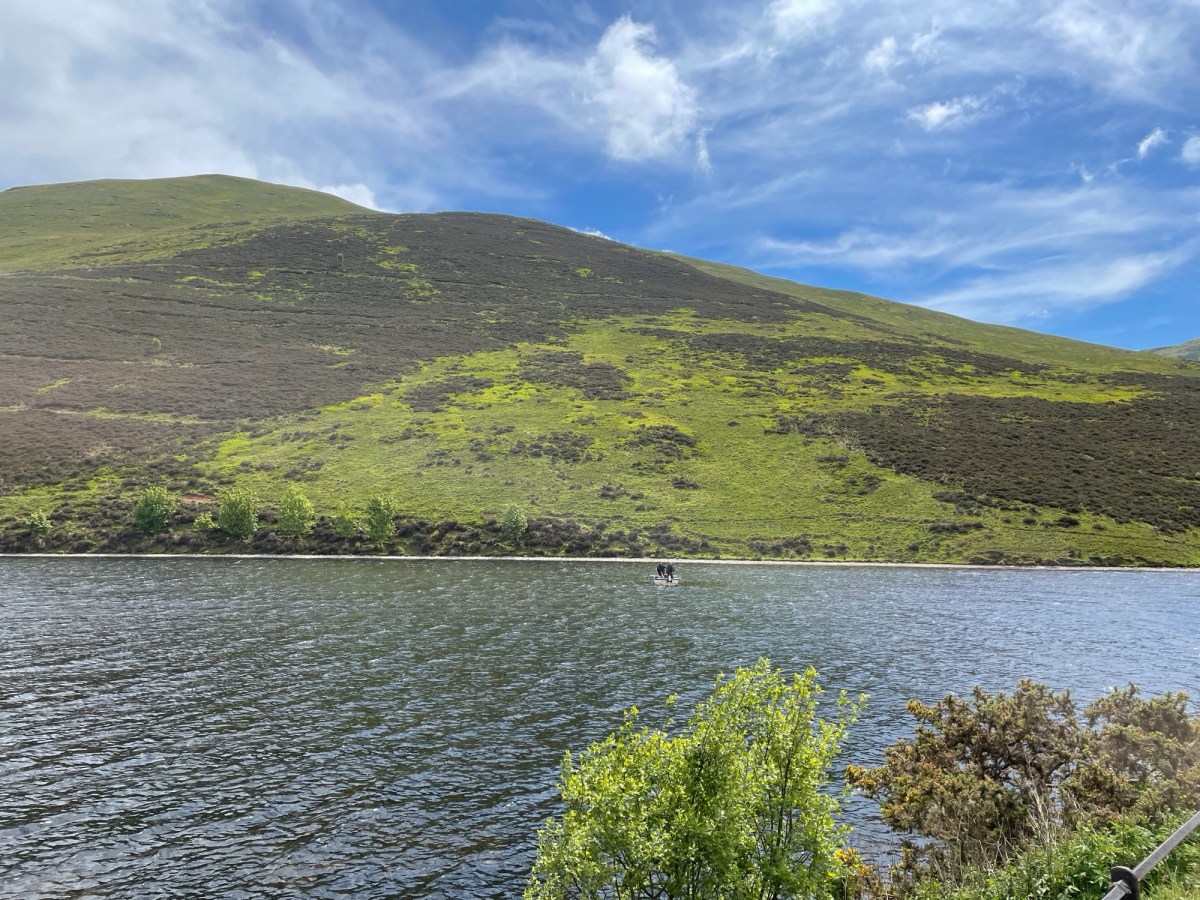
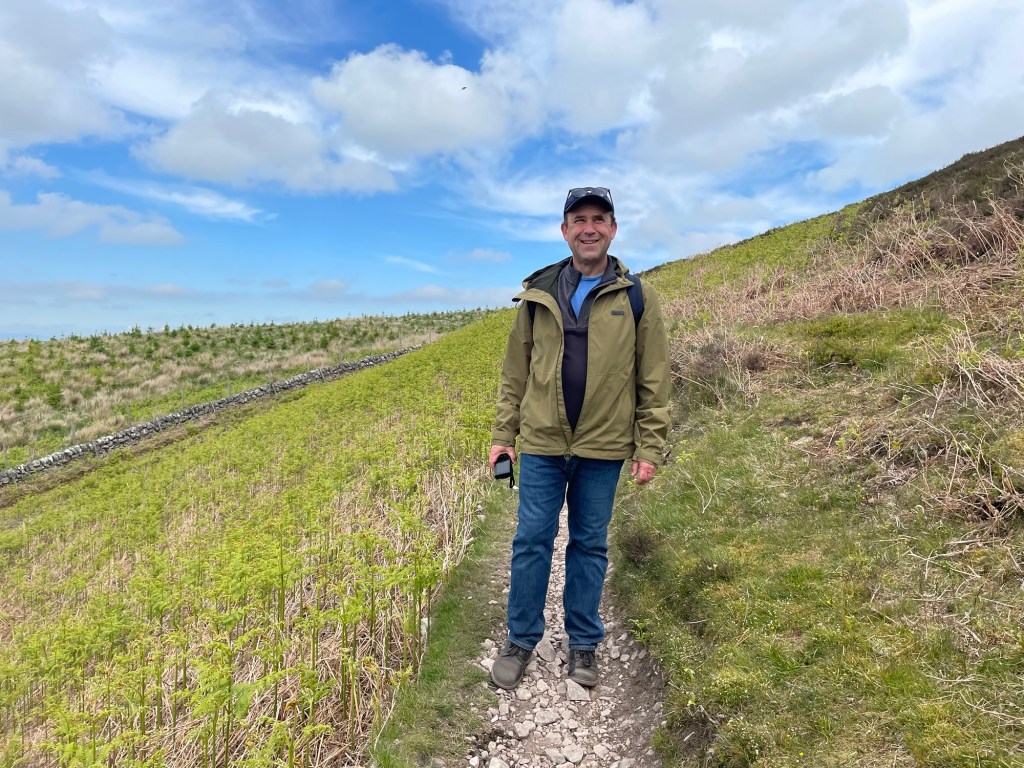
The driver left us at a car park I would only later learn was called Threipmuir Reservoir. We followed the signs to the water, mostly because the signs said it was there and we could see it. These would be the last signs I remember seeing. We walked along the reservoir, and then around it, and eventually we looked up and there was a hill. A big one. There was a path up it, narrow and jagged, the kind that makes you suspect you don’t quite belong on it, but there were runners on it, several of them, moving up and along the slope with that easy purpose that tells you a thing is possible. They were the only sign we had, so we followed where they went and started up.
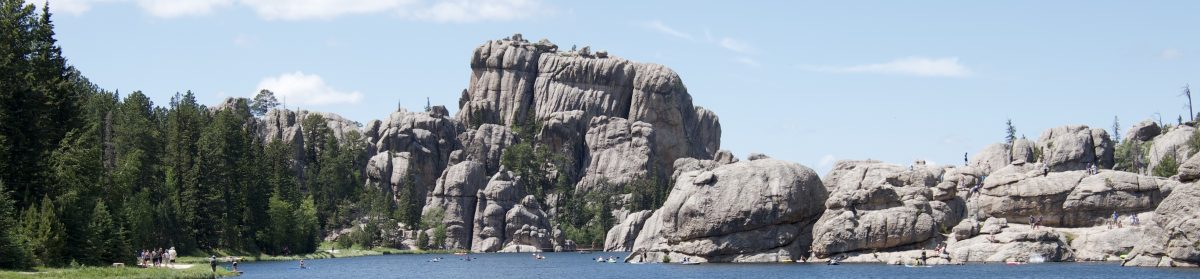
As we climbed, I found myself waiting for a feeling I already knew. Growing up in the Black Hills, I hiked a lot, though I hiked the way a kid hikes, aiming for the destination and not thinking much about the path. Mount Baldy, Little Devils Tower, Hippie Hole. Most of all, Harney Peak, which we would climb a few times each season. I first knew it as Harney Peak, and it was Harney Peak every time I climbed it. They call it Black Elk Peak now, renamed to honor the Lakota holy man.
When you reached that summit, you knew you were somewhere. You stood at the highest place for miles and looked down as the hills rolled away toward the plains. There was a destination, a summit, and a reward for getting there. So as I worked my way up that rocky Scottish path, some part of me was hoping for another Harney Peak. I expected the same bargain. Do the climbing and eventually the world would open beneath you.
What I got instead was better. The climb was hard, but the good kind of hard, the kind that empties your head while it works your legs. Whatever I had carried into that summer got quieter somewhere on the slope. I would find out later that the hill was called Black Hill, and of all the names it could have had, it was that one. I had spent my childhood among hills that carried the name, and here I was an ocean away, climbing another one without knowing it.
There was no sign announcing Black Hill. I learned the name later, tracing our route on a map, and when I saw it, I sat with it for a while. There was something about discovering that name afterward, at that particular moment in my life, that stayed with me. Some circles you don’t notice you’re walking until you’ve already closed them.
The path wrapped around the southern edge of Black Hill, and then the whole world opened. I came around that edge and looked east toward Scald Law, the highest of these hills, and it took my breath away. I had already fallen for Scotland by then, and for the Pentlands, but this was something else. This was not the Harney Peak feeling, the summit that looks down and flattens the world beneath you. This was almost the opposite.
The valley fell away green and folded and enormous, hill giving way to hill, the light doing what light does in that country, always moving. I had come up looking for a view that looked down on everything, and what I found looked out, and across, and into. I stood there and did not need anything to be different than it was, which, if you think about it, is as close to happiness as most of us ever get.
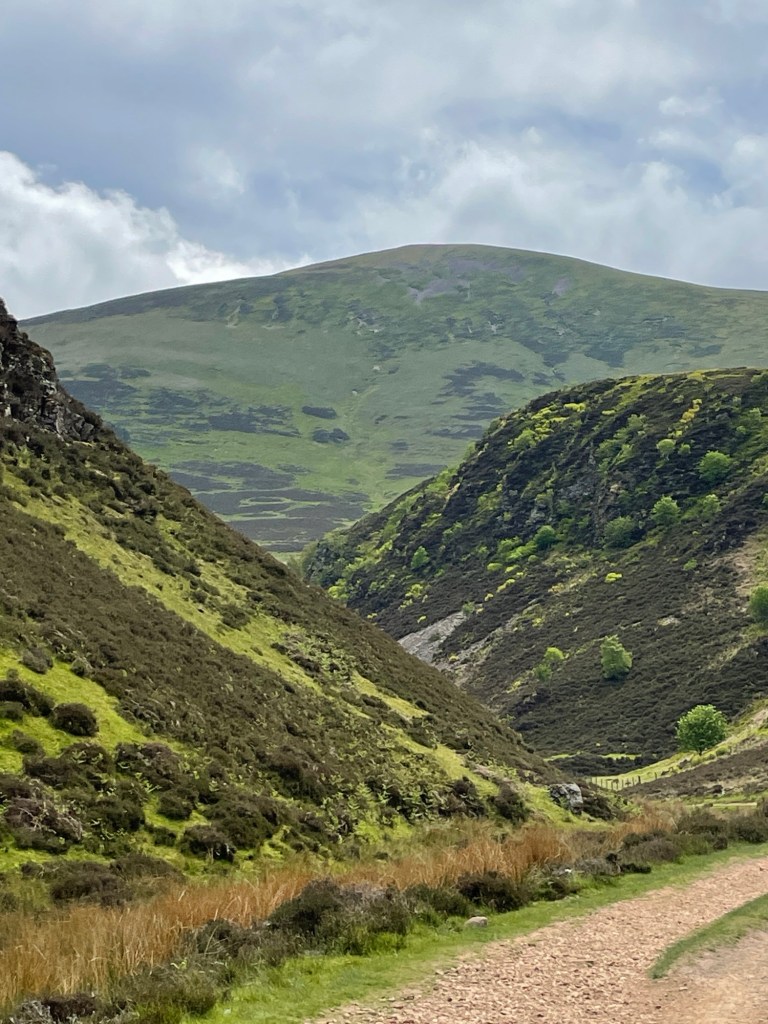
We came down the south edge into the valley below Scald Law and found another path, and this one didn’t test us. It ran north between the slopes, Black Hill on one side and Scald Law on the other, then Carnethy Hill, then Turnhouse. We passed two more reservoirs, each with a few people fishing, patient at the edge of the water. The air was clean in a way that felt like it was doing something for you. You could hear sheep and birds, and not much else. The climb was behind us now, and this was the long, easy after, the way the good stretches of a life sometimes feel when you’re finally not fighting anything.
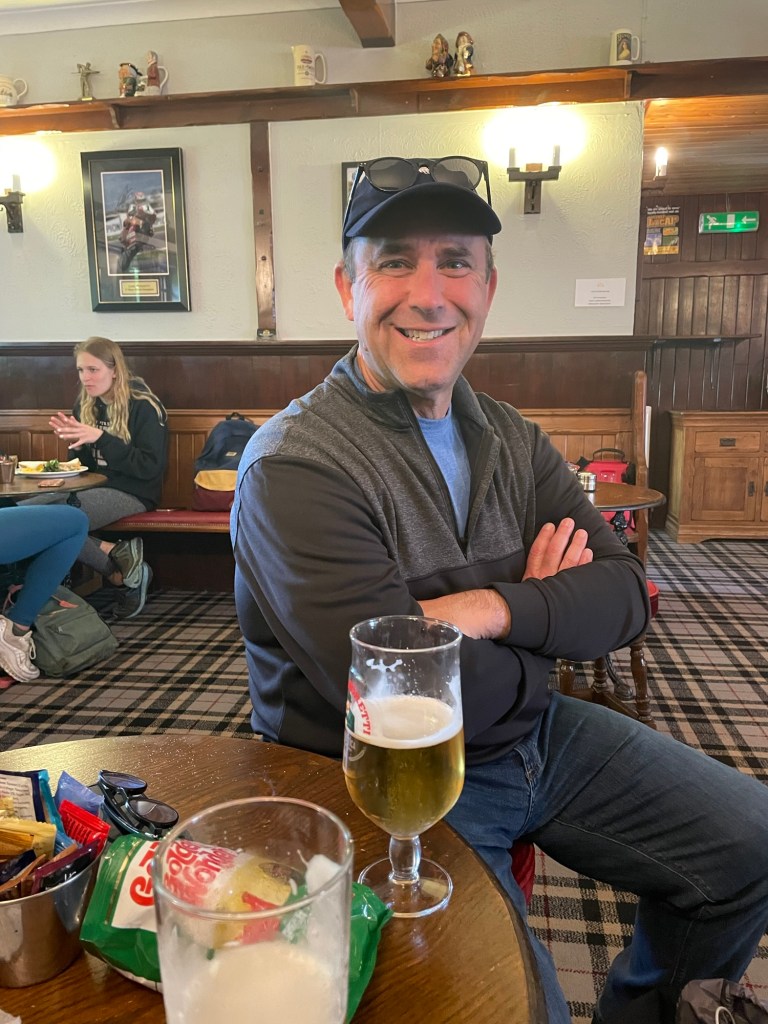
Eventually we stumbled onto a rustic pub called the Flotterstone Inn. We had a couple of drinks, and I don’t know that a beer has ever tasted more earned. There was still one small problem. We had spent the day walking farther and farther from where the cab had dropped us, and we still had no idea how we were going to get home. Then, outside the pub, we found a bus sign.
I keep coming back to that small detail. There had been no signs on the walk telling us the names of the hills. Black Hill, Scald Law, Carnethy, Turnhouse. We had walked among all of them blind and would learn their names later. Yet there at the end was a sign telling us exactly when the bus would come. Maybe that’s about as much direction as we usually get. Not an explanation and certainly not a map of everything ahead. Just enough to keep going. A few runners disappearing up a hill, a path under your feet, and eventually a bus at the end to carry you home. The rest you learn later.
When I sat down to write this, I pulled up the official trail map because I wanted to retrace that day and make sure I remembered it correctly. That was when I found one more thing. The path my wife and I walked that day, up and around Black Hill, isn’t really on it. It isn’t one of the routes they tell you to take. We had wandered onto something unmarked, drawn up a hill by a handful of runners and a feeling, and it made all the difference.
The name of this blog is two words of Scottish Gaelic. Sireadh Toileachas. Seek happiness. I didn’t choose the language by accident, although I didn’t understand when I chose it how much of my own seeking would trace back to a country I keep returning to. I found some of it that day on a hill I couldn’t name, on a path that wasn’t on the map, in the summer when everything was about to change.
I knew where the new job was. I knew when it started, and I knew where I was supposed to land. What I couldn’t know was whether I had chosen the right path to get there. Four years later, I still think about that walk, but not because I eventually learned the names of the hills or because I managed to reconstruct our route on a map. Maybe it is precisely the opposite.
The path wasn’t on the map, and we took it anyway. I think there are stretches of life that work much the same way. We go looking for signs that this is the right job, the right move, the right time, the right path, and most of the time we don’t find them. You pick a direction, start walking, and hope there will be enough along the way to keep you moving.
Sometimes there is. Sometimes there are runners ahead of you, a valley on the other side of the hill, a pub when your legs are tired, and a bus when it’s finally time to go home. You don’t know what any of it means while you’re walking through it. The names come later. Sometimes the meaning does, too. And I have come to think that has always been the deal.


