Both Things Are True

A son’s phone call, a course called Landmand, and a reunion photo that made one choice cost something even though it was still the right one.

The dream comes back often enough that I have stopped being surprised by it. I am walking the halls of my high school, the version that exists only in my head, and I end up in the fine arts center almost every time. Usually it is the band room. Sometimes it is the theater above it. I spent a lot of time there throughout high school, especially senior year, and those rooms were where I began learning who I was going to become before I had any real proof of it.

Sometimes I land in the lunchroom instead, and I always know why. That is where Mike Church told me the Challenger had exploded, and I did not believe him, right up until I did. Some part of my mind decided that moment belonged in the same building as everything else it was not ready to let go of.

I do not wake up from these dreams shaken or sentimental. I wake up and make coffee. But forty years later, it says something that my subconscious still knows the floor plan by heart, even though I could not tell you where any of my lockers were or what a single classroom looked like. Memory makes its own choices about what it keeps and what it allows to disappear. I wish there were a confirmation screen before something vanished, the way there is when you delete a file from your computer. Are you sure? One last chance to keep it.

I have been thinking about all of this more than usual lately, because the dream and the actual building finally had a reason to overlap. This past weekend was my 40th high school class reunion, and even typing that number, I still have to stop and do the math twice before it sounds real.

I have gone back for two reunions, the 10th and the 20th, and if I am being honest, I did not enjoy either one very much. I was never one of the athletes or the popular kids, genetics left me an NBA center trapped in a guard’s body, so there was only so much a name tag and a cash bar could do to manufacture a connection that was not really there the first time around. Do not get me wrong. I had friends, and I liked most of my classmates.

What I never really had was contact. Once my parents moved away, I drifted from most of them, mostly because I rarely went back, and long-distance phone calls were expensive. I suppose I could have written letters. I just did not form the kind of lasting friendships with them that I later formed in college and beyond.

The 10th landed just a few weeks after my father died. Some classmates knew and asked how I was holding up. Others did not know and asked how my parents were doing. Neither question was one I wanted to answer that weekend.

The 20th came a little more than a year after my mother died, and I brought my wife along that time. She did not know a single person in the room, and I do not think she had much fun. It is a strange thing, bringing someone you love into a part of your life she was never part of. She could see the building and hear the names, but she could not see what any of it meant. There was no way for me to hand that over to her in the space of one evening.

Going back for a reunion has always been a little different for me because my parents moved away four years after I graduated. There has never been a house to stay in, a childhood bedroom still holding my trophies, or family to visit while I was in town. You stay in a hotel. The reunion becomes the entire reason for the trip, not one stop on a longer visit home.

When my parents died and were buried in that same town, the tether became stranger. I go back now for a cemetery, not a childhood. Visiting their graves is usually one of the first things I do and one of the last, though I have never made the trip specifically for that reason. The cemetery is something I stop at on my way to something else, a reunion, a funeral, or a drive through town on my way somewhere farther. It is a ritual built around memory, the same names on the same stone and the same silence waiting for me.

None of that means I have lost interest in the people. I do not think I would go back to relive what happened forty years ago. Those years mattered, but I have never felt much need to step inside them again and pretend nothing has changed. If I went back, it would be to find out what happened after we all walked out of that building and into the rest of our lives.

The truth is that social media, Facebook in particular, has already filled in much of that story. Most of us got married. Some of us got divorced. Many had children. We built careers, changed directions, found success, and endured failure. Some became exactly who they imagined they would become when we were seventeen. Many of us did not. That may sound colder than I intend because it is not that I do not care about them. I do. It is simply that high school was forty years ago, and I am still trying to look forward. I remain curious about where life took everyone. I am just not sure I am curious enough to drive three hundred fifty miles for the chance that they might show up.

Even so, I was on the fence about going. My wife could not make the trip because a co-worker’s bachelorette outing had already claimed part of her weekend. If I went, I would be going alone, though maybe that was fine since she had never known any of these people to begin with. One classmate, whose wife was not coming either, offered to make me his plus-one for the drive. I appreciated it, but the offer did not move me any closer to going. It still meant a long drive there, a hotel room, and a long drive back.

I had not decided anything when my phone rang. It was my youngest son, the one who spent his high school years on the tennis court, calling from Nebraska, where he lives now. He asked if I had anything going on that particular weekend. I told him about the reunion, still undecided and still turning it over. He said he had a better idea. He wanted me to come play golf with him at a course called Landmand.

I did not need to think about it. The invitation checked boxes I had not realized I was counting. Time with my son, first and simplest. A round of golf with him, which does not happen nearly as often as I would like now that he lives in Nebraska. And a chance to play a course where people wait a year for a tee time and still come away empty-handed. It was not a difficult choice. It was barely a choice at all.

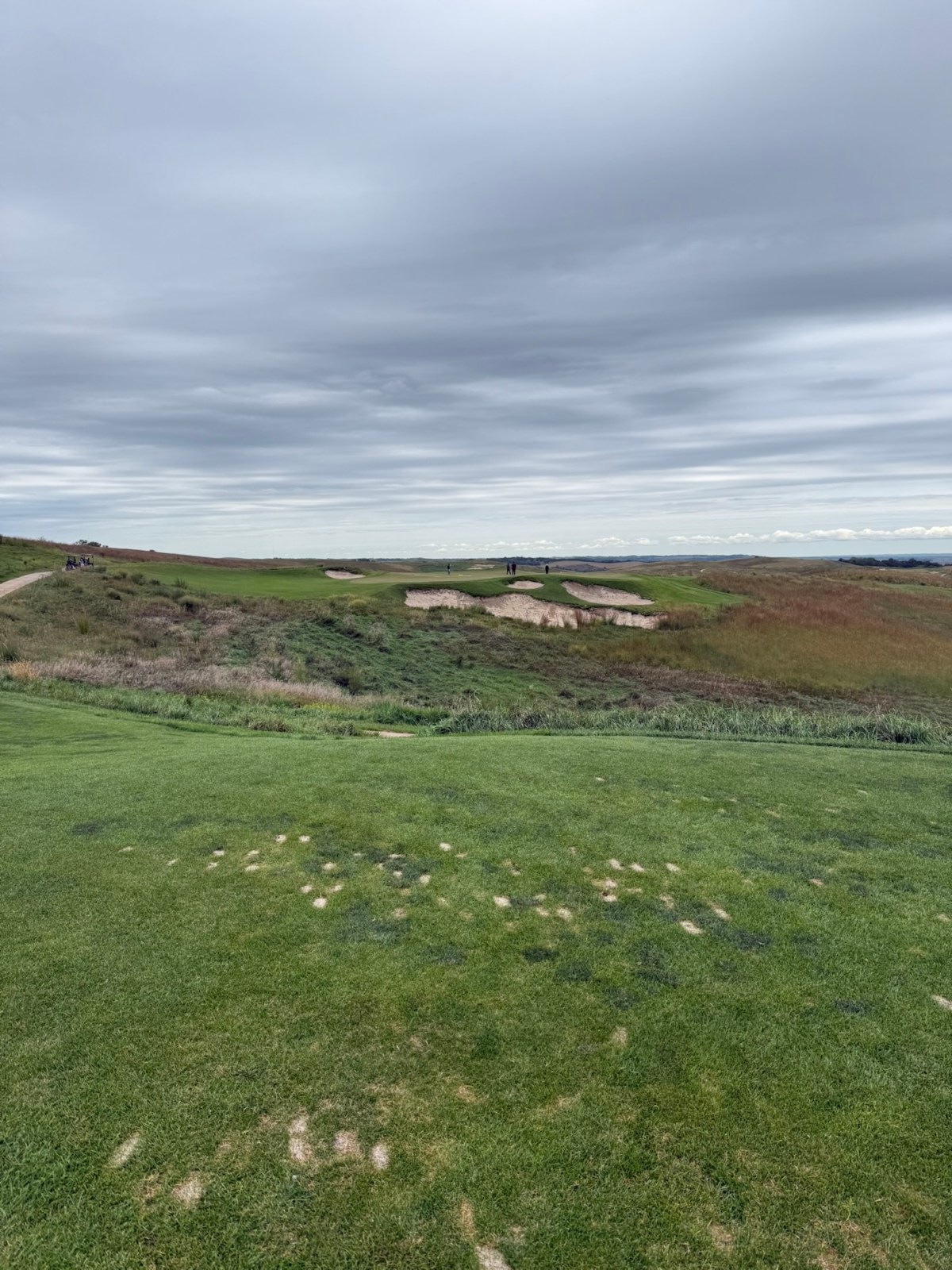
Landmand sits in the middle of nowhere by design, carved into steep, windblown bluffs outside Homer, Nebraska, on a stretch of ground so rough that architects told the farmer who built it to look elsewhere. He did not. Now it is one of the hardest tee times to get in the country, an entire season’s reservations disappearing in less than an hour whenever they open the book. My son had one, and on a Sunday morning in September, that mattered more to me than anything happening three hundred fifty miles away.

The day started cool and gray, with rain moving through in waves. At one point, we watched lightning far enough away that we decided to keep playing rather than duck for cover. Later in the round, the clouds broke enough to let the sun through, though they never fully cleared. We played the rest of the morning under that half-lit sky, with the sun and clouds trading turns overhead.

My son’s roommate came along, and his father did too. It was not one father and son on that course but two, trading shots and ribbing each other across fairways wide enough to lose a golf cart in. There was no ritual waiting for me at Landmand and no history I was expected to revisit. There was just a course my son knew and I had never played, a son who wanted me there, and a Sunday that had not yet decided whether it would rain or clear.
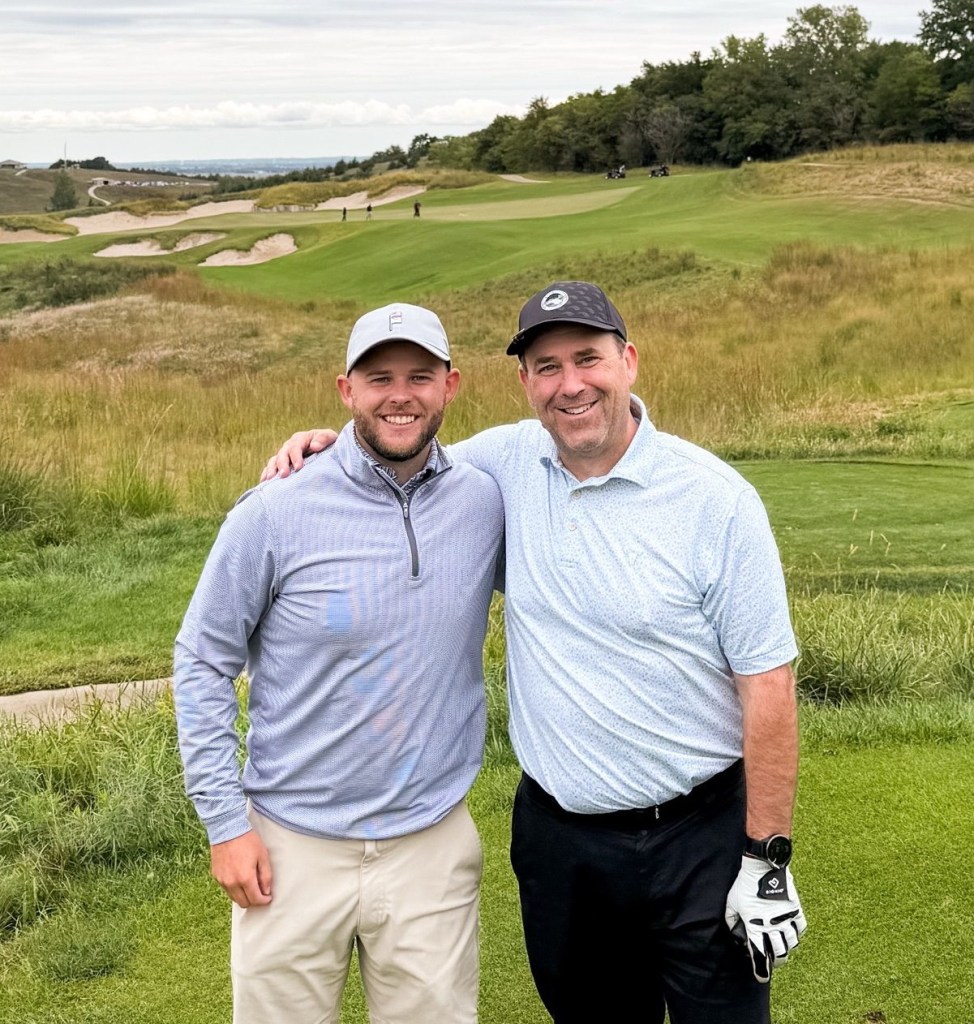
I played terribly at the start and improved only slightly as the round went on. It did not matter. A day on the golf course with my son is priceless.

When I got home after golf, the reunion photographs began showing up. Some appeared on Facebook, posted by classmates who had gone. A few more were sent directly to me by someone who thought of me while scrolling through a camera roll. I went through them slowly, forty years compressed onto a phone screen.

Most of the faces I recognized without much effort, aged but unmistakably themselves. A handful I could not place at all, people who had apparently once shared hallways and classes with me but had left no trace in my memory.

Then I reached a photograph taken in the band room, where I had spent so much of my high school life. Standing in the middle of the group was Mr. Winter, my high school band director, smiling.

A month earlier, I had written about what he meant to me. I had ended that piece by saying that if I knew Mr. Winter would be at the reunion, I would seriously consider making the three hundred fifty mile drive to see him. He was there. I just had not known he would be.

Of everyone I might have wanted to see that weekend, he was the one I wanted to see most. I stopped scrolling and took in the photograph. I wondered if anyone had sent him what I had written about him. What I felt was not regret exactly. It was the honest weight of what a choice costs, even when it is the right one.
Aged Thirty Years

I had a birthday this week. Tomorrow is Father’s Day. This is always a complicated time of year, and this one has been harder than most to put into words.

If you’ve been reading this blog for a while, you’ve heard parts of this story before. The golf course. The note. The phone call. I’ve written about this day before. But thirty years asks for more. This year I wanted to go further. Not just what happened, but who he was. And what it’s like to figure that out without him.

Thirty years ago, my birthday fell on a Saturday. The next day was Father’s Day. I was on the golf course when someone handed me a note written in red ink. Five words: Paramedics called. Call your mom at home.

I went back to the clubhouse. This was before cell phones were common, and they let me make a long distance call to my mother. I think they knew what I was about to learn. She told me “Your father had another heart attack and he isn’t doing very well.” We said a few more words. I don’t remember all of them. Then she told me the ambulance was taking him to the funeral home.

I drove to my parents’ home. Twenty-five minutes. When I arrived, my birthday presents were sitting out. We had been planning a celebration. There wouldn’t be one that day. There was a funeral to plan instead.

Grief, it turns out, comes with logistics. Two services in two towns 350 miles apart. Countless people to notify, arrangements to make, decisions that shouldn’t have to be made at all. His death was so sudden there hadn’t been time to plan anything. We found ourselves picking out burial plots in the cemetery where I had learned to ride a bike. Four of them, side by side. Three are now occupied. One remains. A lot of that planning happened on Father’s Day.

In the middle of it, I needed to get away for a little while. Not far. Just somewhere I could breathe without answering another question or making another decision. I went back to my own home, an apartment attached to a monument shop. That’s when I found it. The Father’s Day card I had already bought, signed, sealed, and set aside. That was not like me. I am usually the guy buying the card the day before, or the morning of, hoping the selection has not been picked clean. But that year, for reasons I still don’t know, I had bought it early. I had written in it. I had done the responsible thing. And now the last Father’s Day card I would ever buy had nowhere to go except with him. It was buried with him.

Father’s Day has never been simple since. Neither has my birthday. They arrive within days of each other every year, and every year they carry the weight of that one. Four times since he died, including the very first anniversary, my birthday and Father’s Day have fallen on the same day. I don’t have a word for what that feels like. I’m not sure one exists.

I don’t know that I can say I know who he was. Maybe none of us ever fully know our parents that way. But thirty years of life have given me more perspective than I had then. I understand more about him now than I did as his son standing in the wreckage of that week. Two of his siblings are still alive, and they could probably tell me even more. That is part of the strange work of grief, too. You keep learning about someone after they are gone. Family. Old friends. Coworkers. Former patients. I’ve heard stories about him from people I barely know. My favorite came from a man who shook my hand and said, “I knew your dad. He did my vasectomy.” I didn’t know what else to say, so I asked how it turned out.

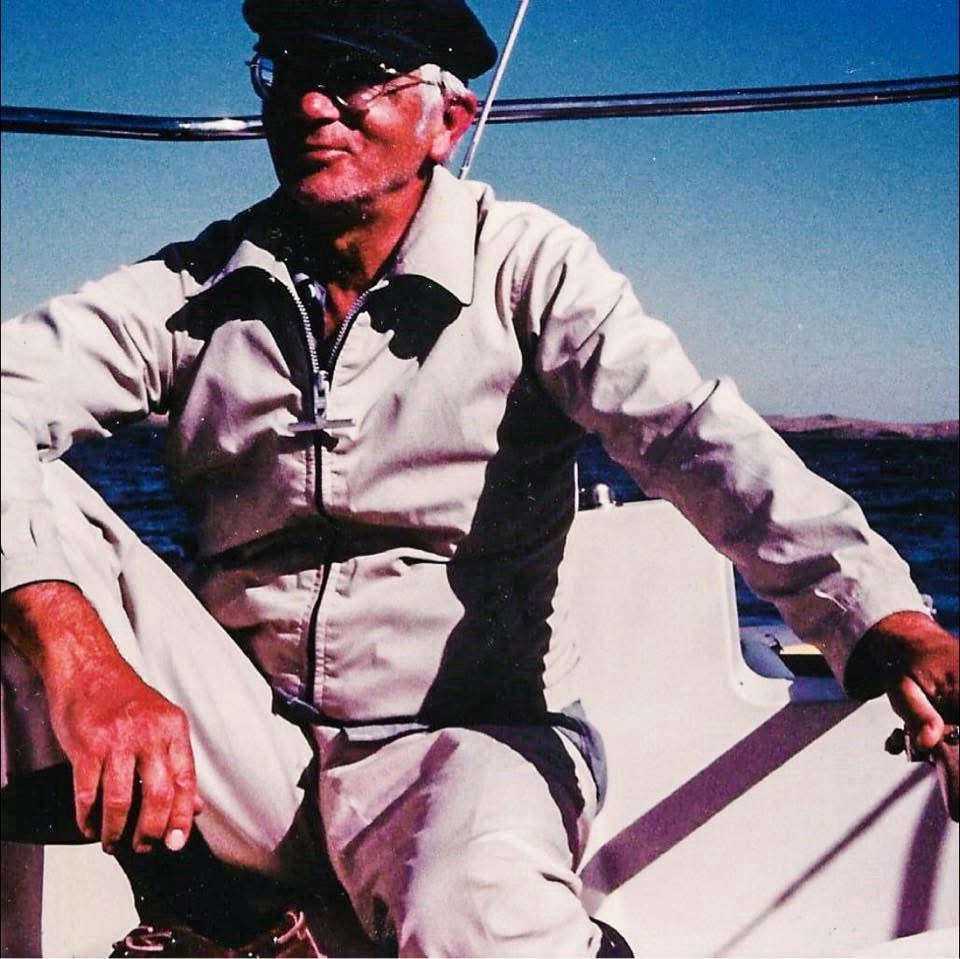
My dad’s name was Russell. He was the oldest child, or so I always believed, and he acted like it his whole life. It wasn’t until we buried my grandfather, his father, that I learned the truth. There had been another child born before him. A baby who didn’t survive. My dad had spent his entire life as the oldest surviving child, carrying that weight without ever fully being the firstborn.

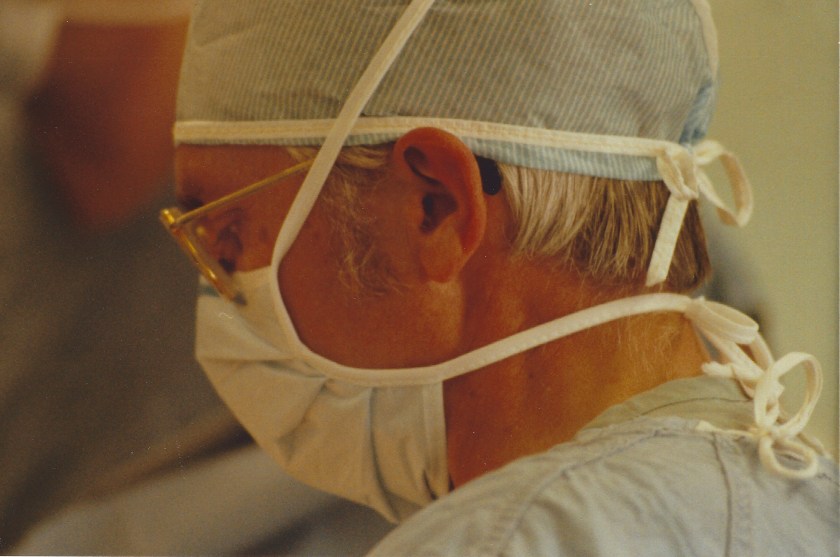
He was a surgeon, and like a lot of surgeons, he was gifted with his hands. He could build things, fix things, figure out what was broken and make it right. He was also a perfectionist. That is exactly what you want in a surgeon. It is not always what you want in a dad.

He tried to teach me some of what he knew, but teaching did not come as naturally to him as doing. I remember being about ten years old, mowing the lawn, and having him inspect it afterward with a surgeon’s eye for the imperfect line and the missed blade of grass. These were errors in a side yard at the end of a long private driveway. Nobody would ever see them. But to him, they mattered. Every project was like that. I never developed any real interest in working with my hands, building things, or fixing things. It wasn’t that the work itself felt beneath me. It was that something in me tensed up every time I picked up a tool, already worrying about the feedback if it wasn’t perfect.

When he died, I kept most of his tools. At the time, I told myself it was practical and valuable. Good tools are worth keeping. He certainly thought so. Every Sunday he would comb through the Sears newspaper ads looking for a deal on a new power tool. If he found one, he would dream up a project that justified the purchase. The tool came first. The reason came after. But the truth is, I kept his tools mostly as a way to keep him.

Over the years, I gave most of them away to people who would use them. That felt better than I expected. There is something good about knowing his tools are still fixing things, still building things, still in the hands of people who know what to do with them.

I still have some of them. This week, I used a few to fix a leaky faucet. I wish I were better at that kind of thing. I wish I cared more about it. But I don’t, not really. Maybe that is because of how he taught me. Maybe it is because of how I am made. Most likely, it is some combination of both. What I know is that even now, standing by a sink with a wrench in my hand, I can still feel the old pressure to get it right on the first try.

And when my own sons were old enough, I didn’t make them mow the lawn. I didn’t teach them how to build things or fix things, either. Maybe that was the wrong choice. But I couldn’t teach what I didn’t know how to do, and I didn’t want them to feel what I had felt. I didn’t want a missed blade of grass, a leaky faucet, or a failed first try to become something larger than it needed to be.

Times are different now. If they need to fix something, they can find a video, ask a question, or follow instructions I never had at my fingertips. But part of me still wonders whether I protected them from frustration or quietly passed along my own fear of it. How do you know what you should teach, what you should push, and what you should let them learn on their own? That is the kind of question I wish I could have asked my father.

What he left behind was not only tools, and the inheritance was not only fear. He left behind standards too. Some useful. Some heavy. Some I wanted to carry. Some I spent years trying not to pass along. And I also remember who he was when he was there.

My father believed in hard work. Not the performance of it, not the talking about it, but the actual showing up and doing the thing in front of you until it was done right.

I remember trying to learn how to water ski. I didn’t enjoy it. I wasn’t having fun. I wanted to be done. My father yelled at me and said that wasn’t the point. The point was learning a new skill, learning how to do something difficult, and taking pride in knowing you could do it. He was right, probably. I did learn how to water ski. But I never learned to enjoy it.

That was one of the complicated things about him. Sometimes the lesson was right, even when the delivery made it harder to receive. He believed competence mattered. He believed doing hard things mattered. He believed there was value in knowing you could do something, even if you never particularly wanted to do it again.

He also believed in integrity, in treating every person you encounter with basic human respect regardless of who they are or what they can do for you. Those weren’t lessons he delivered in speeches. They were just how he lived.

He was generous in ways he didn’t always announce. Our home was open to my friends. He would be there in his chair after a long day, a cigarette in one hand, a book or newspaper in the other, and a martini, scotch, or whatever drink was in rotation sitting not too far away. In hindsight, the fire safety plan may have needed some work. He might pull you into a conversation about politics, argue his side hard, and still expect everyone to be friends the next morning. If we went out to dinner, he paid. Every time, without discussion.

We also had two foreign exchange students live with us for a year. That is not a small thing. Adding another child to a house is expensive, inconvenient, and disruptive in ways people don’t always see from the outside. He did it anyway. He welcomed them, included them, and made them feel like family. That was his generosity, too. Not loud. Not sentimental. But real.

He was not without contradictions. He understood some of his own shortcomings, or at least enough of them to try to warn me away from the same mistakes. I came to think of those warnings as Russisms. He would point at me with a lit cigarette, take a deep drag, and tell me not to smoke because it was bad for me. Or he would swirl a martini, take a sip, and pronounce the dangers of alcohol and why I should avoid it. At the time, I probably heard the hypocrisy more than the wisdom. Now I hear something else. A man who knew his own weaknesses and hoped his son might not have to carry them.

Looking back, I think the Russisms were less about the cigarettes and the martinis and more about something harder to say out loud. They were the advice he wished someone had given him. The mistakes he had already made, handed back to me in the form of a warning. He couldn’t always fix what was broken in himself. But maybe I could avoid some of it. That was the hope, anyway. It usually is.

He was a dedicated physician in ways I didn’t fully understand when I was young. You don’t appreciate that kind of commitment when you’re a kid watching your father leave for the hospital at strange hours. You understand it later, when you’re the patient, sitting across from a doctor and hoping with everything you have that this person actually cares about what happens to you. My father was that doctor. I know that now in a way I couldn’t then.


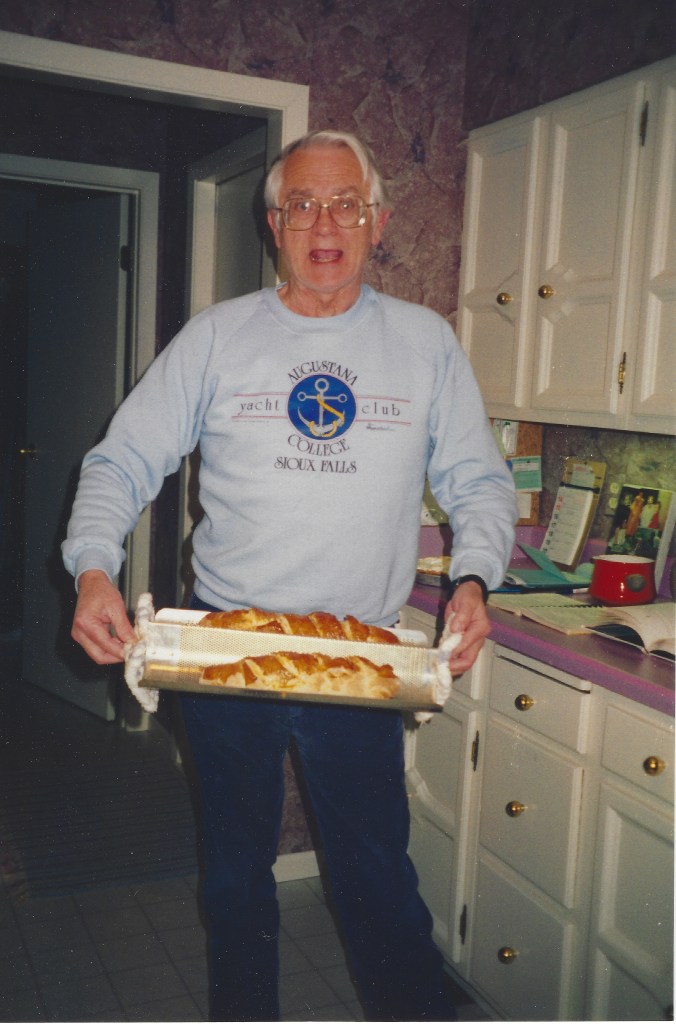
In his later years, after four heart attacks and a forced retirement from medicine, my father began to soften. He tried breadmaking. It didn’t go well, and I think part of him knew it, but he made it anyway. That was new. The man who had inspected a lawn with a surgeon’s eye for the imperfect line was now standing in a kitchen, covered in flour, making something that didn’t turn out right and living with it.

He also showed more outward empathy. He let things go that he wouldn’t have let go before. And in the weeks before he died, he called me just to talk. No agenda. No news to deliver. Just his voice on the phone, checking in. The dad I grew up with never did that. I didn’t know how much I needed it until it wasn’t there.

So what he left behind was also unfinished. The conversations that never happened. The phone calls I never got to make when life got hard. The chance to ask whether he had felt the same doubts, made the same mistakes, and wondered in the quiet moments whether he had gotten it right. I never got to tell him about my own shortcomings and hear him say he understood. And I never got to thank him. Not really. Not for the sacrifices he made, or the strange hours he kept, or the dedication he gave to his patients. I understand now that he did those things so our lives could be better.

He never met my wife. He never met my boys. He would have loved them and probably invented a couple more Russisms. They know him only through stories and a middle name. My youngest carries Russell as his middle name. It’s the closest thing I had to introducing them. It’s not enough. It never is. But it’s something.

Thirty years is a long time to figure something out on your own. Long enough that the figuring becomes the thing itself. I don’t know if I got fatherhood right. I tried to show up. I tried to work hard and keep my word and treat people the way my father taught me. I tried to pass along what was passed to me, even when I wasn’t sure I was doing it correctly. I may not have gotten everything right. But my boys have never once been anything other than the best thing I’ve done. And when I failed, which I did, there was no one to call who had walked this particular road before me.

My father was a connoisseur of scotch and other spirits. Maybe connoisseur is too fancy a word, but he knew what he liked and took some pleasure in understanding it. I have taken an interest in scotch, too. Some of that is taste. Some of it is ritual. Some of it, I suspect, is another way of keeping a small conversation with him going.

A thirty year scotch is not simply older than a fifteen year scotch or a ten year scotch. Time has done something to it. The sharper edges have softened. The heat is still there, but it does not hit the same way. What remains is deeper, smoother, more complicated. Still scotch, but different than it was.

Grief works that way, too. Thirty years have done something to this. Not all of it has burned off. Some of it never will. But the raw pain of that first Father’s Day, the one spent planning a funeral in a cemetery where I learned to ride a bike, has changed. What remains now is grief, yes, but also gratitude, understanding, and a kind of love that has had a long time to age.

Somewhere today there’s a golf course, and a note written in red ink, and a young man who doesn’t yet know what he’s about to learn. I think about him every year on this day. I think about what I’d tell him if I could.

Happy Father’s Day, Russ. I still have things to tell you. And thirty years later, I am still finding things you left behind.