
2025 Competitive, Not Complete

My 2025 looked a lot like the Minnesota Vikings. It began, as always, with hope—an early victory that made you believe this could be the start of something. Then came the injuries, the false starts, the failures, and the quiet realization that planning and execution were still passing each other in the hallway without speaking. By late October, hope had slipped into despair. But then December arrived, and despair softened back into hope—what is known as fake spring. In the end, the record will land just above or just below .500, exactly where uncertainty likes to live.

That’s how 2025 felt for me. There were real successes—moments that mattered, progress worth acknowledging, things I’m genuinely proud of. But there were also stretches when momentum stalled, when intention didn’t always translate into follow-through, and inaction led to failure. 

So 2025 was neither disastrous nor satisfying. A very Minnesota Viking outcome—competitive but incomplete. A fair grade is probably a 5 out of 10, even with the wins, because consistency matters as much as highlights.

My hope for 2026 isn’t about grand promises or naïve optimism. It’s about clarity—and momentum. 2025 finished strong, which matters more than it sounds. It suggests that improvement wasn’t accidental, that progress is possible when effort and intention finally line up. The goal now is to carry that forward. Decide what matters. Align efforts with intentions. Invest accordingly. Losses can be endured. Wins can be celebrated. What wears you down is ambiguity—and the feeling that being better was always within reach, but never quite seized.

Gratitude Challenge 2025 Style

In 2025, I skipped the Gratitude Challenge, mainly due to time constraints. Reflecting on a hectic year, I recognize my gratitude for family and the present moment, acknowledging their support despite challenges. As Christmas approaches, I emphasize kindness, reminding us that everyone faces unseen struggles that require patience and grace.

This was the first year since 2020 that I didn’t do the Gratitude Challenge in November. I could offer plenty of reasons, but the truth is simple: I didn’t make the time for it. That’s on me.

A couple of days ago, I read “The Right Attitude to Gratitude” by David Brooks. It prompted me to look back on 2025. It’s been a hectic year — full of unexpected turns, long stretches of stress, and more challenges than I planned for. But even with all of that, there’s a lot to be grateful for.

I’m grateful for my family. Most of what I feel about them ends up in private writing, where it belongs. But they make my life better in every possible way. They push me to be better, to stay grounded, and to remember what truly matters. I’m grateful for the ways they’ve helped me, and for the quiet ways they help others just by being themselves. Too often, I take them for granted and they become the brunt of my frustrations. I hope to reduce — if not stop — that going forward.

I’m also grateful to be living here and now. When you step back and look at the sweep of human history, you realize how fortunate we are. Things aren’t perfect, but they are better than they’ve been for most of human existence. That perspective doesn’t erase the hard parts, but it does put them in context.

As we move into the Christmas season, I keep coming back to one simple reminder: be kind. Everyone is carrying something — stress, grief, uncertainty, hope — and most of it we never see. A little patience and a little grace go a long way.

No Gratitude Challenge this November. Just a moment to acknowledge what’s good, and to carry that forward.

2000

The pandemic feels like a lifetime ago, and yet I can tell you exactly how long it has been: 2,000 days. I know this not because of science, or history, or the passage of time, but because on March 1, 2020, I started a streak.

A walking streak.

Every single day since then—through shutdowns and reopenings, through new jobs, new routines, travel, stress, exhaustion, weather that felt like it was designed to break me—I have walked at least 10,000 steps.

Two thousand days.

I didn’t set out to do this. At the beginning, it was something to do during the pandemic. It also protected my sanity. Walking was the chance to get out of the house and leave everything else behind. Ten thousand steps a day had long been the baseline, ever since I started wearing a fitness tracker. Twenty-two thousand steps was the dream. (For reference, that’s about ten miles a day, or the equivalent of pacing nervously during a seven-hour baseball game.)

The first year was easy. I averaged nearly 22,000 steps per day. The second was manageable, still averaging nearly 20,000 steps per day. But the last three were harder. I changed careers. Time shrank. The joy of the walk, once as natural as breathing, sometimes felt like another appointment on an already crowded calendar.

Quick aside here: if you’ve never experienced the low-grade panic of watching your fitness tracker show 9,976 steps at 11:57 p.m., you haven’t lived. That’s when you find yourself walking in pajama pants around the kitchen island like a lunatic, praying the neighbors can’t see through the window.

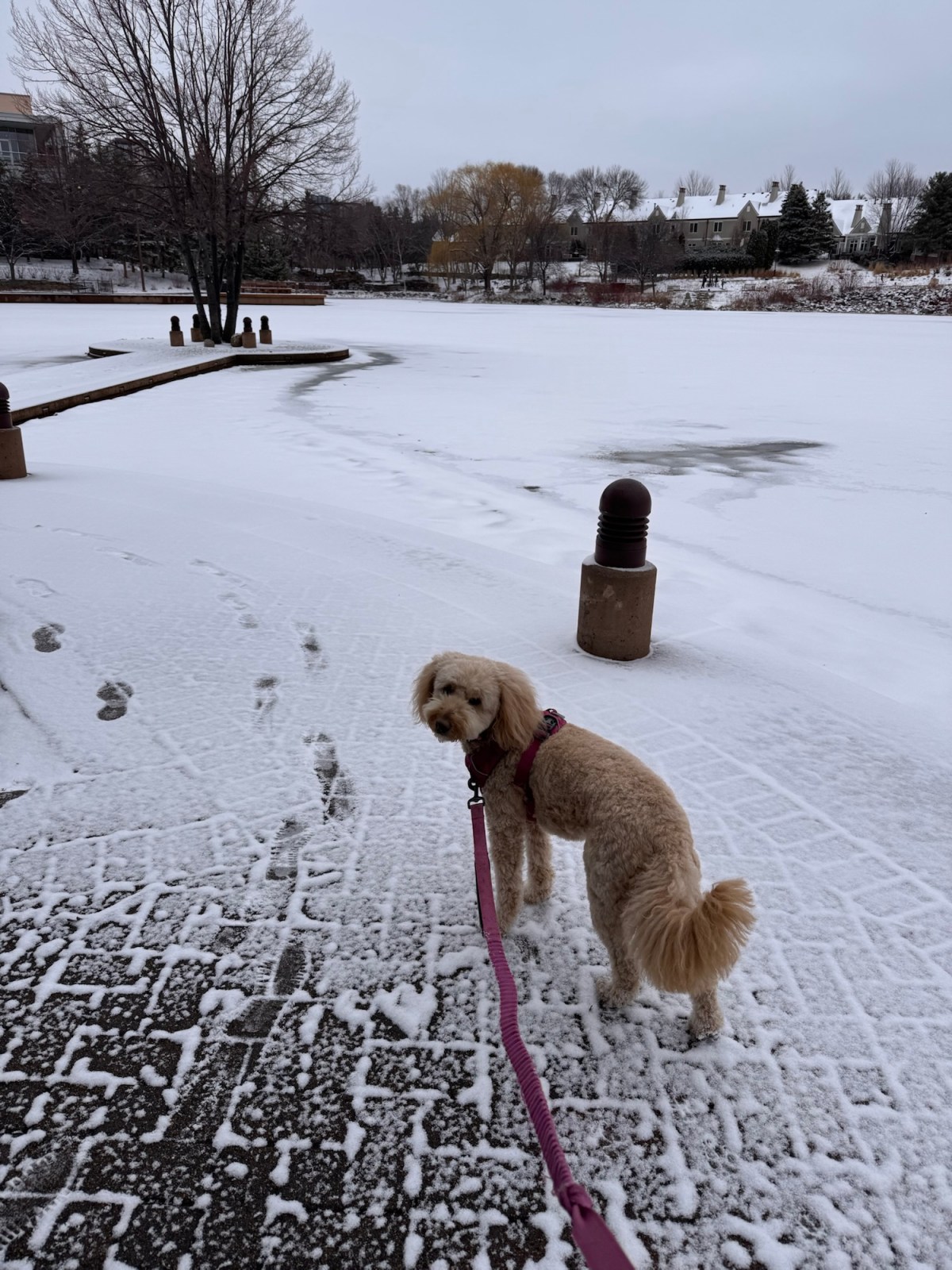
What kept me going? Partly, the dog. (She doesn’t negotiate. She knows when it’s walk time, and if I try to skip, she looks at me like I just canceled Christmas.) Partly, the number itself. The bigger the streak grew, the harder it was to let it go. You don’t walk 1,732 consecutive days just to stop there.

And now we’re at 2,000.

I should say this: I am impressed with myself. I don’t usually say things like that, but persistence deserves a little horn-tooting. If I can string together 2,000 days of anything—walking, writing, flossing—maybe I’m not as undisciplined as I sometimes think.

Of course, streaks end. Technology fails. Bodies get sick. Life interrupts. At some point, a day will come when the step counter doesn’t make it to 10,000, and I’ll have to deal with it.

But not yet.

The next goal is December 30, 2025—Day 2,131. If you’re a baseball fan, you know why. (That’s the number Cal Ripken Jr. reached when he passed Lou Gehrig in consecutive games played. If you’re not a fan, know this: it’s persistence at a mythical scale.) After that, the big one: 2,633 days, when Ripken’s streak itself comes into view on or about February 6, 2027.

Will I make it to 2,633? I don’t know. The streak doesn’t give me the same joy it once did, and some days it feels like one more box to check. But every morning, the dog is there, stretching in anticipation, eyes pathetically pleading. And every morning, I lace up my shoes.

Unforgettable Moments

When I was growing up, my mother drove Chevrolet station wagons. They had wood paneling on the sides, vinyl seats that could burn your legs on hot summer days, and an 8-track player. We had a limited selection of 8-track tapes stored in a faux alligator skin box. One of my favorite tapes was “I Got Lucky” by Elvis Presley. I enjoyed listening to it while we drove around town or went on road trips. Truth be told, it was one of his worst albums, but I loved it.

On June 21, 1977, Elvis performed a concert in my hometown, marking the first event held at the brand-new civic center. This was my first concert (not counting elementary school Christmas concerts). Though it was a long time ago, my memories of that evening are still vivid. The excitement in the building before the concert was palpable. When the lights dimmed and “Also sprach Zarathustra” started playing, I knew we were in for an amazing show.

When Elvis walked onto the stage, the lightbulbs began popping, accompanied by the screams of excited women. I will never forget those screams. It was evident that Elvis was larger than life. He delivered a tremendous show before walking off the stage. Less than two months later, we were all shocked by his sudden death. In the fall of 1977, we gathered around our television to watch the Elvis In Concert CBS Special, which featured the same concert.

That night in June 1977 had a profound impact on me. I fell in love with the music of Elvis Presley. My first cassette tape purchase was “Elvis: Aloha from Hawaii via Satellite.” I must have listened to that tape a thousand times, and I can still sing most of the songs from memory.

In the years since the concert, many people have commented that it wasn’t Elvis Presley’s best performance. In fact, it wasn’t. He was significantly heavier than in earlier parts of his career and forgot many lyrics, often slurring his words. When I compare the concert I attended to other performances I’ve seen, it’s clear that I didn’t witness his finest work. However, even at his worst, his performance was still remarkable.

I still have my ticket stub from that concert, tucked away. It’s a simple piece of paper, but each time I see it, I’m transported back to that night. I’m not entirely sure why I’ve held onto it all these years, but perhaps it’s because some moments in life are so impactful that we want to preserve them forever.

Reflections on Another Year

It’s complicated. It’s Father’s Day. My father wasn’t the father I wanted him to be; however, given how things have turned out, it appears he was the father I needed.

It’s complicated. Twenty-nine years ago today, my mother called to tell me that my father had suffered another heart attack and didn’t survive. It was a Saturday, and the next day was Father’s Day. his sudden death is one of the saddest days of my life.

It’s complicated. As critical as I was of my father while growing up, on this day when we celebrate fathers, I am reminded of how challenging it is to be a parent. You are constantly trying to make the best decisions, but you often fail. I love my sons more than anything in the world. I haven’t been perfect, but I have always loved them.

It’s complicated. An elected official was assassinated yesterday, marking the seventh such incident in the last 50 years. There is a suspect and it appears he was targeting several other elected officials. Meanwhile, the president celebrated his birthday with a grand military parade, something I have never witnessed in my lifetime across the country. There were mostly peaceful protests taking place. The country is deeply divided.

It’s complicated. Birthdays should be a celebration—a time to reflect on all that is good in our lives. Over the past year, I have used social media to acknowledge birthdays. Each day, I start by checking Facebook for birthday announcements. For those who share their birthdays, I make sure to send them a heartfelt birthday message.

I also take a moment to reflect on how I know each person, why they remain friends on Facebook, and the joy we have brought to each other’s lives. My friends come from various places, with diverse interests, differing political views, and various professions. While I may have favorites among them, taking the time to think about each friend is a nice way to start my day and often reminds me of many wonderful memories.

I also remember friends who are no longer with us but are still on Facebook. I believe that if we dedicate time to remember and celebrate these connections, it enriches our lives.

It’s a bittersweet day for me—today marks my birthday, Father’s Day, and the anniversary of my dad’s passing. It’s a lot to process. So, let’s take a moment to do something special today to brighten the world around us. Reach out to the people you love; they might be facing their own complexities. You never know how your words of kindness can make a difference. Life is complicated.

6/9/72

Some numbers stick with you. For me, they are 6/9/1972, a date, and 238, the number of deaths.

On June 9, 1972, in western South Dakota, it started to rain. My only memory of that evening is standing outside under our covered front entryway while my father smoked. As I watched him, I noticed that the raindrops were the biggest I had ever seen. When I mentioned this to my dad, he suggested we go back inside because it was bedtime.

On the evening of June 9, 1972, our family went to bed early. When we awoke the next morning, we were unaware of the tragic events that had occurred overnight. Persistent clouds over the Black Hills resulted in severe flash flooding that devastated the Rapid City area. By the morning of June 10, there were 238 fatalities, and more than 1,300 homes had been destroyed.

My father was a medical doctor in our community. That morning, my mother received a call from the hospital asking if my dad would be coming into work. She was surprised by the question because she was unaware of what had happened. The hospital explained that there had been a severe storm that caused significant damage, and his services were urgently needed.

In the days, weeks, months, and years following the flood, I began to hear more stories. I learned about a classmate and friend who lost his father and two brothers, one of whom was never found. I heard about a friend of my sister’s who survived in an air pocket inside a submerged vehicle while her brothers slowly succumbed. I listened to the accounts of the screams that echoed during the disaster. I witnessed the devastation firsthand.

Our house and family were on high ground, so we were safe from the flooding. However, some friends of ours lost everything and had to stay with us until they could find a new place to live. My preschool was destroyed. While I’m not sure, I believe my father’s office was flooded but did not sustain permanent damage.

It has been over 50 years, but I still vividly remember many events from the time of the flood. Growing up, I encountered haunting reminders of the devastation: driveways where homes once stood, streets that are now vacant and abandoned, and buildings bearing the names of those who perished. Many of these reminders are still visible today if you know where to look (see picture at top of steps from a house washed away in the flood still present). Ironically, much of this is located along a beautiful greenway and bike trail that were created in the aftermath of the destruction.

In recent years, on this anniversary, I have taken the time to read through a list of the names of those who lost their lives. I reflect on friends who were affected by the flood and how suddenly life can change. This reminds me of what Marcus Aurelius wrote over 2000 years ago: “You could leave life right now. Let that determine what you do, say, and think.” Marcus Aurelius, Meditations, Book 2, Section 11.

This is dedicated to all who were affected by the 1972 flood but more specifically to Shirley, Steve, Sarah, Andy, Lisa, Mike, and JoAnn.

Life Events

Throughout my professional career, I have consistently advised adults to establish an estate plan. A well-crafted estate plan helps prevent family conflicts, reduce taxes and expenses, and provides clear guidance on how assets should be distributed. I also recommend that individuals review and update their estate plans after significant life events, such as a death, birth, marriage, or divorce. After this past weekend, I am adding college graduation to that list of important events.

This past weekend, our youngest child graduated from university, and I couldn’t be prouder of him. Watching him grow and mature over the last four years has been incredibly rewarding. As I observed friends, family, and others interacting during this significant occasion, I found myself reflecting on a few key points.

First, I was struck by the importance relationships that were formed over these years. Second, I was reminded of how quickly time passes; it feels like just yesterday when we dropped him off at school. Lastly, I was reminded of the importance of higher education.

My university years were quite a while ago, but many of the relationships I formed during that time still play a significant role in my life today. Watching my son interact with his friends and their families brings a smile to my face; they are wonderful people. As the graduates transition to the next phase of their lives, I hope they continue to nurture their relationships, even as they scatter across the country.

As I write this blog post from my now-quiet empty nest, I can hardly wrap my head around how swiftly time has passed. It feels like just yesterday we were dropping him off at his freshman dorm, filled with a mix of excitement and apprehension. His brief visits home during breaks often left me wishing for just a little more time together, and our trips to his university town were far too few. Yet, here I am, in a surprising twist, sending him a checklist to gear up for moving out of his apartment and into a house of his own. How did we get here so fast?

As a former university professor, I have attended numerous graduation ceremonies. While many share similar elements, my son’s graduation truly reaffirmed the importance of higher education. In recent years, higher education has faced significant scrutiny, and in some cases, this criticism is warranted.

As a student, my university required every student to take a capstone course centered around the essential question, “How then shall we live?” This course encouraged us to explore, connect, and discuss what we had learned throughout our time at the university. My simple takeaway, both then and now, is that higher education serves at least three important functions.

First, it develops and expands our knowledge base. Second, it cultivates essential soft skills, including critical thinking, adaptability, time management, commitment, and improved communication. Lastly, and most importantly, it highlights the importance of building and engaging in a strong community.

What resonated with me was the vital role that universities play in fostering community. A good university gathers a diverse array of individuals—each with their own backgrounds, perspectives, and aspirations—and creates an environment where collaboration and growth can flourish. This sentiment was articulated by both the president of the university and the commencement speaker, who emphasized the importance of this collective journey. They encouraged us to recognize our shared responsibility in using our unique talents and experiences to contribute positively to the world.

2025 New Beginnings

I have chosen themes to drive my aspirations for the year in recent years. One of my aspirations this year is to learn more about paintings.

In recent years, I’ve been fortunate enough to immerse myself in some of the most stunning artwork the world has to offer. Each piece captivates and inspires me, yet I often find myself puzzled. What exactly elevates Van Gogh’s iconic sunflowers above my son’s colorful creations (see below)? The mystery of art continues to intrigue me!

Priceless

In my inform my appreciation for art, I recently picked up a daily art calendar. My aim is to carve out a little time each day to observe and learn something new about the world of creativity.

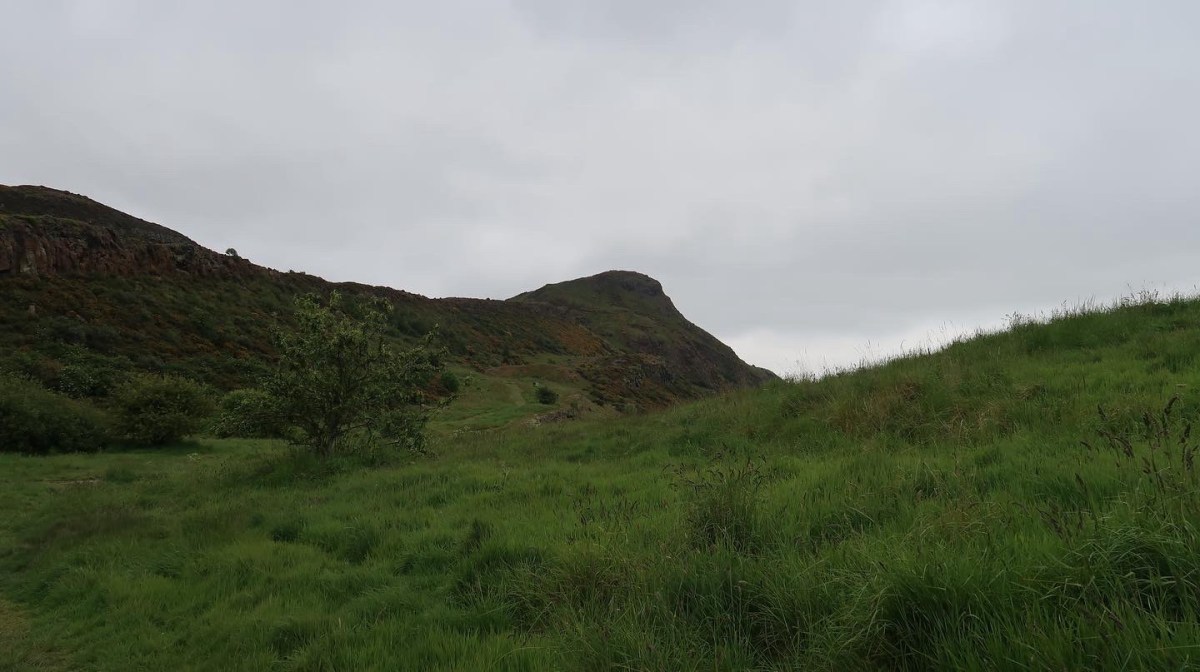
Kicking off this artistic journey, I’m excited to share the January 1 selection: The Oy Valley, a piece by Alexej von Jawlensky from 1912. What grabbed my attention first were the vivid pastel colors. Although it beautifully captures a valley in Germany, it instantly transported me back to a hike I took in the breathtaking landscapes of Scotland (see below picture). It’s amazing how art can evoke such personal memories!

Puntland Hills, Scotland

Below is what ChatGPT can tell me about the painting.

Alexej von Jawlensky (1864–1941) was a key figure in the Expressionist movement, known for his use of vivid colors and spiritualized abstraction. The Oy Valley, painted in 1912, reflects Jawlensky’s fascination with landscapes as a means of expressing inner emotions rather than replicating nature.

This particular painting is characterized by:

1. Dynamic Composition: The scene features a mountainous landscape rendered in bold, angular forms that suggest the natural contours of the valley while emphasizing emotional intensity over realism.

2. Vivid Color Palette: Jawlensky employs a spectrum of bright, saturated colors—reds, purples, greens, and blues—to create a striking, almost otherworldly atmosphere. The color contrasts are meant to evoke a sense of awe and spiritual transcendence.

3. Expressionist Techniques: The brushstrokes are bold and textured, lending the painting an energetic, almost raw quality. Rather than detailed realism, Jawlensky focuses on the essence and emotional resonance of the scene.

4. Symbolic Undertones: Jawlensky believed color had a spiritual power. In this work, the interplay of light and shadow, alongside the vibrant hues, suggests a symbolic representation of the divine presence in nature.

During the period this was created, Jawlensky was closely associated with Der Blaue Reiter (The Blue Rider), an avant-garde group that sought to explore spiritual themes through modern art. This painting exemplifies his contribution to that movement and his desire to transcend the physical world through expressive art.

2024 – Time to Review

In “40 Chances: Finding Hope in a Hungry World,” Howard G. Buffett shares his personal journey of using his wealth and influence to combat global hunger and poverty. Drawing from his experiences as a farmer and philanthropist, Buffett reflects on the 40 opportunities—referred to as “chances”—that a person has in their lifetime to create a meaningful impact. Essentially, each chance represents a year or a growing season.

The title and premise of the book are particularly impactful, highlighting the limited nature of our opportunities. Regardless of whether we analyze our chances over years, months, weeks, or days, it is essential to recognize that we are afforded a finite number of opportunities in life. This understanding encourages me to make the most of every moment.

As we near the end of the year, I find myself reflecting on my year. This time signifies both closure and the promise of new beginnings. Over the couple of days, I will review my goals and aspirations for 2024. While I have celebrated some victories, there have also been moments when I fell short. When January 1st arrives, I plan to take the time not only to dream but also to set purposeful goals for 2025. Here’s to the new opportunities that lie ahead!

Day 31 Gratitude Challenge – Bonus Day

After 30 days, the sun sets on the 2024 Gratitude Challenge. After a month of daily writing, I’ve noticed a shift in my focus and attitude. While I haven’t eliminated all negative thoughts, I have managed to reduce them. I now spend more time reflecting on what I have rather than what I lack. It reminds me of that scene from It’s a Wonderful Life when Clarence says:

“You see, George, you’ve really had a wonderful life. Don’t you see what a mistake it would be to throw it away?”

A few years ago, my wife and I invited each family member to choose a charity for a $100 donation. The only requirement was that they write two paragraphs detailing why they selected that specific charity. On Christmas Eve, as we gathered together, we presented each charity and shared the heartfelt reasons behind our choices, celebrating the impact we could make together. My family doesn’t know this yet, but I’m planning on doing that again this year. 

Mark your calendars for Tuesday, December 3, 2024—it’s National Giving Day! I’m excited to challenge all of you to support a charity that resonates with your heart. Whether big or small, every contribution makes a difference, so let’s spread the generosity far and wide!

As part of this special day, I’d love for anyone considering a Christmas gift for me to think about giving instead to a charity. Share your choice and why it matters to you on social media—let’s inspire each other and make a positive impact together!

Many worthy charities exist at local, regional, national, and international levels. Here are my top five. I might explain why in a future post.

Dakotabilities

LifeScape

Michael J Fox Foundation

Heifer International

Promising Futures Funds