What We Owe the Next Generation

I was still staring at a blank screen when the first one went off.

It wasn’t a gentle reminder that the Fourth was approaching. It was a concussive bang, the kind that travels through the window glass and lands somewhere in your chest before your brain has time to process it. Then several more in quick succession. I pushed back from the desk and looked outside, already composing the old man complaint in my head. In another neighborhood, in another part of the world, I might not have assumed fireworks. That thought crossed my mind before the ordinary explanation arrived, which probably says something about the times we live in and the age I have reached.

Then I saw the kids running across the yard, my yard, chasing the parachutes, those little plastic soldiers drifting down through the summer air. Every one of them was laughing. Pure, uncomplicated, this-is-the-best-day-of-my-life laughing. The kind you can hear through glass. I had to actively suppress the get-off-my-lawn instinct that apparently arrived sometime in my fifties without asking permission. The old man complaint dissolved before I could finish writing it, because the sound had annoyed me before I understood it, and their laughter corrected me.

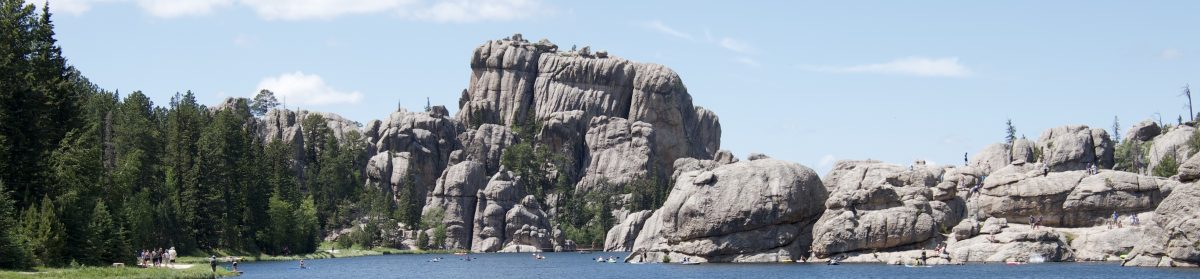
It pulled me back to the version of myself who would have run just as hard across someone else’s grass, because parachutes falling out of the sky felt like a miracle and property lines were an adult invention. I remembered, not as an abstraction, not as something that happened to someone younger who used to be me, but the way you remember something in your body first. A lake. A trailer that my grandparents called a cabin, which was generous. Fireworks reflecting off the surface of Mina Lake while the summer dark came down around us, and a boy who would have been running too.

* * *

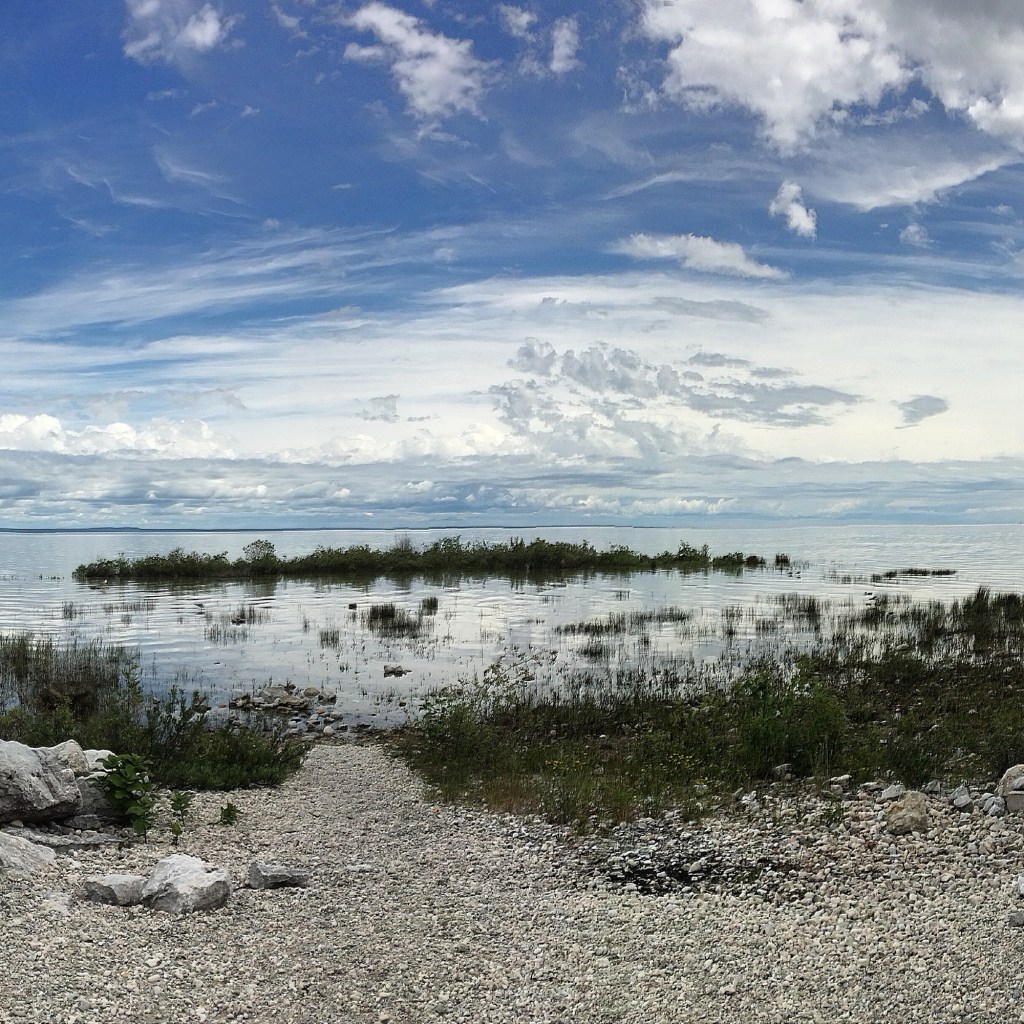
Mina Lake is different now. The cabins have become homes, the kind with proper foundations and square footage and lake frontage that costs what it costs. But when I was growing up, my grandparents had what they called a cabin, which had been, as best I can tell, a repurposed food trailer. Small enough that changing clothes required optimism about personal space. I’m told it was the first cabin on the lake, which I choose to believe makes it historic rather than humble.

Every Fourth of July, we drove six hours to get there. One uncle lived nearby and was always there. My uncle from Michigan often made the trip. My aunt came from Missouri. Another uncle moved wherever Boeing needed missiles pointed at something, Montana, Wyoming, Washington state, and he came too. Most of the cousins came, not all, but most. My grandpa had some contraption rigged for fishing that would alert him when something took the line, which struck me as ingenious. One year, one of my uncles brought a boat, and the lucky ones got rides. I still remember that as the year the lake got bigger.

Mostly, I remember everybody being happy. I know this partly because of photographs. Everybody smiling. The lake behind them. A boy squinting into the summer sun who would grow up to be me. At some point the day would wind down and we’d head back into Aberdeen, to Grandma and Grandpa’s house or a hotel, and the lake would go quiet behind us.

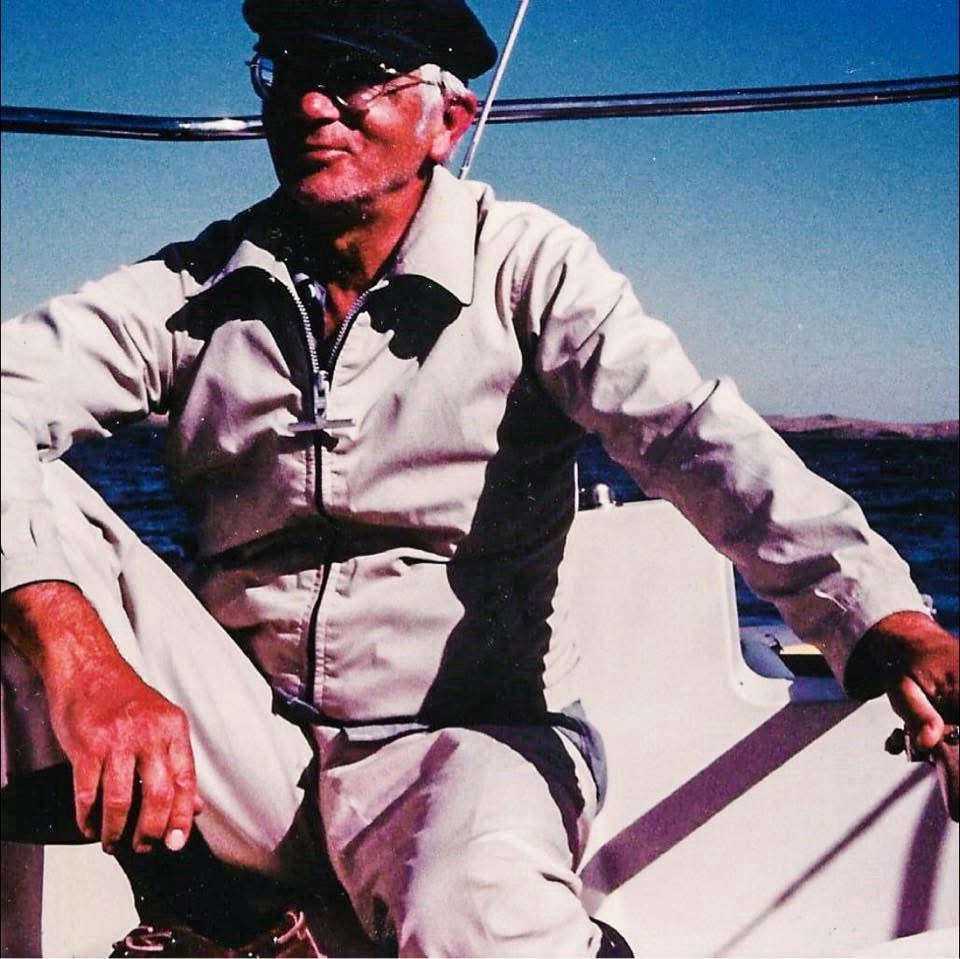
My grandpa died in 1982, and the tradition died with him. I don’t remember anyone announcing that. Families rarely hold a meeting to declare that something beautiful is over. One year it is simply gone, and only later do you understand that what felt like a place was really a person. Mina Lake was the cabin, the cousins, the boat rides, and the fireworks on the water. But mostly it was Grandpa, and when he was gone, the lake was never quite the same.

* * *

When Mina Lake faded out, the Fourth did not disappear. It relocated. Families do that. Traditions rarely announce their retirement. They just move to another yard, another grill, another set of adults pretending they are in charge. For us, that meant family friends in Rapid City, people whose lives had been braided into ours long enough that the distinction between friends and family was mostly technical.

Our families had been neighbors once, built our houses at the same time with the same builder. The houses were similar without being the same, the same era of carpet, comparable doorknobs and railings, enough shared DNA that walking into their house felt familiar in a way you couldn’t quite explain. All the parents have since passed. Most of the kids moved away. But one still lives in that house, nearly fifty years after it was built, which is either a testament to loyalty or to really good construction, and probably both.

Their house was a beautiful ranch sitting above a canyon, with a swimming pool and a view that made you feel like the whole Black Hills had been arranged for your personal enjoyment. The Fourth of July there was simple in the way that only childhood can make things simple. Kids swam. Kids shot fireworks into the canyon under the loose supervision of adults who were doing what adults do at summer parties, which is to say they were drinking and preparing food and pretending to watch us more carefully than they were. In retrospect, it’s amazing there were no fires.

One of us dropped a lit punk into a bag of fireworks once, which nearly caused several simultaneous cardiac events among the adults who were supposedly supervising. At some point the food appeared. At some point we ate. At some point we went home. The fireworks arced out over the canyon and disappeared into the dark, and nobody thought much about what any of it meant. That was the point. You didn’t have to think about what it meant. It just was.

That is how the Fourth felt to me then: noise, food, water, cousins, smoke, and adults who seemed to know what they were doing. I had no sense that the country itself could be tired, or divided, or unsure of what came next. I had no sense that adults were often improvising while hoping the children mistook it for confidence. I had inherited the celebration before I inherited the complication.

* * *

I remember the bicentennial. I was under ten, which meant I understood the festive parts and none of the complicated ones. Red, white, and blue everywhere. Commemorative quarters that felt like holding history in your palm. The $2 bill made a comeback that year, and people collected them because they were certain the bills would be worth something someday. I still have several. They never really caught on, except at a small bar in Pierre, South Dakota, where you can still spend one today, which feels like exactly the right fate for a $2 bill.

What I didn’t understand at the time, though I’ve since filled it in, was that the country was in rough shape. A president had resigned in disgrace two years earlier. The fall of Saigon had happened the previous spring, a war ending not with victory but with helicopters leaving a rooftop. Inflation was eating at everything. It was an election year, and nobody felt particularly good about their choices. The country was celebrating its 200th birthday with the enthusiasm of someone who needed the party more than the cake.

And yet, the flags were everywhere. The quarters were in every pocket. That fall, my family got on a plane and flew to the British Isles for three weeks. Even the passport was bicentennial themed, red, white, and blue, as if the government wanted to make sure you remembered what year it was every time you opened it. A kid from South Dakota visiting the people we’d spent 200 years being independent from. If that isn’t optimism, I don’t know what is.

* * *

Years later, when Wanda and I had children of our own, I don’t think I consciously set out to recreate any of that. Parents rarely do. We just reach for the pieces that still glow and hope our kids will remember them someday with more grace than accuracy. The place changed again, because traditions keep moving until they find a place to land. For us, for a long time, that place was Mackinac Island.

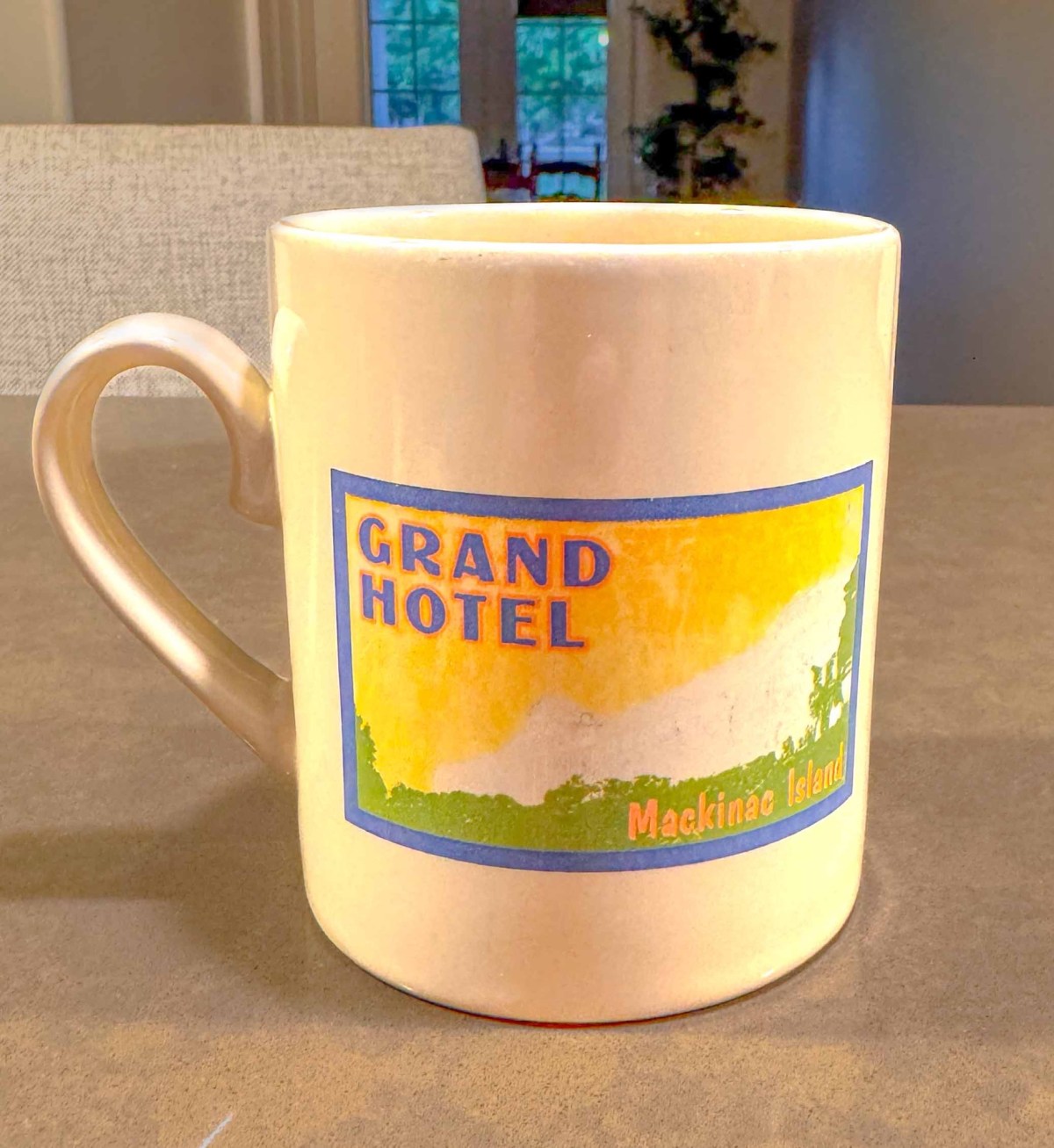
Wanda and I spent our honeymoon on Mackinac Island and went back every year for the next thirteen years. We’ve returned a few times since. The island gets into you that way. Someone told us early on about the Fourth of July celebration at the Grand Hotel and Fort Mackinac. An old-fashioned picnic and carnival, they called it, and that’s exactly what it was. Kids playing games from the late 1800s. Hot dogs and hamburgers. Nathan’s Hot Dog Eating Contest on whatever television they could find, because some traditions require witnesses. The kind of carnival where you swung a hammer as hard as you could and tried to ring the bell at the top, which nobody ever did, but that was never really the point.

One year our youngest played the same carnival game over and over until he won a Detroit Lions football. The determination required for that achievement was either admirable or concerning, and probably both. We took our oldest when he was about ten. Later we brought the whole family. And when our youngest was about ten, he got his own trip too.

In the evening you dressed for dinner, because that’s what you do at the Grand Hotel, and afterward everyone gathered on the long porch to watch the fireworks launch from barges out on Lake Huron. The barges were hidden behind tall Norwegian pines. You’d hear the launch, sometimes catch a trail of light climbing through the dark, and then wait for the explosion to bloom right in front of you, eye level with the porch, which is as close to fireworks as a person should reasonably get.

The year we brought the whole family it was foggy. You heard the launch. You saw a bright flash somewhere in the gray. That was mostly it. Our four-year-old rendered the official verdict: rip off. He wasn’t wrong, but we went back anyway, because that is what families do when they are building memories. They overpay, overdress, misjudge the weather, take the same pictures, tell the same stories, and hope that some small part of it sticks.

* * *

But inheritance is not only made of lake water, canyon smoke, porch lights, carnival games, and children declaring things a rip off. Some things are handed down because they are joyful. Others are handed down because forgetting them would be dangerous. Eventually, if we are lucky, someone teaches us that the celebration and the complication belong to the same story.

In my senior year at Augustana, a January term capstone course took a group of us to Minneapolis for a few days. One morning we visited a Holocaust center where survivors came to speak. I remember a woman who survived Auschwitz. I remember she rolled up her sleeve. I spoke with her. I don’t remember exactly what she said. What I remember is that she chose to be there, and that it cost her something to show up, and that she did it anyway.

I think about my dad’s cousin who shot down 24 Japanese planes in World War II. I think about a former law partner who never knew his father because he was killed before his son was born. I think about standing on Little Round Top and Cemetery Ridge at Gettysburg and trying to understand what it cost to hold that ground, and failing, because some things can’t be understood from a distance. You can only stand there and feel the weight of it.

Freedom isn’t free. That phrase gets said so often it’s stopped meaning anything, which is its own kind of tragedy. The people who actually paid for it didn’t get to say it. They just paid. These aren’t abstract debts. They’re personal ones. She showed up anyway. She kept saying not today. And because enough people across enough generations made the same decision, we’re still here, still arguing about what the experiment means, still shooting fireworks into canyons and watching them explode at eye level over Lake Huron.

* * *

Maybe that is why monuments matter when they are doing their job. Not because they settle the argument, but because they force us to stand still long enough to remember there is an argument worth having. I grew up thirty miles from Mount Rushmore, close enough to stop seeing it and old enough now to understand that was my mistake. I’ve seen it hundreds of times, in every season, in every light. There’s a version of it you stop noticing, the way you stop noticing anything that’s always been there. And then something shifts and you see it again, really see it, and it stops you cold.

Years ago I was fortunate enough to get a private tour that took me to the top of the monument. I sat on George Washington’s head. I don’t say that to be glib. I say it because there is no way to be in that place and not feel the full weight of what was carved out of that granite, and why, and what it cost. At some point I also appeared in a scene filmed there for General Hospital, which is either the most South Dakota thing that has ever happened to me or the least, depending on how you look at it.

What Gutzon Borglum started in 1927 transformed Western South Dakota. It still does. Every year millions of people make the drive through the Black Hills and stand at the base of those four faces and feel something they didn’t expect to feel. Last night, on the eve of America’s 250th birthday, Mount Rushmore became one of the places chosen to mark the moment. Of all the places in America, it was there. The Black Hills of South Dakota. Four faces carved into granite. A monument to an experiment that was never supposed to work and somehow keeps working anyway, imperfectly, stubbornly, at great cost.

There ought to be a day, at least one, when the labels get set down for a while. Not because everything is fine. Not because we agree on what the country has been or what it should become. We don’t. We never have. But in 1976, when the country had real reasons to doubt itself, people put on their bicentennial shirts and collected their quarters and celebrated anyway. Not because everything was fine. Because the alternative was unthinkable.

But countries are not preserved only at monuments. They are preserved, or neglected, in neighborhoods. They are preserved in whether we remember that the kid running across the lawn is not an interruption of the day, but part of the reason the day exists. They are preserved when someone keeps lighting the grill, keeps inviting the cousins, keeps making the drive, keeps telling the story, keeps showing up even after the person who started the tradition is gone.

* * *

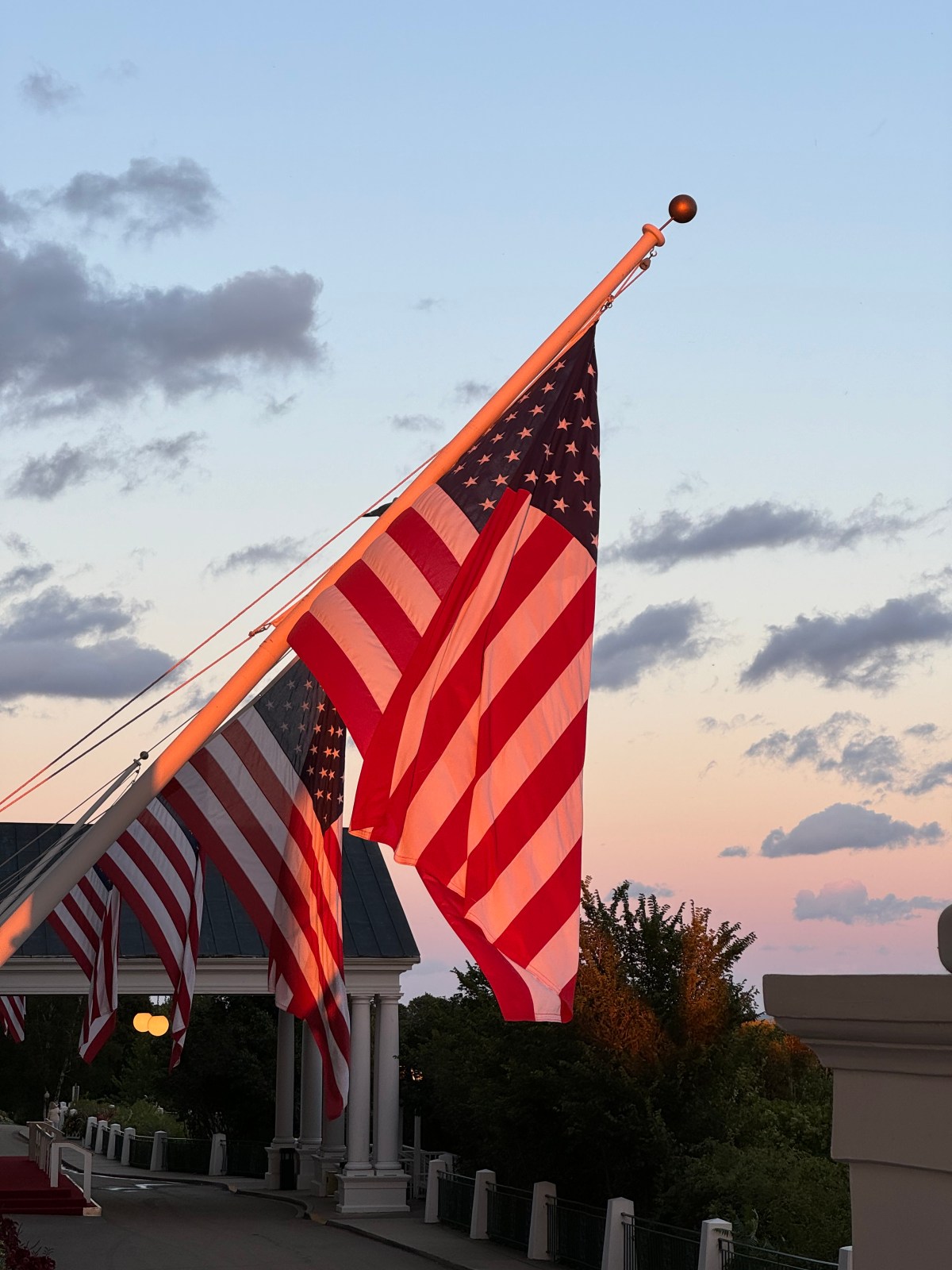
By the time you read this, I will have clipped Ginger’s leash and we will have walked. The neighborhood quiet, the way it only is before the day remembers what day it is. Flags on porches. An empty street. The smell of something someone is already putting on a grill at an unreasonable hour.

This is what I’ll think about. A boy at Mina Lake watching fireworks reflect off the water. A canyon in Rapid City and a lit punk dropping into a bag of fireworks and several adults suddenly remembering they were supposed to be supervising. A foggy night on the porch of the Grand Hotel and a four-year-old’s verdict. A woman in a room in Minneapolis who survived Auschwitz, who rolled up her sleeve, and showed a kid from South Dakota what the cost of forgetting looks like.

Two hundred and fifty years. The experiment continues. Not because it’s easy. Not because we always get it right. But because enough people, in enough generations, decided to show up anyway.

Tonight, throughout America, kids will be out with sparklers and firecrackers, chasing parachutes across their neighbors’ lawns. There will be people annoyed by the noise. There will be people wishing everyone would just get off their lawn. That’s part of it. That’s always been part of it. Let them have the noise for a night. Let them have the parachutes. Let them believe, for a few more years, that the whole thing is as simple as sparks in the dark and people gathered nearby.

Show up anyway.

* * *

The Bridge at Henley

A few weeks ago I wrote about a walk to Paddington Station, and then a walk back. The reason for the trip, I said, was to buy train tickets to Henley-on-Thames. That was true, as far as it went. But if you’ve been reading this series, you might have wondered what Henley actually meant. The tickets were the cover. My friend was the reason. She was also, if I’m being completely honest, the reason for the course itself, and every course I tried to build before it, and every course I’ve sketched out since. She just didn’t know that until now.

Henley-on-Thames had no particular connection to Brexit when I chose it. If I’d been purely academic about it, I might have taken the students to Birmingham or Coventry, cities in the West Midlands that recorded some of the highest Leave percentages in the country. That would have been genuinely instructive. The area around Henley, as it turns out, voted roughly 55 percent to Remain. I could have taken them somewhere that felt the full weight of the Brexit argument, somewhere that might have actually changed how they understood it. I didn’t. I picked Henley.

The Brexit connection was there, if you wanted to work hard enough to find it. Theresa May represented nearby Maidenhead, Boris Johnson once held the Henley seat in Parliament, and I once spotted Rishi Sunak at the Leander Club in Henley. But I didn’t know any of that when I chose it. That came later, the kind of justification you construct after the fact to make a personal decision look like a professional one. The real reason was simpler. None of those other places had her in them.

None of that mattered on the morning of the trip. What mattered was twenty students in a hotel lobby near Waterloo, two tickets each, and a train to catch.

We did this three times. Three different courses, three different years, but it always started the same way, in a hotel lobby near Waterloo, me handing out two tickets to each student. One for the way out, one for the way back. I told them every time: lose either one and the train fare comes out of your own pocket. Nobody ever lost one, not in three years, though I watched a few of them pat their jacket pockets all the way down to the tube just to be sure.

I had some unpopular rules on my courses. No jeans, no trainers, no hoodies, no baseball caps. I wanted them to blend in rather than stick out, and I know it frustrated plenty of them at the start. By the time we got there, I think most of them understood why. Henley was a different level. Just short of a black tie affair. It was the one day of the course I put on a jacket and tie myself. In that same lobby, before we headed for the tube, I’d give them the rest of it. Nice dinner tonight. Old friends of mine. Be gracious guests. Don’t be the ugly American. Come with at least one question ready, something real, something that shows you were listening and not just eating. A couple of those questions I planted myself, quietly, with a student I trusted to ask them well. I never told them how nervous I was. The day needed to go right, the tour, the dinner, all of it, but underneath that I was about to see my friend and her family again, and some part of me was always braced for the year that wouldn’t go as smoothly as the last.

From Waterloo we’d take the tube to Paddington, then the train out toward Henley, changing at Twyford for the last short hop in. I’d count heads at every handoff like a man counting cards, watching backpacks and the occasional dress shoe shuffle across the gap between trains. We never lost anyone. Not once.

She was waiting at the station every time. Forty-some years since she’d lived in our house the year of the Jubilee, since she’d been the exchange student who became something closer to family than guest, and there she’d be on the platform at Henley, easy to spot, easy to find. She’d arranged much of the day herself, never once complaining about any of it. I knew it took real work. I’m not sure I ever adequately thanked her.

I’d put my hand on a shoulder or two and start the introductions. My students, my friend. My sister, in the only sense of the word that really matters.

She’d walk us into town herself, City Hall first, almost always. Main Street the whole way, small shops on both sides, the street sometimes set up for market day in a way that reminded me of Lower Marsh back in London. City Hall sat at the far end with its clock tower, red brick, pale stone, and the quiet confidence of a building that knew exactly what it was. The tour was another favor, one phone call from her that meant the world. Most years it was the Mayor waiting for us. One year the Mayor was unavailable, and we got the utility superintendent instead, which turned out to be just as useful, maybe more so, because he could explain how the town actually worked. Inside, the building had dark wood, old portraits, and a hall upstairs that looked as if it had hosted a century of dances, council votes, and arguments about parking. Whoever led the tour would explain what was on the docket that month, and then, almost every year, offer the same gentle punchline: Brexit, the whole reason we were there, wasn’t going to change much of anything in Henley. I watched that land on their faces every time, the small recalibration of a student who had assumed the thing they came to study was the only thing happening.

More often than not, the local paper was waiting for us when we came back down. A reporter wanting a few words from the Americans, what they’d come to study, what they made of the town so far. They ran stories about it in the Henley Standard more than once — the first year and again in the second. I never asked whether she’d contacted the paper. But I have my suspicions. It had her fingerprints on it, the same quiet phone call that got us the tour in the first place, one more thing handled before I even knew it needed handling.

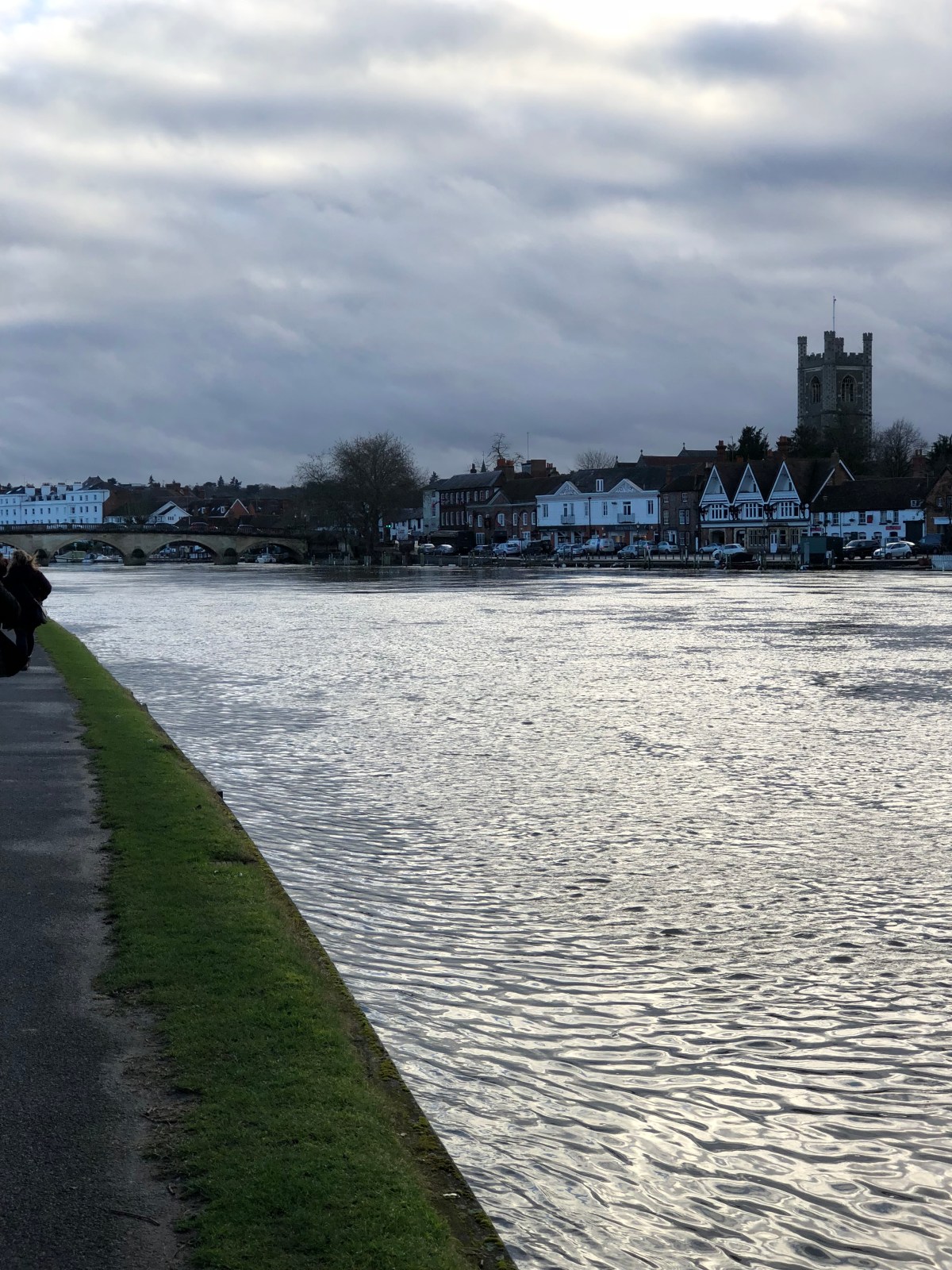
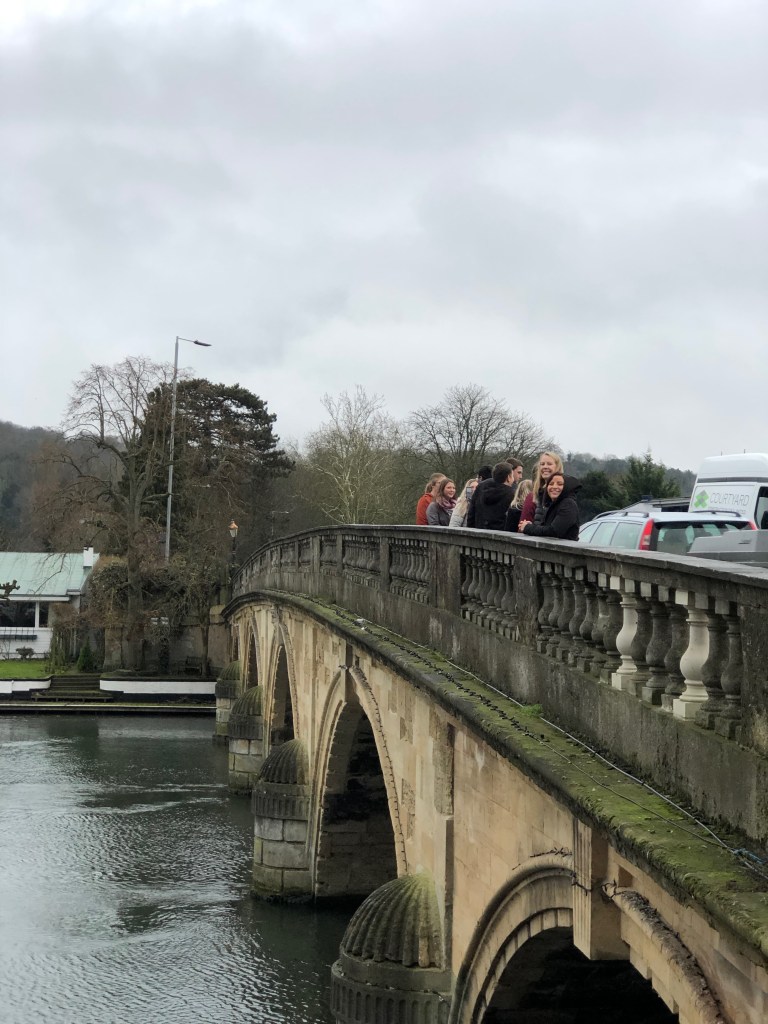
Then I’d turn them loose. A couple of hours to wander, to find shops, to find a pub if they were old enough and bold enough. Most years they ended up down by the water, with the church tower standing watch beside it and the rowing clubs lined up along the river like they’d been waiting two centuries for the next regatta. The students would lean against the balustrade in their dinner clothes, taking pictures of each other with the Thames behind them. I’d see the photos later. Always the same easy grins, always a little wind in someone’s hair, always that river. Before they scattered, I gave them one more instruction: there’d be more guests at dinner, and they needed to be on their best behavior. I never had to say it twice.

That was my window. For a couple of hours, the trip changed shape. Her husband was there, and so was my co-teacher, but it no longer felt like I was leading a course. I don’t remember the specific conversations anymore. What I remember is how welcome we were made to feel, every single time, the same way my own parents had made her feel welcome in our house all those years ago when she was the one far from home. It evens out that way sometimes, across forty years and an ocean, without anyone planning it. It was the one stretch of adult conversation in three weeks otherwise spent keeping twenty-year-olds alive, punctual, dressed, fed, and pointed in the right general direction. I loved being around my students, but three weeks is a long stretch, and we were at different points in our lives wanting different things from the day. Those two hours were the quiet in the middle of all that noise.

For years before Brexit ever entered the picture, I wanted to teach a study abroad course mostly so I could get back to England and see my friend, my sister in every way that matters, under the respectable cover of academic purpose. I spent a long time trying to come up with course ideas that would actually fit a business program at a small liberal arts university. Comparative management. Comparative law. A course tracing Charles Dickens through legal London, courtrooms and debtors’ prisons and all. None of them ever quite found a curriculum to live in.

Then Brexit happened, and the course found me instead. A country legally untangling a forty-year marriage, businesses scrambling to prepare for a divorce nobody had a precedent for. It was real. It was academic. It belonged in a business law classroom, and I could defend every line of it without blinking. The course was genuinely about Brexit. But the reason I’d spent years looking for a course in the first place had nothing to do with the EU at all.

The quiet part of the day always had to give way to the official part again. The students would come back from the river and the shops and whatever pub they’d decided they were mature enough to enter, and I’d become the professor again, counting heads, checking collars, reminding them that dinner was still part of the course even if it came with better wine than anything listed on the syllabus.

Dinner was at Hotel du Vin every year. She recommended it, and for a long time I assumed it was just a place big enough to fit the group. It wasn’t until I dug a little deeper that I learned the building sits on the old Brakspear Brewery grounds, brick and beer and old English usefulness still there underneath the polish. It tied the dinner to Henley as something more than a pretty riverside town: commerce, beer, brick, work, reinvention. The hotel is modern. The bones aren’t. I don’t know for certain, but I can’t help thinking it was intentional all along, one more thing she’d quietly arranged without ever mentioning it.

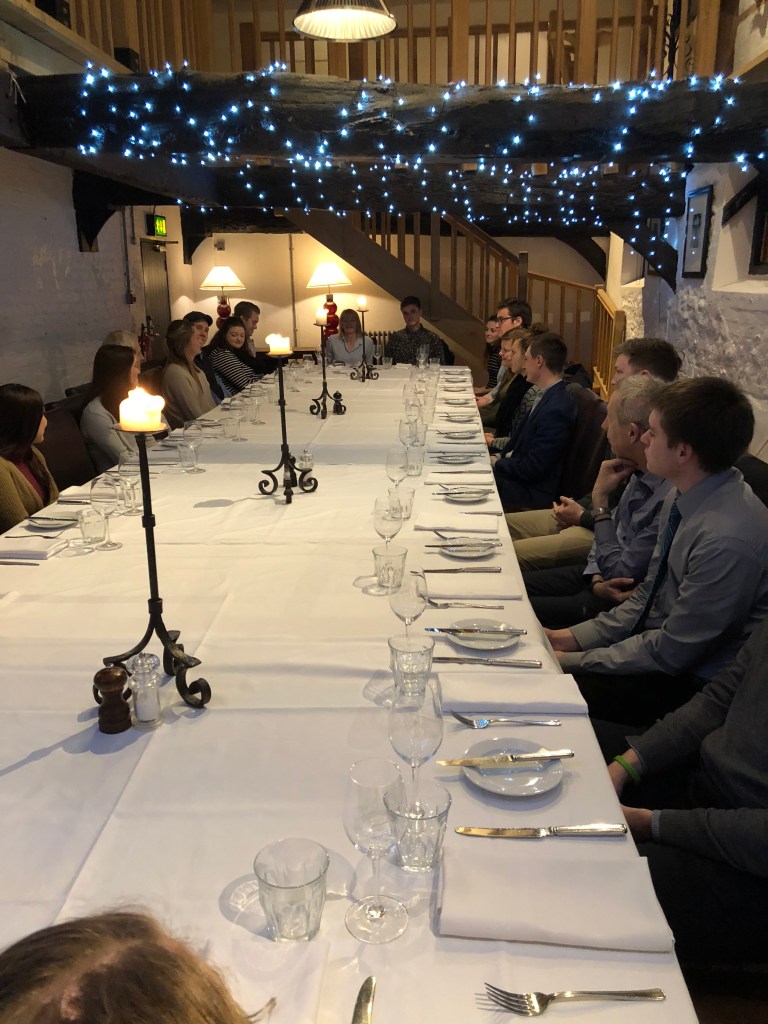
The room barely fit us, every year, and it was often quite warm, the way old buildings get when you pack too many people into a beautiful room and then pretend candles and wine are a climate-control strategy. My friend and her husband joined us every year, along with anywhere from two to four other local adults she’d brought in to sit with the students. On a good night we had nearly thirty people in a room that was meant for twenty. Stone walls scrubbed pale, low black beams strung with tiny lights, candles down the center of a long white table. Same wine selection, same students cleaned up and trying hard, sitting a little straighter than usual and pretending they ate dinner like that all the time. We all knew most of them would have been just as happy with the McDonald’s at Waterloo Station. The conversation changed every year, because the country kept changing. One thing never did. We always ended up ordering a few more bottles than we’d planned on.

The dinners were never lectures, and they were never debates in the way we think of debates now, with everyone waiting for their turn to reload. People disagreed about whether Brexit was wise or foolish, whether it would be painful or merely inconvenient, whether it was about sovereignty, economics, immigration, nostalgia, or some combination of all of it. But the conversation stayed civil, polite, and entirely British. Nobody shouted. Nobody performed outrage for the room. People listened, answered, disagreed, and then reached for the wine bottle like grown-ups.

The first year, Brexit was still young enough to argue about in the abstract. Henley came near the end of the course, the day after Paris, which had only a loose claim on Brexit beyond the EU connection but the students loved it anyway. I’d recruited most of that group myself, and they were quieter than the ones who came after, more curious than opinionated. The British guests at the table were, on the whole, hopeful. It might not be that bad, someone said. One man put it more honestly than anyone else managed all three years: in my heart I was for Brexit, but in my head I knew it was bad. Nobody at the table disagreed with him out loud.

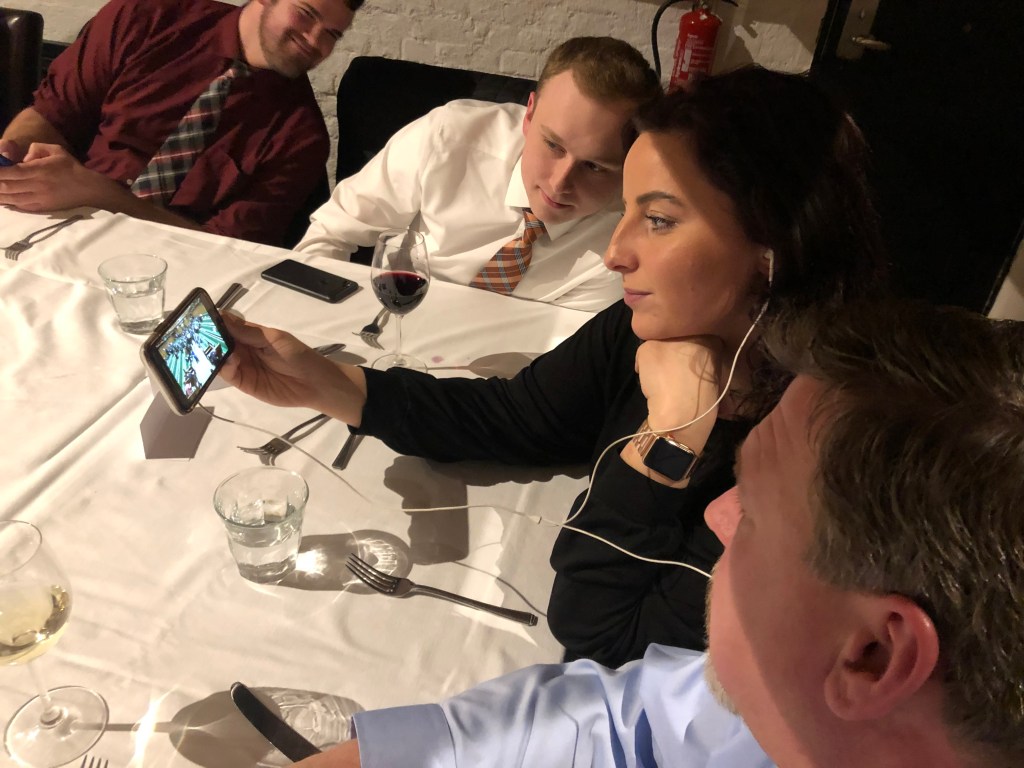
The second year, Brexit had moved from theory to machinery. We went to Henley early, while the students were still fresh and fully engaged with the material. Parliament was in the thick of it, and I watched a student prop her phone against a water glass during dinner, earbuds in, watching the vote happen in real time an hour away while the table talked around her. The optimism from the first dinner had curdled into something closer to exhaustion, though there was still hope a good exit deal could be found. More wine that year too.

The third year, Brexit was no longer a question. It was a date on the calendar. Henley came toward the end again, but this time as the first stop on a three-leg road trip, Henley, then Paris, then an overnight in Chester, the only year we ever made it there. We were within two weeks of the UK formally leaving. Nobody was hopeful anymore, just tired and practical, working through the logistics of a thing that was already decided. The highlight of that dinner, for me, had nothing to do with Brexit at all. One of the students that year had gone to the same high school I had, the same high school my friend had gone to the year she lived with us. Three of us, decades and an ocean apart, all from the same hallways, sitting at the same table in Henley. A reminder of how closely we’re all tied together in this world. We ordered more wine that night too.

I always knew the train times. I always knew exactly when we needed to leave. As that moment got closer every year, some part of me wanted time to slow down, and every year it refused. There was never enough time. There never is. We’d reluctantly finish the last bottle of wine, say our goodbyes at the door, and walk back through town to the station for the long ride home to London.

Three dinners, three years, three versions of a country trying to decide who it wanted to be. That was the course I put on the syllabus. But the part I remember best was never the vote or the lectures or the long train rides back to London. It was a friend who showed up every time without being asked twice. It was students leaning into the river wind, dressed better than they wanted to be, and then showing up at dinner with more curiosity and grace than I probably gave them credit for ahead of time. They asked better questions than I expected. They listened more carefully than I expected. They treated my friends with the kind of care that made me proud to have brought them there. Henley was not just a place I took them. It was a place they helped me see again.

Aged Thirty Years

I had a birthday this week. Tomorrow is Father’s Day. This is always a complicated time of year, and this one has been harder than most to put into words.

If you’ve been reading this blog for a while, you’ve heard parts of this story before. The golf course. The note. The phone call. I’ve written about this day before. But thirty years asks for more. This year I wanted to go further. Not just what happened, but who he was. And what it’s like to figure that out without him.

Thirty years ago, my birthday fell on a Saturday. The next day was Father’s Day. I was on the golf course when someone handed me a note written in red ink. Five words: Paramedics called. Call your mom at home.

I went back to the clubhouse. This was before cell phones were common, and they let me make a long distance call to my mother. I think they knew what I was about to learn. She told me “Your father had another heart attack and he isn’t doing very well.” We said a few more words. I don’t remember all of them. Then she told me the ambulance was taking him to the funeral home.

I drove to my parents’ home. Twenty-five minutes. When I arrived, my birthday presents were sitting out. We had been planning a celebration. There wouldn’t be one that day. There was a funeral to plan instead.

Grief, it turns out, comes with logistics. Two services in two towns 350 miles apart. Countless people to notify, arrangements to make, decisions that shouldn’t have to be made at all. His death was so sudden there hadn’t been time to plan anything. We found ourselves picking out burial plots in the cemetery where I had learned to ride a bike. Four of them, side by side. Three are now occupied. One remains. A lot of that planning happened on Father’s Day.

In the middle of it, I needed to get away for a little while. Not far. Just somewhere I could breathe without answering another question or making another decision. I went back to my own home, an apartment attached to a monument shop. That’s when I found it. The Father’s Day card I had already bought, signed, sealed, and set aside. That was not like me. I am usually the guy buying the card the day before, or the morning of, hoping the selection has not been picked clean. But that year, for reasons I still don’t know, I had bought it early. I had written in it. I had done the responsible thing. And now the last Father’s Day card I would ever buy had nowhere to go except with him. It was buried with him.

Father’s Day has never been simple since. Neither has my birthday. They arrive within days of each other every year, and every year they carry the weight of that one. Four times since he died, including the very first anniversary, my birthday and Father’s Day have fallen on the same day. I don’t have a word for what that feels like. I’m not sure one exists.

I don’t know that I can say I know who he was. Maybe none of us ever fully know our parents that way. But thirty years of life have given me more perspective than I had then. I understand more about him now than I did as his son standing in the wreckage of that week. Two of his siblings are still alive, and they could probably tell me even more. That is part of the strange work of grief, too. You keep learning about someone after they are gone. Family. Old friends. Coworkers. Former patients. I’ve heard stories about him from people I barely know. My favorite came from a man who shook my hand and said, “I knew your dad. He did my vasectomy.” I didn’t know what else to say, so I asked how it turned out.

My dad’s name was Russell. He was the oldest child, or so I always believed, and he acted like it his whole life. It wasn’t until we buried my grandfather, his father, that I learned the truth. There had been another child born before him. A baby who didn’t survive. My dad had spent his entire life as the oldest surviving child, carrying that weight without ever fully being the firstborn.

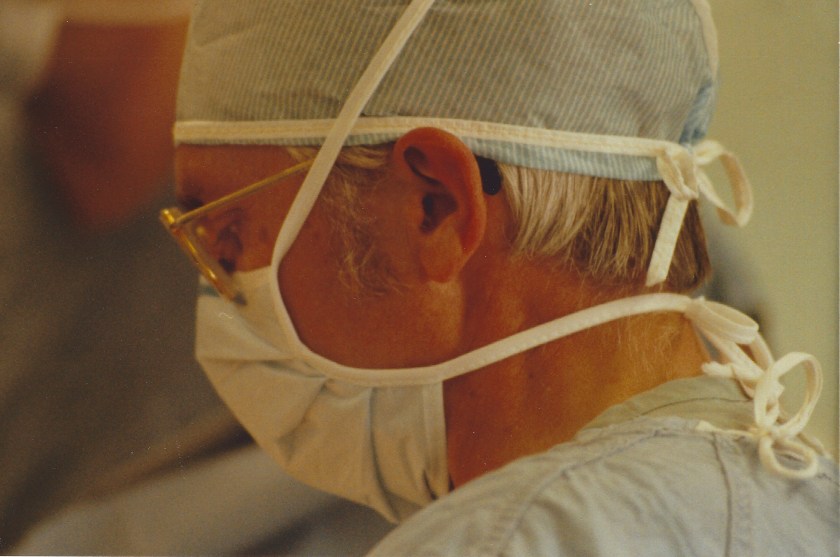
He was a surgeon, and like a lot of surgeons, he was gifted with his hands. He could build things, fix things, figure out what was broken and make it right. He was also a perfectionist. That is exactly what you want in a surgeon. It is not always what you want in a dad.

He tried to teach me some of what he knew, but teaching did not come as naturally to him as doing. I remember being about ten years old, mowing the lawn, and having him inspect it afterward with a surgeon’s eye for the imperfect line and the missed blade of grass. These were errors in a side yard at the end of a long private driveway. Nobody would ever see them. But to him, they mattered. Every project was like that. I never developed any real interest in working with my hands, building things, or fixing things. It wasn’t that the work itself felt beneath me. It was that something in me tensed up every time I picked up a tool, already worrying about the feedback if it wasn’t perfect.

When he died, I kept most of his tools. At the time, I told myself it was practical and valuable. Good tools are worth keeping. He certainly thought so. Every Sunday he would comb through the Sears newspaper ads looking for a deal on a new power tool. If he found one, he would dream up a project that justified the purchase. The tool came first. The reason came after. But the truth is, I kept his tools mostly as a way to keep him.

Over the years, I gave most of them away to people who would use them. That felt better than I expected. There is something good about knowing his tools are still fixing things, still building things, still in the hands of people who know what to do with them.

I still have some of them. This week, I used a few to fix a leaky faucet. I wish I were better at that kind of thing. I wish I cared more about it. But I don’t, not really. Maybe that is because of how he taught me. Maybe it is because of how I am made. Most likely, it is some combination of both. What I know is that even now, standing by a sink with a wrench in my hand, I can still feel the old pressure to get it right on the first try.

And when my own sons were old enough, I didn’t make them mow the lawn. I didn’t teach them how to build things or fix things, either. Maybe that was the wrong choice. But I couldn’t teach what I didn’t know how to do, and I didn’t want them to feel what I had felt. I didn’t want a missed blade of grass, a leaky faucet, or a failed first try to become something larger than it needed to be.

Times are different now. If they need to fix something, they can find a video, ask a question, or follow instructions I never had at my fingertips. But part of me still wonders whether I protected them from frustration or quietly passed along my own fear of it. How do you know what you should teach, what you should push, and what you should let them learn on their own? That is the kind of question I wish I could have asked my father.

What he left behind was not only tools, and the inheritance was not only fear. He left behind standards too. Some useful. Some heavy. Some I wanted to carry. Some I spent years trying not to pass along. And I also remember who he was when he was there.

My father believed in hard work. Not the performance of it, not the talking about it, but the actual showing up and doing the thing in front of you until it was done right.

I remember trying to learn how to water ski. I didn’t enjoy it. I wasn’t having fun. I wanted to be done. My father yelled at me and said that wasn’t the point. The point was learning a new skill, learning how to do something difficult, and taking pride in knowing you could do it. He was right, probably. I did learn how to water ski. But I never learned to enjoy it.

That was one of the complicated things about him. Sometimes the lesson was right, even when the delivery made it harder to receive. He believed competence mattered. He believed doing hard things mattered. He believed there was value in knowing you could do something, even if you never particularly wanted to do it again.

He also believed in integrity, in treating every person you encounter with basic human respect regardless of who they are or what they can do for you. Those weren’t lessons he delivered in speeches. They were just how he lived.

He was generous in ways he didn’t always announce. Our home was open to my friends. He would be there in his chair after a long day, a cigarette in one hand, a book or newspaper in the other, and a martini, scotch, or whatever drink was in rotation sitting not too far away. In hindsight, the fire safety plan may have needed some work. He might pull you into a conversation about politics, argue his side hard, and still expect everyone to be friends the next morning. If we went out to dinner, he paid. Every time, without discussion.

We also had two foreign exchange students live with us for a year. That is not a small thing. Adding another child to a house is expensive, inconvenient, and disruptive in ways people don’t always see from the outside. He did it anyway. He welcomed them, included them, and made them feel like family. That was his generosity, too. Not loud. Not sentimental. But real.

He was not without contradictions. He understood some of his own shortcomings, or at least enough of them to try to warn me away from the same mistakes. I came to think of those warnings as Russisms. He would point at me with a lit cigarette, take a deep drag, and tell me not to smoke because it was bad for me. Or he would swirl a martini, take a sip, and pronounce the dangers of alcohol and why I should avoid it. At the time, I probably heard the hypocrisy more than the wisdom. Now I hear something else. A man who knew his own weaknesses and hoped his son might not have to carry them.

Looking back, I think the Russisms were less about the cigarettes and the martinis and more about something harder to say out loud. They were the advice he wished someone had given him. The mistakes he had already made, handed back to me in the form of a warning. He couldn’t always fix what was broken in himself. But maybe I could avoid some of it. That was the hope, anyway. It usually is.

He was a dedicated physician in ways I didn’t fully understand when I was young. You don’t appreciate that kind of commitment when you’re a kid watching your father leave for the hospital at strange hours. You understand it later, when you’re the patient, sitting across from a doctor and hoping with everything you have that this person actually cares about what happens to you. My father was that doctor. I know that now in a way I couldn’t then.


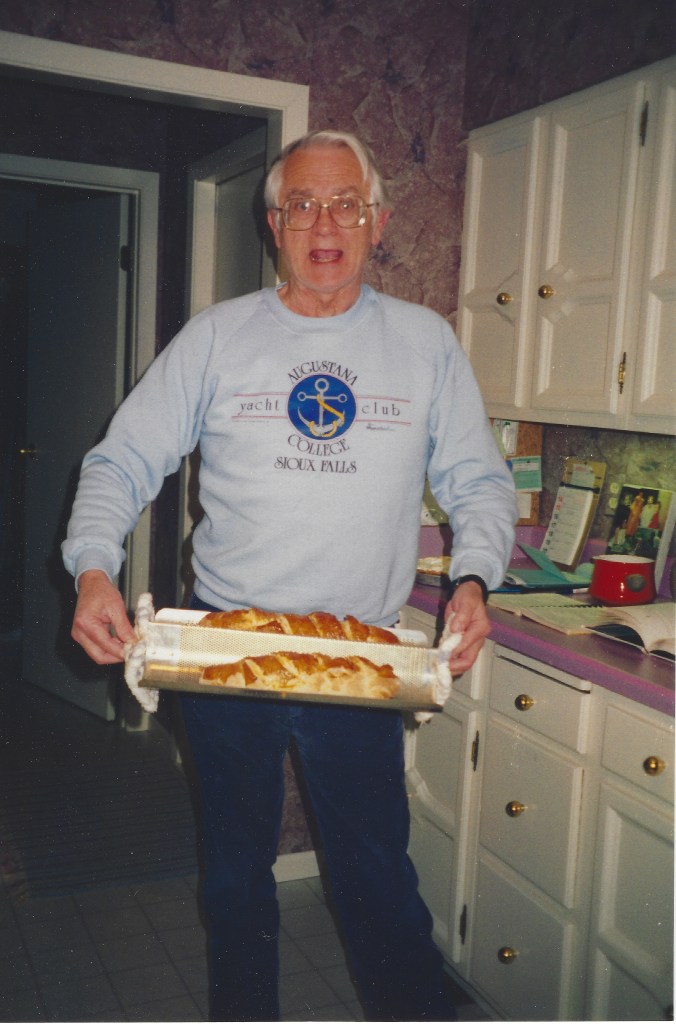
In his later years, after four heart attacks and a forced retirement from medicine, my father began to soften. He tried breadmaking. It didn’t go well, and I think part of him knew it, but he made it anyway. That was new. The man who had inspected a lawn with a surgeon’s eye for the imperfect line was now standing in a kitchen, covered in flour, making something that didn’t turn out right and living with it.

He also showed more outward empathy. He let things go that he wouldn’t have let go before. And in the weeks before he died, he called me just to talk. No agenda. No news to deliver. Just his voice on the phone, checking in. The dad I grew up with never did that. I didn’t know how much I needed it until it wasn’t there.

So what he left behind was also unfinished. The conversations that never happened. The phone calls I never got to make when life got hard. The chance to ask whether he had felt the same doubts, made the same mistakes, and wondered in the quiet moments whether he had gotten it right. I never got to tell him about my own shortcomings and hear him say he understood. And I never got to thank him. Not really. Not for the sacrifices he made, or the strange hours he kept, or the dedication he gave to his patients. I understand now that he did those things so our lives could be better.

He never met my wife. He never met my boys. He would have loved them and probably invented a couple more Russisms. They know him only through stories and a middle name. My youngest carries Russell as his middle name. It’s the closest thing I had to introducing them. It’s not enough. It never is. But it’s something.

Thirty years is a long time to figure something out on your own. Long enough that the figuring becomes the thing itself. I don’t know if I got fatherhood right. I tried to show up. I tried to work hard and keep my word and treat people the way my father taught me. I tried to pass along what was passed to me, even when I wasn’t sure I was doing it correctly. I may not have gotten everything right. But my boys have never once been anything other than the best thing I’ve done. And when I failed, which I did, there was no one to call who had walked this particular road before me.

My father was a connoisseur of scotch and other spirits. Maybe connoisseur is too fancy a word, but he knew what he liked and took some pleasure in understanding it. I have taken an interest in scotch, too. Some of that is taste. Some of it is ritual. Some of it, I suspect, is another way of keeping a small conversation with him going.

A thirty year scotch is not simply older than a fifteen year scotch or a ten year scotch. Time has done something to it. The sharper edges have softened. The heat is still there, but it does not hit the same way. What remains is deeper, smoother, more complicated. Still scotch, but different than it was.

Grief works that way, too. Thirty years have done something to this. Not all of it has burned off. Some of it never will. But the raw pain of that first Father’s Day, the one spent planning a funeral in a cemetery where I learned to ride a bike, has changed. What remains now is grief, yes, but also gratitude, understanding, and a kind of love that has had a long time to age.

Somewhere today there’s a golf course, and a note written in red ink, and a young man who doesn’t yet know what he’s about to learn. I think about him every year on this day. I think about what I’d tell him if I could.

Happy Father’s Day, Russ. I still have things to tell you. And thirty years later, I am still finding things you left behind.

The Long Way Back from Paddington

The tickets were sorted. Now came the long way home.

Last week I wrote about the walk from Waterloo to Paddington, four miles across London on a free day while my students attempted to set the Guinness record for pub crawling. I had gone to Paddington for train tickets to Henley, but the walk back was never going to be the same walk in reverse. London had changed by then.

By the time I started back, the city was louder, the parks were fuller, and the quiet errand had become something closer to a full day’s walk. I was not trying to make good time. I was trying to notice. I reentered at the Italian Gardens, the formal ornamental garden at the northern tip of the Serpentine where Hyde Park and Kensington Gardens meet. The boundary between the two parks is blurry here, which is part of the charm. Stay west and you are in Kensington Gardens. Go east and you are in Hyde Park.

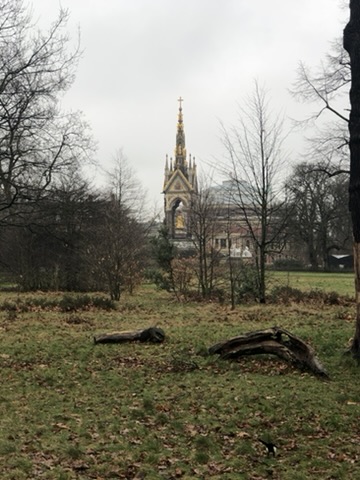
I usually went west first, toward Kensington Palace. The Albert Memorial comes into view on your left, an elaborate gilded monument with Royal Albert Hall rising behind it across the road. Then I would turn back east along the Serpentine. If instead you head south from the Italian Gardens, the path takes you past the Peter Pan statue, which has been standing there since 1912 and still draws people who stop longer than they expected to. Either way, you end up along the Serpentine, which by then was an afternoon walk, with the park busier, the light different, and my feet beginning to understand London better than my map did.

Keep your eyes up while you walk. Hyde Park has parakeets, bright green ones, darting through the trees. They are not native to England, and nobody knows for certain how they got there. The stories range from Jimi Hendrix releasing a pair on Carnaby Street in the 1960s to escapees from a film set. The truth is unclear. The birds are not. Eventually the park releases you. You come out near the back side of Buckingham Palace, which is where I would duck through rather than past the front.

Walking behind the palace, you find yourself in a neighborhood marked by a surprising number of international flags, the kind that signal embassies and consulates. If you know your flags, this is a good stretch to test yourself.

Eventually the consulates of Belgravia give way to Victoria, where each street seems to have been designed by a different century. Turn a corner and you move from Edwardian to Georgian. Turn another and you are in late Victorian. Turn one more and someone has dropped a modern building in without asking. London has always been like that. It should not work. It does.

The street names alone are worth the detour: Petty France, Buckingham Gate, Queen Anne’s Gate. Tucked among the townhouses are pubs with names that feel like they belong in a novel: The Old Star, The Adam and Eve, The Two Chairmen, The Feathers, The Phoenix. More than once I stopped for a late lunch, an afternoon snack, or a local beer. Nobody was in a hurry. Neither was I. Eventually I settled the bill, stepped back outside, and kept walking. A few blocks later I reached into my jacket to make sure the tickets were still there. They were. A few days from now, those tickets would put my students on a train to Henley, and me a few hours closer to someone I had been looking forward to seeing since before the term began. Then, without much warning, Westminster Abbey appeared above the roofline as if it had simply decided to be there. It stopped me every time. It still does.

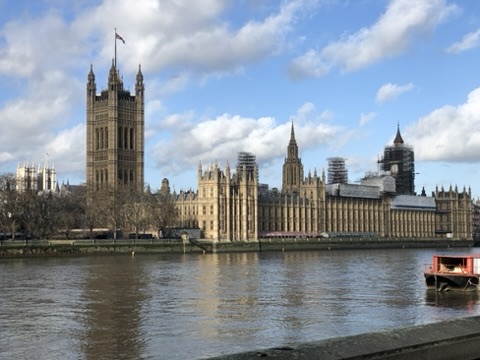
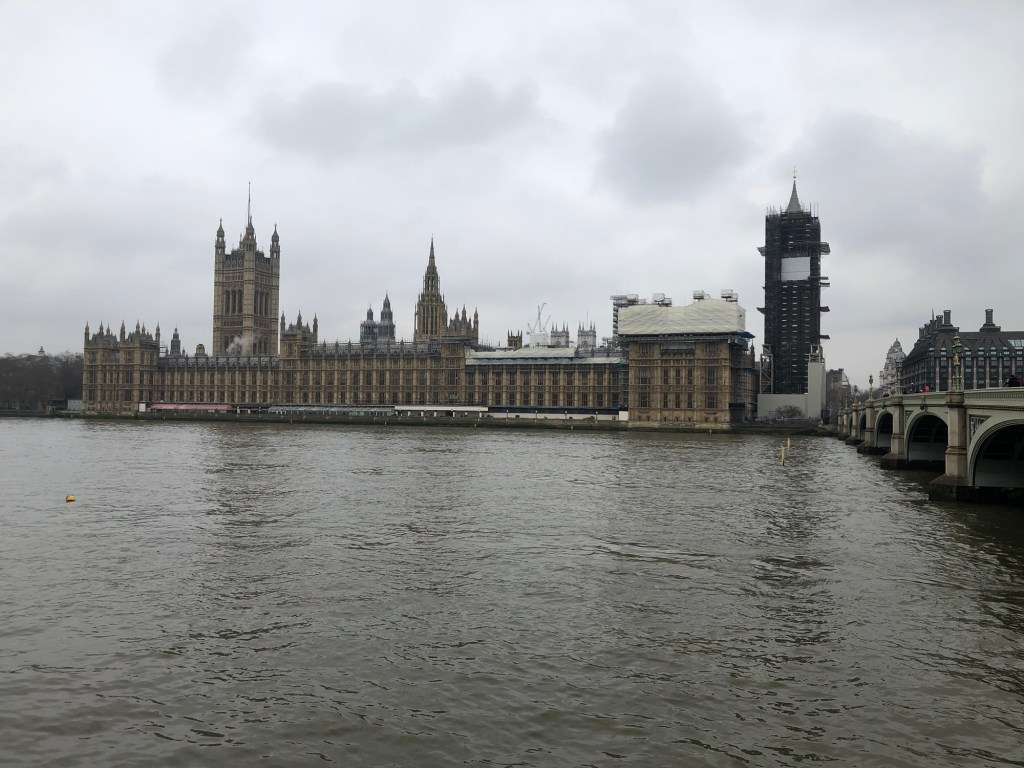
I usually worked my way behind Westminster Abbey and then to Victoria Tower Gardens, a small park tucked at the south end of the Parliament building that most visitors never find. The gardens take you naturally down to Lambeth Bridge, which is nothing like Westminster Bridge and better for it.

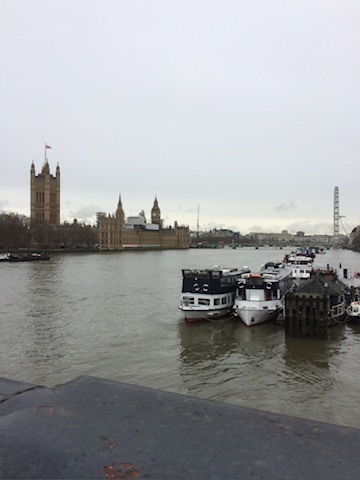
Earlier in the day I had crossed Westminster Bridge, the green one, the postcard one, the one crowded with selfie sticks and people trying to prove they had been there. Lambeth Bridge is different. It is painted a deep red, supposedly to echo the benches of the House of Lords, just as Westminster Bridge echoes the green benches of the House of Commons. Maybe that is true. Maybe it is just one of those stories London tells because it sounds right. Either way, from the middle of Lambeth Bridge you get Parliament and Westminster Abbey without the crowd. The same landmarks, but from a quieter angle.

Once across, you have a choice. Head toward Lambeth Palace, the official London residence of the Archbishop of Canterbury and reportedly so for 800 years. I never saw him there. Or turn and walk along the Thames toward Westminster Bridge.

I usually took the river. The walk along the Thames after Lambeth Bridge is quiet and thoughtful in a way the outbound journey never is. The city has changed pace by now. Fewer people, a handful of street vendors, but no hustlers, no tour groups, and no one performing for anyone. The river moves beside you, and London lets you alone for a while. You follow the river until Westminster Bridge comes into view, and that is your signal to turn. From there it is a short walk back through the familiar landmarks: past the London Eye, back through Leake Street, up through Lower Marsh, and finally the hotel. By the time you walk through the door, you have covered nine to ten miles of one of the great cities in the world, more if you wandered, and your feet know it.

When I got back to the hotel, I carefully sorted and stored the tickets for the trip to Henley. After nine to ten miles of walking, I was ready to join my students for a pint at a nearby pub. Most of them had a head start. Though I should say, some of them had actually used the day the way I had hoped. A few went to the V&A Museum. Others made the pilgrimage to Abbey Road. There were always a couple who did something Harry Potter related, which I understood completely. Many went to pubs. We compared stories about our day.

I told them I had walked to Paddington to get the tickets to Henley. Then I told them a little about my friend. The woman who had lived with our family during the Silver Jubilee. The one who had made my life immeasurably better. Not the whole story. That would come later. For now, it was enough that Henley was getting closer.

A Walk to Paddington

A professor, a free day in London, and a four-mile walk across one of the great cities in the world. From Lower Marsh to Leake Street, Westminster Bridge to Hyde Park, and finally Paddington. This is walking London the right way.

Every course I taught in London included free days on the weekend. The idea was simple. Let the students explore the city on their own terms. In practice, this meant most of them spent the better part of the day on an unorganized pub crawl, apparently attempting to set the Guinness record. As a professor I found this frustrating. But truth be told, when I was 20, I would have done the same thing.

On one of those free days, I had my own agenda. It was my favorite day of the course, just me and London getting to know each other a little better. The walk to Paddington was, on the surface, a practical errand. I needed to purchase train tickets so the students could visit Henley-on-Thames, a small and beautiful town about an hour outside the city, home of the famous regatta and, more importantly to me, people I deeply care about.

One of them had come into our family years earlier as an exchange student and somehow became something closer to a sister. I am not going to name her here, but she knows exactly who she is. She lived with us for a year during the Queen’s Silver Jubilee, and what started as a temporary stay became one of those rare relationships that keeps deepening instead of fading. Over the last twenty years, she and her family have become one of the better things in my life. The train tickets were the reason for the walk. She was the reason for the trip.

The walk is about four miles each way, but that number is misleading. Four miles in London is not four miles on a treadmill or four miles around a suburban walking path. It usually took me a couple of hours to get to Paddington and a couple of hours to get back. You do not rush a walk like this because there is too much to see. You stop for photographs. You pause on bridges. You stand in front of buildings longer than you planned. You let a street, a park, or a memorial interrupt you. That was the point.

Waterloo Station was about five minutes from the hotel, and I could have taken the Bakerloo line directly to Paddington and spent the rest of the day in a pub. But where’s the fun in that. If you have a free morning in London and a decent pair of shoes, this is how I would suggest spending it.

Before any long walk you need fuel. The Hampton Inn near Waterloo put out a full buffet breakfast, and I worked my way through it with some purpose. The scrambled eggs were, I’m fairly certain, made from powder, but after a cup of tea nobody was complaining. I passed on the beans. I understand this is a beloved British tradition. I have never understood it and I’m not going to pretend otherwise. The potato rounds, essentially flattened tater tots, were almost as good as a McDonald’s hashbrown, and that is not faint praise. I finished up, got myself sorted, and stepped outside into whatever London had waiting.

I turned right out of the Hampton Inn and headed up toward Lower Marsh, one of those streets guidebooks mention in passing and then move on from. That is a mistake. In the morning it is a market waking up. Stalls are being assembled. Vendors are arranging things. The smell of food is beginning to organize itself. The sights and smells remind you of a local fair or carnival from childhood, except this version has better coffee, better food, and no livestock barns. Lower Marsh feels more local than the better known markets, less performed, the kind of place where people actually shop rather than pose for photographs. When I was there it ran Monday through Saturday. These days it is weekdays only, probably another casualty of Covid. Come back on a Tuesday for lunch. You will not regret it.

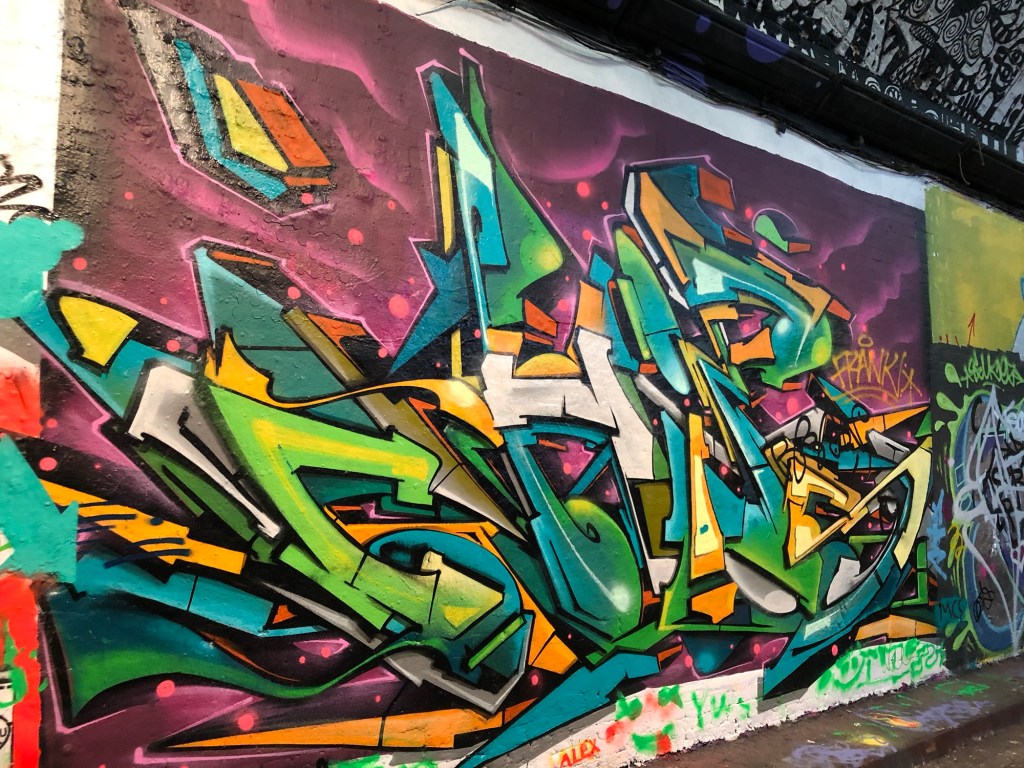
From there I found my way to Leake Street, which is easy to miss and worth finding every time. At its most basic, it is a tunnel running underneath the outbound tracks of Waterloo Station. The entrance is unremarkable, which is part of the point. You step in and the city changes register entirely. Leake Street is maybe 300 yards long, and every wall belongs to graffiti. Not the scratched-out signatures of people marking territory, but actual art, full murals, color from floor to ceiling, work that changes regularly because other artists paint over it and start again. It smells like spray paint and old concrete. It sounds like your own footsteps. Walking through it early, before anyone else has found it that morning, is one of the genuinely strange pleasures London keeps tucked away.

Leake Street eventually opens onto York Road, near the London Eye and the Aquarium. From there you weave your way toward the Eye and eventually the Thames. This stretch of the South Bank is busy at almost any hour, but early on a Saturday morning in January you can have it largely to yourself, which makes it ideal for photographs. Westminster Bridge is worth visiting once. After that, unless you enjoy navigating around selfie sticks, wannabe influencers staging endless photo shoots, and the occasional pickpocket, there are better ways across the river.

But stop in the middle on your first time. The bridge is painted green, which is said to echo the green benches of the House of Commons, the chamber nearest the bridge. London loves that kind of detail, the sort of thing you can walk past a dozen times before finally noticing it. Then look upriver toward Parliament, the Elizabeth Tower with Big Ben rising over everything, and the water moving underneath. It is the postcard version of London, and the reason postcards exist.

The far side of the bridge drops you into Westminster, and you should take a moment before you go anywhere. You are standing at the heart of England. Parliament is to your left, Westminster Abbey just beyond it, the UK Supreme Court across the square, Whitehall stretching north. Not all of it packed into one view, but close enough that you can feel the weight of the place. Early on a Saturday morning in January you may have most of it to yourself, which is the only way to properly appreciate it. From here you have choices. Head up Whitehall and cut across the Horse Guards to reach St. James’s Park from the north, or head due west and arrive at the southeast corner of the park directly. Either way works. I usually went west. And that is where Churchill finds you.

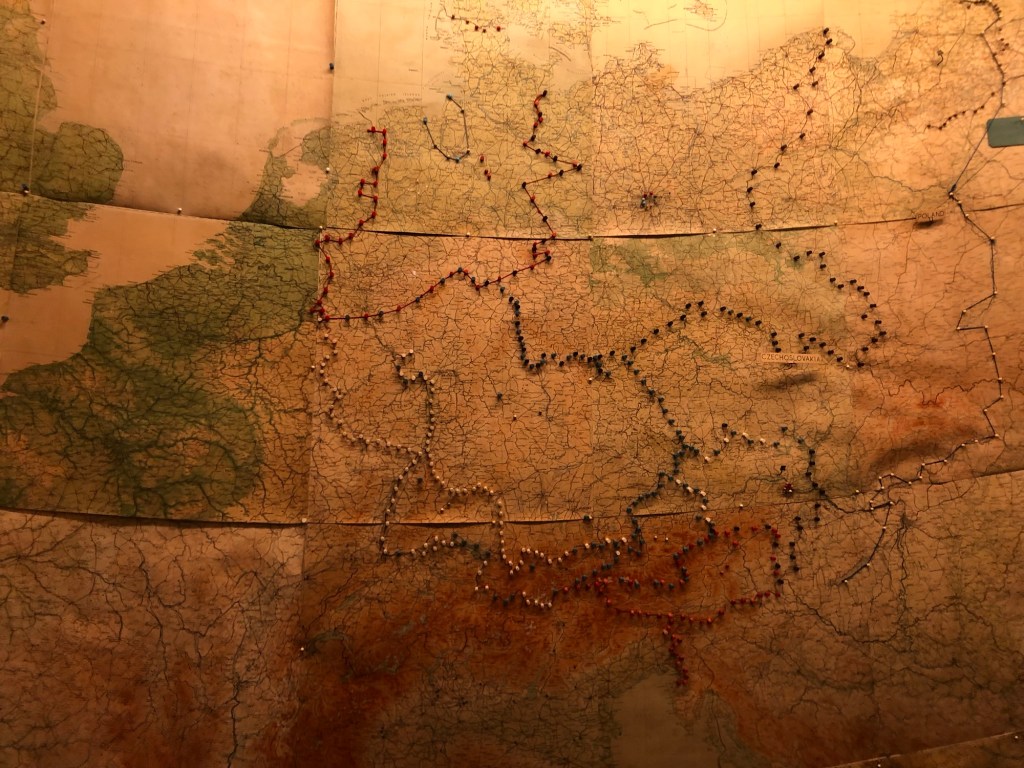
Tucked at the southeast corner of St. James’s Park, nearly in the shadow of Parliament and Downing Street, are the Churchill War Rooms. If you have any interest in World War II, this is not optional. The War Rooms are the secret underground bunker where Churchill and his senior commanders spent the war years monitoring, planning, and trying to hold a country together when certainty was in short supply. When the war ended in 1945, they sealed the facility and walked away. It exists today almost exactly as it was left. The maps are still on the walls. The phones are still on the desks.

A city like London never lets you walk only in the present, and on June 6 that was especially true. Eighty-one years ago, the largest seaborne invasion in human history launched from Britain and landed on the beaches of Normandy. Some of it was planned in rooms like the ones a few hundred yards from where you are standing. The men who went ashore that morning did not all come home. A morning walk through a peaceful city is not a small thing when you remember what left from these shores. It is worth a moment of your time to remember that.

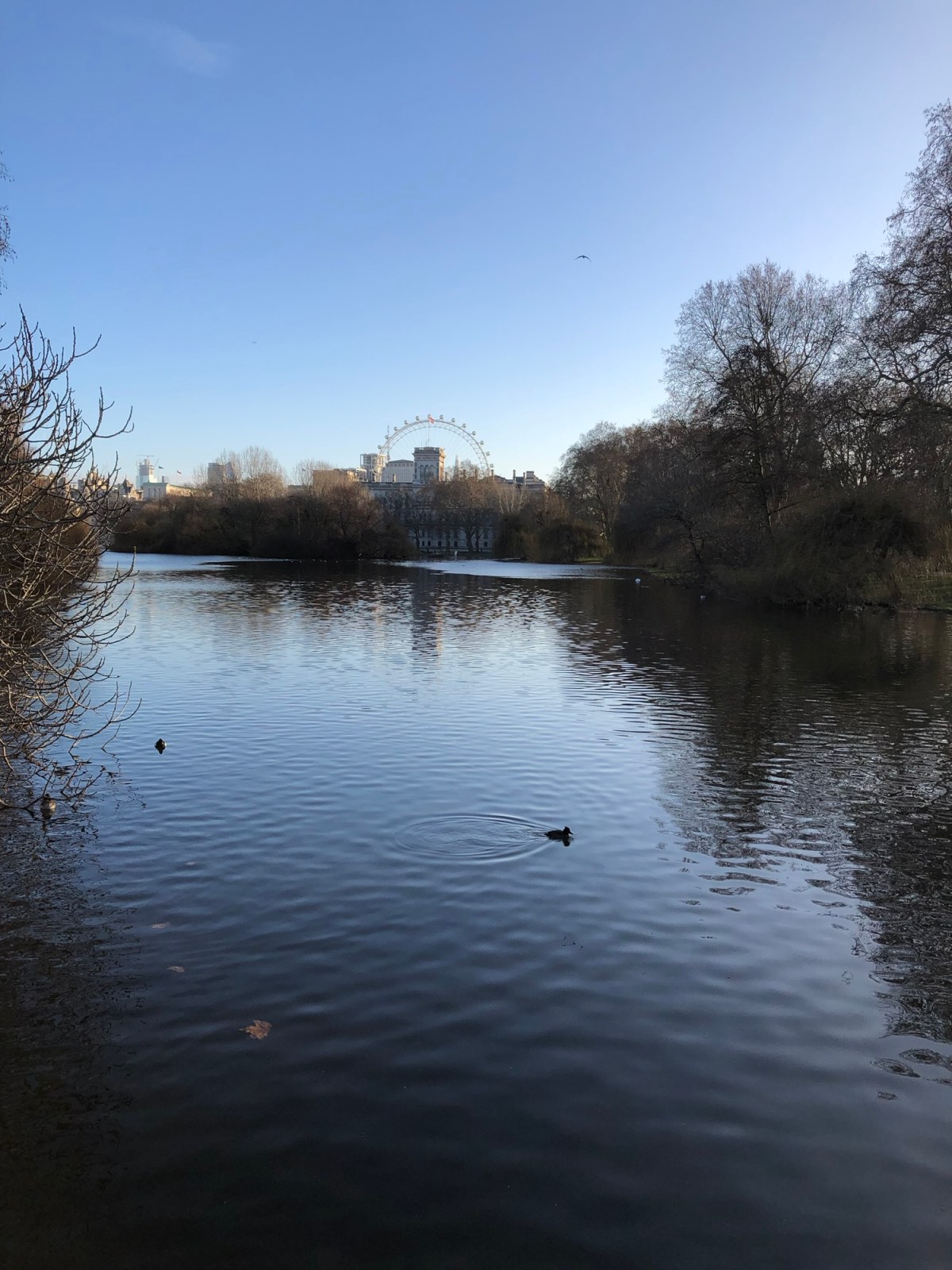
St. James’s Park is worth walking through, not around. Follow the path along the lake and take your time with it. The waterfowl alone are worth slowing down for. Ducks, geese, and swans move around in numbers that suggest they know they own the place. Henry VIII used it as a deer park. James I turned it into an exotic animal park. Charles I walked through it on his way to his execution. Now it is nearly sixty acres of paths, water, birds, and one of the better views in London. From there, Green Park carries you toward Hyde Park.

Hyde Park deserves its own moment. St. James’s Park belongs emotionally to monarchy and ceremony. Green Park belongs to quiet passage. Hyde Park belongs to the public, which means it is sometimes beautiful, sometimes noisy, sometimes odd, and almost always alive. By the time you arrive you have already walked a couple of miles, Paddington is just on the other side, and you might be tempted to think the hard part is behind you. It is not. Hyde Park covers 350 acres. Walking across it is a little like driving through Montana on I-90, where you are absolutely certain it is never going to end.

Henry VIII took this land from the monks of Westminster Abbey in 1536. The man had a pattern. It stayed private for a century until Charles I opened it to the public in 1637, giving Londoners a place to promenade, argue, protest, and occasionally listen to each other. History remembered him poorly regardless.

Every November through January, a corner of Hyde Park transforms into Winter Wonderland, a sprawling Christmas festival with roller coasters, a Ferris wheel, ice skating, a Bavarian village, and enough mulled wine to get through a British winter. I always wanted to go in but never had anyone to go with, and frankly the admission price gave me a convenient excuse. So I walked around it. London’s giant civic backyard. It takes a while to cross. I never minded.

And then, sometime around noon, after nearly four miles, three parks, and more pauses than I could count, I arrived at Paddington. For many, Paddington is where London begins. If you fly in from Heathrow you take the Express straight here. There is a bear named after this place, which tells you something about how deeply it has worked its way into the culture. It is a vast station of steel and glass, with none of the grandeur of Union Station in Washington or Grand Central in New York. It is open and cold and relentlessly busy. Frankly, it is overwhelming.

But I had a job to do, and I did it. Tucked into one corner was the ticket office. Because it was Saturday, there was rarely a line. I ordered the tickets with the group discount and tucked them into my jacket. I always found it odd how satisfying that moment was. I had walked nearly four miles across London for a stack of paper tickets, which made no sense and perfect sense at the same time. They were not just tickets. They were one step closer to Henley, one step closer to my students meeting family, and one step closer to seeing one of my best friends.

The tickets were sorted. Now came the long way home

Advice I wish I had Given My Younger Self

The question is not really whether you would go back. The question is what you are going to do today with everything you already know.

Lately, scrolling through the noise that social media has become, I keep running into a certain kind of post. You have seen them. They usually start with a photograph, a high school hallway, a gymnasium, a parking lot that looks like every parking lot from 1984. And then comes the question. Would you go back? To a specific year. To a specific moment. To a specific version of yourself you have not been in a very long time.

The comment sections on these things are something. People arguing with complete strangers about which year they would choose and why. Some of them are serious. Some of them are heartbreaking. All of them are trying to answer the same question underneath the question, which is: was there a version of this life that went better?

I think about that question more than I probably should. When I see those posts I think about the 1980s with genuine nostalgia. It was a simpler time. We were not being bombarded around the clock with news and noise and everyone’s opinion about everything. But nostalgia is not the same as regret, and when I am honest with myself I do not look back at what I had and feel like something is missing now. My life is good. Arguably great. My wife is my best friend. My sons turned out amazing. My work has mattered, for the most part. My friendships have lasted longer than most things I own. And Ginger meets me at the door every single day like I have been gone for six months.

So the long and short of it is I am not going back. But I would send a note. That note, it turns out, has existed for years in rougher form, tucked inside syllabi and first-day-of-class remarks and the things I said on the last day when I thought nobody was writing anything down. It was shaped by the mistakes I thought I had made and the opportunities I thought I had missed and the things I wished someone had told me before I had to figure them out the hard way. Since I do not have a DeLorean with a flux capacitor, I will have to settle for what I have written here.

Find time for the people who will be gone the soonest. Now, if we are being honest, I would absolutely go back knowing what I know. I understand I might be tinkering with the space-time continuum, and I have made my peace with that. Yes, I would probably look into a few investments. Apple. Walmart. Amazon. Netflix. I am not a saint. But that is not actually why I would go back. I would go back to sit with my parents for a while. Hug them more. Ask them questions I never thought to ask. Ask them about their parents and grandparents, their cousins, the family stories that were actually told. Because they were told. I just was not paying attention the way I should have been. Storytelling is how families survive themselves, and I let too many stories go in one ear and out the other because I was young and thought there was plenty of time. The same goes for a few friends and family members I did not know I was running out of time with. In 1986, I did not know there were only ten years left with my dad.

Pay attention. Most of life does not announce itself as important when it happens. The random Tuesday night dinner when everyone somehow made it to the table. The walk with the dog. The conversation with your dad the night before he died, not knowing it would be your last. The family story you have heard a dozen times before and assume you will hear a dozen more. The big moments are easy to spot. Graduations. Weddings. Births. Retirements. Life has a way of putting those on the calendar for you. The smaller ones require more effort. They slip by quietly, and only later do you realize they were part of something larger. Take the picture. Ask the question. Stay a little longer. One day you will discover that what looked like an ordinary day was actually a gift. The trick is noticing it before it is gone. Turns out Ferris Bueller was right. Life moves pretty fast. If you don’t stop and look around once in a while, you could miss it.

Take the trip. Both of them. The one you cannot afford and the one you can. You will find reasons to wait on both, and the reasons will sound responsible and they will be wrong. Think about what you actually remember. Not the gifts. Not the things. The trips. The British Isles with my parents and grandparents. Switzerland for a dear friend’s twenty-fifth wedding anniversary. The thirteen-hour drive to Mackinac Island with my family, and somewhere in the middle of Wisconsin one of my sons looking up and announcing, “You people are the worst family ever. You people are not my family.” I remember all of it. If I had it to do over, I would rethink every holiday, every birthday, every Christmas morning. Less stuff under the tree. More stamps in the passport. Experiences last forever. Most everything else ends up at Goodwill.

Travel does something else too. It exposes you to different cultures, different people, different food, different ways of looking at the same world you thought you already understood. It hardens some of your beliefs and softens others, and both of those things are good for you. French wine tastes better in France. And most of all, you learn that a mother in South Dakota loves her child just as much as a mother nearly everywhere else in the world.

Ask her out. In my wildest dreams I did not think she would say yes. She said yes. We are married. There were others along the way, there always are, but she was the one, and I almost talked myself out of asking because I was certain I already knew the answer. I did not know the answer. That is the part nobody tells you. You are a terrible predictor of outcomes involving your own life. Ask anyway. Apply anyway. Start the business anyway. Have the conversation anyway. The worst outcome is rarely as bad as you imagine, and the wondering lasts considerably longer.

Read more than you think you need to. Not for school. Not to finish. Read because, like travel, it opens your mind and calms it at the same time. It expands curiosity and makes you better in ways that are hard to measure and impossible to fake. Every good book teaches you something. Find an author you enjoy and spend time with them. Doris Kearns Goodwin taught me about leadership through Lincoln and Team of Rivals, perhaps the greatest lesson in leadership ever put on paper. Oddly enough, my favorite book of hers is not about Lincoln at all. It is about growing up as a Brooklyn Dodgers fan in the 1950s. David McCullough took me to Paris in The Greater Journey. Michael Lewis taught me to see the world differently. Mitch Albom reminded me that kindness still matters. John Grisham kept me up far too late reading The Firm.

Books are inexpensive travel. They let you borrow someone else’s life for a few hundred pages and return to your own a little wiser than when you left. Ted Lasso once quoted Walt Whitman on this subject: be curious, not judgmental. There is essentially no evidence Whitman ever said that. But the line made me curious enough to go read some actual Whitman, which I suppose proves the point entirely. I have learned something from almost every book I have read. Some lessons were profound. Some were useful. Some were simply that Clan of the Cave Bear is still not making my top ten.

I baked reading into my syllabus every semester, mostly through Wall Street Journal articles, but it was intentional. I wanted my students curious about the world beyond the classroom and beyond the case law. Whether it worked I cannot say with any certainty. Some of them listened. I choose to believe more of them did than I will ever know.

Start saving. Now. Not instead of living, not instead of the trip or the experience or the night out that becomes a story you will tell for thirty years. Alongside all of it. Compound interest is the closest thing normal people get to magic. The problem is that magic only works if you start early. Start by at least matching what your company puts in. Then think about more. Ten percent of your pay is a good number. You will not miss it, and I say that knowing you think you will. Every time you get a raise, increase your savings rate by half. If you get a four percent raise, save two more percent before you ever see it. The math on compound interest is not complicated, but it is unforgiving. Time is the one ingredient you cannot buy back. You do not need to save everything. You need to start. There is a difference, and younger me confused the two for longer than I would like to admit.

Move your body. I want to be clear about something. I have never liked working out. The gym, the weights, the person grunting next to you at six in the morning, none of that was ever me. But I do like moving, and it turns out that is enough. Walk. Swim. Bike. Dance. Tai chi. Golf without the cart. Run, if you are that particular kind of crazy. It does not have to hurt and it does not have to be impressive. It just has to happen, and it has to happen again tomorrow. I have now walked more than thirty million steps, one day at a time, and I did not do it because I love exercise. I did it because I love moving. The body keeps score longer than we think it does, and small, consistent habits compound the same way investments do. Small. Consistent. Long term. The math works the same way in both places. Trust it.

Worry less. I mean this practically, not as a bumper sticker. You are lying awake at 2am about the student upset about his grade, the client upset about his case, the beneficiary upset about not getting enough money. You cannot fix any of it at 2am. And if you are being honest, most of it was never yours to fix in the first place. I used to tell my students there were three kinds of problems in the world. Your problems. My problems. Our problems. And most of the problems keeping people awake at night belong firmly in that first category. Not mine. Not ours. Yours. The sooner you learn to hand them back, the better everyone sleeps, including you. So plan for what is actually yours. Adapt when you need to. Handle what is genuinely in front of you. But the 2am rehearsal of every possible outcome, that is just energy leaving the building with nothing to show for it. I stumbled onto a meditation technique once where you imagine a river and you place each anxious thought onto a boat and watch it float away. You keep going until the river is empty. The first time I tried it I was skeptical. By the fifth boat I was nearly asleep. Five minutes of watching your thoughts drift downstream will do more for you than two hours of staring at the ceiling. Put it on a boat. Let it go.

Take the chance. This one is broader than the trip and the girl, though it includes both. I mean the job you are not sure you are qualified for. The idea you have not said out loud yet. The conversation you keep rehearsing and never having. The version of yourself you have not introduced to anyone yet. Younger me was careful in ways that younger me thought were wise. They were not wise. They were fear with better posture. I tried to tell my students that, in so many words, every chance I got. I am not sure they believed me. I am not sure I would have believed me either. And if it does not work? Pay attention. Failure usually has something to teach you. More often than not, the breakthrough is sitting just on the other side of the thing that did not go according to plan. Some of the best things that happened to me came immediately after something I thought was a setback. At the time I could not see it. Looking back, it seems obvious. Looking forward, it never does.

Forgive yourself. You will make mistakes. You will say the wrong thing to the wrong person at the wrong moment. You will lose friends, money, and maybe a job. Some of it will be your fault. Some of it will feel like your fault and will not be. Either way, carrying it does not fix it. Learn what it has to teach you, resolve not to do the same thing twice, and put it down. It just makes everything else heavier.

There is a particular cruelty in advice. It arrives, almost without exception, after the moment it would have been useful. Four years ago I wrote something called The Last Lecture, my final words to my students at Augustana on my last day in the classroom. Reading it now alongside this is an interesting exercise. The curiosity is still there. The belief in showing up is still there. But that piece was written from the front of a room to people just starting out. This one is written from inside a life, to myself, with the benefit of forty years of evidence. What strikes me most is that the advice is not all that different. Which means one of two things. Either I have not learned as much as I thought, or the fundamentals were right all along and the only thing that changes is how personally you feel them. I choose to believe it is the latter. And I suspect that everything I just told younger me applies just as much to the students who sat in my classroom over the years as it does to the man who stood at the front of it.

Here is the thing I did not expect when I started writing this. Most of this list is not finished business. It is current business. The people who are still here will not always be. There are trips not yet taken and chances not yet seized and worry that still needs to stop. The body still needs to move tomorrow and the day after that. The math on all of it still works, but only if you start. I wrote this as advice to a younger version of myself and somewhere in the middle of writing it I realized I was also writing it to right now. That is what the social media posts never tell you. The question is not really whether you would go back. The question is what you are going to do today with everything you already know.

Most of the chances I took turned out better than I deserved, and most of the ones I did not take I cannot quite stop thinking about. The balance sheet is not even close. My life is good. It could have been good sooner, and with less hesitation. But it is not too late for any of it. Not for me. Not for you.

Do the thing. Take the trip. Ask.

The Man With the Rose

A family trip to Washington DC becomes an unexpected lesson in memory, sacrifice, and what memorial day really means when you let it land.

Washington, D.C., in the summer belongs to everyone. The tour groups, the school trips, the families with strollers and matching t-shirts and someone always needing a bathroom. We had both been there before, my wife and I, though never together. Our oldest son had not been there at all. We were the kind of parents who believed in this sort of thing. Washington, D.C., is the heart of the democratic experiment, the place where laws are made, history preserved, and sacrifice remembered in stone and silence. Some families went to Disney. We went to Washington. Each boy was going to get his own trip, seven years apart. This was the first one. It also happened to be near my wife’s fortieth birthday, which made it feel like the right time for all of it.

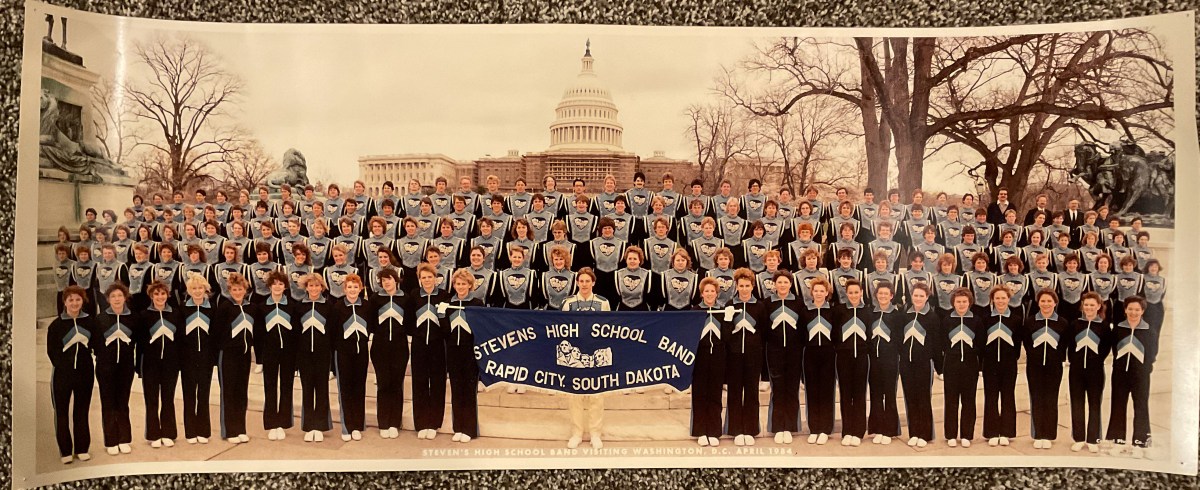
Washington and I went back a long way. In 1984 I came with my high school band for the Cherry Blossom Festival. We took first place in the competition, the same thing our band had done three years earlier. Just three years after that we would become the first band from South Dakota invited to march in the Rose Bowl Parade, but what I remember most about that first trip was Pennsylvania Avenue. We marched down it playing “Battle Hymn of the Republic” and “This Is My Country,” trying to stay in formation while I worried mostly about the horses ahead of us. White marching shoes and horses always felt like a risky combination. Even then the city felt different to me, heavier, like history happened there in a way it did not happen other places. I was a teenager and I felt it. I wondered what I would feel coming back as a father.

This trip was different. I was coming back with nearly four decades of life behind me, but I was also seeing the city through the eyes of an eleven-year-old seeing it for the first time. That changes the experience. We walked the Mall, toured the Capitol, and negotiated our way through the Smithsonian. My wife wanted to watch a congressional debate on immigration. My son and I wanted Air and Space. We went to Air and Space. We stood at the Vietnam Wall. The names go on longer than you think they will. More than 58,000 of them. At some point they stop feeling historical and start feeling personal. You cannot stand there very long without realizing each name once belonged to somebody who thought they would eventually come home.

We visited Arlington National Cemetery and found the grave of Cecil Harris, my father’s cousin and a World War II fighter ace. He died on his birthday. I had known his name my entire life, mostly because he was my father’s hero. Standing over the marker, surrounded by row after row of men just like him, I understood something about that word for the first time. This was where the heroes were. All of them. My son was young and we told him what we could.

The changing of the guard at the Tomb of the Unknown Soldier is another one of those things Americans think they understand before they see it. Then they see it. Twenty-one steps. Twenty-one seconds. Everything deliberate. Everything exact. While we were there another group laid a wreath, the same ceremony my high school band had once participated in years earlier. We stood quietly with everyone else watching until a phone rang somewhere in the crowd. Not just any ringtone either. The American Idol theme song. The sound cut through the silence in a way that felt almost physically painful. Heads snapped around. A few people gasped. The soldier never reacted. That made it worse.

But even that was not the moment we carried home with us.

That came later at the World War II Memorial.

We arrived early on purpose because my wife hates crowds. The memorial was nearly empty when we got there. Blue sky without a cloud in it. White stone. You could hear your own footsteps. The World War II Memorial feels different from the Vietnam Wall. The Vietnam Wall is intimate and personal. It breaks you quietly. The World War II Memorial is broader than grief. Vast and declarative, built to hold the weight of an entire generation and what was asked of them. We walked slowly around the perimeter reading the names etched into the stone. Normandy. Bastogne. Midway. Saipan.

Then the bus pulled up.

It was a charter carrying veterans. The men stepped off slowly, moving with the careful mechanics of age. Several wore hearing aids. One carried portable oxygen. There were canes and a few white New Balance tennis shoes. Many wore caps stitched with the names the campaigns and divisions: Pacific Theater, 82nd Airborne, Battle of the Bulge. Someone handed each man a rose as he stepped onto the plaza. They entered the memorial built for the war they had fought more than sixty years earlier, long after most of the country had moved on. Etched into the stone behind them, the words of one of their own: “This was a people’s war, and everyone was in it.”

One man drifted quietly toward the Pacific side of the memorial. He moved slower than the others. His rose trembled slightly in his hand. I tried to take a picture without being noticed, one man alone walking toward a wall built for his war. He stopped near the word Saipan and carefully lowered the flower to the base of the wall. Then he stayed there. He did not speak. He did not move. More than once he started to turn away and could not do it. Something kept pulling him back to that stone. After a while another veteran walked over and gently took him by the arm. He leaned into the help as they slowly started back toward the bus. Halfway there he turned around once, just once, looking back toward the wall with something I still do not have a word for.

The rose stayed. The man left. The name on the stone didn’t change.

I have thought about him many times since that morning. I still wonder what it was that held him there. A memory. A friend. A brother. Something that happened on that island that he never spoke of and never forgot. Whatever it was, it was strong enough to pull him back to that wall sixty years later with a rose in his hand and no ability to leave. I will never know the answer. When you are talking about war, maybe wondering is the right response. Maybe not asking is its own kind of respect.

Those men came home. Thousands of others did not. Their theaters and battles are etched in the granite. Others have their names on the Vietnam Wall. They are in the ground at Arlington. So many who never came home. Memorial Day gets treated now as the unofficial start of summer, the long weekend, the backyard barbecue, the first real warmth after winter. None of that is wrong. But it is also this. An old man and a rose and a word carved in stone. The ones who did not come home deserve at least that much of our attention, at least one moment in the long weekend when we let it land.

My son was eleven that morning. My wife and I were nearing forty. The veterans were in their eighties. We all stood in the same place. We all carried different versions of the American experience. None of us said much walking back. Washington does that. It finds you wherever you are. It found a teenager once, worried about horses. It found a father watching his son. It found old men with roses. It finds everyone. And it asks the same thing every time. Do you understand what this cost?

Sometimes that’s how it starts.

Walking Thoughts

A ransomware attack took down Canvas at the end of the semester. A seven year walking streak. A treadmill in a basement. And what all three have in common.

Earlier this week, I walked outside in shorts and a t-shirt for the first time in a long time. Ginger was with me, which has not been a given since January. The temperature was what my kids used to call Goldilocks weather. Not too hot. Not too cold. Just right. It felt like spring, which is one of my favorite seasons, and for a few minutes it felt like something else too. It felt like before.

After my fall, the winter was a lot of treadmill miles. Necessary, functional, and about as inspiring as a dentist waiting room. The streak stayed alive, but the treadmill is not this. It is not the morning air or the way Ginger’s ears go up when she realizes we are actually going outside and not just standing near the door. It is not pavement under your feet or the specific quality of light that only exists in early morning in May. The treadmill is the backup system. This is the real thing. I have been thinking about backup systems a lot lately.

The streak is important to me. It is not worth my life. Those two things can both be true, and learning to hold them together has been its own kind of discipline. Ginger has paid the price for my caution more than anyone, which is not entirely fair to her. But here we were on Tuesday morning. Back outside. Goldilocks weather. Shorts and a t-shirt. The dog happy in the way only dogs can be happy, completely and without reservation.


On one of those treadmill mornings earlier this week, before the shorts and the t-shirt and the Goldilocks weather, I was reading about Canvas on my iPad while walking in place in my basement. Canvas had been hit with a ransomware attack. The system was down. Data had been breached. Somewhere, someone was waiting to get paid.

For those who do not spend their lives around universities, Canvas is the learning management system that runs coursework, gradebooks, assignments, and submission records at a majority of American colleges and universities. Michigan uses it. Minnesota uses it. So do Harvard, Stanford, MIT, and Cal Berkeley. The public school district down the street uses it. Everyone uses it. Well, almost everyone. Purdue made a different call. North Carolina State uses Moodle, which used to be the system at my former institution before Canvas became the answer to a question nobody asked out loud.

The ransomware attack was timed with surgical precision. End of semester. Grades due. Students at maximum anxiety. Every hallway conversation and email orbiting the same question. Then suddenly, the whole system was gone. I later learned that the day before the attack, my former institution had recommended a policy requiring faculty to use Canvas or suffer consequences that were not fully specified but were clearly intended to sound unpleasant. One day later, Canvas did not exist. The universe, apparently, was paying attention.


In the days after the attack, I came across social media posts and articles from professors, mostly in the humanities. Most were people I have never met. A few were former colleagues. Many smugly announced that this never happened before Canvas, that the old system worked fine, and that if we simply returned to bluebooks and spiral notebooks we would all be safe from hackers. They were not wrong that ransomware cannot attack a filing cabinet. They were wrong about almost everything else. A bluebook and a spiral notebook are one fire, flood, theft, or dog with poor judgment away from a semester that never existed. The filing cabinet has no redundancy, no recovery, and no mercy. That is not a backup system. That is cognitive dissonance with a manila folder.

My response to all of this has mostly been a Gen X eye roll. We are the generation that typed college papers on typewriters with margin formatters because the alternative was starting over. We are the generation that had that one professor, and you know exactly who I mean, who required footnotes at the bottom of every page instead of endnotes because he had decided that was how civilization worked and your convenience was not his problem. In law school, we saved papers every ten minutes and printed them every half hour. By the end of a writing session there would be a stack of drafts on the desk and no reliable way to know which one was current. That was our backup system. We learned early that the tools were never as reliable as they looked and the system was never your friend. So when administrators started calling Canvas innovation, some of us smiled, nodded, and kept backing things up.

And because Gen X does not brag about this kind of thing, I will simply say that my gradebook most likely would not have been impacted. During my last semester teaching, I was required to use Canvas as my LMS. Every time I entered a grade into Canvas, I exported the file into an Excel spreadsheet saved in two places: my computer and a thumb drive. My syllabus was not contained in Canvas. It was uploaded to Canvas, which is a different thing entirely. Assignments were separate files. Canvas was the display window, not the warehouse. I did this because systems fail. Not sometimes. Eventually. All of them.


I have been walking every day for nearly seven years. Two thousand two hundred and some days, depending on when you are reading this. The streak began on March 1, 2020, and I know that the way I know my own birthday. Every step since then has been counted by a device, transferred to software, uploaded to an app that tells me immediately where I stand and how long the streak has been intact. The streak is simple in its requirements and unforgiving in its execution: a minimum of ten thousand steps, every single day, without exception. Early on, that number mattered more than it does now. I needed to see it. Now I just need to know it.

If the watch dies tomorrow, if the software crashes, if every piece of technology I use to track this disappears overnight, and I have already walked at least ten thousand steps that day, the streak is still intact. The walk happened. The streak exists in the record, yes, but it also exists somewhere the record cannot touch. I know for a fact that I have walked every day since March 1, 2020. No ransomware attack changes that.

The grades and assignments should work the same way. The learning happened. The work happened. The record of it should be protected, backed up, saved in more than one place. But the work itself belongs to something no system can hold and no hacker can touch. Canvas was the display window, not the thing itself.

The treadmill kept the streak alive all winter. It is not the walk. It was never the walk. But it was there when the walk was not possible, which is the only thing a backup system needs to be.


I will walk this morning. I will write down the number. Somewhere, somebody will back up a gradebook before the semester closes. Somebody else will not.

What a Mother Is

A Mother’s Day essay about the several mothers in one life — the mother who raised me, the birth mother I found after fifty years, and the woman I chose. Each gave me something the others couldn’t.

There is a painting in my home that has always been part of my life. A mother holding a child, rendered in bold blues and yellows by a local artist named Jacqueline Rochester. My parents bought it from her when she was a neighbor. Years later, I inherited it. My wife lets me keep it in our home. I am not someone who is moved by a great deal of art. I am moved by this one.

It hangs in the main room. At some point, Mother’s Day flowers ended up on either side of it without anyone planning it. Two bouquets framing a mother and child. It seemed right to leave them there. Tomorrow is Mother’s Day. Early in life, the assumption built into all of it, the cards, the brunches, the flower displays waiting near every grocery store entrance, is that you only have one mother to think about. That is true for a while. Then life keeps moving and the math changes.

There are several mothers in my life, each of whom gave me something the others could not. Every second Sunday in May, I think about all of them.


My mother was everything a young child could want. Caring, compassionate, creative, kind. She made my lunch every day, always my favorite foods. When dinner came, she cooked multiple meals to keep all of us happy. My father, who grew up in a time when food was not always plentiful, would have told us to eat what was in front of us and be grateful. My mother just cooked another meal.

It was early June when a flash flood devastated my hometown. Two hundred and thirty-eight people died in a matter of hours. I was four years old, so my memories are not complete. I remember pieces. Bridges washed out. Cars upside down in department stores. Water and sewer service gone. Close family friends lost their home and lived with us for six or eight weeks. We shared what we had. When we needed drinking water, we drove to an elementary school where tanker trucks had been set up for families. Standing in line filling jugs should have felt strange or frightening. My mother made it feel like an adventure. She made turning on a faucet sound dull by comparison. What four-year-old gets to drive to a school to pick up water?

Looking back now, I realize the same qualities that made her a good mother also made her good on television. “A Woman’s Touch With Mary Ann” was a local talk show, and she was its host. Before tapings, I watched her settle nervous guests with conversation. She made them comfortable. She treated them like they were the most important person in the world, and for those few minutes, maybe they were. She interviewed Phil Donahue, Bob Hope, and, before much of the country understood what it was seeing, Oprah Winfrey. I have sometimes wondered what would have happened if she had been born in a different era or found her way to a bigger market earlier. She never wondered out loud. She may have known it. She never let on.

When South Dakota decided to close the institution where both of my brothers lived, one for twenty-five years and the other for nearly fifteen, my mother went to work. She wrote letters, made calls, cornered politicians, and fought for her sons the way only a mother can fight when she has nothing to lose and everything to protect. In the end, the institution closed anyway. She did not win. But by the end of it, the governor knew exactly who she was. For a mother fighting for her kids, that is not nothing.

In late April and early May, the pasque flower bloomed across our property in the Black Hills. Purple and low to the ground, the first sign winter had finally loosened its grip. Every spring I picked bouquets for my mother without being asked. What I did not know at the time, or perhaps did not care about, was that the pasque flower is the South Dakota state flower, and picking it is technically illegal. I was out there committing crimes for my mother on a seasonal basis. She never once mentioned it. She took those bouquets like they were the greatest gift she had ever received, and she made me feel like maybe they were. Even in college, if I happened to be home at the right time, I still picked them. Some habits survive childhood intact.

She wasn’t there the day I was born, but she is the beginning of every memory I have. She is my original Mother’s Day. She’s gone now. But every May she returns a little.


Maybe that is part of getting older. You realize the people you have lost are not gone in any practical sense. They remain in habits, stories, meals, flowers, holidays, and even the objects sitting quietly in your home. Mother’s Day stopped being simple for me a long time ago because eventually I realized there was another mother thinking about me too.

In the summer of 1968, a twenty-year-old junior at Florida State University arrived in Sioux Falls alone, unmarried, and pregnant. In that era, those facts carried their own social sentence. She lived in a basement apartment for four months. She sewed clothes. She read books. She watched baseball. When the time came, nurses took the baby before she could hold him. She knew only that he was a boy. Then she went home and rebuilt her life. She married, had children, built a career, and kept the secret for fifty years. The hardest days, she later told me, were Christmas, Mother’s Day, and June 15th, the birthday she knew was being celebrated somewhere by someone.

That boy was me.

I found Sandi the way people find things now. A DNA test led to a first cousin match, some internet sleuthing, and eventually, to her. The letter I wrote her took nearly two weeks. I gave her every possible exit because I did not know what waited on the other side. On Christmas Eve 2018, I was standing in a Hy-Vee checkout line, already irritated about something I can no longer remember, when I checked my phone and saw an email subject line that read “Happy Christmas.” I left the cart where it was and walked to my car. I sat there reading the words of a woman I had never met, a woman who had thought about me every Christmas for half a century. At some point I started crying. By the time I drove home, whatever had irritated me ten minutes earlier had completely disappeared.

We met in North Carolina the following spring. She saw me come through the airport terminal and recognized me instantly. To anyone watching, the resemblance probably made the whole thing obvious. She held me the way she had not been allowed to hold me fifty years earlier. For most of my life, adoption had felt abstract to me, almost administrative. A fact more than a feeling. Meeting Sandi rearranged that.

Sandi gave me two things no one else could give. She gave me life. And she gave me up so I could have a better one. I did not understand the size of that decision until I became a parent myself. Both required courage. Both were acts of love. It took me five decades to understand that, but I understand it now.

The painting changed a little after that. For years I had mostly seen comfort in it. After finding Sandi, I started noticing the grip in the mother’s arms.


I did not get to choose the first two women in this story. They came to me the way most things in life do, through circumstance, timing, and decisions made by others. Wanda I chose. She chose me back. What followed has been the great gift of my life, and I have never once found the words adequate to describe her.

Wanda is not a June Cleaver mother. She didn’t bring treats to the ball games. But she made sure her boys got there, on time, with every piece of equipment they needed, which anyone who has ever tried to get a child out the door for a game knows is no small thing. She grew up with only a sister. Boys were not part of her original instruction manual. She figured it out anyway. I’d like to think I helped with the translation.

What she did was harder and quieter than the performing version of motherhood, and she never pretended otherwise. She led by example. She became a role model for her boys without any of them noticing it was happening, which is the only way that actually works.

She protected them, even from me. There were moments when I had something to say and she would suggest another approach. She was right. Every time. Her version of mothering was never hovering. She let her boys figure things out on their own, which takes more restraint than most people realize. When they needed to be challenged, she challenged them. When they needed to be held accountable, she held them accountable. She had a gift I never fully mastered. She could chew them out and motivate them in the same breath. I could only manage the first part.

There is one moment, though, that I come back to more than any other. Our oldest was seven years old when he hit a tree on a ski slope and cracked his skull. We had just found out we were pregnant with our youngest. The doctors were careful with their words. The next 48 hours would be key. That was all they could tell us.

The first night, the two of us folded ourselves into a single recliner in that hospital room, holding each other, not saying much. There wasn’t much to say. Outside the window, the world was going about its business. Inside that room, everything had narrowed down to the sound of a monitor and a seven-year-old’s breathing.

She stayed. The second night, she insisted I go to the hotel. One of us needed real rest, she said. One of us needed to be ready for whatever came next. She had already decided it wasn’t going to be her turn to step back. She sat awake through the night carrying one child while watching over another, and she did it without drama, without complaint, without asking anyone to notice.

We knew he was going to be fine when he started trying to make shapes on one of the monitors, controlling his breath, watching the screen, turning medical equipment into a game. That’s a seven-year-old telling you he’s back. We laughed. On the third day, we went home.

Wanda has been that woman every day for more than twenty-five years. I have a law degree and I teach for a living. I am reasonably good with words. They are not sufficient when it comes to her.


There are several mothers in my life. I am not confused by that. I am grateful for it. Each one of them gave me something the others couldn’t.


Tomorrow is Mother’s Day. There will be flowers and a card, and if I know Wanda, she will insist neither was necessary. Ginger will spend the day underfoot, hoping the occasion calls for a longer walk than usual. Somewhere in North Carolina, Sandi will think about June 15th, except now she knows where the story ended. And I will think about my mother, who spent much of her life making difficult things feel manageable for the people around her.

The painting will still be there when we get back. A mother holding a child between two bouquets no one planned.

See You When Silver Turns to Gold

Twenty-five years ago today it was raining in Rapid City. The places are mostly gone. The day is completely intact.

They say it’s good luck if it rains on your wedding day. Twenty-five years ago today, it was raining. I remember because my soon-to-be wife was worried about her hair. That has held up as a theme. I do not worry about my hair, one of the advantages of not having much left to negotiate. It was also Cinco de Mayo, and I’ve always suspected that wasn’t entirely accidental.

We were married at the Chapel in the Hills, a replica stave church in Rapid City honoring her Norwegian Lutheran heritage and a shared Augustana history, even if we hadn’t found each other there yet. Only our families were invited. Our friends found out later, which was less dramatic than it sounds and exactly how we wanted it. Nine people. Small, quiet, and right.

After the ceremony, we had lunch at the Canyon Lake Chophouse. It’s gone now. That evening, after everyone went their separate ways, we drove to Deadwood for dinner at Jake’s, on the top floor of the Midnight Star. It felt like the right place for that night. It closed about ten years ago, reopened at some point, and I’m not entirely sure what it is now. After dinner, we headed to our family cabin at Terry Peak. We sold that about fifteen years ago.

The Chapel in the Hills is still there, but much of the rest has shifted. The restaurant where we celebrated with family is gone. The place where we had our first dinner as a married couple has been through at least one more life. The cabin where we ended the night is no longer ours. Many of the places that framed one of the most important days of our life no longer exist, or no longer belong to us, or have become something else entirely. And yet the day is completely intact.

We are not the same as we were that day either. A lot of life has happened. We expanded our family. We built a home. We buried a parent. We buried a brother. We built careers and then rebuilt them. We watched both kids grow up and leave, which is the point and also a terrible system. It wasn’t all sunshine and puppy dogs, though we did eventually get the dog. There were ups, a lot of them, and some downs. We rode them out. Everything around us shifted. We shifted too. But through all of it, one thing never moved. Us.

Twenty-five years is long enough to know which fights weren’t worth having and short enough to remember having them anyway. Long enough to finish each other’s sentences and still occasionally be surprised by the person sitting across the table. Long enough to understand that showing up, day after day, in the ordinary and the hard and the unremarkable, is the whole thing.

So, to the woman who worried about her hair in the rain on a cool May morning in Rapid City, thank you. For your love, your patience, your understanding, your compassion, our children, and the thousand quiet Tuesdays that nobody writes about but that are the whole story.

Your hair looked great, by the way. It always does.

See you when silver turns to gold.