The next 30 million steps

Six years of walking at least 10,000 steps a day taught me a lot about perseverance. A fall in my driveway taught me even more about perspective.

In 1989, the first Life Alert commercial hit television. A woman on the floor yelling into a necklace: “I’ve fallen and I can’t get up.”

To a twenty-something watching it at the time, the whole scenario seemed absurd. That was a problem for Old People, somewhere far down the road, probably around the same time you start voluntarily eating bran for breakfast.

Life, of course, has a way of adjusting your perspective.

Given my recent fall in the driveway, that famous line suddenly felt less like a punchline and more like a documentary. Gravity made a convincing argument, and the driveway won the debate.

In last week’s blog post, I joked that only five people read the essay and two of them probably clicked the link by accident. At least I think I was joking. The analytics suggest I may not have been. But those five readers were clearly paying attention. Within hours I received several helpful suggestions, including one enthusiastic recommendation that I start “walking by five in the morning,” which I assume is now considered medical advice.

Last week also marked six years of walking at least 10,000 steps a day. Other than writing about it here, the milestone passed with almost no fanfare, which frankly felt appropriate. Nearly 30 million steps sounds impressive until you realize most of those miles were not heroic. They were cold mornings, windy afternoons, and sidewalks that could politely be described as uninspiring. Plenty of days the couch made a very strong closing argument. People assume a streak like that is about discipline or health, and those things matter. My knees appreciate it. My doctor probably does too. But after six years, I’ve realized the real benefit isn’t physical. Mostly, it’s perspective.

And perspective has a funny way of making you look at familiar things differently.

This week the streak continued, but I changed a few things up. Same commitment, just a slightly different angle.

One morning I walked a familiar route in the opposite direction, clockwise instead of counterclockwise. Another day the treadmill got involved, and I started playing with the incline and speed like a bored airline pilot. One morning I swapped the usual podcast for music.

Small adjustments, same routine. And something interesting happened. By making those subtle changes, I started noticing things in my own neighborhood that I hadn’t seen before. An electric utility box that had always been hidden from one direction but stood out clearly from the other. A tree I don’t remember ever seeing, even though it must have been there the entire time. I noticed the sunlight hitting houses, water, and the sidewalk differently depending on the angle. Turns out sometimes the only thing that changes is the direction you’re looking from.

It reminded me of something I once heard from pro golfer Dicky Pride. When Pride prepares for tournaments, he sometimes walks the course backward during practice rounds. Not playing it that way, obviously, just studying it.

His explanation stuck with me. Golf course designers are good at their jobs. They know exactly where players look and where the traps appear when you approach a hole the way it was designed to be played. From the tee forward, the course tells you a story.

Walk it backward and suddenly you see something else. You see where the trouble really sits, and you notice angles you missed. The fairway that looked generous from the tee suddenly looks a lot narrower when you’re standing on the green looking back. The bunkers make more sense, and the danger becomes clearer.

Same course, different perspective.

Six years ago I started walking because I wanted to feel better. What I didn’t realize was that the real value wouldn’t be the miles behind me. It would be the perspective that comes from continuing to put one foot in front of the other. The real story was never the first 30 million steps. It’s the next 30 million.

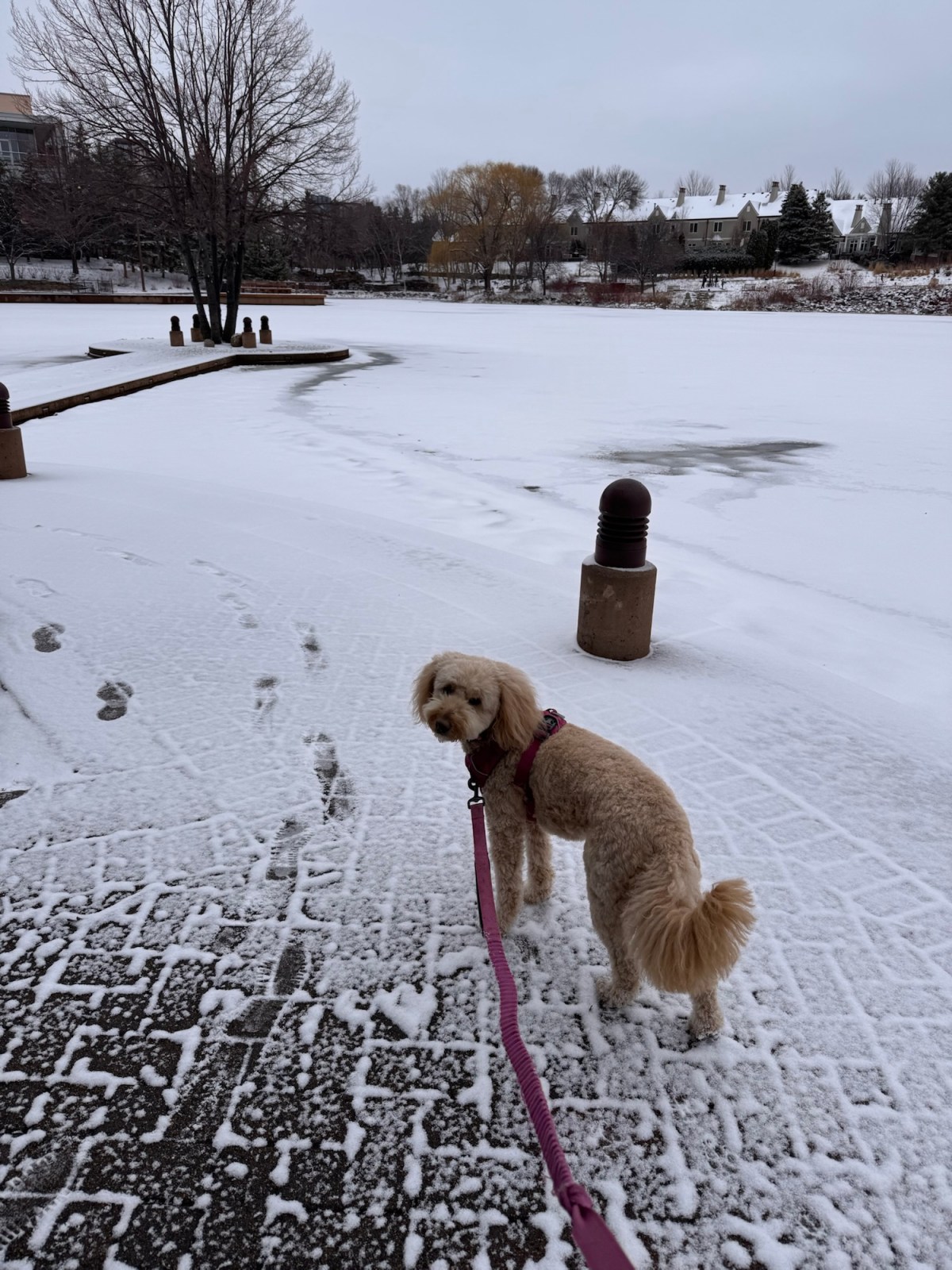
The weather is finally starting to warm up, which means Ginger is thrilled the streak continues. She has always been a strong advocate for additional walking. So tomorrow morning we’ll head out again, same sidewalks and same neighborhood, maybe clockwise, maybe counterclockwise. Sometimes the best way to see things differently is simply to keep walking — just from another direction, toward the next 30 million steps.

Six Years. Nearly 30 Million Steps. My Dog Is Thrilled.

The streak has become a daily permission slip to call the day a success. Some days it is a gift, a good conversation, an unexpected view, twenty quiet minutes nobody can touch. Other days it is just a man and his kitchen. Either way, you keep moving, and that is the philosophy.

Fair warning. If you have followed this blog for any length of time, you know what is coming. I have written about this before. My five loyal readers are nodding. The other two are still trying to find the exit. Feel free to skim. I mostly write these for myself anyway. It is cheaper than therapy and the co pay is better. Still, stay with me. Maybe something here lands for you too.

January was brutal, and I wrote about it. Somehow it became the most viewed post in the five year history of this blog. Apparently the best thing I ever did for readership was fall down. February was merely hard, and through all of it there was the streak. Today it turns six years old.

That means two thousand one hundred ninety one consecutive days. Not one missed. No exceptions. At least 10,000 steps every single day.

Nearly 30 million steps. Over 13,000 miles. An average of 13,500 steps a day. Thirteen thousand miles, on foot, mostly on ordinary days.

The last two months tested the streak more than most. I am still hurting from the fall in January, and my neck and back remind me every morning that gravity won. Some days I stand up slowly and negotiate with muscles that are not interested in compromise. There were days, more than I would like to admit, when I considered letting it go because six years felt like a respectable number. Instead, I pressed on.

Here is what that actually looks like sometimes. It is 8:57 p.m. I am tired. The weather is ugly. My neck and back are staging a formal protest. And there I am, walking circles around the main floor of my house, because every loop is 75 steps and I still need 1,256.

It is not scenic. It is not Instagram worthy. It is a middle aged man shuffling past his own kitchen for the fourteenth time while his dog watches with concerned confusion. But the steps get done and the streak survives, and somewhere in that absurd little ritual is the whole point. Some days, showing up looks nothing like you imagined, and it counts anyway.

The streak has become a daily permission slip to call the day a success. Some days it is a gift, a good conversation, an unexpected view, twenty quiet minutes nobody can touch. Other days it is just a man and his kitchen. Either way, you keep moving, and that is the philosophy.

Six years of daily movement has not made me stronger. It has made me steadier and less dramatic about hard days. I am more willing now to do the small, boring thing that keeps everything else from unraveling. The change was not heroic or loud. It was ordinary, and it stuck.

Today feels like spring’s opening act. The snow has mostly surrendered. I spotted a robin doing that smug little robin thing like it never left, and the days are stretching longer. Year seven will not be about intensity. It will be about curiosity. I want new trails, new neighborhoods, and roads I have never turned down before, because discipline got me here and curiosity can take it from here.

That is where you come in. Yes, you, all five of you plus the two still searching for the exit. If you have a favorite two or three mile route, send it my way and consider it your contribution to year seven. I cannot promise I will get to all of them, but I can promise I will keep moving.

Six years ago this started as a way to survive a pandemic. Now it is the anchor in chaotic mornings and the release valve at the end of hard days. It is quiet proof that I showed up for myself again, even when showing up meant walking past my own kitchen for the fourteenth time.

If I am honest, though, I am not the one who benefits most. Spring means real walks again, trails and air that does not sting. It means doors that open on purpose and paws that hit pavement with enthusiasm. Discipline is easier when someone is waiting by the door.

She has watched the kitchen laps and endured the treadmill indignity. She has waited on cold mornings with complete certainty that today would be worth it. She was right, because six years and nearly 30 million steps later, it was never really about mileage. In the end, it was always about the dog.

Office Hours at Josiah’s: Do You Remember Me?

Teaching is more than just imparting knowledge; it’s about building lasting relationships and witnessing personal growth. Despite the lack of financial rewards, the joy of connecting with students remains unmatched.

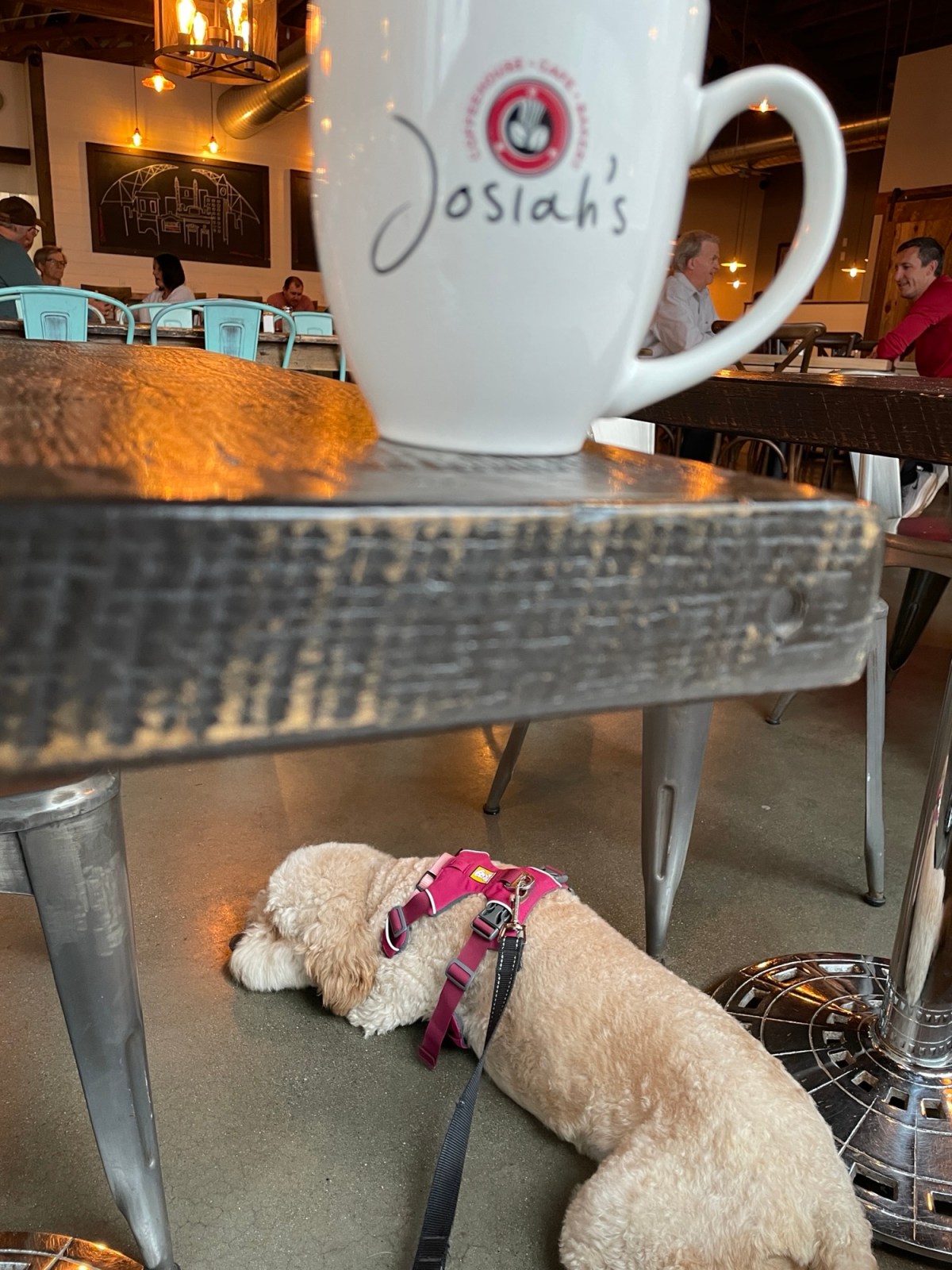
Outside of golf season, when I am in town, I spend 45 quiet minutes with Ginger, a cup of coffee, and my thoughts in my usual booth at Josiah’s. Ginger handles public relations. You can follow her on Instagram @sdgingerdoodle. She is better at this than I am.

For Ginger, the best part is when kids ask to pet her. The second best is when they spill something on the floor.

For the past two Saturdays, the person in line behind me has been a former student. Same place. Different Saturday. Same opening line.

“Professor Harris, I’m not sure you remember me.”

That is a reasonable question. I have taught roughly 1,200 students. When I did the math, it stopped me. That is not a number. That is a neighborhood or, in South Dakota, a mid-sized town. I knew every name during the semester. Ten years later, without the Business Law textbook in your hands, I may need a hint.

Today, the former student I met in line told me she and her husband had moved away, later had children, and recently moved back. Now she is in school again and loving it. She asked if I remembered a friend from class. They still keep in touch. Of course I remembered. That is a life lived between cups of coffee.

I love these meetings. I love hearing what you built after class ended. I love knowing you still talk to people from that room.

At some point the question comes. Do you miss teaching? I do. I miss the relationships. I miss watching confidence take shape. I do not miss the pay. I do not miss the administration.

So if you see me at Josiah’s or anywhere else, say hello. Tell me who you are, or make me work for it. I would love to hear your story.

But only if I was your favorite.

Not a Hockey Fan, Except Every Four Years

I will begin with full disclosure. I am not a hockey fan. In fact, I do not particularly like the sport, which is awkward considering the number of people who do. A few years ago, when the university where I work announced they were starting a Division I hockey program, I remember thinking that was the stupidest thing I had ever heard. If I am honest, part of me still thinks that, although I will concede that the food at the games is surprisingly good and sometimes that counts for something.

Simply put, hockey has always felt like a sporting event designed to expose my weaknesses. The puck disappears like a small black ghost. The action feels chaotic. I am never entirely sure whether I am watching a hockey game or a hockey match, or whether I am supposed to call it something else entirely, like a tilt or a contest, or perhaps just remain silent and nod respectfully while someone in a vintage jersey explains icing to me for the fifth time. The rules seem designed for people who grew up with skates on their feet, and I did not.

And yet, for two weeks every four years, hockey becomes the center of my attention. It interrupts my schedule and pulls me back in the way certain songs do, whether you want them to or not. That began in 1980, and the hook was set in a way that has never quite come loose. It had less to do with the sport itself and more to do with the moment in which it arrived, because sometimes a game walks into history at exactly the right time.

For those who were not alive at the time, it is difficult to explain what America felt like in 1980. We were only a few years removed from Vietnam, and the Cold War cast a long, steady shadow over daily life. Inflation was high. Gas lines stretched around corners. Iran had erupted in revolution, American hostages were being held, and there was a quiet, persistent sense that the country had misplaced something important and was not entirely sure where to look for it.

Then came the Winter Olympics in Lake Placid, like a bright light in a very gray season. Hopes initially rested on Eric and Beth Heiden in speed skating and on figure skater Linda Fratianne. Eric Heiden delivered one of the most extraordinary Olympic performances in history, winning five gold medals in five events and setting Olympic records in each race, as if he had decided gravity simply did not apply to him that week. His dominance was breathtaking, but what ultimately captured the country’s imagination was something else entirely.

A group of American college players faced the Soviet hockey machine, a team that looked less like athletes and more like a system. It was more than a game, and everyone knew it, even if they pretended it was not. For two weeks, the country rallied around a team that had no business winning on paper but did so anyway, and in doing so reminded us that paper is not destiny. The Miracle on Ice was not just a victory. It was a pulse returning.

Last week, I watched the Netflix documentary Miracle The Boys of ’80, and it is outstanding. The players, now in their late sixties, tell the story with the kind of clarity that only comes after decades of perspective. In 1980 they were young and largely unknown. Today they are older men who understand what they were part of, and you can hear it in their voices. Memory has a way of polishing certain moments until they glow, and that one still does.

For every Olympics since then, I have tuned in hoping to feel that again, quietly wondering whether lightning ever agrees to strike twice. Sarajevo, Calgary, Lillehammer, and a dozen more came and went like chapters in a long book, each one arriving with promise and leaving with something less than myth. There were silver medals in 2002 and again in 2010, and those were fine teams filled with extraordinary talent, but by then the Olympics had changed, professional players filled the rosters, and the Cold War backdrop had faded into history.

The truth is that it will never feel the same as 1980, because 1980 was not just about hockey. It was about timing and need and a country that wanted something uncomplicated to cheer for. Some moments are less about what happened and more about when they happened. You do not have to love hockey to understand that, and I am living proof that you can dislike the sport and still carry that memory like a lucky coin in your pocket.

There is, however, one Olympics in that long list that I do not remember very well, and that has far more to do with my family than with hockey. During Salt Lake City in 2002, my wife was newly pregnant with our youngest child, and our oldest, who was seven, apparently decided he would sample multiple Winter Olympic disciplines at once when he launched himself off the main slope of a local ski area and directly into a tree, cracking his skull in the process. The small hospital we were taken to had exactly two emergency rooms, my son occupying one and my wife occupying the other after seeing his condition.

Everyone else received oxygen that day. I did not.

Everyone would fully recover, our youngest would be born perfectly healthy, and I remain convinced the extra oxygen in the building did not hurt. It may explain why my recollection of the silver medal that year is foggier than it should be. Or it may not. I was not getting any oxygen.

Today, after nearly forty six years of waiting and on the anniversary of the defeat of the Soviets, the United States beat Canada two to one in an overtime thriller to win the gold medal. It was not 1980, and it did not feel like 1980, but it was still a pretty good feeling, the kind that makes you sit a little straighter on the couch. Some echoes are softer than the original, but they still travel.

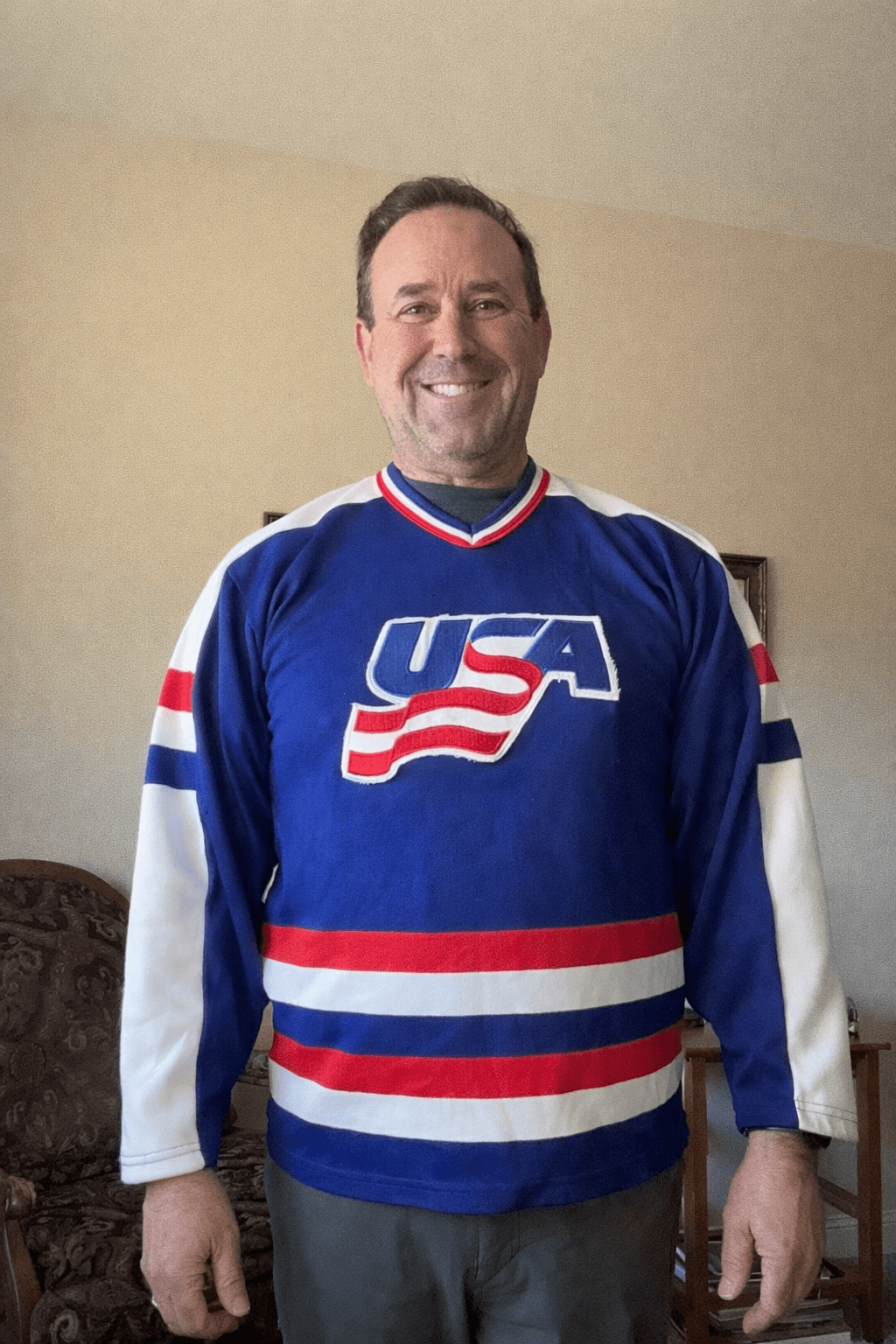
After the game, I went into the bowels of my home to find a relic of the past, because nostalgia apparently requires wardrobe choices. I am not entirely sure when I purchased the uncomfortable polyester knockoff Team USA hockey jersey, but it has been at least thirty years, and either way it predates both my children and my marriage. I once thought it dated back to 1984, though a little recent research suggests it carries an early to mid 1990s logo, which means my memory may be as unreliable as my understanding of icing. Nonetheless, it felt good to pull it over my head today. I was mildly surprised, and quietly pleased, that it still fit. Which, at this stage of life, might be the most improbable comeback of all.

A Dream That Started With a Newspaper List

I love dreaming, though not in a sentimental way. I am drawn to ideas that begin quietly, almost casually, and then refuse to disappear. The kind that linger in the background long after the initial spark, returning at inconvenient moments and asking to be taken seriously. Those are usually the ideas worth following.

It is good and healthy to dream of what can be. When used properly, it can drive us toward a better life and a better world.

I love the United Kingdom—London in particular, Scotland without hesitation, and Wales in a quieter way. Each region carries its own language, rhythm, and sense of continuity. Even when you do not fully understand the language—literally or culturally—you sense that something deeper is being said. That feeling has stayed with me.

When I first began traveling to London, my attention was fixed on the familiar landmarks. I was drawn to the area that includes Buckingham Palace, St. James’s Park, Parliament, Big Ben, and Westminster Abbey. Much of it unfolds near the Thames, though not every landmark sits directly along the river. The space feels unmistakably British—formal, ceremonial, layered with continuity. Even the London Eye, whether admired or merely tolerated, has secured its place in the broader skyline. Walking through that part of the city, it is difficult not to feel like you are moving through the official version of Britain, the one presented in guidebooks and history texts.

But the real London lies to the east of these landmarks, toward a different expression of authority. In London’s financial district, the skyline feels less ceremonial and more negotiated. The Gherkin. The Walkie Talkie. The Cheese Grater. The Shard rising with sharp ambition. And nearby, the centuries-old Tower of London, unchanged and unimpressed. Glass and steel operate within sight of medieval stone. The range of styles is not accidental. It reflects the demolitions that reshaped the city—from the Great Fire to the bombing campaigns of the Second World War. Destruction created space for reinvention. Nothing matches, yet everything coexists. That coexistence reveals something essential about institutions: they evolve, but they rarely disappear entirely.

I have always loved teaching for similar reasons. I value the moment when two ideas that seem unrelated begin to connect. When history feels less distant. When law feels less theoretical. Even after stepping away from formal teaching, that instinct—to connect disciplines and follow questions beyond their surface—has not left.

This past weekend, all these interests intersected while I was reading an article in The Times listing the five best pubs in London. It was a simple list, the kind meant to spark mild debate. Sadly, none of my favorite pubs made the list. Still, I found myself reading it twice. My first thought was practical: I should visit these places and see what makes them distinct. My second thought followed naturally: it would be better to experience them with others.

What began as travel curiosity shifted into something more serious because London makes that shift almost inevitable. You can walk from modern trading floors to medieval walls in minutes. Between those two worlds sit pubs that have operated for centuries. They have hosted legal debates, commercial negotiations, political organizing, and literary exchange. In the eighteenth century, writers and thinkers gathered in taverns to test ideas before they appeared in print. Reform movements were shaped in conversation long before they were formalized in law. Licensing structures themselves evolved in response to the civic role these establishments played.

The pub has long functioned as an informal institution—part marketplace of ideas, part community forum, part literary workshop. It reflects how people deliberate in practice, not just how they are governed in theory. If Parliament represents formal authority, the pub has often represented conversational authority, and the two have existed in tension and in dialogue.

The more I thought about that newspaper list, the more it stopped being about five destinations and started becoming a larger question. What role do informal institutions play in shaping formal ones? How often do we overlook the spaces where culture is actually formed because they seem ordinary? At some point, curiosity became inquiry.

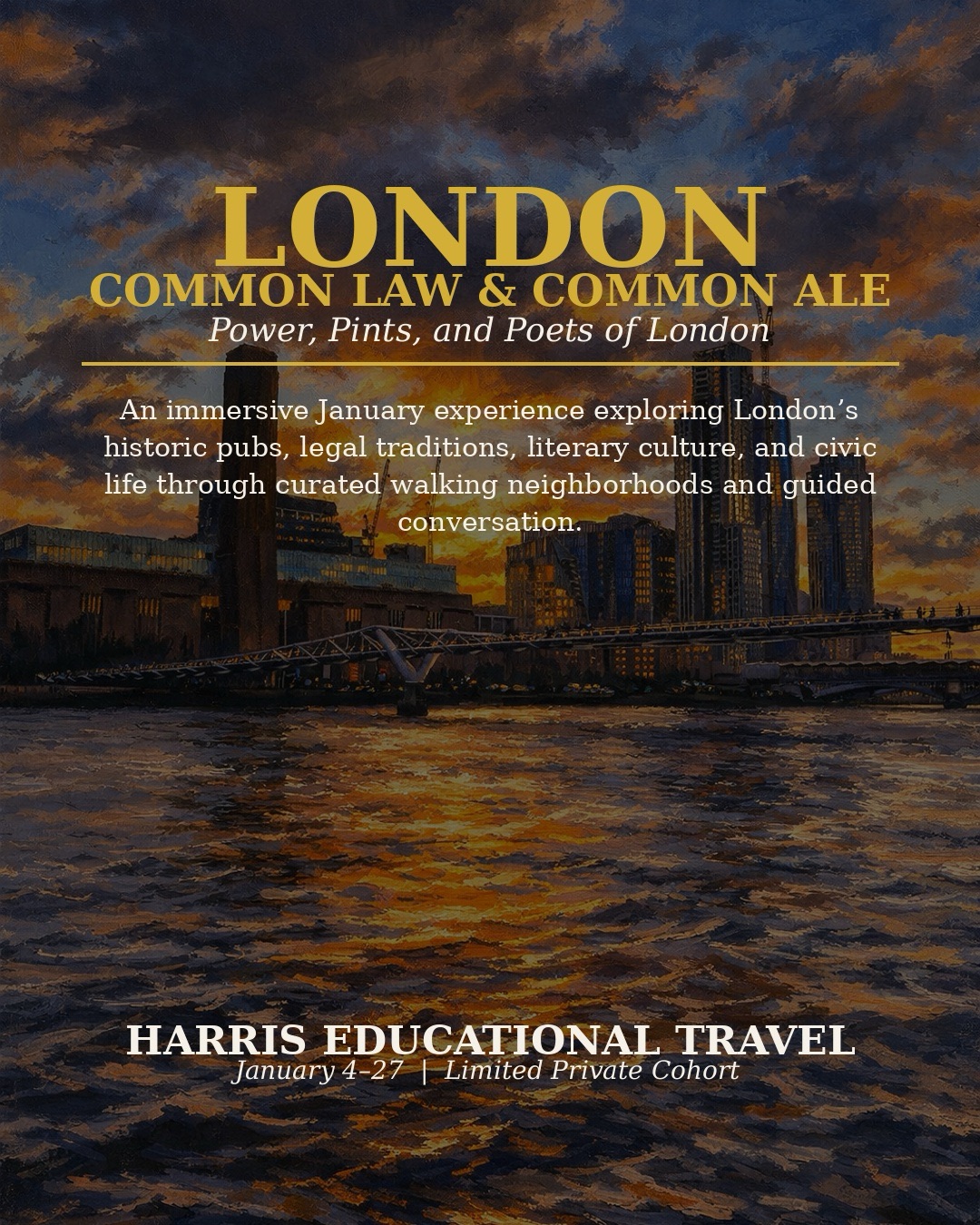
I began researching readings and mapping neighborhoods. I designed a course poster using a photograph I took last December, and seeing the image framed with a title made the idea feel more concrete. I have attached the image below. It moved from a passing interest to something that could, with discipline and intention, take shape.

I do not know whether this will ever become a formal course or even a friends’ vacation. It may remain research, travel, and writing. But it is a rabbit hole I am willingly descending.

We often assume dreams must become programs, credentials, or measurable outcomes to matter. Yet sometimes the value lies in following a question far enough to see what it reveals. Sometimes the work is simply in listening more carefully—to cities, to institutions, to the conversations that shaped them.

So I will ask you something practical. What is the quiet idea you have been circling? What article, book, or conversation has lingered longer than expected? What would happen if you gave it structure and followed it further than convenience allows? If this idea were ever to become something more defined, would you commit to a month of study—walking those streets, sitting in those rooms, asking those questions, and listening for meaning beneath the surface?

It began with a newspaper list, and it continues because I am still listening.

The Stories That Remain

I know I’m dating myself with this story, but still stories matter. Lately, I worry we are losing our ability to connect through them.

When I was in high school, Chicago released a song that became a staple at every dance. The lights would dim, and somewhere in the opening line—I guess I thought you’d be here forever—the gym suddenly felt much larger and much quieter. Teenagers stood shoulder to shoulder, unsure where to put their hands, hoping the song would end before anyone noticed they weren’t moving at all. Standing a little closer than usual felt like progress.

“You don’t know what you got until it’s gone.”

Forty years ago, those words were about a breakup. A boy and a girl. A slow goodbye.

Age changes lyrics. It sharpens them.

Both of my parents died when I was relatively young. Now I’ve reached the age where friends and colleagues are experiencing what I went through decades ago. I recognize the look. The stunned quiet. The way the world keeps moving while something essential has stopped.

When my parents died, I was devastated. They were far from perfect. But they were my parents, and I believe they did the best they could. As children, we only see one version of our parents. Mom and Dad. We don’t see the other hats they wear.

My parents held high-profile roles in our town. I understood that in theory. In practice, they were the people who packed lunches and asked about homework. My father wasn’t a public figure to me. He was the man who sat in the stands.

After they passed, people began telling me stories.

One day, a rancher came to see me. He was nearly six-foot-four, with large hands that looked like they had done real work. He had a military haircut and an imposing presence—the kind of man who fills a room without speaking. I had only ever known him as unshakable.

He stood in front of me and cried.

He told me how my dad had saved his life. Then he told me how my dad had saved his wife’s life too. He said he thanked God for Doc Harris and for what he did. Then he looked at me and said, simply, your dad was an amazing man.

I had never heard that story.

In that moment, my father became larger—and somehow closer. I learned about the quiet ways he showed up for people. The unseen hours. The choices I never knew about. And I understood that sometimes saving a life mattered more than making it to a baseball game.

When people die, all we really have left are the stories. If we don’t tell them, they disappear.

That’s why it matters to speak them out loud. To share them while we still can. Stories are how we keep people alive—not as they were in one role, but as they truly were.

You don’t know what you’ve got until it’s gone.

And sometimes, you don’t really know it until someone tells you the story.

So maybe today, reach out to someone and tell a story—about a parent, a friend, a moment that mattered—because maybe, just maybe, it will remind us of our shared human bond.

2026 arrived quickly and with a certain enthusiasm for chaos.

Some seasons arrive quickly, carrying more than we planned to unpack.

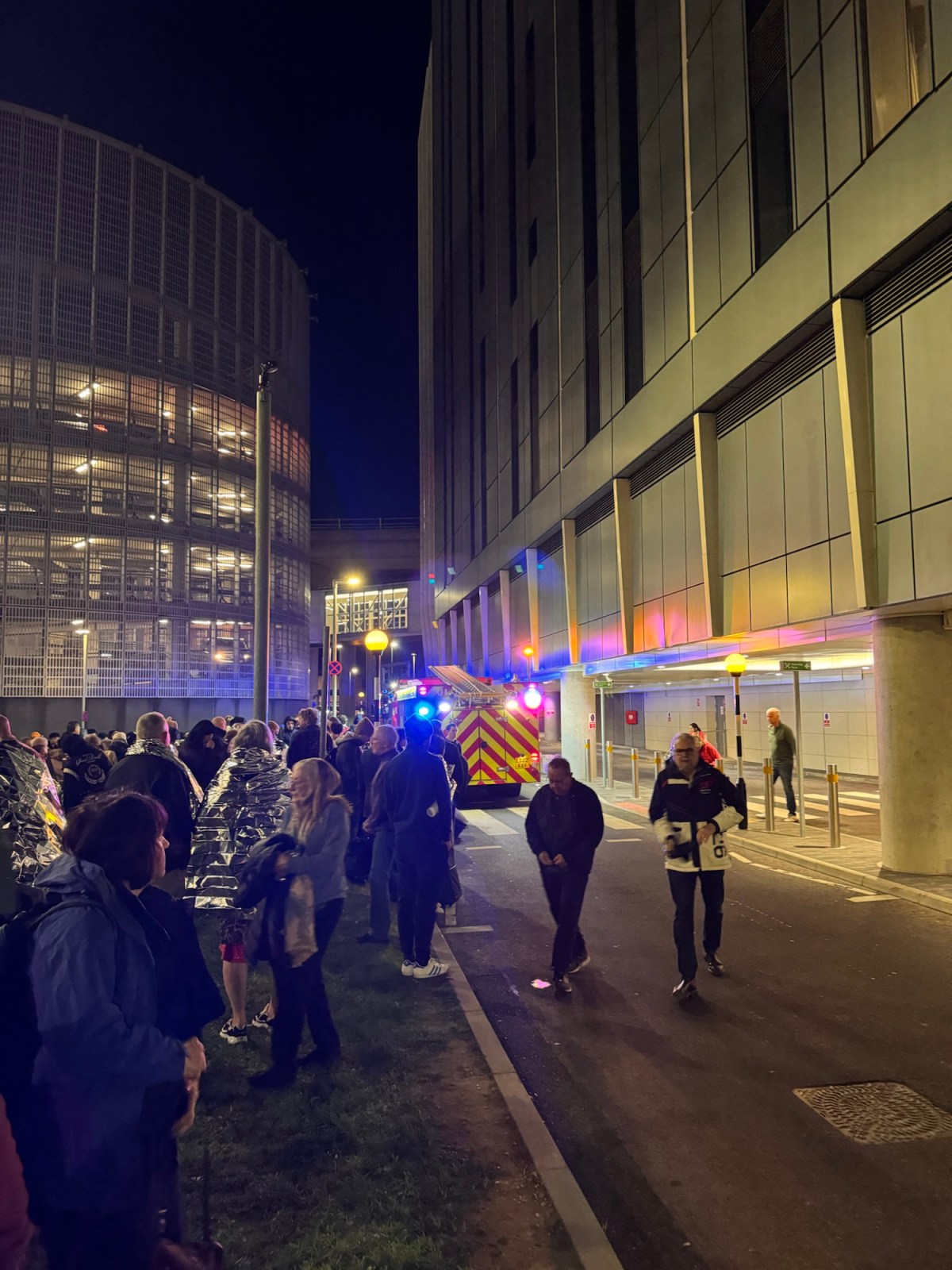
It was probably best that I didn’t subscribe to Dry January. I should have known the year was going to be a beast when, less than six hours into it, I was in a hotel and the fire alarm went off—and it wasn’t a drill. This is not how you want to meet a new calendar year. Then the gods of fate said hold my beer when four members of my immediate family experienced “medical” events, including three emergency room visits, three hospitalizations, and a surgery. January came in like it had a clipboard and a very aggressive agenda.

Along the way, I learned—or was reintroduced to—phrases like spinal stenosis, Clostridioides difficile, colitis, concussion, and tympanostomy. My medical vocabulary has expanded more in a few weeks than it had since I snuck into my dad’s home office and leafed through his copies of the Journal of the American Medical Association and Annals of Surgery. I may not have earned a degree, but I’ve at least qualified for a certificate. Possibly laminated.

And in case you hadn’t noticed—perhaps because you, too, were distracted by sirens and discharge papers—there is also a lot going on in the world.

Much of my attention has been on the Twin Cities. My family has been impacted. My friends have been impacted. This hits close to home. I watch and wonder how we got here. Early in my professional life, I spent time both prosecuting and defending criminal cases, which means I have a reasonably high tolerance for human dysfunction. Even so, many of the things I now see and read—especially through that lens—are genuinely shocking. Not shocking in a cinematic way. Shocking in a quiet, procedural, this-is-how-it’s-written-down way.

Current events often pull me back to what I studied in college, back when you could take courses that wrestled directly with uncomfortable truths instead of politely circling them. I took more than one class focused on the Holocaust and similar atrocities. As a senior, I enrolled in Light in the Darkness: Courage and Evil in the Twentieth Century. The course focused heavily on the Holocaust. At the time—and still—I struggled with how something so terrible could happen.

We studied life in Nazi Germany. We discussed Anne Frank. We read Elie Wiesel. We also read Heart of Darkness by Joseph Conrad, a book I still don’t fully understand, which puts me in excellent company that includes most honest readers.

Though my memory of the course is imperfect—college being a long time ago and optimism being a powerful anesthetic—several moments stand out. Perhaps most significantly, we took a “field trip” to Minneapolis. While there, we attended a concert at Orchestra Hall, spent an evening at the Chanhassen Dinner Theatre, and visited a Holocaust museum.

But there is one experience I will never forget.

We met Holocaust survivors.

One woman had been sent to Auschwitz. She told us her story patiently and answered our questions with care. Then, in a moment that permanently fixed itself in my memory, she rolled up her sleeve and showed us the tattooed number on her arm—a mark that had been there for more than forty-five years. No build-up. No warning. Just history, sitting across from us in a folding chair.

She spoke about the days leading up to liberation. She described the moment she knew she was free. She was offered a ride to the nearest supply camp roughly a mile away. She declined. This, she said, was her freedom walk. She walked the entire distance, stopping frequently because she was so weak. She had to keep her head lower than her heart to avoid losing consciousness.

She spoke about her first bite of food—and the danger of eating too much, too quickly—because her body had essentially shut down. She knew she was close to death, close enough to feel it in a practical, unsentimental way, but she willed herself to live. She told us she kept repeating to herself: Not today. Today I am free.

Someone asked her how she felt about Germany now. Very calmly, she explained that she bore no ill will toward Germans born after World War II. They were not responsible, she said; they carried the scar, not the guilt. But Germans who were present at the time—who did nothing and said nothing—were responsible for the atrocities.

There was no theatrics. No slogans. No grand conclusions. But the emotion, the pain, and the anger hung in the air, doing what facts sometimes do when delivered by someone who earned them the hard way.

I don’t remember her name. I remember her message.

Make sure this never happens again.

Since then, I have found myself returning to her words. I wonder—perhaps naively—whether a similar regime could ever arise in my own country. I keep reaching the same conclusion: yes, it absolutely could. Not because of any single current event, but because we are human, and humans have repeatedly shown a remarkable capacity for atrocity, especially when paperwork is involved.

I also arrive at a more uncomfortable conclusion: there is no way to know how I would respond.

Would I recognize what was happening in real time? Would I speak out? Would I protect those being targeted? Or would I choose personal or family safety over principles and values? Would I convince myself that compliance was temporary, reasonable, or necessary? History suggests these decisions are rarely dramatic. They are incremental. Transactional. Rationalized. Often explained afterward with excellent grammar.

And that, more than anything, troubles me.

What unsettles me most is not that the news feels alarming—news often does—but how quickly alarming things begin to feel normal. A headline that stops you cold on Monday becomes background noise by Friday. By the following week, it’s something we summarize with a shrug and a sentence that starts with, “Well, I guess that’s just how things are now.” That is usually the point at which questions about how we would respond quietly turn into questions about what we are willing to tolerate.

What we are willing to tolerate is shaped, in no small part, by what we understand to be our rights in the first place. When those boundaries are clear, normalization has limits. When they are vague, everything becomes negotiable. Fortunately, we do not have to define those boundaries from scratch or rely solely on instinct and outrage. We have a well-worn roadmap. It is called the Constitution. It does not prevent abuse or guarantee wisdom, but it does establish a baseline—certain rights meant to exist regardless of convenience, popularity, or who happens to be in power.

At its most basic level, that baseline includes the right to move through daily life without harassment; the right not to be stopped and required to justify one’s existence; the right to be free from restraint, harm, or worse based on minor suspicion; and the right to observe authority without becoming its target. It includes the right not to be threatened, exploited, confined, or erased—and the right to speak freely, worship freely, and to have a home that remains a refuge rather than a checkpoint.

None of this is abstract. None of it lives safely in textbooks or court opinions. It unfolds in real time—often within hours: a traffic stop at dusk, a crowd forming, a knock before sunrise, a decision made quickly by someone with power and limited restraint. At that speed, there is no meaningful pause, no appeal, no rewind. Due process—the idea that power must justify itself before it harms—only protects people if it exists before force is applied, not afterward. If this feels distant or exaggerated, it is usually because it has not yet arrived at one’s own door.

These are not rights granted by government, nor privileges extended for good behavior. They exist prior to government—whether understood as gifts of God, products of nature, or the result of generations of hard-won human progress. We entrust them to the state for one narrow purpose: protection. When that order is reversed, what remains may look like order, but it is not law.

It is force, borrowing the language of authority.

I began by describing how difficult January felt for me—personally, professionally, and emotionally. But those struggles, real as they were, pale in comparison to January of 1945, when Auschwitz was liberated and survival itself depended on the refusal to give in, even when the body was failing and the future uncertain. Remembering that contrast doesn’t diminish present concerns; it sharpens them. It reminds me that perspective matters, that endurance has a history, and that resolve—then as now—often begins with a single, quiet decision: not today.

Sleepless in Savannah

I didn’t sleep well last night. Perhaps it was the low-grade anxiety that comes from traveling during a major weather event, the kind where every departure board looks like a crime scene. Maybe it was the neck pain, still hanging around like an unwanted houseguest who keeps promising, “I’ll be gone tomorrow.” Perhaps it was the realization that three beers is now officially one beer too many when you’re not 23—or even pretending to be. Or perhaps it was the unmistakable sense that my hotel room and I had very different ideas about acceptable living conditions.

Perhaps it was something else.

Perhaps it was the conversation I overheard at the hotel bar, where three extremely drunk, mostly younger people were conducting what appeared to be a peer-reviewed symposium on the modern dating landscape and which apps deliver the strongest romantic return on investment. (Important disclosure: none of them were married, but all spoke with the calm authority of seasoned divorce attorneys who had seen things.)

I can’t control what happens in the world. I can barely control what happens before my first cup of coffee. But I can control how I respond to it. Which is why I’ve chosen not to unload my thoughts on social media—that gleaming coliseum of reasoned debate where everyone listens carefully, nobody interrupts, and no one is sharpening a digital pitchfork while waiting for their turn to speak.

There’s a reason I’ve connected with people on social media, but I can’t think of a single friend I have because they voted a certain way. That feels important.

For the most part, I don’t think my social media friends are inherently good or evil. Do they post dumb things? Absolutely, but who am I to judge? My dog has her own Instagram account—@sdgingerdoodle—and it is, without question, the most consistently joyful and least controversial thing in my feed. You should probably follow it, if only to restore your faith in the internet.

Which brings me back to the hotel bar. To be clear—and I want this on the record—I AM NOT IN THE DATING MARKET and haven’t been for many years. That may be why dating apps confuse me the way TikTok confuses my parents. Back in the prehistoric era of my youth, dating involved something radical: talking. Face-to-face. Sometimes—often—alcohol was involved, but there were no algorithms, no swipes, and no carefully curated versions of yourself that mysteriously enjoyed hiking.

You walked up to someone and said, “Hey. You’re cute. I like you. Want to go on a date?” Frequently, the answer was “No.” When that happened, I licked my wounds, questioned my entire identity, wondered if I should’ve worn the other shirt, and moved on. It was brutal. It was inefficient. And yet, somehow, humanity endured.

Eventually, through a combination of persistence, timing, and luck that bordered on divine intervention, I got the girl. We’ve been married almost 25 years now. No app required. Just conversation, shared space, and the quiet miracle of two people choosing each other again and again.

So why couldn’t I sleep?

I think it’s because we’re disconnected. I think social media, for all its conveniences, has a way of sanding down real human interaction until it’s flat, loud, and oddly lonely. I think we’re better when we talk to each other—actually talk—where autocorrect can’t rescue us and we have to look someone in the eye and live with what we say.

So here’s my modest proposal: let’s talk. Meet in the town square or the coffee shop. Pick up the phone. Check in. Be human. Care a little more than feels comfortable. In short, stop being assholes to each other.

So I end with this message – Love everyone. Even Packer or Buckeye fans.

Cold Hard Facts

There is a strong argument for keeping certain things to yourself. This is probably one of those things. Unfortunately, I may soon be in public wearing medical equipment, which tends to raise questions and invite speculation. Rather than let the driveway control the narrative, or pretend it didn’t know exactly what it was doing, here is what happened.

Friday morning, as I was leaving my house to walk the dog, I was attacked. Not by an animal. Not by another human. By ice. In my own driveway. A place I had crossed hundreds of times safely. No warning. No sound. No dramatic buildup. The last clear thought I remember having was wondering whether the driveway might be slippery. That thought turned out to be the prologue. When I regained consciousness—flat on my back, staring at the sky, with a dog hovering over me like a very judgmental witness—I felt comfortable ruling the surface hostile.

Out of an abundance of caution, and at my wife’s direct and non-negotiable order, I went to the local hospital. On the drive there—where my wife also works—she decided to run a neurological exam. The questions were unfair and oddly personal: when were we married, where were we married, when is her birthday, and, in what felt like an advanced interrogation technique, what is the password to our financial accounts.

Because my injury did not involve a gunshot, a stroke, or a heart attack—and because I walked in under my own power—the hospital staff responded with polite professionalism mixed with the unmistakable vibe of let’s see what this turns into. This was reasonable.

After a short wait—which, in medical terms, is often measured in hours rather than minutes—I was invited to check in. Check-in involved a weigh-in, an IV “just in case,” and a full panel of vitals: blood pressure, heart rate, and oxygen levels. All of this felt slightly unfair given that I had not yet taken my medication and had recently been tackled by frozen precipitation. At one point, I believe they also asked my body to “relax,” which suggested a touching but misplaced optimism.

Then came the questions, which demonstrated that my wife—though well-intentioned—was still very much an amateur. After the battery of questions, the staff turned to her and asked whether she had noticed any personality changes. She said I was more irritable than usual. This answer was delivered efficiently, confidently, and without hesitation. It is now, presumably, part of my permanent medical record.

After a CT scan and an MRI, it was confirmed that I had indeed “bonked” the back of my head. Medical terminology has a way of minimizing the unsettling. I did not break my neck—which aligned with my own independent research—but I did sprain it. I am now in a cervical collar, which sends a clear message about fragility, gravity, and the quiet power of ice.

I have been told to take it easy and to avoid complex thinking until my brain fully heals. This feels less like short-term medical advice and more like a long-term warning.

I should end by thanking my wife, whose compassion, patience, and steady presence have carried me through this with far more grace than I deserve. She has been unfailingly supportive, calm when I could not be, and generous with both care and restraint—except, of course, for the comment about my irritability, which has been entirely forgiven.

The dog, meanwhile, remains unconvinced. She watches me closely, tilts her head from time to time, and appears to believe that my collar is essentially the same as hers. In her mind, this confirms that I am ready for a walk. Healing is fine—but the schedule still matters.

2025 Competitive, Not Complete

My 2025 looked a lot like the Minnesota Vikings. It began, as always, with hope—an early victory that made you believe this could be the start of something. Then came the injuries, the false starts, the failures, and the quiet realization that planning and execution were still passing each other in the hallway without speaking. By late October, hope had slipped into despair. But then December arrived, and despair softened back into hope—what is known as fake spring. In the end, the record will land just above or just below .500, exactly where uncertainty likes to live.

That’s how 2025 felt for me. There were real successes—moments that mattered, progress worth acknowledging, things I’m genuinely proud of. But there were also stretches when momentum stalled, when intention didn’t always translate into follow-through, and inaction led to failure. 

So 2025 was neither disastrous nor satisfying. A very Minnesota Viking outcome—competitive but incomplete. A fair grade is probably a 5 out of 10, even with the wins, because consistency matters as much as highlights.

My hope for 2026 isn’t about grand promises or naïve optimism. It’s about clarity—and momentum. 2025 finished strong, which matters more than it sounds. It suggests that improvement wasn’t accidental, that progress is possible when effort and intention finally line up. The goal now is to carry that forward. Decide what matters. Align efforts with intentions. Invest accordingly. Losses can be endured. Wins can be celebrated. What wears you down is ambiguity—and the feeling that being better was always within reach, but never quite seized.