Day 6: Gratitude Challenge

Yesterday was another blur. I’m not sure I accomplished everything I was supposed to, so I’m going to give it another try today. I spent some time thinking about my parents, but there are other people I need to thank. I guess that’s one of the nice things about this gratitude challenge. There’s nothing that says you can only do these things once.

Today’s challenge is about resisting consumerism. We live in a society where someone is always trying to sell us something. Turn on the television, scroll through your phone, or check your email, and somebody is telling you that you deserve something newer, bigger, faster, or better. And if you don’t already want it, they’ll do their best to convince you that you need it. The truth is, most of us already have more than enough. We know better, even if we don’t always act like it.

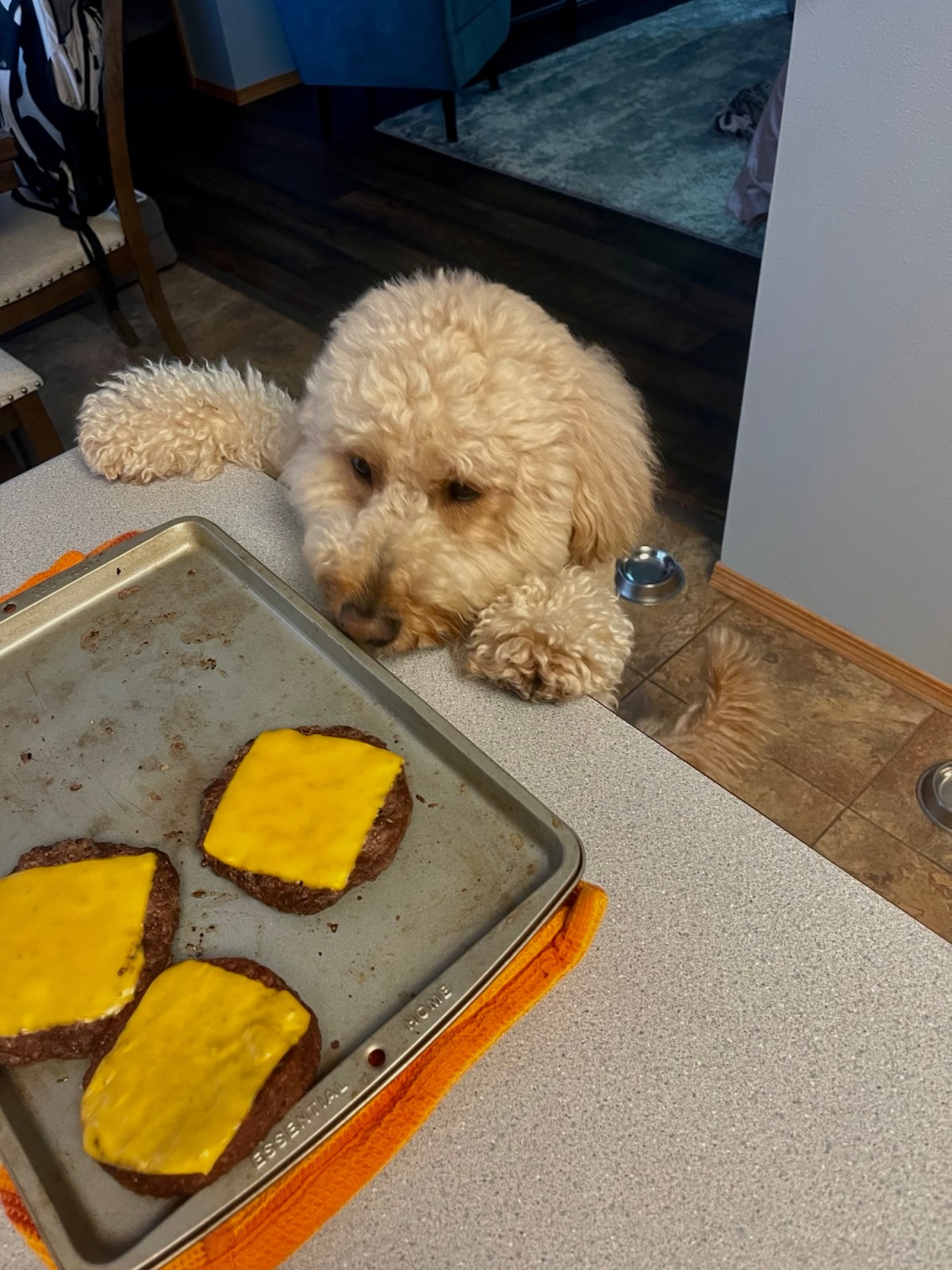
Apparently, even dogs need to work on resisting temptation. Ginger is convinced she deserves one of those cheeseburgers, and she’s having a difficult time understanding why she can’t have one. In her defense, she isn’t particularly concerned about consumerism, and she has never been very good at distinguishing between wants and needs. Come to think of it, neither are most of us.

So today, instead of treating yourself to something you probably don’t need, do something for someone else. Buy someone lunch, pick up the tab for a stranger, or make a donation to a cause you care about. It doesn’t have to be expensive or complicated. The idea is to spend a little less time thinking about what we want and a little more time thinking about what we can do for others.

Tonight, write about what you did and how it made you feel. Did you feel like you missed out on something by not treating yourself? Or did doing something for someone else turn out to be the better deal?

Day 5: 2026 Gratitude Challenge

Yesterday’s challenge was about cherished memories, and I left out part of mine. The memory was really the entire trip to Paris for my wife’s birthday, but the party was the most cherished part. It was not only our family but dear friends who joined us for the intimate dinner. That trip, and especially that evening, always makes me smile.

Today’s challenge is about the people in our lives. Being grateful is good for our emotional health, and the research backs it up. A 2025 review of 145 studies and nearly 25,000 people found that gratitude exercises improved well-being. The improvements weren’t dramatic, but they were consistent. The evidence for physical health is thinner, so I’ll stick with the emotional benefits. We also underestimate how much it means to someone when we tell them we appreciate them, and we overestimate how awkward it will be. So today, think about the people you are most grateful for. If they are still with us, tell them. A call, a text, or a note will do. Just tell them what they did and why it mattered.

Imagine if we all did this instead of complaining about the election.

Today, I am especially grateful for both of my parents. I didn’t thank them enough when they were alive. They were both gone before I fully appreciated everything they had done for me. The older I get, the more I understand the sacrifices they made, the lessons they taught me, and the example they set. I wish I could tell them that now. Since I can’t, I’ll say it here. Thank you, Mom and Dad.

Tonight, journal about who you are grateful for and why. If you reached out to someone today, write about how they responded and how it made you feel. And if someone you wish you could thank is no longer here, take a moment to remember them, too.

Day 4: 2026 Gratitude Challenge | Cherished Memories

Yesterday’s challenge was to be present, and work was kind enough to keep me busy. I took a few short breaks to refocus, then spent the evening working on plans for my new home office, occasionally checking election results, and catching up on a favorite television show. The best part was dinner with my wife, enjoying a meal she prepared and talking about our day. I even put my phone down. Mostly. I’m also trying to carry the earlier challenges forward, noticing the little things, complaining less, and taking a few moments when I wake up and before I go to bed to reflect on what I’m grateful for. The idea is to build on each day’s challenge throughout the month.

Today’s challenge is about cherished memories. We don’t always recognize how special a moment is while we’re living it. Sometimes it takes a little distance, a photograph, or a story told years later to appreciate what we had. Think about the memories that make you smile, laugh, or maybe bring a tear to your eye. Better yet, share them with the people who helped create them.

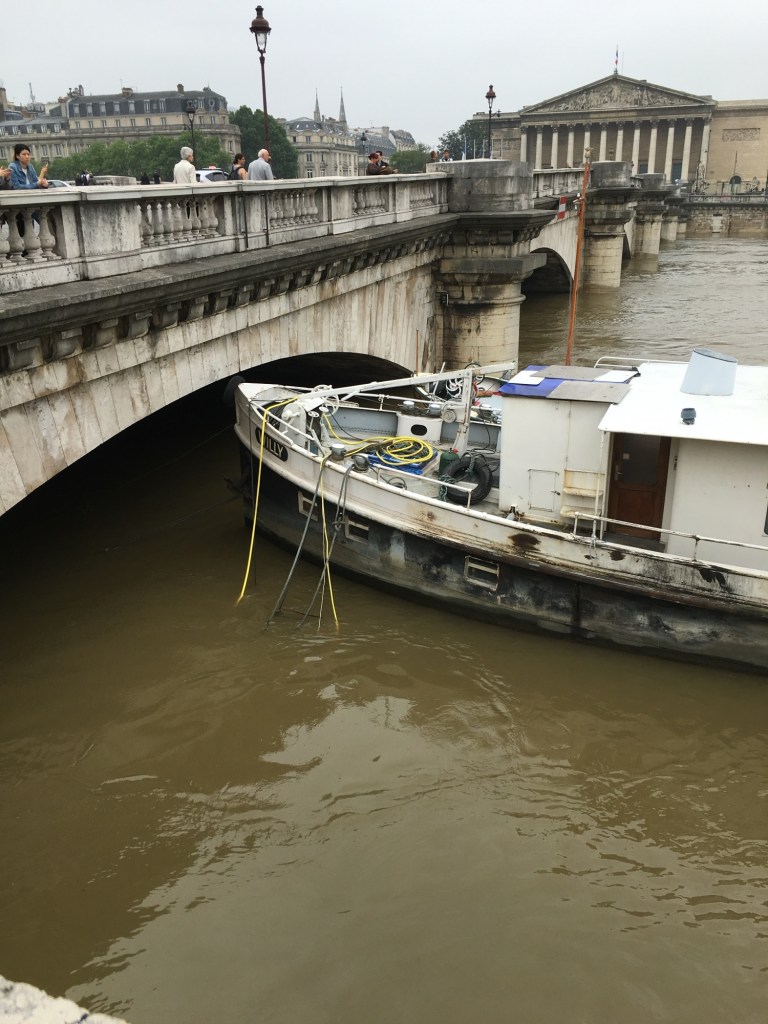
One of my favorites is a milestone birthday for my wife. She wanted a birthday party in Paris. That seemed reasonable enough, so I decided to make it happen. We rented a flat in our favorite neighborhood and brought our children, our future daughter-in-law, my mother-in-law, and my sister-in-law. With the help of a party planner, I arranged a dinner cruise on the Seine. What could possibly go wrong? Well, Paris flooded. So much for the cruise. Fortunately, our planner found a wonderful private room at a hotel, complete with a bar and garden. We celebrated, laughed, and enjoyed being together. It wasn’t quite the party I planned, but it became one of my favorite memories.

Tonight, take a few minutes to think about the memories you treasure most. Maybe write one down in your journal or share it with someone who was there. What made that moment so special? And while you’re at it, remember that the ordinary moments you’re experiencing today might become the cherished memories you look back on tomorrow.

Day 3: 2026 Gratitude Challenge

Be Present

Yesterday’s challenge was to notice the little things. It was raining when I woke up, and Ginger wasn’t particularly interested in her morning walk. It would have been easy to complain about the weather, but instead I thought about how much we needed the rain. The window in my office, which has leaked more times than I care to remember this summer, stayed dry. I appreciated my windshield wipers on the drive to work and my coat for keeping me dry. On the drive home, the storm was moving out. Dark clouds filled the sky to the east, while to the west the clouds were breaking apart, allowing rays of sunshine to peek through. Ginger and I eventually got our walk. It was dark, but unseasonably warm for November. I thought briefly about the Halloween blizzard of 1991 and decided I was perfectly happy with rain. None of these things were particularly remarkable. But when you start looking for reasons to be grateful, it’s surprising how many you find.

Today’s challenge is a little different. It’s Election Day, and by tonight we’ll probably know the outcome of many of the races. Some people will be celebrating, and others will be disappointed. Regardless of which side you’re on, today is a good day to practice being present. Don’t spend the day worrying about what might happen or dwelling on what already has. Focus on what’s happening right in front of you. Give someone you care about your undivided attention. Take a few moments every hour to breathe deeply, look at a piece of art, or simply notice what’s happening around you. The world will keep turning whether you’re watching every minute of the election coverage or not.

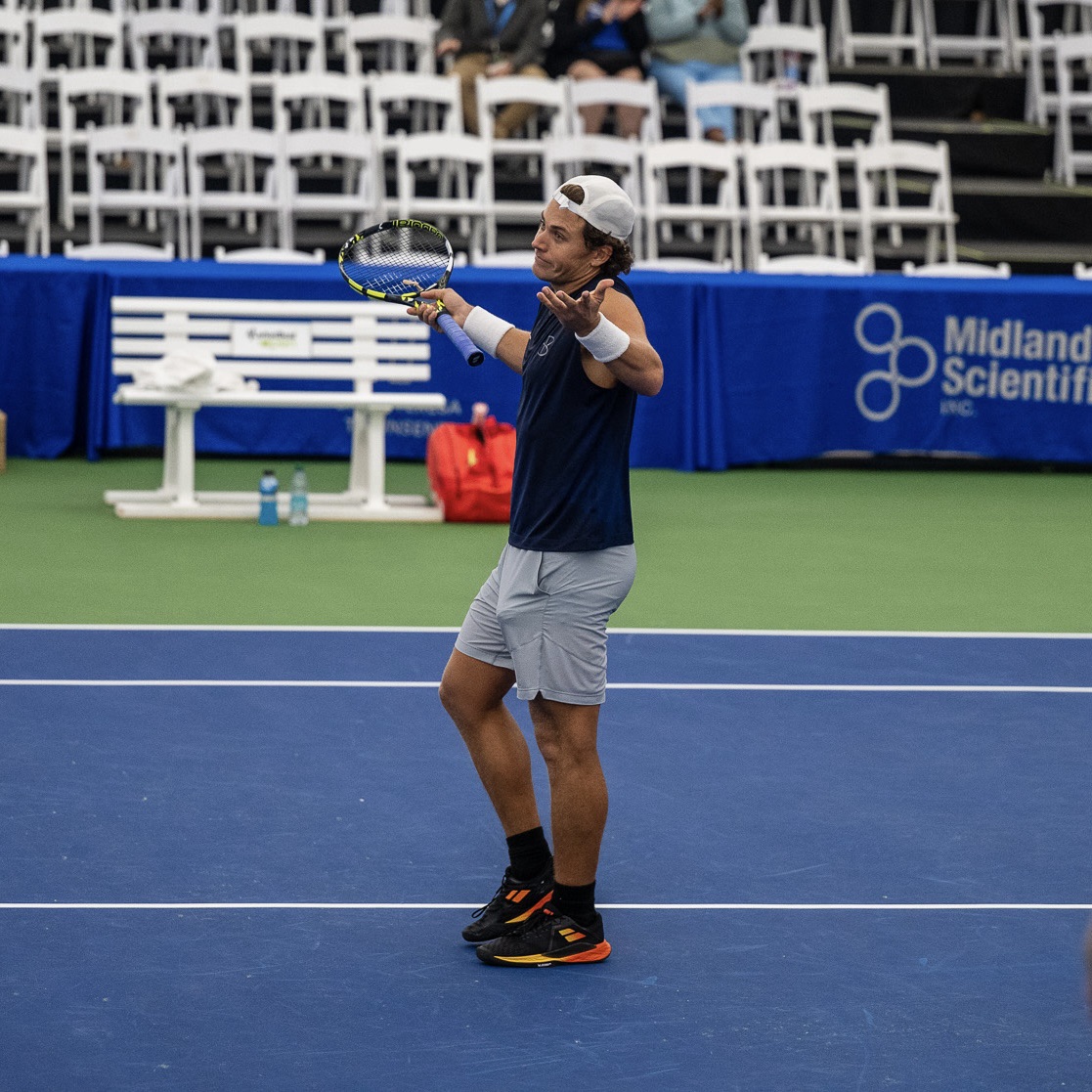
There’s a lesson in tennis that applies here. Between points, you’ll sometimes see a player stop, look down, and collect himself. Maybe he’s just hit the best shot of his life. Maybe he missed one he should have made. Either way, that point is over. The next one is all that matters. It’s surprisingly good advice for life, too. We spend an awful lot of time replaying yesterday or worrying about tomorrow, sometimes at the expense of today.

At the end of the day, take a few minutes to reflect. Maybe write your thoughts in a journal. What did you notice when you made a conscious effort to be present? What did you learn? Did you feel any different when you stopped worrying about things you couldn’t control and paid attention to the things you could? Being present doesn’t mean ignoring the world around us. It means making sure we don’t miss the life happening right in front of us.

Day 2: 2026 Gratitude Challenge

The Little Things

Yesterday’s challenge was to go an entire day without whining or complaining. I got lucky. I spent most of the afternoon photographing the MarketBeat Open tennis tournament, which meant I never watched the Vikings game. My wife told me afterward that they lost, and I said, “That’s OK.” What was I going to do, complain? Besides, my youngest son is a Lions fan, so I was happy for him. I can’t say that one day without complaining changed my life, but being conscious of what I was saying certainly changed the way I thought about things.

Today’s challenge is to notice the little things. We tend to take an awful lot for granted. A car that starts, electricity when we flip a switch, and hot water when we turn on the shower. Things we rarely think twice about until they aren’t there. And things that plenty of people around the world would be grateful to have.

The tennis tournament lasted an entire week, and after a while, photographing it started to feel a little like Groundhog Day. Thousands of pictures of essentially the same thing, just from different angles. Seriously, how many pictures can you take of a guy serving a tennis ball? But something interesting happens when I get home and start editing. I notice things I never saw while taking the pictures. A facial expression I missed, a familiar face in the crowd I didn’t realize was there, or something completely unexpected in the background. And then there were the little things the organizers did that made this year’s tournament special. Flags representing the players’ home countries hanging from the back of the grandstand (see picture), an in-house barista on several days, and even phone chargers available for the volunteers and people working the tournament. None of those things made the tennis any better, but together they made the experience better. Somebody thought about those details, and somebody made them happen.

So today, take a second look at the world around you. Appreciate the hot shower, the car that starts, and the people who do little things to make your day better. Maybe even thank a few of them. And when you sit down to journal tonight, think about the things you noticed and what life would be like without them. Funny how much you notice when you take the time to look.

Day 1 2026 Gratitude Challenge

Welcome back. Day 1 doesn’t ease anybody in, so here’s the assignment: from the time you get up until the time you go to bed, no complaining and no whining. Only positive words.

I picked a good day for it. We all got an extra hour of sleep last night, so nobody has an excuse for starting grumpy. Then again, it’s election season, which means my phone buzzes all day with text messages from campaigns that apparently believe we’re old friends, and the Vikings play this afternoon, which has tested my vocabulary for most of my life.

The final of the MarketBeat Open is today! It’s hard to grumble while watching two players chase a title in a town that doesn’t usually get professional tennis. But I know myself. Complaining is a reflex, and somewhere around the second quarter I’ll be tempted. When I catch a negative word on its way out, I’m going to swap it for something true and good and keep walking.

Tonight I’ll take two minutes to see how it went. Did my words change how I felt, and how did they land on the people around me? Try it yourself and see what you find. See you tomorrow.

The Gratitude Challenge Is Back

I’ve been a little quiet around here lately. I didn’t exactly plan to take October off from writing, but sometimes life makes plans without bothering to consult you. There was a friend’s birthday to celebrate and a tennis tournament to help with, while the day job stubbornly insisted on remaining a day job. Somewhere along the way, a couple of Saturdays came and went without anything new from me. I’ve got a few pieces half written, and we’ll see if they ever get finished. If you stopped by looking for something to read, I’m sorry I wasn’t here.

Some of you have been reading long enough to remember November 2020. It was a difficult time in my life, and my wife knew I was struggling. She gave me a gratitude book that one of her coworkers had put together. That little book became the starting point for something that would make a real difference in my life. Over the years, I’ve used it as a framework, made some modifications, and added a few thoughts of my own. For five consecutive Novembers, I made a point of spending a little time each day thinking about the people and things I was thankful for.

The woman who created that book passed away in 2024. I don’t know if she ever realized how much of a difference her work made in my life, but it did. And while I’ve made the tradition my own over the years, I haven’t forgotten where it started. Last year, I never made the time for it, and I’ve missed it.

So, the Gratitude Challenge is back. Starting tomorrow, I’ll share something here every day that I’m grateful for. It might be a person or a memory, or something so ordinary that most of us walk right past it without giving it a second thought. Nothing terribly elaborate, just a paragraph or two each day. My regular Saturday essays will take November off and return in December.

I’d love for you to follow along. Read every day, catch up on the weekends, or try it yourself. You don’t need a special book or even a pen and paper. You can do it over your morning coffee or while you’re trying to convince yourself to get out of bed. There aren’t any rules, and nobody’s keeping score.

But here’s something I’ve come to believe. If you make a conscious effort to spend just a few minutes every day thinking about what you’re grateful for, something begins to change. Your problems don’t disappear, and the people who annoy you will probably still annoy you. But you start noticing things you might otherwise have missed. A little kindness here, a reason to smile on a day when you weren’t expecting one. And somewhere along the way, you begin to realize there’s an awful lot to be thankful for, even when life isn’t quite going the way you’d planned.

I could use that reminder again. Maybe you could, too. See you tomorrow.

From Worst to First, and Beyond

A last-chair saxophone player’s slow climb to first chair, and the band director who never let contempt into the room. A long-overdue than you

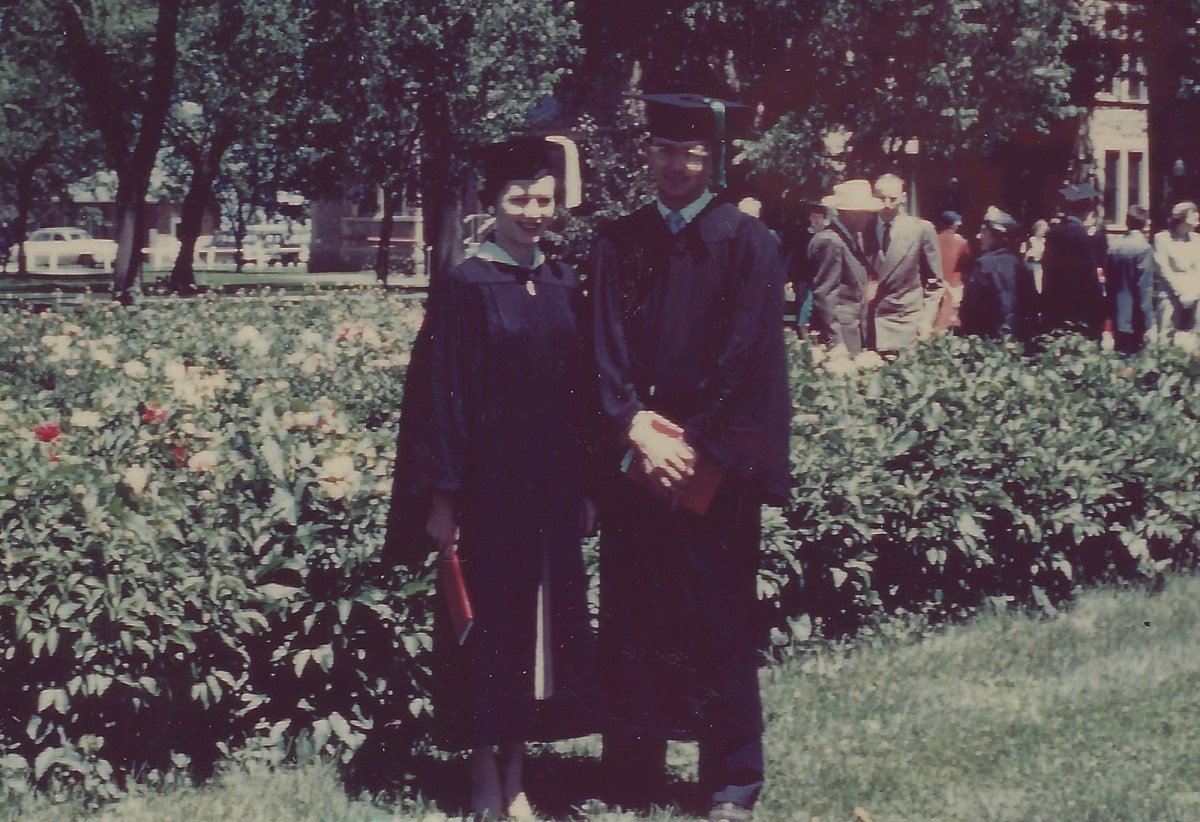
We are downsizing, and my wife has asked me to do a bit more of the sorting than I’d prefer. That’s how I ended up on the floor of a closet with a box of photographs across my lap, the kind of box you mean to go through quickly and never do. Many of them were from high school. There were pictures of family and friends, but a surprising number were from band. We were standing on football fields, sitting on buses, and wearing uniforms I’d forgotten we ever wore. The faces of the people I spent those years beside were all there, and looking at them made me think about the man who’d stood behind nearly all of it.

Mr. Winter was one of the most influential people in my life. I hadn’t thought about him in a while. Once I did, I couldn’t stop.

I came to band the way many children come to things. I wanted to belong before I fully understood what I was joining. My sister was already in high school, and one of her best friends played saxophone. The band at our high school had been good for years. People came to football games as much for the band as for the team, and more than a few left after halftime, once the show they’d come to see was over. It was a program with a reputation, and even as a child I understood that being part of it meant something.

It wasn’t just the locals who thought so. While I was in the band, it received the Sudler Flag, an award recognizing the finest high school bands in the country, and ours was the first in the state to earn it. The honor reflected what the program had built long before I arrived, but I was there when it came, and that felt special. It was exactly the kind of thing a child wants to be part of, even before he understands the work required to belong there.

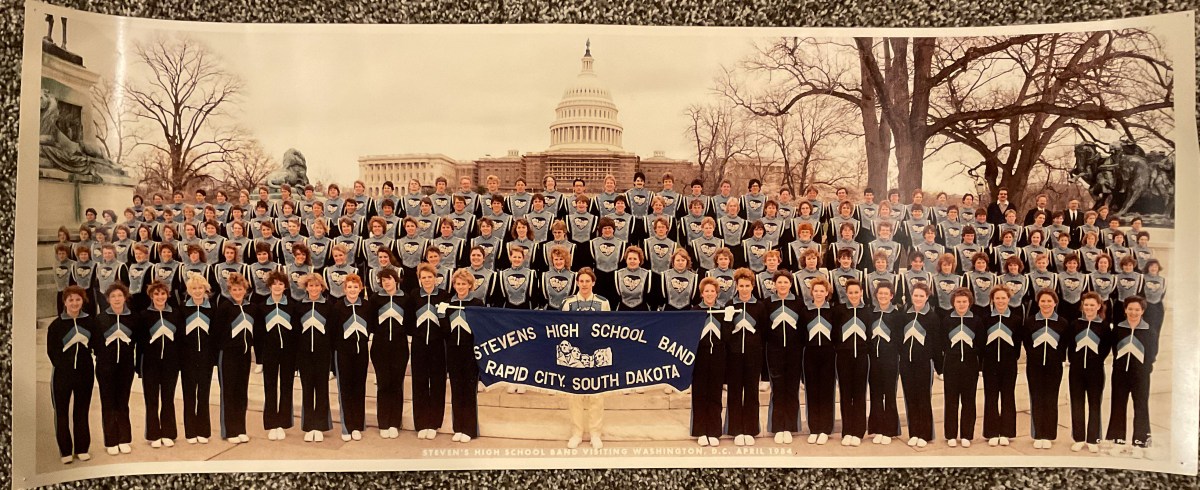
What captured my imagination most, however, was the traveling. Every third year, the band went somewhere significant for a competition or a tour. My sister’s friend had gone to Europe, which seemed impossibly glamorous to a fifth grader growing up where I did. The band would later become the first from our state to march in the Rose Bowl parade, and during my sophomore year we were scheduled to travel to Washington, D.C., for the Cherry Blossom Festival. I didn’t know any of those destinations when I chose the saxophone. I knew only that if I joined and stayed long enough, I’d eventually get on that bus and go somewhere that felt much larger than the world I knew.

So I chose the saxophone and imagined the rest would follow. I’d become part of something great, take the trip, and collect the kind of experience that seemed to belong to older and more interesting people.

The problem was that I didn’t enjoy band, at least not in junior high. I didn’t like to practice, it didn’t come naturally to me, and as a result I wasn’t very good. It was a reliable formula. I avoided the work, remained bad at the thing, and then used being bad as further justification for avoiding the work. Junior high is difficult enough on a child’s confidence. Your body is changing without consulting you, and whatever certainty you possessed a few years earlier quietly disappears. Practicing at home, where someone might hear me, wasn’t something I wanted to do.

It didn’t help that my father was both a perfectionist and a genuinely gifted musician. The person most likely to hear me could also hear exactly what I was doing wrong. So I didn’t practice, and because I didn’t practice, I remained at or near last chair for most of those years. There is no hiding a thing like that. The seating chart announces it for you.

By the end of junior high, I’d developed a plan. I’d stay in band through my sophomore year, take the major trip, and then quit. The band was going to Washington, D.C., and I’d already endured too many uncomfortable years to walk away before the reward. In my mind, the arrangement was settled. I’d hang on long enough to see Washington and then put the saxophone away for good. The trip had always been the goal. Band was simply the price of admission.

None of this was a plan I shared with anyone. So when I went to my parents, sooner than my own schedule called for, and told them I wanted to quit outright, I wasn’t really asking. I knew what they’d say. It was the kind of thing teenagers do, rattling a door to see whether it’s still locked. It was.

My father believed in what music education could do for a person, and he wasn’t prepared to let me leave simply because I was frustrated. He was a surgeon, and surgeons aren’t inclined to reopen a decision once they’ve closed it. I resented the rule at the time, but he was right. Had he allowed me to quit when I wanted to, the story would have ended there, somewhere near the bottom of a junior high seating chart.

My mother was different. She looked for another solution, and the solution she found was private lessons. Somehow, my parents persuaded Mr. Winter to teach me. He didn’t take many students, but once a week for the next three years, he took me.

I’ve never known exactly why he agreed. Perhaps he saw something in me, although there wasn’t much evidence available at the time. Perhaps it was simply a little extra money on the side. Years later, after I became a teacher myself, I came to think there was another explanation. Good teachers don’t reserve their effort for the students who make teaching easy. They work with the student sitting in front of them and try to move that person forward. Mr. Winter had done that for the students who came before me, and he’d do it for those who came after, because that was the kind of teacher he was.

His house wasn’t far from the school, an ordinary home with a black trumpet standing near the entrance. The trumpet was his instrument. The saxophone, unfortunately for both of us, was mine. The lessons took place in a small office where we warmed up with scales in different keys and then worked through whatever the band was rehearsing. I’d play a passage, and he’d interrupt. A missed note, a rhythm I’d gotten wrong, or a phrase that bore only a passing resemblance to the music on the page, and we’d stop.

He figured out fairly early that I learned by ear. If I heard something played correctly, I could usually imitate it. He’d pick up the trumpet, play the phrase, and have me play it back to him. Sometimes he made me count the rhythm aloud, which felt childish but worked. He could become frustrated. I could see that. But he never once let contempt into that room. He corrected me without humiliating me. He didn’t get angry, and he didn’t make me feel small, which wasn’t always how correction felt at home.

Don’t mistake his patience for softness. In that small office, and later in the band room, he pushed me harder than I’d have pushed myself. He was demanding, structured, and occasionally intimidating. Some people thought he bordered on authoritarian. I eventually came to believe there was an important difference between an authoritarian and a disciplinarian. An authoritarian pushes for control so that the person in charge remains at the center. A disciplinarian pushes the group, and every person within it, toward excellence.

With Mr. Winter, it was never about him. It was about us. He believed that through discipline, hard work, and consistency we could become great, and he ran the room like a man who meant it. He demanded excellence, and we wanted to give it to him. I wanted to be excellent, and I think most of the others did too.

I remember him telling us once that we needed to be at the practice field by five o’clock. He let that sit for a moment, and then he explained what he actually meant. If you arrived at five, you were late. If you arrived at four fifty-five, you were also late. You were expected to plan for the unexpected, the flat tire, the fender bender, the train that might hold up traffic, whatever might keep you from where you needed to be. To this day, when I have somewhere to be, I arrive fifteen to twenty minutes early. He wasn’t really teaching us about punctuality. He was teaching us that showing up late let down everyone else who had already arrived on time.

Even when we were certain we’d improved, he found the small thing still wrong. The spacing was off in the marching formation. The trumpets were too loud in the jazz band. Someone had missed an entrance. The clarinets needed to give more. Everything was held together by structure, and all of us were accountable to it. There was no false praise in that room. If he told you something was good, it was good, which is exactly why it mattered so much when, on the rare night we truly put everything together, he’d tell us the performance had given him goosebumps. He wasn’t a man who traded casually in that kind of praise, so it meant the world. You worked an entire season hoping to hear one sentence like that. I understand now that he tended to say it in the day or two before a concert or a competition, which meant it was less a report on what had already happened than his way of telling us we were ready.

I don’t know exactly when the lessons began to work. There was no single morning when I woke up able to play. The improvement arrived quietly. Through the challenge system, I’d sit across from the player ahead of me, and we’d compete for the chair. I began to move up, one seat at a time. I moved out of last chair, climbed through the ranks, and eventually moved out of the lowest band.

One of those moves meant more than the others. Throughout junior high and the beginning of high school, I’d played the second part, the harmony, which never made much sense to my ear. I wanted the melody, the line the song seemed to be built around. When I finally won my way onto a first part, it felt like more than another chair. It was the difference between singing lead in a rock band and standing in the back with the other harmonizers. I was carrying the tune now.

As I moved upward, something happened that mattered more than the seating chart. I gained confidence. For the first time, I began to enjoy not merely belonging to the band, which was all I’d originally wanted, but the music itself. I enjoyed reading it, interpreting it, and performing it. The thing I’d spent years avoiding became something I looked forward to.

I started practicing. The high school had small practice rooms, and that was where I did most of it. At home, I learned to find times when the critical ears were elsewhere. I was finally doing what my father had always hoped I’d do, but I was no longer doing it because he expected it. I was doing it because I wanted to improve.

The trip to Washington came during my sophomore year. For years, it had been the finish line. I’d planned to endure band long enough to take the trip and then quit. By the time we returned, however, I no longer wanted to leave. The lessons had changed the bargain. They had taken something I was merely surviving and turned it into one of the greatest experiences of my life.

Sometime during my junior year, I made the permanent jump from the junior varsity band, the concert band, to the varsity, the symphonic band. Make no mistake, symphonic was the A-team, the place you wanted to be. The move came with a small indignity. Climbing into a stronger band meant returning near the bottom, which put me back on the second part again. This time it didn’t bother me. I’d stopped keeping score of first parts and second parts and started caring about the music. I trusted that if I continued to work, the climb would come.

By my senior year, I reached first chair. I’d gone from worst to first, although I’d never describe myself as an outstanding musician. I was good, and I felt good about what I could do. Somewhere along the way, I’d come to love all of it: the band, my friends, the performances, the trips, the music, and the life that surrounded it. That was the real distance traveled, farther than the chairs could measure.

That same year, Mr. Winter gave me another responsibility I hadn’t seen coming. Before each concert selection, I stood in front of the audience and explained what they were about to hear. He wrote out the introductions and made me rehearse them until they were right, the same way he made me practice everything else. The boy who’d spent years hoping no one was listening was now the person he placed in front of the audience to speak.

After graduation, I thought about playing in college but decided against it. I didn’t believe I had enough ability to justify the time it would require while keeping my grades where they needed to be, so I let it go. I still have the saxophone. During the current purge, I’ve considered selling it so that another child might get from it what I eventually did, later than I should have, but not too late.

College led to law school, and through both I found myself relying on lessons Mr. Winter had taught me without ever intending them to apply beyond the band room. I learned the discipline required to work toward a goal, the value of preparation and repetition, and the importance of refusing to settle for work that was merely adequate. Nearly a decade after I graduated from high school, his influence was still shaping what I did every day, which is probably why running into him in a hallway in Madison, right after I argued my first case before the state Supreme Court, felt like something closing a circle.

The court was holding a traveling session that year, hearing cases in a college theater with members of the public seated in the audience. I was nervous. When the argument ended and I walked into the hallway, Mr. Winter was standing there.

He told me he was in town to fish and had seen that the court was holding a session, so he decided to come. I don’t think he drove to Madison specifically to see me. I suspect he noticed my name and decided to stay, which is somehow the better version of the story.

We spoke for only a minute. He told me I’d done a good job, and then he said something I’ve remembered ever since. You were always a good speaker, he told me. He was right. Years before I stood in a courtroom, he’d placed me in front of concert audiences and made me practice speaking until I could do it well. Like a good teacher, he’d recognized something in me and pushed me to develop it long before I understood that was what he was doing.

We talked briefly about where life had taken us. He said it was good to see me, and then we went our separate ways. That was approximately thirty years ago, and I believe it was the last time I saw him.

I cherished those three years in that band as much as almost anything else in my life. I’m still in touch with a few of the people who stood on those fields and stages beside me, though I’ve lost touch with most of them. A fortieth reunion is coming this fall. I don’t know yet if I’ll go. But if I knew Mr. Winter would be there, I’d give serious consideration to making the three hundred fifty mile drive to see him.

Mr. Winter is still alive. He’s in his nineties now and, as far as I know, still lives in the same house with the small office where I sat across from him all those years ago. I can’t repay him for what he gave me. I’ve tried to carry the lessons forward, applying them to my own life and passing them along when I later stood in front of students of my own. What I never did was thank him the way he deserved to be thanked.

Perhaps he’ll read this. Perhaps someone back home who still knows him will see it and place it in front of him. I hope so, because this is the thank you I should have given him a long time ago. Thank you for taking on a student who wasn’t very good and didn’t yet care enough to become better. Thank you for demanding more without making me feel small. Thank you for seeing something in me before I knew it was there. Thank you for turning an experience I intended to abandon into one of the defining experiences of my life.

It began with a box of photographs and all those faces from band. Mr. Winter appeared in only one of them, and even there he was just a figure in the background. But he was in every picture, all the same.

Office Hours at Josiah’s: Do You Remember Me?

Teaching is more than just imparting knowledge; it’s about building lasting relationships and witnessing personal growth. Despite the lack of financial rewards, the joy of connecting with students remains unmatched.

Outside of golf season, when I am in town, I spend 45 quiet minutes with Ginger, a cup of coffee, and my thoughts in my usual booth at Josiah’s. Ginger handles public relations. You can follow her on Instagram @sdgingerdoodle. She is better at this than I am.

For Ginger, the best part is when kids ask to pet her. The second best is when they spill something on the floor.

For the past two Saturdays, the person in line behind me has been a former student. Same place. Different Saturday. Same opening line.

“Professor Harris, I’m not sure you remember me.”

That is a reasonable question. I have taught roughly 1,200 students. When I did the math, it stopped me. That is not a number. That is a neighborhood or, in South Dakota, a mid-sized town. I knew every name during the semester. Ten years later, without the Business Law textbook in your hands, I may need a hint.

Today, the former student I met in line told me she and her husband had moved away, later had children, and recently moved back. Now she is in school again and loving it. She asked if I remembered a friend from class. They still keep in touch. Of course I remembered. That is a life lived between cups of coffee.

I love these meetings. I love hearing what you built after class ended. I love knowing you still talk to people from that room.

At some point the question comes. Do you miss teaching? I do. I miss the relationships. I miss watching confidence take shape. I do not miss the pay. I do not miss the administration.

So if you see me at Josiah’s or anywhere else, say hello. Tell me who you are, or make me work for it. I would love to hear your story.

But only if I was your favorite.

Day 31 Gratitude Challenge – Bonus Day

After 30 days, the sun sets on the 2024 Gratitude Challenge. After a month of daily writing, I’ve noticed a shift in my focus and attitude. While I haven’t eliminated all negative thoughts, I have managed to reduce them. I now spend more time reflecting on what I have rather than what I lack. It reminds me of that scene from It’s a Wonderful Life when Clarence says:

“You see, George, you’ve really had a wonderful life. Don’t you see what a mistake it would be to throw it away?”

A few years ago, my wife and I invited each family member to choose a charity for a $100 donation. The only requirement was that they write two paragraphs detailing why they selected that specific charity. On Christmas Eve, as we gathered together, we presented each charity and shared the heartfelt reasons behind our choices, celebrating the impact we could make together. My family doesn’t know this yet, but I’m planning on doing that again this year. 

Mark your calendars for Tuesday, December 3, 2024—it’s National Giving Day! I’m excited to challenge all of you to support a charity that resonates with your heart. Whether big or small, every contribution makes a difference, so let’s spread the generosity far and wide!

As part of this special day, I’d love for anyone considering a Christmas gift for me to think about giving instead to a charity. Share your choice and why it matters to you on social media—let’s inspire each other and make a positive impact together!

Many worthy charities exist at local, regional, national, and international levels. Here are my top five. I might explain why in a future post.

Dakotabilities

LifeScape

Michael J Fox Foundation

Heifer International

Promising Futures Funds